An old castle made new

It feels like being on a castle roof rather than perched uncomfortably on top of a high, stone wall.

I’ve visited York many times in my life, and on several occasions I’ve visited Clifford’s Tower, the ruined remains of a roughly circular stone building on top of a conical grass mound near the centre of the city.

I visited the tower again recently, and was astonished at the work done to improve this venerable structure, work that has utterly changed the place without disturbing any of the old stonework. It will never be the same again – in a good way! Here are some before and after photos:

I took the first image in October 2012 and the second image is from my recent visit almost exactly ten years later. They’re taken from similar angles, and there are recognisable features close to the edges of the photos – a small opening on the extreme left and a doorway and damaged stonework on the extreme right, for example.

I think you’ll agree that the tower looks stark and pretty much ruined in the first photo – almost uncared for (though nothing could be further from the truth). But in the second photo it looks so different. There’s a wooden ceiling and internal structures. The new work is entirely supported from beneath and is not attached to, or supported by, the original stonework.

A new feel, almost a new life

The building is utterly transformed. The moment I stepped inside I felt it was a different place, no longer a ruin but a place for people once again. The wooden ceiling is castle-like and tells visitors they are indoors. Before the new structure was added, visitors definitely felt they were somehow outside. The sky was visible, if it rained you got wet.

The new walkways and stairs make it possible to view the structure from completely new angles, and visualise another floor at a lower level.

There was always access to the top of the walls, but it was cramped and people inevitably got in one another’s way. Now the roof deck makes it easy to walk straight across from one side to the other; it feels like being on a castle roof rather than perched uncomfortably on top of a high, stone wall. Groups can stand together to admire the view and discuss the surroundings.

I’d like to say a big ‘Thank you’ to English Heritage for doing this major work, also to the designers for creating an idea that leaves the old stonework unaffected, yet transforms the feel of the place.

What can we learn?

For me, there’s something here more general than improving an old structure. The work on Clifford’s Tower shows how anything might be improved in radical ways. What about a broken friendship? Or an area of woodland? Or a failing school? Or something much bigger – climate change, or racist attitudes in an entire nation?

Whatever the issue that needs to be tackled, it’s never wrong to consider approaching it in novel and imaginative ways. Clifford’s Tower should spur us on to be more creative and less willing to give up because of restraints and difficulties. Here’s a shining example of a novel solution to a problem that might, at first, have seemed intractable.

Useful links:

Time flies!

I plan to gird up my literary loins and begin to put things right

It’s been a long, long time since my last post. I sent a hasty ‘Happy Christmas’ post on 23rd December 2020 and since then – nothing. I really have been rather busy, but also have somehow lacked the energy to make the effort. I don’t know why – perhaps I just needed a break.

In the next few days I plan to gird up my literary loins and begin to put things right. There are a lot of unanswered comments that I need to deal with first, I want to say something about a song I especially like, and I’ve been asked to write a little about my personal history. So watch this space.

Meanwhile, just for fun, here’s my friend Kevin and his daughters at the Cotswold Wildlife Park in August. (It’s well worth a visit, by the way.)

Kevin is taking a photo of a waterlily. Don’t drop your phone, Kevin! Don’t fall in, Kevin! He didn’t – but it looked risky for a moment there.

Walking the Swiss bisses

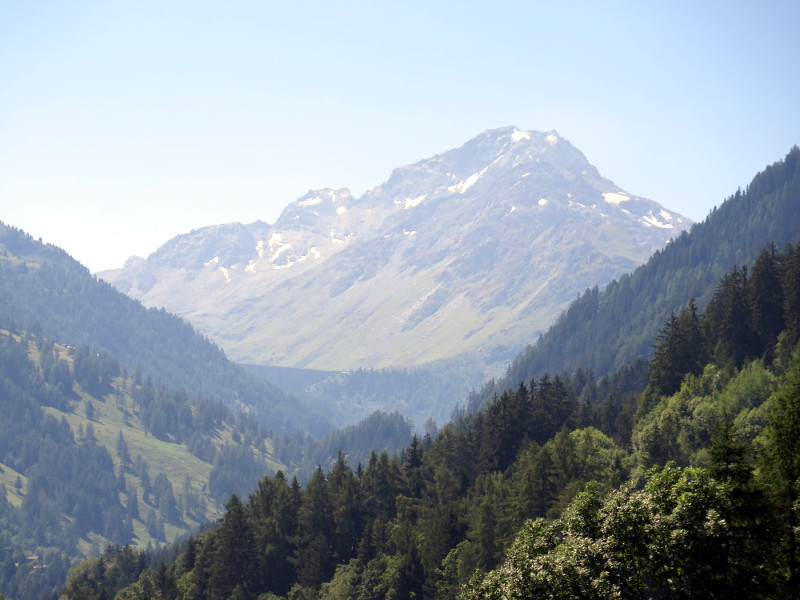
We were constantly surprised by the next unexpected vista

Every summer we go away somewhere different for a week – Donna and me along with two daughters, their husbands, and our four grandchildren. This year we stayed in a ski chalet in Haute-Nendaz in western Switzerland, just over the border from France.

Although prices are high in Switzerland, there are many wonderful compensations in terms of mountain scenery, clean streets and clean air, friendly people, and the walks. I had expected walks with big and tiring changes in elevation – and we certainly did our share of walks of that sort. But the bisses: what a wonderful experience!

Looking at a bisse
Looking at a bisse

I must admit, I had no idea what a bisse was when we drove from Geneva Airport, around Lake Geneva, and then south-west to Nendaz. I hadn’t even come across the word ‘bisse’. But we soon found a leaflet of local walks and discovered that several of them followed the local bisses. A bisse is an irrigation stream running gently downhill, almost following the contours of the mountains and hills. As a result the bisse paths are gentle and easy walking for the most part, and they wind around the slopes through woodland and meadow. The views of the mountains and valleys are spectacular; following the path through woodland and then coming out into the open again we were constantly surprised by the next unexpected vista.

The view from a bisse

All the way, the path is accompanied by the sparkling water hurrying  down its channel, sometimes shallow, sometimes deep, and sometimes disappearing into a large pipe and reappearing beside the path again a little further on. Some of these paths follow one bisse gently uphill and then pick up a different one for the return, making a lovely, circular tour through the countryside.

Further reading

I love the European Union

DailyToast

Mark Rice-Oxley writes a wonderful piece in the Guardian today, ‘The EU is Sixty‘, in which he enthuses about the wine, the food, the freedom from border checks and visas, and so much more. In particular he writes ‘[The EU] helped my generation fall in love with
Europe’.

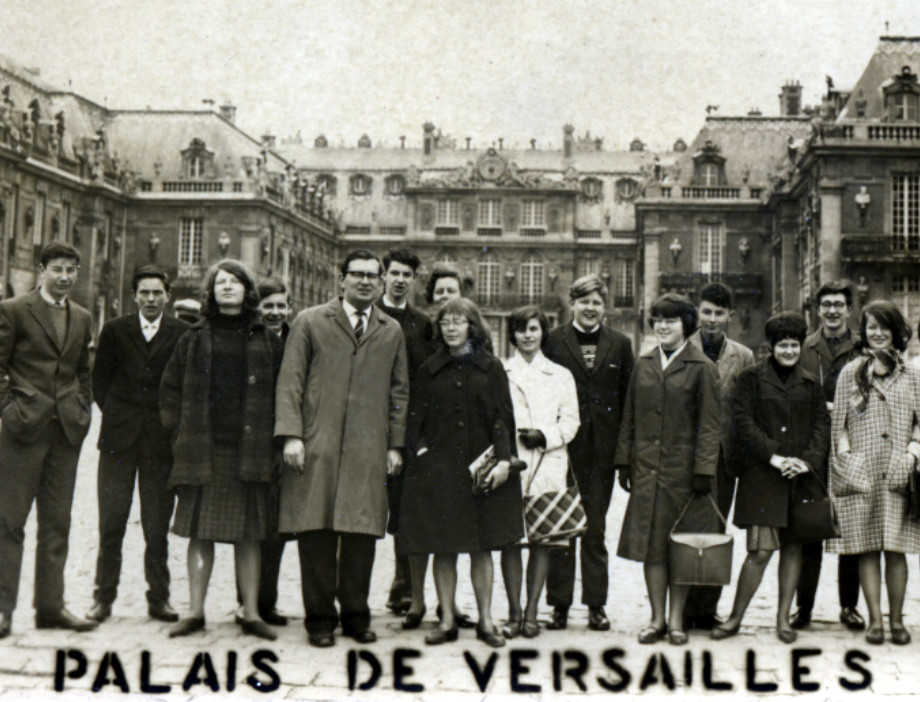
Paris1964Not just your generation, Mark. I’ll be 69 next birthday, and I well remember a school trip to Paris in 1964. A passport was necessary and there were about 13 Francs to the Pound. The photo is taken from a street photographer’s post card of our party magically created while we toured the palace and gardens of Versailles.

We had a wonderful week, the Eiffel Tower, Montmartre, the Louvre, the book and picture sellers along the banks of the Seine, getting lost on my own and having to ask the way in French, ‘Ou se trouve la Place de la Republique, s’il vous plait?’ Until I visited Paris on that school trip, Europe was a mysterious place that was far away and not very real. For me, Europe became a real place where trees grew, people lived – it was just like home but different in so many interesting ways.

For me, the EU is a glorious and precious thing. Far from perfect, of course, yet worth preserving. I heartily wish that the UK would remain in the EU and influence it for good. I wish we could see it as a partnership. We Brits are split in our views on this, more or less 50-50. Oh, OK, nearly 52-48 if we have to be pedantic about it, but certainly not the ‘overwhelming majority’ for leave that we hear about sometimes.

I hope we can remain well integrated and on good terms with our neighbours. Half of us wanted that nine months ago. Half of us still do.