What’s in an image? Sometimes quite a lot, more than meets the eye.
I’m posting an image every day (or as often as I can). A photo, an image from the internet, a diagram or a map. Whatever takes my fancy.
Today’s photo shows the River Liffey in the centre of Dublin. I liked the contrast between the old sailing ship and the modern buildings along the waterfront. There’s a sense of history, of the long passage of time beyond an individual human life.
Two hundred years ago, in 1824, the city was here, the river was here, sailing ships of various sizes would have been jostling together along the quayside, but the buildings have changed dramatically. In 1824 there was no photography, no computing, no motor vehicles, no EU, no electricity supply. There were no railways; coastal vessels and canal barges were the main system for transporting heavy goods, while horse drawn vehicles on generally poor roads were used for passenger travel and light goods.
Over many thousands of years, science and technology working together have taken us from the use of stone, wild plants and animals in the prehistoric past to all the conveniences of modern living. And those changes continue, faster now than ever. Imagining the past is at least possible, imagining the future much less so. There are too many unknowns.
Images from our Irish holiday 2024
For convenience, here’s a list of all the Irish holiday images:
If you enjoyed this or found it useful, please like, comment, and share below. (If you don’t see those links, click the article’s title above the main photo and they will appear.) Send a link to friends who might enjoy the article or benefit from it – Thanks! My material is free to reuse (see conditions), but a coffee is always welcome and encourages me to write more often!
What’s in an image? Sometimes quite a lot, more than meets the eye.
I’m posting an image every day (or as often as I can). A photo, an image from the internet, a diagram or a map. Whatever takes my fancy.
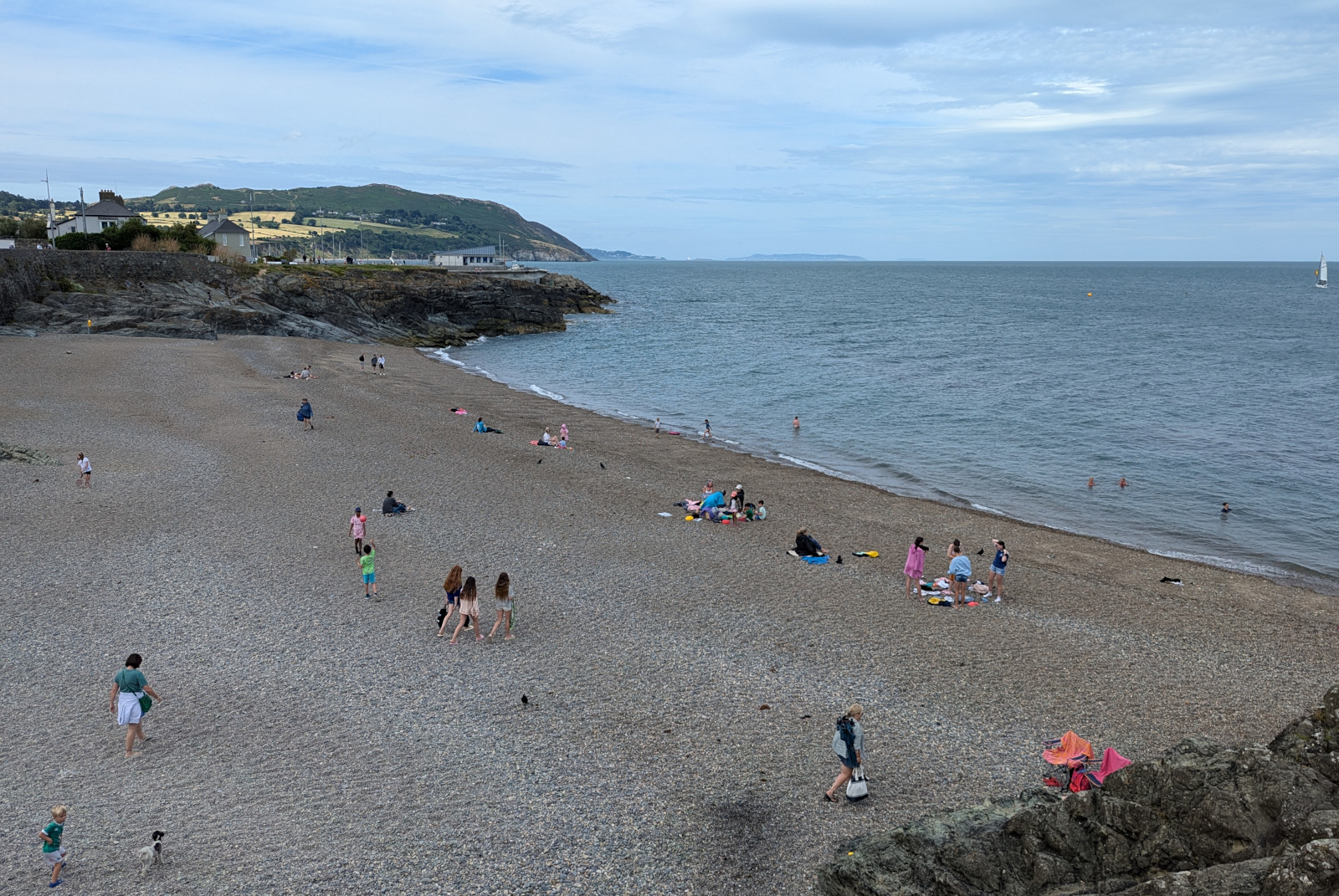
The beach at Greystones
Greystones is a delightful little town on the Irish coast south of Bray and Dublin. We visited it for a stroll along the seafront, discovering several small beaches as well as two longer ones north and south of the town. There’s a harbour/marina and interesting rock pools to see as well. With a good rail link from Dublin, this must be a busy place on warm, sunny days in the summertime.
In the photo, the headland with fields and trees beyond the rocks is just south of Bray, and the more distant headland is near Dun Laoghaire, with the furthest visible land at Howth jutting out from Dublin.
Everyone enjoys a visit to the seaside, though perhaps the people living nearby prefer it when it’s a bit quieter – though visitors bring trade to the local businesses and holiday homes, of course. I think Greystones would be a good choice for a winter break too, travel to Dublin is easy on the train, so days in the city and evenings on the coast might be a very fine combination.
Images from our Irish holiday 2024
For convenience, here’s a list of all the Irish holiday images:
If you enjoyed this or found it useful, please like, comment, and share below. (If you don’t see those links, click the article’s title above the main photo and they will appear.) Send a link to friends who might enjoy the article or benefit from it – Thanks! My material is free to reuse (see conditions), but a coffee is always welcome and encourages me to write more often!
What’s in an image? Sometimes quite a lot, more than meets the eye.
I’m posting an image every day (or as often as I can). A photo, an image from the internet, a diagram or a map. Whatever takes my fancy.
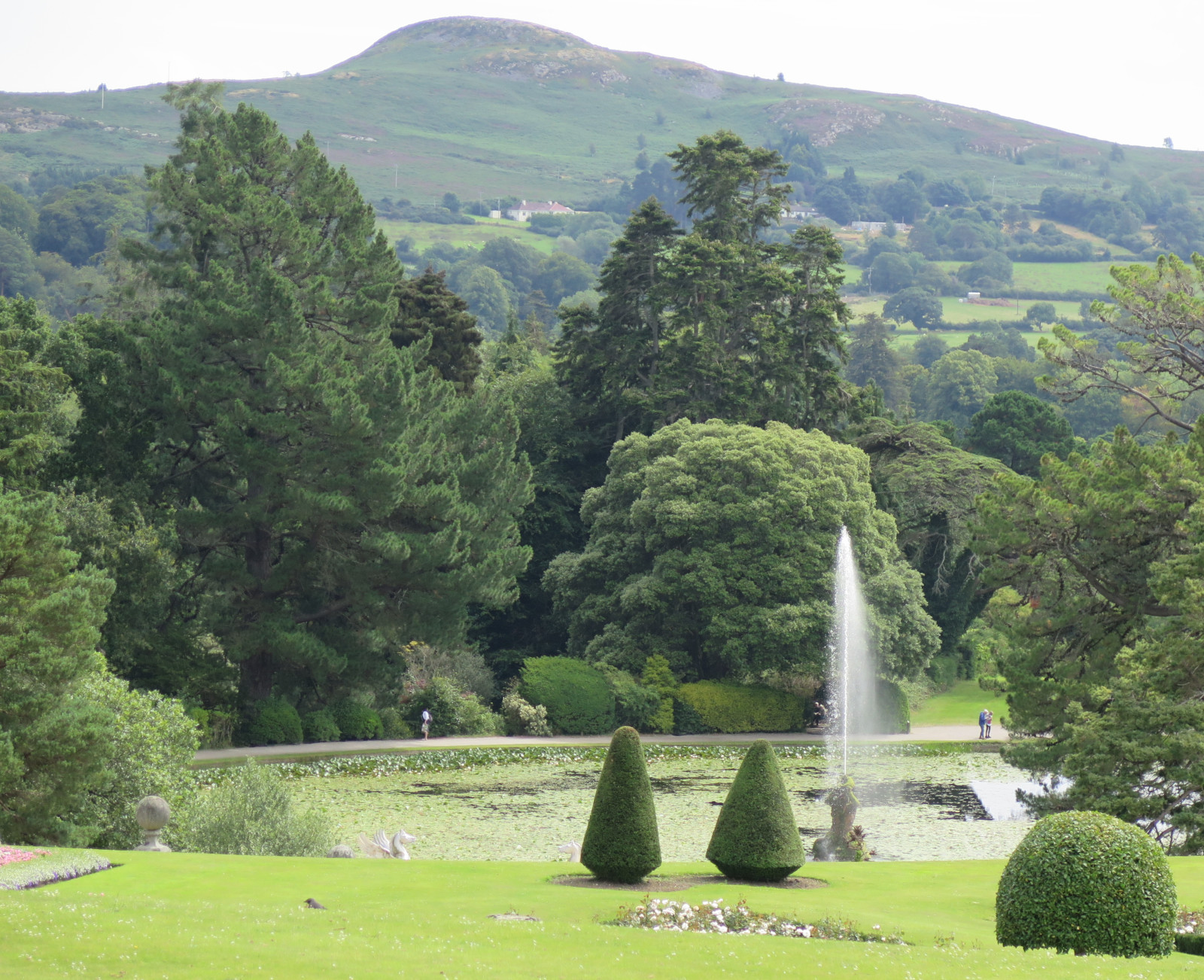
National Geographic rated this as the third best garden in the World. It’s Powerscourt Gardens in Wicklow, Ireland. National Geographic is right, this is a very fine garden indeed. It’s spacious, well designed, full of interesting plants and landscape features, and very well maintained. We did spot a few small weeds here and there, but not very many; keeping a garden this large will require a lot of dedicated gardeners, either volunteers or paid staff (probably both). Most of the work has to be done manually, it will not be a cheap operation!
Of course, ordinary everyday people can’t manage a huge garden like this, nor afford to build a house as large as Powerscourt. A very tiny minority of the population could build and live in this kind of luxury either then or now. And even among the very wealthy, not everyone wants to.
But time moves on, and most of these old houses and their gardens are now enjoyed by much larger numbers of visitors than the original owners could possibly have imagined. Perhaps they’d have been horrified! But I, for one, am grateful for their beautiful legacies that I can visit and enjoy.
I have a final question for you, dear reader, and for myself too. What will you leave as a legacy for future generations? And what will I leave? Why not leave your thoughts below in a comment? There are no right or wrong answers.
Images from our Irish holiday 2024
For convenience, here’s a list of all the Irish holiday images:
If you enjoyed this or found it useful, please like, comment, and share below. (If you don’t see those links, click the article’s title above the main photo and they will appear.) Send a link to friends who might enjoy the article or benefit from it – Thanks! My material is free to reuse (see conditions), but a coffee is always welcome and encourages me to write more often!
What’s in an image? Sometimes quite a lot, more than meets the eye.
I’m posting an image every day (or as often as I can). A photo, an image from the internet, a diagram or a map. Whatever takes my fancy.
Arriving in Ireland, one of our first explorations took us into the Wicklow Mountains, driving a loop from Newtownmountkennedy to Glendalough via the old military road through Sally Gap. The scenery was glorious as you can see from the photo. I was reminded of North Wales, the Pennines, the Lake District, and Western Scotland.
It always feels good to be alive, but for me this was one of those special times when it feels especially good to be experiencing the grandeur, the beauty, and the sheer ‘thisness’ of the surroundings.
‘Thisness’ is a term I borrowed from Kim Stanley Robinson‘s Mars trilogy, a word he puts in the mind and mouth of Sax Russell, one of the science team in the story. The books are a good read; begin with ‘Red Mars’, then ‘Green Mars’, and finally ‘Blue Mars’. They are not just good science fiction, they are also a powerful commentary on many political, technological, and societal issues in the real world.
Images from our Irish holiday 2024
For convenience, here’s a list of all the Irish holiday images:
If you enjoyed this or found it useful, please like, comment, and share below. (If you don’t see those links, click the article’s title above the main photo and they will appear.) Send a link to friends who might enjoy the article or benefit from it – Thanks! My material is free to reuse (see conditions), but a coffee is always welcome and encourages me to write more often!
What’s in an image? Sometimes quite a lot, more than meets the eye.
I’m posting an image every day (or as often as I can). A photo, an image from the internet, a diagram or a map. Whatever takes my fancy.
Welsh National Botanic Garden
We enjoyed a holiday in Ireland from 28th July to 12th August and I’ll share some photos from our trip. I’ll return to more Roman villa photos later.
This first photo is from our journey out from Cirencester where we live. We took the M5 down to the Second Severn Crossing and then the M4 to its end in South Wales, stopping later at the National Botanic Garden of Wales for a light lunch and a break from driving.
The photo shows a view inside their amazing ‘Great Glasshouse’, the world’s largest single-span glasshouse. With its protection, it’s been possible to nurture not just some tropical and semi-tropical plants, but entire biomes. The exprience reminded us of Cornwall’s Eden Project. Although the Great Glasshouse is smaller, it is still very, very impressive.
If you had a greenhouse this big, what would you like to grow in it?
Images from our Irish holiday 2024
For convenience, here’s a list of all the Irish holiday images:
If you enjoyed this or found it useful, please like, comment, and share below. (If you don’t see those links, click the article’s title above the main photo and they will appear.) Send a link to friends who might enjoy the article or benefit from it – Thanks! My material is free to reuse (see conditions), but a coffee is always welcome and encourages me to write more often!
What’s in an image? Sometimes quite a lot, more than meets the eye.
I’m posting an image every day (or as often as I can). It might be a photo I took, an image from Wikipedia, NASA, or some other open source, a diagram or a map. Whatever takes my fancy.
The famous Falkirk Wheel
The Falkirk Wheel is a boat lift in Scotland that replaced a set of eleven canal locks. Here it holds a tourist boat full of passengers, it must be an extraordinary experience to rotate between the upper and lower levels in a boat floating in a short section of canal.
The rotation takes 10 minutes which seems rather slow, but it’s actually a great deal faster than passing through a series of eleven locks.
Themed image collections
The links below will take you to the first post in each collection
If you enjoyed this or found it useful, please like, comment, and share below. (If you don’t see those links, click the article’s title above the main photo and they will appear.) Send a link to friends who might enjoy the article or benefit from it – Thanks! My material is free to reuse (see conditions), but a coffee is always welcome and encourages me to write more often!
What’s in an image? Sometimes quite a lot, more than meets the eye.
I’m going to post an image each day, or as often as I can; a photo I took, an image from Wikipedia, NASA, or some other open source, a diagram or a map. Whatever takes my fancy. This is the first in what may become a long series.
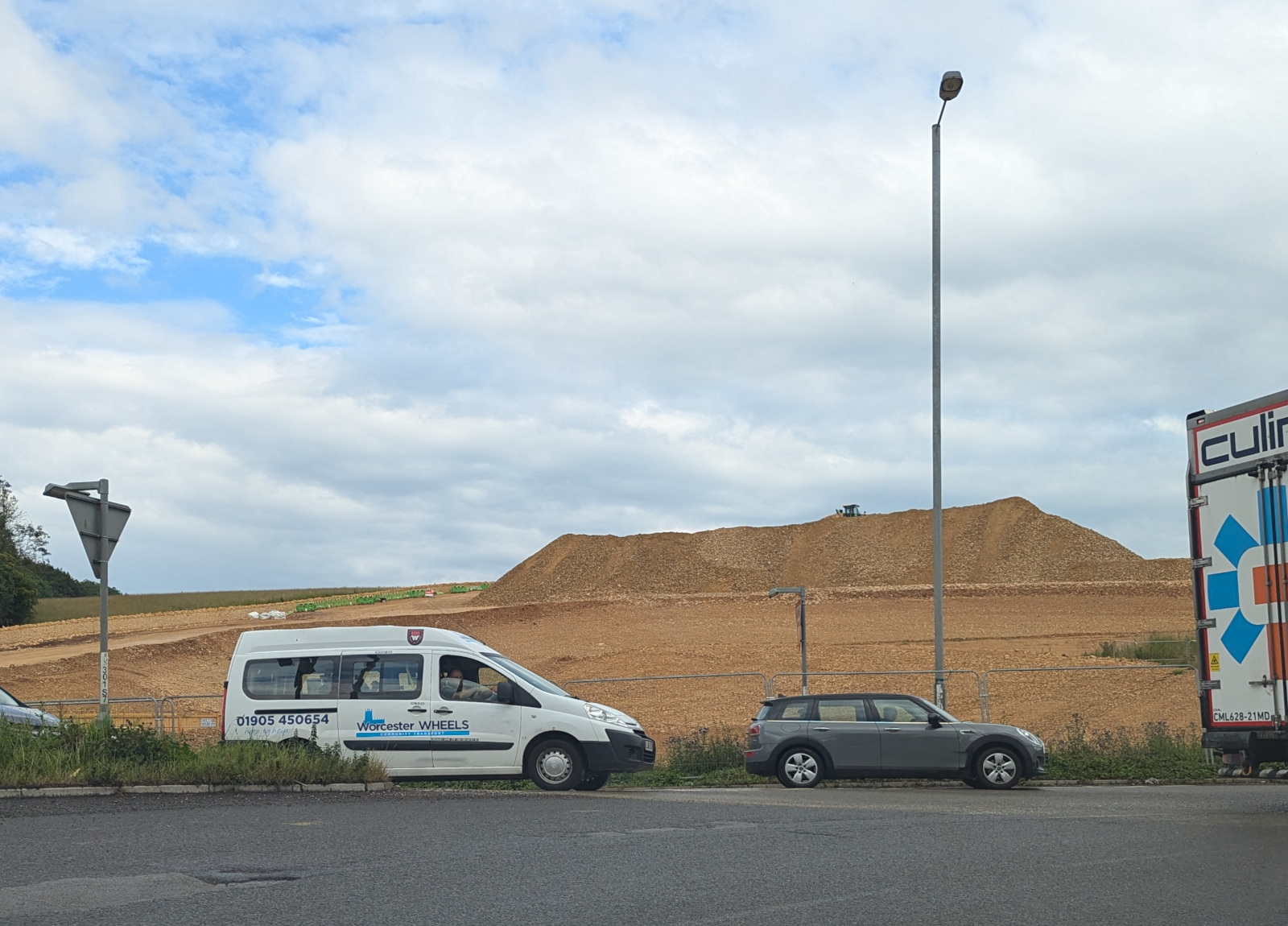
Roadworks on the A417, at the Air Balloon Roundabout
The scarp slope of the Cotswolds is steep, and roads usually have to twist and turn to reduce the slope to acceptable levels. A new section of dual carriagway is being built near the village of Birdlip, to complete the link from the M4 near Swindon to the M5 near Gloucester.
It’s involved the demolition of a famous old landmark, the ‘Air Balloon’ pub, and the amount of rock being moved is astronomical. All of this to smooth out a course for the new road that will let it make the 300 m climb in one, long, sweeping bend. The completion date is estimated to be Spring 2027.
Cirencester
For convenience, here’s a list of all the Cirencester area images:
If you enjoyed this or found it useful, please like, comment, and share below. (If you don’t see those links, click the article’s title above the main photo and they will appear.) Send a link to friends who might enjoy the article or benefit from it – Thanks! My material is free to reuse (see conditions), but a coffee is always welcome and encourages me to write more often!
I set out for a walk along the canal, not intending anything more than a quick explore. I began near Chalford and thought of walking in the Stroud direction, but on the spur of the moment I decided to follow the canal through Chalford village instead as I hadn’t gone that way before.
This is a typical view of the canal in this section
A gentle stroll turns into a major plan
I was enjoying my walk and soon decided to extend it as far as the mouth of the canal tunnel at Daneway Inn. While driving home afterwards I had the idea of walking the entire route in small chunks. So I now have a plan for the old Thames and Severn canal; I’ve done several sections previously, but this time I hope to repeat the walks, covering as much as possible in short sections, and writing up each walk for Journeys of Heart and Mind (JHM).
Part of the canal runs through a tunnel with several sections blocked by collapses, some other sections run through private property and can’t be accessed. Others have been filled in, turned into roads, or are otherwise not walkable. But where the canal has been restored, the towpaths are in great condition. Elsewhere, towpaths are usually passable, especially in dry weather, and they are usually open for use even when the canal itself remains derelict.
Making a start
I was able to park the car right by the tow path (Map), just off London Road west of Chalford (very near Belvedere Mews). Don’t assume you’ll be able to do the same; you might, but there’s only room for half a dozen cars here.
The canal is quite derelict in this section, there’s water in it at many points, but not everywhere. The stonework and brickwork of the locks is severely damaged, and more recent structures such as pipes and small bridges cross the canal and will need to be rerouted or rebuilt. In places the canal has been filled in and one section has been used as a diversion and is now part of the River Frome. The eastern part of today’s route will be very expensive to restore; there are, for example, sixteen locks to rebuild, and not just a simple refurbishment of the masonry and new, timber, lock gates. For the most part it will be a combination of restoration and refacing where possible, but full reconstruction from scratch in many places where the damage is particularly severe.
It’s hard to grasp how destructive the natural world is to our built environment. The canal was dug 235 years ago (completed in 1789) and during its period of use must have been well maintained and repaired whenever necessary. The last narrow boat traffic passed this way about 100 years ago. It was already in bad shape by then, but natural decay, leaks and the growth of trees has resulted in the dereliction we see today.
Section by section
Leaving the car, and carrying my rucksack with a water bottle, I headed east along the tow path. I didn’t take a map, but the path is well marked. I subscribe to the OS maps on my phone (good enough for walks like this) and next time I plan to use the OS 6-inch map for 1892 to 1914 to better understand the canal’s surroundings while it was still in use.
The River Frome in Chalford
(Hint: Click any image to enlarge it.)
The section through Chalford village is very pretty, on the information boards it’s likened to a Swiss valley. That’s a fair comparison, I think. The wooded valley rises sharply on either side, the River Frome (or Stroudwater) runs along the valley bottom, and stone cottages cling to the slopes on either side. If you could only visit one place along the canal, Chalford would be an excellent choice.
Swan’s nest
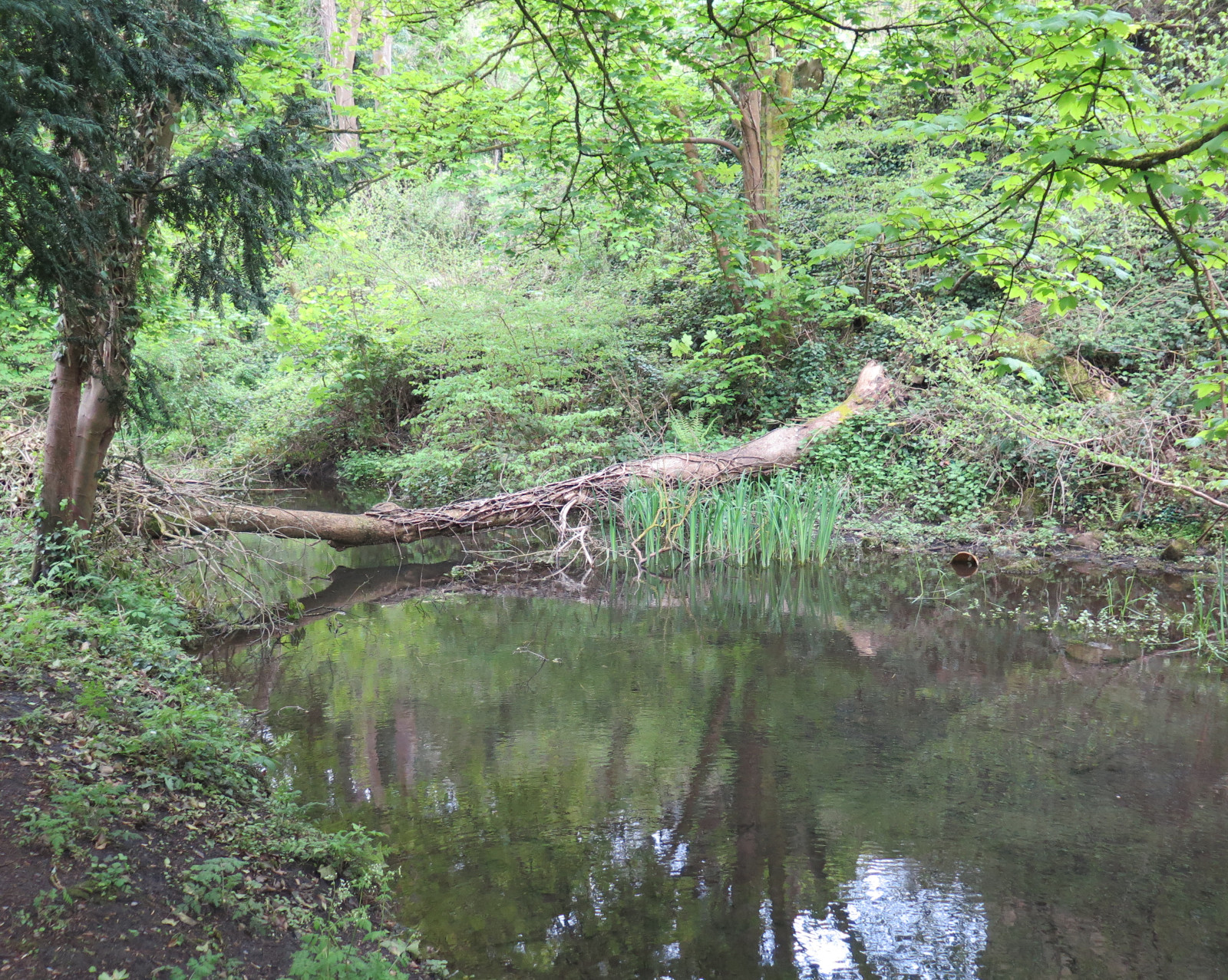
Beyond the eastern end of Chalford, the tow path passes a lake on the left; originally this was a mill pond, supplying water to turn the wheel at Baker’s Mill. When the canal was constructed, water supply was a frequent problem and the mill pond was extended by the canal engineers to keep this section of the canal full enough even when the locks were operating frequently due to higher traffic levels. The lake is partly silted up now, especially close to the mill, and it has become a wildlife reserve. Passing this point I spotted a swan’s nest in use and a group of mallards nearby.
Marsh marigold in the canal
Some sections of the canal are badly silted and are full of plants like this glorious marsh marigold close to Siccaridge Wood. The nature reserve is well worth a visit if you have time. The site stretches up the hill from the canal and faces south, so it’s a warm spot when the sun shines and likely avoids early frosts in autumn and late ones in the spring. Further on again, a small footbridge crosses the canal and the tow path continues on the north bank until it reaches Daneway Lane.
I stopped at the Daneway Inn for a lovely Coronation Chicken sandwich with a simple salad and some crisps along with a welcome cup of coffee. I have to report that service was prompt and I felt welcomed. The canal continues a little further and the path resumes from the corner of the Inn car park. The tunnel portal (Map) looks mysterious and, frankly, uninviting. It would have been an adventure to travel through the tunnel in a narrow boat; one day it may be possible again!
If you enjoyed this or found it useful, please like, comment, and share below. (If you don’t see those links, click the article’s title above the main photo and they will appear.) Send a link to friends who might enjoy the article or benefit from it – Thanks! My material is free to reuse (see conditions), but a coffee is always welcome and encourages me to write more often!
We enjoyed every aspect of the house … and we plan to return in the summer to view the garden as well.
We visited Chastleton House recently, it’s a Jacobean country house in the Cotswolds, between Stow-on-the-Wold and Chipping Norton. Amongst other features it has the wonderful Long Gallery with a curved, plasterwork ceiling and panelled walls. Amazing!
The Long Gallery on the top floor
The house is in the care of the National Trust and was open to the public for the period leading up to Christmas. They’d decked it out with Christmas decorations as they might have been in the 1960’s – wrapped gifts, paper chain decorations, Christmas tree lights of the period, everything.
1960s decorations
But the real gem, and what I especially wanted to see, was the Long Gallery. It was certainly not a disappointment!
We enjoyed every aspect of the house, of course, and we plan to return in the summer to view the garden as well. Living, as we do, in Cirencester it’s not a long journey so we can also visit in spring and autumn too if we wish.
I can recommend a visit to Chastleton. It’s a gem of a place.
The day began with a flight to Inverness Airport, and then a short journey north with several stops en route, ending at Dornoch where we spent the night in a traditional hotel.
We skipped breakfast as we were keen to get to the airport and could buy something there after checking in. Paul gave us a lift to Weston-super-Mare railway station where we loaded our luggage onto the Airport Shuttle bus and watched the countryside go by until turning into Lulsgate Airport. The bus service from Weston is very efficient and only £7 return, but on arrival we discovered our flight with EasyJet was running 45 minutes late because landing had been delayed at Schipol on the plane’s first flight of the day. We had more time than expected to grab coffee and choose a light breakfast.
Once on the plane (an Airbus A320), we were soon airborne and had good views of familiar local landmarks including south Bristol, the Chew Valley and Blagdon reservoirs, and Flat Holm in the Bristol Channel. After that we were in thick cloud until we got our first views of Scotland on our approach to Inverness Airport. We were soon in the arrivals area with our bags and had a rather long wait for our turn at the car hire desk. But then we were quickly on the road out from the airport and able to start our journey towards the north coast.
Heading north from Inverness
We had decided not to visit Inverness on this trip, but to get started right away on the NC500 route. We had visited Inverness briefly on an earlier holiday, and thought we might get a chance to visit again during our family get-together in the Cairngorms in August. We skirted the city on the A9, crossed the river by the bridge and visited the Shandwick Stone for our first stop. This is a Pictish carved monument encased in glass; there are many of these Pictish stones in the north-east of Scotland, but the others are all in museums so it’s great that this one still stands where it was erected, about 1200 years ago. It is a Christian monument with a cross forming an important part of the design, clearly showing that the Christian faith had reached the north-east of Scotland by 800 AD.
We drove on to Portmahomack, a pretty fishing village, well known for its mermaid sitting on a rock on the pebbly beach. We parked the car to explore on foot and take some photos, then we drove across a second bridge near Dingwall before heading on to Dornoch for our first night’s stay in a comfortable, little hotel in the town. Had we not flown we would have needed one or two nights en route to limit the daily driving. This would have been fun, and would have allowed us to explore others places in England and in Scotland on our way to Dornoch. But we didn’t have much time and wanted to focus on the NC500 route as much as possible.
Dornoch
We had time to explore a little during the late afternoon. Dornoch is a beautiful small town, peaceful and historic.
Strolling out to the coast just 1 km from the town centre, we ate at ‘The Highland Larder’, refreshingly different and with an open-sided shelter against wind and rain.
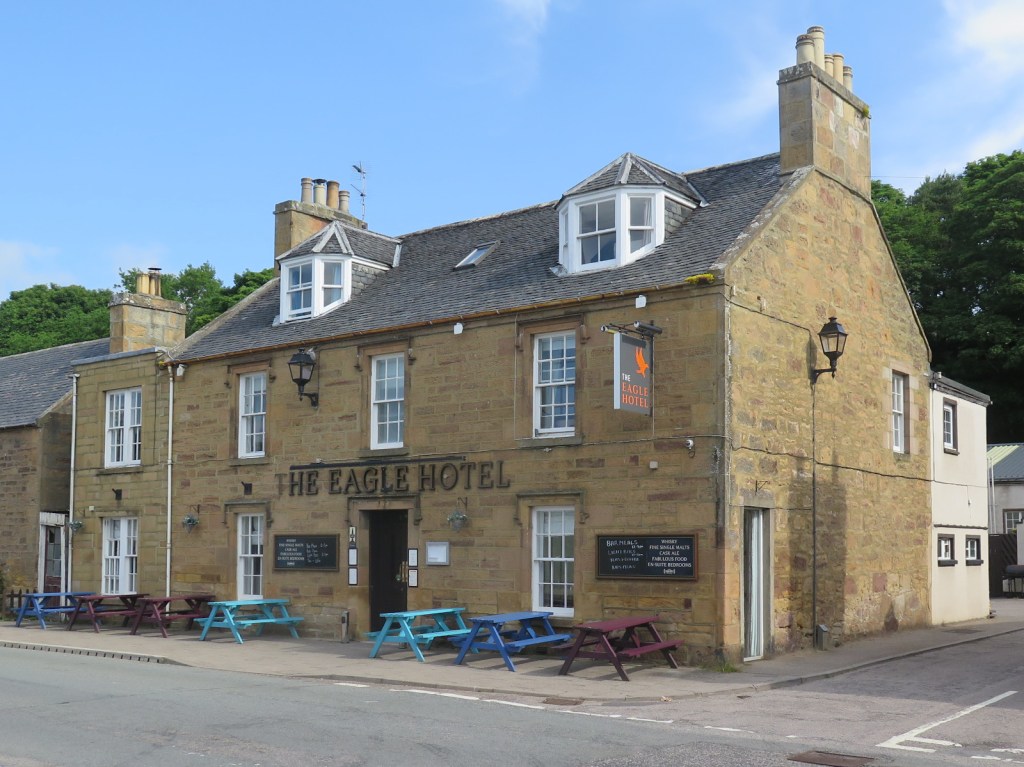
We walked around the old streets, noticed the widespread use of warm sandstone for older buildings like the little castle, and looked in shop windows as we passed. The cathedral here is the most northerly on the British mainland, only the Orkney Islands have a cathedral further north than this. We decided to look around the cathedral the next day and instead spend our time getting a feel for the town. We stayed in The Eagle Hotel which was unpretentious, comfortable and friendly.






 Journeys of Heart and Mind