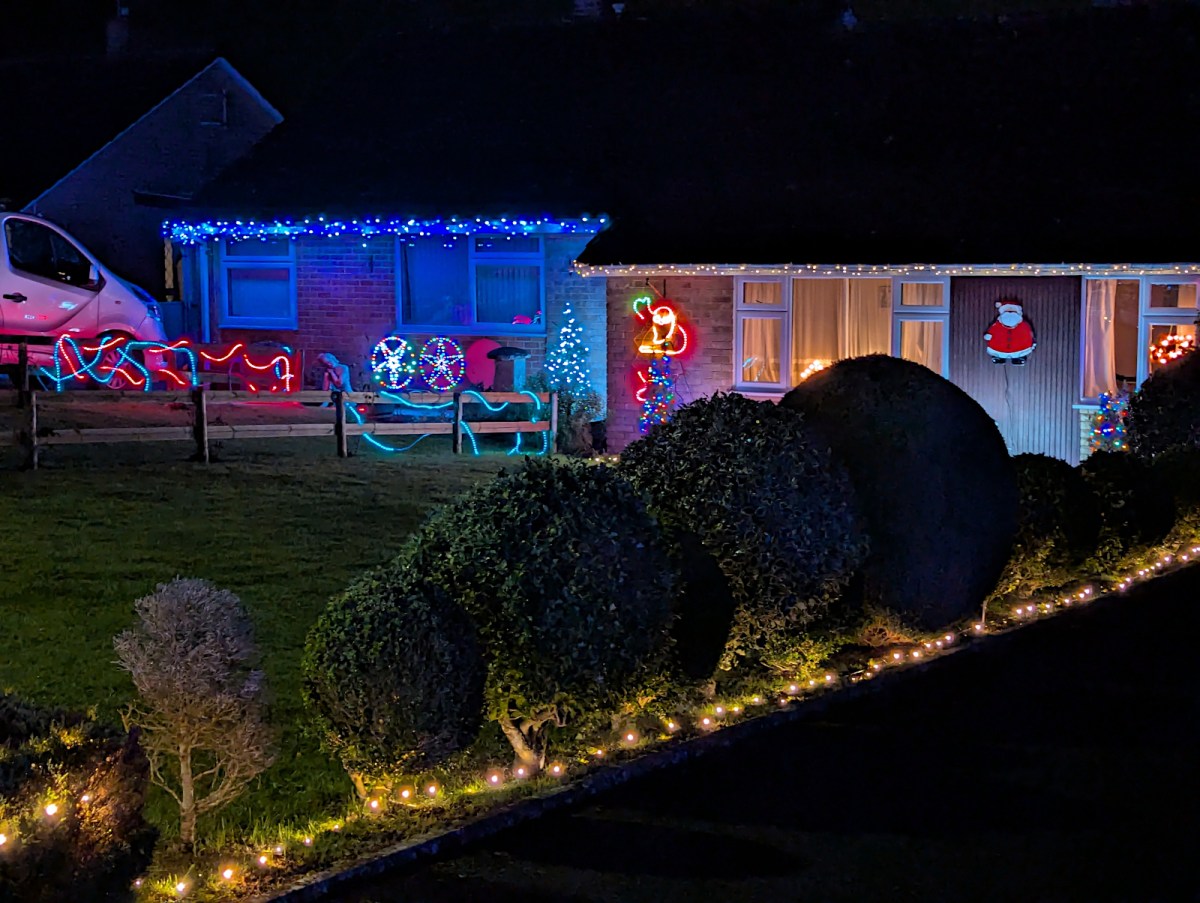
At Vale Road in Stratton on the northern edge of the Cotswold town of Cirencester, residents (and one in particular) put a lot of effort each year into decorating their homes and gardens with all sorts of coloured and illuminated decorations. And they invite the people who come to look to make a contribution to Macmillan Cancer Support.
What’s in an image? Sometimes quite a lot, more than meets the eye. I’m posting an image every few days.
Click images to enlarge
People love Christmas lights and decorations, and people hate illness particularly if there’s no cure. So can Christmas lights help people with incurable illness? Yes they can! But…how?
Well, one way is to use the Christmas decorations to raise money for charity, and that’s what one street in Cirencester has been doing every year for some time now.
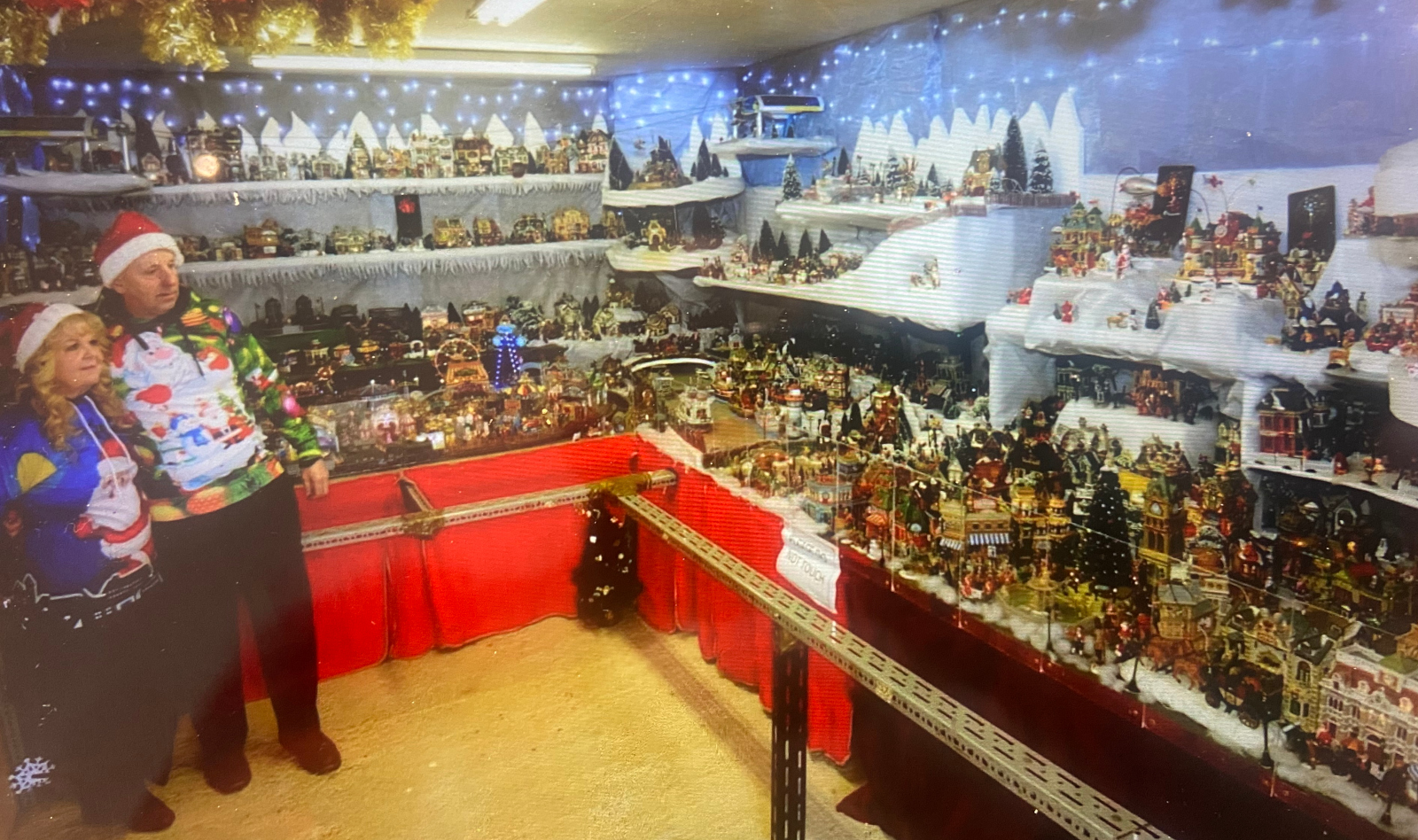
There’s more inside – a model village!
At Vale Road in Stratton on the northern edge of the Cotswold town of Cirencester, residents (and one in particular) put a lot of effort each year into decorating their homes and gardens with all sorts of coloured and illuminated decorations. And they invite the people who come to look to make a contribution to Macmillan Cancer Support. This charity provides care, help, nursing and support for cancer patients and their families right at the time when they need help most. They will help families care for a mum, a dad, or a grandparent at home.
The heart of the action
If you live in Cirencester or the local area, why not drive out to Vale Road and park in a nearby street like Vaisey Road, Tinglesfield or Park View? (But please don’t block any driveways or park near junctions.) Then walk the short distance to Vale Road. You can pay for a tour of the best of the lights, delight your children (or grandchildren), and help support a great cause all at the same time. What could be better than that?
If you enjoyed this or found it useful, please like, comment, and share below. (If you don’t see those links, click the article’s title above the main photo and they will appear.) Send a link to friends who might enjoy the article or benefit from it – Thanks! My material is free to reuse (see conditions), but a coffee is always welcome and encourages me to write more often!
Petal doubling makes flowers more showy, but often at the cost of the ‘doubled’ flowers being less interesting to pollinating insects. The additional petals may be modified stamens so less pollen is produced. Compare a wild rose to a garden rose and you’ll see what I mean.
What’s in an image? Sometimes quite a lot, more than meets the eye. I’m posting an image every few days.
Click images to enlarge
These autumn leaves are on a purple Cotinus coggygria bush, common name ‘smokebush’. Like many trees and shrubs at this time of year, Cotinus leaves change colour in autumn before falling to the ground. The shrub will produce fresh, new leaves in the spring. But look more closely and you may see something else.
The leaves in the image have developed interveinal patches of necrotic tissue, making the plant even more striking in autumn. I had never noticed this condition before moving to Cirencester, but there’s a Cotinus in the grounds of the Stratton House Hotel and Spa that does this annually. The shrub seems healthy in the spring and summer. For a week or two at the end of October this patterned necrosis makes the autumn leaves look even more spectacular.
Irregularities of this kind are common in both animate and inanimate natural systems and not infrequently appear as deliberate ‘enhancements’. Here are one or two notable examples:
Leaf variegation – Gardeners and plant breeders select and propagate from stable variegations. Normally plants with variegation grow more slowly because the efficiency of photosynthesis is compromised.
Petal doubling – This make flowers more showy, but often at the cost of the ‘doubled’ flowers being less interesting to pollinating insects. The additional petals may be modified stamens so less pollen is produced. Compare a wild rose to a garden rose and you’ll see what I mean. How often do you see bees working garden roses?
Variations in animal characteristics – amongst cats and dogs (and also budgerigars, canaries, parrots and chickens you’ll see size and shape changes as well as behavioural, colour and pattern modifications. Compare a Jack Russell with a retriever or a blue budgie with a green one and you’ll find plenty of differences to ponder.
Frost hardiness in plants. Frost sensitive species cannot survive winter in temperate or arctic conditions, so hardiness is a prized feature of many garden plants, and plant breeders pay attention to things like this. A Dahlia or Chrysanthemum that can flower for an extra week or two in the autumn may be worth a higher price, for example.
Fruit colour and flavour components. These days strawberries are much larger than when I was child, and they are often red inside, not just on the outer surface.
Many variations of this kind are deliberately selected for by plant and animal breeders.
Certain other changes have been caused deliberately, even in humans. Lower lip enlargement, neck ringing to generate extended neck length, foot binding, and forms of male and female circumcision have been required for a variety of religious and cultural reasons. Hair styling, removal, or transplantation, piercing of ears, noses and other body parts are common, and don’t forget tattooing. And in plants; pruning, clipping, or bonsai are widely employed.
In the world of rock and stone, coloured and uncoloured crystals may be prized as jewels and fetch fantastic prices. I wrote about an example of this, a geode I spotted in an ordinary, traditional, Cotswold dry stone wall.
If you enjoyed this or found it useful, please like, comment, and share below. (If you don’t see those links, click the article’s title above the main photo and they will appear.) Send a link to friends who might enjoy the article or benefit from it – Thanks! My material is free to reuse (see conditions), but a coffee is always welcome and encourages me to write more often!
The abbey’s construction was a huge project continuing throughout the 12th century. To fund the ambitious project, Henry I and his successors, Henry II and Richard I, granted the abbey revenues and privileges, such as exemption from tolls, access to commerce, and timber and stone for construction.
What’s in an image? Sometimes quite a lot, more than meets the eye. I’m posting an image every few days.
Click images to enlarge
In medieval times there was an Augustinian Abbey in Cirencester. Like so many abbeys and monasteries in the United Kingdom it was dissolved during the reign of King Henry VIII and afterwards demolished. The outline of the walls is marked in the Abbey Grounds with small, square paving slabs, and a few of the column bases are visible too, but that is all that remains above ground where the Abbey once stood. There are some additional carved stones and other items in the Corinium Museum.
The photo shows a Lego model of the Abbey, currently on display in the Parish Church. You can see a Lego tree in the garden within the cloisters, and part of the nave of the Abbey church. The model is complete with its tower although this doesn’t appear in the main photo, but it’s there in the image below.
Construction and history
The Abbey and tower
Some of the political and practical history of the founding and later dissolution of the abbey are well described in blog articles published by the Corinium Museum. These articles, and the Wikipedia article are well worth reading. They are linked below.
Long before the Abbey was built the land where it later stood was part of the Roman City of Corinium Dobunnorum; the River Churn (in those times named Kern, Kerin or Corin) had been divided into two, one part outside the city walls as a defensive feature, the other part within the city as a source of water for drinking, washing, for industry, building and so forth. The Saxons, moving West into the still Romano-British part of what is now South-West England, took control of the area, but had no use for a derelict Roman city. However, there was a Roman church building in the area where the abbey would later be founded, and a Saxon church was built over the Roman church.
Early in the 12th century, King Henry I founded St Mary’s Abbey, building the chancel on the site of the Roman and Saxon churches. About 1130, Abbot Serlo arrived with a community of canons to set up residence .
The abbey’s construction was a massive project continuing throughout the 12th century. To fund the ambitious undertaking, Henry I and his successors, Henry II and Richard I, granted the abbey revenues and privileges, such as exemption from tolls, access to commerce, and timber and stone for construction. Henry II allowed the abbey the revenues and control of the town (or ‘vill’) of Cirencester around 1155, initiating centuries of friction with the local townspeople. The abbey church was consecrated in 1176 in the presence of King Henry II and several bishops, but building work on the cloisters, refectory, dormitories, and the abbot’s house continued for many more years.
The result of all this effort was the most wealthy and influential Augustinian abbey in the Kingdom. The abbey flourished through its ownership of very large estates in the Cotswolds and an important role in the very profitable medieval wool trade.
Dissolution
The townspeople repeatedly asked the Crown to grant them a borough charter, but this was consistently and strongly opposed by the abbots. In the end, Henry VIII’s dissolution of the monasteries ended with the destruction of the abbey and the confiscation of much of its wealth and property. A Royal Commisioner, Robert Southwell arrived in the town on 19th December 1539 to receive the surrender from the last abbot, John Blake. There was no resistance, and the abbot and monks received pensions, but the buildings were torn down and everything of value was sold off.
Religion or faith?
As with so many JHM articles, as I write I am deeply struck by the huge gulf between religion (usually a very worldly affair as in the history of Cirencester Abbey) and faith (with its basis not so much in what we think as in who we are and how we live.) The distinction is essential if we are to live full lives, discovering who Jesus is and why he matters so much.
If you enjoyed this or found it useful, please like, comment, and share below. (If you don’t see those links, click the article’s title above the main photo and they will appear.) Send a link to friends who might enjoy the article or benefit from it – Thanks! My material is free to reuse (see conditions), but a coffee is always welcome and encourages me to write more often!
Put an upturned bucket over a patch of grass in your garden. Lift the bucket every day and take a look, then re-cover the patch… How long does it take for the grass to die?
What’s in an image? Sometimes quite a lot, more than meets the eye. I’m posting an image every few days.
Click to enlarge
Trees provide shade, most welcome on a hot day, and they provide shelter when it rains (though this may be unwise during thunderstorms).
But notice the absence of grass beneath these conifers. Shade and shelter are exactly what other plants don’t need; they depend on plenty of light and water to enable them to grow. Light is essential as it provides the energy to split water into hydrogen and oxygen, and water is essential as the raw material for this process. The oxygen is released into the atmosphere, while the hydrogen is bonded with carbon dioxide from the atmosphere to make energy-storing sugars for use at night and to build cellulose, the main support molecule that gives stems, branches and tree trunks their strength.
The lack of light and water under tree canopies creates a kind of local desert. You can see this clearly in the photo from the presence and absence of grass. So how do the trees survive? That’s a great question! Their roots spread out widely and deep, far enough to reach moist soil and deep ground water. In persistent rain, water drips from the drenched leaves above. And root, trunk and branch all contain stores of water so a tree can cope with a long, dry summer far better than the grass can.
Light
Here’s an experiment anyone can do. Put an upturned bucket over a patch of grass in your garden. Lift the bucket every day and take a look, then re-cover the patch. See how long it takes for the grass to turn yellow. How long does it take for the grass to die?
For plants, light is essential. There are some animals that live in dark caves or underground, with no light. Earthworms are a good example, but like all animals they get their food by consuming plants and other animals. But for most creatures, including us humans, light is essential nonetheless. Whether we are plant eaters (like cows and sheep) or meat eaters (like lions and wolves) or omnivores eating either or both (like humans and rats) we still need light to see in order to find and identify the things we must eat to stay alive.
Water
For plants, water is part of their ‘food’, it’s needed to make sugars. For animals water is of no value as food, but it’s essential to prevent dangerous dehydration. All animals know when they’re thirsty and they’ll find water and drink to keep themselves alive. Think of a man lost in a desert, the cartoons have him croaking out, ‘Water.. Water..’ Imagine someone unable to find water, they’d die of thirst long, long before they died of hunger. Most of us would be in danger after a few days without drinking, but we could live for several weeks with nothing to eat. And of course, if you are a fish too little water would mean you couldn’t breathe, and if you were a land animal too much would mean you would drown.
Spiritual (not religious)
The idea of essentials has been carried over into spiritual ideas too. Light and water (and food) are so clearly necessary for life that they make good analogies and illustrations. What did Jesus mean when he said, ‘I am the way, the truth and the life’? Or when he explained to the Samaritan woman at the well that he would provide water that never runs out, or when he told his followers, ‘I am the bread of life’ or ‘I am the light of the world’?
He was simply saying, I am essential, you can’t live without me. I’m necessary for life. Just as in the physical world, how would it feel to live in the dark, without water and without sustenance? How long would you last? How long would I last?
Many people today feel sure there is no spiritual aspect to life at all, it’s just about living your life in the here and now and then dying from accident, illness, or just old age. Others think there’s much more to life than that. At the very least there are moral and philosophical truths to consider. We should care for one another, help one another, and cooperate in helpful and kind ways.
Food for thought. Let me know below how you think about the essentials of life. Do you have any thoughts to share on this?
If you enjoyed this or found it useful, please like, comment, and share below. (If you don’t see those links, click the article’s title above the main photo and they will appear.) Send a link to friends who might enjoy the article or benefit from it – Thanks! My material is free to reuse (see conditions), but a coffee is always welcome and encourages me to write more often!
Walking through the Corinium Museum is not just a walk through history; it is a pilgrimage into the very nature of human experience. These mosaics remind me that we are connected to the past not just by shared geography, but by shared themes of life, art, and the simple beauty of the world around us.
What’s in an image? Sometimes quite a lot, more than meets the eye. I’m posting an image every few days.
Walking in Cirencester
Orpheus
Almost every day, I walk over history in Cirencester. My feet tread on pavements, asphalt, and concrete, a modern tapestry built over layers of forgotten lives. But in Cirencester, the past isn’t merely buried beneath; it is visible to view, laid out in small, colourful cubes of stone or painted wall plaster. At the Corinium Museum, the mosaics of Roman Corinium offer more than just archaeological wonder; they invite a journey into the heart and mind of a world long gone.
Corinium
The Roman town of Corinium Dobunnorum was one of the most important settlements in Britain, second only to Londinium. This prosperity is captured in the magnificent mosaic floors that once adorned the villas and townhouses of its elite. As I stand before them, they cease to be mere objects of a museum. Instead, they become stories frozen in time, each tiny tessera a word in a sentence, each panel a vibrant, geometric chapter.
Sometimes we see things indirectly, and our brains are capable of retrieving far more information than you might at first think. It’s true of all our senses – hearing, touch, taste, smell and all the rest. The senses provide information but the brain makes much more of it all.
The hare
The hare
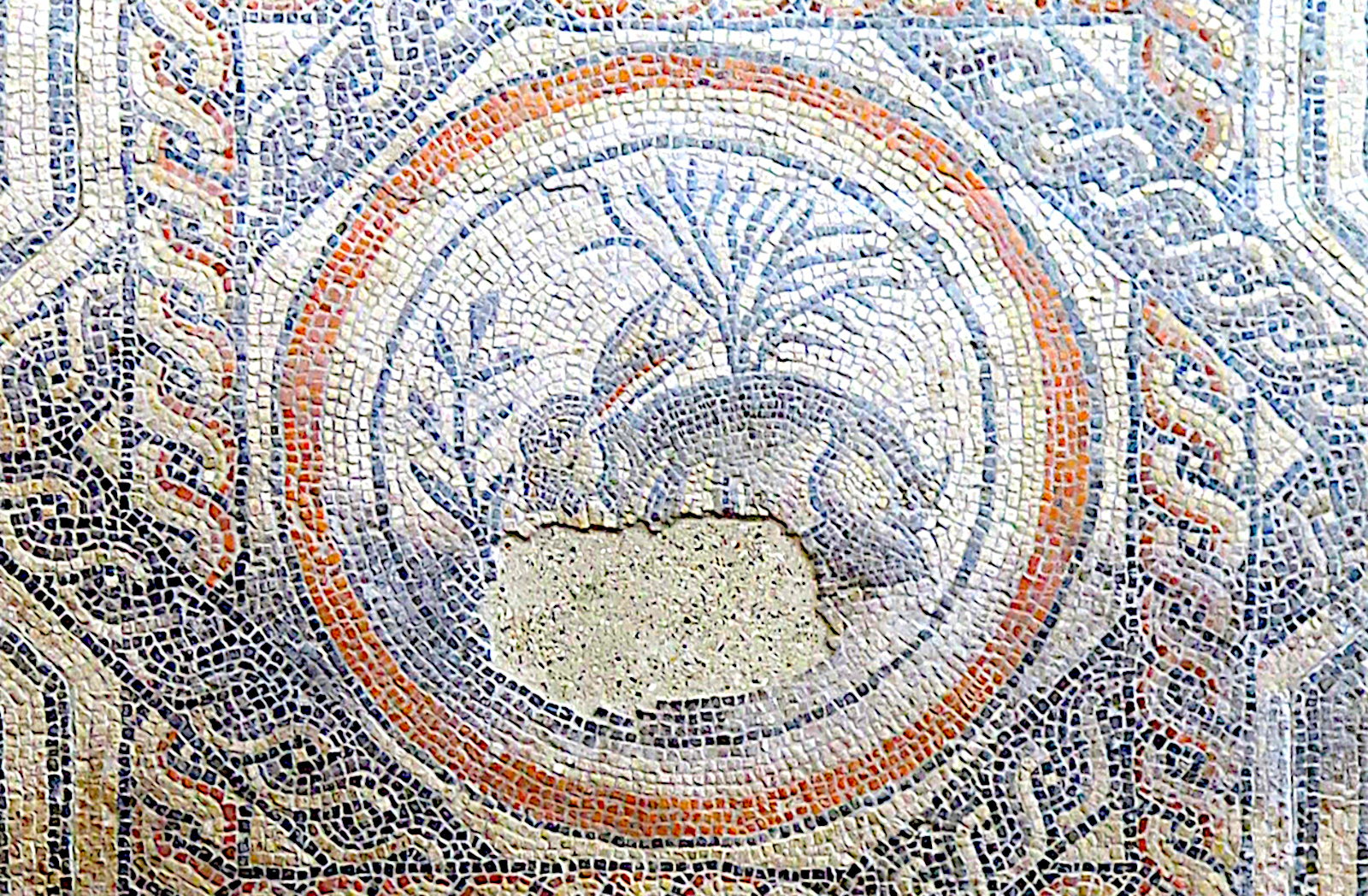
There is the famous Hare mosaic, found in Beeches Road and now a quiet emblem of our town. The artistry captivates the mind: a small hare caught in a moment of simple, vulnerable life, feeding amongst the foliage. When I look at it, I feel a curious resonance. We are so used to seeing animals in art as symbols of strength or the spoils of the hunt. Yet here is a humble creature, a snapshot of everyday nature from the fourth century. It reminds me that even in a grand Roman villa, the small, quiet moments of life were still observed and valued. It’s a message that travels two millennia, from one human heart to another.
The seasons
The Seasons mosaic presents another journey entirely. Here, Greek myth and a Roman love of the seasons mingle in intricate detail. But what strikes me is the continuity of it all. The cycle of winter pruning, spring planting, summer harvesting, and autumn gathering was as central to life then as the changing seasons are to us today. The mosaic is a reminder that some rhythms of existence are eternal, transcending the rise and fall of empires. It connects us to a shared human experience of time, of labour, and of nature’s relentless, beautiful cycle.
Orpheus
Perhaps the most poignant is the Orpheus mosaic (image at the top of the article), which once decorated a grand house just outside the town. In the centre, Orpheus charms wild animals with his music. This isn’t a scene of violent conquest, but of tranquil harmony, of nature tamed by art. In our own divided and turbulent world, the image speaks to a timeless desire for unity and peace. The mosaic suggests that art has the power to bring disparate parts of the world together, if only for a moment.
Walking through the Corinium Museum is not just a walk through history; it is a pilgrimage into the very nature of human experience. These mosaics remind me that we are connected to the past not just by shared geography, but by shared themes of life, art, and the simple beauty of the world around us. And as I step back out onto the modern pavement of Cirencester, I can imagine the ancient tesserae still underfoot, a solid reminder of the stories that lie beneath.
I didn’t write this article
OK, it’s confession time. I asked Google’s AI to write this article for me. I’ve made a few minor tweaks and edits, but that’s all. The prompt I provided wasn’t complex either. Here it is:
Write an article for ‘Journeys of Heart and Mind’ on Corinium mosaics. Follow the style and structure of existing articles.
Those twenty words resulted in this article. All you need to do is visit gemini.google.com and write a request like that, and the AI will write an answer for you. You don’t have to install anything or pay for anything, just type the request and press ‘Enter’. Give it a try! Type in ‘Write ten verses in the style of Wordsworth about laptops’ and see what comes out.
In some ways I think the AI did a better job than I would have done, but if I’d written it, it would have been me – and this isn’t! Where AI can help is to do some of the necessary research and perhaps create a first draft. But beyond that, my advice is to keep it human.
If you enjoyed this or found it useful, please like, comment, and share below. (If you don’t see those links, click the article’s title above the main photo and they will appear.) Send a link to friends who might enjoy the article or benefit from it – Thanks! My material is free to reuse (see conditions), but a coffee is always welcome and encourages me to write more often!
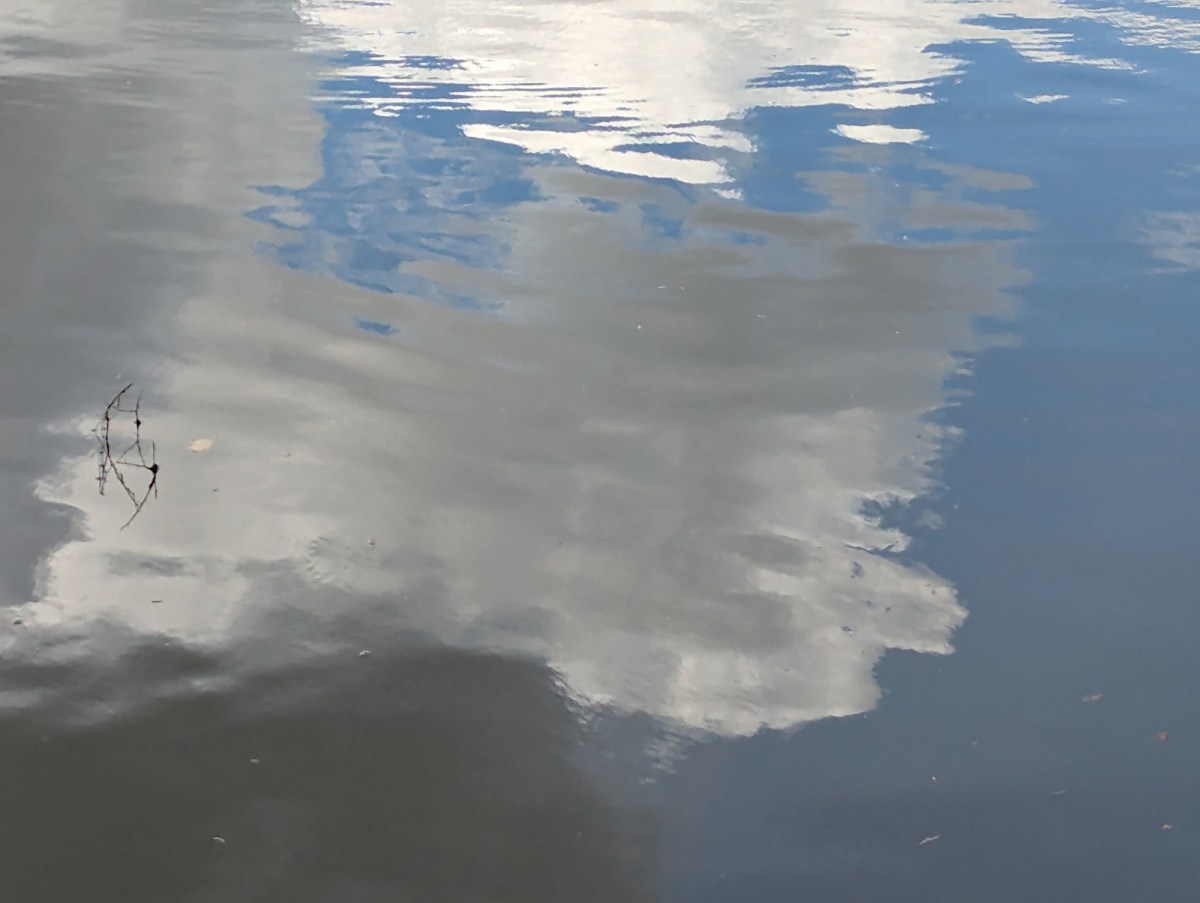
Just from this image the brain understands there are ripples on the surface of the water and from past experience will also know that these ripples will be moving.
What’s in an image? Sometimes quite a lot, more than meets the eye. I’m posting an image every few days.
Click to enlarge
Sometimes we see things indirectly, and our brains are capable of retrieving far more information than you might at first think. It’s true of all our senses – hearing, touch, taste, smell and all the rest. The senses provide information but the brain makes much more of it all.
What do we see in this image? It’s just a pattern of coloured patches reflected from a water surface. That’s what the eye sees. But the brain tells us there are clouds in the sky above and there are ripples on the water. Then the brain compares this basic information with what it recalls from past experience and it can construct two narratives, one for the clouds and another for the water.
The clouds
There is a dark cloud and it’s the closest one to us, it threatens a shower of rain. A second image taken a few seconds later would be enough for the brain to decide the direction of movement of the cloud and predict whether the rain might fall here or somewhere else. Paler clouds, white clouds and blue sky suggest there’s some sunshine around as well so although there might be a brief shower, it won’t turn into ongoing steady rain. All of that from from a few colour patches.
The water
Because of the way the cloud reflections are distorted, the brain can infer the water is neither heavily disturbed not completely calm. Just from this image the brain understands there are ripples on the surface of the water and from past experience will also know that these ripples will be moving. The same brain will realise that there are two likely causes; either there is a light breeze blowing or perhaps a boat has passed recently. Once again, past knowledge in memory is necessary to arrive at these conclusions. There are some large ripples and, near the top of the image, some much smaller ones too. There was a small disturbance in the water further away as these small ripples seem to form an expanding circle of which we see only a small part.
Here and there things are floating on the water, small leaves, perhaps? If so, there must be trees nearby, perhaps with branches overhead. What a lot the brain can reconstruct on the basis of prior knowledge! And all of these conclusions come from some patches of colour in a still image. And what about the little sticks emerging from the water on the left-hand side? It’s the remains of vegetation of some kind. Was there a plant growing in the water? Did a strong wind break twigs off an overhead tree branch?
And one last point – it was not raining at the moment the photo was taken. The water would have been covered with dozens of circular disturbances if rain was falling. That’s a lot of information that your eyes and brain can glean from a single fragment of time trapped by my camera!
We are, as the Bible expresses it, fearfully and wonderfully made (Psalm 139:14).
If you enjoyed this or found it useful, please like, comment, and share below. (If you don’t see those links, click the article’s title above the main photo and they will appear.) Send a link to friends who might enjoy the article or benefit from it – Thanks! My material is free to reuse (see conditions), but a coffee is always welcome and encourages me to write more often!
I was able to put the puzzle together during a recent holiday in the Lake District. A jigsaw is a family tradition for us every year, we usually do a 1000-piece, commercial cardboard puzzle but I’d say the lion was rather more difficult.
What’s in an image? Sometimes quite a lot, more than meets the eye. I’m posting an image every few days.
Click to enlarge
My Sister, Rachael decided she wanted to learn to make traditional wooden jigsaws and bought a power scroll saw to learn the skills and processes involved. Having mastered the process she asked me for a clear photo of the lion picture I made in 1969. I had to take the picture out of the frame to avoid reflections in the image. I also had to adjust the image shape in GIMP to correct the geometry, and I increased the contrast to bring the black and white parts of the image closer to the way they originally appeared. Rachael used my image file to get the lion picture printed on plywood ready for cutting. She didn’t tell me she was making the jigsaw as a gift for me, so it was a lovely surprise when she handed the pieces over in a decorative container. I’m so impressed that Rachael has learned to design and cut jigsaws. She is also restoring old jigsaws, cutting replacement pieces if they are missing and lost. She even paints the new pieces to match the rest of the puzzle when necessary. So clever!
With the help of my wife, daughters and grandchildren, I was able to put the puzzle together during a recent holiday in the Lake District. A jigsaw is a family tradition for us every year, we usually do a 1000-piece, commercial cardboard puzzle but I’d say the lion was rather more difficult. Today’s image shows the completed jigsaw.
The jigsaw of life
Life is sometimes a bit like doing a jigsaw. Nothing seems to fit at first, but once you have some pieces in place it begins to get easier as you recognise more pieces with just that shade of colour or a similar texture. It takes a long time, but you get there in the end. Perseverance is necessary to complete a jigsaw, that’s another thing that’s true in life, you have to persevere; giving up is not an option. Attention to detail is crucial for a successful outcome.
Can you think of other parallels between jigsaw building and life? If so, drop me a line in the comments section below.
Two short videos about cutting the jigsaw
The two videos below show my very clever sister, Rachael, working on the jigsaw. In the first one she talks briefly about the cutouts and little lion shapes (or ‘whimsies’ to use the proper jigsaw terminology). You can see these clearly if you look at the photo at the top of the article. The second video shows a small extract of the cutting process.
Techie video
A techie maths video all about jigsaws and the number of pieces in each, picture shape ratios, piece shape ratios, probably far more than you want to know. None of it applies to the Lion jigsaw as that’s hand cut, each piece is unique and there are no rows or columns.
If you enjoyed this or found it useful, please like, comment, and share below. (If you don’t see those links, click the article’s title above the main photo and they will appear.) Send a link to friends who might enjoy the article or benefit from it – Thanks! My material is free to reuse (see conditions), but a coffee is always welcome and encourages me to write more often!
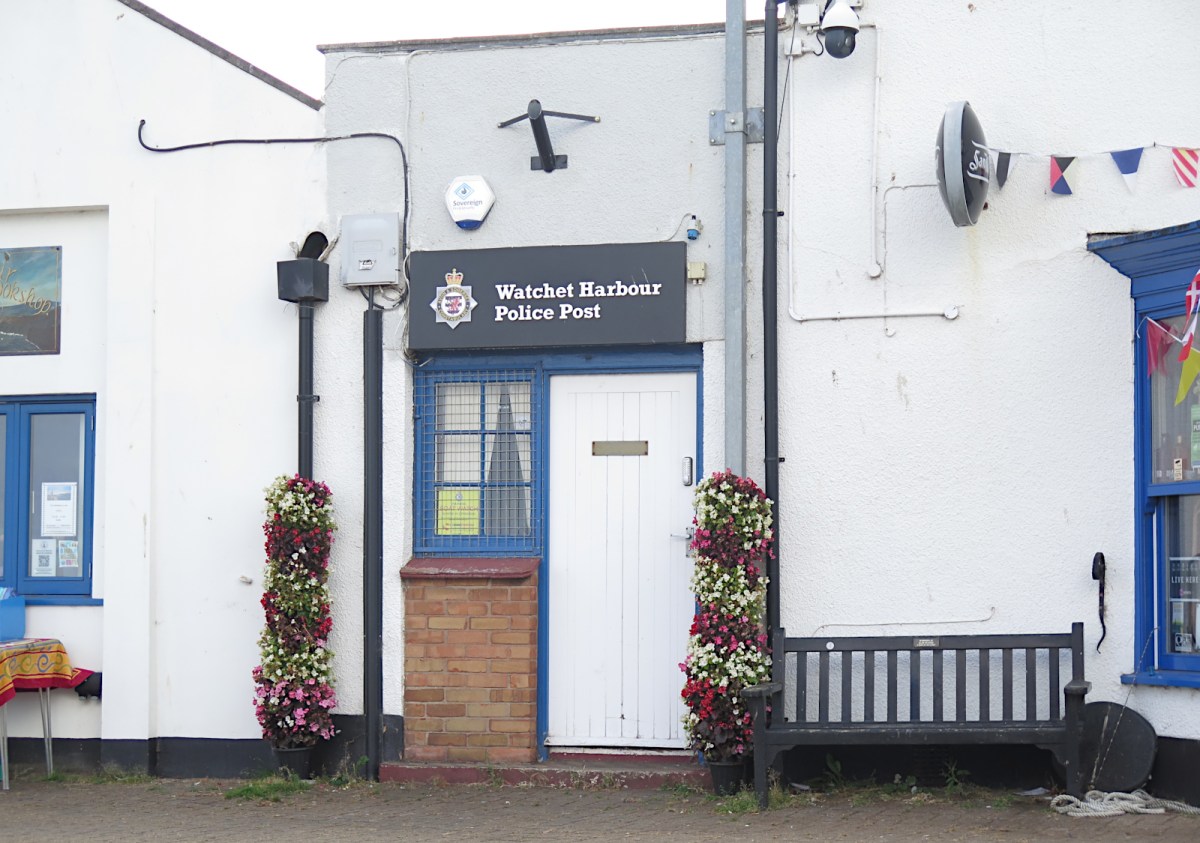
At Watchet Harbour on the north coast of Somerset stands possibly the smallest Police Station in the world. Certainly I’ve never seen one this tiny before. It’s just a door and a small window wide and has the grand title ‘Watchet Harbour Police Post’. If you know of a smaller police building anywhere in the world, please let me know in the comments section below.
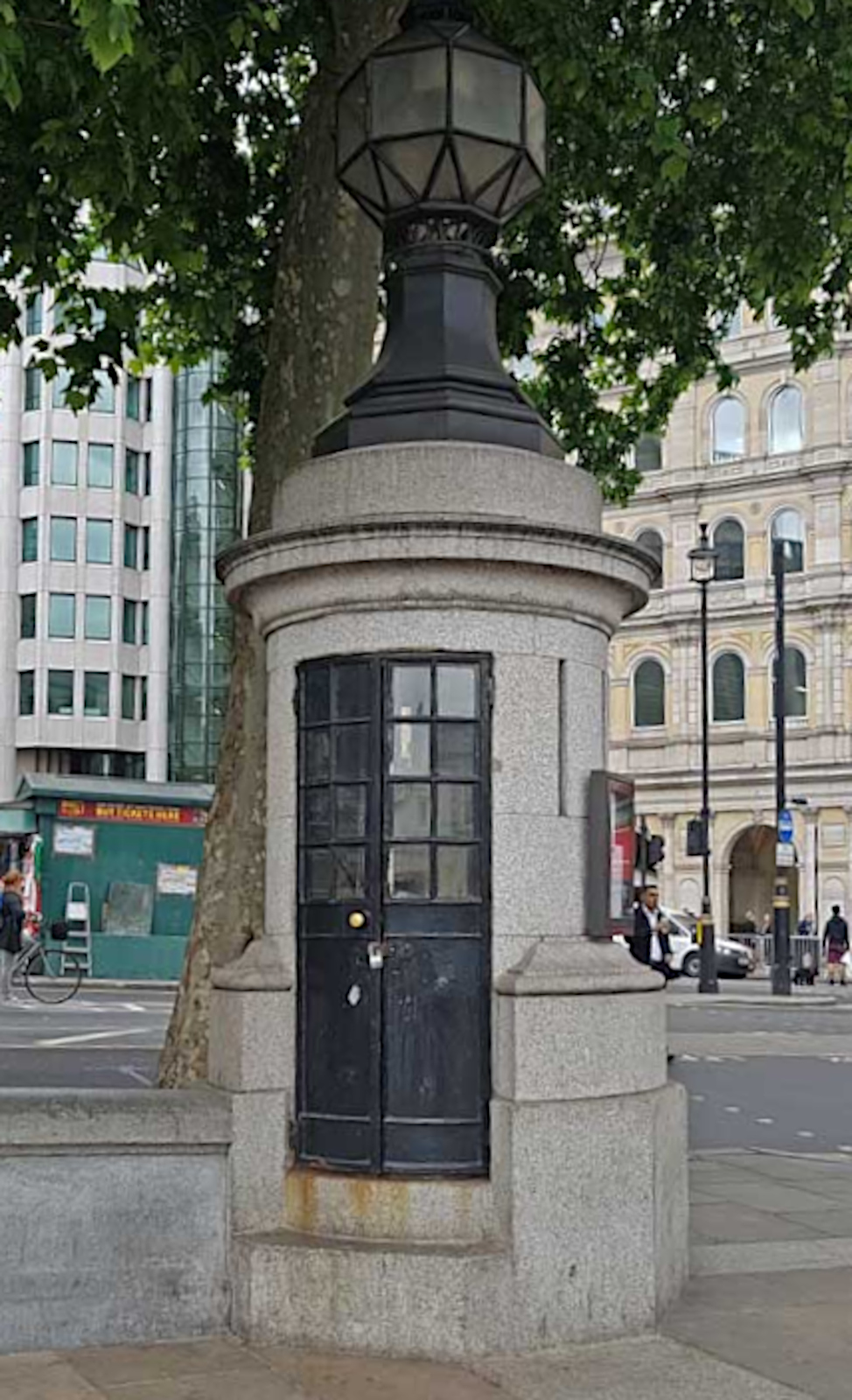
However, a quick Google search turned up an even smaller one in Trafalgar Square, London. So Watchet has already lost its brief claim to fame! Read more about the Trafalgar Square example. However, the London claimant is no longer used by the Police, so Watchet might still claim to have the smallest working police station in the UK.
International claimants
Florida also has a claim to the smallest working police station and it’s certainly much smaller than the police post in Watchet. Like the London version, Florida’s is sheltered by a tree.
I suppose it’s possible there’s a smaller one somewhere else in the world, but if so it must be so tiny that you’d need a smaller than average police officer to occupy it.
This is a bit different. You can’t measure a church in terms of how wide or long it is. Churches are measured in terms of how many people are meeting. Jesus once said, ‘Wherever two or three are gathered in my name, I’ll be there with them’. So the smallest church must be a meeting of two people (three if you include Jesus). That’s because church is not a building at all (although we often call a place where followers of Jesus meet ‘a church’. Is it still a church if the people have all gone home? No. Why? Because church is a community, not a building. Two people is the smallest possible community. We don’t always think of church as a community, but we should. If it’s not a community can it really be church at all?
If you enjoyed this or found it useful, please like, comment, and share below. (If you don’t see those links, click the article’s title above the main photo and they will appear.) Send a link to friends who might enjoy the article or benefit from it – Thanks! My material is free to reuse (see conditions), but a coffee is always welcome and encourages me to write more often!
We cannot know exactly what this area would have been like when it was full of active volcanoes, but we can get a rough idea from modern subduction regions on Earth today. Under the Mediterranean, for example, the African plate is being subducted underneath the plate carrying Europe.
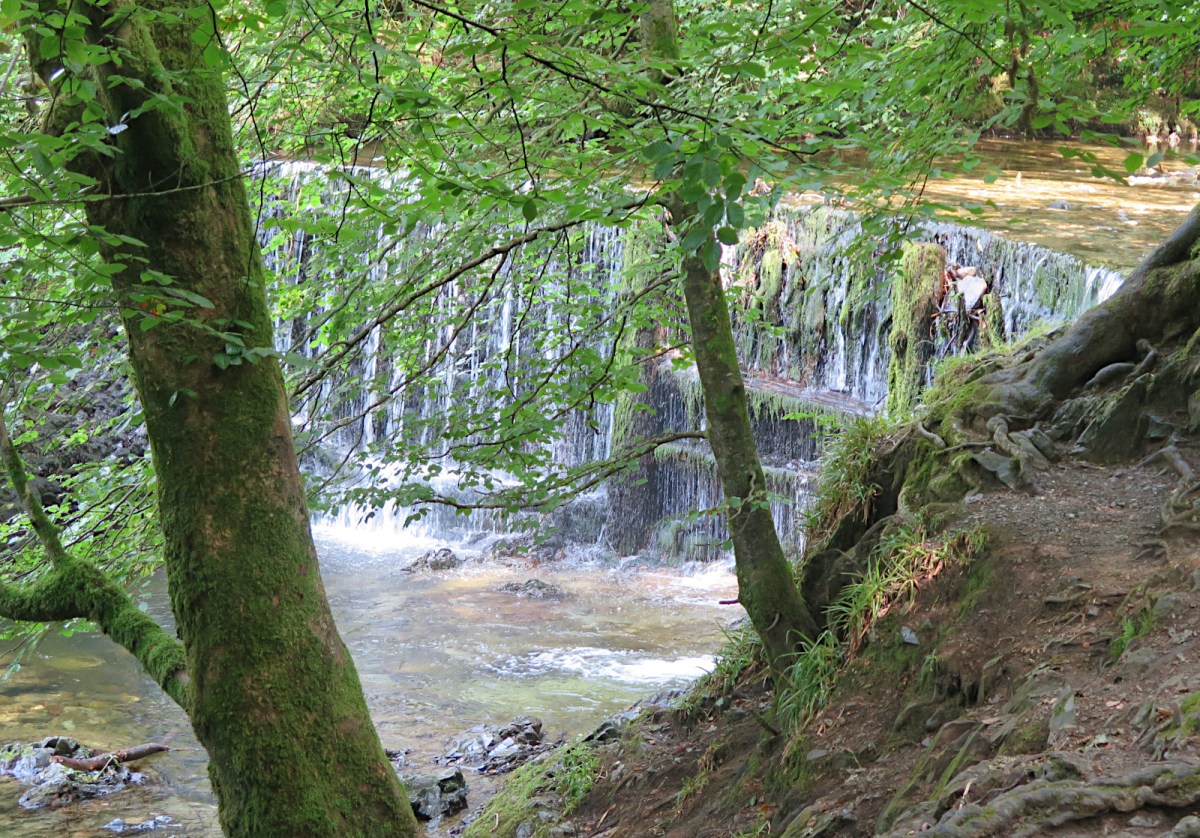
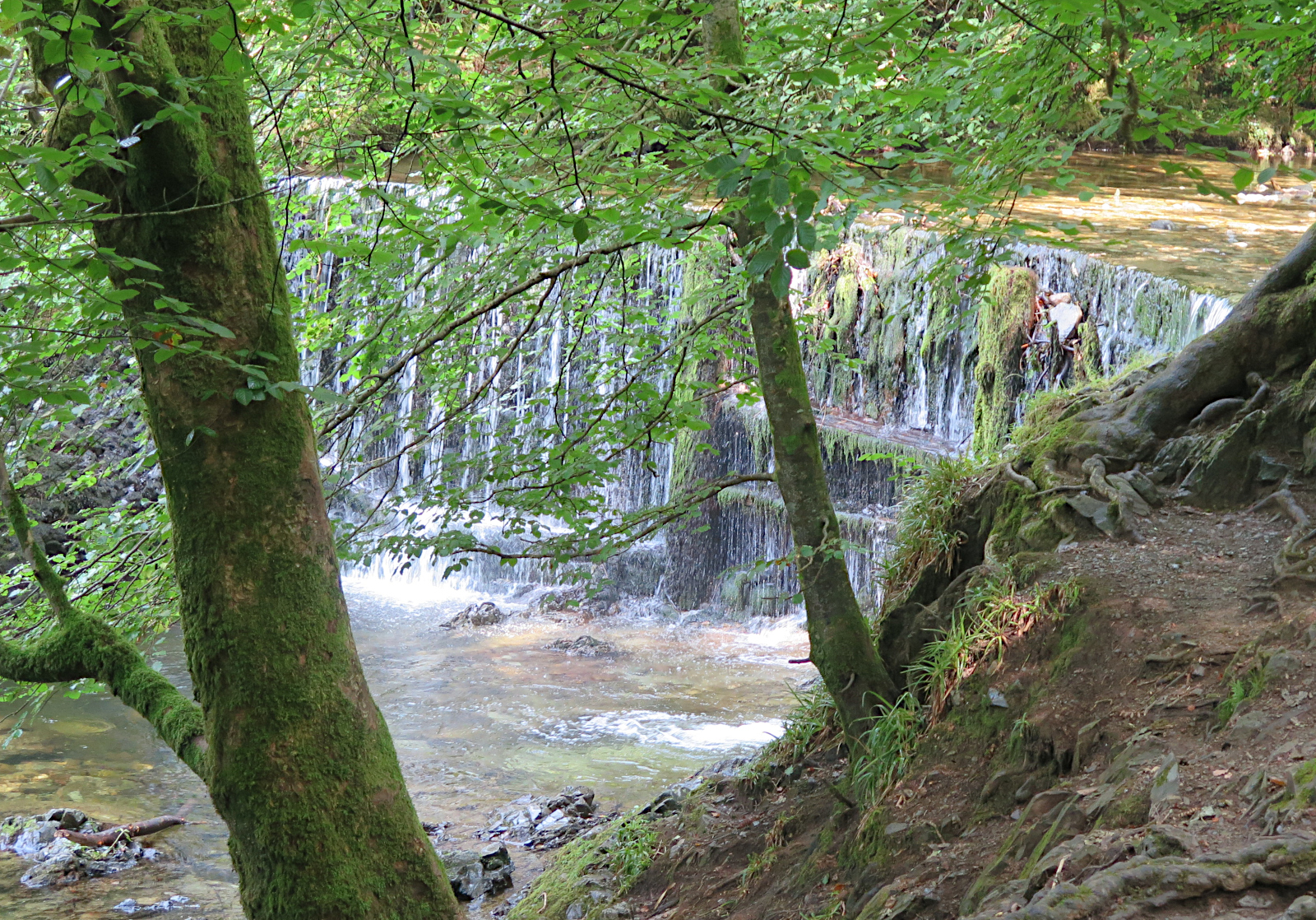
This is one of the waterfalls along Stock Ghyll just north-east of Ambleside, Cumbria in the English Lake District. It’s beautiful countryside, and the nearby Force Cafe and Terrace served us a wonderful ‘Full Force’ breakfast. In the local dialect, a waterfall is known as a ‘force’, and there’s a whole string of them along this stretch of Stock Ghyll. A ghyll or gill is a narrow, deep, wooded ravine with a stream running though it. The term can also be used for the stream itself. Donna and I made our way carefully along this muddy, stony footpath, and it was well worth the effort.
Stock Ghyll runs right down into the town of Ambleside where it once powered a series of watermills, and finally flows into the nearby lake of Windermere.
Bobbin mills
Bobbin mills were common in Ambleside in the 19th century. Coppiced timber was cut to length and shaped on a lathe, then wooden discs were attached to both ends and the completed bobbins sold to the textile spinning and weaving businesses in the industrial cities south of the Lake District where they were used to store thread after spinning and before weaving. They contributed to the rapid growth of spinning and weaving factories in northern England. Wooden bobbin manufacturing died out with the 20th century introduction of plastics.
Formation of the Lake District
Skiddaw in the distance
The granite structures of the fells and mountains of the Lake District erupted from volcanoes during the Ordovician period some 460 million years ago.
Much more recently, repeated glaciations ground out U-shaped valleys arranged more or less radially and when the glaciers melted during warmer periods, lakes remained in the valley bottoms. Rivers flowing into the lakes or sometimes from one lake to another, have silted up some of the lakes at one end, and these flat, silted zones are now rich areas of pasture and crop land as well as places where urban construction has become possible. The photo above shows the mountain of Skiddaw in the distance and farmland in the foreground. The town of Keswick, out of the frame to the right, is also built on this flatter land laid down as sediment in the northern part of Derwent Water.
What else can we learn
One thing is very clear, what happens in one time period may be changed drastically at another, later time.
We cannot know exactly what this area would have been like when it was full of active volcanoes, but we can get a rough idea from modern subduction regions on Earth today. Under the Mediterranean, for example, the African plate is being subducted underneath the plate carrying Europe. The Alps and the Pyrenees have risen as a result, and volocanoes like Etna and Vesuvius are still actively pumping out magma or ash. The Mediterranean region is also prone to earthquakes. Now imagine (if you can) a mile or more depth of ice resting on top of the Alps grinding down the rocks to form U-shaped valleys as they slide due to gravity across the rock surface far below.
In Roman times, the areas of river sediment like that in the photo above would have been smaller than they are today and the lakes would have been correspondingly longer.
It’s very much a dynamic process. It’s a bit like the life of a person, we start as a new born infant and learn to talk and walk, then run. We learn to eat, and we learn to reason. at school we learn a lot more about the world we live in, politics, science, other languages, geography, history; we fall in love, we marry and raise a family; we have a career and learn how to manage the work environment, run a business, serve customers, manage bank accounts and so forth. The world is our playground, we travel on business or just for fun, we become grandparents as we grow older and retire from work. There are many beginnings and endings along the rich tapestry that is a human life. And lives intertwine in so many ways – friends, family, work colleagues, neighbours. Just like the Lake District, at any point it’s impossible to know what the future might hold.
Life is the same. What happened in my life when I was young is very different from what is happening in my life today. Change and unpredictabilty are the only things that are consistent throughout. If the ice hadn’t melted when it did, the Lake District would be far different from the place we know and love.
How do we deal with this built-in uncertainty? One way that many have found is faith, following a guide that we trust in ways that stretch us and help to shape our characters. Faith can be like an anchor in a choppy sea or even a full-blown storm, holding us safely in the right place until calmer conditions return. I recommend having an anchor in this experience we call life. But if you choose an anchor, choose carefully, there are some pointers elsewhere on this website. Hunt around and see if there’s anything here that you find attractive or compelling.
I’m always fascinated by links and similarities between one thing and another, life is full of them and sometimes they help to broaden our vision and understanding in ways that are quite unexpected.
If you enjoyed this or found it useful, please like, comment, and share below. (If you don’t see those links, click the article’s title above the main photo and they will appear.) Send a link to friends who might enjoy the article or benefit from it – Thanks! My material is free to reuse (see conditions), but a coffee is always welcome and encourages me to write more often!
Living fossils can be found and recognised over long periods of geological time, and appear very similar throughout. And they may have little diversity, in other words the species in the group all tend to be similar to one another.
The first two are required for recognition as a living fossil; some authors also require the third, others merely note it as a frequent trait.
To put this more simply, Living fossils can be found and recognised over long periods of geological time, and appear very similar throughout. And they may have little diversity, in other words the species in the group all tend to be similar to one another.
Here are some examples, listed in order of their discovery. In some cases the fossil organism was already known before a living form was discovered, in other cases the living form was known first:
Mymarommatidae or ‘false fairy wasps’ (2007ish, North America)
Syntexis libocedrii or ‘cedar wood wasp’ (2011, California to British Columbia)
What else can we learn from this
Two things really. The first thing is that species can sometimes exist for very much longer than normal. And the second thing we learn is that species with astonishingly similar appearance may rise independently more than once. So-called fossil species may be no more than independently arising lines that happen to look very similar.We see the same thing between different living groups, so there’s a marsupial mouse that looks quite like its European namesake. This is known as parallel or convergent evolution.
If you enjoyed this or found it useful, please like, comment, and share below. (If you don’t see those links, click the article’s title above the main photo and they will appear.) Send a link to friends who might enjoy the article or benefit from it – Thanks! My material is free to reuse (see conditions), but a coffee is always welcome and encourages me to write more often!








 Journeys of Heart and Mind
