I never thought I would say this. But I approve of some of Boris Johnson’s actions. But let me be a bit more specific; I disapprove strongly of almost everything he did as Prime Minister, but there is one exception:
I like the way he stood up to Russia and clearly understood that enabling Ukraine to win and standing firm against Russia’s objectives and actions was necessary to Europe’s (and the UK’s) long term safety. Although that is all in the past now, we should still be analysing the European situation as it is today, and facing it by planning and acting wisely in our own and our neighbour’s best interests.
With that in mind, I urge you to watch the video below, in which Jonathan Fink interviews the researcher, political analyst, member of the RUSI think tank and author, Dr Benjamin Tallis. It’s a fascinating, and I think important, conversation. The thinking exposed by the interview is crucial to the survival of our way of life in a very dangerous world.
If you enjoyed this or found it useful, please like, comment, and share below. (If you don’t see those links, click the article’s title above the main photo and they will appear.) Send a link to friends who might enjoy the article or benefit from it – Thanks! My material is free to reuse (see conditions), but a coffee is always welcome and encourages me to write more often!
Although it’s clearly the home of relatively wealthy, upper-class people; the house also has a friendly and lived-in feel to it, not just a grand house, but a family home as well.
What’s in an image? Sometimes quite a lot, more than meets the eye.
I’m posting an image every two days (or as often as I can). A photo, an image from the internet, a diagram or a map. Whatever takes my fancy.
Click to enlarge
Springhill is an old house and garden, not far from Cookstown. The house was built in Jacobean times, and latter extended and modified in Georgian style. The central part of the house is the remodelled Jacobean part, with large Georgian wings on both sides.
Donna and I drove to Coagh where we met Debbie, Steve, Aidan and Sara, took a quick look at my grandparent’s house, and visited Tamlaght Church where Mum and Dad were married. From there we separated again and Donna and I drove to Springhill to visit both the house and the grounds. I remember Mum talking about springhill, but I hadn’t visited it before. The photo of the dining room gives some idea of what it’s like inside. Although it’s clearly the home of relatively wealthy, upper-class people; the house also has a friendly and lived-in feel to it, not just a grand house, but a family home as well.
The house was built by the Conyngham family who came from Scotland having been granted land by King James I. The village of Coagh was reconstructed by a Conyngham, and when the family fell on hard times and the direct line died out, Springhill was presented to the National Trust which extensively restored it and has managed it ever since.
If you enjoyed this or found it useful, please like, comment, and share below. (If you don’t see those links, click the article’s title above the main photo and they will appear.) Send a link to friends who might enjoy the article or benefit from it – Thanks! My material is free to reuse (see conditions), but a coffee is always welcome and encourages me to write more often!
What’s in an image? Sometimes quite a lot, more than meets the eye.
I’m posting an image every two days (or as often as I can). A photo, an image from the internet, a diagram or a map. Whatever takes my fancy.
Click to enlarge
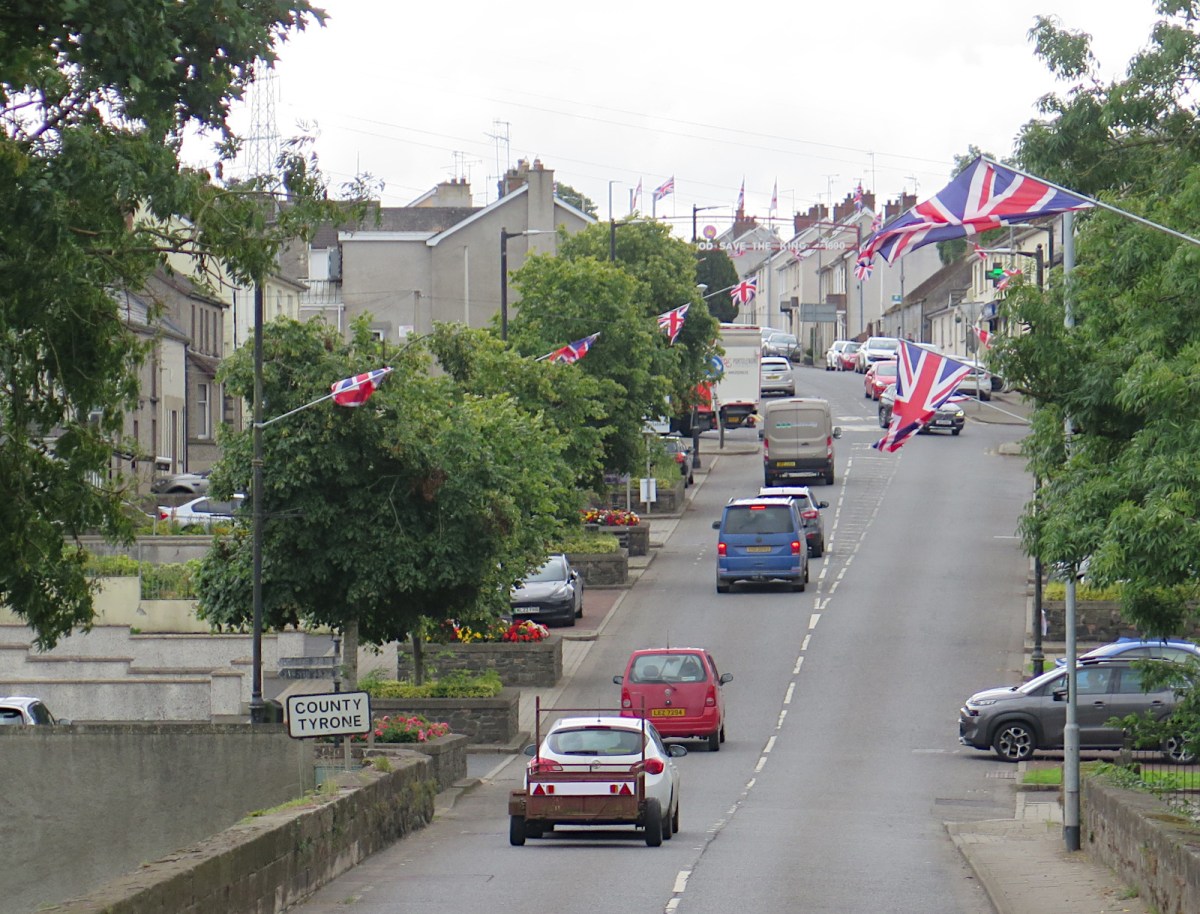
This is a view of Coagh, my Mum’s home village in County Tyrone in Ireland. The photo is taken from across the Balinderry River which forms the border with County Londonderry (or Derry). The centre of the village is Hanover Square just across the bridge, and then three streets head out from the far side of the square. The road up the hill in the photo is Main Street, where my grandparent’s house was on the left hand side. The other two roads are not visible, heading left and right from the square.
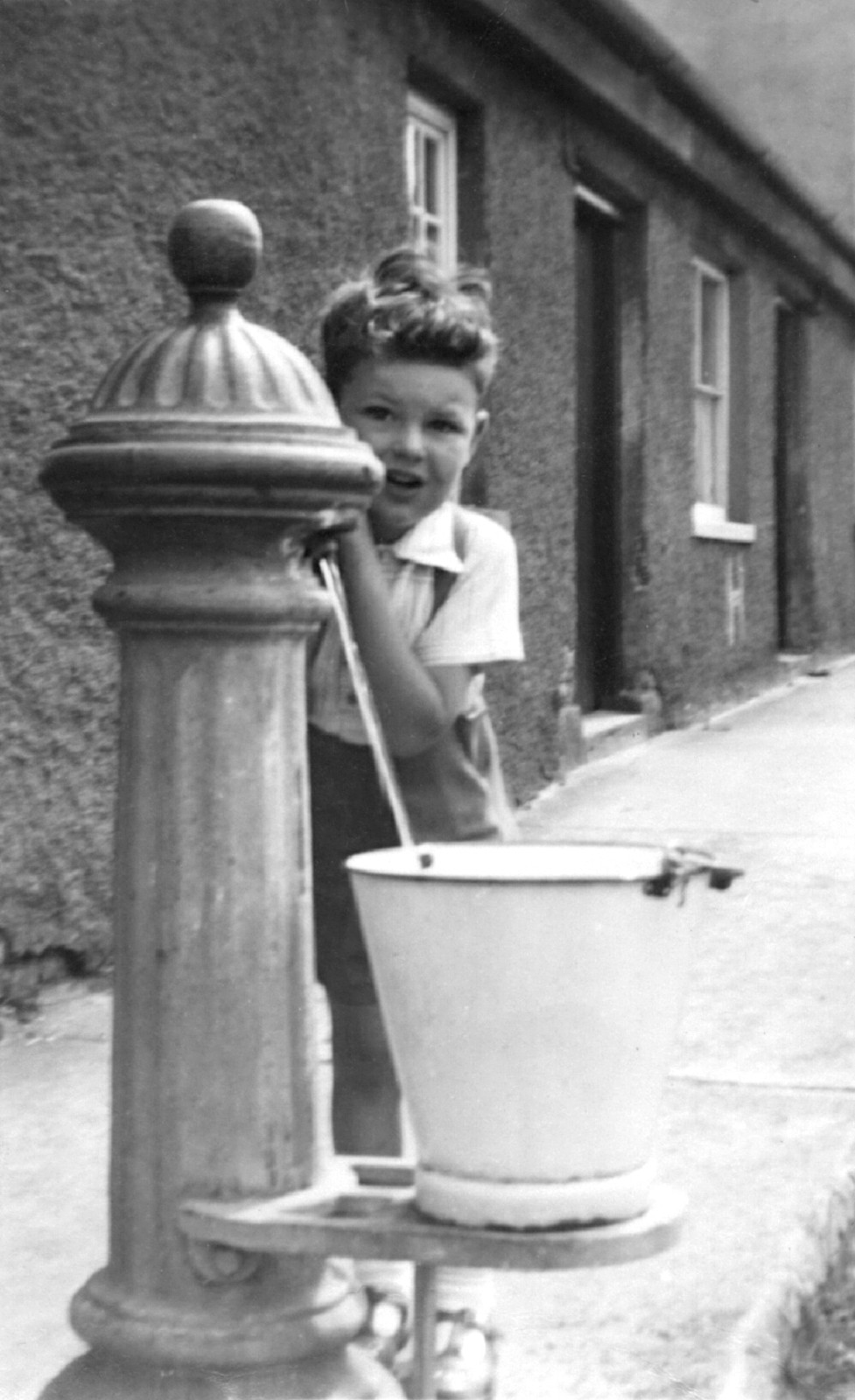
My earliest memories of Coagh involve the old village pump on the pavement near the house (a little further up the hill), the village shop where my parents first met during the Second World War, 200 chickens in the yard at the back of the house, the loo outside in the yard, the kitchen range burning peat supplied from a stash in the cupboard under the stairs, and a large collection of black, wooden flutes in the attic along with a cuckoo clock. I could list more things, but I think that’s enough for now!
Me using the pump in 1952
The pump had to be primed, so you couldn’t fill your pail unless you took out a mug of water to pour in to get it started. It was fun to pull the handle and see the water spurt out clean and cold.
The shop was an Aladdin’s cave full of sweets, soda drinks of various flavours (my favourite was cream soda), superhero comics, stacks of newspapers in the evening, biscuits, Tayto crisps, and much more.
The chickens were loud and somewhat smelly. The eggs were collected daily and had to be cleaned with sandpaper, washing them was not permitted by the regulations.
The loo was a wooden seat with a hole in a small shed, and pieces of newspaper on a string for wiping your bum afterwards. It seemed very strange, no chain to pull to flush the loo like the one at home in England!
I think the flutes belonged to the Orange Lodge but had been replaced, presumably with more modern metal ones. There seemed to be dozens of them!
Images from our Irish holiday 2024
For convenience, here’s a list of all the Irish holiday images:
If you enjoyed this or found it useful, please like, comment, and share below. (If you don’t see those links, click the article’s title above the main photo and they will appear.) Send a link to friends who might enjoy the article or benefit from it – Thanks! My material is free to reuse (see conditions), but a coffee is always welcome and encourages me to write more often!
What’s in an image? Sometimes quite a lot, more than meets the eye.
I’m posting an image every two days (or as often as I can). A photo, an image from the internet, a diagram or a map. Whatever takes my fancy.
Click to enlarge
We visited the village of Coagh in County Tyrone where my Mum grew up. We came here for holidays when I was a child and I remember a lot about those times, the people (now mostly gone) and the places (changed a good deal but still recognisable).
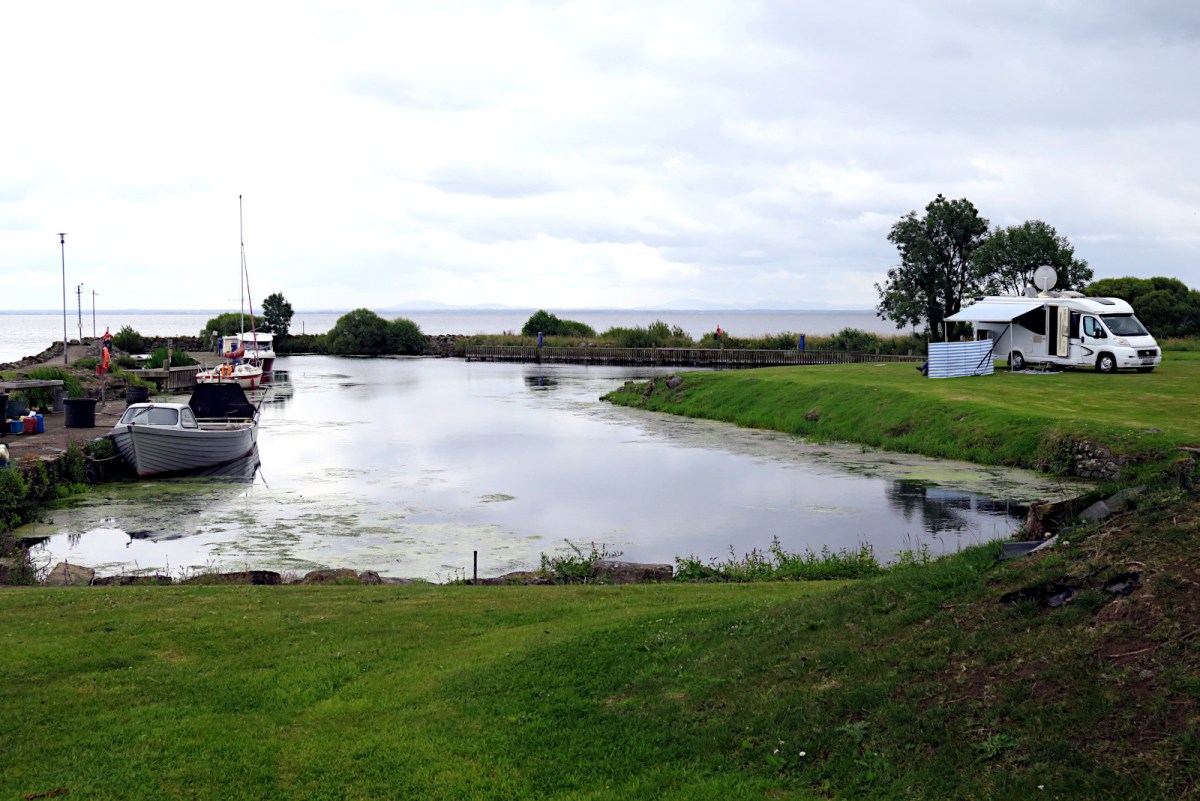
And among many of the places I remember, one has always been the Lough shore with its little harbour at the end of Battery Road just north of Ardboe. There are changes here too, of course, but the place still has very much it’s old character. The photo looks out across Lough Neagh at more or less its narrowest point, and you can see distant mountains along the horizon. Here’s a zoomable map if you want to see the location and layout.
I remember an old beech tree at Ardboe, where people had pushed pennies into the bark; I don’t know how the tradition began, but it must go back a very long time indeed. Apparently these are known as ‘pin trees’ and historically pins and nails were used, but when I was a child it was always the big, bronze penny coins. Read more about the Ardboe pin tree.
The pennies were very large, 31 mm in diameter. There were two kinds, the United Kingdom penny with the heads of various kings and queens, and the Eire pingin of the same size, weight and value with a harp on one side and a hen on the other. I loved those old coins!
Images from our Irish holiday 2024
For convenience, here’s a list of all the Irish holiday images:
If you enjoyed this or found it useful, please like, comment, and share below. (If you don’t see those links, click the article’s title above the main photo and they will appear.) Send a link to friends who might enjoy the article or benefit from it – Thanks! My material is free to reuse (see conditions), but a coffee is always welcome and encourages me to write more often!
What’s in an image? Sometimes quite a lot, more than meets the eye.
I’m posting an image every two days (or as often as I can). A photo, an image from the internet, a diagram or a map. Whatever takes my fancy.
Click to enlarge
The Montalto Estate in County Down had an extensive fruit and vegetable garden to supply the house year round with freshly harvested crops. Greenhouses were an important feature, providing out-of-season crops and exotic fruits like pineapples and citrus. These greenhouses needed heating in the winter months and this was supplied by wide-bore cast iron pipes below the plant benches.
The remains of some of these pipes are visible in the photo. They usually ran in pairs; there were no circulating pumps, instead the boiler would be below ground in a stokehole and the hot water would rise and flow by gravity acting on the changes in density. Hot water rose in the system and the returning pipes contained cooler, denser water that flowed down, re-entered the boiler and warmed up again.
I remember greenhouse heating systems just like this from my childhood, my father had a role in the family business at that time, a nursery with greenhouses full of cuttings and seedlings and houseplants that needed heating during the winter. There was a wonderful smell of greenery, the pipes were always warm, yet never too hot to touch, delicate maidenhair ferns grew wild around the pipework below the benches and these were allowed to remain because the fronds were always useful in making bouquets and buttonholes for sale in the shop in town, or for weddings and other occasions. Even on cold, frosty days you’d want to take off your coat, hat and gloves if you went into a greenhouse!
Modern glasshouses are very different, they have oil or gas fired systems controlled automatically on demand by thermostats, and the heat may be distributed by water pipes or by fan-blown air circulation.
Images from our Irish holiday 2024
For convenience, here’s a list of all the Irish holiday images:
If you enjoyed this or found it useful, please like, comment, and share below. (If you don’t see those links, click the article’s title above the main photo and they will appear.) Send a link to friends who might enjoy the article or benefit from it – Thanks! My material is free to reuse (see conditions), but a coffee is always welcome and encourages me to write more often!
What’s in an image? Sometimes quite a lot, more than meets the eye.
I’m posting an image every two days (or as often as I can). A photo, an image from the internet, a diagram or a map. Whatever takes my fancy.
Click to enlarge
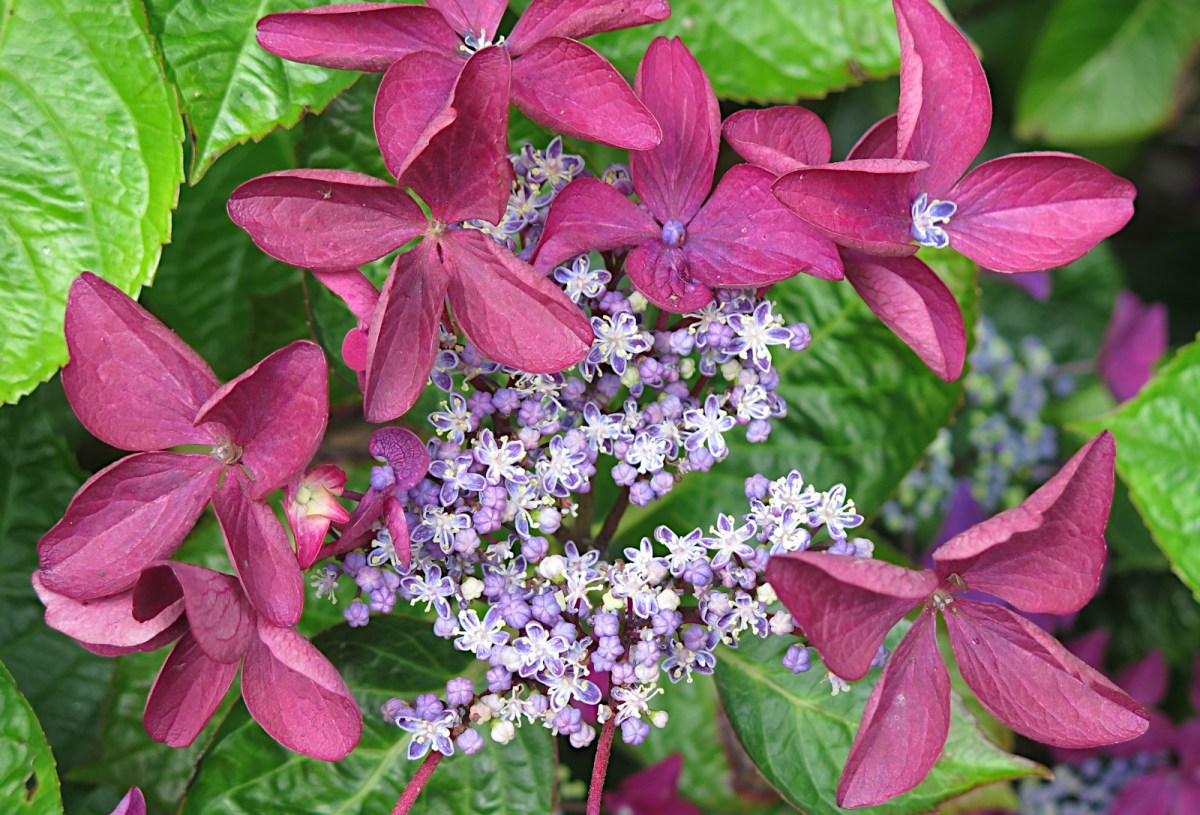
Irish gardens often have the most magnificent Hydrangeas, in striking colours, not just white, blue and pinks, but purples and very vivid blues as well as many kinds like the lacecaps where there are small inner flowers and large outer ones as in the photo.
It seems there’s something in the Irish soils or climate that cause Hydrangeas to thrive particularly well! We visited the Montalto Estate just south of Ballynahinch where I took this shot, but it’s typical of all the gardens we visited in our two weeks in Ireland.
Perhaps the same is true for people. Do we thrive best in particular places? Perhaps the cultural ‘soil and climate’ suit us best in the country we call home, or amongst people we know well. Some people are energised by good company and parties, others (like me) are energised by solo activities. I can walk for miles on my own and come home afterwards feeling calm, balanced, and ready for anything. Others I know are just the opposite, a long, solo ramble would be hard to endure.
Whatever the individual differences it’s good for all of us to spend time in the ways that are most comfortable to us. Thrive like an Irish Hydrangea, get rooted in surroundings and situations that bring out your very best. You deserve it! And the people around you deserve it too.
Images from our Irish holiday 2024
For convenience, here’s a list of all the Irish holiday images:
If you enjoyed this or found it useful, please like, comment, and share below. (If you don’t see those links, click the article’s title above the main photo and they will appear.) Send a link to friends who might enjoy the article or benefit from it – Thanks! My material is free to reuse (see conditions), but a coffee is always welcome and encourages me to write more often!
The photos were not taken from quite the same place, the landscape is more established and natural than it was 64 years ago, there has been a modification to the overspill structure.
What’s in an image? Sometimes quite a lot, more than meets the eye.
I’m posting an image every two days (or as often as I can). A photo, an image from the internet, a diagram or a map. Whatever takes my fancy.
Click to enlarge
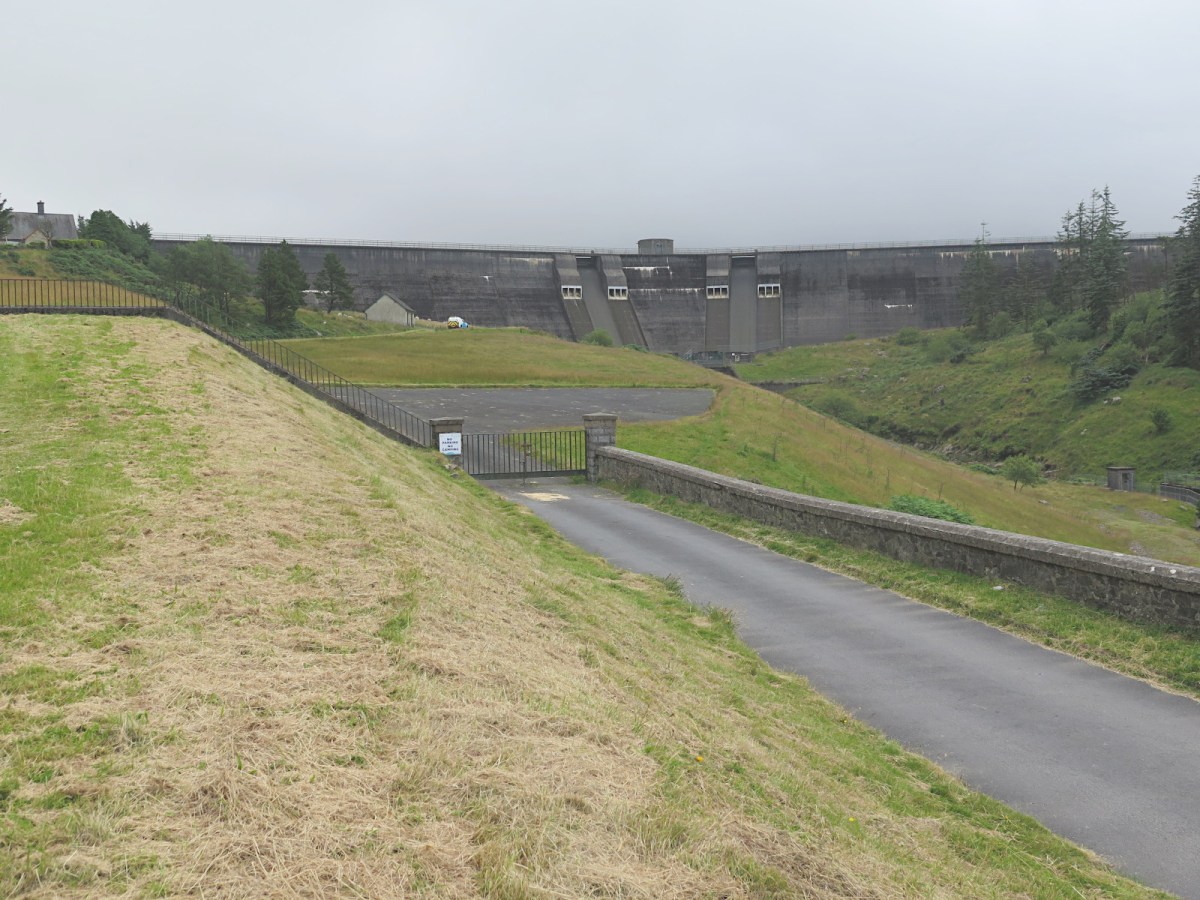
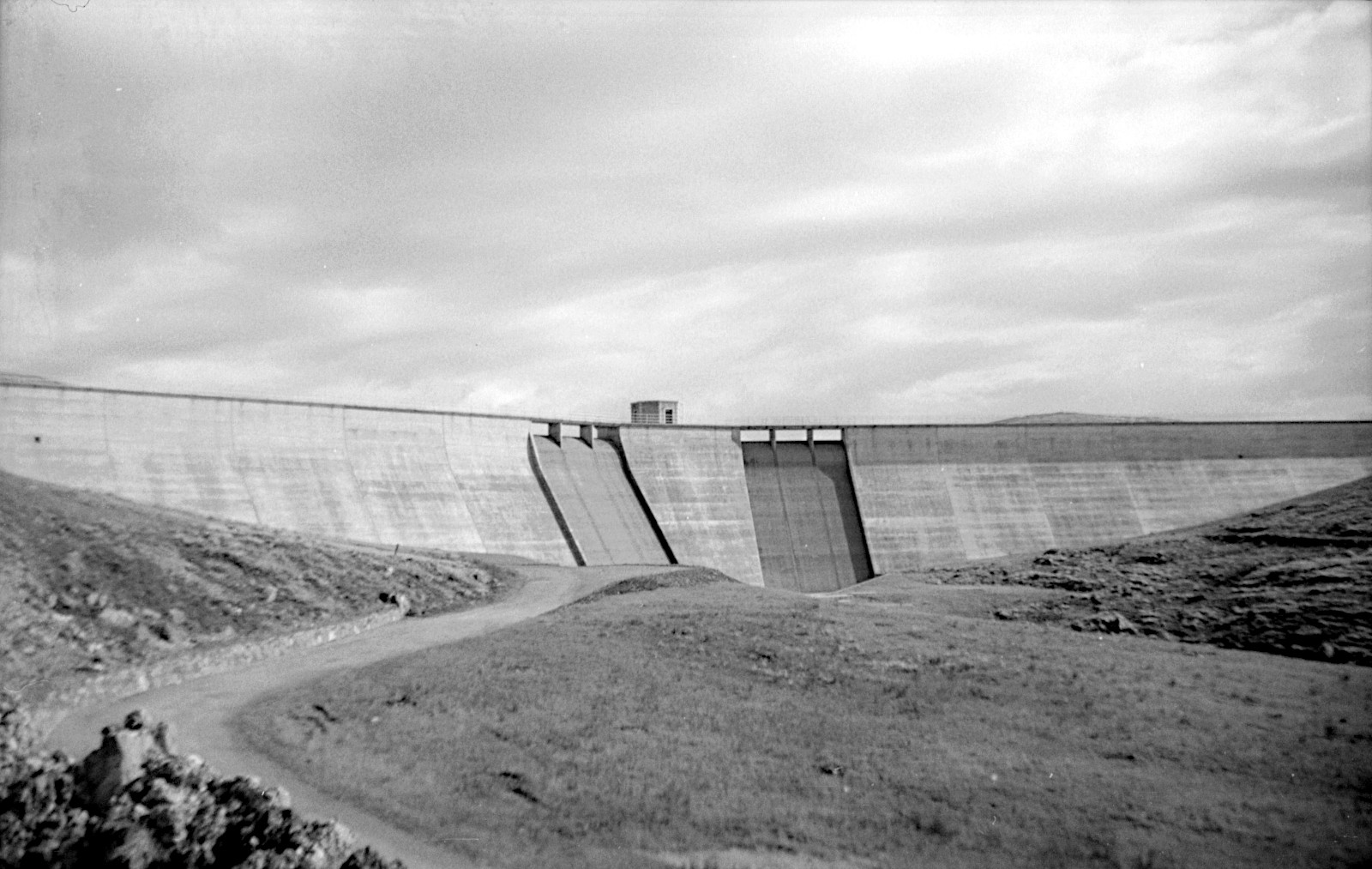
This is the Spelga Dam in the mountains of Mourne. The reason I’m including it here is that I took a photo of it when I was quite young and that earlier shot is below for comparison and additional interest.
I took the old photo when I’d just turned twelve, and the recent one when I’d just turned seventy-six, so they’re almost precisely sixty-four years apart. So what has changed in that time? Not much, really! I have changed far more in that time than the dam and its surroundings have done. The photos were not taken from quite the same place, the landscape is more established and natural than it was 64 years ago, there has been a modification to the overspill structure, and the concrete of the dam is more discoloured – but that’s about it. The dam might well be there in another 64 years, I will not!
Images from our Irish holiday 2024
For convenience, here’s a list of all the Irish holiday images:
If you enjoyed this or found it useful, please like, comment, and share below. (If you don’t see those links, click the article’s title above the main photo and they will appear.) Send a link to friends who might enjoy the article or benefit from it – Thanks! My material is free to reuse (see conditions), but a coffee is always welcome and encourages me to write more often!
Yara has a lovely way with words, especially when you consider that she had to learn English first. Or maybe she expresses herself in a Ukrainian way that English speakers don’t expect.
Here’s more from Yara in Kyiv and her weekly Sunday messages. She stays strong and determined, reporting on events, Ukrainian art and literature, sharing photos and sometimes a video.
I wanted to mention Yara from Ukraine again (aka StrategyWoman) because I’d like you, my readers, to better understand what she and others in Ukraine have to deal with every day. Normal for Ukrainians is not the same as normal in the West – far from it. Yara lives in Kyiv, hears the drones and missiles coming in every night, and the air raid sirens. Her life is not like yours (unless, perhaps, you also live in Ukraine or another country under attack).
Here in the UK, and in western nations more generally, most of us have experienced nothing like this since the Second World War, and you would need to be very old to recall those times.
Yara does not ask us to rescue her, that would be to misunderstand her completely. She wants to live in her own country, not escape to somewhere more peaceful (but nor would she blame those who have left Ukraine). What she does hope for is that we in the west won’t forget about Ukraine.
To guard against our forgetting, she posts weekly messages on Sundays. These provide news, but they are always illustrated by beautiful artworks and photos, and she usually explains something from her daily life and from those around her.
Yara has a lovely way with words, especially when you consider that she had to learn English first. Or maybe she expresses herself in a Ukrainian way that English speakers don’t expect. However that may be, her words are fresh in innovative and interesting turns of phrase. For example:
Every support adds a feather to my wings. Yeah, I use these feathers to write you letters.
And she included the picture of feathers in a nest along with the words above.
If you’re willing to read her Sunday letters you are unlikely to be disappointed. For starters, read her 27th October letter for yourself. Even better, sign up to receive her letters regularly, the links are on Yara’s page. Sign up for free, but if you like what you find, do consider supporting her as well.
What’s in an image? Sometimes quite a lot, more than meets the eye.
I’m posting an image every two days (or as often as I can). A photo, an image from the internet, a diagram or a map. Whatever takes my fancy.
(I plan to return to some more images from our Irish holiday for a while, before getting back to more Cirencester images in the near future.)
Click to enlarge
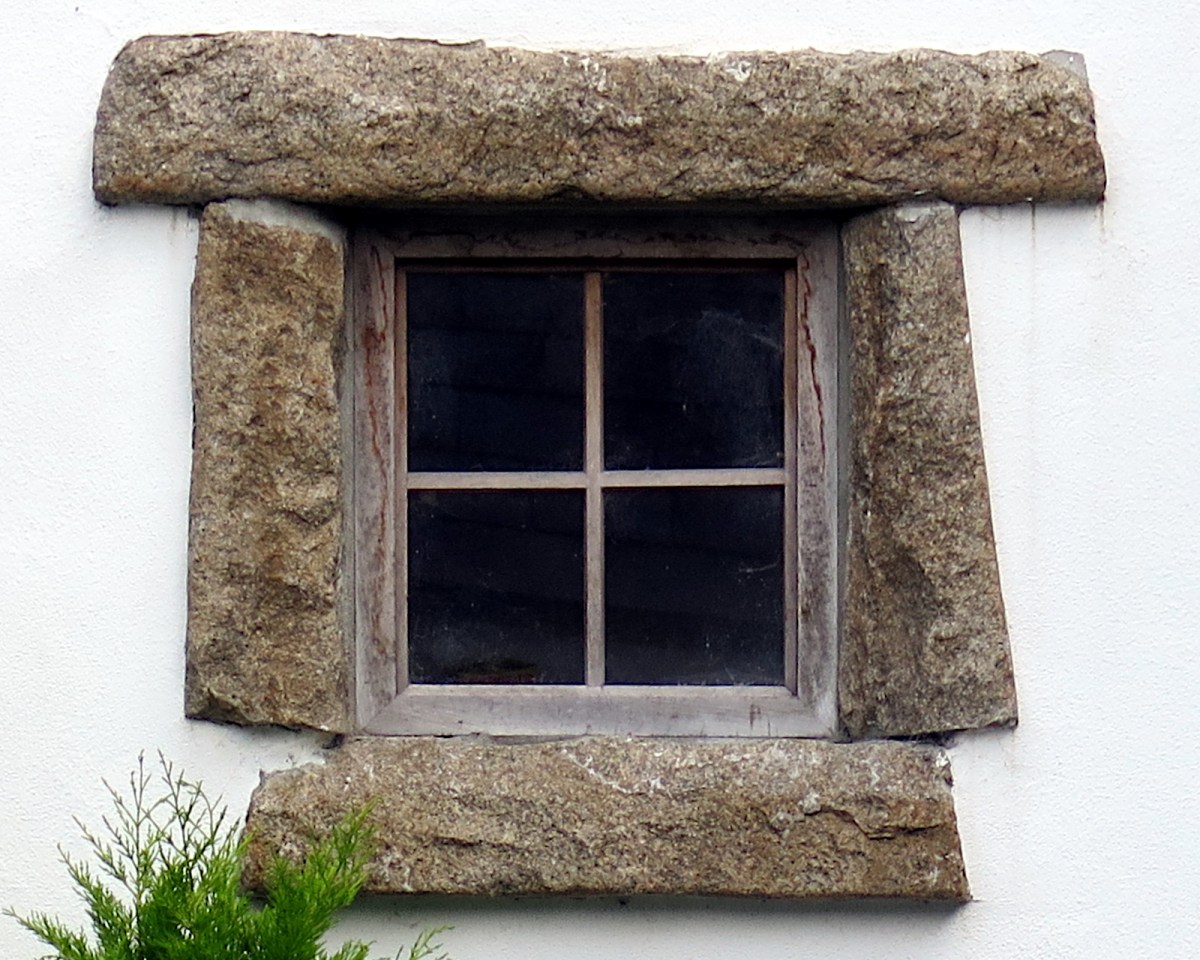
I felt I really had to share this delightful little farmhouse window with you. Donna had booked an AirBNB near Castlewellan and it was right next to the farmhouse across a little, cobbled yard.
I love the heavy, stone construction and the little wooden frame – so rustic, so pretty, and a young conifer is trying to get in on the act in the lower left corner. This looks like a window that would invite you in if you were a friend, but sternly resist if you were trying to break in or up to no good! I’ve never before thought of windows as having personalities – but this one certainly does!
Images from our Irish holiday 2024
For convenience, here’s a list of all the Irish holiday images:
If you enjoyed this or found it useful, please like, comment, and share below. (If you don’t see those links, click the article’s title above the main photo and they will appear.) Send a link to friends who might enjoy the article or benefit from it – Thanks! My material is free to reuse (see conditions), but a coffee is always welcome and encourages me to write more often!
Silicon Curtain will expand your knowledge and background of the war as well as current events as they unfold. He posts frequently so the interviews are bang up to date.
Jonathan Fink is deeply interested in Russia’s illegal and barbaric invasion of her neighbour, Ukraine. He interviews all sorts of interesting, knowledgeable, and influential people in depth on his channel Silicon Curtain.
The background
Jonathan speaks at length with western politicians, retired army generals, Ukrainian commentators, visionaries, exiled Russians, and more. His interviews are always fascinating and he draws his guests out, always kind and measured, but also always probing and perceptive. Silicon Curtain is well worth watching and will expand your knowledge and background of the war as well as current events as they unfold. He posts frequently so the interviews are bang up to date.
With Mark Galeotti
Here he is, for example, talking with Mark Galeotti, a British historian, academic, and writer as well as being a senior associate fellow at the Royal United Services Institute (Rusi).
With Chuck Pfarrer
And here interviewing Chuck Pfarrer, a retired US Navy Seal team leader and a respected military analyst and commentator, author and more.
Do take time to browse Silicon Curtain, you will find interviews on every aspect of the conflict here with experts who know their topics really well.
Useful? Interesting?
If you enjoyed this or found it useful, please like, comment, and share below. (If you don’t see those links, click the article’s title above the main photo and they will appear.) Send a link to friends who might enjoy the article or benefit from it – Thanks! My material is free to reuse (see conditions), but a coffee is always welcome and encourages me to write more often!









 Journeys of Heart and Mind
_01.jpg)