John knew Peter well, they’d been around the entire time of Jesus’ teaching of the twelve, and perhaps they’d known one another for years before Jesus came on the scene, both families lived by fishing on Galilee, they were both called by Jesus to follow.
18:1-14 – Jesus and his disciples left the upper room and walked out of the city, presumably by a southern gate. They crossed the Kidron Valley and entered the garden of Gethsemene (from ‘gath’ meaning a press, and ‘Shemanim’ meaning oils). It was a place where olive trees grew and where the harvested olives were pressed to release the oil. ‘Garden’ does not imply decorative plants and flowers as we would think of a garden today. It was just the term for an enclosed agricultural space, a ‘garth’ or ‘gard’ with a wall around it to ‘guard’ it. Jesus and his followers often met here, and Judas was well aware of that fact.
Judas arrived outside the enclosure, followed by a group of soldiers (presumably Romans) as well as a group of Pharisees and some staff of the High Priest. Jesus left the walled enclosure and asked them who they were looking for, and they answered ‘Jesus of Nazareth’.
Jesus told them, ‘I am he’. And they stepped back and fell to the ground. ‘I am’ in Hebrew and in Aramaic sounds rather like ‘Yahweh’, the Holy Name that nobody was allowed to utter. This would have profoundly shocked the Pharisees and the High Priest’s staff. He asked them again, ‘Who are you looking for?’ Again they answered, ‘Jesus of Nazareth’. And he told them again, ‘I am he, so let these others leave’. Peter had a sword and struck out at Malthus, the High Priest’s servant, cutting off his ear lobe. Jesus told Peter to put the sword away. The Roman soldiers under their commander, and the Jewish officials accompanying them, arrested Jesus and tied his arms, probably behind his back, then took him to Annas, once High Priest, father-in-law of Caiaphas, the current High Priest. Annas asked questions about Jesus’ followers and about doctrinal matters and then sent him on to Caiaphas.
Peter’s denials
18:15-26 – Peter and one other disciple followed Jesus and the group who’d arrested him (bravely under the circumstances). There’s been some debate about the ‘other’ disciple. It might have been John, or Nicodemus, or Joseph of Arimathea, or possibly even the traitor, Judas. (Read some aspects of the debate for yourself.)
This other disciple made it possible for Peter to enter the home of Annas where there were some questions being asked of Jesus. So which of those characters mentioned above would most want Peter to hear that questioning and Jesus’ answers? Think about that for a moment. John knew Peter well, they’d been around the entire time of Jesus’ teaching of the twelve, and perhaps they’d known one another for years before Jesus came on the scene, both families lived by fishing on Galilee, they were both called by Jesus to follow. Peter was a man of action, he’d proved it once again by using his sword that very evening!
Annas questioned Jesus about his disciples and about his teaching (verse 19). Jesus often taught to crowds (you can’t get more public than that) and replied that he always taught in public in synagogues, or even the Temple courts. He didn’t teach in secret. Annas could learn about Jesus’ teaching from any of his many listeners. That remark drew an abusive slap in the face from one of the Jewish officials. Peter and the other disciple heard and saw all this. At this point Annas sent Jesus, still tied up, to Caiaphas.
And Peter denied being one of Jesus’ disciples for the second and third times. How did all this affect Peter? I’d suggest seeing and hearing the interrogation and the angry slap and recognising his own failure in denying he was a disciple all helped to stir Peter up and ready him for action. Frustration, helplessness, anger and guilt are a heady mix for anyone with a habit of activity. And I submit that John, knowing Peter as he did, would have expected that. I think John also understood that a time for action was coming very soon.
With Caiaphas
Although John doesn’t record the interaction between Jesus and Caiaphas, we can fill the gap a little from other sources, read Matthew 26 for example.
After the resurrection of Lazarus, Caiaphas had told the Sanhedrin that it would be better for one man to die for the people, than that the whole nation should perish. He was worried that the Romans would lose patience and intervene militarily.
And during Jesus trial before the Sanhedrin, Caiaphas directly questioned Jesus, demanding a clear answer on his identity: ‘I demand you tell us whether you are the Christ, the Son of God’. Jesus did not give a direct answer, but what he said was regarded as blasphemy and the Sanhedrin condemned him.
The Roman governor, Marcus Pontius Pilatus
Caiaphas and the Sanhedrin wanted the death penalty for Jesus, but only the Roman governor could provide such a sentence, so Caiaphas sent him on for a third hearing.
Pilate was not interested in religion, only in politics, so his first question was about Jesus’ kingship. Jesus explained that he hadn’t come to rule, but to testify to the truth. Pilate’s concern was not truth, either, but still only politics, so he went back outside to the waiting Jewish delegation and told them he didn’t find Jesus guilty of anything. But the custom is that at Passover time I release someone from captivity for you. I can release Jesus for you if you wish. ‘No’, they shouted back, ‘Not Jesus, release the agitator and rebel, Bar Abbas. This Aramaic name means, quite literally, ‘Son of the father’. This is striking indeed as Jesus is the true ‘Son of the Father’. Jesus was known in Galilee as ‘Yeshua bar Yoseph’, Jesus son of Joseph, but he was truly ‘Yeshua bar Abba’, Jesus son of the Father. The Jewish leaders were choosing the wrong man, but also the Wrong Father!
If you enjoyed this or found it useful, please like, comment, and share below. My material is free to reuse (see conditions), but a coffee is always welcome!
If Jesus is in John and is glorified, John shares in that glory too! Even if John doesn’t fully grasp what exactly the glory is, he certainly grasps that through Jesus that glory is already in him.
17:24-26 – If these verses do not astound you, you need to pay closer attention to what Jesus is saying. Let’s break the material down to consider it carefully. The first thing to note is that Jesus is not conversing with his followers here, he’s speaking with his Father. He’s not asking for strength during his coming ordeal on the cross, instead he’s just telling his heavenly Dad what he wants. And the first thing that comes to mind is that he wants his followers to be with him where he is and to see his glory. Well, they are with him, he’s in the upper room in Jerusalem and so are they.
Seeing the glory
But do they see his glory? No, I don’t think they do – not yet, not fully. Peter, James and John had been with Jesus on the mountain and had seen and heard what happened there. But they didn’t understand what was really going on. Peter, always the practical doer, was going to build three shelters. James might have had more intuition about it, but I imagine John would have got closer than the other two. John was the disciple ‘Jesus loved’, he viewed things from a more spiritual dimension, it was his nature to dwell on spiritual truth and look for hidden depths of meaning.
I think John is already aware that Jesus thinks of himself as Yahweh’s Son, he’s referred to himself as the Son, and he often talks about ‘My Father’. And I suspect John understood that was an eternal relationship. Jesus spells it out again here in the Garden as he prays to his Father. The Father loved him before the world was created and loves him still. And I imagine for John it was not too great a leap to see that this love is eternal and will remain even after the end of time itself. And in verse 26 Jesus says to his Father that he has made his followers aware that the Father has sent him (Jesus), that he’ll continue to show them that so the Father’s love will be in them and so that Jesus himself will be in them too.
Does this take us back to Jesus in glory on the mountain? Yes, I think it does! And John must have understood that if Jesus is in him, that he too must have been gloriously transformed on the mountain, so that he, John, can also talk freely with Moses concerning law and with Elijah concerning prophecy. If Jesus is in John and is glorified, John shares in that glory too! Even if John doesn’t fully grasp what exactly the glory is, he certainly grasps that through Jesus that glory is already in him and raises him to the giddy heights of the law and the prophetic.
And this is where we all stand if Christ is in us. We just need to see, as John did, that the glory arrives when Jesus does, that we share in him and in his glory permanently. So when my body dies (as it must) I continue to live gloriously because Jesus is in me. I’m sure Peter and James came to understand this too, certainly at Pentecost if not before. That was the moment when Jesus’ glory was fully revealed to the entire church, not just in theory but in full experience.
This was a moment they had been told to wait for, but when it came it was far beyond what they had imagined or expected.
If you enjoyed this or found it useful, please like, comment, and share below. My material is free to reuse (see conditions), but a coffee is always welcome!
Paul’s letter to the Ephesians has sometimes been described as the constitution of the church, but that’s not strictly correct. Paul didn’t write Ephesians to define what church is and is not, so it contains much more than the bare bones of a definition. Constitutions are (relatively) brief but very clearly lay out the essence and limits of something, be it an organisation like a business, a charity, or indeed a nation. They also spell out definitions of terms as well as the concept being defined, as clearly as possible. So if we want a constitution for the church, we must think in terms of something succinct, crystal clear, and complete but not providing unnecessary additional detail.
Why have a constitution?
The church has never truly had a constitution, some might argue it doesn’t need one. But recently I’ve begun to feel it does. Almost every denomination imposes customs and requirements on their adherents, over and above anything that Jesus taught. There are paid leaders and managers, forms of infant baptism, doctrine, so much encrusted over the basics. So much that can be seen as unnecessary when we compare it to the earliest forms of church or to what we learn from the New Testament. Some form of declarative constitution might bring much needed clarity to the confusion.
Over the centuries there have been repeated reforms and corrections, but generally these have resulted in yet more varieties of belief and practice. A constitution might help, we should at least make an attempt to form one.
So first of all, why would we even want a church constitution? There are probably as many definitions as there are denominations, and that’s quite a large number; a constitution provides clarity and a reference point. The Bible, and even just the New Testament is far too detailed to be a definition; yet it contains everything we need to know and does not support the additions and concretions of the last two millenia.
The essentials, but no more
What else can we say about constitutions in general? The key point, I think, is that a constitution should contain everything essential but nothing beyond that. A definition brings clarity and focus. Constitutions are usually amendable both for corrections and for additions or deletions. There is normally an agreed process for amending a constitution.
So where would we begin for the church? As always, we must begin with our source – Jesus himself.
A good start would be to state that church is defined by everything that Jesus is and does and teaches and by nothing beyond that. Having leaders of a particular flavour or style and how we name those leaders are not fundamental. Whether you have a priest, a vicar, a pastor, elders or deacons, those are all secondary features of church life and practice. They cannot form part of the definition.
Let’s begin by saying church is a group of people striving to follow Jesus. I don’t think we can start in any better way.
We’ll make that our primary clause.
Making a start
1 – Church is a group of people striving to follow Jesus as fully as possible.
Let’s check this statement. It’s a group so we’re defining the minimum size to be two. One person alone following Jesus therefore falls outside our definition. And another point in that first statement is that complete success in following Jesus is not an essential of church either, so two or more people doing their best to follow Jesus becomes our initial attempt at defining what church is. We can adjust our primary clause to make this explicit.
1 – Church is a group of two or more people striving to follow Jesus.
Perhaps we need to clarify the relationship between the people that make up church. They are a community, interacting with one another, and cooperating in following Jesus. Let’s add that in as well. And we need to include the idea of making progress, so…
1 – Church is a community of two or more people striving together to follow Jesus ever more closely.
Let’s add some support from the New Testament. Matthew 4:18-21 shows that people are chosen, called, and follow. Also, I now begin to see that there needs to be some statement before this one, declaring that Jesus is our source and foundation. So let’s renumber our clause as 2 to leave room for a new number 1 to be written later. So now we have…
2 – Church is a community of two or more people striving together to follow Jesus ever more closely. (Matthew 4:18-21)
I’ve linked to Bible Gateway for convenience. The link is not part of the constitution, but the Bible verses themselves are.
For now I’d like to adopt that as the first stab at a constitution for the church. We’ll need to expand it by adding further clauses later. Some of these additions will extend the definition while others will limit it. I plan to revisit this topic repeatedly. But for now I’d love to hear suggestions for improvement as well as objections to this initial statement. How should we extend it? What else do you think we should include? What should we leave out? What might future clauses cover?
If you enjoyed this or found it useful, please like, comment, and share below. My material is free to reuse (see conditions), but a coffee is always welcome!
From my longer perspective today at seventy-seven years old I can see that what seemed a minor difference between me and the Open Door elders is in truth a yawning gulf. It’s not just that I took a misstep, but that the entire edifice of following Jesus (Church almost everywhere and throughout history) took an enormous misstep.
Donna and I were married in 1998 and Tony was my best man; Donna’s best friend, Jane, was her chief bridesmaid. Donna had taken a new job with Unilever Research at their research site a little north of Bedford. She bought a cottage in the village of Tilbrook and when we were married I moved into the cottage with her and Unilever offered me a job on their intranet web team, initially to create a website that could be duplicated for each of their research sites – two in the UK, one in the USA and one in the Netherlands.
Donna was keen to find a church in the nearby town of St Neots, or if necessary in Bedford.
We soon found the cottage was far too small, and moved to a four-bedroom property in Eaton Ford, part of St Neots. The internet had barely hit its stride in the late ’90s, so it wasn’t nearly as easy to find a church (or anything else) as it would be today.
One weekend before we were married, I was visiting Donna , and on the Sunday I said, ‘Come on , let’s drive into St Neots and see what we can find’. She said, ‘No, you’ll never find anything that way’. But we jumped into the car and I prayed very briefly to be shown where to go – and off we went. We drove through the middle of the town and out towards Eynesbury but saw nothing of interest, then I turned right and down a couple of streets and coming to a secondary school we spotted an A-board welcoming people to ‘Open Door Church’. We followed the sign, parked the car, and made our way into ‘Ernulf School’ and there we were – Open Door Church! It turned out to be a lively, welcoming place, just what Donna was looking for. Over the next week or so she got to know some of the people and was invited to join a cell group run by Rob and Jean and a couple from France who were planning to return home in a few weeks time. And that was that! By the time I was working at Unilever and had moved into the cottage full time, Donna was well-established at Open Door, the French couple had moved back to France, and Rob and Jean were running the cell group on their own. They quickly became good friends, we even had a holiday in Scotland with them one year.
A wrong step
How easily we do this! Wanting to support Donna, I was happy to go along to the Sunday meetings at Open Door and, far more to my taste, join in with the weekly cell meetings every Wednesday or Thursday. But there was a fly in the church ointment. It was expected that people taking part regularly would ‘join’ the church and sign the membership book. This also involved promising to give your allegiance to Open Door. That was something I found hard – a step too far, a very big ask. My allegiance was to Jesus and him alone. But I did want to support Donna in her new membership of Open Door and it seemed to be something couples were expected to do together. So I put my doubts to one side and signed up – that was a major wrong step!
Trying to right the wrong
What’s the best thing to do if you take a wrong turning? Usually the best thing is to retrace your steps to the point of the mistake and take a different path. As the weeks went by it became clearer and clearer to me that I was in a bad place. I had agreed to be guided by the leaders of Open Door Church but knew that my only guidance should come through Jesus and his Spirit working in me and in my brothers and sisters.
So I wrote to the elders, explaining my mistake and asking to be released from membership and the promise of allegiance I had made. Nothing like this had happened before and they really had no idea what to do. They invited me to visit the lead elder’s (Tony’s) house, and when I went along he had also invited another elder, Brian. They asked me to explain what I meant. I told them, as gently as I could, that in my view all followers of Jesus should follow him alone. I added that this did not mean I wanted to leave Open Door. The reaction surprised me, almost as if I had decided to follow Islam, Hinduism or Buddhism. They were cold, even a bit frosty, and it was very clear that they felt I was rejecting their authority in some rather dangerous way. It was as if they felt that following Jesus implied following the elders. I was left feeling, ‘Hang on, this is my life in which I can follow anyone I wish, and I’ve chosen Jesus. Do you think he will lead me to cause problems for you?’
They wanted to talk again the following week, and this time told me that they’d heard my point of view and now wanted me to hear the conditions under which I might continue to come to Open Door meetings. The main point was that they wanted to be assured that if I said or did anything in a meeting that they objected to, and they asked me to stop, that I would do so. And so, on those terms, I was allowed to continue to meet with them on Sunday mornings and for weekday cell group meetings.
Meeting again with other friends
Although I continued to meet at Open Door for some time, I felt unable to contribute freely on Sunday mornings. Sometimes I would share something prophetic, or a vision, but I didn’t want to upset Tony or the elders so I was always quite careful. And now and again I’d sing in the Spirit and others would join in, or I’d speak in a tongue and someone would interpret and that always felt safe enough because the interpretation was not through me! Or I’d dance, usually near the back of the room.
Rob and Jean, however, were personal friends and also seemed to have no issues over anything I said or did either on Sundays or at cell group sessions, but rather welcomed the input. Over the years the group leaders were changed repeatedly but I was still allowed the same freedom almost all of the time we lived in St Neots.
Meeting at home
All of this left me feeling that life in St Neots was poorer in some ways than life in Yatton. I missed my friends, but above all I missed the spiritual depth and intensity of meeting completely freely, guided by the Holy Spirit alone and allowing him to speak to each one through the way he was using all the others. I missed the kind of community I’d experienced in Yatton. I knew it didn’t depend on particular people being involved, but instead, what it required was that all those present intended to rely only on Jesus. ‘I can do all things in Christ who strengthens me’ (Philippians 4:13) and ‘Without Christ I can do nothing’ (John 15:5).
Where was I to find these people? I can’t be sure of the details at this point – who was involved first or how we got started. But my sister Rachael was involved very early on, as were various St Neots friends, my friends Jody and Peter from Unilever, and eventually many more from a wide area in Cambridgeshire, Northhamptonshire and Bedfordshire.
For eleven years I kept a list of meetings and now I can refer to that list to pick out the first time we met at each new location, and that will give a feeling for how the meetings spread and grew. There were rarely more than 10 people at a meeting, but I knew how these small gatherings worked (from long experience in Yatton). There were no rules, but we encouraged everyone to feel free to contribute in any way providing they felt it was from the Spirit and aligned with the way Jesus would contribute. So there was usually a sense of openness and freedom. Almost always there would be tongues with interpretation, Bible readings or at least a few quotes, prayer for guidance and for any needs expressed by those present, prophecy, and plenty of peaceful silence for thought and processing of what others had contributed. The meetings were never boring, and more often than not we could identify a theme that had come together little by little as we met. Most times we’d begin with coffee and a chat.
Dec 2002 – Eaton Ford
May 2006 – Rugby
Nov 2006 – Eaton Socon
Mar 2007 – Great Doddington
Feb 2008 – Little Paxton
May 2010 – Brampton
Jun 2010 – Hinchingbrooke
Jul 2010 – Letchworth
Jul 2010 – Eynesbury
Aug 2010 – Cornerstone, St Neots
Sep 2010 – Watton-at-Stone
Oct 2010 – Corby
Feb 2011 – Offord d’Arcy
Apr 2011 – Moggerhanger
Apr 2011 – Costa, St Neots
Nov 2011 – Earls Barton
May 2012 – Oundle
As you can see, things got under way slowly but spread in an accelerating manner. And in addition to these meetings all around the area, some of us were involved in other things, we had larger celebration meetings when we’d invite other friends along and there’d be music, singing, dancing and the praise and worship would be free and enthusisastic. For me these little meetings were encouraging and exciting – just as in Yatton there was a feeling that Father was pouring his nature and character out amongst us. Jesus was with us.
Donna meanwhile continued with Open Door and the cell group meetings (later renamed Small Group). I drifted away from Open Door’s Sunday meetings as I found it difficult to contribute and disagreed with a fair proportion of the teaching on offer. There was far more freedom in the Small Group environment.
The Eatons
Some time in the past, St Neots Evangelical Church had planted an offshoot called ‘The Eatons’ in Eaton Ford and Eaton Socon (once Bedfordshire villages but by this time absorbed as districts of the growing town of St Neots). Over time, the number of people meeting each week had fallen significantly and only a handful remained. I don’t recall how I heard about this situation, but I felt the Holy Spirit nudging me to go along one Sunday morning to meet them, and specifically to encourage them.
So I began to meet with them every Sunday morning and they were encouraged. I explained why I was there, and that encouraged them too. A turning point for me was that some of the members would go into another room to pray with whoever had been chosen to speak that morning. Sometimes there would be a visiting speaker, other times it would be one or two of the group. One day, only one person, Jim, went out to pray so I followed him out and joined in the prayer. He was touched by this I think, and we struck up a friendship which has lasted right up to the present day.
The Eatons reminded me very much of Zetland Road Church and Horsecastle Chapel (see part 2 of this series), they were just the same kind of traditional, independent, evangelical gathering. The Eatons had made a bargain with Jesus, they had ‘laid out a fleece’. They had stated that if two or three new families joined them by the end of the current year they would continue, but if not they would close down the meetings and wrap up the finances and the organisation. They counted my appearance as a step in the right direction, but I explained gently that I was not a permanent feature but had been told to come and encourage them. I was even invited to speak to them one Sunday morning which I did, though I’m not a great public speaker – far from it! I don’t recall what I spoke about but it was politely and kindly received. In due course The Eatons did close down but I had made some new friends. Not just Jim and his wife Pam, but some others too including Sean. Jim and Sean became involved in some of the home meetings mentioned earlier.
A longer perspective
From my longer perspective today at seventy-seven years old I can see that what seemed a minor difference between me and the Open Door elders is in truth a yawning gulf. It’s not just that I took a misstep, but that the entire edifice of following Jesus (Church almost everywhere and throughout history) took an enormous misstep at some point in its past development. Do we follow Jesus and Jesus alone? Or do we follow people who have structured what began as a simple community into a series of organisations that often disagree with one another on the details of what to think, what to believe, and how to behave?
The change may have been kickstarted by the Roman Empire making Christianity the official religion of the Empire in the 300s CE. Or it may go back even before that. But whatever the origins, it’s a misinterpretation and misrepresentation of what Jesus and the early church intended and practised. That all are equal under one head (Jesus), that all are filled with and empowered by his Spirit, and structures of stone or of management are not required or permitted. Church is community, a structure of children, women and men organised and motivated by the Same Holy Spirit and following only one master – Jesus!
If you enjoyed this or found it useful, please like, comment, and share below. My material is free to reuse (see conditions), but a coffee is always welcome!
Teaching is not a bad thing, it’s an essential thing. A well-balanced community living in Jesus’ presence needs to receive truth from apostolic, prophetic, evangelistic, pastoral and teaching gifts.
A new family moved into the village and began to advise and work with Tony, Faith, Paul, Jenny and some of our friends from the next village, Claverham. During this time Judy and I began to feel that things were going a bit off-track. Judy actually wanted nothing to do with the new situation, I decided to go along to the meetings fairly often to keep in touch with our friends. I should add, right at the outset, that I don’t think there was any intention to derail the work that Father was doing amongst us, but rather to enrich it and bring additional knowledge and experience to the mix. But unintentionally this had the effect of changing track with a new focus on teaching that had not been there before. Teaching had never been a notable part of our meetings, we had always been guided mainly by prophecy, and by what we read in the Bible. We were exposed to teaching when we went to larger meetings (the pre-crusade rallies in Portishead for example and visits to Pip’n’Jay in Bristol or the meetings at Post Green), and from the popular books that were doing the rounds (books by Graham Pulkinhgham, Michael Harper, Colin Urquhart, David Watson and others) and we did a small amount of teaching when we were invited to visit local churches as ‘Fountain’. But in our own weekly and daily meetings there was little to no teaching. We were growing and learning together in our exciting faith journey. It was wonderful and extraordinary while it lasted.
But now Alan and Dorothy provided new songs (some of them truly excellent) and Alan taught regularly about how and when and where the meetings should take place as well as material about Jewish customs, feasts and celebrations. Alan and Dorothy came from a background of small gatherings in a different part of the UK (Blyth). So the Spirit-guided growth we had experienced gradually gave way to ideas and processes managed mainly by Alan. Something similar to this has happened over and over again throughout church history. Personally I learned a good deal by seeing it happen both from the outside (because I wasn’t directly involved in the events) and also from the inside (because I was at many of the meetings and had a ringside seat, so to speak). Sometimes I feel I should have shared my thoughts and feelings clearly, but Alan was experienced in meetings of this kind and I was not. I didn’t feel it was my place to interfere, nor was I part of what was happening. When I went along to a meeting I always felt I was accepted partly because I didn’t stir up trouble, but somehow seen as not quite making the grade. Everyone must have been aware that I had some doubts though I was careful not to express them too often or too forcefully. I was, however, grieving about the loss of the sense of direction we’d had together and the subtle shifts in emphasis.
A bad thing can sometimes spark good outcomes
What a strange heading, but it’s true! A few years later my wife Judy was diagnosed with bowel cancer and everything changed. Your friends are always your friends, through good times and bad, so at some point in late spring or early summer 1995 I think, I approached Tony and Faith with this really bad news and invited them to visit and pray with us. And because your friends are always your friends, they were not slow to respond. This coincided with a time when the meetings with Alan and Dorothy were proving rather difficult though I didn’t know that at the time.
Before long Tony and Faith, and Paul and Jenny were coming round for an evening visit at least once a week, and eventually two or even three times a week as Judy’s illness progressed. But what happened during those meetings was astounding and utterly unexpected. Jesus was palpably present every single time we met, and his Spirit was so active amongst us. We experienced prophecy, interpreted tongues, and deep coincidences between songs we were singing, what we were thinking and Bible readings that popped out in the moment. We knew we were right in Father’s presence every time we met. This was holy ground. None of us had experienced anything like it before. The cancer spread and I, for one, had no expectation of physical healing, but Judy and I were both blessed deeply by the renewed presence of our friends and by the experiences in the meetings. It’s fair to say we were all changed by these times together and I know that all of us who remain will never forget it. Judy died on 28th December 1995 and Paul is now no longer with us either. I’m sure all of us learned a lot through the shared experience of those times. Looking back from the perspective I have now, it seems that the change in the meetings following Alan and Dorothy’s arrival combined with the astounding times and experiences as we met again during Judy’s illness, starkly illuminated the difference between living and meeting in our own human wisdom and strength and the freedom we had in the pure presence of Jesus and his Spirit. There’s something further to say about this.
Teaching is not a bad thing, it’s an essential thing. A well-balanced community living in Jesus’ presence needs to receive truth from apostolic, prophetic, evangelistic, pastoral and teaching gifts. If any are missing or if there is an imbalance, any group, no matter how well-meaning, risks derailment in one form or another.
Winding down
After Judy’s death, the five of us continued to meet for a while, and sometimes we were joined by a couple from Clevedon, members of a new local church, and also by Donna (now my second wife) who was a work colleague from Long Ashton Research Station.
These meetings, too, were good but things were still changing. I remain in touch with Tony and Faith occasionally, though less so with Jenny. Donna and I were married a few years later and left the south-west for the east of England, but that’s another story and I’ll share my personal journey of faith there in the next part of this series. Paul and Jenny moved east as well to be closer to more of her family. Tony and Faith still live in the village of Yatton. Donna and I moved west again ten years ago and now live in Cirencester, Gloucestershire.
If you enjoyed this or found it useful, please like, comment, and share below. My material is free to reuse (see conditions), but a coffee is always welcome!
We didn’t see ourselves as a house church, more as a group of local believers from a range of denominations all wanting to be part of the exciting revival going on in the UK at the time, open to the gifts of the Spirit, but not wanting to become yet another splinter group.
Yatton, the village in Somerset where it all happened
Things were changing. We’d been fairly comfortable at Horsecastle Chapel in Yatton, and we’d learned a great deal and felt loved and made very welcome by the people there. But there were one or two niggles already mentioned in part two of this series. We felt it was not right, and rather unfortunate, that women were not able to take leading roles in meetings, that it was required that women wear hats (a minor thing, but an irritant nonetheless). It began to seem that some of these rules were made by people, not by our Father in heaven, and certainly not by his Son, Jesus. But the greater niggle was that we were not able to move in spiritual ways that were being revealed to us more and more as time went by.
An Anglican home group
For me it came into sharper focus when I went to an Anglican study group. Judy might have come to the same ideas in a different way, but she died in 1995 so I can’t check! I’m not sure we discussed it at the time, but we were moving on closely parallel paths, that I can say with certainty. I wanted to meet some of the Anglicans because I had the feeling there was supposed to be a single church, not a plurality of them. I couldn’t see any way that they could all be brought together, but I wanted to at least get to know some people of other denominations. Going along to the study group seemed a good way to approach this. I soon came to understand that the Holy Spirit was nudging me to go along, and rather quickly I discovered what he had in mind!
Friends and allies
The Anglican study group was held in the home of one of the St Mary’s congregation and was led by the Vicar, Revd Richard Acworth. I don’t remember what was discussed, but I very clearly remember the topic of humility coming up. There was a man in the group who protested, quite strongly, that he was not humble and didn’t intend to become so. I had the impression that he equated ‘humble’ with ‘impoverished’ or ‘weak’ or ‘demeaning’ or some other utterly unattractive idea. I think I was also a bit disappointed by the Vicar’s response.
Also in the group was a woman about my age and as we were leaving I mentioned the humility issue. She agreed quite enthusiastically and we had a brief conversation on the way home; her name was Faith. Judy and I would soon become good friends of Faith and her husband Tony. We shared a lot of views in common concerning Jesus, the Bible, and Church – and this excited me because we were from such different church traditions.
Meeting often
We began meeting quite regularly with Tony and Faith. We were like-minded on so many church matters, and some other things too. we both had young families so most often one of us would walk down to Tony and Faith’s house in Court Avenue in the evening while next time one of them would walk up to our house in Rectory Drive. We would do some Bible study, perhaps sing some of the Christian songs that were so common in those days, and we would pray together. But by far the most important thing we did was to listen to one another and to what the Holy Spirit seemed to be saying to us, sometimes in a whisper, sometimes rather loudly! We invited other people we knew to come and join us, especially Paul and Jenny who lived close as well, so four became six, and there were many other local people with us so on a weekly basis we took turns to host these larger meetings. Sometimes there’d be 20 people in our sitting room, on our sofa and armchairs or sitting on the floor. These were great times of blessing when all of us would feel the presence of the Holy Spirit right with us in every word read or spoken and in every song we sang. We were warned of the dangers we were facing by some of the elders at Horsecastle Chapel, we knew their hearts were in the right place and that the warnings were well-meant; but we knew we were following Jesus so we ignored the advice and warnings and carried on.
Music
Fountain at St Barnabas
Tony is a skilled bass guitarist, Paul was good on a steel-strung 12-string he had, And I would plonk along on a nylon-strung Spanish style acoustic guitar Judy and I had bought at a music shop in Park Street, Bristol while we lived in our flat in Belmont Road. This was an expensive instrument – I think it cost us £27 in 1970 or 1971 (around £540 today) and it replaced the two cheap, second-hand guitars we bought while at university. It seemed better to share one good guitar than to persevere with two older ones that were difficult to tune. Rather later, we were joined quite often by David and Mary Bolster, another couple living nearby. David worked for Scripture Union, and was usually busy with youth work of one kind or another. Judy and I went on a youth retreat with them one year at Wroughton near Swindon to help as assistant leaders, and visited them at a camp at Greatwood near Bridgewater in Somerset. The photo shows Fountain in the Church Hall at St Barnabas in Claverham (from left you can see Paul, Faith, me, Ian on flute, Jenny, Judy and Tony on bass). Ian joined us a little later but was a very useful addition providing a higher pitch in the mix and helping strengthen the melody line.
Tongues
One evening after walking down to Tony and Faith’s, Tony mentioned that he’d received the gift of tongues. We’d read about this in Acts and in some of Paul’s letters to the Greek churches. and we’d read about it in modern times too in books by Colin Urquhart, David Watson, Graham and Betty Pulkingham and others. On hearing this news from Tony I felt mild surprise, delight, frustration and envy all at the same time. So, of course I asked about how it had happened and what it was like. Tony told me he’d been having a bath so was very relaxed and he just started talking scribble. He felt warm and encouraged. As I walked home after that evening at Tony and Faith’s. I gave it a try – I talked some scribble words myself. I learned a valuable lesson right at that point. Was this a gift from the Holy Spirit or was it just me talking scribble and being really foolish. I realised right away that there was no way to tell. And I understood something that I’ve never forgotten since that evening. It’s not about me doing something or not doing something. Specifically, it’s all about Jesus doing something in me, and the only skill needed for that is the simple ability to listen to him and do what he wants, not what I want. This tiny revelation changed my entire life. Everything became real in that moment. In this journey with Jesus it’s not for us to do anything more than rest in his presence. If I do that one thing, consistently, he will do anything else that is necessary. My effort is not required, and life is often far better if I keep well out of the way, especially at moments when he’s touching someone else. My surprise and delight are in order, but never frustration or envy.
As the weeks and months went by, our home meetings grew in numbers, but more importantly in depth and in our appreciation of receiving gifts. We were being invited to bring music and teaching to local churches around the county of Avon and the northern areas of Somerset. We called ourselves ‘Fountain’, played all the latest choruses and songs, as well as some of our own songs and acted out little sketches to help people understand the charismatic revival that was taking hold all around us. Tongues and interpretation became normal for us in meetings, as did prophecy, but the most important things for me were the spirit of caring for one another that grew in our hearts and minds and the determination we all had to follow Jesus in everything.
Jesus provides gifts, but will we open them?
One of those sketches sticks in my mind so I’ll share it with you, Tony played the part of Jesus, and Paul was a typical church member. Tony had a cardboard box wrapped in colourful paper, perhaps with a ribbon tied in a bow. He gave the box to Paul, saying I have a special gift for you. Paul took it and made a point of thanking Tony several times, saying, ‘Oh it’s really lovely, thank you so much, but I don’t think I really deserve it’. He put it down on the table, walked round it, looked at it from all angles and carried on saying how lovely it was. Tony (Jesus) asked, ‘Aren’t you going to open it?’ I chose it specially for you, it’s just what you need, you know.’ Oh no, I couldn’t possibly open it,’ said Paul, ‘That would spoil it, it’s so beautifully wrapped, it would crumple that lovely paper. Jesus responded, but if you don’t open it you won’t find out what it is and you won’t be able to use it. I want you to open it’. And this went on for a while. Then we explained that Jesus has gifts for all of us, but we do need to open them and start using them. And without the gifts being unwrapped and used as intended, Jesus will find it a problem to help us do the work he has in mind for us. His work, building his church, growing his people. Pouring his grace and love into us so that we can share those things with those around us. He does not want us to be timid. We must gratefully receive everything he has for us. It’s for his glory, not ours and we shouldn’t stand in his way.
Good News Crusade
Another thing we did around the same time was print a monthly local newsletter called ‘Community Spirit’ with details of forthcoming meetings at churches around the area, and any special events in the pipeline too. One of these was a Good News Crusade with a series of pre-Crusade rallies beforehand at a church in Portishead. I recorded many of these meetings on a portable stereo cassette machine, and I produced copies from the originals so they could be passed around the community as widely as necessary.
Not a house church
Eventually we would be hosting home meetings of up to twenty people once a week at our house, Tony and Faith’s, or Paul and Jenny’s and one or two other homes in the nearby village of Claverham. There were other similar house meetings going on (for example the Bank House Fellowship in Clevedon). We didn’t see ourselves as a house church, more as a group of local believers from a range of denominations all wanting to be part of the exciting revival going on in the UK at the time, open to the gifts of the Spirit, but not wanting to become yet another splinter group. Much of the leadership effort at the time was spent on starting new streams of churches, New Frontiers for example or Vineyard, or on the other hand bringing spiritual gifts into the established denominations – Anglican, Catholic, Methodist, Baptist and so on. Both of these efforts became successful and widespread, but from my perspective today I can see very clearly that we made by far the better, and perhaps more obedient choice. We thought the way forward was more about bringing people together in freedom to follow Jesus in flexible ways, while providing information, help and encouragement both in the established churches and chapels in our area, and amongst Jesus followers with no connections to established churches. We were also keen to encourage new and deeper spiritual growth in all the local churches, though our links with some of the larger places were more tenuous than those with the smaller and self-governing groups. I still feel privileged to see things this way – as if I had a narrow escape from taking a wrong path. I think we all had a narrow escape, Jesus was protecting us and whispering to us, ‘Not that way, this way, just follow me!’ Many of the churches and chapels we encouraged still exist and remain active, some of their websites are listed below under the See also: heading.
Prophecy
It wasn’t just Tony, as time went by we all found ourselves receiving spiritual gifts in a variety of ways. For me, visions and prophecy became the main gifts and I well remember the first time I became aware of it.
I was sitting on the floor in Tony and Faith’s front room, it was just the three of us. (so before Paul and Jenny became involved). In my mind I saw us as children playing on a building site. There were muddy puddles and stacks of bricks all around. We took some of the bricks and stacked them up to make little ‘houses’, four bricks for walls and another balanced on top to make a roof. We were happy playing with the bricks together, but just then the builder arrived and spotted us. He walked over and smiled, though we thought he’d be cross with us. Somehow I knew the the builder was a representation of Jesus. And he said to us, don’t play with the bricks but bring them to me because I know how to use them to build real houses. If you bring them to me you’ll save me time and I’ll be able to build faster.
So that’s what we did, and the first real house started to rise! It wasn’t much of a stretch to see that the real house represented the church, and our job was not to build something ourselves but to bring people into Jesus’ presence and watch while he builds the church.
It was an important lesson and a growth point for me personally and perhaps for all of us as a group. And I’ve been used that way in meetings ever since. Sometimes it’s been well received, sometimes not.
The Fisherfolk/Community of Celebration
Around this time we became aware of the Fisherfolk, a music ministry that wrote and recorded many new Christian choruses focusing on spiritual growth, and particularly the receiving and use of spiritual gifts. This was right up our street! We bought the music books with words and, most helpfully with keyboard score and guitar chords as well, we bought the LP recordings and avidly absorbed it all, practicing Fisherfolk and other songs as well as creating some of our own.
But then a special opportunity came up. We learned that a weekend of music, praise and worship was planned at a site in Dorset – Lytchett Minster. There was a field for camping, the Fisherfolk would be playing and there’d be a lot of like-minded people to discuss things with. We booked space for three tents and went along. It turned out to be a time of growth and learning, just as we’d hoped – hugely beneficial, confirming much that we were already doing and encouraging us to continue.
Impressed as we were by the community style of living demonstrated by the Community of Celebration, we briefly toyed with the idea of selling our three homes and buying an old farmhouse with some land around it, Faith, Paul and I thought this would be a great idea, but Judy, Tony and Jenny disagreed and we didn’t follow through on the plan. It was only an idea in the back of our minds, we didn’t even start to look into the practicalities. but without unanimity, it couldn’t get off the ground.
If you enjoyed this or found it useful, please like, comment, and share below. My material is free to reuse (see conditions), but a coffee is always welcome!
Judy and I were hooked, more and more so as we spent further time with the lovely people at Zetland Road. We discovered that the origins of Zetland were with the Brethren as that movement spread from the south-west peninsula of Cornwall and Devon.
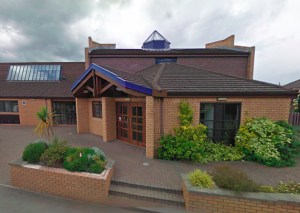
Zetland Road Church – (Both images in this article are from Google maps)
We left part one of this series with our discovery that the weird-looking place near our flat in St Andrews in Bristol, was in fact Zetland Road Fellowship (now Zetland Evangelical Church) – and not weird at all. Judy and I had hunted high and low, all over the city, and not found what we were looking for. Somehow, we had known all along that we would know the right place when we found it. And so it turned out to be.
Zetland Road Fellowship
The first thing we noticed on walking into Zetland was that several people took the trouble to talk to us. There were smiles and we felt welcome amongst these people. This in itself was a novelty, different from everywhere else we had tried. When the meeting began things were pretty much as expected; there was a welcome, a mix of prayers and hymns, some notices, a Bible reading, thoughts and teaching on topics from the reading, and after the closing prayer an invitation to remain for tea or coffee, a biscuit, and a chat.
The conversation over a drink and biscuit was good too, welcoming, not pushy, but friendly and we had a chance to speak with several different people before we left.
After going along to Zetland for several Sundays, I decided to try an evening meeting on, I think, a Wednesday. I was blown away by what I found there! The text was from one of the books of Samuel and concerned King David, though I no longer remember the details. What I do remember is that it was a passage that I had read for myself in the past and that the way it was explained in the meeting was very striking. I remember being greatly impressed at the convincing thoughts expressed, the fact that there was more to know than I had seen for myself, that what was being said acted like a telescope, helping me see further and in more detail than before. I wanted to hear more – and more was being offered the following week.
Judy and I were hooked, more and more so as we spent further time with the lovely people at Zetland Road. They felt like a welcoming family. We discovered that the origins of Zetland were with the Brethren as that movement spread from the south-west peninsula of Cornwall and Devon. Both Zetland and (later) Horsecastle were Open Brethren assemblies. A lot of small, independent chapels were built in the Bristol area during Victorian times. There were a few things that we questioned privately – the insistence that women should wear hats for example, and the irritating fact that they were not permitted to speak in meetings. To some degree this spoiled the lovely Open Meetings they held once a month. And the belief they had that the spiritual gifts were no longer present in church life was also a problem for us, but they had so much clearly right that we were happy to ignore these niggles. We were not entirely happy, but more than happy enough to stay. Our spiritual and social lives benefitted enormously from being part of the Zetland fellowship. We particularly cherished the experience of each assembly governing itself. There was absolutely no higher level of authority apart from the Bible – no hierarchy whatsoever, no bishops, no pastor, no circuits, no rules, no limitations. From what Judy and I had read in the New Testament this seemed right to us.
We were only with the Zetland Road church for about two years because we wanted to move up the housing ladder from our unfurnished flat in St Andrews, Bristol, to a small mid-terrace 1960’s house in Yatton, twelve or so miles west of the city. Our first daughter, Debbie, was born shortly before the move and was dedicated at Zetland Road Chapel, a simple expression of gratitude not involving water or godparents. We’d already planned to share a caravan in Ilfracombe for a late summer holiday with Cliff and Ginnie, another young couple from the Zetland fellowship, and although we moved to Yatton before that holiday, we were still able to get away with them later. Cliff and Ginnie collected us from Yatton on their way to Ilfracombe (they had a car, we did not), but for the return journey they dropped us off at Barnstaple Railway Station and we caught the train back part way, but the Barnstaple train was delayed and we missed our connection to Yatton, the last one of the day. We had to ask a friend to rescue us from Bridgewater Station.
Horsecastle Chapel
Horsecastle Church
We were absolutely up against the financial buffers when we made our bid for our first house in Yatton. We were only able to offer £7000 and it was a time of rapid inflation which made saving very hard. The asking price was higher than we could afford: quite a lot higher (perhaps £7500 or so, I don’t recall the exact figure). So when we put in our offer of £7000 we expected it to be rejected. Much to our surprise it was accepted straight away without discussion or argument. This seemed strange, but it was exactly what we needed and so we were relieved and excited as well as a little puzzled. But you don’t look a gift-horse in the mouth, so we just said thank you and the paperwork went through.
Two of my friends from work, Ruth and Peter helped us move. We hired a self-drive van and filled it with our hand-me-down three piece suite; our double bed funded by my grandmother, Nor; all our clothes, books, LPs etc; our cheap second hand dining table and four chairs; cooker and more. We set off for Yatton and and then discovered at the first right hand bend that a rear tyre was rubbing under the wheel arch and making a terrible noise. We had to take all right handers as slowly as possible, and with great relief arrived outside our new home.
With Ruth and Peter’s help we soon had everything indoors or stashed in the garage, and Ruth and Peter left us to it. By now it was late on Saturday and the shops had closed. As the evening light began to fail we turned on the light in the lounge only to find there was no bulb! We looked round the entire house and found all the bulbs removed and of course the shops would remain closed all day on Sunday. Finally, I checked the garage and found a bulb in the light fitting there, took it up to the house and fitted it so we had light at last, at least in one room.
Much later, we learned that the previous owners of our new home were Mark and Jean, members of the local Evangelical Chapel (Horsecastle). They had prayed about selling their home and moving to a bigger house in the village, and felt quite certain that they were supposed to accept whatever price we offered them!
What wonderful ways our heavenly Father has, working unexpectedly and often leaving us in ignorance until the time is right for us to know. He really is amazing!
Of course, one of our first thoughts was finding another gathering of people like those we’d been so delighted to find at Zetland. When they knew we were going to live in Yatton, the Zetland folk had told us about Horsecastle Chapel near the railway station in Yatton, and Claverham Chapel in the nearby village of Claverham. They recommended we take a look at these two places. We found we liked both, but Horsecastle was closer and larger so that’s where we ended up (a second welcoming family).
Our time at Horsecastle was good, we were both baptised while we were there, in a small pool underneath the raised dais at the front of the main meeting room. This was an exciting time and an important step in our journeys. For both of us it felt like a time of triumph and of belonging. We learned a lot at Horsecastle, we grew in faith and in knowledge, and we became deeply involved in the church community at a time when our young family was thriving . When our second child (Beth) was born she was duly dedicated at Horsecastle. But not everything was good.
Horsecastle held quarterly meetings when the entire church would meet to discuss planning for the future. We would talk about what had gone well, any issues that needed attention, that sort of thing. There was no single person in charge, no minister, no lead elder or pastor or anything like that. There was a small group of elders, all older men, but their role was informal, limited to providing advice, and perhaps speaking from the front a little more often than others.
At one of these quarterly meetings we discussed the idea of finding and employing someone to lead the church on a full time basis. Judy and I thought this would be an unwise move, and I expressed this as clearly as I could. I suggested that we already had a full-time leader whose name is Jesus, and pointed out that Israel had demanded a king ‘like all the other nations’ and Saul had been chosen, undermining Israel’s reliance on Yahweh alone. It had not worked out well for ancient Israel and it would not work out well for us, either.
In the end, as you might guess, a pastor was appointed. It was a factor that, over time, led Judy and me to feel a little less comfortable at Horsecastle. There were undeniably some good things about the move; the new pastor, Peter Cresswell, initiated an annual Holiday Club for children from the village with fun and exciting Bible-based crafts and activities, sports events in a local field, and these proved very successful. Judy and I helped with the first two of these events.
But more and more we felt sure that the teaching about spiritual gifts having been present in the early church but now no longer active was incorrect, as was the choice of employing a pastor. These niggles turned into something stronger as we began to experience the gifts for ourselves. And it seemed to us that if you are given something, you should also be using it. But that could not be part of our journey with the good folk at Horsecastle. For that we would need a different environment, with different friends, people open to receive, rejoice in and benefit from the presence of the Spirit of Jesus in our meetings and beyond.
How we found those friends, and what happened next will have to wait for the next part of this series.
If you enjoyed this or found it useful, please like, comment, and share below. My material is free to reuse (see conditions), but a coffee is always welcome!
Image 112 – What’s in an image? Sometimes quite a lot, more than meets the eye. I’m posting an image every day or so.
Enlarge
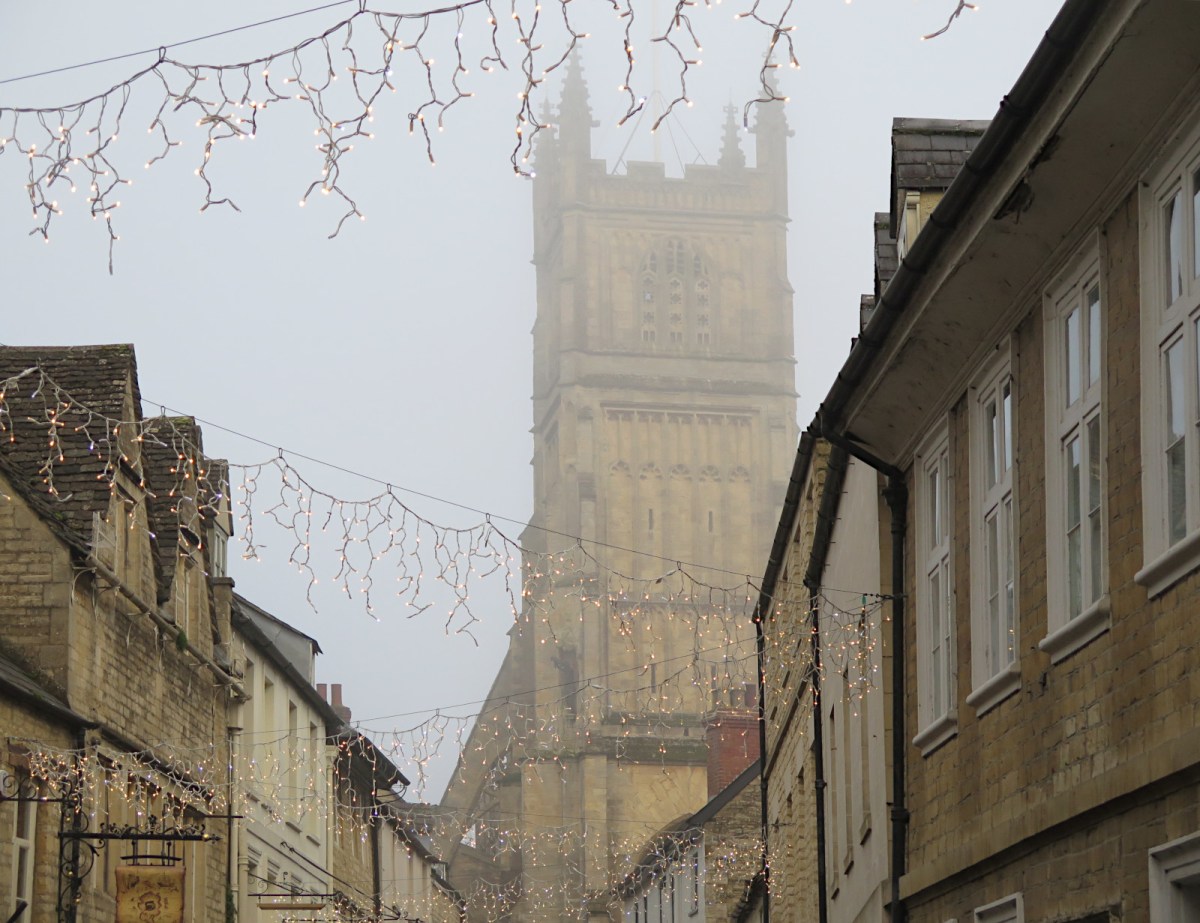
This was a magical moment that just asked to be captured. The Christmas lights had been switched on at the beginning of December and then we had low cloud. The top of the church tower was partly obscured, but other buildings in the town were not tall enough to be affected.
I took several shots, and this one seemed the best of them. So here it is for all to see. Happy Christmas and a wonderful New Year of grace and peace as we head into 2025.
If you enjoyed this or found it useful, please like, comment, and share below. My material is free to reuse (see conditions), but a coffee is always welcome!
You will need good character, deep relationships, respect for others and appreciation for what they are and do. Do whatever you can to help others succeed in mission.
This article is an updated extract from my short book, Jesus, Disciple, Mission, Church (JDMC). The bite-sized piece below is roughly two percent of the book. This is the first part of the fifth forgotten way.
Connect and communicate
Churches on mission usually connect with one another to form networks. Read Acts and the New Testament letters and you will see this everywhere, for example Acts 11:20-23, 21:3-4, 1 Corinthians 16:19-20. These networks may be formal or very informal, but where there is no network, encourage people to talk and swap ideas. Adapt what others have done rather than developing it again from scratch, and work together, especially for training. Host workshops, share books, DVDs and digital resources, go on retreats with other groups, share meals, share bread and wine together.
Don’t keep things to yourself (Colossians 4:16). Let others learn from your mistakes and tell them about successes. Share newsletters and calendars. Set aside time in meetings for people to share, use email and the web to send out materials and stories. Promote good books, provide lists of email addresses, perhaps set up a social network group.
Try to dream and plan with other groups. People with strong APEST gifts will wake everyone up and get them dreaming, thinking and planning. Ask questions like, “What is Jesus preparing for us?”, “Where is Papa already at work in the community?”, “What does good news look like for the people around us?” Make alliances.
You will need good character, deep relationships, respect for others and appreciation for what they are and do. Do whatever you can to help others succeed in mission. Identify the essential issues and choose to understand more than to be understood. Be willing to listen.
Discuss or consider – What have you already done as a group that you could share more widely? Even very early in your shared lives there will be good things to offer others; make a list of them. Can you think of other people or groups that would benefit from hearing some of your stories? How will you contact them? Don’t just talk about this, but begin doing it.
Sneeze the gospel
The gospel will spread easily and widely if the conditions are right, just as it did in the first few centuries in the Roman world and beyond (Acts 2:36-41). Part of our task as Jesus’ followers is to match the message to the society and culture we are part of. Read Acts together and list the ways the early church did this.
Simple, deep, meaningful messages work best; “Jesus is Lord” is a really great example because it captures a central and essential truth in just three words. The message and the people who carry it need to be very easily and quickly transferable. Distil the essence of the gospel and make church as simple and reproducible you can. At the very least, avoid unnecessary complications in both the message and the messengers.
Experiment right away without waiting until you have a perfect approach, but learn from your mistakes. Look for new ideas, new people and shared learning. Value and celebrate anyone who pioneers new ways of thinking about mission and church life. Let new believers develop their own forms of church as you pass on the basics about gospel and community. Use the passions, gifts and lifestyles you find in groups of people.
The gospel should be really simple to catch and very infectious. But progress may seem slow so you will need to be quite persistent and very, very patient. Pray often and with great hope and expectation; think carefully and sympathetically about the host community but keep church as simple as you can, small and really easy for others to copy. Pray especially for more workers to gather in the harvest (Luke 10:2).
Discuss or consider – You are already far enough along to begin spreading the good news far and wide. I’m telling you – you are! Talk about how this process is going. Think together about better ways to work in the future. Can you simplify things? Pray for specific people you know who need to hear and see the truth. How will you demonstrate Jesus to them?
Facilitating growth and change
Think deeply and talk together about what you are doing; pray about how you might reach those around you (Ephesians 6:18-20). Ask the Holy Spirit to speak to you and guide you (as he did Peter in Acts 10:9-23). Consider re-reading this part of JDMC later and revising your approach as necessary.
Do your best to be practical but try to understand the underlying reasons for what you are doing. Bounce ideas off one another and keep thinking about how living things grow and reproduce – that is how church will grow and reproduce too. Something big can grow from the tiniest seed. Try to work out where you are weak and where you are strong. The objective is to keep moving forwards and trying new things. Think in terms of new ways and old ways, going forward but also reflecting on where you have come from, focussing on Jesus but not for one moment forgetting the people living all around you. Remember the seeds but don’t forget the tree, remember the tree but don’t forget the forest!
Discuss or consider – You decide to plant a daffodil in your garden. Would it be better to buy a plastic flower for immediate effect, or plant a bulb, water it, keep the weeds away, and wait for it to grow? How many daffodils will you have in ten years time? Did you make them grow?
This was extracted from Jesus, Disciple, Mission, Church (JDMC), pages 17 and 18. Download the whole thing or read it online – GetJDMC.scilla.org.uk
Useful? Interesting?
If you enjoyed this or found it useful, please like, comment, and share below. My material is free to reuse (see conditions), but a coffee is always welcome!
This article is an updated extract from my short book, Jesus, Disciple, Mission, Church (JDMC). The bite-sized piece below is roughly two percent of the book. This is the first part of the fifth forgotten way.
Introduction
The New Testament likens the church and the kingdom of heaven to various other things. These include the human body (1 Corinthians 12:27), farmers’ fields (1 Corinthians 3:9), the effect of yeast (Matthew 13:33), seeds (1 Corinthians 3:6) and trees (Luke 13:18-19). These are great illustrations because church actually does behave quite like a living thing. Church is alive! It is Christ’s body. Of course, church and kingdom are two different things; church is part of the King’s domain, though by no means all of it. But both are alive.
Think about it. The church grows, reproduces and responds to the world around it. It develops and matures; it spreads like seeds or a virus. The good news about Jesus spreads from one receptive person to the next as we talk about it and especially as we live it out. You can see all of this at work in the book of Acts. Some of the most astonishing Jesus movements have had loose network structures and have spread widely and rapidly. Think in terms of a forest or a city of people; each tree or citizen is like a local church while a movement is a network like a forest or city.
Jesus said, ‘I will build my church and the gates of Hades will not prevail against it’ (Matthew 16:18). So what sort of environment has he provided in which this building (or growing) will take place? History shows that whenever there has been major growth in mission there has always been apostolic leadership at work.
It’s very important to encourage real life in church; we need to get the structure right for that and we will have to help the lifelike processes of growing and reproducing come to the fore. To do this, we must avoid too much organisation and control, things we tend to like because they make us feel useful and safe. But we shouldn’t be in control – Jesus should!
Discuss or consider – Talk about the structure and management of what you do. Are there things you need to change? Are there things you should stop doing How might you free people up and encourage more natural processes to take over.
Keep moving on
Think and talk about church as a movement. Aim to plant movements, not churches. Pay attention to stories of great movements past and present, read books about them, get excited about the possibilities.
Begin consciously behaving as a movement. Be fluid and adaptable, ready to take risks, build in lifelike structures, aim to multiply, dream and experiment, look into ways of changing from what you are to what you need to become. Remember that movements are networks; find as many ways as you can of connecting people really widely.
Discuss or consider – What might prevent you from moving forward? Talk about the way you think, your expectations and your goals. Are these as flexible as they need to be? When change becomes necessary, what forces might stand in the way? What is the difference between a movement and a church?
Structure for life
Change or remove anything and everything that stifles real life; good structures are very simple and easy to copy. Think about gardening rather than engineering because gardening involves living things. What is the easiest way to make a city? What is the easiest way to make a forest?
Remember that living things grow by themselves according to the life code (DNA) that is within them. An oak tree cannot produce grains of wheat and an acorn can never grow into a cabbage. In the same way, it’s impossible for the church to produce seeds of injustice and someone who continues to follow Jesus can never grow into a thief. Each grows according to its type. Jesus said we’d be known by the fruit we produce, either good or bad. Aim to produce plentiful, good fruit! (Matthew 7:15-20).
In other words, you don’t need to make the church grow. You can’t! All you can do is help the process start and provide the right conditions. Take good seed, bury it to the right depth in well tilled and manured ground, make sure it has enough water, keep away weeds and pests and your job is done. There will be a good harvest, but it might take a little time and patience.
Make sure leaders give power away, not hold onto it as the world tends to do; leaders should see themselves as servants (Matthew 20:25-28). Encourage every part of your group to think for itself, and give everyone the opportunity to use their gifts and interests freely and fully. What did Paul write about the body of Christ? (Ephesians 4:11-13) Encourage passion and ownership by telling great stories; invite people to act with boldness and ‘have a go’; involve everyone in planning. Celebrate every success; rethink and retry after every failure. Learn from every mistake and look for the positive aspects; never give up.
Share information as widely and openly as possible. Get apostles, prophets, evangelists, shepherds and teachers to explain what they do to everyone. Share any problems and talk about them; if possible become part of a wider network; welcome change whenever it’s needed. Don’t try to turn chaos into order but instead see if you can find meaning in the chaos. You may need to change your point of view or encourage others to say what they think.
It’s best to structure things around the passion, energy and life that you see in people. Everyone is a potential power house in their own, unique way so encourage them to be more active, not less. Don’t build ‘windbreaks’ that slow the wind down, instead build ‘windmills’ that harness its energy. Remove obstructions to active life and, when that is not possible, find alternative pathways to get around them. Build mission and church around people’s interests, and choose meeting times to avoid clashing with social gatherings in the wider community. Let go when something is no longer useful, support new ideas and fresh energy whenever they appear in the group.
Shared beliefs and purposes are great at holding networks together. So form common values, beliefs and practices and help newcomers to understand them. Find simple, clear, memorable ways to talk about them. Share the stories of the group’s origins often and in as many ways as possible. Encourage one another and tell people why you value them.
Discuss or consider – Spend some time right now to dig out the stories of how your group got started. Write these stories down; perhaps someone will volunteer to collect them in a notebook or folder or post them to a blog. Also, talk about the ideas in this section. How many of them are you already doing? List examples. Where do you need to do better?
This was extracted from Jesus, Disciple, Mission, Church (JDMC), pages 17 and 18. Download the whole thing or read it online – GetJDMC.scilla.org.uk
Useful? Interesting?
If you enjoyed this or found it useful, please like, comment, and share below. My material is free to reuse (see conditions), but a coffee is always welcome!