Becoming disciples-3

There’s a real need to put what you are learning into practice. It needs to move from being head knowledge to being something you do.

< Previous | Index | Next >

This article is an extract from my short book, Jesus, Disciple, Mission, Church (JDMC). The bite-sized piece below is roughly one percent of the book. This is the third part of the second forgotten way.

Be active from the start and stay active

Get stuck right in with the business of making disciples and growing in discipleship. (Acts 14:21-22) Don’t wait. Be active right from the start. Then reflect together, pray together and celebrate what Jesus is doing amongst you and around you. What went well? What might have been done better? What can you learn?

Keep going around this loop – action, reflection – action, reflection – do and grow. This can be very helpful, giving people a chance to experiment and learn about strengths and weaknesses, opportunities and threats. Some experiments may work out, others may not. You might find a coach in another group that has already been through this learning process; you might avoid known pitfalls and pick up useful ideas and tips. Do remember, though, that coaching may be helpful but is by no means essential. A small group of people and the Holy Spirit together will always do well.

Discuss or consider – Do you see the value of reflecting on your successes and failures? Have you started doing this yet?

Keeping up the momentum

Don’t lose what you have discovered in this part of the guide. Spend time praying about how you should respond (Matthew 6:6-8); listen to the Holy Spirit (John 14:26). Write down what you hear from him and record any significant thoughts, ideas or plans you have. And spread the benefits; if you found this session useful, encourage others to try it too. (If you’re unfamiliar with purposefully listening to the Spirit, read The work of the Spirit and then
return here.)

As with every section of this guide, there’s a real need to put what you are learning into practice. It needs to move from being head knowledge to being something you do. In fact, it will work much better the other way round; begin with some doing and the head knowledge will gradually crystallise.

So don’t spend too much time theorising and planning. Make some simple choices and get started. There are some ideas in the notes above, and there are some in the sources listed below. But often, the most relevant ideas may be those you think up for yourselves.

Discuss or consider – Is anything holding you back? If so identify it and deal with it. If not, go and make a start on the activities you decided on!

See also:
More sections of JDMC

IntroductionJDMC, what does it contain?Using JDMC – how to approach it

Working together in six waysIntro and Way 1Ways 2, 3 and 4Ways 5 and 6, six ways

Way One, Jesus at the centreJesus at centre 1Jesus at centre 2Jesus at centre 3

Way Two, Becoming disciplesDisciples 1Disciples 2Disciples 3

Way Three, Outward and integratedOutAndInt1, OutAndInt2

Way Four, Gifts for buildingGiftsForBuilding1, GiftsForBuilding2

Way Five, A living organismLivingOrg1, LivingOrg2

More sections will appear here…

The work of the SpiritIntroJesus, disciples, outwardGifts, living, community, help

Other church leadersIntro, bishops, eldersDeacons, pastors, priests

Last wordsThe end can also be the beginning

< Previous | Index | Next >

Read the book

This was extracted from Jesus, Disciple, Mission, Church (JDMC), pages 19 and 20. Download the whole thing or read it online – GetJDMC.scilla.org.uk

Useful? Interesting?

If you enjoyed this or found it useful, please like, comment, and share below. Send a link to friends who might enjoy the article or benefit from it – Thanks! My material is free to reuse (see conditions), but a coffee is always welcome and encourages me to write more often!

John 15:9-17 – Love and fruit

This joyful, loving relationship we have with Jesus is so important. In these verses Jesus stresses it by repetition. He wants to see joyfulness in our lives, he wants his joy to find a welcome in our lives.

< Previous | Index | Next >

Bible text – Read it yourself (opens in a new tab)

A fragment of John’s gospel
(Wikimedia)

At this point Jesus begins talking about love. It always helps, when explaining something, to have an illustration or example; Jesus needs an example of his love for his followers, so he says, ‘I’ve loved you the same way the Father has loved me’. There’s such a lot in that simple statement!

But the disciples had evidence of the Father’s love for the Son going far beyond words alone; the love was affirmed by powerful action. They had seen the sick being healed, the dead raised to life and evil spirits thrown out. Oh yes, he had the affection of the Father, and now Jesus tells them that he loves them like that, too! Notice how remaining in the love depends on obeying the commands. It’s not that the love is taken away in the absence of obedience, but the absence of obedience is the same thing as walking away from the source of the love. So his followers have a part to play as well, they are to ‘Stay in his love’. They are to stay close, not wander off but to stay in that place of affection.

It begins and ends with love

This joyful, loving relationship we have with Jesus is so important. In these verses Jesus stresses it by repetition. He wants to see joyfulness in our lives, he wants his joy to find a welcome in our lives. He’s explained this clearly and now, in verse 12 he shows how simple it is. The command that must be obeyed if we are to remain in him and his joy in us is not hard and it’s not complicated or demanding – just love one another, please!

And the greatest and fullest love imaginable is to be more concerned for one another than for our own existence! In verses 14 and 15 Jesus brings us right back to the need for obedience yet again, and it’s not an obedience like that of servants or slaves. We are fully informed, he calls the disciples (and us) his friends, not his servants. Our place is not to serve Christ, but to be his friends. I’m sure you appreciate the difference. We’re helping out one of our mates, not scraping and bowing to an imperial boss!

Getting the job done

Sometimes we are told that people in the world need to ‘choose Christ’, that they need to ‘make a decision for Christ’. Yet Jesus clearly sees it very differently, he tells us here that he chooses us, not the other way around. We are right to share the good news about Jesus, to explain to people that peace and joy and freedom are found in him. But we don’t need to persuade people to make a choice. Jesus makes the choice. We never, never need to browbeat anyone, our task is just to introduce one of our friends. Hey, this is Jesus, say ‘Hi’ to the best friend I have, he’d like to get to know you better.

We do have a job though, and introducing Jesus might well be an important part of it. We were chosen to bear lasting fruit, and if we ask Papa for something, he’ll provide it. He’s always willing because he sees us as one of his Son’s friends – he loves the Son and he loves his Son’s willing mates and helpers. It’s all about relationship, is it not? What we do counts for little, who we are counts for everything! Without Jesus I can do – nothing! But I can do everything in Christ.

And finally, Jesus reminds them one more time, ‘Love one another’. He knows how easily we forget!

< Previous | Index | Next >

Useful? Interesting?

If you enjoyed this or found it useful, please like, comment, and share below. Send a link to friends who might enjoy the article or benefit from it – Thanks! My material is free to reuse (see conditions), but a coffee is always welcome and encourages me to write more often!
Becoming disciples-2

Find out what everyone’s leadership gifts are. We all have them, there are no exceptions. We all have the role and duty and joy of encouraging and equipping others for service.

< Previous | Index | Next >

This article is an extract from my short book, Jesus, Disciple, Mission, Church (JDMC). The bite-sized piece below is roughly two percent of the book. This is the second part of the second forgotten way.

Be committed

It’s useful to agree some standards to help us in our lives together as disciples; this guide doesn’t give you any rules to follow so you will need to work out your own. Every group is different, but getting into some sort of discipleship rhythm is useful. Our aim is already clear (1 Corinthians 10:31-11:1) but the details need working out.

Try hard to discover what really matters most to you. You’ll need to talk about it, and pray together, and you’ll need patience because it may come gradually. You’re looking for the group’s sense of purpose, something that really grips you, a shared passion. Once you understand why your group exists you can begin to work out some of the details together. You’ll be searching for objectives that are both exciting and challenging. As soon as you recognise these group purposes start working towards them.

Choose one or two activities for each of them. Some examples might help. Suppose you really care about the state of your local area, you might organise or join a weekly walk to clear litter or adopt a piece of waste ground and turn it into a beautiful flower bed. Or perhaps you’re passionate about homeless people in your town. If so, find practical ways to regularly bring them food or give them shelter. Maybe the group feels driven to dig deep into the Bible: in that case work through a study course together, find and watch a relevant DVD or online video together each week, or share something significant that you’ve learned or found challenging. One or two could do this every time you meet, different people each time so that everyone is active in sharing.

If enough people in a group are actively growing as disciples it will become the norm. Talk about what you are doing, demonstrate it, give plenty of examples, tell stories of successful outcomes, and encourage others to share too. Try to get more groups of people engaged, tell them about your activities, invite them to come and see for themselves, suggest they try working through this guide with their own group, help them get started.

Discuss or consider – Spend a little time right now talking about the group’s passions and purpose. Consider options for practical ideas like the examples above, and decide how you could work on these together. If it’s difficult to make  progress give yourselves more time and come back to it in a few weeks or months. Oh, and pray about it.

We are all priests

No, I’m not suggesting you all sign up for holy orders – but we are a royal priesthood, a holy nation, a chosen race (1 Peter 2:9). In Israel the royal and priestly functions were separate. But in Christ they are combined, he is King of Kings (Revelation 19:16) and he is also our Great High Priest (Hebrews 4:14). Under him we are government officials and priests. Every single one of us is a servant of Christ and should be fully active – it’s part of being a disciple.

Find out what everyone’s leadership gifts are. We all have them, there are no exceptions. We all have the role and duty and joy of encouraging and equipping others for service. We must build one another up in love. It’s part of discipleship, part of becoming like the Master.

Discuss or consider – I can guarantee that everyone in your group has taken the lead in some way, great or small. Can you identify some of these leading  abilities? It might be initiating something, reminding the group to listen to what the Spirit is saying, spreading a good idea to another group, getting people to care for one another and cooperate or explaining something.

More sections of JDMC

IntroductionJDMC, what does it contain?Using JDMC – how to approach it

Working together in six waysIntro and Way 1Ways 2, 3 and 4Ways 5 and 6, six ways

Way One, Jesus at the centreJesus at centre 1Jesus at centre 2Jesus at centre 3

Way Two, Becoming disciplesDisciples 1Disciples 2Disciples 3

Way Three, Outward and integratedOutAndInt1, OutAndInt2

Way Four, Gifts for buildingGiftsForBuilding1, GiftsForBuilding2

Way Five, A living organismLivingOrg1, LivingOrg2

More sections will appear here…

The work of the SpiritIntroJesus, disciples, outwardGifts, living, community, help

Other church leadersIntro, bishops, eldersDeacons, pastors, priests

Last wordsThe end can also be the beginning

< Previous | Index | Next >

Read the book

This was extracted from Jesus, Disciple, Mission, Church (JDMC), pages 18 and 19. Download the whole thing or read it online – GetJDMC.scilla.org.uk

Useful? Interesting?

If you enjoyed this or found it useful, please like, comment, and share below. Send a link to friends who might enjoy the article or benefit from it – Thanks! My material is free to reuse (see conditions), but a coffee is always welcome and encourages me to write more often!

Becoming disciples-1

It will help us if we talk about these commitments daily, read what the Bible has to say about them, and pray and work together to sharpen our focus.

< Previous | Index | Next >

This article is an extract from my short book, Jesus, Disciple, Mission, Church (JDMC). The bite-sized piece below is roughly two percent of the book. This time we begin on the second forgotten way.

Introduction

Becoming disciples is important because it’s the main way believers grow to be more like Jesus. It’s not a process with a beginning and an end; it’s ongoing throughout our lives. And we’re not automatically disciples simply because we have believed. Not all of the crowds who listened to Jesus or were healed by him were disciples. Only those who followed him and were greatly changed could claim to be disciples (Matthew 4:19, Matthew 10:38).

The English word ‘disciple’ is rather old-fashioned these days, but it has more or less the same meaning as ‘apprentice’. In particular it’s all about learning to do the things that the expert is already doing, and Jesus is the expert here. Apprentices don’t just learn from books; this is a hands-on experience. At first, things will often go wrong, but apprentices get better and better by repeatedly doing something under supervision. Expect that to happen to you as Jesus’ apprentice.

Because this change is hard and takes time, Jesus put most of his effort into three years of living closely with a small band of men and women who were prepared to do much more than simply be amazed. They were utterly transformed in those three years. The fact that Jesus worked this way reveals how important making disciples was and is. He put everything he had into those few, and when he returned to the Father they were the ones he continued to work with to reach the nations and build his church (John 17:6-23).

Jesus needs men and women who will become conformed to his image. They are his disciples.

The challenges for us include rejecting false gods such as consumerism, becoming more and more like Jesus, and understanding that we most effectively change by doing, not merely by thinking. Imagine an apprentice plumber who had studied all the books on plumbing but had never bent a pipe or soldered a joint.

Discuss or consider – ‘We most effectively change by doing, not merely by thinking.’ Is this true in your experience? List some examples. Think about the skills involved in sport, work, music, art. Are there any areas of life in which regular practice doesn’t help?

A more effective way

If we are going to become disciples, who will disciple us? Sometimes it’s been thought that we need to follow others who have set us a good example. But if we follow another person there is always a risk of following some bad habits in amongst the good. This must be so; we know that nobody is perfect.

To do better than this we must follow a leader and guide who is perfect (Matthew 4:18-22, 5:43-48, John 10:30) , and that’s a tall order indeed for any human being – except one.

Discuss or consider – Who could you turn to as the One example to follow? Yes, the answer is obvious, of course. But what does this mean in practice? Talk together about anything you might try to help you become better disciples of Jesus.

Really mean business

We can begin by setting ourselves the highest standard for discipleship – the standard Jesus himself set us. This includes loving the Father with all our heart, mind and strength; denying ourselves; lifting our own heavy cross; and following Jesus and loving those around us in active and meaningful ways (Luke 10:25-28, Matthew 16:24-25, James 2:14-17).

It will help us if we talk about these commitments daily, read what the Bible has to say about them, and pray and work together to sharpen our focus. Read the Bible (2 Timothy 3:16-17), especially the gospels, with a view to what we must do (not just what we must think). Regular patterns of prayer, together and alone, are essential (Philippians 4:6). Don’t forget worship (Hebrews 12:28, Romans 12:1) another key part of becoming a disciple. And worship includes serving one another and the wider community, offering everything back to the Father.

So we need to become kinder, more generous and more patient. We must think about justice, and giving and using our spiritual gifts. And we will need to meet around Jesus and encourage one another. We are responsible for the way we use our time, our skills and our money. These resources are not just for our own pleasure; the way we live speaks volumes about what we value – and the world is watching and listening.

We need to care about our neighbours and about the environment. How can we release more time for friends and family? Are there ways we can represent the Almighty’s deep concern for justice? How can we better care for our surroundings? Try to become an ace recycler, or help keep the locality clean and tidy. Save fuel by turning down the heater or the air conditioner; drive less and walk or cycle short distances instead.

Jesus’ disciples lived and travelled together, ate and talked and listened and learned together. Community is an essential part of being a disciple, for us as for them. He calls us to love one another as he loves us (Ephesians 4:32, Galatians 5:22-23).

Discuss or consider – Pick one or two of the ideas in this section (or ideas of your own) and consider together how you could use them regularly to focus more on living as disciples of Jesus.

More sections of JDMC

IntroductionJDMC, what does it contain?Using JDMC – how to approach it

Working together in six waysIntro and Way 1Ways 2, 3 and 4Ways 5 and 6, six ways

Way One, Jesus at the centreJesus at centre 1Jesus at centre 2Jesus at centre 3

Way Two, Becoming disciplesDisciples 1Disciples 2Disciples 3

Way Three, Outward and integratedOutAndInt1, OutAndInt2

Way Four, Gifts for buildingGiftsForBuilding1, GiftsForBuilding2

Way Five, A living organismLivingOrg1, LivingOrg2

More sections will appear here…

The work of the SpiritIntroJesus, disciples, outwardGifts, living, community, help

Other church leadersIntro, bishops, eldersDeacons, pastors, priests

Last wordsThe end can also be the beginning

< Previous | Index | Next >

Read the book

This was extracted from Jesus, Disciple, Mission, Church (JDMC), pages 17 and 18. Download the whole thing or read it online – GetJDMC.scilla.org.uk

Useful? Interesting?

If you enjoyed this or found it useful, please like, comment, and share below. Send a link to friends who might enjoy the article or benefit from it – Thanks! My material is free to reuse (see conditions), but a coffee is always welcome and encourages me to write more often!

Jesus at the centre-3

Consider the everyday. How do you love the Lord, the creation, and other people (how do you treat them), consider your obedience, are you willing to spend time in Jesus’ company?

< Previous | Index | Next >

This article is an extract from my short book, Jesus, Disciple, Mission, Church (JDMC). The bite-sized piece below is roughly two percent of the book. This article completes our deeper look at the first forgotten way.

Everything is holy!

Make those ‘ordinary’ things holy! Every part of the Tabernacle was holy, not just the impressive parts, but every little thing. (Exodus 40:9) If we are truly a temple built of living stones, we are all marked as holy, set apart for the Almighty’s exclusive use. (Ephesians 1:13) How can you make cleaning, shopping, work and study holy? Sometimes we think of holiness in terms of what we avoid doing. Instead, begin to think more positively in terms of what you do.

Even the things that give us the greatest pleasure can be enjoyed in his presence, with his blessing and in gratitude. Sometimes we regard these things as worldly, and of course they can be if we misuse them. But they can (and should) also be brought into the place of holiness, part of the kingdom. Think of nothing as apart from him.

Worship is much more than singing songs and praising the Lord, it’s also a matter of obedience. Worship is living lives that honour Jesus, it’s gratefully offering our world back to him. As you read the Bible pay attention to what constitutes worship and allow that learning to reshape how you define and practice worship.

In particular consider the everyday. How do you love the Lord, the creation, and other people (how do you treat them), consider your obedience, are you willing to spend time in Jesus’ company?

Not only should Jesus be at the very centre of our lives, he should also not have to share that place with anyone or anything else.

Discuss or consider – Do you reserve certain activities for use only in church? What are they? They might include prayer, worship and communion; is it possible to take these activities out into society? If not, why not? If so, how?

Put the gospels first

Measure everything you do against what Jesus taught. And to get to grips with that teaching, read and think about the parables and topics like prayer, money and the kingdom; go through the Sermon on the Mount thoroughly. (Matthew 5:1-7:29) Do your best to absorb these truths into your daily life and expect to be deeply affected by them. (Check my post from 24th June 2013 for more on this.)

Reading the gospels on a steady cycle is one idea, aim to read a section every day. If possible read the same passages as other people you know so you can talk about what you read and share insights. Get as many people as possible to join in. Study one of the gospels in depth from time to time. Studying a gospel can be done together or it might be made the topic for a teaching series.

When you read other parts of the New Testament, read them with the life, words, actions and nature of Jesus as the framework. Let Jesus be the source of light that makes the entire New Testament clear to you. And when you read the Old Testament books, look for Jesus there as well. Interpret everything with Jesus’ teachings and actions in mind.

Discuss or consider – Talk together about practical ways you might spend more time in the gospels. They focus on Jesus and they’ll help you do the same. What could you do individually? Even better, what could you do together?

Taking it further

Spread the benefits. If you found this session useful, encourage others to try it.

Where will you take this next? Make some notes about things you have decided to do and goals you want to achieve. Make a list of questions you want answered. Check out the extra information below. Come back and revisit this section from time to time.

Discuss – What is the most important thing you have learned during this
part of the guide? Different things may stand out for different people.
Which of the ideas here and those of your own could you begin to put into
practice? (Don’t bite off more than you can chew! But make sure you
actually make a start on something.)

More sections of JDMC

IntroductionJDMC, what does it contain?Using JDMC – how to approach it

Working together in six waysIntro and Way 1Ways 2, 3 and 4Ways 5 and 6, six ways

Way One, Jesus at the centreJesus at centre 1Jesus at centre 2Jesus at centre 3

Way Two, Becoming disciplesDisciples 1Disciples 2Disciples 3

Way Three, Outward and integratedOutAndInt1, OutAndInt2

Way Four, Gifts for buildingGiftsForBuilding1, GiftsForBuilding2

Way Five, A living organismLivingOrg1, LivingOrg2

More sections will appear here…

The work of the SpiritIntroJesus, disciples, outwardGifts, living, community, help

Other church leadersIntro, bishops, eldersDeacons, pastors, priests

Last wordsThe end can also be the beginning

< Previous | Index | Next >

Read the book

This was extracted from Jesus, Disciple, Mission, Church (JDMC), pages 15 and 16. Download the whole thing or read it online – GetJDMC.scilla.org.uk

Useful? Interesting?

If you enjoyed this or found it useful, please like, comment, and share below. Send a link to friends who might enjoy the article or benefit from it – Thanks! My material is free to reuse (see conditions), but a coffee is always welcome and encourages me to write more often!

Jesus at the centre-2

Jesus says he only does what he sees the Father do and only says what he hears the Father say. He came to reveal the Father. It’s time to start following him in this.

< Previous | Index | Next >

This article is an extract from my short book, Jesus, Disciple, Mission, Church (JDMC). The bite-sized piece below is roughly two percent of the book. This article continues our deeper look at the first forgotten way.

Magnificently modelled mission

Make Jesus your primary model for mission. Study the ways he interacted with others, the things he said and the things he did. Prayerfully consider what you can learn from him.

Follow his example in leadership by recognising that he was a servant who washed his disciple’s feet. He didn’t have or desire any institutional or positional authority, but he had immense moral and spiritual authority. Character trumps position. Check this out in the gospels, see how Jesus led and made disciples, work to become more like him in this.

If Jesus is not the all-consuming centre of my life, I need to be asking the question who (or what) is?

Read 1 Corinthians 8:4-6 and consider what these verses mean. What do they tell you about Jesus? Jesus is described here as a channel for creation and for life. Our awareness of the Almighty’s presence in our lives in and through Jesus should stir us up. It is all about him!

Jesus says he only does what he sees the Father do (John 5:19) and only says what he hears the Father say (John 12:49). He came to reveal the Father (John 14:9). It’s time to start following him in this. Do only what you see Jesus do; say only what you hear him say; live to reveal Jesus. You will be surprised at the impact this will have. Gradually, even the way you think will change.

Discuss or consider – Why did Jesus wash his disciples feet? (see John 13:1-17). Washing feet was a sign of welcoming guests into the home and honouring them. Whose home is Jesus, as a servant, welcoming them to? For more on the meaning of washing feet see Genesis 18:1-5 and Luke 7:36-50. And notice that washing feet is an action. Jesus is defined by what he does

Jesus alone

We need to avoid the common idea that we have two lives. There’s the life we live in church and the life we live at work and in our free time. One life for Sunday mornings and perhaps a mid-week evening meeting, and another life for the rest of the week. One life with Christians, another life for worldly people. One life following Jesus, another life following our own desires and needs. (Matthew 6:24, Luke 9:57-62)

There are at least three helpful habits we can develop; these are keeping Jesus at the centre, following Jesus alone, and putting the gospels way, way ahead of anything else.

Recognise that it’s necessary to see things very differently. All of life comes under Jesus’ direction.

Discuss or consider – How might you restructure your life around Jesus? Are there things in life that are more important to you than Jesus? Career? Financial security? A nice home? The latest in home entertainment?

More sections of JDMC

IntroductionJDMC, what does it contain?Using JDMC – how to approach it

Working together in six waysIntro and Way 1Ways 2, 3 and 4Ways 5 and 6, six ways

Way One, Jesus at the centreJesus at centre 1Jesus at centre 2Jesus at centre 3

Way Two, Becoming disciplesDisciples 1Disciples 2Disciples 3

Way Three, Outward and integratedOutAndInt1, OutAndInt2

Way Four, Gifts for buildingGiftsForBuilding1, GiftsForBuilding2

Way Five, A living organismLivingOrg1, LivingOrg2

More sections will appear here…

The work of the SpiritIntroJesus, disciples, outwardGifts, living, community, help

Other church leadersIntro, bishops, eldersDeacons, pastors, priests

Last wordsThe end can also be the beginning

< Previous | Index | Next >

Read the book

This was extracted from Jesus, Disciple, Mission, Church (JDMC), page 14. Download the whole thing or read it online – GetJDMC.scilla.org.uk

Useful? Interesting?

If you enjoyed this or found it useful, please like, comment, and share below. Send a link to friends who might enjoy the article or benefit from it – Thanks! My material is free to reuse (see conditions), but a coffee is always welcome and encourages me to write more often!
Living in the presence

To come away with a shining face you must first go into the place where the glory is, you must stand face-to-face with the One who is the Presence.

Reading Chris Dryden’s ‘Concepts’ post, I was aware that I should write about how Father deals with me face to face. He always does this when I’m least expecting it, but I always know it’s him.

When I was a child, back in the 1950s and early ’60s, I had one or two luminous toys, and later a luminous watch. I never tired of holding these up to the light at night time and then turning the light off and watching the weird, greenish glow fade slowly over the next few minutes.

Some background
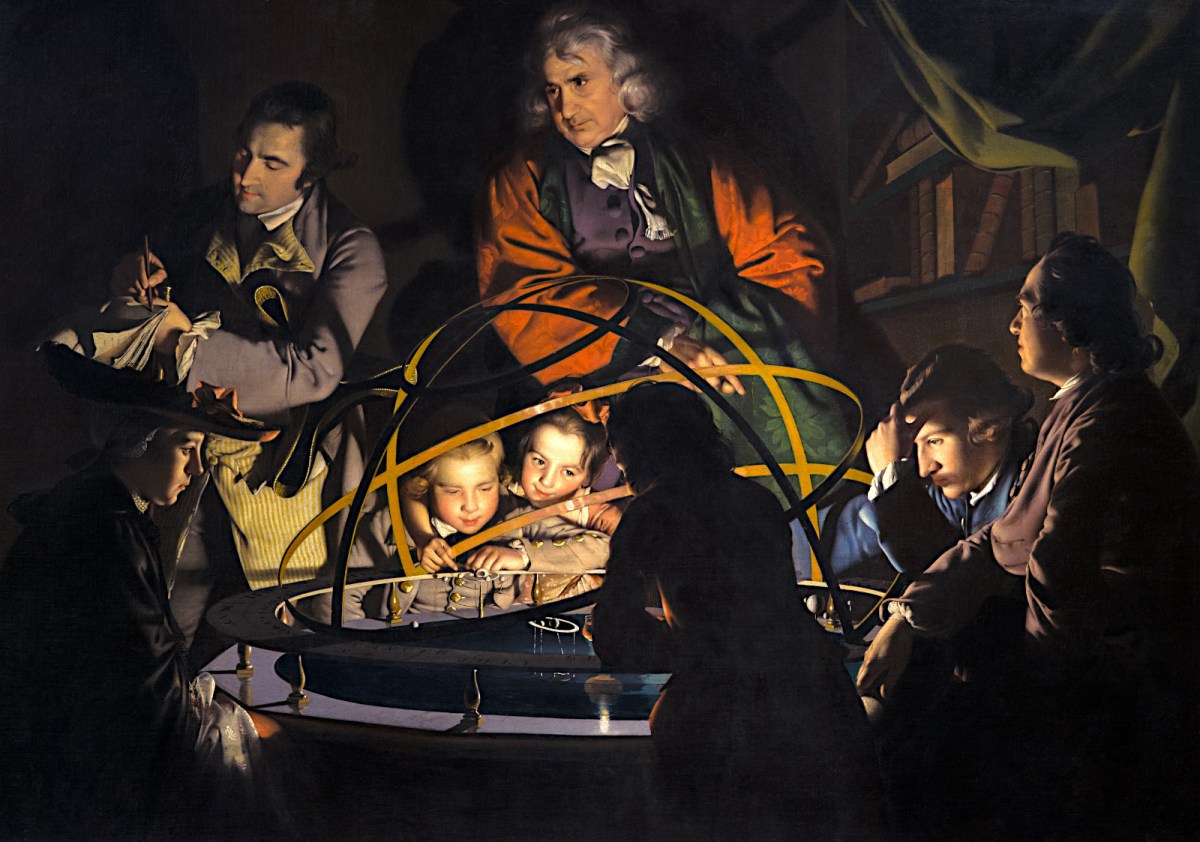
The Orrery
(Wikimedia)

Let’s begin by setting the scene. Here I was, married and with an infant daughter, living in a very modest house in a very modest street, Judy and I had to be careful with the little money we had. Second hand everything, no car, riding my bike to work. A very typical story in the early years of married life. We were friends with another couple just a street away and had been meeting with them to read the Bible, pray together, and explore what the Holy Spirit was doing at that time in our area. They were Anglicans, we were from the Evangelical chapel at the far end of the village, but differences like that seemed utterly irrelevant.

On one particular evening as we were praying, a picture came into my mind. We were children, playing with bricks from large piles stacked on the ground. We were making little houses with them, walls of a few bricks with a gap for a doorway, another gap for a window and a few more bricks balanced on the top for a roof. We’d made several of these tiny ‘houses’ when the builder arrived on the scene.

He strode towards us through the mud and puddles and looked down at us. We thought he’d be cross so we jumped up to run away; if we ran in different directions we might all get away! But he smiled down at us and said,

‘I’m here to build a real house. If you scatter the bricks around, it’ll slow down my work, but if you bring the bricks to where I’m working, you’ll save me time and the house will be finished sooner’. So we did exactly that, we ran around collecting bricks and stacking them at his feet, while he got on with the work of building the house. And up it went, it was magnificent.

What we understood from this

I shared this ‘picture’ with my friends, Tony and Faith. And we could all see what it meant right away. The house is the church – not Anglican, not Evangelical, just the church. And the bricks were people – us, our friends, anyone we could bring into the builder’s presence. And the builder, of course, was Jesus. He is the one who said, ‘I will build my church’. And what resulted over the next few years was that a number of people including us (the living stones) were built into something very special indeed. It was a body pulsing with spiritual life and energy, especially when we met, but overflowing into the world around us too. I can say that for me, having this foundation and experience changed how I viewed my life more generally – at work, at home, with my parents, with friends, with family.

So don’t build structures with the people who belong to Jesus, but assist him as he directs and builds. Chris Dryden, writing on his site Life with CD, wrote recently about Moses speaking face-to-face with Yahweh. Maybe you should read his post and then come back here afterwards…

For 40 days – Day 8: Covenant Renewed: Concepts

…Reading the concepts article sparked a new thought in my mind. All those years ago in the mid 1970s I’d had face-to-face conversations with Father through the presence of his Spirit! That describes the way it felt (and still does).

Moses in the Presence

Chris Dryden wrote about Moses and the conversations he had with Yahweh, face-to-face, created-to-creator, follower-to-leader. That was a mighty privilege; it still is! And it left Moses with a glow on his face (and I imagine, a glow in his heart as well). Do I have a glow on my face after conversing with Jesus through the power and presence of his Spirit? Yes, I think I do. The connection and the conversation leave me changed in a way that people can see. Not a visible glowing, but a glowing heart and a face that relaxes and smiles in a new way as I describe the revelation to those around me. Really, I suppose, an awestruck and amazed face!

Have you witnessed the glowing hearts and faces of people who’ve been in the Presence, in conversation with the King of Kings? If you’ve spent time in meetings when the Holy Spirit is allowed in and there are prophesies and pictures and singing and dancing and arms raised – then yes, I bet you’ve seen those shining faces! There is nothing to beat face-to-face time. That’s true with family, with friends, and it’s true with Jesus as well. We come away encouraged, lifted up, newly informed – there is nothing like being in the Presence. We all come away with shining faces, you bet we do!

But, just like Moses, to come away with a shining face you must first go into the place where the glory is, you must stand face-to-face with the One who is the Presence. The Shekinah Glory is his and his alone. Our faces shine with an absorbed light, just like those luminous toys.

But what is even more precious is that going about, living my ordinary life, the Spirit often surprises me. I see something, hear something, think something, and suddenly in that moment I realise there’s a spark from him. He speaks face-to-face with me without any effort on my part. He lives within me even when I’m unaware!

Useful? Interesting?

If you enjoyed this or found it useful, please like, comment, and share below. Send a link to friends who might enjoy the article or benefit from it – Thanks! My material is free to reuse (see conditions), but a coffee is always welcome and encourages me to write more often!

Image of the day – 58

In the New Testament flames flicker on the heads of the believers when the Spirit falls on them in the upper room where they’re meeting.

< Previous | Index | Next >

What’s in an image? Sometimes quite a lot, more than meets the eye.

I’m posting an image every two days (or as often as I can). A photo, an image from the internet, a diagram or a map. Whatever takes my fancy.

Warmth from a fire

Fire is both beneficial and dangerous. There’s nothing better than a nicely controlled fire in the living room on a cold January day; but there are few things worse than an out-of-control fire consuming your entire home! Even if the fire brigade arrives quickly and manages to save the house, they will do so by pouring hundreds or thousands of litres of water into your home. What is saved from burning will be wrecked by water.

If you read the Bible you’ll soon understand that the Holy Spirit is sometimes described as fire. The Old Testament describes Isaiah as being touched on the lips by fire. Ouch! (Though he comes to no harm.) And in the New Testament flames flicker on the heads of the believers when the Spirit falls on them in the upper room where they’re meeting in Jerusalem. (Again, they come to no harm.)

But both Isaiah and the believers in the upper room are changed, they are changed at a fundamental level and they are changed permanently. So let me just add that the Holy Spirit is the Spirit of Christ, he is the very nature of Jesus, he is a person, one of the three who live together in complete harmony – the Father, the Son (Jesus), and their Spirit. It’s not possible to know any of them without being changed fundamentally and permanently. And when I say ‘know’ I imply more than some casual meeting. If you get to know any one of them you will soon realise that you know all three.

My only advice is not to be put off by the idea of fire, yes it’s dangerous, but life itself is dangerous. Living a normal life in this world always leads to death, for nobody lives for ever. If you reach 100 you are doing really, really well. But seek first the heavenly things, welcome the fundamental and permanent change. It’s nothing to be afraid of.

How to begin? Find out about the life of Jesus. Read one of the gospels, they were specifically written about him. If you don’t know where to start, try reading Mark. If you want to see my thoughts along the way, you can join me in Cruising the Gospel.

Themed image collections

The links below will take you to the first post in each collection

Cirencester, Favourites, Irish holiday 2024, Roman villa

< Previous | Index | Next >

Useful? Interesting?

If you enjoyed this or found it useful, please like, comment, and share below. Send a link to friends who might enjoy the article or benefit from it – Thanks! My material is free to reuse (see conditions), but a coffee is always welcome and encourages me to write more often!

DaManCD

Articles that dig deep into where we are going, why, and how, what is expected of us, our fears, hopes, failures, successes.

This is a quick heads up for my readers, a mention of another website you might like to take a look at.

Chris Dryden’s website

There are a multitude of websites out there, often on very specific topics, so many that there’s something for absolutely everyone. So many that it can be hard to find what you need. My online friend DaManCD (aka Chris Dryden) runs one of them, and I run another. We’ve been aware of one another since we both contributed a chapter in a collaborative book, and we’ve interacted from time to time over the years, especially recently (though we’ve never actually met).

Chris’s website is called Life with CD and it’s well worth a visit. Chris draws on his life experience as a follower of Jesus to produce articles that dig deep into where we are going, why, and how, what is expected of us, our fears, hopes, failures, successes. His focus is always on the King who leads us. Why not take a look at a recent article starting a great series on the theme of 40 days?

Useful? Interesting?

If you enjoyed this or found it useful, please like, comment, and share below. Send a link to friends who might enjoy the article or benefit from it – Thanks! My material is free to reuse (see conditions), but a coffee is always welcome and encourages me to write more often!

About Patrick

My name is Patricius, I’m a sinner, a simple country person, and the least of all believers; I am looked down upon by many. My father was Calpornius, a deacon.

Patrick, or Saint Patrick as we normally think of him, had an interesting background and history. Of course, we know very little about him, but far more than we know about most other people who lived at that time.

Late Roman Britain
(Wikimedia)

What does the name, Patrick, mean? It comes from the Latin patricius, meaning “nobleman”, “of noble origin” or “patrician”. Patricians were the noble families in ancient Rome, a ruling class, and Patrick can be viewed as a Roman or perhaps a Romanised Briton. By 409 CE when all remaining Roman forces in Britannia were recalled to protect the Western empire against uncontrolled immigration across the Rhine, the distinction between Roman and Romano-Briton had pretty much vanished. Archaeological evidence makes it clear that Roman life continued well after the troops left, particularly in the west of Britain.

Patrick’s life

Patrick’s family lived in Roman style somewhere near the west coast in what is now northern England or southern Scotland (also possibly Wales). They would have been little affected by Angle and Saxon incursions into the far eastern regions of the British Isles, but raids from Ireland and northern Scotland were sometimes a problem. Farming life and indeed villa life and Roman town life would have carried on; no longer governed by the empire, but governed locally like a Roman province. Patrick was born around the time the Roman forces departed.

When he was sixteen he was captured by Irish pirates raiding the area where his parents lived. And he was sold in Ireland as a slave and had a hard life, outside in all weathers, herding sheep or pigs. He had been exposed to Christian ways as a child but had not believed in Jesus or made any attempt to follow him, but during his time in captivity he developed a faith. Spending times of great hardship as a herdsman slave, and living in the open air in all seasons, he must often have been wet and very cold. But spiritually it was a time of great growth and depth for him. He prayed incessantly and felt very close to his heavenly Father.

He made a dash for freedom when the opportunity arose, hearing a voice in his sleep telling him that a ship was waiting to return him home. He was recaptured, but escaped again and made it home successfully.

Later, sensing that his responsibility was to return to Ireland to share his faith with the pagan people there, he travelled back and began to share everything he knew of Jesus. People listened to what he told them and he started many local communities of believers. Later again, Patrick travelled back to northern Britain and spread his teaching about Jesus to the Irish and Welsh speaking Britons and also to the Saxons in the areas he visited. The Celtic church in Ireland and in Great Britain spread far and wide, even back into northern Europe. Celtic Christian monks journeyed singly or in small groups, spreading the good news and founding further communities and groups of believers.

His writings

At some point in his later life, Patrick authored books and letters, two have survived, and one of these is autobiographical in nature, telling the story of who he was and the events of his life. And that book (The Confessio) is why we know as much as we do about Patrick and the world he lived in. Here are his opening words:

My name is Patrick. I am a sinner, a simple country person, and the least of all believers. I am looked down upon by many. My father was Calpornius. He was a deacon; his father was Potitus, a priest, who lived at Bannavem Taburniae. His home was near there, and that is where I was taken prisoner. I was about sixteen at the time. At that time, I did not know the true God. I was taken into captivity in Ireland, along with thousands of others. We deserved this, because we had gone away from God, and did not keep his commandments. We would not listen to our priests, who advised us about how we could be saved. The Lord brought his strong anger upon us, and scattered us among many nations even to the ends of the earth. It was among foreigners that it was seen how little I was.

The Wikipedia article on Patrick provides a lot of good information.

Useful? Interesting?

If you enjoyed this or found it useful, please like, comment, and share below. Send a link to friends who might enjoy the article or benefit from it – Thanks! My material is free to reuse (see conditions), but a coffee is always welcome and encourages me to write more often!