I began to see that whether Jesus was right or wrong in some of his claims, his character came through clearly and I liked what I saw.
Atheist, Muslim, Buddhist, Hindu, Catholic, Baptist – whoever you are, whatever you think, wherever you live, I hope you’ll read along for at least a sentence or two while I consider this question.
Walking along to listen and learn
Is religion necessary? No, personally I think it’s a hindrance. If religion matters at all, it matters only because it always gets in the way of the truth. So attaching yourself to a religion, following religious teaching, calling yourself a Christian or a Muslim or a Buddhist does not, in itself, make you a better person; nor does a name make you acceptable in some way. It merely make you identifiable – part of an organisation.
I follow Jesus, or at least I do my best to follow him (some of the time). All too often I just follow my own inclinations moment by moment, and that sometimes leads to selfishness, hurting other people, and disappointment. If you follow Muhammad, or the Pope, or Buddha – well, good for you! Following a person is always better than following a religion or a philosophy. Do, though, be careful to follow somebody of good character, someone you can trust. The reason I follow Jesus is that he always deals with people wisely, gently, generously, truthfully, and lovingly. I’d like to become like that too. I have no wish to be foolish, harsh, mean, false or hateful – to anybody. I don’t claim to have succeeded in that goal, but it is a goal in my life.
When I first heard about Jesus I was a child. My parents talked about him, and when I went to school we learned more about him. Every school day began with prayers, a Bible reading, and singing a hymn. None of this seemed important at the time, it was just something that happened at school that you had to do – like learning to read and write, or learning multiplication tables and how to add and subtract numbers. It became a bit more formal as the years passed, but it didn’t mean very much as far as I could see. At 14 years old there were confirmation classes (part of learning to be a good Anglican), this too meant nothing to me, it was just something Mum and Dad expected so I sat through it, usually mystified or bored. And at university nothing like this was required any more.
Towards the end of my university course I began reading the Bible. I thought that people were making a mistake following this nonsense and I wanted to find out where they were going wrong. I was an atheist at this time in my life. But as I read I became quite interested by things that Jesus did and said. I began to see that whether Jesus was right or wrong in some of his claims, his character came through clearly and I liked what I saw. He was wise, gentle, generous, truthful and loving – all the things I wanted to be, but could often not manage. This is, of course, only a partial list, but you get the idea – there’s no need to draw up an exhaustive list of character attributes.
And as I read, I gradually realised that this Jesus was probably the best role model and example of living well that I’d ever come across. So I read more. And that is the answer to the question, ‘Why on earth would I follow Jesus?’ For me it’s simply about his character.
I don’t need to write more than that, though I will add that I had started on a journey that would take me a long, long way. But none of the things I’ve learned since have changed that original choice to follow. If anyone starts on that journey they will learn much more about Jesus along the way. When Jesus was walking along the shingle beach of Lake Galilee and spotted some fishermen casting nets into the water; he called to them, ‘Come and follow me and I’ll show you how to fish for people’. They were intrigued, dropped what they were doing, and walked along with him for a while. That is how it starts, the invitation is always there, follow along and he’ll teach you some surprising things about yourself, about who he is, about his character and purpose, and where he is going.
Maybe I’ll write some more later, in another article. But for now, if you do start this journey, are already on it, or don’t even care to begin, I’d just like to bless you and wish you well. Peace, joy, encouragement and hope in your life – in Jesus’ name. He wants those things for you too.
See also:
Take a look for yourself (many versions and languages, all free to read) – Bible Gateway
If you enjoyed this or found it useful, please like, comment, and share below. (If you don’t see those links, click the article’s title above the main photo and they will appear.) Send a link to friends who might enjoy the article or benefit from it – Thanks! My material is free to reuse (see conditions), but a coffee is always welcome and encourages me to write more often!
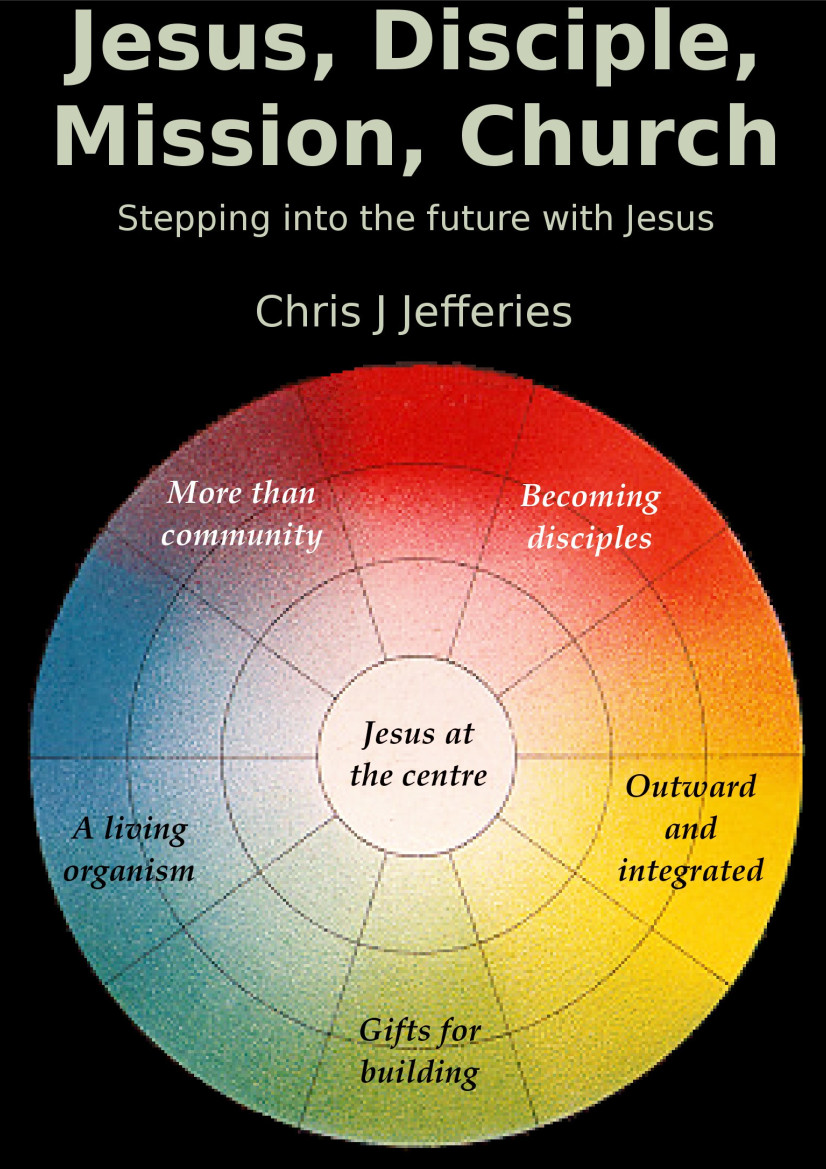
This article is an extract from my short book, Jesus, Disciple, Mission, Church (JDMC). The bite-sized piece below is roughly two percent of the book.
Jesus at the centre
JDMC cover
We have seen how important it is to keep Jesus right at the heart of everything we do. We have seen that we must follow Jesus alone and that there can be no room for following anyone or anything else.
Without the Holy Spirit we will find this impossible. We receive the Spirit from Jesus as a baptism (Matthew 3:11). In response to our love and obedience, Jesus sends us his Spirit (John 14:15-17). We are not free to defile our bodies because they are ‘temples of the Holy Spirit’ (1 Corinthians 6:19) – and if this is true of our bodies, isn’t it also true of our hearts and minds? The essence of keeping Jesus at the centre is that we know Jesus is Lord of our lives and our thinking and our emotions, of all that we are and all that we do. Yet we can’t even say the words ‘Jesus is Lord’ except by the Holy Spirit (1 Corinthians 12:3).
How has the Spirit helped keep you focused on Jesus? Try to find specific examples rather than generalisations.
Becoming disciples
This is a matter of following Jesus and becoming conformed to his image. Look at the fruit of the Spirit as set out by Paul in Galatians 5:22-26: love, joy, peace, patience, kindness, goodness, faithfulness, gentleness and self-control. This is how the Holy Spirit moulds us to become more Christlike. This is fruit, it grows in us day by day, year by year. And the degree to which we have become conformed is expressed in all we think and say and do.
Doesn’t this sound familiar? Isn’t this the very process of becoming disciples that we are looking for? If we are filled by the Spirit and respond to him we will bear the fruit of the Spirit in every way. We co-operate with the Holy Spirit when we develop a habit of joy or patience or gentleness. Right behaviour over and over again forms those habits of fruitfulness in us. There are two sides to this. We cannot do it in our own strength so we need and depend on the Spirit. But he will not coerce us, he expects to see our obedient willingness to allow him to change us.
Is there spiritual fruit in your life? How might you explain this to someone who doesn’t yet know Jesus?
Outward and integrated
We need to reach those around us; Jesus commands it. He said, ‘I’ve been given all authority in heaven and on earth, so as you go, make disciples of all nations … and I’ll be with you.’ (Matthew 28:18-20) But as we go out into the world and seek to embed ourselves deep in the culture (as he did), we do not go alone.
Not only are we together as a community of his people, we are also together in the community of the Almighty Creator. The Son has made the way open and has sent the Spirit to fill us – Father, Son, Spirit, and us! It’s not going to heaven when we die; it’s far better than that. It’s living in their community right here, right now and forever. Jesus says he is with us right to the end (Matthew 28:20) and he says that if we have seen him we have seen the Father (John 14:9).
In our going out and going deep we remain in the Presence, for the Holy Spirit is in us and communicates with us and for us. We couldn’t be effective carriers of good news without him. There are some great examples in the New Testament; read Acts 8:26-39, Acts 10:9-21 and Acts 16:7-10.
As you go out and deep in the culture around you, how will you pay attention to the presence of the Holy Spirit with you? Consider prayer, listening, and the truth that the Spirit is alive within you and wanting to communicate with you.
This was extracted from Jesus, Disciple, Mission, Church (JDMC), pages 38 and 39. Download the whole thing or read it online – GetJDMC.scilla.org.uk
Useful? Interesting?
If you enjoyed this or found it useful, please like, comment, and share below. (If you don’t see those links, click the article’s title above the main photo and they will appear.) Send a link to friends who might enjoy the article or benefit from it – Thanks! My material is free to reuse (see conditions), but a coffee is always welcome and encourages me to write more often!
Notes from bygone years – May all your Mays be amazing Hint: Click on the thumbnails for larger images.
May 2023 (1 year before publishing this article)
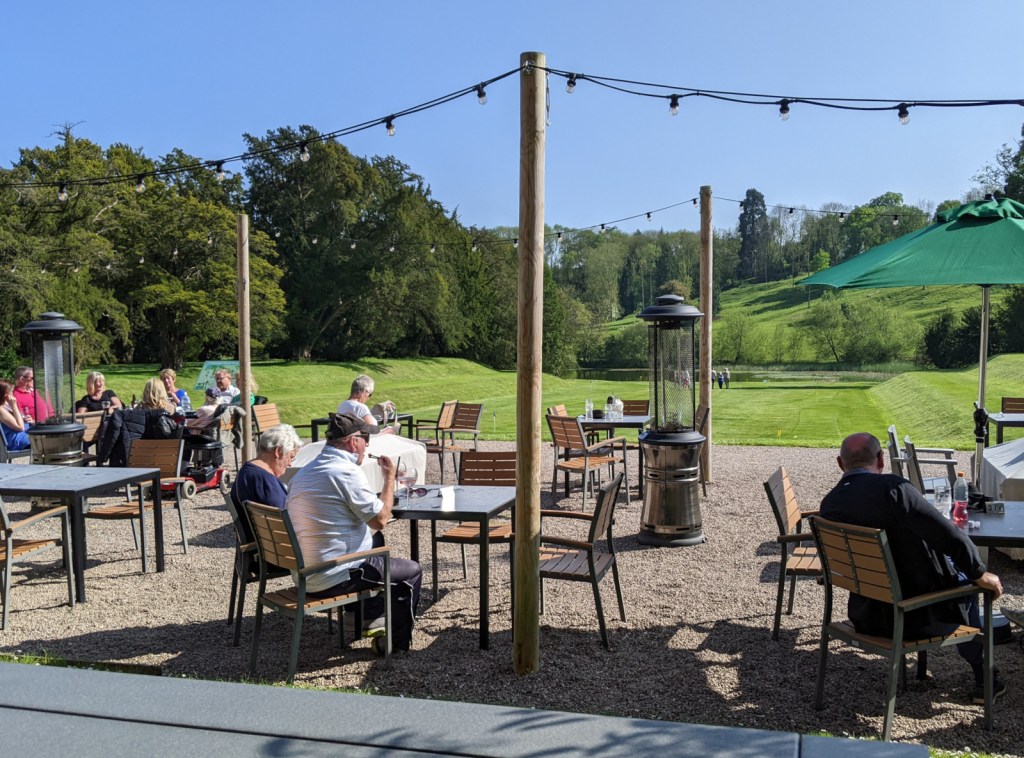
Warners hotel near Hereford
We took Donna’s Mum, Isobel, for a weekend break at a Warners hotel; the one we visited is Holme Lacy, not far from Hereford. Donna thought Isobel would enjoy this place, and she was right. In the evening there were tribute bands singing songs that were popular in the 50s and 60s, so music that is still popular amongst the older generation these days. The outside areas are attractive too as you can see from the photo.
I had a suspected cold but needed to be sure it wasn’t COVID as I was planning to be with a group of friends, but as you can see the result was negative.
I don’t think any of us wants to go through another pandemic! It was very disruptive in so many ways.
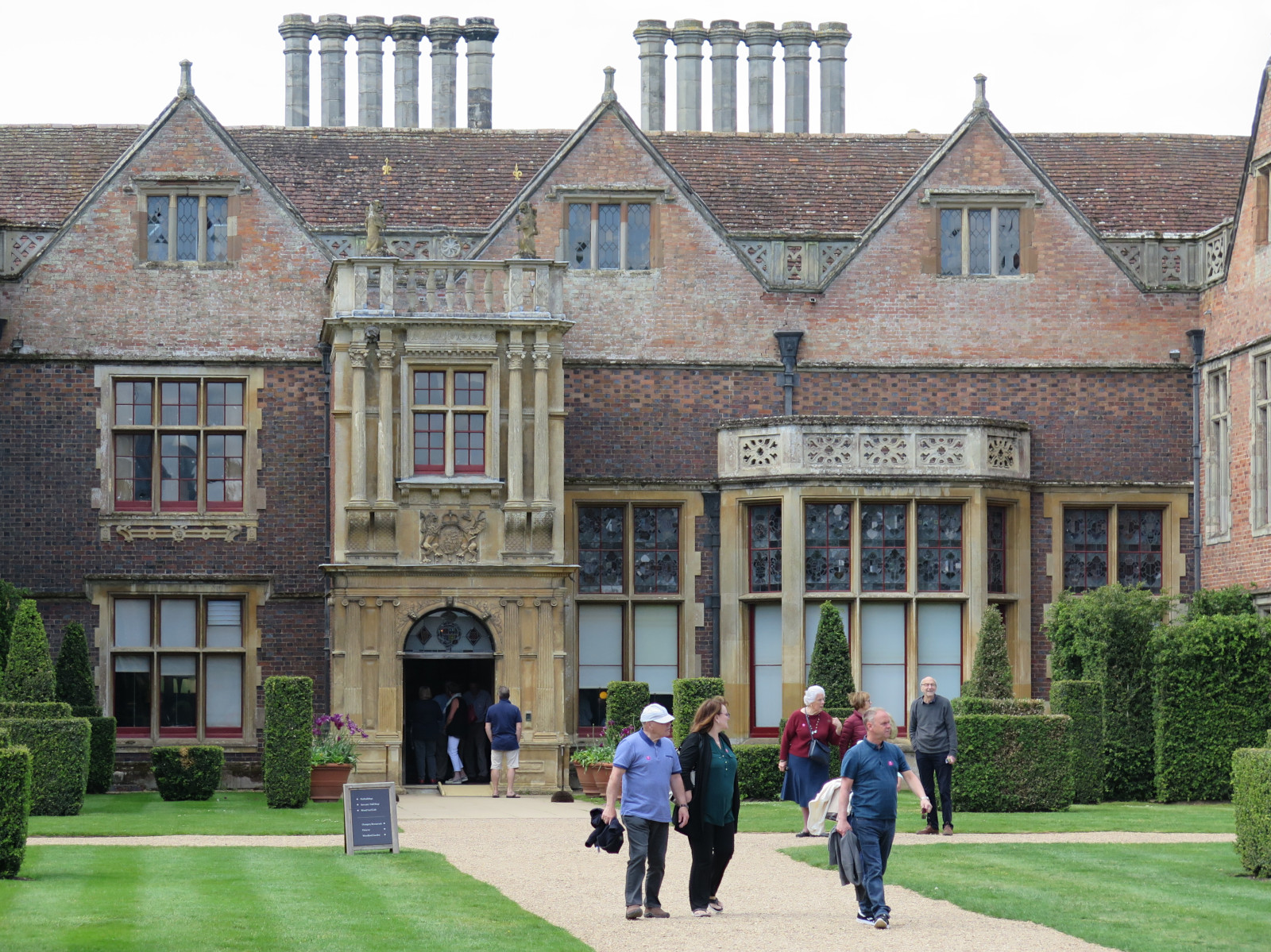
Choosing a day with beautiful sunshine, we visited Hidcote Gardens and then Charlcote Park (pictured). The ingenuity, design and construction that went into gardens and houses like these is astounding. But they depended on the work of large numbers of people much less fortunate than the people who lived in them.
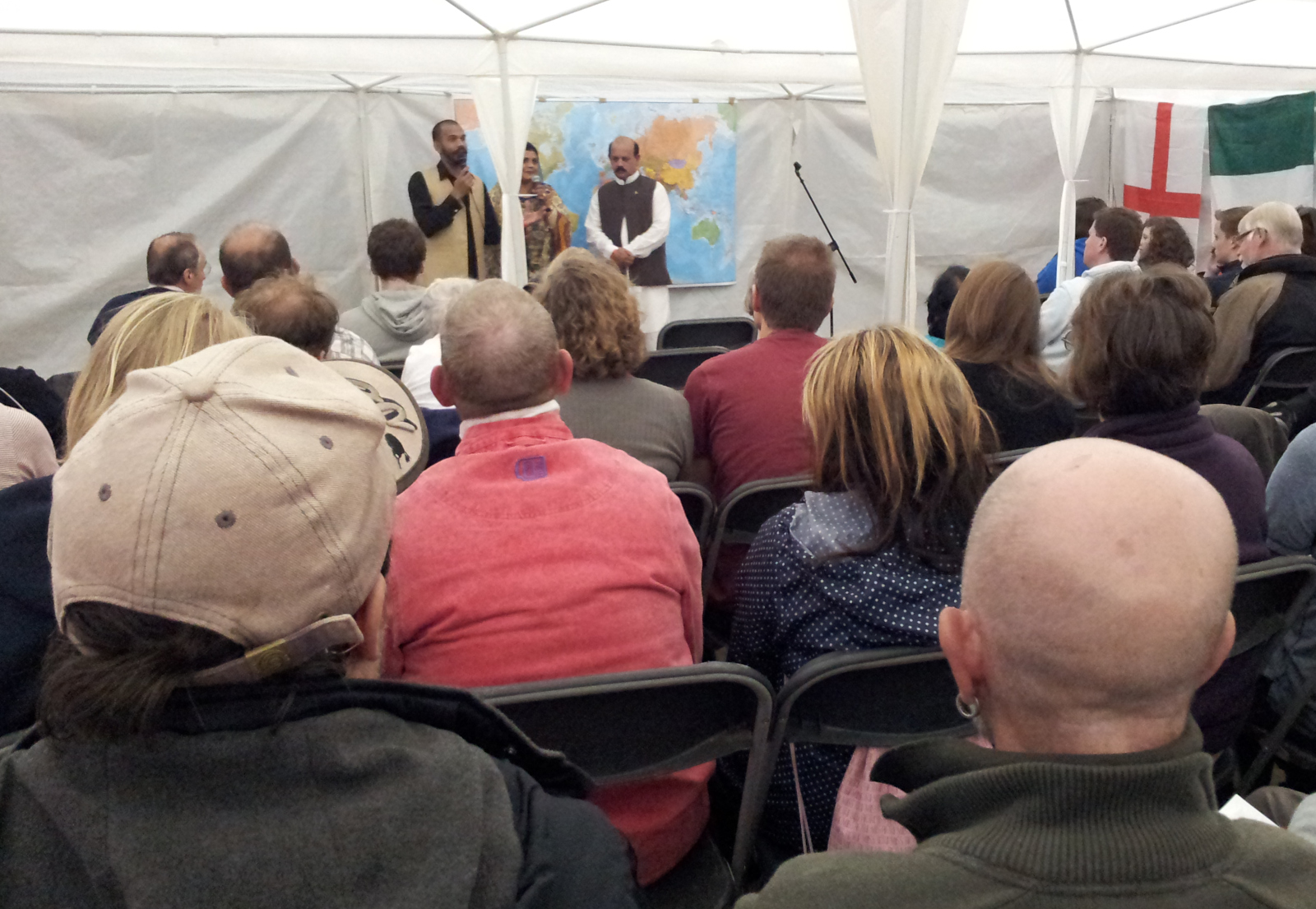
New Frontiers were holding their annual gathering at the National Agricultural Centre at Stoneleigh and I felt I should take my friends Kev and John to one of the sessions. They’d shown real interest in Jesus and we’d been reading through parts of the Bible in a local coffee shop in St Neots. The photo shows them listening to news about church planting in Pakistan.
River Church in St Neots had a day out at Grafham Water on 25th May. Here’s Jim’s giant Jenga being put to good use. Everyone had a great time, but Jim’s Jenga tower is nowhere near the largest. Try this one for size!
Ken and Gayna are good friends of ours. Ken and Donna were both working and I was working a four day week at that time, so Gayna and I visited Ely Cathedral which she’d never seen before. The photo shows the lantern, an astonishing design and structure for medieval times.
On 1st May we visited Donna’s parents. Her Dad had a hot air balloon flight for two as a birthday present and this was the day he chose for the ascent, inviting me to join him. In the photo, I’m on the left and Tony’s on the right. It was an amazing experience!
I replied to a mailing list message about SUPER.EXE, an MS-DOS utility for getting temporary admin rights on a Novell Netware server. It saved logging out and in again (twice) or, even worse, going to the locked server room to perform the same task from there.
World events: F1 world champion, Ayrton Senna died in a crash; the Channel Tunnel opened between England and France; and Nelson Mandela was inaugurated as South Africa’s first black president.
We visited Cirencester and my Mum and Dad took us to North Meadow at Cricklade to look at the snake’s head fritillaries growing wild there. After that we drove up the Stow Road to see orchids and pasqueflowers. It was quite the botanical field trip!
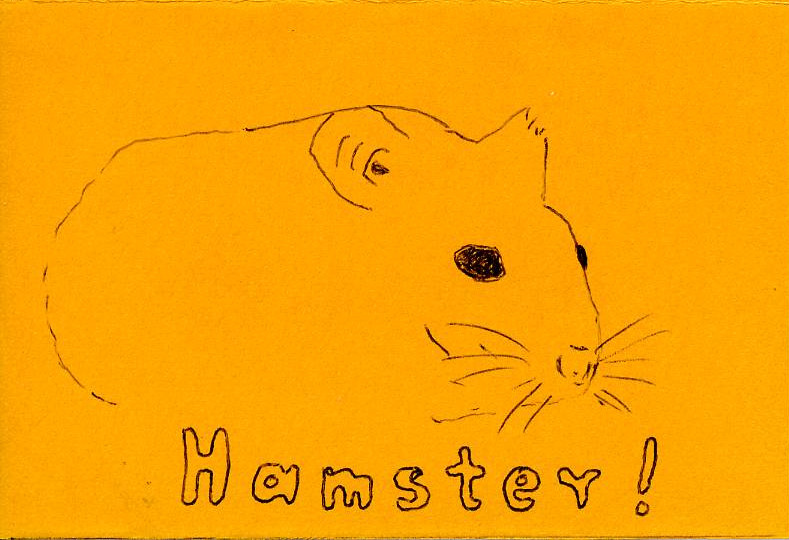
My daughter Beth loved hamsters, so when she was six I wrote a Sinclair Spectrum text adventure for her, starring a hamster. If you use a Spectrum emulator you can still load and run this game. I suggest the Fuse emulator (free). Once installed, here’s the Hamster! download.
World events: The Severomorsk Disaster was an enormous explosion at the Soviet Severomorsk Naval Base; and a gas explosion in Lancashire killed 16 people.
We travelled to a Post Green meeting at Lytchett Minster near Poole with our friends Paul and Jenny as we had no car at this time. Tony and Faith also drove down. This was an eye-opening experience for all six of us, we learned so much about community, making music, and the gifts of the Spirit. We camped in a borrowed tent and our one-year-old, Beth, slept in a cardboard box. Beth’s first birthday came in May as well, Debbie was already four, our family was growing up!
World events:Margaret Thatcher became the UK’s first woman prime minister; and Greenland was granted limited autonomy from Denmark.
I was still doing a little work on willow growth rates for Ken Stott, the Willows officer at LARS, but Ken had been providing help to the Pomology Group and I was working more and more on that. I’d had a promotion to Higher Scientific Officer (HSO) and was eager to spend more time on microscopy and pollination.
As Bath University Horticulture students, we visited commercial sites from time to time see horticulture in action and ask questions of the managers and staff. The photo shows one of these visits in May 1969. Peter Thoday, one of our lecturers at the time and later a TV personality, is at the back on the right.
World events: An American teenager died of a baffling medical condition, later identified as HIV/AIDS; Apollo 10‘s lunar module flew two astronauts to within 16 km of the Moon‘s surface.
Here’s my sister, Ruth, busy with coloured chalks and a little slate. The floor covering is linoleum, bought by my grandparents for the house, now relegated to the garden. In the background is my old scooter from the mid 1950s. Ruth is on the loggia, a covered area in the garden with three open sides.
May probably brought school half-term, Spring Bank Holiday was 18th, the Eleven Plus exams loomed, and probably came in June; it was strange to realise that at the end of term, my days at Junior School would be over! Uncertainty lay ahead but I don’t remember feeling anxious, nor indeed excited.
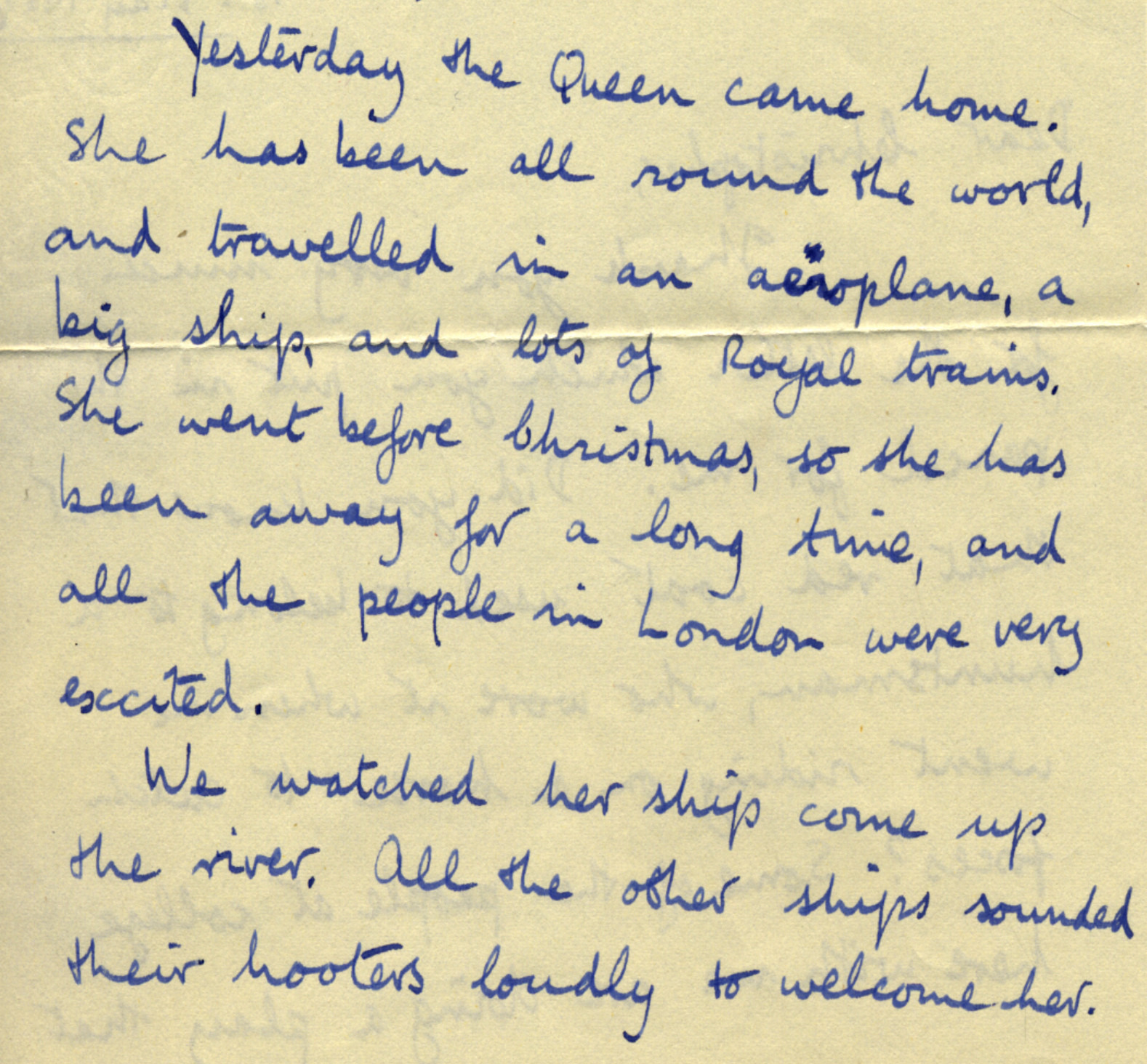
I had a letter from my older cousin, Jill. At this time she was staying in a hostel in Deptford, London. She had watched the Royal Yacht Britannia returning home with the Queen and Prince Philip on board. The ship was brand new at the time and she wanted to describe the event for me. Click the image to read an extract.
Approaching ten months old, I might have started imitating sounds. I’d have been fairly mobile and no doubt making a nuisance of myself by crawling. Perhaps I had a favourite toy by this time too. We were still living with my grandparents, though Mum and Dad were hoping to move to a home of their own soon.
In May, Dad had several firsts during basic training for the RAF. He threw a live hand grenade, went through a gas chamber and removed his mask inside, fired a Sten gun, and suffered a carbuncle on his neck that required a stay in Sick Quarters. On 25th May Dad was moved, with 12 others, to an RAF station at Wilmslow in Cheshire.
If you enjoyed this or found it useful, please like, comment, and share below. (If you don’t see those links, click the article’s title above the main photo and they will appear.) Send a link to friends who might enjoy the article or benefit from it – Thanks! My material is free to reuse (see conditions), but a coffee is always welcome and encourages me to write more often!
This article is an extract from my short book, Jesus, Disciple, Mission, Church (JDMC). I also mention The Forgotten Ways, a book by Alan Hirsch. The bite-sized piece below is roughly two percent of the book.
Introduction
JDMC cover
The work of the Holy Spirit is mentioned briefly in the previous part of JDMC, ‘Six – More than community’ (p 33). It is not explicitly presented in The Forgotten Ways, but it is certainly implied on every page. In the first edition of JDMC I closely followed the structure of Alan Hirsch’s work, but in this revision I have decided to add extra sections including this one about the Spirit.
I want to guard against any suggestion that JDMC is merely presenting an organisational mechanism for rapid missional spread. It’s much more than a worldly method or a management technique. Instead it is the pattern set by Christ himself, and therefore the Spirit of Christ is present throughout and waiting for us to hear his guidance and encouragement as we do the work the Master has entrusted to us. To depend on human technique alone won’t cut the mustard – far from it! One of the forgotten ways is keeping Jesus central, following only him, adding nothing in addition. This utter dependence on Christ surely implies and demands a dependence on his Spirit – how could it possibly be otherwise?
We need to recognise that this new life we live is not just about what we do, nor is it entirely about receiving from the Spirit. Jesus wants our co-operation. If there was no need for the work of the Spirit, why would Paul warn us not to quench him? (1 Thessalonians 5:19) And if there was no need for human effort or will, why would he tell us to strive? (1 Thessalonians 5:15, 1 Timothy 4:10)
So in this additional part of JDMC I want to highlight some of the ways we can recognise and value the Holy Spirit’s activity as we attempt to remember and activate the six forgotten ways. I also offer some advice on spiritual listening at the end.
To be clear, this section should not be seen as an additional ‘forgotten way’. It isn’t that at all. But the work of the Holy Spirit surely runs deep in each of those six forgotten ways. He is, as already mentioned, the Spirit of Christ and he was sent specifically to enable us to continue the work of Jesus. If we are the body and Jesus is our head, then the Spirit is like a nervous system – fundamentally centred in the head but with sensory and motor connections to every part of the body. When we resist him and are disobedient, part of the body is effectively paralysed. And if the body acts without the Holy Spirit it is sleepwalking and ineffective.
If all of this sounds hard – it is. We have to learn to die so that we can begin to live in Christ. It’s not that we have to work hard to be more like Jesus; rather we have to let go of all our own goals and desires and effort and planning and let Jesus live his life in us. He will tell us and show us what to do, when to do it, and how. The Holy Spirit is no less than the Spirit of Christ, he is our guide and walks with us in every situation. He is the heart and mind of the Messiah expressing himself through his people.
Discuss or consider -Talk together about the ways the Holy Spirit has interacted with you in your lives as you follow Jesus. Are there some encouraging stories you can share?
This was extracted from Jesus, Disciple, Mission, Church (JDMC), page 37. Download the whole thing or read it online – GetJDMC.scilla.org.uk
Useful? Interesting?
If you enjoyed this or found it useful, please like, comment, and share below. (If you don’t see those links, click the article’s title above the main photo and they will appear.) Send a link to friends who might enjoy the article or benefit from it – Thanks! My material is free to reuse (see conditions), but a coffee is always welcome and encourages me to write more often!
Barges were able to move goods of all kinds between London and the River Severn via Oxford, Cirencester and Stroud
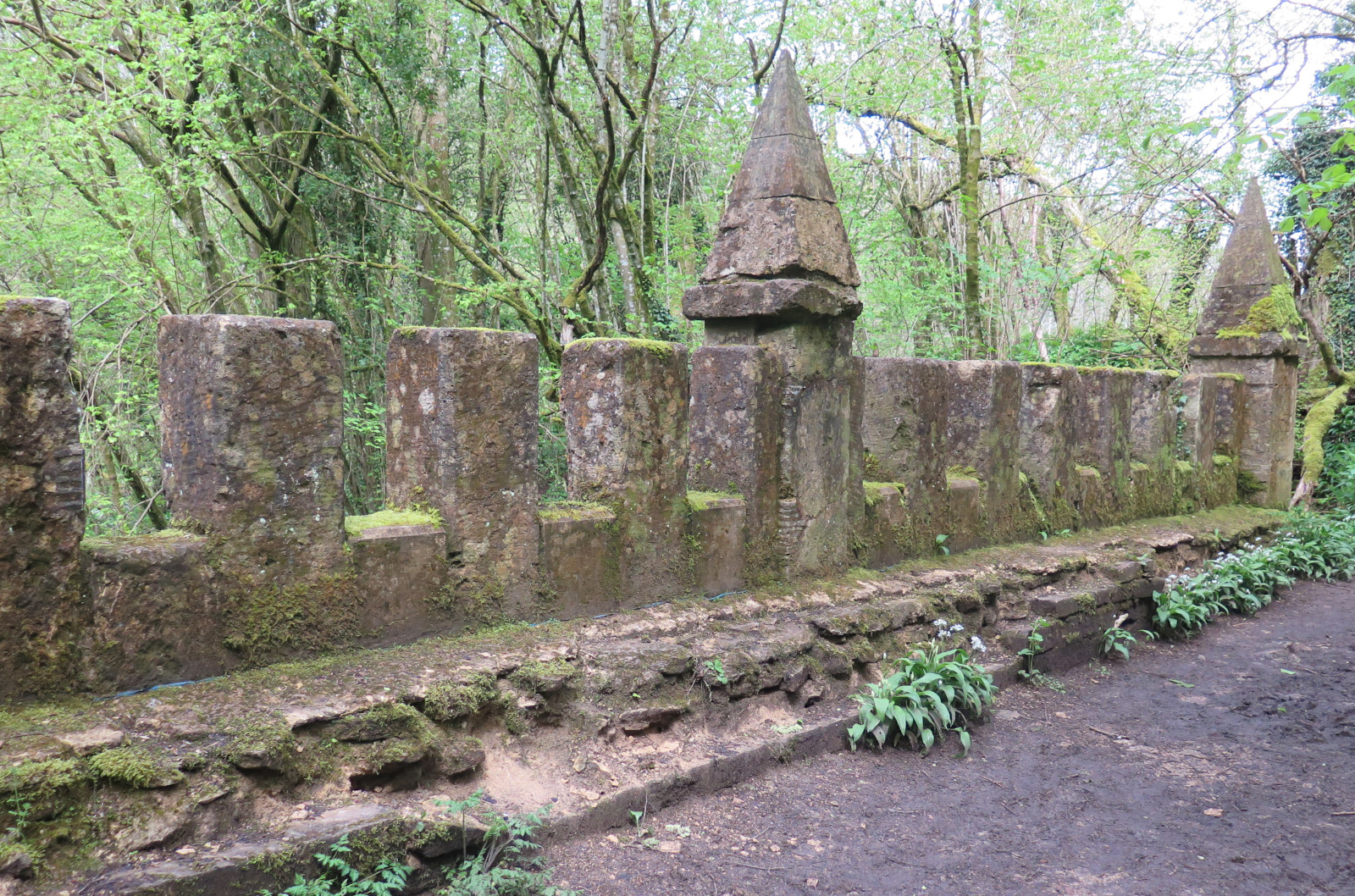
The parapet at the NW tunnel portal (Click image to enlarge)
The Thames & Severn Canal tunnel was opened in April 1789. The work was a major engineering achievement at the time.
There had been serious difficulty with the contractor originally chosen to do the work. But now it was complete, and barges were able to move goods of all kinds between London and the River Severn via Oxford, Cirencester and Stroud.
Here’s a short extract from the Gloucester Journal from 4th May 1789.
By a letter from Cirencester, dated the 19th ult., we learn that a great undertaking of conveying a tunnel sixteen feet high and sixteen feet wide, under Sapperton-hill and Hayley-wood (very high ground) for two miles and a quarter in length, through a very hard rock, lined and arched with brick, is entirely completed, and boats were to pass through it on the 21st ult.
By this opening communication is made between the river Severn, at Framiload, and the Thames near Lechlade, and will be continued over the Thames below St. John’s Bridge, and so to Oxford, etc., and London, for conveyance of coals, goods, etc.
It is now navigable from the Severn to Themsford by way of Stroud, Cirencester, Cricklade, being filled with water for the purpose near forty miles.
At the time of its execution the tunnel was considered a great undertaking; old King George III visited and expressed himself astonished with it, and that part of the canal at the east end of the tunnel is called “The King’s Reach,” probably in consequence of the visit.
The opening of the canal did not take place until the month of December, 1789, and the Journal of Monday, the 30th of that month, gives the following description of the event: —” On Thursday last was effected the greatest object of internal navigation in this kingdom. The Severn was united with the Thames by intermediate canal, ascending by Stroud, through the Vale of Chalford, to the height of 343 feet, by locks there entering a tunnel through the hill of Sapperton, for the length two miles and three furlongs, and descending 22 [sic 16] locks, it joined the Thames near Lechlade.
If you enjoyed this or found it useful, please like, comment, and share below. (If you don’t see those links, click the article’s title above the main photo and they will appear.) Send a link to friends who might enjoy the article or benefit from it – Thanks! My material is free to reuse (see conditions), but a coffee is always welcome and encourages me to write more often!











.jpg)