What’s in an image? Sometimes quite a lot, more than meets the eye.
I’m posting an image every day (or as often as I can). A photo, an image from the internet, a diagram or a map. Whatever takes my fancy.
Today’s photo shows the River Liffey in the centre of Dublin. I liked the contrast between the old sailing ship and the modern buildings along the waterfront. There’s a sense of history, of the long passage of time beyond an individual human life.
Two hundred years ago, in 1824, the city was here, the river was here, sailing ships of various sizes would have been jostling together along the quayside, but the buildings have changed dramatically. In 1824 there was no photography, no computing, no motor vehicles, no EU, no electricity supply. There were no railways; coastal vessels and canal barges were the main system for transporting heavy goods, while horse drawn vehicles on generally poor roads were used for passenger travel and light goods.
Over many thousands of years, science and technology working together have taken us from the use of stone, wild plants and animals in the prehistoric past to all the conveniences of modern living. And those changes continue, faster now than ever. Imagining the past is at least possible, imagining the future much less so. There are too many unknowns.
Images from our Irish holiday 2024
For convenience, here’s a list of all the Irish holiday images:
If you enjoyed this or found it useful, please like, comment, and share below. (If you don’t see those links, click the article’s title above the main photo and they will appear.) Send a link to friends who might enjoy the article or benefit from it – Thanks! My material is free to reuse (see conditions), but a coffee is always welcome and encourages me to write more often!
What’s in an image? Sometimes quite a lot, more than meets the eye.
I’m posting an image every day (or as often as I can). A photo, an image from the internet, a diagram or a map. Whatever takes my fancy.
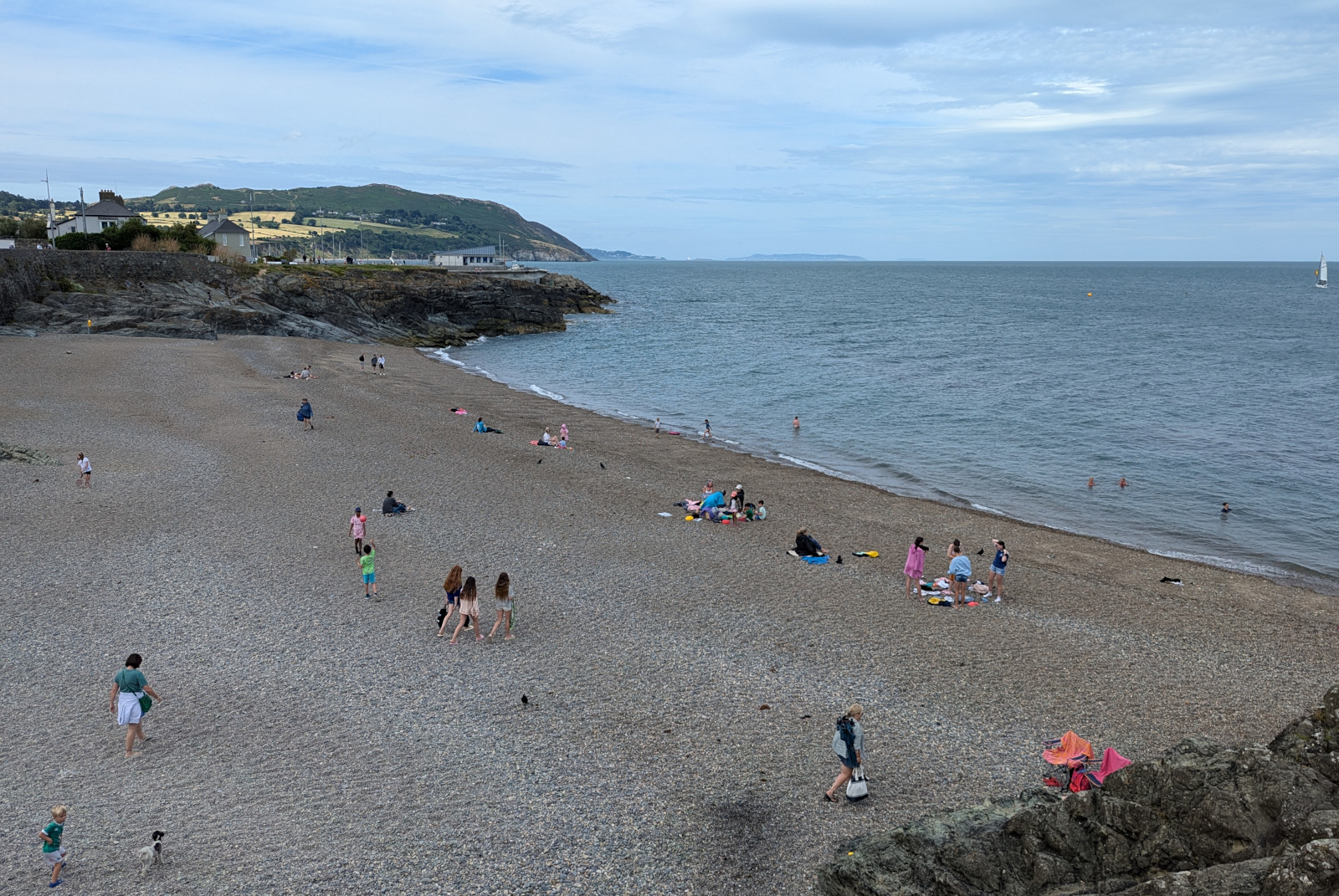
The beach at Greystones
Greystones is a delightful little town on the Irish coast south of Bray and Dublin. We visited it for a stroll along the seafront, discovering several small beaches as well as two longer ones north and south of the town. There’s a harbour/marina and interesting rock pools to see as well. With a good rail link from Dublin, this must be a busy place on warm, sunny days in the summertime.
In the photo, the headland with fields and trees beyond the rocks is just south of Bray, and the more distant headland is near Dun Laoghaire, with the furthest visible land at Howth jutting out from Dublin.
Everyone enjoys a visit to the seaside, though perhaps the people living nearby prefer it when it’s a bit quieter – though visitors bring trade to the local businesses and holiday homes, of course. I think Greystones would be a good choice for a winter break too, travel to Dublin is easy on the train, so days in the city and evenings on the coast might be a very fine combination.
Images from our Irish holiday 2024
For convenience, here’s a list of all the Irish holiday images:
If you enjoyed this or found it useful, please like, comment, and share below. (If you don’t see those links, click the article’s title above the main photo and they will appear.) Send a link to friends who might enjoy the article or benefit from it – Thanks! My material is free to reuse (see conditions), but a coffee is always welcome and encourages me to write more often!
What’s in an image? Sometimes quite a lot, more than meets the eye.
I’m posting an image every day (or as often as I can). A photo, an image from the internet, a diagram or a map. Whatever takes my fancy.
A beautiful rose at Powerscourt Gardens
While we were at the Powerscourt Estate, Donna wanted to look at the rose garden; this photo shows a really beautiful example of the flowers on view. Looking at the image now I can almost smell the fragrance in my mind!
Roses like these are not part of the natural world; they’re the work of plant breeders crossing a range of wild species and selecting for characteristics they liked. Nobody knows when rose breeding began, it may have been as far back as Greek or Roman times, but was certainly underway in medieval Europe and perhps in the middle and far east as well.
I wrote an article four years ago that includes photos of a much more natural rose. Comparing the two images emphasises how plant breeding can make huge changes (the breeders might say ‘huge improvements’) to wild forms. The same is true for animal breeding, just compare any modern breed of dog with the wild, wolf ancestor for example!
Images from our Irish holiday 2024
For convenience, here’s a list of all the Irish holiday images:
If you enjoyed this or found it useful, please like, comment, and share below. (If you don’t see those links, click the article’s title above the main photo and they will appear.) Send a link to friends who might enjoy the article or benefit from it – Thanks! My material is free to reuse (see conditions), but a coffee is always welcome and encourages me to write more often!
What’s in an image? Sometimes quite a lot, more than meets the eye.
I’m posting an image every day (or as often as I can). A photo, an image from the internet, a diagram or a map. Whatever takes my fancy.
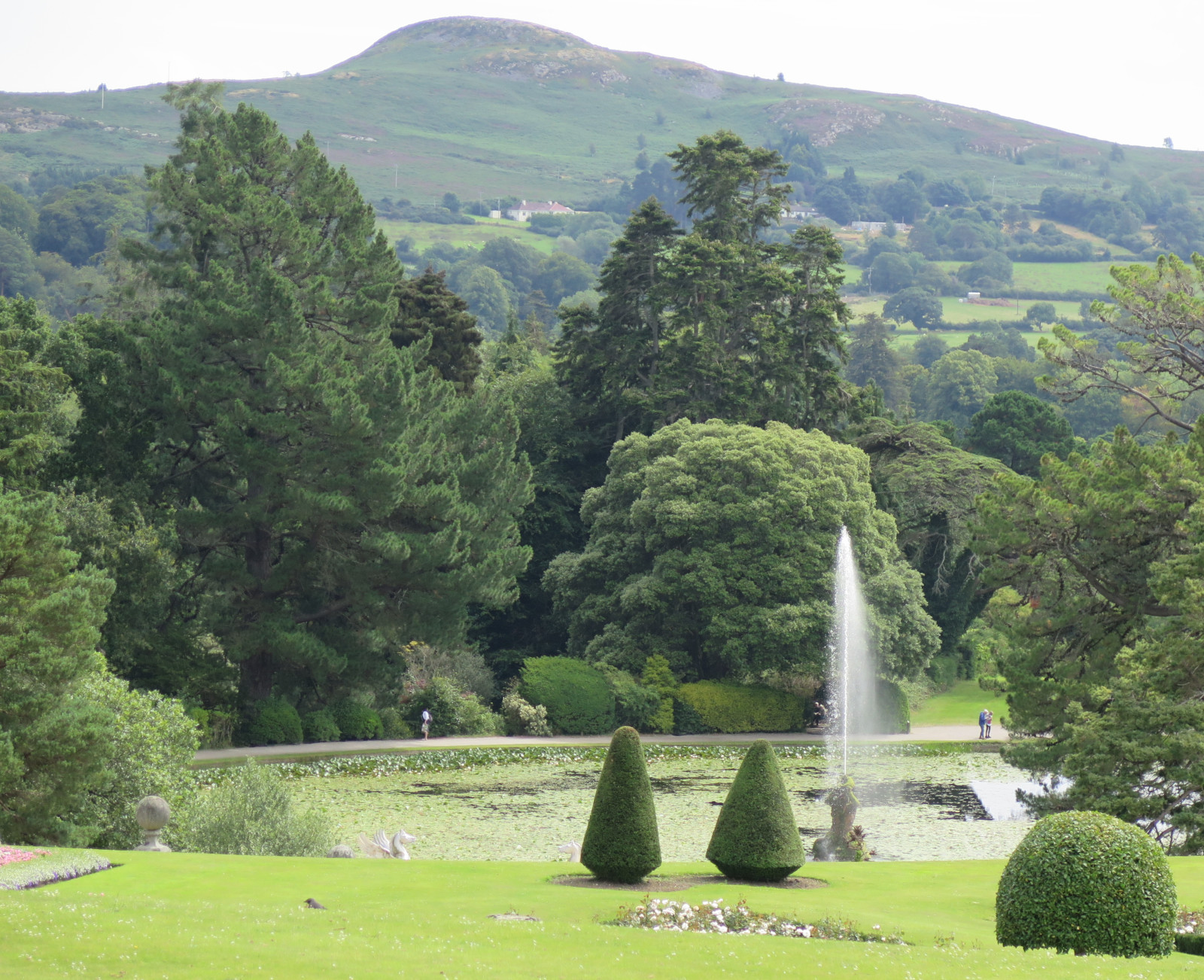
National Geographic rated this as the third best garden in the World. It’s Powerscourt Gardens in Wicklow, Ireland. National Geographic is right, this is a very fine garden indeed. It’s spacious, well designed, full of interesting plants and landscape features, and very well maintained. We did spot a few small weeds here and there, but not very many; keeping a garden this large will require a lot of dedicated gardeners, either volunteers or paid staff (probably both). Most of the work has to be done manually, it will not be a cheap operation!
Of course, ordinary everyday people can’t manage a huge garden like this, nor afford to build a house as large as Powerscourt. A very tiny minority of the population could build and live in this kind of luxury either then or now. And even among the very wealthy, not everyone wants to.
But time moves on, and most of these old houses and their gardens are now enjoyed by much larger numbers of visitors than the original owners could possibly have imagined. Perhaps they’d have been horrified! But I, for one, am grateful for their beautiful legacies that I can visit and enjoy.
I have a final question for you, dear reader, and for myself too. What will you leave as a legacy for future generations? And what will I leave? Why not leave your thoughts below in a comment? There are no right or wrong answers.
Images from our Irish holiday 2024
For convenience, here’s a list of all the Irish holiday images:
If you enjoyed this or found it useful, please like, comment, and share below. (If you don’t see those links, click the article’s title above the main photo and they will appear.) Send a link to friends who might enjoy the article or benefit from it – Thanks! My material is free to reuse (see conditions), but a coffee is always welcome and encourages me to write more often!
What’s in an image? Sometimes quite a lot, more than meets the eye.
I’m posting an image every day (or as often as I can). A photo, an image from the internet, a diagram or a map. Whatever takes my fancy.
The monastery at Glendalough
This is the ancient monastery of Glendalough. (Glen da lough – da means two, so the ‘Valley of two lakes’.) The aerial shot was taken from a helicopter in the early twelfth century, showing the thriving monastery with many stone structures, and the round tower in the upper-left corner. This is, of course, a modern model of how the settlement may have appeared, but it absolutely looks like the real thing and it’s easy to imagine flying over the scenery.
Very little remains, though the tower is still complete and some of the ruins are quite impressive (especially the cathedral and the gateway). The site is still in use as a graveyard. The museum nearby is informative and beautifully presented, well worth a thorough visit.
I’m always intrigued by the ruins of once-inhabited places. It’s good to imagine the hustle and bustle of the monks as they tended the farm, milled wheat for flour, baked their bread, and carried out all the other tasks – blacksmithing, building, making repairs, fetching water, weaving – everything it took to survive here. And then, the contemplation and prayer, the worship and copying of illuminated manuscripts: nothing would have been done unless other tasks were done first. No writing without preparing vellum, making inks, fashioning pens – you couldn’t just pop down to the shops!
If you ever have a chance to visit Glendalough, don’t hesitate!
Images from our Irish holiday 2024
For convenience, here’s a list of all the Irish holiday images:
If you enjoyed this or found it useful, please like, comment, and share below. (If you don’t see those links, click the article’s title above the main photo and they will appear.) Send a link to friends who might enjoy the article or benefit from it – Thanks! My material is free to reuse (see conditions), but a coffee is always welcome and encourages me to write more often!
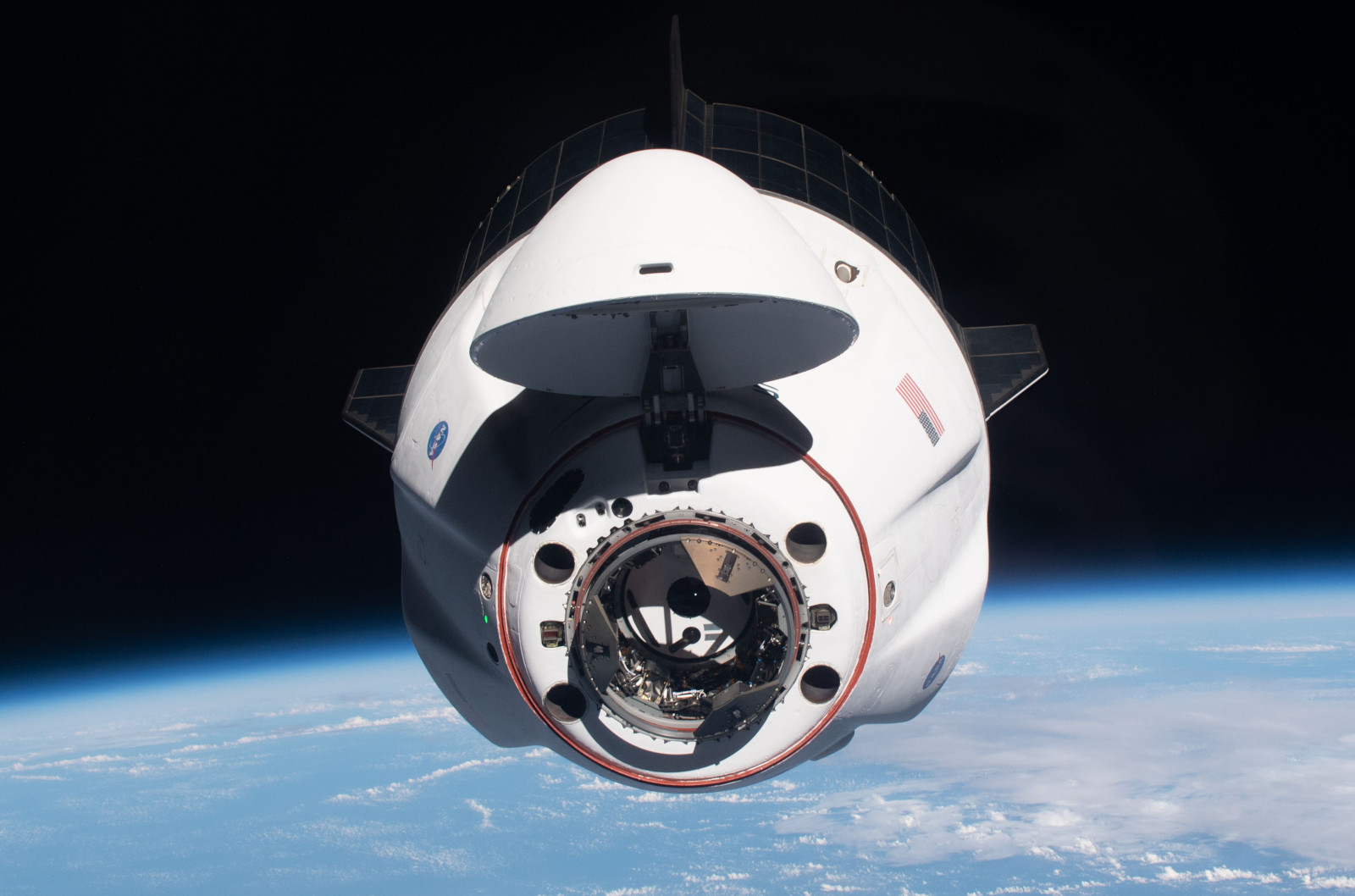
Many satellites are launched every year for profit-making purposes … TV broadcasting, imaging, weather forecasting, and internet provision.
Some time ago I was asked, ‘Why explore space?’
It’s a good question; space exploration is very expensive, surely we could spend the money on better and more important things? Surprisingly, perhaps, spaceflight has become a very profitable industry. Although exploration per se remains almost entirely government funded, exploration in past decades has sparked the profitable space industries that exist today.
Taking the world as a whole, we spend a very large amount of money on space exploration, US$117 billion in 2023. It’s fair to say that the USA almost certainly spends more than any other nation, and China and India both have major space programs, so does Europe (taken as a whole) through the joint ESA programmes (ESA is not part of the EU, however). Russia and Japan are major players too. You can view the figures as a bar chart from Statista.
It’s not quite as simple as it sounds, though. For one thing, material and human resources are much more expensive in some countries than in others, so US$1 billion buys a lot less in the USA or Europe or Australia than it does in China, or India, or Brazil.
Another thing to consider is that space research, spaceflight, and space exploration are not all about spending a lot of money, they are also activities that can generate a great deal of income. Economics is complex and difficult.
I think it may help us if we briefly review the history of space exploration.
The history of spaceflight
We have to go back to ancient and medieval times to find the first hints that people wanted to travel beyond the Earth. Even thousands of years ago, some people thought about leaving Earth behind. The Bible describes Elijah being taken up in a fiery chariot. The Koran describes Mohammed on a winged horse. The Greek, Icarus, wanted to fly high above the Earth. Dante’s ‘Divine Comedy’ in 1320 describes a journey to the heavens. ‘Kepler’s Dream’ in 1608 describes how Earth would look from the Moon. In 1657 Cyrano de Bergerac described a journey from Earth to the Moon.
Of course, much of this was fanciful in various ways, but people were thinking about it. Science fiction became popular in the 19th and, especially, the 20th century and some of the ideas discussed seemed quite plausible. Engineering experiments with solid and liquid fuelled rockets began in the early 20th century, and that’s when some people began risking money (and sometimes their lives) to make progress with early rockets. Costs were involved, but no income was generated.
By 1944 the wartime German government could see the tide had turned against them, with losses on the Russian front and in North Africa. Italy had fallen to the Allies and by the middle of the year southern and northern France had been invaded and German forces were struggling to hold on. Germany had been developing new weapons for some time, and now they began to use them in a final attempt to reverse impending defeat. Jet aircraft, the first cruise missile (the V-1) and the first rocket capable of reaching space (the V-2, the first ballistic missile) all came into play at this late stage of the war. Firing the V-2 vertically in a test, Nazi Germany became the first nation to reach space at 174.6 kilometres (108.5 miles) on 20 June 1944. The rocket entered space vertically and fell straight back as it didn’t have sufficient fuel to attempt the horizontal velocity necessary to go into orbit.
After Germany’s defeat in May 1945 there was a scramble by the USA, the Soviet Union, and to a lesser degree by the UK to capture unflown V-2s, plans and information, construction and test facilities, as well as the engineers and technicians behind the technology.
Rocket technology was developed further, both for use as a weapon and also for scientific research and space exploration. This has led to many nations engaging in spaceflight and space exploration in the late 20th and early 21st centuries.
Recent developments
So now we have set the scene. Space exploration has become technically possible. It remains difficult and expensive, though the development of advanced and miniaturised electronics and computers for control, and improved fuels, materials, and designs have reduced the costs and look set to reduce them even more substantially in future. One major change in the last decade is that we now have the first reusable rocket boosters. SpaceX is already flying some of its Falcon 9 boosters more than twenty times. The costs savings are enormous and other rocket companies are trying to catch up.
Given all of this, why would we want to explore space?
Reasons for exploring space
First, it’s worth mentioning that the reasons for exploring space are the same as those for exploring more generally. People are born explorers: the youngest infant begins exploring the environment as soon as they can crawl. There are only two requirements – an ability to move from one place to another, and a desire to find out what lies further away.
Given the ability we now have to reach ever further into space, we just naturally want to investigate what is there and understand it to the best of our ability. These days, automatic systems can travel to dangerous and hard to reach places and return images and measurements without the presence of human travellers. So we have good images and many kinds of measurement from every large body in the Solar System, and growing numbers of the smaller asteroids and comets. But automated systems have limitations in terms of decision making and judgement, limitations that require the presence of people. These limitations are more severe than first appears given the great distances involved in exploring space. When a rover on the Moon takes an image, we may be able to view it within a few seconds and send instructions on what to do next. On Mars it might take twenty minutes to receive the image and another 20 minutes for the instruction to reach the rover. So a Mars rover needs to navigate and make decisions on avoiding obstacles semi-autonomously.
So far we have travelled only to Earth orbit and to the Moon, but the urge to go further remains. We’re a nosy and inquisitive race; we want to know more, we want to find out, we love to solve mysteries.
The benefits so far
This is unlikely to be an exhaustive list, there are many benefits already and new ones keep moving from theory to practice. I’ll list those I can think of below.
Photographing the Earth’s surface from orbit. This benefits mapping, weather forecasting, resource discovery, agriculture, military intelligence and much, much more.
Understanding geology by comparing Earth rocks and minerals with those on the Moon, other planets, rocky moons, and so on. We are learning how Earth and the other planets formed, and how long ago.
Astronomy has advanced as telescopes are operated from space. Earth’s atmosphere causes reduced image clarity and blocks many wavelengths of light, X-rays, and other forms of radiant energy. Light pollution from cities is also avoided by putting a telescope into orbit. It also becomes far easier to identify smaller objects that might collide with Earth and potentially cause serious damage and loss of life.
Probes have travelled to distant solar system objects to return images and sometimes samples of surface material.
Manufacturing in micro-gravity can produce medical, engineering and scientific materials that simply cannot be made on Earth. Ultra pure proteins have aided medical science enormously in some areas, helping scientists understand protein structures for example, or manufacturing life-saving antibodies and drugs.
Understanding the inhospitable conditions of space itself and the other planets in our solar system provides a perspective that helps us value what we have here on Earth.
Communications systems have benefitted enormously from spaceflight. From TV satellites providing hundreds of high-resolution channels, to satellite internet availability for ships, aircraft and remote regions, the exploration of space has provided the technology behind these improvements. Good internet access for remote areas improves disaster rescue, allowing much quicker responses.
Satellite navigation has transformed many aspects of land, air and sea travel. Who wants to manage without their satnav while driving?
Spin-off technologies like solar panels, stronger materials such as carbon fibre, recycling and purification of air and water were all developed first because of space exploration and are now proving invaluable here on the ground as well.
New resources are becoming available as a result of space exploration. Rare and expensive metals from asteroids, ices from comets and the moons of planets in the outer Solar System are likely to become useful in the near- to mid-term future. This is not yet commercially viable, but will become so as space transport systems develop further.
I hope that brief round up will help my readers understand some of the why-questions around space exploration. In the early days it was an expensive operation, funded by governments, and often justified by military considerations. Today, much space activity is done by companies with a profit motive. Launch services are now largely commercial in nature, so too is the transport of people and materials to and from Earth orbit and even now to and from the Moon. And finally, many satellites are launched every year for profit-making purposes as well – TV broadcasting, imaging, weather forecasting, and internet provision to name just a few.
What’s in an image? Sometimes quite a lot, more than meets the eye.
I’m posting an image every day (or as often as I can). A photo, an image from the internet, a diagram or a map. Whatever takes my fancy.
Arriving in Ireland, one of our first explorations took us into the Wicklow Mountains, driving a loop from Newtownmountkennedy to Glendalough via the old military road through Sally Gap. The scenery was glorious as you can see from the photo. I was reminded of North Wales, the Pennines, the Lake District, and Western Scotland.
It always feels good to be alive, but for me this was one of those special times when it feels especially good to be experiencing the grandeur, the beauty, and the sheer ‘thisness’ of the surroundings.
‘Thisness’ is a term I borrowed from Kim Stanley Robinson‘s Mars trilogy, a word he puts in the mind and mouth of Sax Russell, one of the science team in the story. The books are a good read; begin with ‘Red Mars’, then ‘Green Mars’, and finally ‘Blue Mars’. They are not just good science fiction, they are also a powerful commentary on many political, technological, and societal issues in the real world.
Images from our Irish holiday 2024
For convenience, here’s a list of all the Irish holiday images:
If you enjoyed this or found it useful, please like, comment, and share below. (If you don’t see those links, click the article’s title above the main photo and they will appear.) Send a link to friends who might enjoy the article or benefit from it – Thanks! My material is free to reuse (see conditions), but a coffee is always welcome and encourages me to write more often!
Nobody can predict when the crash will come. But I believe General Hodges is right when he suggests that current events in Kursk are unlikely to be the only surprise.
What is going to happen next in Russia’s war against Ukraine? We don’t know, we’ll have to wait and see. But it’s possible to make some broad predictions even without knowing the facts.
General Ben Hodges, speaking about Vladimir Putin and the Russian Army’s current floundering against Ukraine, quoted Ernest Hemingway :
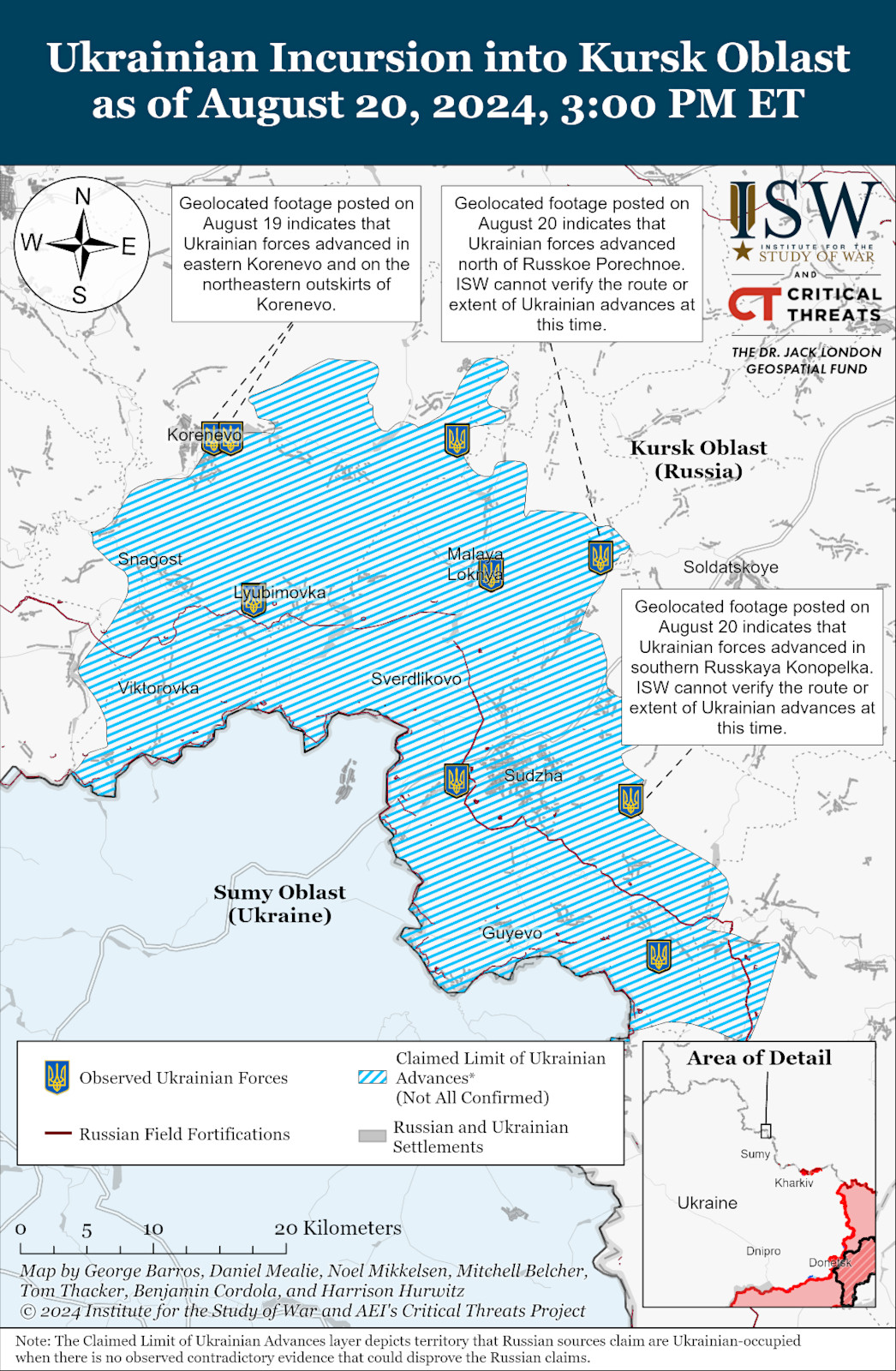
This is certainly true of Russia, they are wasting their soldiers, wasting their equipment, the economy is sliding out of control, and the population is now beginning to hear the very bad and disturbing news from Kursk Oblast (click the map for a larger version).
And it’s just as true for Putin personally. His moral bankruptcy in Russia and in the world at large is going to catch up with him. Abraham Lincoln’s famous words are relevant here: ‘You can fool all of the people some of the time, and some of the people all of the time, but you can not fool all of the people all of the time.’
The truth has a way of coming out, and it often chooses very bad moments to do so!
Nobody can predict when the crash will come. But I believe General Hodges is right when he suggests that current events in Kursk are unlikely to be the only surprise Ukraine will spring on all of us, perhaps in the near future or maybe a little while later.
We’re still in the ‘gradually’ stage. But for Russia and for Putin the ‘suddenly’ phase will surely follow.
Watch the interview with Ben Hodges
Kyiv Post interview with General Ben Hodges
The Kyiv Post interviewed Ben Hodges on 21st August 2024, answering a series of questions about Ukraine’s recent activity in Russia’s Kursk Oblast, as well as some more general questions.
Useful? Interesting?
If you enjoyed this or found it useful, please like, comment, and share below. (If you don’t see those links, click the article’s title above the main photo and they will appear.) Send a link to friends who might enjoy the article or benefit from it – Thanks! My material is free to reuse (see conditions), but a coffee is always welcome and encourages me to write more often!
What’s in an image? Sometimes quite a lot, more than meets the eye.
I’m posting an image every day (or as often as I can). A photo, an image from the internet, a diagram or a map. Whatever takes my fancy.
Leaving Fishguard
We were leaving the Welsh port of Fishguard for Rosslare in Ireland for a two week holiday. We drove our car onto the ferry and then relaxed on board, and I watched as the ship’s maneuvering thrusters churned up the water and pushed us away from the quayside. Before these thrusters were introduced, a pair of tugs would be required to get the ship into a position where it could begin to leave the harbour. The disturbed water between the ship and the quayside is clearly visible in the photo.
Moving a heavy object from a fixed position takes a lot of force, but that force also needs to be well-directed and carefully applied for some time. Sometimes we are like the ship. We have some kind of fixed position (mentally, ideologically), but to get us to safely shift may require considerable pressure combined with delicate care and understanding, accurate guidance and plenty of time.
In principle, we are all the same. So it’s worth remembering the right approach when we want to encourage some kind of movement in others. Be prepared to use sustained pressure; care, wisdom and understanding; accurate guidance; and by no means least, as much time as necessary. You certainly don’t want to cause a shipwreck!
Images from our Irish holiday 2024
For convenience, here’s a list of all the Irish holiday images:
If you enjoyed this or found it useful, please like, comment, and share below. (If you don’t see those links, click the article’s title above the main photo and they will appear.) Send a link to friends who might enjoy the article or benefit from it – Thanks! My material is free to reuse (see conditions), but a coffee is always welcome and encourages me to write more often!
What’s in an image? Sometimes quite a lot, more than meets the eye.
I’m posting an image every day (or as often as I can). A photo, an image from the internet, a diagram or a map. Whatever takes my fancy.
A juvenile robin
This young robin perched on the back of a chair at our table in the cafe of the Great Glasshouse. Clearly hoping for some dropped particles of food, but disappointed as we only had coffees at the time.
Is it good to feed wild birds? Sometimes this is a no-brainer. In the short, cold days of winter when food may be hard to come by, a bowl of tepid water and some fruit, seeds, fat balls or dried insect larvae may be just the thing they need to avoid dehydration, starvation or hypothermia. But when natural food supplies are plentiful, it may be better to let them find their own. Here’s some good advice from the RSPB.
If you enjoyed this or found it useful, please like, comment, and share below. (If you don’t see those links, click the article’s title above the main photo and they will appear.) Send a link to friends who might enjoy the article or benefit from it – Thanks! My material is free to reuse (see conditions), but a coffee is always welcome and encourages me to write more often!







 Journeys of Heart and Mind
.jpg)