I want to explain difficult concepts in ways that non-experts can understand. I believe it’s important for all of us to have some grasp of how science works and why it’s useful.
I like to write about things I’m passionate about, but that provides a good deal of scope because I’m deeply interested in quite a few disparate things. A brief personal history will explain why.
I was interested in science and technology as a child, I did well in O-levels in Chemistry and Physics, also Maths and Geography. For A-levels I chose Chemistry, Physics and Biology and passed all three, securing a place at the University of Bath for a BSc degree. My first job was doing biological research, first on tree growth, then on flower and fruit development for an MSc (lots of microscopy which I loved).
I had an early interest in astronomy and spaceflight, and that has remained with me to this day. At the same time, I became convinced that I should follow Jesus, and spent a good deal of time attempting to separate the wheat of Jesus from the chaff of church tradition and formality. I used to collect coins (almost entirely British coins) and I’m fascinated by history and archaeology. I took up photography around the age of 9 and have stuck with it as a hobby ever since.
I could add more, but regular readers will already recognise some familiar posting topics from that list above.
So what do I post?
Around half of my posts these days are based on photos I’ve taken. I’m on Image of the day – 88 at the moment. Sometimes it’s just a photo with descriptive text, sometimes I try to draw out something a little deeper in the text.
Perhaps another 25%(ish) of my posts are about faith and following Jesus. Not too religious, I hope, more practical and applicable to every day living. Some are clearly teaching on a topic that I feel is important, but perhaps widely ignored or misunderstood. Others are more casual notes about something I’ve seen, or heard, or thought.
A smaller proportion of posts relate to the war in Ukraine. I feel quite strongly about this as you will already realise if you have read any of them. But I want to be positive as far as possible, and appeal to the good that is in most ordinary people to a greater or lesser extent.
Then there are posts on science and technology topics, this one for example on star formation. I want to explain difficult concepts in ways that non-experts can understand. I believe it’s important for all of us to have some grasp of how science works and why it’s useful.
I began writing more or less regularly way back in 2002, sometimes there have been significant times when I’ve been silent for a while, other times I’ve been on a roll. And even before blogs were a thing, I was writing online about this and that. See this example from January 1997. You’ll probably note some similar topics, even that far back.
Any thought or questions? Leave them in the comments section below (or click the ‘Comment’ link below the main image), thanks.
Useful? Interesting?
If you enjoyed this or found it useful, please like, comment, and share below. (If you don’t see those links, click the article’s title above the main photo and they will appear.) Send a link to friends who might enjoy the article or benefit from it – Thanks! My material is free to reuse (see conditions), but a coffee is always welcome and encourages me to write more often!
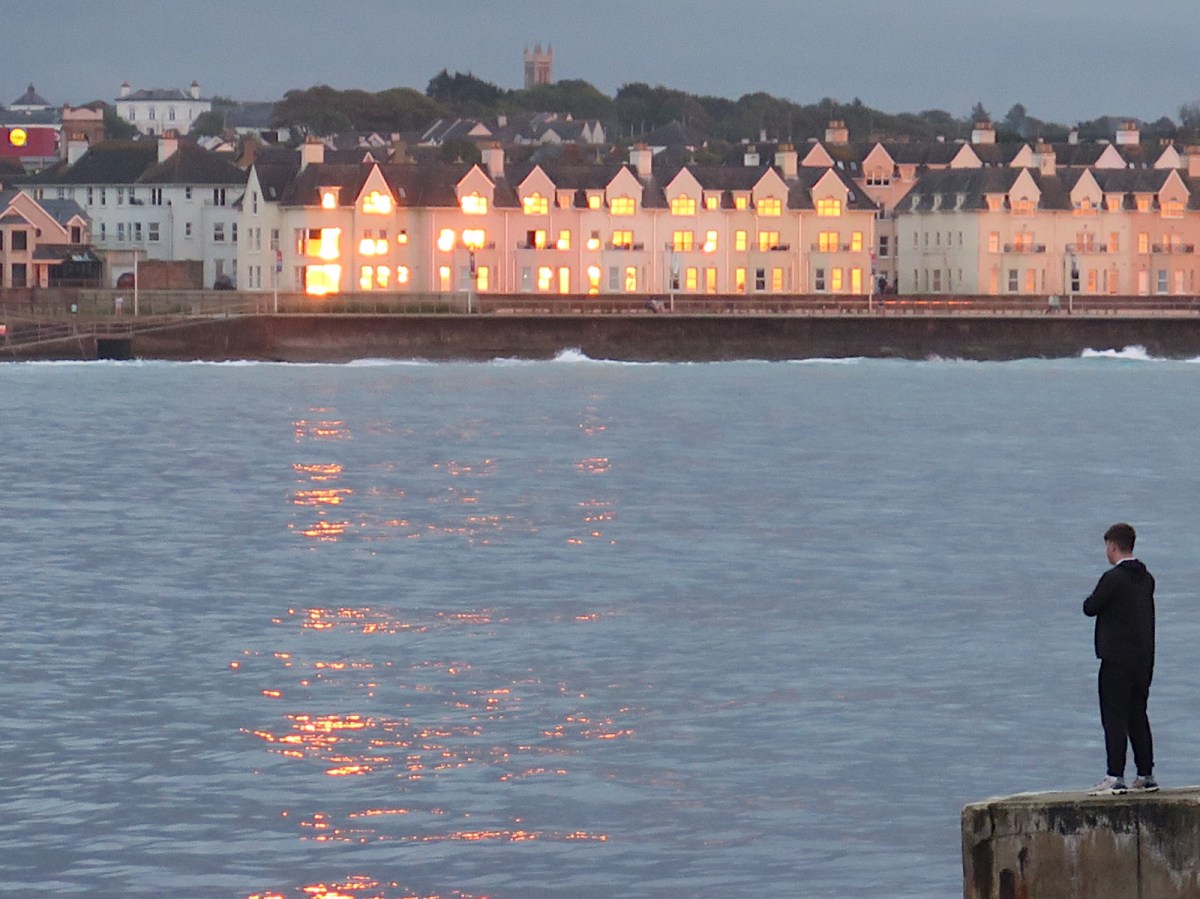
I walked out to the harbour and enjoyed the sounds and smells of the sea as well as a glorious sunset. Looking south from the harbour there are some great views of the town.
What’s in an image? Sometimes quite a lot, more than meets the eye.
I’m posting an image every two days (or as often as I can). A photo, an image from the internet, a diagram or a map. Whatever takes my fancy.
Click to enlarge
Returning to Portrush at the end of the day we ate a good meal in the holiday house, with a view over the harbour and the west beach.
Later in the evening I walked out to the harbour and enjoyed the sounds and smells of the sea as well as a glorious sunset. Looking south from the harbour there are some great views of the town and its seafront and I managed to get this shot with the setting sun and orange clouds reflecting in the windows of properties just beyond the shore. You can even see reflections on the water of reflections from the windows! Third-hand sunlight!
And I was reminded of something else. Jesus told his followers, ‘I am the light of the world’. And sometimes it’s said that as his followers we will reflect something of his grace and light into the lives of the people we meet in our daily lives. I hope I sometimes do that, I’d certainly like to.
But we don’t often realise, perhaps, that the people who receive that second-hand light reflected by us, also reflect his character and nature yet again to others.
What a responsibility we bear! The better we reflect Jesus into the world, the better others may be enabled to reflect him too. Jesus is the light. If you follow him be the best reflector you can be – others may depend on it! Not that we can change anyone, only he can do that, but sometimes he does use us as mirrors to reflect his presence and nature into our world.
Images from our Irish holiday 2024
For convenience, here’s a list of all the Irish holiday images:
If you enjoyed this or found it useful, please like, comment, and share below. (If you don’t see those links, click the article’s title above the main photo and they will appear.) Send a link to friends who might enjoy the article or benefit from it – Thanks! My material is free to reuse (see conditions), but a coffee is always welcome and encourages me to write more often!
This article is an updated extract from my short book, Jesus, Disciple, Mission, Church (JDMC). The bite-sized piece below is roughly two percent of the book. This is the first part of the fifth forgotten way.
Introduction
The New Testament likens the church and the kingdom of heaven to various other things. These include the human body (1 Corinthians 12:27), farmers’ fields (1 Corinthians 3:9), the effect of yeast (Matthew 13:33), seeds (1 Corinthians 3:6) and trees (Luke 13:18-19). These are great illustrations because church actually does behave quite like a living thing. Church is alive! It is Christ’s body. Of course, church and kingdom are two different things; church is part of the King’s domain, though by no means all of it. But both are alive.
Think about it. The church grows, reproduces and responds to the world around it. It develops and matures; it spreads like seeds or a virus. The good news about Jesus spreads from one receptive person to the next as we talk about it and especially as we live it out. You can see all of this at work in the book of Acts. Some of the most astonishing Jesus movements have had loose network structures and have spread widely and rapidly. Think in terms of a forest or a city of people; each tree or citizen is like a local church while a movement is a network like a forest or city.
Jesus said, ‘I will build my church and the gates of Hades will not prevail against it’ (Matthew 16:18). So what sort of environment has he provided in which this building (or growing) will take place? History shows that whenever there has been major growth in mission there has always been apostolic leadership at work.
It’s very important to encourage real life in church; we need to get the structure right for that and we will have to help the lifelike processes of growing and reproducing come to the fore. To do this, we must avoid too much organisation and control, things we tend to like because they make us feel useful and safe. But we shouldn’t be in control – Jesus should!
Discuss or consider – Talk about the structure and management of what you do. Are there things you need to change? Are there things you should stop doing How might you free people up and encourage more natural processes to take over.
Keep moving on
Think and talk about church as a movement. Aim to plant movements, not churches. Pay attention to stories of great movements past and present, read books about them, get excited about the possibilities.
Begin consciously behaving as a movement. Be fluid and adaptable, ready to take risks, build in lifelike structures, aim to multiply, dream and experiment, look into ways of changing from what you are to what you need to become. Remember that movements are networks; find as many ways as you can of connecting people really widely.
Discuss or consider – What might prevent you from moving forward? Talk about the way you think, your expectations and your goals. Are these as flexible as they need to be? When change becomes necessary, what forces might stand in the way? What is the difference between a movement and a church?
Structure for life
Change or remove anything and everything that stifles real life; good structures are very simple and easy to copy. Think about gardening rather than engineering because gardening involves living things. What is the easiest way to make a city? What is the easiest way to make a forest?
Remember that living things grow by themselves according to the life code (DNA) that is within them. An oak tree cannot produce grains of wheat and an acorn can never grow into a cabbage. In the same way, it’s impossible for the church to produce seeds of injustice and someone who continues to follow Jesus can never grow into a thief. Each grows according to its type. Jesus said we’d be known by the fruit we produce, either good or bad. Aim to produce plentiful, good fruit! (Matthew 7:15-20).
In other words, you don’t need to make the church grow. You can’t! All you can do is help the process start and provide the right conditions. Take good seed, bury it to the right depth in well tilled and manured ground, make sure it has enough water, keep away weeds and pests and your job is done. There will be a good harvest, but it might take a little time and patience.
Make sure leaders give power away, not hold onto it as the world tends to do; leaders should see themselves as servants (Matthew 20:25-28). Encourage every part of your group to think for itself, and give everyone the opportunity to use their gifts and interests freely and fully. What did Paul write about the body of Christ? (Ephesians 4:11-13) Encourage passion and ownership by telling great stories; invite people to act with boldness and ‘have a go’; involve everyone in planning. Celebrate every success; rethink and retry after every failure. Learn from every mistake and look for the positive aspects; never give up.
Share information as widely and openly as possible. Get apostles, prophets, evangelists, shepherds and teachers to explain what they do to everyone. Share any problems and talk about them; if possible become part of a wider network; welcome change whenever it’s needed. Don’t try to turn chaos into order but instead see if you can find meaning in the chaos. You may need to change your point of view or encourage others to say what they think.
It’s best to structure things around the passion, energy and life that you see in people. Everyone is a potential power house in their own, unique way so encourage them to be more active, not less. Don’t build ‘windbreaks’ that slow the wind down, instead build ‘windmills’ that harness its energy. Remove obstructions to active life and, when that is not possible, find alternative pathways to get around them. Build mission and church around people’s interests, and choose meeting times to avoid clashing with social gatherings in the wider community. Let go when something is no longer useful, support new ideas and fresh energy whenever they appear in the group.
Shared beliefs and purposes are great at holding networks together. So form common values, beliefs and practices and help newcomers to understand them. Find simple, clear, memorable ways to talk about them. Share the stories of the group’s origins often and in as many ways as possible. Encourage one another and tell people why you value them.
Discuss or consider – Spend some time right now to dig out the stories of how your group got started. Write these stories down; perhaps someone will volunteer to collect them in a notebook or folder or post them to a blog. Also, talk about the ideas in this section. How many of them are you already doing? List examples. Where do you need to do better?
This was extracted from Jesus, Disciple, Mission, Church (JDMC), pages 17 and 18. Download the whole thing or read it online – GetJDMC.scilla.org.uk
Useful? Interesting?
If you enjoyed this or found it useful, please like, comment, and share below. (If you don’t see those links, click the article’s title above the main photo and they will appear.) Send a link to friends who might enjoy the article or benefit from it – Thanks! My material is free to reuse (see conditions), but a coffee is always welcome and encourages me to write more often!
What’s in an image? Sometimes quite a lot, more than meets the eye.
I’m posting an image every two days (or as often as I can). A photo, an image from the internet, a diagram or a map. Whatever takes my fancy.
Click to enlarge
After a good look at the Giant’s Causeway, we drove on to Carrick-a-Rede to see the famous rope bridge. The bridge connects the mainland cliff with the nearby small island where fishermen traditionally trapped salmon making their way to the rivers Bann and Bush for spawning. That industry is now abandoned as the numbers of salmon have dwindled.
The bridge has been replaced many times over the years and is currently owned and managed by the National Trust. It’s quite an interesting walk, and very smelly in places due to the seabirds nesting on the cliff face. Definitely a ‘strong pong’!
The island itself is interesting too, there’s a small house, no doubt built and used by the fishermen, and old machinery and a place to tie up boats. And there’s a great view out to sea, of course. If you’re visiting this part of the Irish north coast, the bridge is well worth a visit.
If you enjoyed this or found it useful, please like, comment, and share below. (If you don’t see those links, click the article’s title above the main photo and they will appear.) Send a link to friends who might enjoy the article or benefit from it – Thanks! My material is free to reuse (see conditions), but a coffee is always welcome and encourages me to write more often!
In some ways, predicting the future is a fool’s errand, we will always fail in the detail. But where there are clear trends we can make educated guesses, and these can inform our actions in the here and now.
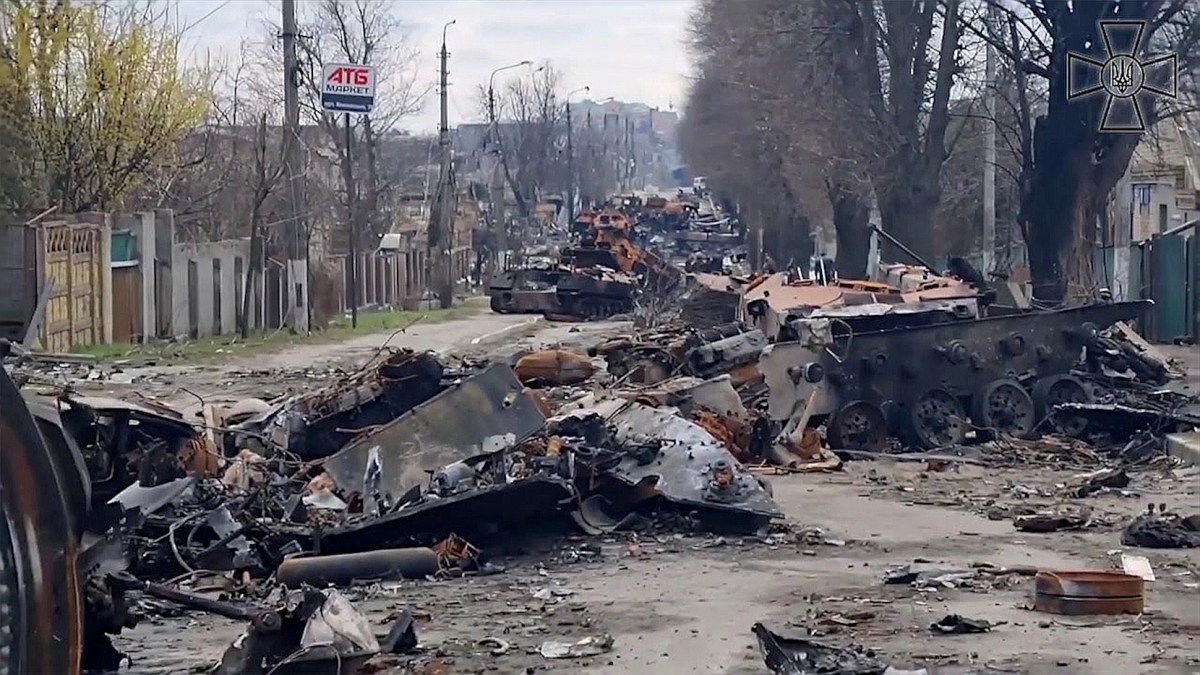
What began as a Russian invasion of Ukraine, a show of force aimed at decapitation of the state, the destruction of democracy, and the installation of a puppet administration didn’t work out well for Russia.
There are many sources of news, interviews, and comment covering events in Russia and Ukraine. There’s a list of some of these at the end of the article. The history of events so far is also well covered. But here I want to consider the future. What might happen next?
In some ways, predicting the future is a fool’s errand, we will always fail in the detail. But where there are clear trends we can make educated guesses, and these can inform our actions in the here and now. Looking ahead is hugely useful. Do I need to buy more bread? How long will the milk remain usable? How can I raise the money to start a new business? Where shall I go on holiday next year? How should we change our behaviour to reduce the impact of global warming? Even walking along a footpath involves thinking about the next step, avoiding obstacles. Whether we’re planning our next footfall, considering our next holiday or our next career step – trying to predict the future is essential. And remembering the past is part of the process as we ask ourselves, ‘Have we seen a situation like this before? What happened last time?’
So what is likely to happen next in the war between Russia and Ukraine?
Russian advances on the front line
The pattern of previous months has continued, Russia has pushed forward, little by little, day by day, sometimes in just one part of the front line, sometimes in several. But these advances have been mostly small, often just tens or hundreds of metres, sometimes a couple of kilometres. Looking at a large scale map it’s difficult to see any change at all, and sometimes Ukraine has pushed back. The bigger story, perhaps, is the cost to Russia in terms of men and materiel. They are losing around 40 000 men a month, along with large numbers of vehicles including tanks and armoured personnel carriers. Giving up ground slowly gives Ukraine many opportunites to destroy Russian troops and equipment.
The wet, muddy season that bogs down military vehicles has not yet fully materialised. Surely it will come soon. We may see a sharp drop in large scale movements by both sides; but there are other factors too. Russian losses in men and materiel have been savage, Ukrainian drone strikes have destroyed large amounts of stored ammunition and equipment, army HQ facilities, fuel supplies, airfields, and military industrial facilities. All of this is slowing Russian forces down and making everything more difficult.
It seems likely that Russia’s creeping advance will stall, and perhaps even go into reverse. There are already some signs that this is already happening, both in Kursk and along the frontlines in Ukraine. Expect this trend to continue.
Presence of Korean forces
The evidence so far is that Korean troops are not likely to make much difference. They have not been very effective so far in Kursk where they’ve been deployed. At best, they may delay Russia’s need to find additional Russian troops.
Donald Trump as US President Elect
This is a difficult one to call. Trump tends to be erratic and therefore unpredictable. Perhaps the best we can do is wait and see. Ukraine will hope for the best but prepare for the worst.
Technology
The Ukrainians have been very effective in developing novel solutions to seemingly intractable military problems; consider the sea drones, FPV warfare on the front lines, the development and use of very long range weapons to perform deep strikes on Russian facilities, the development of a cruise missile, even rumours of nuclear capability within a few months.
The trends here are suggestive. Russia has been innovative too, but on a much smaller scale. Certainly they have also made advances with FPV warfare and with electronic countermeasures, but to a greater extent than Ukraine they have depended on drawing down stocks of older and older equipment.
Russia seems to be slowly becoming less effective, Ukraine is rather quickly becoming more effective. Draw your own conclusions assuming this trend continues.
Power and energy supplies
Both nations have destroyed energy facilities. Russia has destroyed almost all Ukraine’s thermal power stations, and a large amount of hydro-electric power as well. Ukrainians will face a hard winter with insufficient electricity supply, depending now on nuclear plants and imports from the European grid.
Ukraine has seriously damaged Russian oil facilities, taking out many refineries and storage depots. It’s also likely that Russian oil pipelines will freeze this winter, and getting them back online will be very difficult and expensive to say the least. Even without Ukrainian strikes, Russian infrastructure of all kinds is in a poor state because of inadequate maintenance, and there were some notable failures last winter.
Russian economy
Sanctions have profoundly hurt Russia’s economy. Oil and gas revenues have been very hard hit, many skilled and unskilled industrial staff have died in the war leaving severe manpower shortages, the Rouble has fallen in value, inflation and high interest rates are making themselves felt. The future doesn’t look promising.
Unhappy and rebellious populace
It’s quite clear that the Russian people are becoming unhappy. By contrast, in Ukraine people are weary but morale remains high.
Russia can flip when the people are deeply unhappy; there have been similar situations before. In 1917 the autocratic leadership of the Czar brought both defeat in war and hunger to the population – there was a revolution. In 1991, the fall of the Soviet Union followed defeat in Afghanistan and restlessness at home. And in 2024 we see similar conditions building right now – the Russian Army may fail in Ukraine and there’s growing unrest as living conditions worsen and so many families have lost fathers, husbands, brothers and sons in Putin’s war.
We can only conclude that something similar may happen again. It’s not guaranteed, but nor is it impossible.
I might revisit this topic in future if I sense there are useful new points to be made.
If you enjoyed this or found it useful, please like, comment, and share below. (If you don’t see those links, click the article’s title above the main photo and they will appear.) Send a link to friends who might enjoy the article or benefit from it – Thanks! My material is free to reuse (see conditions), but a coffee is always welcome and encourages me to write more often!
What’s in an image? Sometimes quite a lot, more than meets the eye.
I’m posting an image every two days (or as often as I can). A photo, an image from the internet, a diagram or a map. Whatever takes my fancy.
Click to enlarge
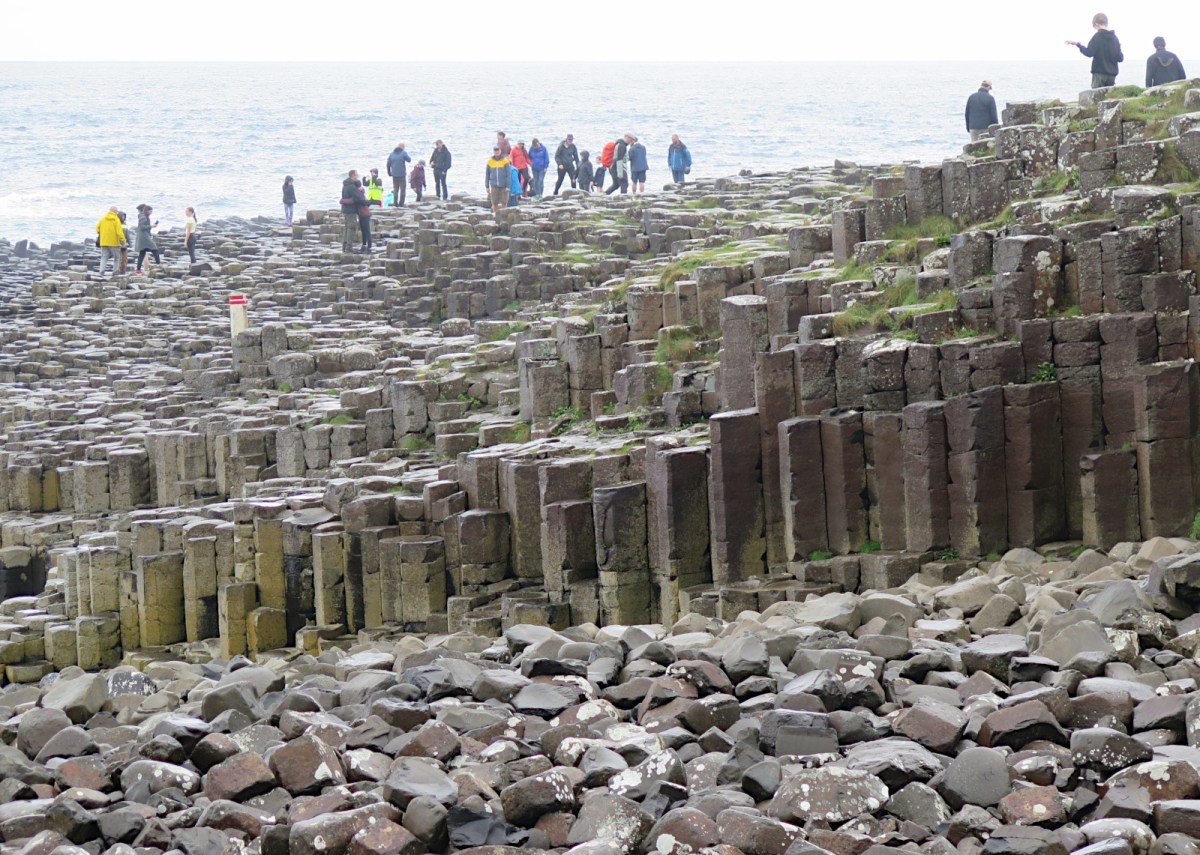
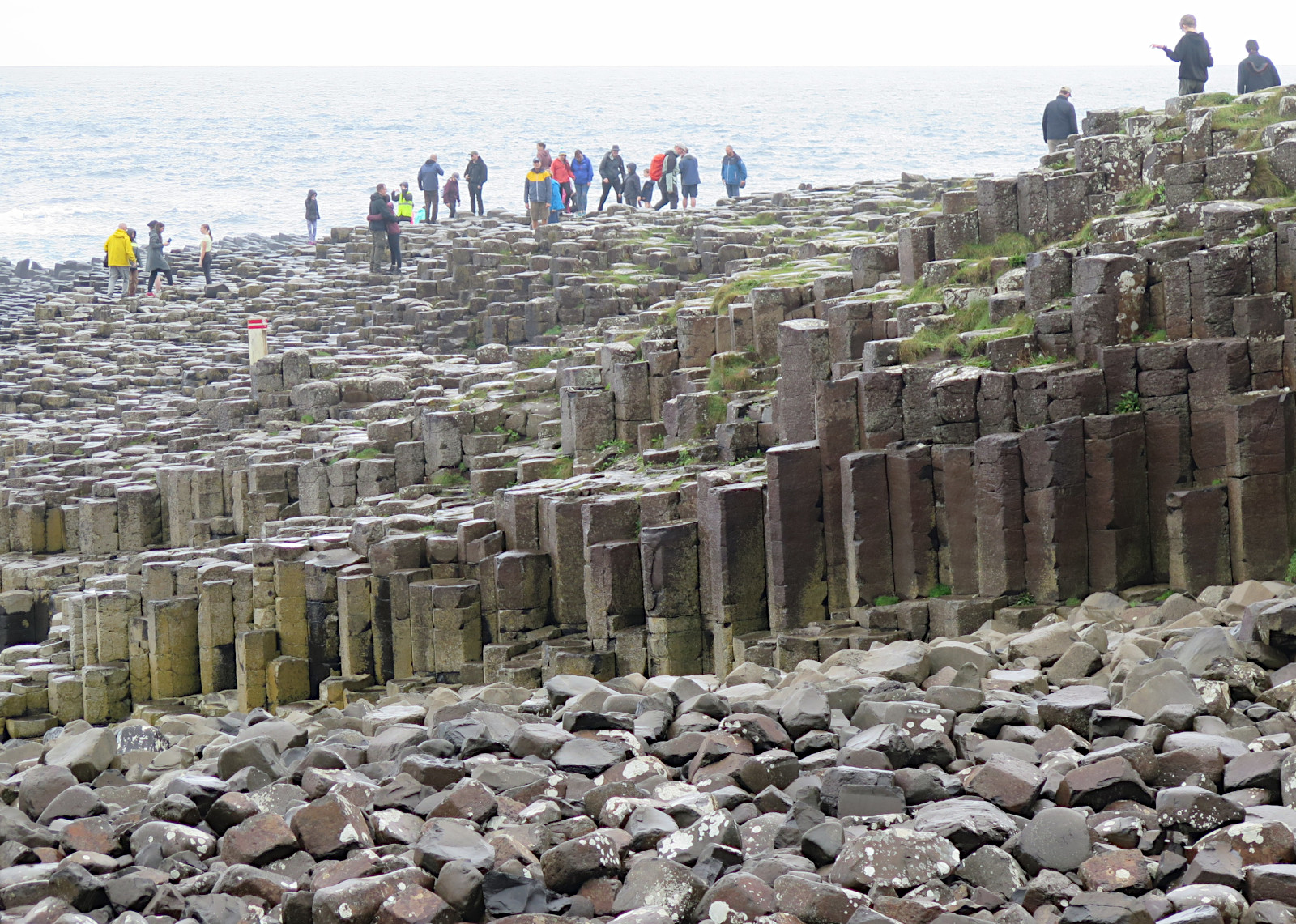
After our first night in the holiday house at Portrush we were ready to explore in earnest. We drove to the Giant’s Causeway, and the photo shows how many people turn out to see this geological feature, even on a damp and breezy day. It is an incredible sight, with the famous hexagonal basalt columns taking on a multitude of forms. In places they are weathered down to appear like an almost flat pavement (the legendary giant’s work in building a causeway between Ireland and Scotland). In other places they rise vertically like organ pipes, and in yet others they are still capped at the top by overlying sediments deposited above them.
As with the sandy beaches at Portrush, the coast trends east-west and faces north. What a place, rugged, very unusual and most impressive. It is deservedly famous! UNESCO declared it a World Heritage Site, it is a Northern Irish National Nature Reserve, and it was voted the fourth-greatest natural wonder in the United Kingdom
The Wikipedia article listed below gives a good explanation for the volcanic origins of the ’causeway’.
If you enjoyed this or found it useful, please like, comment, and share below. (If you don’t see those links, click the article’s title above the main photo and they will appear.) Send a link to friends who might enjoy the article or benefit from it – Thanks! My material is free to reuse (see conditions), but a coffee is always welcome and encourages me to write more often!
Judy’s Dad turned 70-years-old on the tenth and she made him a cake decorated with emblems representing his life so far. We met at their house in Charlton Kings, Cheltenham, with her brother Frank and his family. (1994)
Notes from bygone years – November (Remember, remember). Hint: Click images to enlarge them.
November 2023 (1 year before publishing this article)
Bristol Boxkite at Bristol Museum
We drove to Bristol to take Donna’s saxophone in for a service at Headwind and then spent the rest of the day in the city. We visited the museum and spent some time in the art gallery there. The main lobby still has the Bristol Boxkite hanging from the ceiling, reminding visitors of Bristol’s long and continuing contribution to the aerospace industry. We also walked down Park Street in the rain, investigated Bristol Guild, ate at a student cafe, and looked around the cathedral briefly. A good day out!
Erin (our cat) responded very well to steroid treatment and was fit and happy for the first half of the month, but towards the end of November she was becoming very unwell again and there was nothing more that the vet could do to help her.
JHM: I posted an article about Chuck Pfarrer and his maps of the Ukraine war; and another about Yara who lives in Kyiv. World events: An AI safety summit was held in the UK; and global average temperatures exceeded 2° C above pre-industrial times.
The Christmas cactus was in great form in November, and a couple of Streptocarpus as well.
We had a visit from two friends from the St Neots area, Jim and Kevin. Jim’s wife, Pam, couldn’t make it this time, and Kevin is living on his own. I took them down to Cirencester and we visited the Corinium Museum. Jim was suitably impressed by the tesselated pavements, and Kevin (a fitter by trade) was intrigued by Roman lock mechanisms and the workmanship of these items.
We were meeting at the Baptist Church in Bibury for a while to help encourage them with some changes and fresh ideas. I was involved in other meetings as well, and we were helping Donna’s Mum and Dad with decorating and getting about (though that was becoming harder).
I went to the election hustings where our local MP, Sir Geoffrey Clifton-Brown was booed and heckled a lot. I certainly wasn’t inclined to support him.
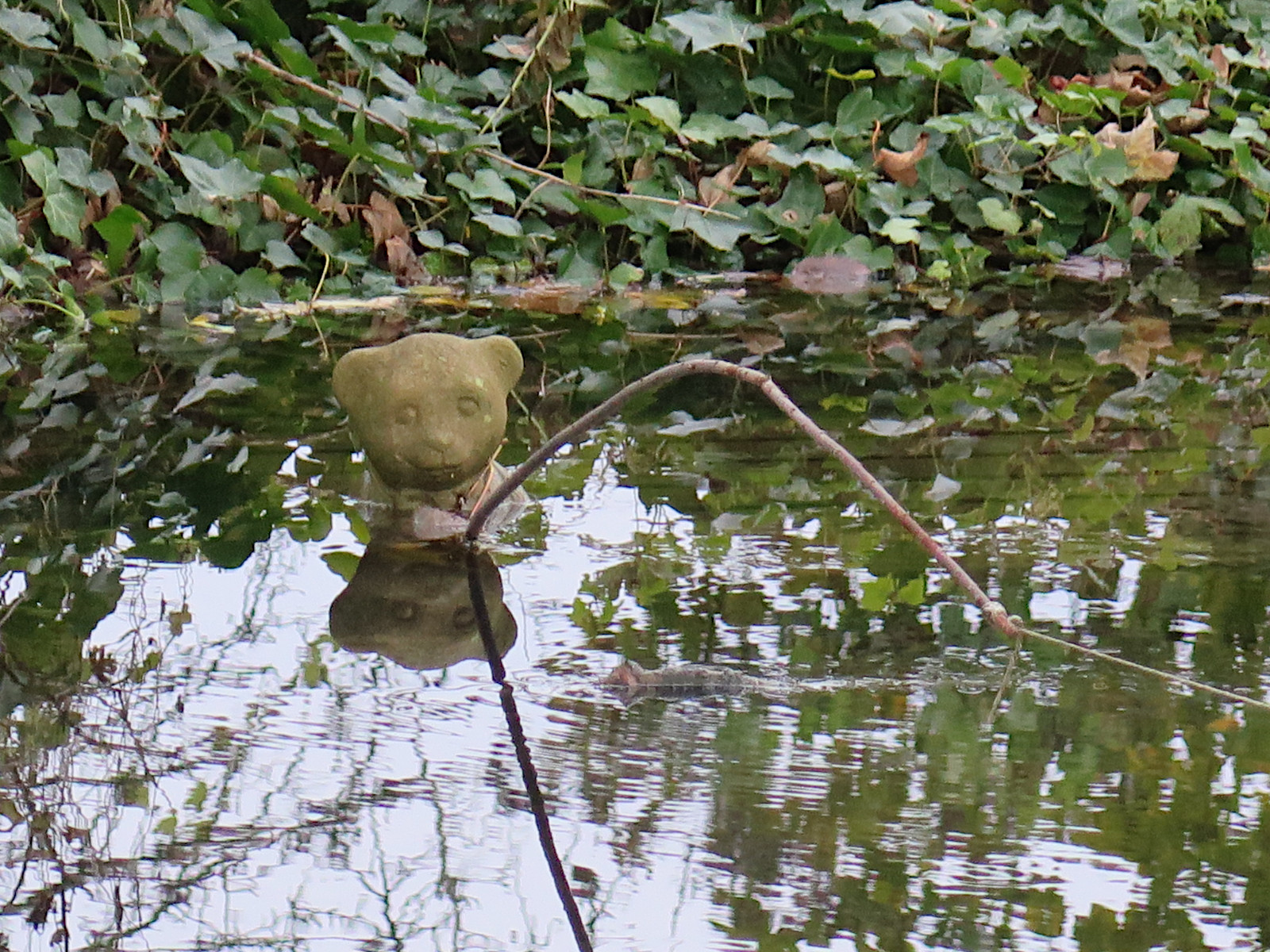
There was quite a lot of rain this month, and a dusting of snow as well. As a result there was some flooding. There’s a concrete bear (a garden ornament) on a wooden platform on the edge of Riverside Walk in Cirencester, and the bear is our water level gauge. As we walk past we see him sitting with his fishing rod on a dry platform (usually). But the photo shows him during the flooding, still clutching his rod and line.
Donna was training as a teacher but was having some second thoughts because of unruly and difficult kids, she also wanted to spend less time running the Open Door Small Group since the teaching work gave her much less available time. Meanwhile I put in a claim for my state pension and we helped some friends move house.
John, one of the guys I’d met at Caffe Nero, was grasping spiritual truths really quickly. He was asking a lot of questions and understanding everything quite deeply. I found this very exciting and immensely encouraging.
I was meeting frequently with different people, there was the Open Door small group once a week, coffee shop meetings with some friends in town, and meetings with my friends Jim, Sean and Kevin rotating around our three homes. It was all good and seemed useful, but three such different groups! Another friend, Chris, was working through Revelation and we met for coffee to discuss this too.
I took my coffee shop friends Matt and Kev to the Newforms Gathering at Kidderminster at the end of the month (photo).
I wrote a short note on the old family dining table we’d been using. It came originally from one of my Dad’s relatives and we’d used it when Judy and I lived in Yatton in the 1980s and 90s. Now we no longer needed it as we required something a good deal larger; we decided it should go to one of my daughters (assuming one of them wanted it).
We had new next door neighbours, Annette and Jerry moved into number 126. And there were major changes taking place in Unilever’s IT organisation that would affect us at Colworth where I was working.
Mum and Dad booked two adjacent holiday villas at Ross-on-Wye and the whole family spent the weekend together. It was a lovely time, a great way to keep in touch, typical of Mum and Dad to organise something like this. They were both closer to the end of their lives than any of us could have imagined, so it’s a special memory for all of us.
Mum had no idea there was an alien spacecraft hovering above her head! Click the photo for a better view.
We had a new gas heating system installed in our home – boiler, radiators, hot tank – everything. The preexisting system was old, decrepit and very inefficient, so high time to replace it.
On 4th November I flew to Schipol for Unilever business at Rotterdam.
And we had a new permanent house guest, Truffles the cat. She was a gift from friends who had more than enough cats, and Truffles preferred being a bit of a loner (though very affectionate with humans).
JHM: View the predecessor website at this time. World events: Australia decided to keep the Queen as head of state; and Kuwait revoked a 1985 law that granted women’s suffrage.
Judy was getting stronger after the problems with the attempted chemotherapy. She was out of danger and out of hospital too during November. She had lost her hair and was wearing a hospital wig, but new hair was already starting to grow and the wig would be only a temporary measure.
Judy’s Dad turned 70-years-old on the tenth and she made him a cake decorated with emblems representing his life so far. We met at their house in Charlton Kings, Cheltenham, with her brother Frank and his family.
In November I bought a new video camera to replace the one stolen in August while were on holiday. This time I bought one of the new, higher resolution Hi-8 cameras. The photo of Beth was made from a VHS copy of a Hi-8 original.
Debbie was probably playing clarinet around this time, but I don’t recall if they ever attempted a piano/clarinet duet!
World events: Dial-up internet was introduced in the USA; while the East German communist government resigned and the Berlin Wall came down.
I developed a DECO database for the Plant Science Division at Long Ashton Research Station to improve the processing and storage of bibliographic information.
This month we had a bit of a breakthrough. My boss at Long Ashton, Ken Stott, put us in touch with a friend of his who was a bank manager; we were then offered good terms on a mortgage.
During the interview we had to hide the fact that Judy was pregnant, as her income had been taken into account.
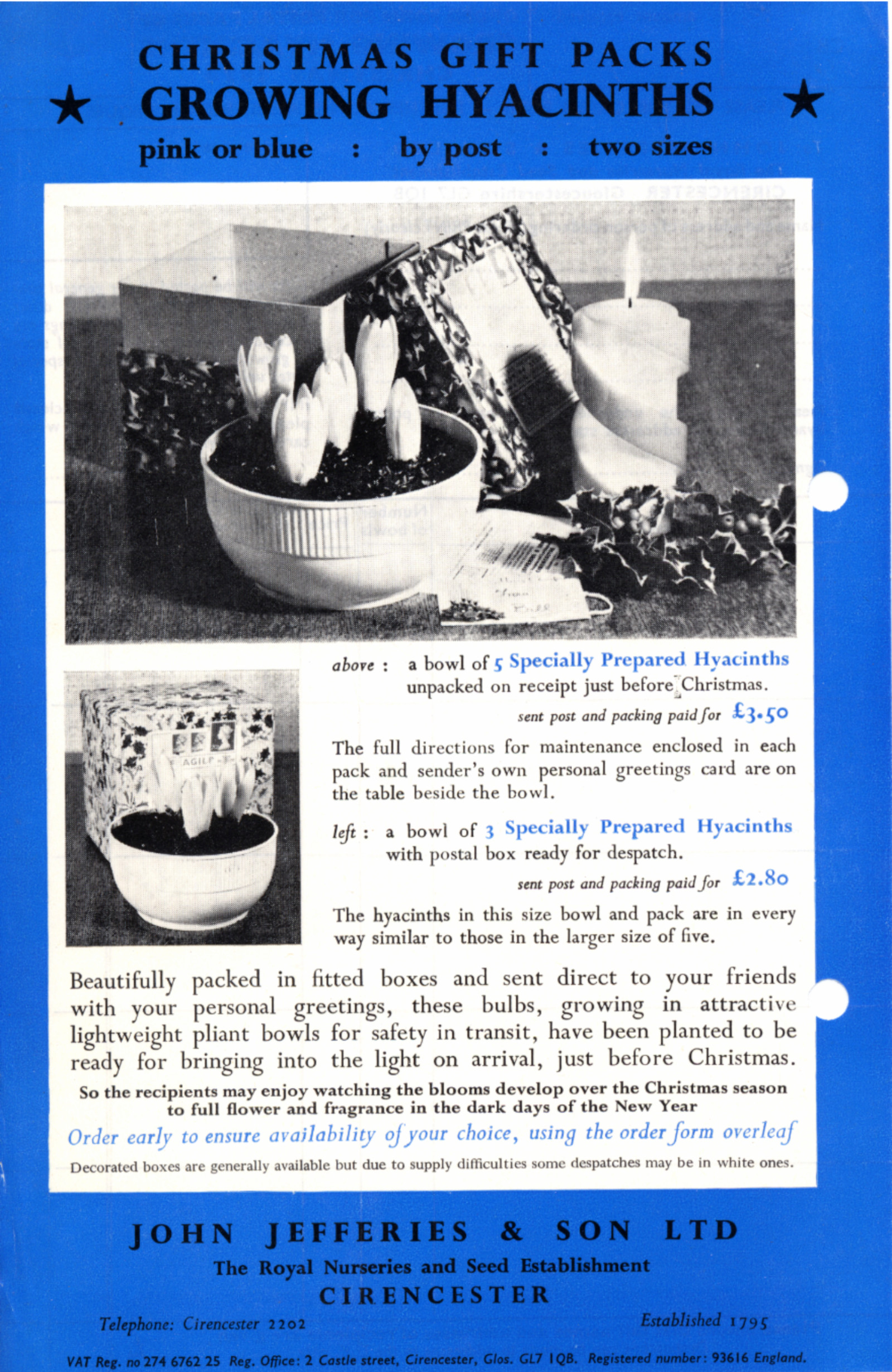
John Jefferies and Son Ltd published their Christmas bulb offer (see the full details, but don’t place an order – they’ve sold out!)
My Granny (Nor) celebrated her 80th birthday and the family gathered for photos and a short celebration at Uncle John’s house, 4 Tower Street, Cirencester.
In the photo – Back row: Cousin Tim, me, Uncles Bob, John and Dick, cousin Jeremy, and my Dad. Middle row: Judy, Aunty Betty (Bob’s wife), Pippa (Jeremy’s wife), My Mum, and Deirdre (Tim’s wife). Front row Aunty Jo (John’s wife), Nor, and Aunt Millicent (Dick’s wife).
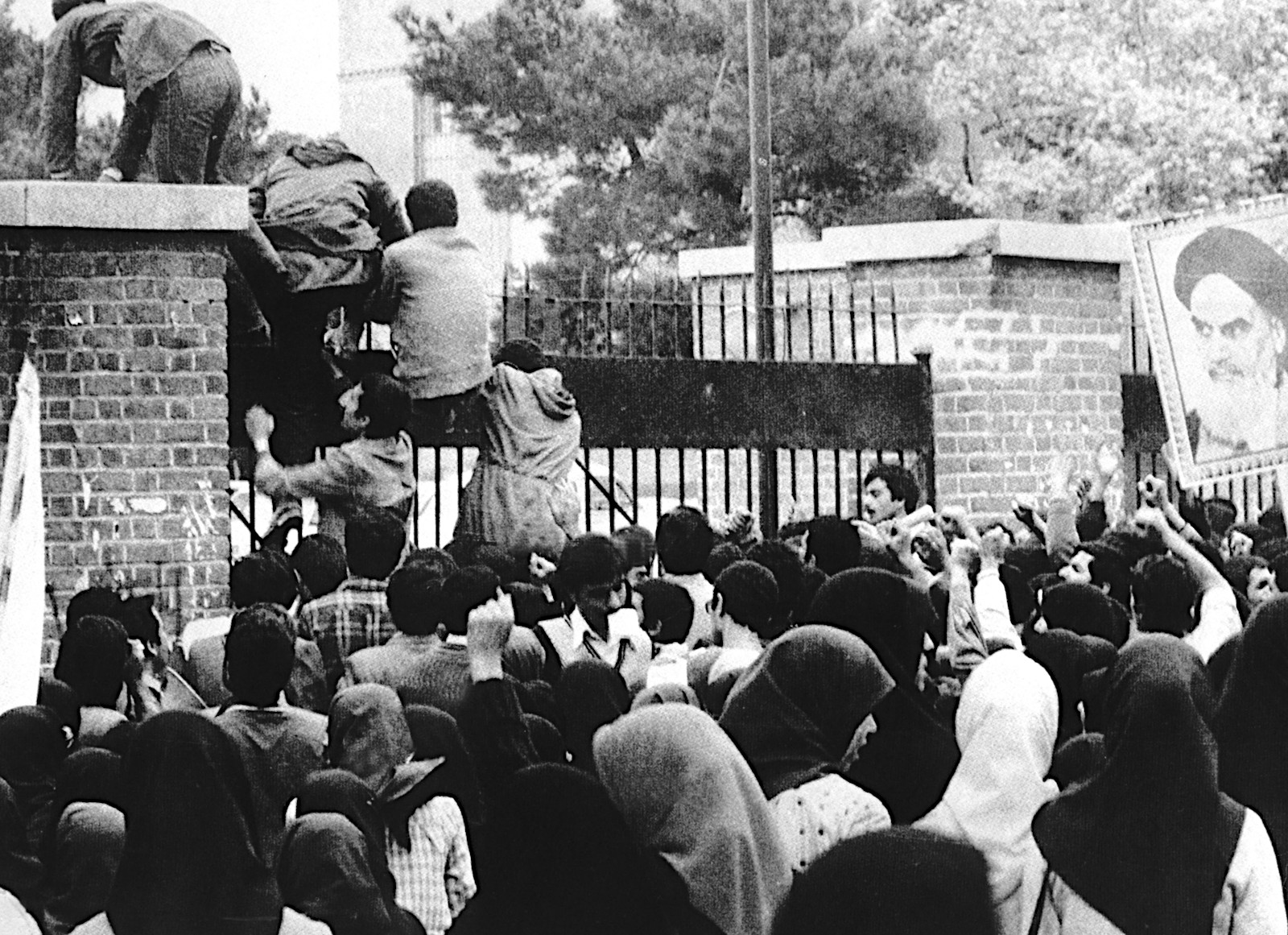
Bonfire Night on 5th November was always an important calendar date when I was a child, and indeed right up until recently. It’s gradually been replaced by Halloween over the last ten or twenty years.
This triple Roman candle was the prize firework item in my parent’s back garden in 1964. I took a time exposure on a tripod while this one ran its course, and the photo came out remarkably well. I was 16-years-old and in the Lower Sixth at Cirencester Grammar School.
World events: NASA launched Mariner 4 to Mars; and France tested an atomic bomb underground in Algeria.
I was still in my first term at Cirencester Grammar School. My classroom was in the southernmost of the three Prefab Classrooms; the first year forms 1A, 1B and 1X had these three rooms, perhaps because they were a little way away from the classrooms for the older pupils.
It was an easy walk to the playground where the tuckshop was (it’s important to get important details sorted out as early as possible).
World events: The first section of the M1 Motorway opened; and the MOSFET transistor was invented in the USA.
I was in my second year at Querns School, and half way through the first term. I think that we had Miss Hourihane as our teacher for this second year as well as my first year, although I can’t be sure about that.
I joined the Trex Club, Mummy helped and I remember being a bit puzzled by the whole process, frankly! If you’d like to join, here are the full details.
World events: The first Godzilla film premiered in Tokyo; and a four-kilogram piece of the Hodges Meteorite crashed through a roof injuring a woman.
There’s little to say about this month, as in October I was 1¼-years-old, life went on, and we were still living in my grandparents house in Victoria Road, Cirencester. Dad continued working on the nurseries, part of the old family business.
World events: Oil was discovered beneath the Caspian Sea; and Winston Churchill supported the idea of a European Union.
Mum and Dad briefly talked about the idea of one day being married, and Dad bought a postcard of Cirencester Parish Church in the village shop in Coagh! They visited Uncle Samuel and Aunt Annie in Belfast on 23rd. On the 29th, Dad heard he was soon to be posted away from Northern Ireland, they were both very sad at this unwelcome news.
If you enjoyed this or found it useful, please like, comment, and share below. (If you don’t see those links, click the article’s title above the main photo and they will appear.) Send a link to friends who might enjoy the article or benefit from it – Thanks! My material is free to reuse (see conditions), but a coffee is always welcome and encourages me to write more often!
Our Sun is a typical, smallish star, it has been around for some five billion years so far and probably has about another five billion years to go. No need to panic, the Sun is middle aged! Steady as you go.
Stars producing elements up to iron, gas giant planets
Enables
Novae, Supernovae
Two features of the birth of a star system are important here, matter and energy. The first stars formed from the gradual collapse of clouds of cold gas consisting mainly of hydrogen with some helium and a trace of lithium. Gravity slowly pulls a gas cloud into an ever-shrinking volume, and slow, drifting motions lead to increasing rates of rotation as this shrinkage proceeds. Compression of gases always results in heating, so over a long period of time, a diffuse cloud of cold gas becomes a rotating mass of increasingly hot gas.
Sufficient collapse eventually causes the internal pressure and temperature to reach a critical point at which nuclear fusion becomes not just possible, but inevitable, and conditions then settle to a point where the fusion energy dramatically increases the core temperature and pressure, pushing outwards more and more strongly until the the gravitational collapse is stopped. The rotating, hot mass is a young star, converting hydrogen to helium.
Over time it settles down more and more to a stable state, though this lasts for a limited time, basically until no further hydrogen fusion is possible because there is insufficient hydrogen remaining. The length of time of that stable state is related to the mass of the star. Small, light stars process their hydrogen slowly. Large, very massive stars burn through their supply much faster. Although they have a great deal more to begin with, the temperatures and pressures at the centre are much higher so there is a faster reaction in a larger volume of core. That’s why large stars run out of fuel faster than small ones. These earliest stars are called Population III stars by astronomers, it seems they were usually very large and therefore short-lived.
Our Sun is much more recent, a typical, smallish star, it has been around for some five billion years so far and probably has about another five billion years to go. No need to panic, the Sun is middle aged! Steady as you go.
Eventually, as the hydrogen is used up, energy production falls and gravity can no longer be resisted, so the star shrinks and heats up further. As the internal temperatures and pressures increase, the star shrinks until the temperature at the core is sufficient to fuse helium. Once again, further gravitational collapse is halted by increasing core temperatures and this lasts until the helium supply is exhausted. Through a whole series of similar steps the star creates heavier and heavier elements all the way up to iron, but fusing atoms of iron absorbs energy so gravity wins out in the end. Small stars slowly cool and eventually become inactive and unchanging. Particularly large stars have a different fate.
This is the ‘Land’s End’ of the north – not a narrowing peninsula as in Cornwall, but here a long, straightish coast running east to west. A glorious, glorious place to stand and look and imagine.
What’s in an image? Sometimes quite a lot, more than meets the eye.
I’m posting an image every two days (or as often as I can). A photo, an image from the internet, a diagram or a map. Whatever takes my fancy.
Click to enlarge
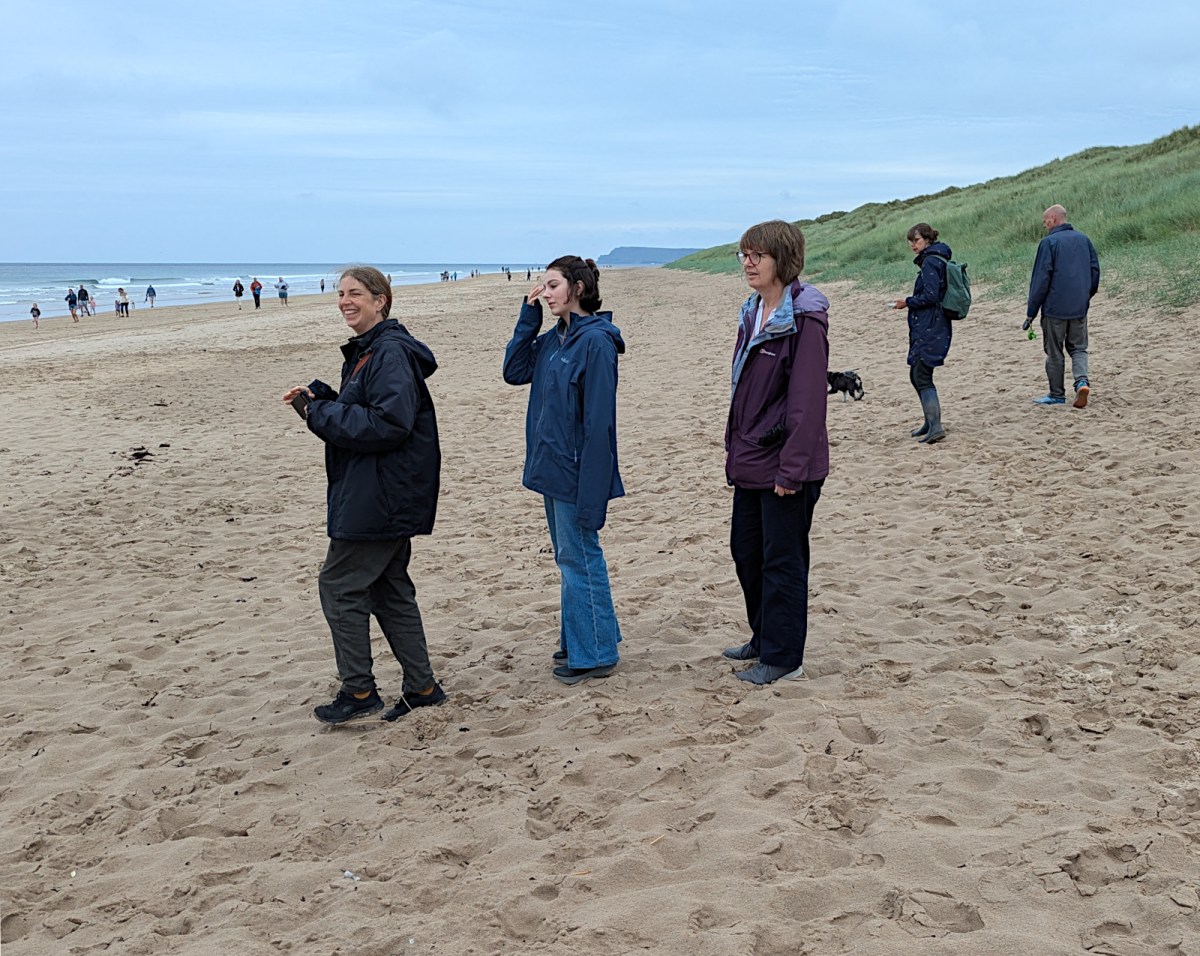
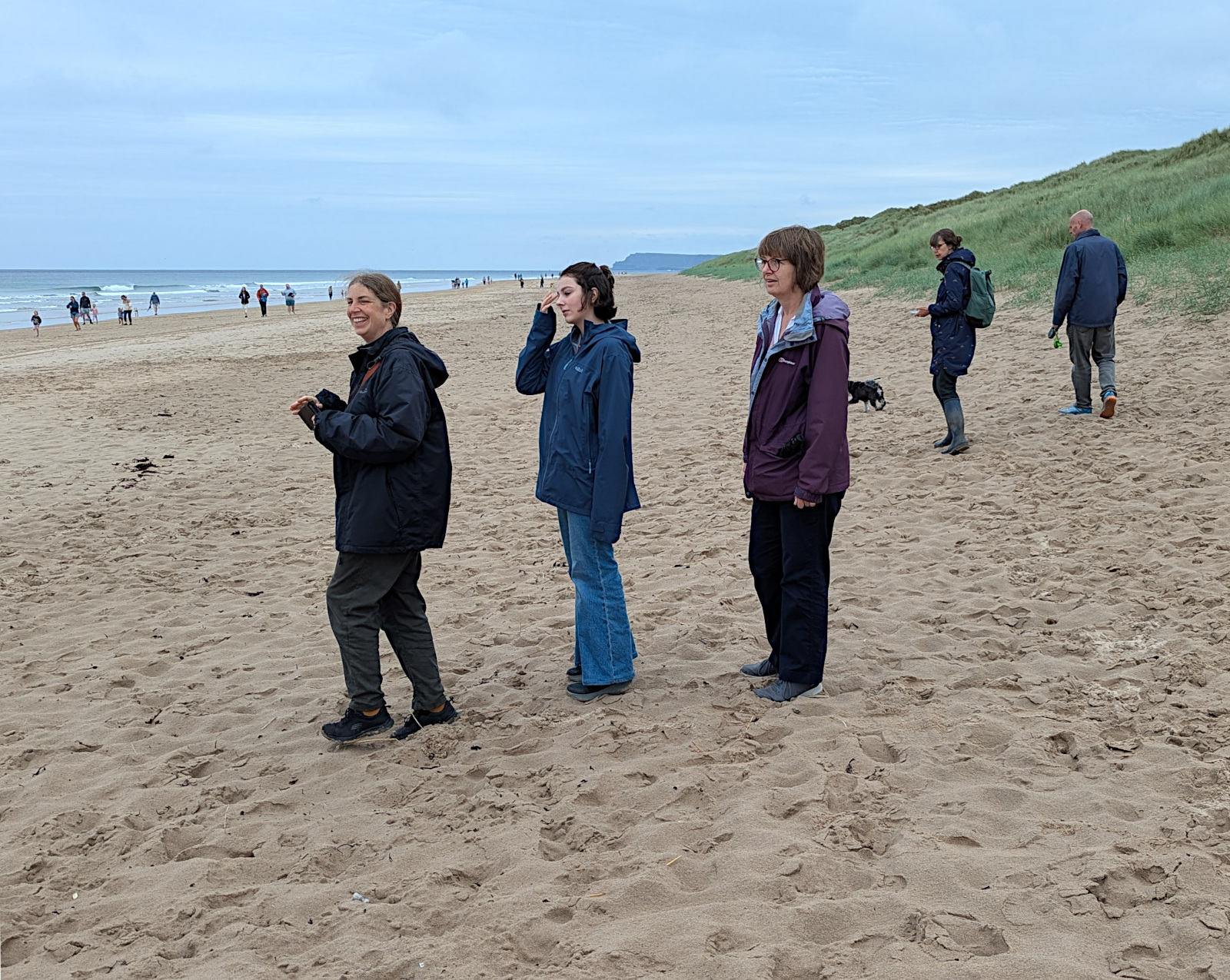
On the day after arriving at Portrush, we relaxed in the house, chatted, explored the town and its little harbour, and walked east along one of the beautiful beaches of golden sand. It was a chilly day, and cloudy, but I don’t think anyone wanted to go far after all the travelling of the previous day.
The land and seascapes here are glorious. A wide, long sandy beach is backed by dunes stabilised by vegetation as you can see from the image. This beach slopes down to the north until it meets the sea with the waves rolling in and breaking. A little way out in deeper water there’s a series of small barrier islands, some of them merely bare rocks. And beyond those, the open sea – the edge of the mighty North Atlantic.
On a clear day parts of Scotland are visible towards the east, while beyond the northern horizon there’s nothing but ocean until the cold Arctic waters east of Iceland. This is the ‘Land’s End’ of the north – not a narrowing peninsula as in Cornwall, but here a long, straightish coast running east to west. A glorious, glorious place to stand and look and imagine.
I have no hesitation in recommending Portrush as a holiday destination. It really does have something special for everyone – children, teens, adults young and old, nature lovers, for swimming, boating, walking – it’s all here within easy reach.
If you enjoyed this or found it useful, please like, comment, and share below. (If you don’t see those links, click the article’s title above the main photo and they will appear.) Send a link to friends who might enjoy the article or benefit from it – Thanks! My material is free to reuse (see conditions), but a coffee is always welcome and encourages me to write more often!
This article is an updated extract from my short book, Jesus, Disciple, Mission, Church (JDMC). The bite-sized piece below is roughly two percent of the book. This is the second part of the fourth forgotten way.
B – Activating the forgotten ways (continued)
2 – Encouraging one another As you go out to reach the world together, put time aside to think and pray about what you are doing. Ask one another questions about how things are going. A weekend retreat now and then will help with this sort of planning and remembering. Don’t slip back from mission and become inward-focussed; it happens all too easily.
Reawaken one another to the gospel, are you drifting away from your first calling as mission-minded people? Avoid becoming lukewarm (Revelation 3:14-22), be wary of busyness and make mission an essential part of life. Mission-focussed prayer helps the six elements work together as they should, so keep mission at the heart of your prayer together. This will help everyone remember that Father stirs up mission and is involved in it. Jesus said we should pray for more workers in the harvest (Luke 10:1-4). Consider prayer walking areas where you’re connecting with people.
Jesus said, ‘I will build my church and the gates of Hades will not prevail against it’ (Matthew 16:18). So what sort of environment has he provided in which this building (or growing) will take place? History shows that whenever there has been major growth in mission there has always been apostolic leadership at work.
Discuss – How are you doing in these areas? Talk together about successes and failures, ways you might do more or improve your focus. Pray about it.
C – Identifying purpose
There will be a reason that your group exists, it is likely to be something to do with a shared passion which has been implanted in you by the Spirit for a specific purpose. Read Isaiah 55, and especially verse 11. Find out what you are passionate about, Papa will reveal it to you, and he will walk in it with you as well. Is it a particular function (such as helping the poor, feeding the hungry, or reaching the lonely)? Is it to reach out to a specific area or people group? Whatever it may be, talk about it, pray about it, and ask one another significant questions. Apostolic leadership will help this process.
It takes patience and commitment to discover purpose. Pray regularly, reflect and work together, ask outsiders who are familiar with what you do. Here are some useful questions… Why did the Lord create the group? What was the original dream? How has the group been used? What does the group do best?
Discuss or consider – What is your purpose? If you don’t yet know, agree to spend some time investigating.
D – Growing the gifts
Read and watch material that helps you develop an understanding of the five service gifts – they’re often called ministry gifts (Ephesians 4:11-12). Check out the JDMC section on The APEST gifts as a starting point. Talk together about the gifts you see in one another, give one another feedback; most people are strong in one or more gifts. Recognise that these gifts are not limited to experts, but are distributed throughout the body. If any of the gifts is significantly absent in your group, ask Jesus to bring the right people to join you. There’s no room here to examine all the service gifts in depth, but make time to understand them early.
Use the do it and consider it approach mentioned earlier. Provide books, DVDs and articles and encourage people to go to conferences and workshops. Find suitable networks. Explore ‘For more information’ at the end of this part of JDMC and use the material.
Be careful not to control anyone (Matthew 20:25-28), there’s no need for it and it undermines the life that Father has poured into the group. Instead, just inspire people and let them do what they do best. People don’t have power because it’s been granted by a leader but because it’s been granted by Jesus (Acts 1:8). Look for passion, ask questions, encourage experimentation. Free up time for all this, don’t over-programme, and aim to get the group dreaming.
Discuss or consider – Delegate five people from your group (or five small teams of people) to find out more about the five service gifts. One person or team to investigate one gift. Agree a time to report back, perhaps a week or two.
E – Sparking connections
Apostolic people link others together for positive action (Acts 11:19-30). Encourage them! They are starters, full of ideas, and inspire others. As catalysts, they get people talking and connect those with similar passions. They intuitively keep track of people and relationships. Sometimes they even network networks. If that sounds strange, just think of the internet. It’s called the internet because it networks company, government, and other networks. Apostles sometimes work at that sort of scale – Paul did.
People with an apostolic gift are widely connected and love to put the people they know in touch with one another. Sometimes the results are startling and unpredictable (in a good way). Movements really need people who can do this, it makes it far easier for good ideas to be shared widely and rapidly. A well-connected movement is an agile movement. Not everyone who sparks connections is apostolic, but all apostles are good at this.
scuss – Do you know anyone with this ability to connect people and build networks? Could you do this too? Like all the gifts of service, this is part of the church DNA that is in all of us to some degre
Discuss or consider – Do you know anyone with this ability to connect people and build networks? Could you do this too? Like all the gifts of service, this is part of the church DNA that is in all of us to some degree.
Develop and encourage each other
Bounce ideas off one another and keep thinking about the gifts of service. Try to work out where each of you is strongest and encourage any strengths (2 Corinthians 13:11). Tell one another, ‘I noticed you come alongside Steve when he was struggling. It seems to me you have some of the instincts of a shepherd. Well done!’, or, ‘I’m glad you reminded us to pray earlier, we needed to hear that.’ And above all, look for and encourage everyone who shows signs of going out to actively press forward with new things, laying foundations, making a fresh start, stirring people up, drawing out dormant gifts.
This was extracted from Jesus, Disciple, Mission, Church (JDMC), pages 17 and 18. Download the whole thing or read it online – GetJDMC.scilla.org.uk
Useful? Interesting?
If you enjoyed this or found it useful, please like, comment, and share below. (If you don’t see those links, click the article’s title above the main photo and they will appear.) Send a link to friends who might enjoy the article or benefit from it – Thanks! My material is free to reuse (see conditions), but a coffee is always welcome and encourages me to write more often!













 Journeys of Heart and Mind

.jpg)


