Churn flood plain

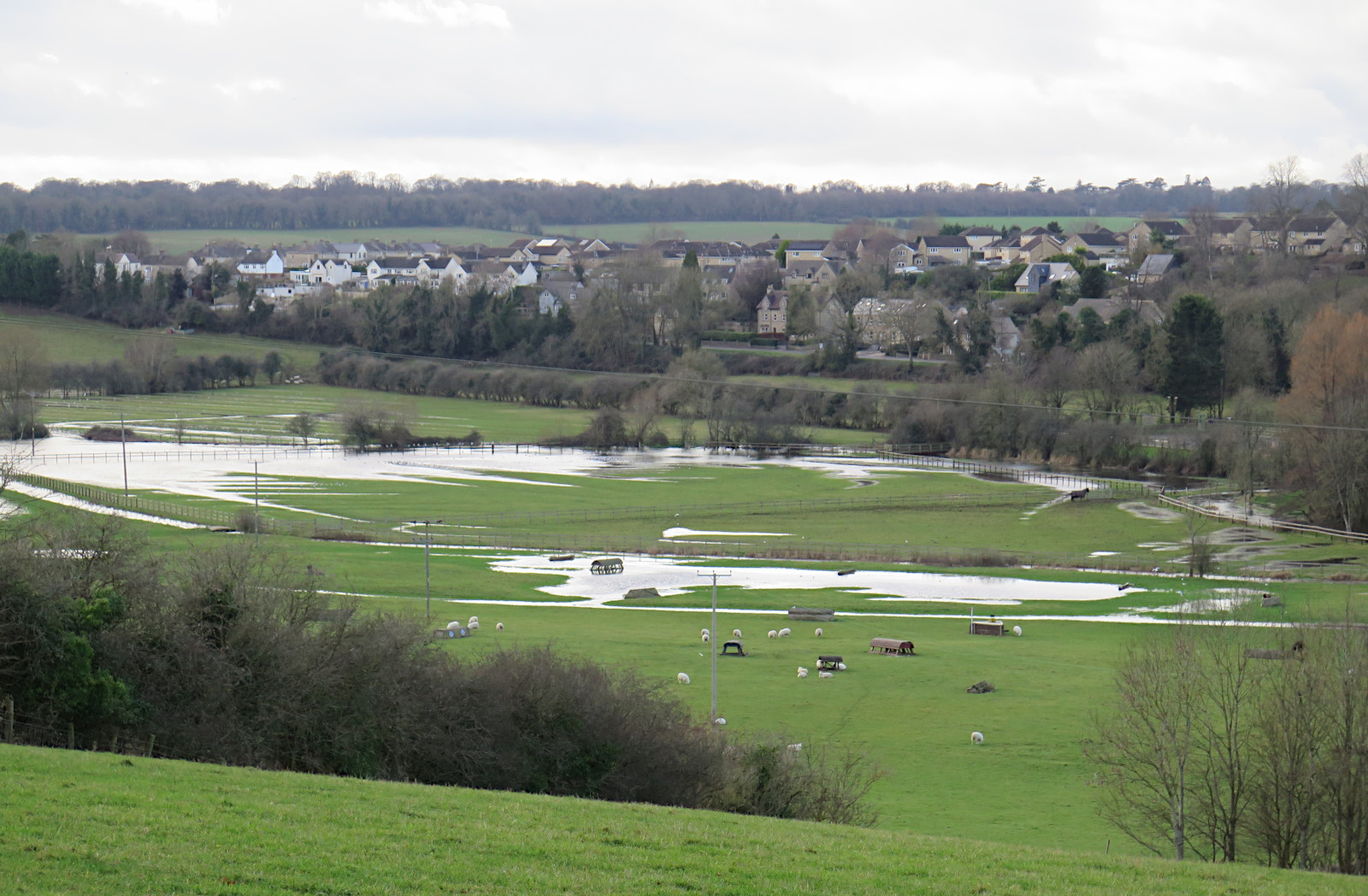
You can see the Churn’s flood plain very clearly in this image. The treeline on the horizon marks the border of Cirencester Park and is on much higher ground.

< Previous | Index | Next >

Image 106 – What’s in an image? Sometimes quite a lot, more than meets the eye. I’m posting an image every day or so.
Larger view

This is a view of the River Churn overflowing into fields, the village in the background is Stratton, where Donna and I live. As you can see, Stratton is on higher ground and is not at risk of flooding, though some parts of nearby Cirencester are at risk during the winter.

You can see the Churn’s flood plain very clearly in this image. The treeline on the horizon marks the border of Cirencester Park and is on much higher ground, and beyond those trees the beech woodland is criss-crossed with rides at different angles, very different from farmland and home to roe deer and many kinds of wild woodland plants and animals.

When: 23rd December 2023
Where: North of Cirencester, Gloucestershire

See also:
Cirencester

For convenience, here’s a list of all the Cirencester area images:

A417 roadworks, Advent Market, Bishops Walk, Baunton, Canal 1, 2, Castle Street, Christmas lights 1, 2, Church 1, 2, 3, 4, 5, 6, Churn flood, Countryside, Fallen tree, Fleece, Gasworks, Gloucester Street, Hare 1, 2, Hospital, Market Place 1, Phoenix Fest, Riverside Walk, Stone plaque, Stratton Meadow, Tank traps, View, Wonky 1, 2, Yellow Iris

Themed image collections

The links below will take you to the first post in each collection

Cirencester, Favourites, Irish holiday 2024, Roman villa

< Previous | Index | Next >

Useful? Interesting?

If you enjoyed this or found it useful, please like, comment, and share below. My material is free to reuse (see conditions), but a coffee is always welcome!

Image of the day – 28

Similar tank traps have been used along the front lines by both sides in the ongoing Russian invasion of Ukraine.

< Previous | Index | Next >

What’s in an image? Sometimes quite a lot, more than meets the eye.

I’m posting an image every day (or as often as I can). A photo, an image from the internet, a diagram or a map. Whatever takes my fancy.

Tank traps

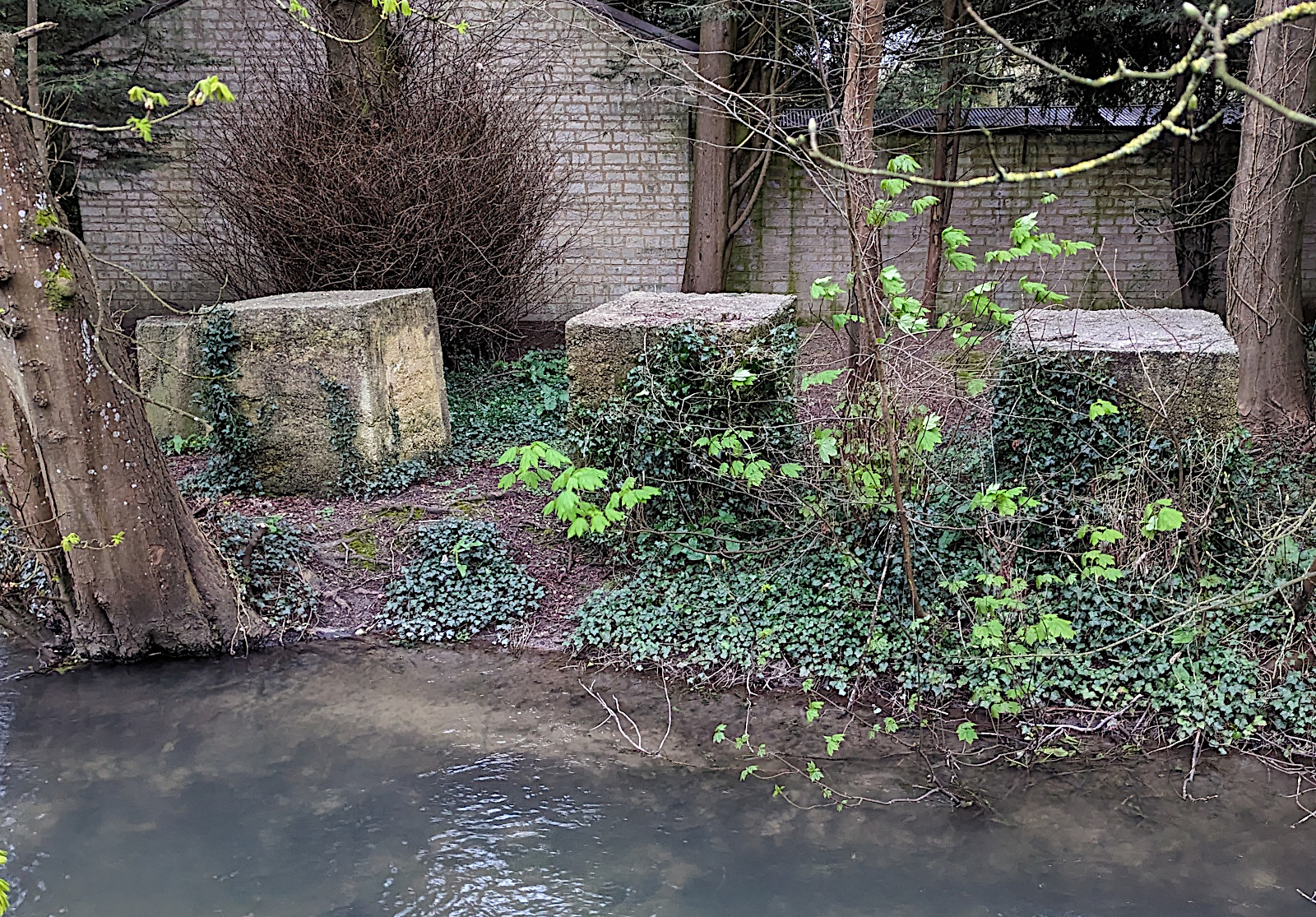
We have some history today. The river is the Churn and it runs in several different channels through the Cotswold town of Cirencester. On the bank you will notice three, large, concrete blocks; there’s also a fourth, partly hidden by the block on the left. The blocks were placed here during the Second World War to slow down German armour in the event that Britain was invaded. German failure to win the Battle of Britain in the air war prevented the invasion, but at the time the blocks were cast and put in place invasion remained a real threat.

The trees in the photo and the wall in the background are more recent than the blocks. The river bank led to an open field with the grounds and gardens of Abbey House beyond at that time, with the centre of the town on the other side of the gardens. The town would have been very vulnerable to attack from this direction.

Similar tank traps have been used along the front lines by both sides in the ongoing Russian invasion of Ukraine. The main difference is that modern, concrete traps are pyramidal (‘Dragon’s Teeth‘, not cubic. The sloping sides use less concrete and are more effective against tanks, but concrete cubes were also commonly used in the 1940s.

It pays to anticipate problems. But wars are rarely anticipated years in advance; political differences can boil over into actual conflict quite suddenly. And once they have started it can be very difficult to bring them to an end.

NOTE: These blocks can be seen from Grove Lane in Cirencester, quite close to the Norman Arch. From inside the Abbey Grounds, walk through the arch and turn right along the footpath for just a few yards. Look across the river, and there they are! A piece of Cirencester history that you can see for free.

< Previous | Index | Next >

Cirencester

For convenience, here’s a list of all the Cirencester area images:

A417 roadworks, Advent Market, Bishops Walk, Baunton, Canal 1, 2, Castle Street, Christmas lights 1, 2, Church 1, 2, 3, 4, 5, 6, Churn flood, Countryside, Fallen tree, Fleece, Gasworks, Gloucester Street, Hare 1, 2, Hospital, Market Place 1, Phoenix Fest, Riverside Walk, Stone plaque, Stratton Meadow, Tank traps, View, Wonky 1, 2, Yellow Iris

Themed image collections

The links below will take you to the first post in each collection

Cirencester, Favourites, Irish holiday 2024, Roman villa

Useful? Interesting?

If you enjoyed this or found it useful, please like, comment, and share below. My material is free to reuse (see conditions), but a coffee is always welcome!

Image of the day – 27

In the natural way of things, each Aloe will produce an average of one new plant, and the population will remain in balance.

< Previous | Index | Next >

What’s in an image? Sometimes quite a lot, more than meets the eye.

I’m posting an image every day (or as often as I can). A photo, an image from the internet, a diagram or a map. Whatever takes my fancy.

Aloe aristata

Today’s picture is a close up of an Aloe aristata plant with a developing flower bud. All plants, animals, fungi, bacteria and even viruses have ways of reproducing themselves. That’s one of the defining characters of life of any kind. We can be absolutely confident that the same will be true of any life forms anywhere in the universe.

The Aloe flower bud will develop on a tall stalk and if the flowers that form are pollinated they will produce and release seeds that stand a chance of germinating and growing into new, similar, Aloe plants. In the natural way of things, each Aloe will produce an average of one new plant, and the population will remain in balance.

The only choices available to life are to survive for ever with no reproduction, or to live for a limited time and leave behind new versions to carry on the process. What life cannot do is live forever and reproduce: that would lead to overpopulation and catastrophic failure of resources. Even with reduced family sizes, the planet is no longer capable of supporting the billions of people on our planet. We face catastrophic population collapse due to lack of resources at some point unless we can reduce our population size in some other way first. That’s a matter of simple arithmetic, not a political statement or some kind of guesswork. If we don’t face and fix the issue, something else will sooner or later.

Themed image collections

The links below will take you to the first post in each collection

Cirencester, Favourites, Irish holiday 2024, Roman villa

< Previous | Index | Next >

Useful? Interesting?

If you enjoyed this or found it useful, please like, comment, and share below. My material is free to reuse (see conditions), but a coffee is always welcome!

Image of the day – 21

The plant, on the other hand, is a living organism. Nobody designed or manufactured it – life is much more wonderful than that!

< Previous | Index | Next >

What’s in an image? Sometimes quite a lot, more than meets the eye.

I’m posting an image every day (or as often as I can). A photo, an image from the internet, a diagram or a map. Whatever takes my fancy.

It’s quite amazing how life clings on, even in the most adverse circumstances. This plant was growing in my front drive, somehow finding a way to get its roots into a narrow gap in the block paving. The blocks were designed by a garden landscaping company and manufactured to particular standards of hardness and resistance to my car rolling over them. They were designed to last.

The plant, on the other hand, is a living organism. Nobody designed or manufactured it – life is much more wonderful than that! The universe we live in is tailored to build ever more complex things from very simple beginnings. A handful of quantum fields is all it takes, and these are exquisitely able to give rise to fundamental subatomic particles. These group together, eventually settling into simple atomic nuclei. As the universe expanded and cooled, atoms of simple elements appeared, almost entirely hydrogen and helium. Stars condensed and formed heavier elements up to iron. I could go on, but it’s a long story! Maybe some other time?

For now, just consider the battle between order (my paving blocks and the urge I have to remove weeds that neither I nor my wife want to see growing there) and disorder (weeds thriving wherever they can, despite my best efforts). Life always wins in the end, it seems!

Themed image collections

The links below will take you to the first post in each collection

Cirencester, Favourites, Irish holiday 2024, Roman villa

< Previous | Index | Next >

Useful? Interesting?

If you enjoyed this or found it useful, please like, comment, and share below. My material is free to reuse (see conditions), but a coffee is always welcome!

Image of the day – 20

In ancient Jewish thinking, flowing water was considered living water, but stationary water in a cup, basin, pond or lake was not living.

< Previous | Index | Next >

What’s in an image? Sometimes quite a lot, more than meets the eye.

I’m posting an image every day (or as often as I can). A photo, an image from the internet, a diagram or a map. Whatever takes my fancy.

The River Churrn in Stratton

This photo shows the River Churn flowing through Stratton Meadow on the northern edge of Cirencester, with the old Stratton Mill in the background. As you can see, the Churn is only a small river, but like the Thames its name is very ancient, going back at least to Iron Age times. In Roman Britain the Thames was Thamesis and Churn is the Corin in Corinium (the Roman name for Cirencester). It’s also the Ciren in Cirencester and the Cerney in several villages north and south of the town.

Rivers are intriguing things, the water contained in them is flowing so the water you see now is different from the water that you saw five minutes ago. Yet the river usually changes its course very little in a human lifetime, so there’s a sense of constancy about it. The water is here for moments only, but the river is here for generations.

In ancient Jewish thinking, flowing water was considered living water, but stationary water in a cup, basin, pond or lake was not living and was therefore of less value and significance. A mikvah was a special bath with water flowing in and water running out at all times, bathing in this living water would make a person ritually clean. Taking a dip in the pond had no such effect!

Cirencester

For convenience, here’s a list of all the Cirencester area images:

A417 roadworks, Advent Market, Bishops Walk, Baunton, Canal 1, 2, Castle Street, Christmas lights 1, 2, Church 1, 2, 3, 4, 5, 6, Churn flood, Countryside, Fallen tree, Fleece, Gasworks, Gloucester Street, Hare 1, 2, Hospital, Market Place 1, Phoenix Fest, Riverside Walk, Stone plaque, Stratton Meadow, Tank traps, View, Wonky 1, 2, Yellow Iris

Themed image collections

The links below will take you to the first post in each collection

Cirencester, Favourites, Irish holiday 2024, Roman villa

< Previous | Index | Next >

Useful? Interesting?

If you enjoyed this or found it useful, please like, comment, and share below. My material is free to reuse (see conditions), but a coffee is always welcome!

An old school friend

Friends are important, we humans are fundamentally social beings

At my sister’s recent book launch, I was delighted to meet an old friend from school days, Nick Henderson. Although he looks older – as, of course, I do too – his personality is entirely as I remember from the mid 1960s. We agreed to meet again this morning at the Golden Cross in Cirencester, and it was a delight.

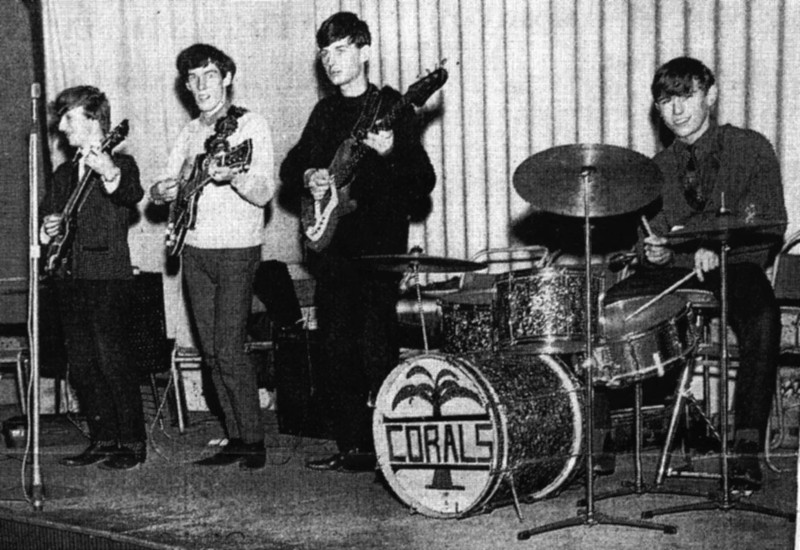
Nick and I last met when we were both living at home and very probably still at school. For a year or two we used to hang out quite a bit. I remember going with Nick to see a local band called The Corals during a record-breaking attempt at playing non-stop without repeating any songs; the drummer, one Colin Flooks, another lad from our school year, later became famous as Cozy Powell. And yes, they did break that record – in fact they smashed it by playing for 11½ hours.

TheCorals
The Corals during their record-breaking session, photo from The Wilts and Glos.

Nick and I talked about many things, catching up on our personal journeys over the last half century, recalling the cross-country runs that were compulsory on Wednesday afternoons at school, and thinking about Daglingworth Brook, the River Churn and how the water is channelled in and around the town. The drainage courses have changed over the years, altered for many reasons, beginning in Roman times when the town was young, and continuing right down to the present.

Friends are important, we humans are fundamentally social beings; renewing a connection after such a long gap has been a very special thing for me. More so than I had expected or imagined.

For more about Nick, take a look at his website and/or a site he edits, Anglicanism.org .