Every chapter is necessary

There is a synergy, a sparking of abundant life that comes from the interdependence of the parts.

A page from the book

This is a slightly modified copy of an article I wrote in 2014. I’m republishing it because I think it is still useful and deserves another airing. Perhaps it hints at some things we are liable to forget.

The book, Simple Church: Unity Within Diversity, contains twenty-four chapters. Each one discusses a positive aspect of church, something that is an essential part of the whole. Reading from the book I was deeply impacted by Chapter 22 from Kathy Escobar; the chapter is entitled A church that restores dignity where it’s been lost.

She writes:

Jesus calls [Lazarus] out of the tomb, but then he looks to the people around him – his community, friends, and advocates – and says to them ‘unbind him’. Unbind him. Unwrap him. Take off his graveclothes.

I think God calls us to participate in this uncovering-unwrapping-unbinding with each other through healing community.

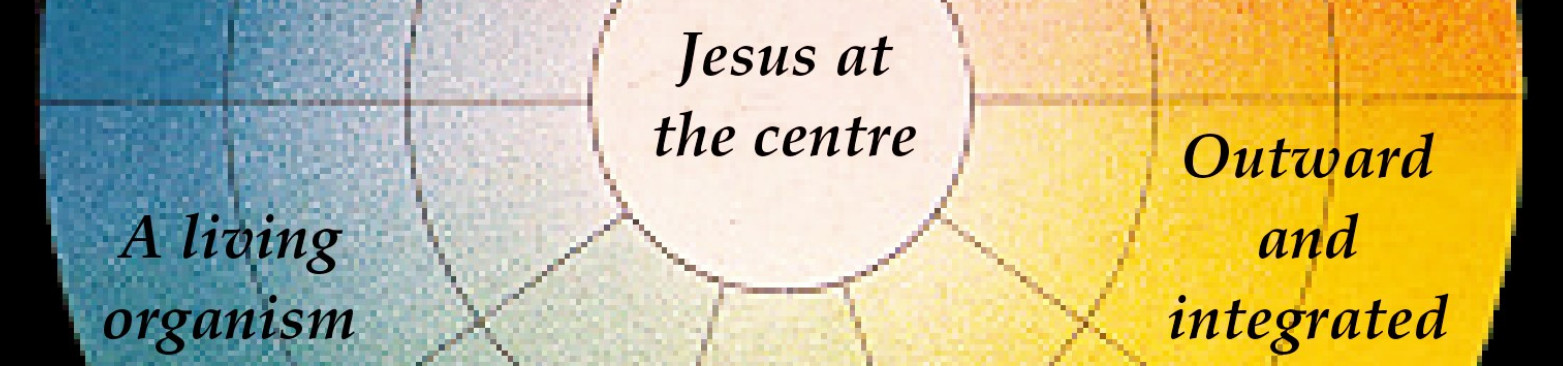
And it struck me that although church is much more than the sum of its parts, all of the parts need to be actively present. There is a synergy, a sparking of abundant life that comes from the interdependence of the parts. Church is a person, the Bride of Christ.

Like all people, you and I are much more than the sum of hands, ears, spleen, heart, lungs and all the rest. But if any of these were missing we would either die or be unable to fully function. And it’s just the same with the church.

Just consider some of the other chapter themes. The church cherishes Jesus Christ, exhibits personal holiness, counts every member as key, assembles for mutual edification, and knows eternal life is free. Imagine all of those being true in a church that fails to restore dignity where it’s been lost. It would be a church without the active compassion necessary to unbind those who so desperately need it.

Or consider a church that clings to scriptural truth, is most notable for its love and is united in Christ but doesn’t follow the lead of the Holy Spirit. This would be a church that failed to hear where to go and what to do and did everything in its own strength.

Or what about a church that was composed of peacemakers, viewed itself as a people, restored dignity but failed to proclaim the gospel clearly?

The chapters of this book all stand alone and can be read alone. But they often overlap so that there are echoes and glimpses of them in one another. Yet taken together, with no part missing or inactive, they describe a holistic church, a wholesome church and a church that is alive and active and effective in the world. There are other aspects that are not explicitly covered in the book, prayer for example. But these are implied throughout in a variety of ways.

Church is as complex as any living organism, and just like a living organism it is not only complex but also multi-faceted, and astonishingly well constructed. The church is also alive with the life of Christ. And every part contributes!

Find the book on Google Play Books and on Amazon Books.

Useful? Interesting?

If you enjoyed this or found it useful, please like, comment, and share below. My material is free to reuse (see conditions), but a coffee is always welcome!

‘Greatest thing’ republished – INDEX

The analysis excited me, Henry Drummond confirmed what I already knew to be true – this new life in Christ is all about love.

Here’s a modern English version of Henry Drummond’s ‘The Greatest Thing in the World’. His wonderful essay on love was originally created in 1884, and it analyses Paul’s famous chapter 13 of 1 Corinthians. Well worth a read!

(See indexes on other topics)

Read it online or download it
  • The modern English version is available to read or download online (a couple of the links in the PDF no longer work, I’ll correct them when I can).
  • The Victorian original is also available.
  • Many printed versions are available too, take your pick.
Article series

You might enjoy this series of short articles in which I examined Henry Drummond’s essay in more detail.

Why create a new version?

Why have I gone to the trouble of translating this essay into modern English? Basically, because it deserves a wider audience. Years ago The Greatest Thing was often reprinted as a booklet and was very popular. I remember buying a copy in Wesley Owen’s on Park Street in Bristol back in the 1970s when the language was still less than 100 years out of date. It was a great read and it helped to change my life. The analysis excited me, Henry Drummond confirmed what I already knew to be true – this new life in Christ is all about love. At the same time the little book challenged me and drew me on.

This great essay is no longer widely known or read. It deserves better. It will speak to readers today just as it always did. Read it!

Acknowledgements

And finally, I just want to thank the family members and friends who read my early drafts and made helpful suggestions, pointed out errors, or were just encouraging. You know who you are.

Licencing

Copyright in the original has expired while the new version comes with a Creative Commons licence. So please feel free to print or republish either version and distribute it as widely as you like.

See also:

Going out on a limb?

I’m looking forward to seeing the book in due course

This is a ‘must post’, I think.

The History Girls blog

My sister, Cynthia Jefferies, has been a successful children’s author for some time; now, heading in a slightly different direction, she is about to publish her first book for adults. It’s an historical novel, The Outrageous Fortune of Abel Morgan, set in the period after the Civil War. Cindy provides some background  in a post on The History Girls blog – you might like to swing by and read what she has to say.

I’m looking forward to seeing the book in due course, meanwhile I wish her every success with the launch.

And ‘going out on a limb’? You’ll need to check out those History Girls to find out what that refers to.

Living the revolution

Engage with the people around us as people of peace

QuoteMe

“What if we read the Bible through the eyes of a revolutionary?” – George Barna

In his book, ‘Revolution’ (2012), George Barna suggests that if Christians want to be more effective, they need to read the Bible in a new way – as revolutionaries. In my own words, here are some of the attributes he ascribes to revolutionary believers.

  1. Live the revolution; it’s a way of life. Read the Bible not just to see what it says, or to memorise it, or to study it. Read it in order to actually do what it says.
  2. Victory through engagement, promoting peace. In other words, if we read the Bible through the eyes of a revolutionary we will do what Jesus did; we will engage with the people around us as people of peace. We will enter their culture, on their terms, to bring them the best news possible – that they are loved by a powerful presence who wants a personal relationship with them.
  3. Motivated by love and obedience. We will not only tell people they are loved, we will show them. A revolutionary follower of Jesus will listen to the lonely, feed the hungry, support the weak, heal the sick, take in the orphan and the homeless. If people engage with revolutionary readers of the Bible they will know they are loved.
  4. Take orders from Papa, accept he’s in charge and listen. To be a revolutionary means paying attention to the Holy Spirit all the time and every day. As he whispers to us, ‘Go there’, ‘Speak to that person’, ‘Invite those people to dinner’ –  the revolutionary believer will just do it.
  5. Leadership. Doing what’s right. Revolutionaries don’t lead by giving orders, they lead by going in front. Set an example by doing what you read in the Bible and inviting others to join you.
  6. Internal politics are absent. A revolutionary has no agenda or goal other than the revolution itself. Jesus’ revolution is about turning the world upside down. If you want to lead, learn to be a servant or even a slave. If you want to be rich, keep giving things away. If you want to be eloquent listen a lot and speak little. If you want to be strong, strive to be weak. If you want to be wise, be willing to appear foolish.
  7. A different dimension. In the end, to be an effective revolutionary you will need to see far beyond everyday things and events. Grapple with the spiritual realities that Jesus invites us to engage with. These have nothing to do with the way the world behaves or speaks or thinks. Find that different dimension.

A fresh Greek New Testament

The parable of the sower may begin a little differently

FaithOrKnowledge3

The Tyndale Greek New Testament will be published on 15th November 2017, just three days from now. This is a rare event and will provide a new source for Koine Greek scholars and translators of the New Testament.

The new version sticks to the earliest Greek sources and draws on the most up-to-date research and scholarship available. The publishers write:

The Greek New Testament holds a special place in Christian thinking as the mouthpiece for God’s revelation of the Gospel and of Jesus Christ. While there are a few trusted Greek texts currently in print, significant advances have been made in Greek transmission studies of the New Testament since a standard text was last adopted in 1975.

Here’s one example of the way the new version may affect future translations. The parable of the sower may begin a little differently, simply because of the placing of a paragraph mark in the early manuscripts. It will take a long time for changes like this to feed through into the modern language Bibles we can buy and read, and translators may or may not decide to make changes. Watch this space!

Reading 5Q

If it’s wide and deep vision that you are looking for … then read this book

FaithOrKnowledge

I don’t often write about books here on JHM. But I just have to tell you about 5Q.

If it’s wide and deep vision that you are looking for, a penetrating gaze into the truth written with passion and humility, then read this book; you will not be disappointed. It’s a book for everyone who is serious in following Jesus. 5Q will challenge you, encourage you, and maybe shock you, but it will also illuminate your thinking and understanding.

5Q is a book by one of my favourite authors, Alan Hirsch. In it, he examines church as commonly understood in the West, and challenges his readers to look at it with fresh and inquisitive eyes. For many years now, Alan has been accumulating knowledge and experience about the way we tend to do church, and sharing his thoughts on what fundamental changes are needed. He has delved deep into both theology and practice, he’s written and taught extensively about the understandings he has developed. And it’s not merely theoretical stuff, much of it is good, practical guidance and advice.

5Q is based on frameworks Alan has described before, namely his ideas around the APEST gifts to the church described by Paul in Ephesians 4. These are the gifts of apostles, prophets, evangelists, shepherds, and teachers. But he has gone much further in the grand synthesis that is 5Q; his excitement and passion shine out on every page.

Don’t miss out, read 5Q for yourself. It’s available both in print and as an e-book.

Paul Young Interviews

Watching ‘The Shack’ was an emotional experience, it had me on the edge of tears a number of times.

FaithOrKnowledge

Paul Young’s extraordinary book, The Shack, came out in 2007. I read it at the time and was so impressed that I shared it widely amongst my friends and family.  A film based on the book was released in March in the USA, but here in the UK we had to wait until June.

Donna and I went to see it in Cheltenham on 10th and thought it  was very true to the book. In some ways it’s better than the book! Watching ‘The Shack’ was an emotional experience, it had me on the edge of tears a number of times, and I mentioned the book and the film on Thursday when I met with some friends from Cirencester Baptist Church. One of the people in that meeting, Miriam, told us about an online video she had seen in which the author is interviewed by Nicky Gumbel. This is just one of many interviews out there, my three particular favourites are below, Paul Young has collected others on his own website, and Google will find more with the author, and with the actors in the film,

https://www.youtube.com/watch?v=S6_A0-kyYXQ

Forgotten ways renewed

Whatever your views on faith, discipleship, mission, community or the nature of church, this book will encourage you to fresh thinking.

JDMC

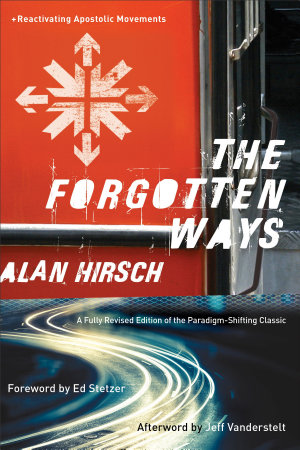
Ten years ago a significant book was written by a guy called Alan Hirsch. He titled it ‘The Forgotten Ways’ and in it he laid out his thinking about a new paradigm to explain the rapid flourishing of movements such as the early church.

forgottenways2

A few days ago a new edition appeared with significant changes following ten further years of thinking about explosive missional movements. Alan has refined the book by adding new examples, making some changes to the terms he uses, and making even more persuasive arguments.

The new version is a great book; read it! Whatever your views on faith, discipleship, mission, community or the nature of church, this book will encourage you to fresh thinking. It will take you down some rarely travelled roads, through unexplored countryside, and it will open new vistas and opportunities.

There are a few links below, you might explore these if you are new to Alan’s thinking. And if you’re familiar with the first edition you’ll certainly want to read the new one.

In the book, Alan writes

The twenty-first century is turning out to be a highly complex phenomenon where terrorism, disruptive technological innovation, environmental crisis, rampant consumerism, discontinuous change, and perilous ideologies confront us at every point. In the face of this upheaval, even the most confident among us would have to admit, in our more honest moments, that the church as we know it faces a very significant adaptive challenge.

He’s absolutely right! But what can we do about it? A very plausible answer will unfold as you read this book.