I’ve been finding I don’t have time to post as often as I’d like, and one way to deal with that is to post shorter messages based around material I already have to hand So as part of the mix I’m going to start posting single point extracts from JDMC, and continue with short image posts as well. We’ll see how it goes.
These single point extracts are intended to spark fresh thinking individually or in group discussions of up to ten people – (Christian Unions, church home groups, house churches etc). Unions, church home groups, house churches etc).
JDMC extract – 1
No, I’m not suggesting you all sign up for holy orders – but we are a royal priesthood, a holy nation, a chosen race (1 Peter 2:9). In Israel the royal and priestly functions were separate. But in Christ they are combined, he is King of Kings (Revelation 19:16) but he is also our Great High Priest (Hebrews 4:14). We have Royal duties because our Father is also the King’s Father, so we have a role in leading and ruling. But we also have priestly duties because we’re brothers and sisters of the High Priest, and we have a role in bridging the gap between the people around us and our Father in heaven. Every single one of us is a servant of Christ and should be fully active – it’s part of being a disciple. We do what he does, we say what he says.
Find out what everyone’s leadership gifts are. We all have them, there are no exceptions. We all have the role and duty and joy of encouraging and equipping others for service. We must build one another up in love. It’s part of discipleship, part of becoming like the Master.
Discuss
I can guarantee that everyone in your group has taken the lead in some way, great or small. Can you identify some of these leading abilities? It might be initiating something, reminding the group to listen to what the Spirit is saying, spreading a good idea to another group, getting people to care for one another and cooperate, or explaining something. Can you identify anything apostolic, prophetic, evangelistic, shepherding, or teaching here?
If you enjoyed this or found it useful, please like, comment, and share below. (If you don’t see those links, click the article’s title above the main photo and they will appear.) Send a link to friends who might enjoy the article or benefit from it – Thanks! My material is free to reuse (see conditions), but a coffee is always welcome and encourages me to write more often!
What’s in an image? Sometimes quite a lot, more than meets the eye. I’m posting an image every few days.
Click to enlarge
This boat, seen here on the Gloucester and Sharpness Canal, is based at Saul Junction in Frampton on Severn. It might look like a tourist boat available for hire by the public, but it serves a different and entirely charitable purpose. Two similar (but not identical) special boats were built to provide opportunities for disabled or seriously ill people to experience a day on the canal for free. And for those that want to, they are also given the chance to explore the boat, see how it all works, hold the steering gear and so forth. The boats are designed for wheelchair access too. Check the See also link below for details and photos from the Willow Trust website.
I love to see examples of effort and resources being expended by enthusastic teams to greatly benefit those who need and deserve help. Every one of us can see the need for support of this sort, though not all are able or willing to provide it. But every single person in the world can do something positive to help others one way or another. It might be as simple as a kind word at the right moment, or a helping hand to steady someone losing their balance, or even just a smile. All it takes is an open eye, an attentive ear, and a willing mind.
If you are a wealthy person you might give thousands of pounds towards maintenance and fuel costs for these boats; if you have some spare time but no money, you might give time and energy to help with tidying and cleaning a boat between trips or helping in other practical ways. No matter what we do or do not possess, there’s always something we can offer.
It’s about contributing something, anything, in a world that’s not always fair or kind. And there are so many considerate, helpful organisations out there – everyone can find worthy opportunities in every town and most villages around the globe; even where there’s no local group or organisation, there will be many local opportunities to find and fill a need of some kind.
If you enjoyed this or found it useful, please like, comment, and share below. (If you don’t see those links, click the article’s title above the main photo and they will appear.) Send a link to friends who might enjoy the article or benefit from it – Thanks! My material is free to reuse (see conditions), but a coffee is always welcome and encourages me to write more often!
Orchids grow wild here in the UK, they’re not as showy as many of the tropical ones, and the flowers are far smaller, but they are still beautiful plants.
What’s in an image? Sometimes quite a lot, more than meets the eye. I’m posting an image every few days.
Click to enlarge
Orchids produce such beautiful flowers, often in great abundance, and they last for months if protected from too much heat and strong sun. This lovely, white Phalaenopsis flowers every year for us, but this year it had a bad plague of scale insect on the backs of the petals and on the leaves.
Scale insects are not hard to deal with as they can be wiped off with a soft tissue moistened with methylated spirit. Or even just wiped away gently with your finger. But you have to be persistent because you need to remove all the adults and then keep on removing the smaller insects until you have broken their reproductive cycle.
Orchids grow wild here in the UK, they’re not as showy as many of the tropical ones, and the flowers are far smaller, but they are still beautiful plants. Some orchids have flowers that mimic insects such as bees, butterflies, and flies. The insects are attracted to the flowers, and sometimes even attempt to mate with them; they act as pollinators, spreading the orchid pollen from one flower to another and so helping the orchid produce viable seed.
If you enjoyed this or found it useful, please like, comment, and share below. (If you don’t see those links, click the article’s title above the main photo and they will appear.) Send a link to friends who might enjoy the article or benefit from it – Thanks! My material is free to reuse (see conditions), but a coffee is always welcome and encourages me to write more often!
Like all dogs, Marple and Maizi spend a lot of time asleep. They sleep at night of course, just like we do; but they also sleep after meals, after walks, and any time they fancy during the day.
What’s in an image? Sometimes quite a lot, more than meets the eye. I’m posting an image every few days.
Click to enlarge
Here’s a five-year-old photo of my brother-in-law Paul’s dog, one of a pair of black Labradors, lovely, soppy, friendly creatures. This one is Marple, I think, though it’s hard to tell them apart without seeing both at the same time – if not Marple, she is Maizi.
Like all dogs, Marple and Maizi spend a lot of time asleep. They sleep at night of course, just like we do; but they also sleep after meals, after walks, and any time they fancy during the day. Apart from doing what they are told they have no responsibilities, no chores, no planning or organising, but plenty of time to rest. And like all carnivores, they mostly want to find something to eat and then rest until hunger pangs set in again. It’s a dog’s life!
Now five years older, at 14-years-old, they sleep even more than before.
Paul and his wife Vanessa live in Weston-super-Mare, a seaside town with a wonderfully long and wide beach and some fine woodland on a hill. Needless to say, Marple and Maizi have always loved visiting both the beach and the woodland. And it’s in those environments that I’ve seen some of the special closeness of interaction between human and dog; the throw, chase, catch, bring back, drop process for example, redone over and over and over again!
The close interaction between people and dogs developed a very long time ago, in his book, ‘Sapiens’, Yuval Noah Harari writes:
We have incontrovertible evidence of domesticated dogs from about 15,000 years ago. They may have joined the human pack thousands of years earlier. Dogs were used for hunting and fighting, and as an alarm system against wild beasts and human intruders. With the passing of generations, the two species co-evolved to communicate well with each other. Dogs that were most attentive to the needs and feelings of their human companions got extra care and food, and were more likely to survive.
Labradors possibly take this cooperative union further than almost any other breed. The bond between dog and owner can be really close. It’s been my privilege to see that very clearly with Paul, his wife Vanessa, and their dogs Maizi and Marple.
If you enjoyed this or found it useful, please like, comment, and share below. (If you don’t see those links, click the article’s title above the main photo and they will appear.) Send a link to friends who might enjoy the article or benefit from it – Thanks! My material is free to reuse (see conditions), but a coffee is always welcome and encourages me to write more often!
What we can say with some certainty is that the Gospel of Matthew was written by a person with a good knowledge of Judaism and was complete in its current form within 70 years of Jesus’ death.
Before starting to read and discuss Matthew, here’s an overview of the book and its author.
Matthew’s gospel was written by a well-educated Jew, probably between 60 and 90 CE (thirty to fifty years after the events he describes), but some scholars think it was written as early as 40 to 50 CE. It seems likely the author drew from Mark’s gospel (which was written earlier); possibly also from the text of a different early account, now lost (referred to as Q); and perhaps from material written by the disciple Matthew. The facts are lost in the past, and Bible scholars continue to change their views based on the material available and their opinions about it. Some argue that the disciple Matthew was the author, others believe this is unlikely.
The author
The book may have been written by Matthew the tax collector (also called Levi), one of the twelve apostles. Certainly this is what the second century church fathers thought. The text itself suggests that the author was fluent in Greek with a good knowledge of either Aramaic or Hebrew (or indeed both).
The debate will continue, but what we can say with some certainty is that the Gospel of Matthew was written by a person with a good knowledge of Judaism and was complete in its current form within 70 years of Jesus’ death. The structure of Matthew closely follows that of Mark with the addition of extra material at the beginning (the genealogy and stories of Jesus’ birth) and at the end (events after the resurrection).
Purpose
This gospel is focused on Jewish traditions and people, and generally draws on a broad and deep understanding of Jewish society and customs at the time of Jesus. It was probably written for the Jewish diaspora living in Alexandria, Antioch and elsewhere, Jews who would have spoken Greek in everyday life.
The purpose of the book is to reveal Jesus as the Messiah, of the royal lineage of David, and as fulfilling the Jewish Bible (the Old Testament). The author of Matthew is also clear that Gentiles are included with Jews in everything Jesus did and promised.
The Wikipedia article on the book gives a lot of useful information all backed up by detailed references. If you want to understand the background in further detail it’s a good place to start. The article about the author is also useful and provides ample references.
If you enjoyed this or found it useful, please like, comment, and share below. (If you don’t see those links, click the article’s title above the main photo and they will appear.) Send a link to friends who might enjoy the article or benefit from it – Thanks! My material is free to reuse (see conditions), but a coffee is always welcome and encourages me to write more often!
Cycling through the gospels to keep Jesus at the centre of all we do.
I’m posting notes on short passages from the gospels. Come and join me in reading the passages and leave me some thoughts and comments. The notes can be used individually, or they can be used systematically to work through a whole book, or all four gospels. The most recent notes are on my Journeys of heart and mind site (JHM), and more will follow. Older material is on an older website, some links may need updating but navigational links work seamlessly across old and new.
I’ve made a start in Matthew, Mark, and now John; it’s been an interesting journey for me. You can start from any point, all the old posts remain and new ones will appear once every week or so.
Alan Hirsch has developed a model for vibrant, missional church life and at the heart of the model is the idea that Christ should be central in all that we do. Few people would argue with that! One habit that he recommends to help us keep Jesus at the heart of our lives is to cycle through the gospels as part of our Bible reading. Not only that, he recommends reading all of the Bible ‘through the lens of the gospels’.
I agree with that; and it’s where these articles come in.
Latest news:
22nd June 2025 – Today I finished the task of repairing broken links in the old version of these posts. You can now navigate the entire series using the links in each article – Matthew, Mark, and most of John. Next, I propose revising all the material from the old version, moving each item to Journeys of heart and mind as I go.
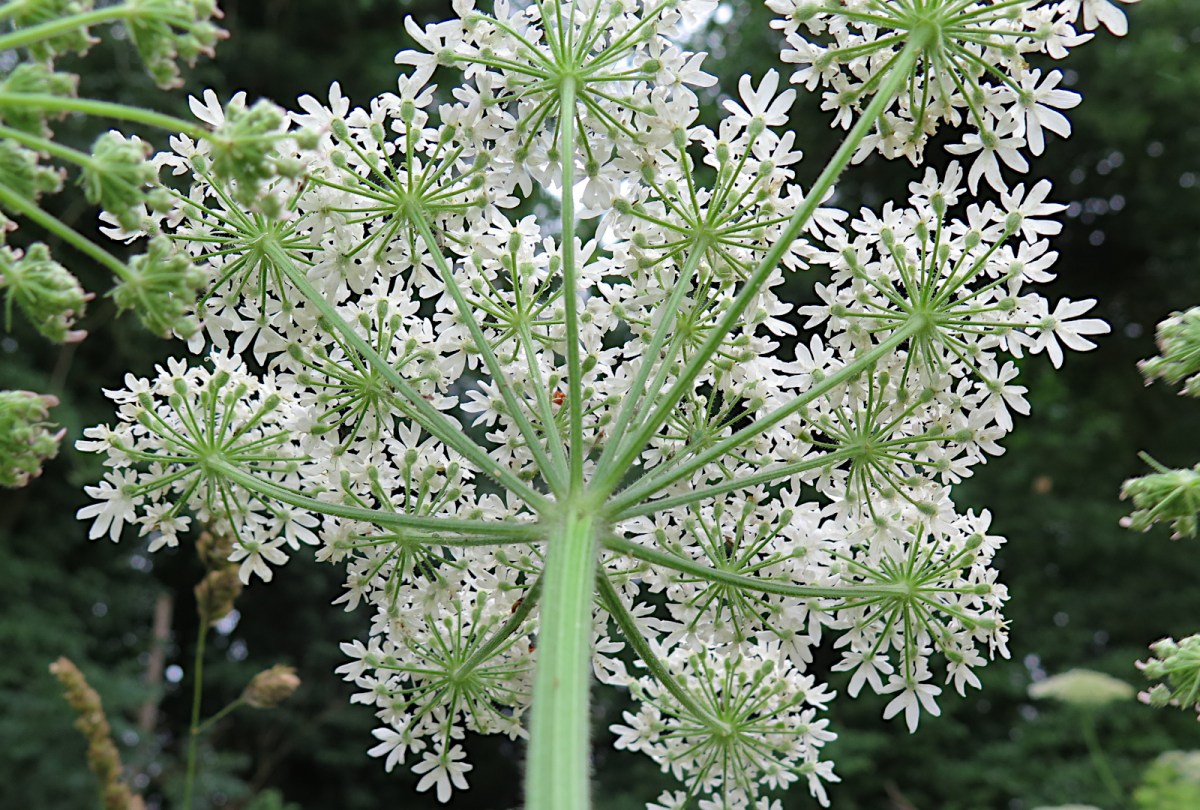
Notice how every part is sized precisely for the task it performs. The main stem is stout and sturdy, the stems that spring from it are much smaller and each one carries a number of flowers.
What’s in an image? Sometimes quite a lot, more than meets the eye. I’m posting an image every few days.
Click to enlarge
This photo was taken at a different time and place from the previous Umbellifer image, but the structure of this flower is very similar to the previous one. The main difference is that this time we’re viewing it from below. This reveals the exquisite architecture of an umbel.
Notice how every part is sized precisely for the task it performs. The main stem is stout and sturdy, the stems that spring from it are much smaller and each one carries a number of flowers. Those flower stalks in turn are smaller yet, and each one carries a single, tiny flower. It’s exactly how an engineer might design something, each part as large and strong as it needs to be, but no more. Why and how? Well, in the case the engineer, because lightness means less material, less mass, and therefore lower cost. Failure will be unusual because the forces will have been calculated and the values increased just a little to ensure safety.
Your car is designed this way, it could be designed and built to survive a collision with little or no damage, but it would be unaffordable because of the high cost of the extra material required, and it would consume much more fuel because of its high mass. That’s why you drive a car when travelling, not a tank!
The same argument applies to plant structures. The umbel could be made to survive a hurricane, but it would demand much more photosynthesis to provide the cullulose and other materials required to make it tough enough to survive such powerful winds. That’s why coconut palms have far stronger stems than the umbellifer! Living things are not designed by engineers, they adjust to their environment little by little over many generations by a trial and error system we call evolution.
Sometimes people say, ‘It’s only a theory’, meaning that something is a bit shaky and not to be trusted. That is to misunderstand what scientists mean by the word ‘theory’. In everyday use the word has a sense of an untested idea, something you just dreamed up as a way to explain something – might be wrong, might be right. Scientists have a word for that, but the word is not ‘theory’ – it’s ‘hypothesis’. In science, a theory is something so well tested as to be essentially unrejectable. Evolution is a theory in that sense, like the theories of relativity or quantum physics or plate tectonics. Theories have almost no room left for argument.
You can’t believe in evolution, it’s not a matter of faith but of overwhelming evidence. Following Jesus, as I and many others do, is based on faith, and I write about that too on Journeys of heart and mind.
You might be surprised to learn that engineers sometimes use evolution to design things like aircraft wings. The software to do that makes a long series of small tweaks to an initial design and calculates which changes improve performance. And this process is repeated many times enabling the final result to be stronger, lighter and more effective. An aircraft wing (or other structure) created in this way is not designed with paper and pencil or with CAD in the normal way, it evolves.
If you enjoyed this or found it useful, please like, comment, and share below. (If you don’t see those links, click the article’s title above the main photo and they will appear.) Send a link to friends who might enjoy the article or benefit from it – Thanks! My material is free to reuse (see conditions), but a coffee is always welcome and encourages me to write more often!
Mar 2025 (3 months before publishing this article)
Click to enlarge
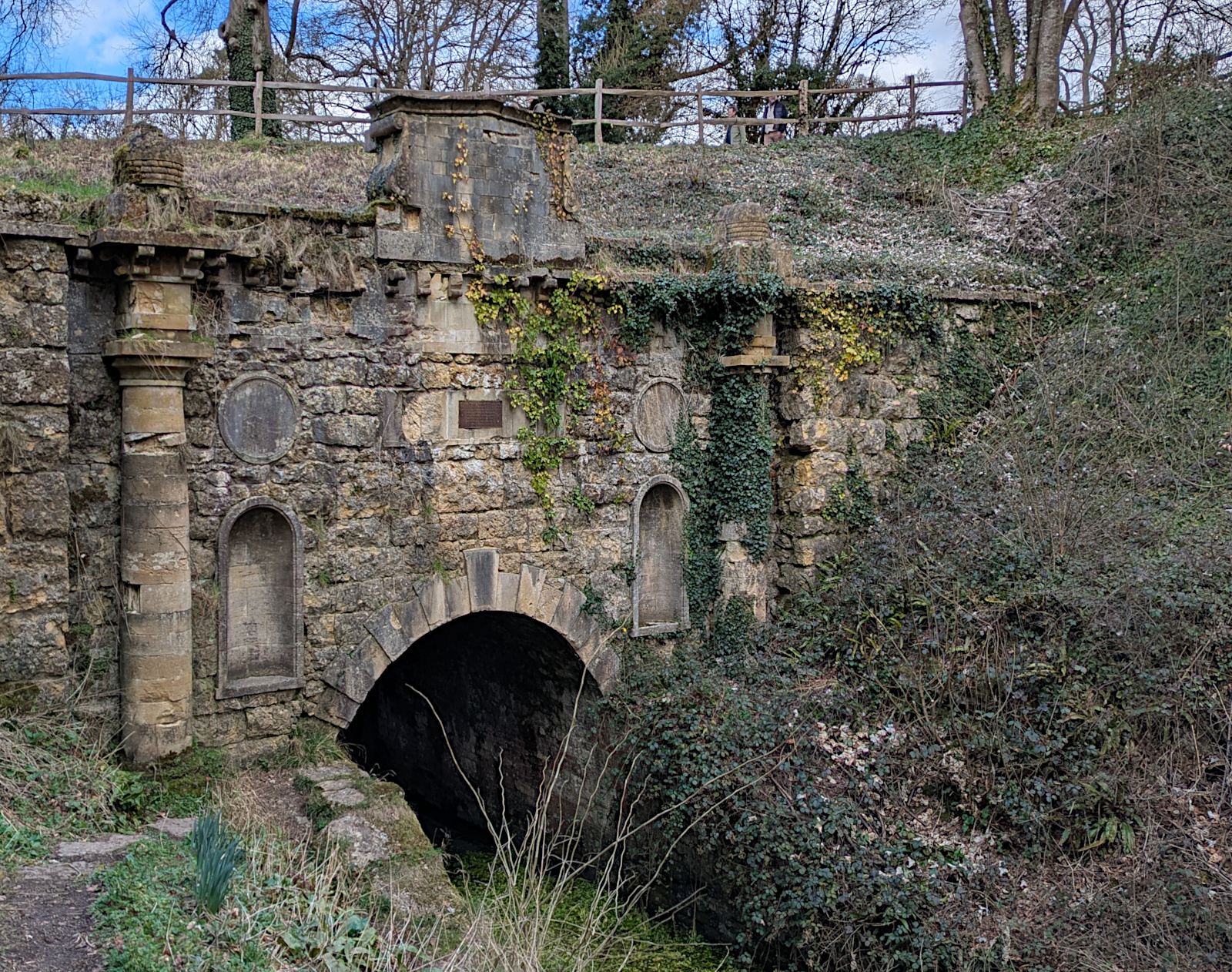
I walked the Thames and Severn Canal from the tunnel portal at Sapperton (Daneway Inn) to the other end at Coates (Tunnel House) and then followed the towpath where possible to Siddington and back along the Cirencester arm to meet Donna for a coffee before walking home again. Including some detours to view additional pieces of canal it amounted to about 15 miles in all.
Coates portal
The main photo shows Cotswold countryside, with Hailey Wood on the horizon. The footpath through this field is part of the Thames Way, and on the far side of the woodland is the southern canal tunnel entrance at Coates.
Several years ago I set up the Friends of the Gumstool Brook website for a friend, and after some difficulty I was able to hand it over fully to him. I’m not as nimble with the technical side as I once was, and I feel more comfortable not having the responsibility any longer.
We drove to York to exchange Christmas gifts with Debbie, Beth and their families. You can see Christmas paper debris in this shot but don’t ask what else is going on! Fern is probably creating really good artwork on her tablet. Paz and Debbie are having a sensible conversation. We did have an excellent time, and it’s always good to catch up.
Westonbirt School
Donna ran in a 10 km event at Westonbirt School, it was a big event with a lot of runners (she competed as 3390) and it involved two loops of a 5 km course circling around the grounds and local roads. She did really well, finishing the course and being far from the last runner home.
We visited Lydiard Park near Swindon. It’s owned by Swindon Corporation who look after it well – a bit like a National Trust property. The grounds serve as a public park with play equipment, a cafe/restaurant, and places for ball games and so forth.
The house has an interesting history and is well worth a visit. It’s available as a conference centre and for weddings and other events, and includes accommodation for guests.
Weston-s-Mare
We also spent a week in Weston-super-Mare, looking after the dogs for Donna’s brother Paul and his wife Vanessa. The photo shows Knightstone Harbour, with Brean Down beyond on the left and far beyond that, on the right, is Exmoor.
The highlight this month was our expedition to northern Scotland for the North Coast 500. We flew from Lulsgate to Aberdeen Airport while Isobel had a week in Weston-super-Mare with Paul and Vanessa; our journey out was on 17th June and we returned on 26th.
On our third day we visited John O’Groats, it had something of a Land’s End feel to it which is, I suppose, entirely to be expected. But looking towards the sea instead of the crowd-focused gift shops and cafes, you see the old harbour from which many an Orkney or Shetland ferry will have left or landed and small fishing vessels come in to land a catch.
Museum
Earlier the same day we’d explored Wick, once famous for the large scale of its famous herring fishing industry. The town has fallen on hard times with the loss of its major source of income, but tourism is beginning to bring some income back, aided by a really great fishing museum.
Paul and Vanessa visited us on 7th, and Tony’s funeral was on 17th at Cheltenham Crematorium. The lady who presented the address was very good indeed and everything went well. There were quite a lot of guests, Tony’s brother Ken with his wife Anne and their daughters and families, Paul and Vanessa of course, and more.
Fine weather made it better and we were able to chat outside, spaced according to the COVID rules though it didn’t seem too bad as each family could gather more closely within their own bubble.
We were having email problems with our web hosting company and as they were unable to fix the issue I decided to move to a Swedish company, one.com. It took a little time to get everything moved over, but it resolved the email difficulties and I soon had scilla.org.uk moved over and all the DNS aliases set up for jhm, chris, photo, and so on.
World events: The number of COVID cases worldwide passed 7 million on 8th June and 10 million on 28th; and there were border skirmishes between China and India.
I visited Thorganby on 13th, driving up through heavy rain most of the way. Donna couldn’t make it this time, but it was a good day. We visited Elvington for Aidan’s football awards day which included some sheep racing as well as football! In the evening Beth and the girls came over and finally I drove back home.
And I met my sister, Rachael, for coffee and lunch at Bosworth’s Garden Centre in Burton Latimer; it’s conveniently about half way between St Neots and Rugby.
Donna bought a new, purple HP laptop at PC World in Bedford. I suggested she spend a bit more on a higher spec device but she wanted the purple one!
I uploaded a new, revised version of Jesus, Disciple, Mission, Church (JDMC), a booklet on following Jesus based partly on the work of Alan Hirsch. I was very active in church life at this time, working with Several groups of people in and around St Neots. One of these was an Open Door Church small group run by our friends Roger and Carolyn. We met once a week for prayer, to sing, and to listen to the Holy Spirit’s guidance. Normally we would meet at the Church office.
World events:Lithuania officially adopted the euro as its currency; and the Kobanî massacre was one of three ISIL atrocities during Ramadan.
We began work refurbishing the old sports shop in Cambridge Road, St Neots, to turn it into a coffee and book shop. The old place had become dreary and old-fashioned inside and out, but we were confident that a new, fresh, bright colour scheme would make a very considerable difference. The major tasks would be to install a small kitchen where the changing cubicles had been, and build a service counter with coffee machine and display for cakes and so forth.
Aidan’s party
On 13th we visited Thorganby for Aidan’s 4th birthday party; dinosaurs and their footprints were everywhere, and Aidan was impressively knowledgeable about the different species. The food was dinosaur-themed too.
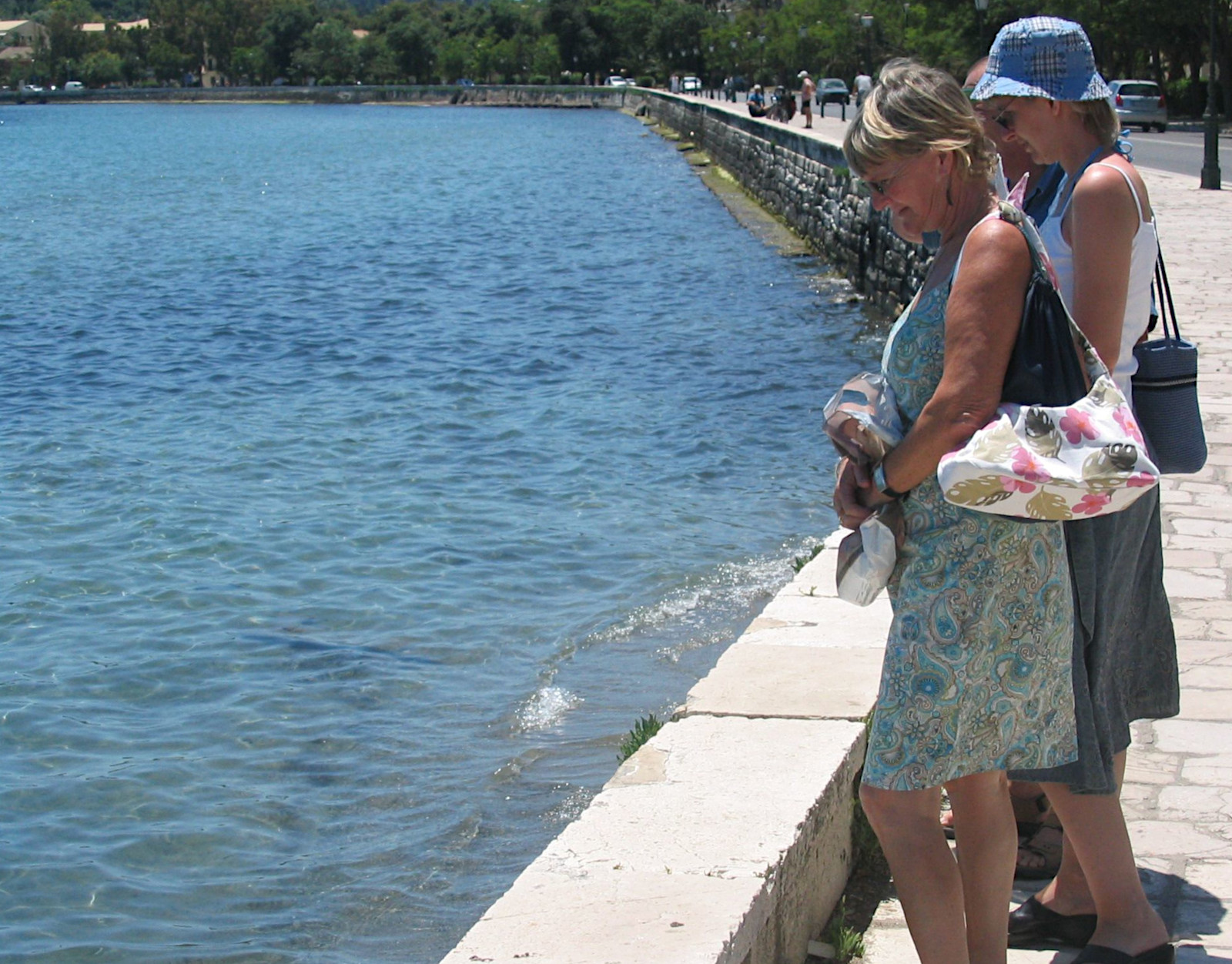
We visited our friends Geoff and Dawn who live in Corfu, Dawn’s daughter married a Greek so they have grandchildren in Corfu, and it’s a lovely climate. We spent a week with them using a little guest room in their garden for sleeping but eating and spending all day with them at home and around the island.
Mum’s note
Rosie and Richard were married (Rosie is my niece, Rachael’s daughter). Here’s something my Mum wrote for Rosie when she was born and brought it along to present at the reception! It’s so typical of my Mum.
At work at Unilever Research, I helped with some aspects of developing the Lipton intranet site and was helping set up new PCs for Knowledge and Information Systems (KIS).
World events:Wikipedia was featured in TIME Magazine; and there were protests in several European cities against software patents.
Unilever’s Colworth Web Team was set up, I was a part of this and worked for the team for almost all my years at the company..
Our friends Tony and Faith came to visit and we took a look at the Monk’s Wood Reserve that they wanted to see.
Ripon
We had a holiday in Yorkshire, hiring a cottage in the picturesque little town of Masham and visiting the surrounding countryside. We loved Masham itself, and also Ripon which I’d never visited before. We did a tour of the Black Sheep Brewery, right in Masham itself, really interesting and good fun as well.
June was definitely a good month, but also a busy month.
The photo shows Beth and Grandad (Judy’s Dad) at Hilcot, between Cheltenham and Cirencester. Grandad’s dog, Skip, is in the water and would probably have got himself hosed down when they arrived home in Charlton Kings!
Judy was beginning to lose a little weight at this time though was still fit and well and not in any discomfort. She had read somewhere that drinking vegetable juices might help with cancer so we bought a juicer and submitted all sorts of vegetables to its noisy, destructive action.
Beth must have been sitting A level exams this month, while Debbie was busy with her finals at the University of the West of England in Bristol. These were important times for them both, with significant implications for the future depending on the results.
World events: A US F-16 fighter was shot down over Bosnia; and Space Shuttle Atlantis docked with Russia’s Mir space station.
I chatted with Bill Giles the BBC weather forecaster at the Bath and West Show where I was working on the Long Aston Research Station (LARS) display.
At the allotments
A few days later, we drove to Charlton Kings, Cheltenham to visit Donna’s Mum and Dad, Madeline and Ron. Ron had an allotment nearby and he took us up to take a look at it. Like everything Ron did it was impeccable, not a weed in sight, all the plants raised in the greenhouse in his back garden, everything in dead straight rows. Quite regimented, really; but growing well. The allotment in the photo is not his, in the only one I have of him on his own plot, he’s far away and there’s no detail.
Larchmount
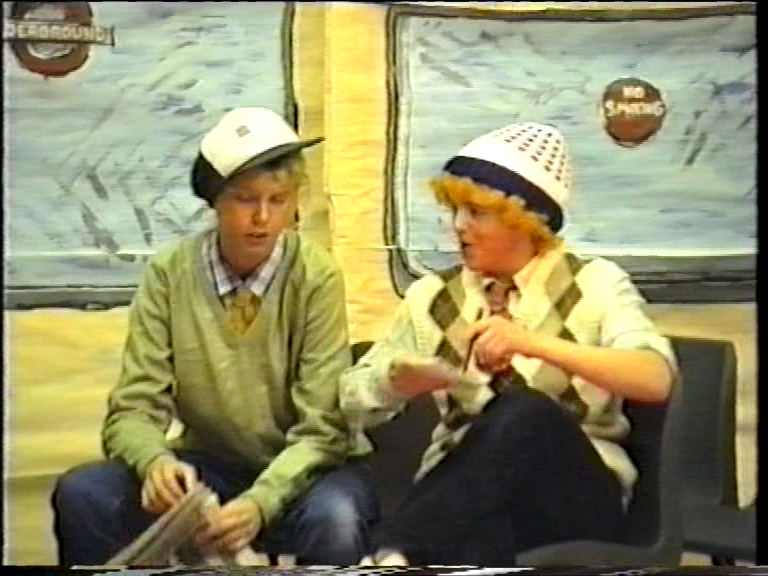
Towards the end of June, Debbie took a leading role in the Larchmount Players summer comedy in which bombs were transported on the London Underground and the other passengers made life extremely difficult!
World events: JK Rowling had the initial idea for Harry Potter; and the 14th FIFA World Cup was transmitted from Italy to Spain in high-definition TV.
There was country dancing at the Yatton Junior School Fete. Beth was involved in this and there were a lot of families and friends watching. I think I missed the fun because I was at work.
Fancy dress
Debbie and Beth also took part in the fancy dress carnival procession through the village. Here they were setting off, still in the school grounds at this point. Beth was wearing a clown costume made by her great-grandmother, Nor. I believe it was originally for my Uncle Dick to wear!
World events: The Schengen Area was created by five European states; and Route 66 was officially decommissioned.
Debbie and Beth went on an expedition with Mum to climb the stone stairs to the top of Yatton’s church tower. It must have seemed a lot of steps, and then all of them to do again to get back down. At two-years-old I dare say Beth might have been carried, but Debbie must have climbed up and down the entire way.
In Clifton
Here we are later in the month, crossing the Clifton Suspension Bridge in Bristol. It was clearly a hot day (flaming June), we were a very typical young family, Judy and I were still both thirty-one-years-old when she took this photo.
Debbie was three-months-old around the middle of the month and was probably able to hold things by herself. I’m guessing about the date of this photo, it might have been taken in July.
We hadn’t moved into our new home in Yatton yet, but the paperwork was all being processed. We didn’t move, I think until July or August, but at least by this time we probably had a definite date and would have given our landlord at the Belmont Road flat notice of our leaving date.
Exciting times!
World events: The Suez Canal reopened after the Six-Day War; and military rule ended in Greece with the formation of the Hellenic Republic.
This month spelled finals for Judy in Aber (Aberystwyth), and for me in Bath. As usual, for me this meant working in a hot exam room for hours and hours while suffering from a heavy dose of hay-fever. It was really not helpful!
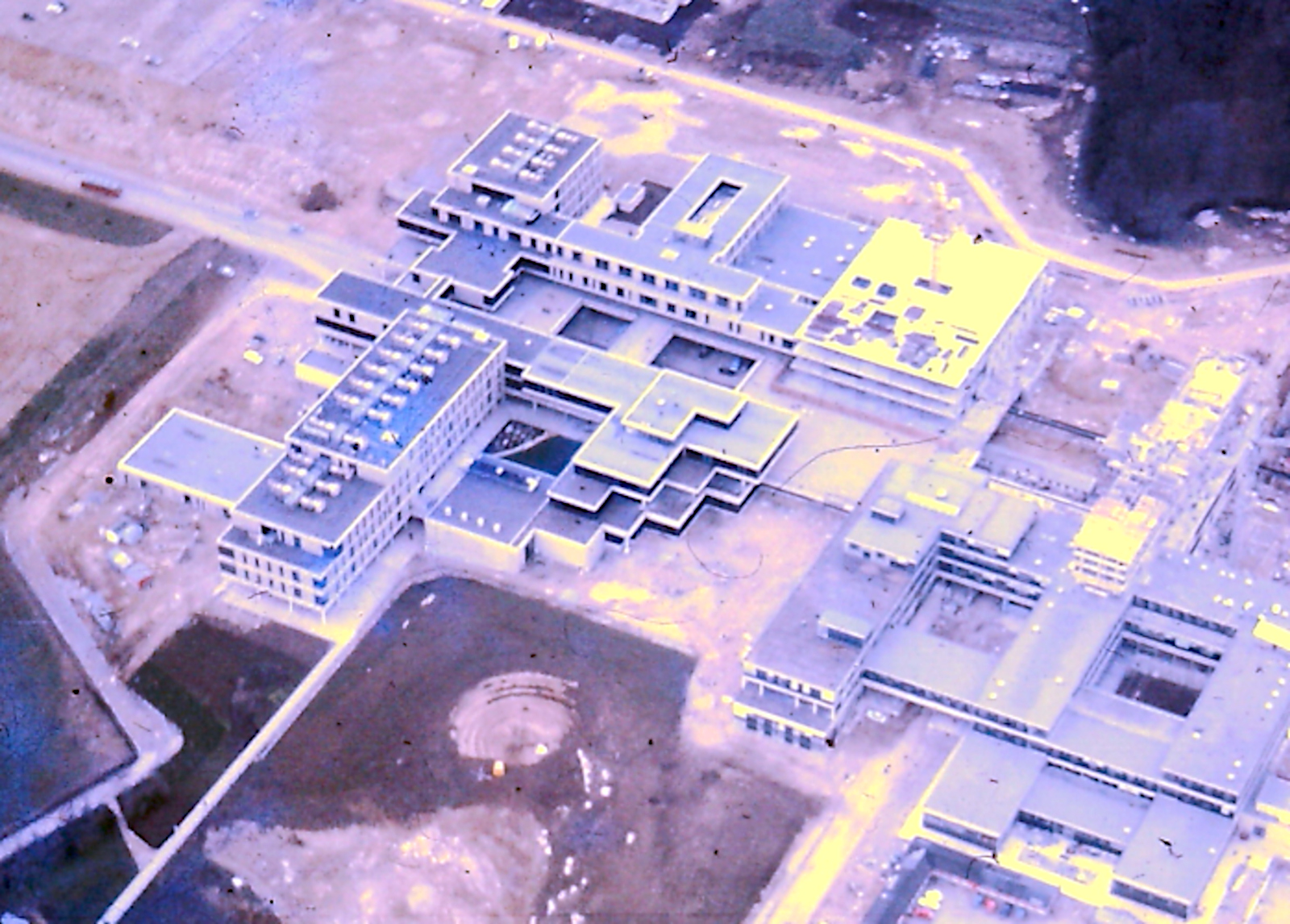
I’d been studying Horticulture in year 4, while Judy was studying Biochemistry in year 3. The photo shows the Bath campus from the air around 1968. The large, pale construction site towards the upper right is the new maths and computing centre which was complete and in use by the time I graduated.
World events:Soyuz 9 carried a two-man crew for a record nearly 18 day spaceflight; and Brazil defeated Italy 4–1 to win the 1970 FIFA World Cup.
This month, Rachael had her 8th birthday and Ruth had her 9th, both of them were finishing an academic year at Querns School. Dad’s 39th birthday was also in June. If you want to see the riddles and their answers you’ll have to read the card.
I climbed Cirencester’s Parish Church tower and took some photos from the top, and also visited the World Gliding Championships at South Cerney with Dad and Günter, a German exchange student living with us at the time.
The school term ended in June, and that was also the end of my first year at Cirencester Grammar School. This is the main front entrance inside the lobby; turning first right led to the imaginatively named, two-storey ‘Red Brick Building’, second left was the Music Room, and right was the Library. Outside is a view across Victoria Road. (I took the photo in 1966, but nothing significant had changed.)
Ruth’s fourth and Rachael’s third birthdays were in June, Cindy was eight-years-old and I was still eleven (but only just).
This photo shows the corner of Cricklade Street (left) and Castle Street (right) in Cirencester. It’s based on a photo on the Wilts & Glos website.
The end of the school year was approaching as the second half of the summer term slipped by. I knew we’d have the long summer holiday and when we came back to school in September I’d be in my third year, not the second year any more. I was six-years-old at the time, but I’d be seven when we went back to school.
We went to Weston-super-Mare with Granny and Grandpa and stayed in one of the old hotels at the northern end of the front. I remember being fascinated by the waiter opening the doors on the wooden gramophone cabinet to make the music louder. We also visited Wells Cathedral on this trip.
(I know I remembered the gramophone from just two years old because I asked Mum and Dad about it much later when visiting them from Yatton. They were astonished and told me when and where it had happened. They remembered the name of the hotel we’d stayed in: The Lauriston).
At the end of May Dad travelled to Northern Ireland on leave and with some difficulties made it to Coagh on 29th. On 1st June they visited his old Ballinderry radar site and found it to be ’empty and derelict’. On 2nd they travelled to Belfast and had lunch with Mum’s Aunt Annie and her husband, Uncle Samuel. They sat in the sun outside City Hall and an American took their photo for them. After saying ‘Goodbye’ Dad caught the train to Larne, boarded the ferry, and was back in Stranraer in the evening, he wrote in his diary, ‘Horrible to leave Lilias’.
He then spent the rest of his leave in Cirencester catching up with the family and by the 10th he was back at camp in Alford. On 16th he spent a lot of time at the Butlins fun fair with others from camp. Radar duties continued 24/7 but with Germany defeated, the likelihood of hostile aircraft would have been zero.
There’s not enough information to write something for every month in the 1940s. Dad’s diaries start in January 1943, so for January 1940 to December 1942 I’ll write about things I know, or draw on dated photos and documents. Sometimes I might use a photo or document with a guessed date.
Dad was fourteen-years-old on 4th June, and most likely at school at Rendcomb College just north of Cirencester on the Cheltenham Road. The family home was ‘Churnside’ at 37 Victoria Road on the eastern edge of Cirencester. Mum was still eleven and living with her parents in Coagh, just inside County Tyrone on the border of Londonderry.
Tower St Nursery
One of the Jefferies’ nurseries was at Tower Street, this was on a plot of land that had once been very much larger and in the countryside on the southern edge of the town, but the town had expanded and the nursery was now surrounded by newer development; large parts had been sold off over the years, no doubt at a good profit.
The small piece that remained contained the Warehouse where seed-cleaning machinery occupied the top floor. The lower floors and the cellar were used for storage and processing of horticultural supplies and implements of all kinds. There were a number of greenhouses used for plant propagation and growing on in pots of various sizes. These were heated by a coke boiler feeding warm water through large bore pipes; during the winter months the boiler had to be tended and recharged with coke at roughly twelve hour intervals, usually around eight in the morning and then again around eight in the evening.
There was a packing shed in use all year round. Plants and sundries ordered by customers were packed in wood wool, tied up with raffia,and wrapped in sacking as required to protect them on their journeys; then delivered by horse and cart to local destinations in Cirencester and nearby villages, or taken to the nearby Cirencester Town Station for longer journeys by rail.
The photo is from a cine film taken in September 1960. The sign reads ‘Royal Nurseries, J Jefferies & Son Ltd, Cirencester’, but that aside, the greenhouses, pathway and warehouse would have changed little since 1940.
Anything that appears in this section will be material that I believe belongs in this decade. Items will not be in sequence within the decade, but where I can make a good guess of the date I will do so.
Stamp removed
This is an item that can be dated precisely. It mentions a nine-year-old, and other items with it as well as use of the name ‘Tigger’ show that it was part of a birthday present trail of clues for my Dad (he was known as Tigger by close family). As he was born on 4th June 1926, it’s almost certain that this trail was laid on 4th June 1935. It’s in my grandfather’s hand writing so we also know who laid the trail. And the stone steps and sharp right turn to a dark room describe the access to the concrete air-raid shelter where a step ladder must have been stored at the time. This little piece of paper tells us so much!
World events (June 1931): French industries warned that the US Smoot-Hawley bill would trigger an international tariff war; and the Dow Jones tumbled to its lowest level of the year due to anxiety over the Smoot-Hawley bill.
If you enjoyed this or found it useful, please like, comment, and share below. (If you don’t see those links, click the article’s title above the main photo and they will appear.) Send a link to friends who might enjoy the article or benefit from it – Thanks! My material is free to reuse (see conditions), but a coffee is always welcome and encourages me to write more often!
What’s in an image? Sometimes quite a lot, more than meets the eye. I’m posting an image every few days.
Click to enlarge
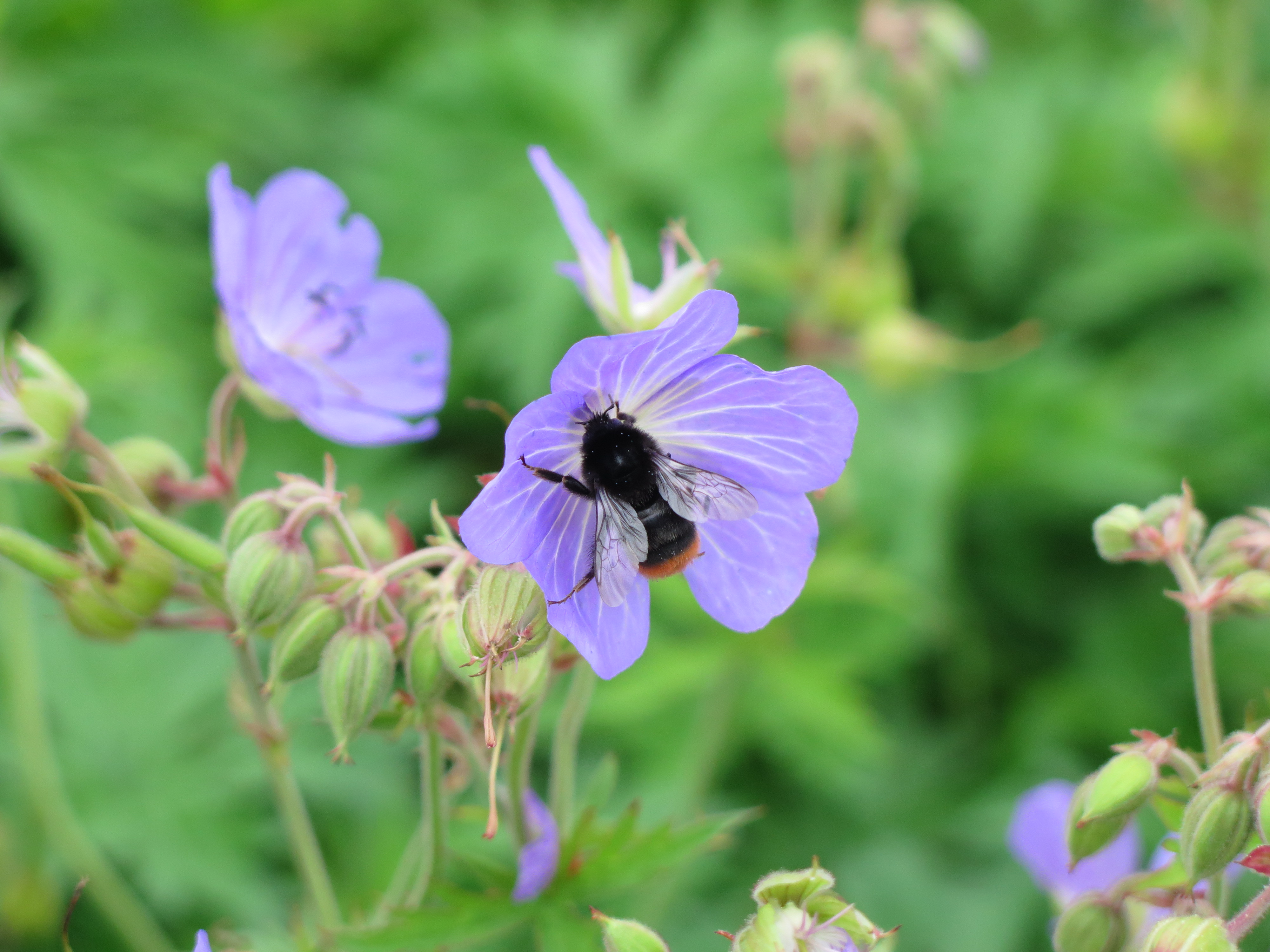
Here’s a bumble bee busy collecting nectar from a meadow cranesbill flower in a field margin just a brief walk from my home. The cranesbills are wild geraniums, close relatives of the pelargoniums; both genera are widely grown as decorative plants in pots or garden borders.
The photo is sharp enough when enlarged that you can see individual pollen grains on the bee’s black, furry body. Click the thumbnail image and stretch it to full size, then look for little white dots on the bee, those are the pollen grains.
Mutual benefit
The bees and flowering plants co-evolved, ancestors of both succeeded best in the presence of the other. Presumably the bee ancestors fed on the pollen of wind pollinated plants, incidentally transferring pollen more efficiently than the wind. And plants that provided sugary solutions and flagged this with colourful leaves near the nectar and pollen source were more successful than those that did not. After a while the insect and plant species were locked into a mutually beneficial relationship. Flowers are wonderfully adapted to attract bees and supply them with energy and a protein source to feed to their larvae. Bees are wonderfully adapted to collect and store nectar and pollen while moving some pollen grains from one flower to another.
If you enjoyed this or found it useful, please like, comment, and share below. (If you don’t see those links, click the article’s title above the main photo and they will appear.) Send a link to friends who might enjoy the article or benefit from it – Thanks! My material is free to reuse (see conditions), but a coffee is always welcome and encourages me to write more often!
What’s in an image? Sometimes quite a lot, more than meets the eye. I’m posting an image every few days.
Click to enlarge
This is a flower head of cow parsley or one of its relatives, a wild plant that grows extensively in Britain on untrimmed grass verges, along hedgerows, and in similar places. It’s a member of the carrot family, the Apiaceae ( until 2011, Umbelliferae), the word ‘umbellifer’ is related to ‘umbrella’ and you can probably see why!
The umbellifers are an interesting group of plants, including carrot, parsnip, celery, parsley, dill, fennel, coriander and many more. Cow parsley, like the others listed here, is safe to eat – but be very careful; hemlock looks much like cow parsley and is deadly poisonous. The infamous giant hogweed is another harmful umbellifer.
It was a hemlock extract that the Greek philosopher Socrates was required to drink following a guilty verdict in Athens.
If you enjoyed this or found it useful, please like, comment, and share below. (If you don’t see those links, click the article’s title above the main photo and they will appear.) Send a link to friends who might enjoy the article or benefit from it – Thanks! My material is free to reuse (see conditions), but a coffee is always welcome and encourages me to write more often!




















 Journeys of Heart and Mind

