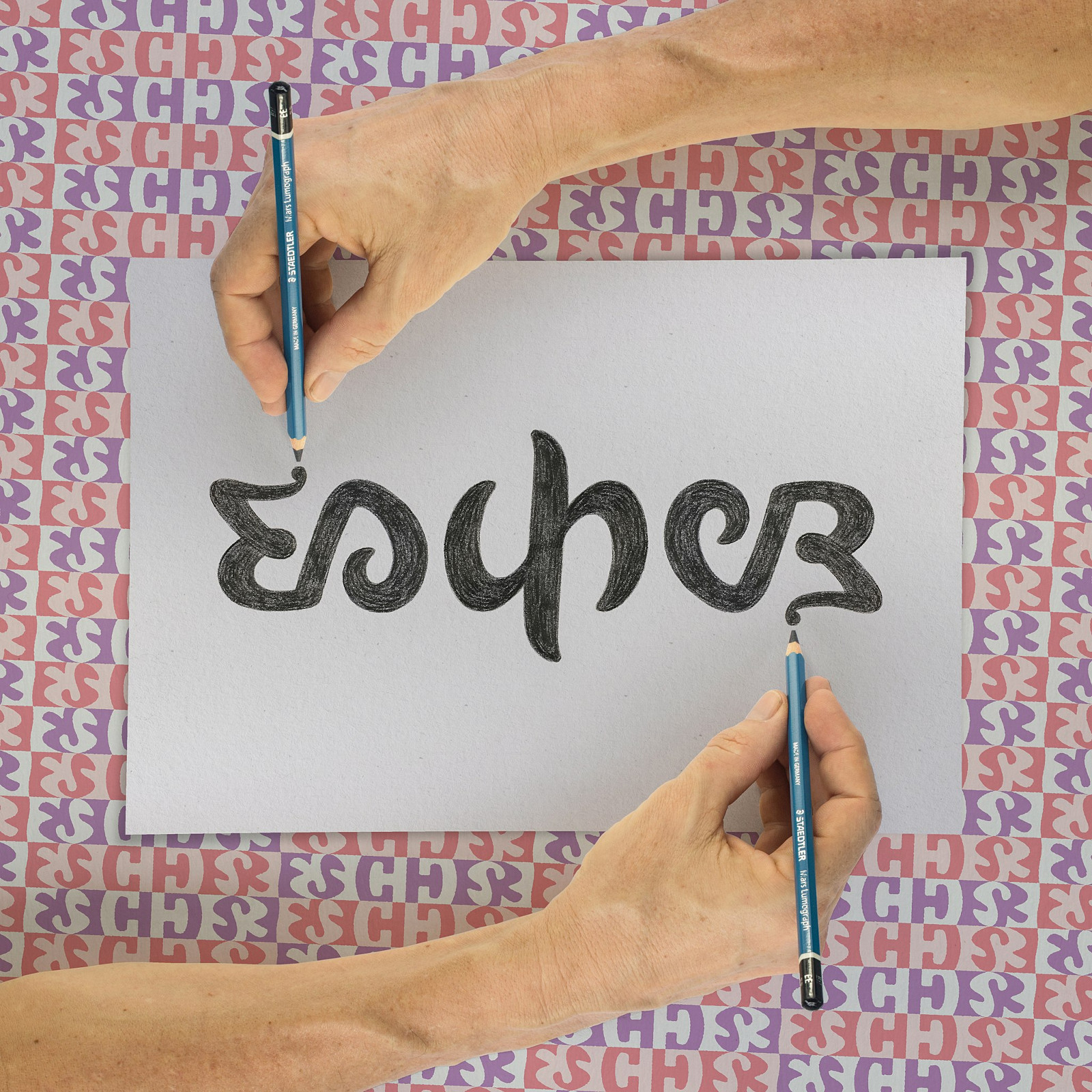
What’s in an image? Sometimes quite a lot, more than meets the eye.
I’m posting an image every day (or as often as I can). It might be a photo I took, an image from Wikipedia, NASA, or some other open source, a diagram or a map. Whatever takes my fancy.
The beach at Weston-super-Mare
This is Weston-super-Mare, North Somerset in the UK on 22nd June. The beach is long and wide, golden sand at the top running down to sticky and dangerous mud at low tide. Beyond the mud is the sea, beyond that the distant north coast of Somerset, and finally the sky with a bank of cloud.
The colours here are so subtle, grey-blues and grey-browns. How would you describe these colours? Do any of them have names? Put it all together with the three figures and it makes a lovely composition, a peaceful scene. If I’d turned 180º and taken another photo it would have shown the hustle and bustle of the sea front streets – not peaceful at all!
Favourites
For convenience, here’s a list of my favourite images:
If you enjoyed this or found it useful, please like, comment, and share below. (If you don’t see those links, click the article’s title above the main photo and they will appear.) Send a link to friends who might enjoy the article or benefit from it – Thanks! My material is free to reuse (see conditions), but a coffee is always welcome and encourages me to write more often!
SpaceX, the world’s foremost space launch company by almost any measure, is attempting to launch Starship tomorrow, 6th June 2024. This launch is Integrated Flight Test Four (IFT-4). Each of the first three flight tests did better than the one before.
SpaceX is part way through the flight test program for its Starship launch vehicle.
IFT-1 cleared the pad (in more ways than one). It lifted off successfully, though very sluggishly and with significant engine failures and it actually blew away large quantities of concrete from the base of the launch platform. It flew to a considerable altitude but had to be destroyed in the upper atmosphere after four minutes of flight.
IFT-2 did a lot better. All engines performed well, the redesigned launch pad survived, and lift off was smooth and the ascent much faster. Starship separated from the Superheavy first stage, but both later failed. Starship flew for eight minutes on the planned trajectory.
IFT-3 was a fully successful launch, Starship separation was smooth and the engines fired to reach the intended trajectory (almost orbit but not quite), and Superheavy fired its engines for a return. Additionally, Starship opened its payload bay door and completed an internal propellant transfer test. But after those successes, both vehicles failed and were destroyed.
IFT-4 – Who knows? We may find out tomorrow or there may be a delay due to poor weather conditions or a last-minute glitch of some sort. When the launch takes place it’s likely that it will do better than IFT-3. Complete success would see Superheavy return to a chosen point above the sea near the launch site and make a catch landing on an imaginary launch tower before plunging into the water; Starship would fly safely to a re-entry point over the Indian Ocean, survive the descent, and possibly make a ‘landing’ attempt over the water.
Spaceflight enthusiasts world wide are all agog to see how it goes.
Assuming complete success of IFT-4, IFT-5 will push the envelope further, probably in mid-July (my best guess), possibly with a booster catch attempt and a Starship insertion into orbit. It might even attempt to release one or more Starlink satellites. But whatever IFT-5 attempts to do will depend on how many of IFT-4’s goals are achieved tomorrow (or whenever the flight takes place).
If you enjoyed this or found it useful, please like, comment, and share below. (If you don’t see those links, click the article’s title above the main photo and they will appear.) Send a link to friends who might enjoy the article or benefit from it – Thanks! My material is free to reuse (see conditions), but a coffee is always welcome and encourages me to write more often!
Topic-focused blogs tend to get large readerships. But I’ve always expressed whatever takes my fancy here on JHM.
I’ve been writing posts on ‘Journeys of Heart and Mind’ (JHM) for twenty-two years now. Sometimes I’ve written daily, or even more often than that, sometimes I’ve gone for months without posting at all, but recently I decided to deliberately write more frequently. But what I’m considering right now is not the frequency of posts, but the range of topics I cover.
The most successful blogs specialise on a topic, often quite a narrow topic – for example ‘Infra-red astronomy’, or ‘greenhouse gardening’; poetry or photography or evolution or Bronte or Paris. These topic-focused blogs tend to get large readerships. But I’ve always expressed whatever takes my fancy here on JHM; I’m not interested in audience size, more on variety and sharing an insight here or an opinion there.
My favourite topics include spaceflight, history, following Jesus, science, technology, astronomy, photography, world events and more. I’ve decided to continue posting an any topic that grabs my attention.
I spend £100 a year or so on the blog, about £2 a week. This is what it costs to keep and manage the domain name scilla.org.uk (though this covers my email address and Donna’s too and allows me to set up and manage subdomains like jhm.scilla.org.uk as well. And it also covers the cost of web hosting and a Word Press account to manage the blog, cover data storage, editing facilities and the rest. I could return to using Google’s Blogger platform which is free of charge; that’s what I used until July 2016. But it’s more limited and doesn’t provide such flexible formatting as Word Press.
All of this to say I shall probably leave things as they are, post a little more than I’ve managed for the last few years, and try to keep posting on a range of topics that interest me.
But it would be good if you, my readers, gave me some feedback. What do you like or dislike? Are there other topics you’d like me to write about? Are there things you wish I would not write about? If you have anything to say about this, do please leave me a reply. I don’t guarantee to follow your advice, but I promise I will consider it carefully. Thank you! And thank you also for reading JHM.
Useful? Interesting?
If you enjoyed this or found it useful, please like, comment, and share below. (If you don’t see those links, click the article’s title above the main photo and they will appear.) Send a link to friends who might enjoy the article or benefit from it – Thanks! My material is free to reuse (see conditions), but a coffee is always welcome and encourages me to write more often!
What will persuade me to do more? What will persuade you? And what form might ‘doing more’ take? It’s easy to feel helpless as an individual. What can one person do? Here are some simple, effective suggestions.
We all know what an amplifier does. It takes a signal from a microphone or a musical instrument and increases the power dramatically so that a relatively quiet sound can be sent to a loudspeaker and become very loud.
And we know what a broadcast is. It takes sounds and pictures and sends them to many different places, often very far away. So a TV broadcast will appear in many homes across an entire nation.
Sometimes it’s necessary and important to amplify and broadcast ideas – make them louder and spread them more widely. That’s what I want to do here. Please read this message from Yaroslava Antipina (Yara), writing from Kyiv, Ukraine. Here’s an extract to pique your interest.
Hi!
It’s a bit gloomy headline today. But it describes the reality we have in Ukraine now. russians kill children (adults as well, of course) and destroy our energy infrastructure. Often, homes without children and power don’t have walls, either.
I am writing to you surrounded by generous spring sun rays. It is warm and green outside. But these bright colours cannot hide our current reality.
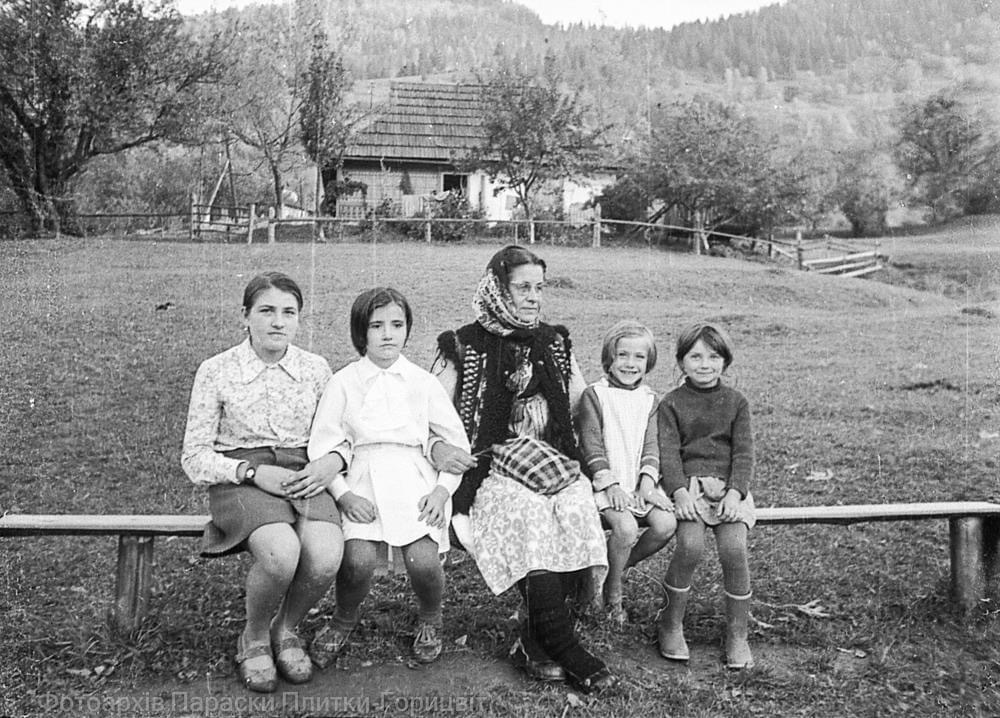
A few words about the photos you will see in this letter. I will show you the pictures of a Ukrainian photographer, ethnographer, folk writer and artist, Paraska Plytka-Horytsvit (1927-1998). She is called Homer Hutsul. What is Hutsul? It is an East Slavic ethnic group spanning parts of western Ukraine (mainly the Carpathian Mountains). I will tell you shortly about Paraska in the second part of the letter.
Here’s something I wrote in reply, a comment at the bottom of Yara’s message:
‘It amazes me how people survive through the worst nightmares. Paraska is one example and you, Yara, are another. But you are both just examples of the determination of thousands, millions of ‘ordinary’ people. Actually nobody is ordinary, every living person is extraordinary. Every last one. It’s not just that people survive, it’s that despite the circumstances people actually thrive. We, in our comfortable countries, want all Ukrainians to survive and to thrive; but do we want it enough to make it happen? That is the big question.‘
And it’s a question I want to put to all my readers. What will persuade me to do more? What will persuade you? And what form might ‘doing more’ take? It’s easy to feel helpless as an individual. What can one person do? Here are some simple, effective suggestions:
Read about events in Ukraine. One good place to start is with Yara’s posts. But also read the news and dig deeper than just TV and news channels. Listen to blogs, watch video interviews. (You may need to scroll around to find the stories about Ukraine and the war, there’s world news here.)
Reply to some of the people out there, people like Yara. There are many of them, all with good perspectives, all worth your attention, all deserving and benefitting from friendly interest from beyond the borders of Ukraine.
Consider buying Ukrainian goods, hunt around on the internet, there are many outlets. This is one practical way to help Ukrainians directly. If you want advice, ask around. People like Yara who are posting articles regularly will be able to answer practical questions like this.
Lobby your government representatives, in the UK write to your MP asking them and their party to do more.
Donate to good causes in Ukraine or to organisations supporting Ukraine in your own country.
Here’s a little more from Yara’s Sunday letter:
Paraska Plytka-Horytsvit’s literary heritage includes 46 books, 500 pages each, mostly handwritten, and dozens of smaller ones. Thirty of them are spiritual works, and sixteen are philosophical reflections. There is also poetry and works on Hutsul folklore.
I do like her personality. To see more of her photos, please visit the Facebook page.
I almost finished the letter. At the moment, I am in the cafe, having a cup of warcoffee and enjoying the calm Sunday. People are passing by; children are laughing, and some may think that it is a perfectly normal life. But it is not. We became masters of pretending.
Okay, it’s time for me to go. Thank you for reading my letter, leaving a comment, and possibly even buying me a warcoffee. Your support is what helps me continue writing these letters and my war diary, as well as sharing my love for Ukraine with the world.
So be an amplifier and a broadcaster for Ukraine, we can all help in this way. Learn more about Ukraine, speak out (or write), tell your friends, share some of Yara’s letters.
Useful? Interesting?
If you enjoyed this or found it useful, please like, comment, and share below. (If you don’t see those links, click the article’s title above the main photo and they will appear.) Send a link to friends who might enjoy the article or benefit from it – Thanks! My material is free to reuse (see conditions), but a coffee is always welcome and encourages me to write more often!
The photo shows a peaceful scene along a stretch of water, this is Barton Mill Pound in Cirencester. Two mallard ducks swim past. What do you see?
Mallards that you can see on the water and reflections of things on the far bank that you can’t see. Light carries information to our eyes, but the brain has to interpret it. A clever thing, the brain!
You just know, without giving it a single deliberate thought, that there’s a stone-built house on the far bank, and there are bare trees so it’s not summer time. And even the little brains of the mallards can process information in the same way. We (and they) do this all day long, every day we live, without having to take any trouble to process the information. We don’t even know how we do it! The brain has multiple layers of neurons, brightness and colour information in from the eyes to the top layer, understanding of what we see out from the bottom layer.