Notes from bygone years – March after March after March
Two years ago
There were no posts in March 2021, but I walked a long section of the old Thames and Severn Canal. The photo shows the towpath on the left and the bed of the canal on the right. The canal is being restored, but it will be a long time before this section can carry barges again.
The old canal and towpath
Five years ago
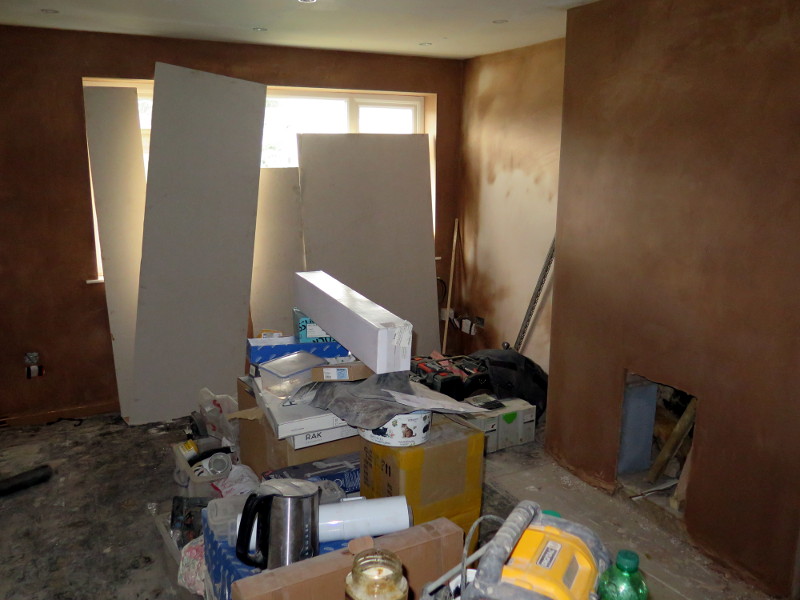
In March 2018 I posted about moving into our new house and adding an extension (‘Our new home in the Cotswolds‘). The building work was disruptive in the extreme, of course. We had to move out for four weeks, and make do with just part of the original space for much longer than that. But it was worth it.
We used to watch TV here!
Ten years ago
Grasshopper landing
In March 2013 I wrote about a TED interview with Elon Musk. Perhaps you haven’t heard of the TED talks, but everybody has heard of Elon. The post is interesting: Musk was already experimentally landing rockets ten years ago, and TED continues to be a great ideas platform. Take a look and explore the links in the original post.
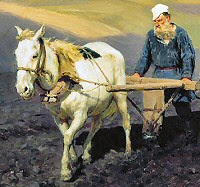
Rachael also shared a picture of an old-fashioned plough making furrows. The soil needs to be churned up and overturned before something new can be grown. There is a necessary process of breaking before the land can be used.
We thought about how Father releases us from ourselves. At the beginning he said, ‘Let there be light’; he still speaks those words into his people today and pours light into the darkest places in our hearts.
Twenty years ago
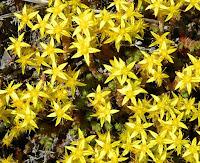
March 2003, another early blog post about a meeting at home. This time there were only two of us, but we heard such a lot! For example, that the tiny stonecrop, the great cedar, and the mighty oak tree were all planted by Father’s hand. The important thing is not to be big or strong, but to be planted by the master.
For this first flight both parts of the vehicle will be lost after landing on the sea (but hopefully not before)
Elon Musk’s company, SpaceX, is close to the first launch of their new spacecraft – Starship. This is an exciting step forward in space flight technology as fully reusable Starship versions are planned to return NASA astronauts to the moon, act as orbital fuel tankers, take people and materials to destinations throughout the solar system, and colonise Mars.
The world’s most powerful rocket is likely to make its first orbital flight attempt during March. Whatever happens, the attempt will be spectacular in the extreme! With twice the thrust of NASA’s SLS rocket, SpaceX’s Super Heavy booster will attempt a launch from Starbase on the Texas coast, heading east. The Starship will separate and pass between Florida and Cuba.
The Super Heavy booster will attempt a landing on the surface of the sea, offshore of its launch point. When fully operational, SpaceX intends that Super Heavy boosters will return to the launch site to be caught in mid-air by arms on the launch tower. Starship will attempt a landing, also on the sea surface, north of Hawaii, but again, the intention is to eventually catch Starship at the launch site as well.
For this first flight both parts of the vehicle will be lost after landing on the sea (but hopefully not before). It’s likely they will attempt to hover above the sea surface to practice the manoeuvre they will need to perform for a catch. Once landing precision is good enough, SpaceX will attempt the first catches. But that’s something for future flights and will depend on data returned from this first attempt. You can’t put a note in your diary to watch the launch as we don’t yet know exactly when it will happen. But I’ll keep you posted here on JHM.
The previous step forward for Starship was a static fire by the Super Heavy booster on 9th February. This is worth watching in this video clip from NASA. Thirty-one of the booster’s thirty-three engines fired for the duration of the test, one was not ignited at all, and one shut down early. The engines fired at half thrust during the test, but for the first launch they’ll be run at 90% thrust.
See also:
The SpaceX website carries an introduction to the concept of the Starship system.
The launch is listed on Spaceflight Now’s Launch Schedule page and on Next Spaceflight’s SpaceX Launch Manifest page. You can check those sources for schedule updates as they become available.
Wikipedia has a good article about the Starship vehicle covering details of size, thrust, the development process, purpose, capabilities and so on.
I sum these topics up on my Twitter profile as biology, web, science, technology, family, faith, history, and travel.
Having recently restarted blogging after a long pause, I’ve been thinking through how best to move forward – what should I change, what should I drop, and what should I keep?
Today’s post explains some of this, I’ll share what I’m doing and what I plan to do next. I’ll consider any comments you may leave, either here on the blog, or on Twitter or Facebook. But here’s how I see things right now.
Buy me a coffee
I’m offering everything I publish for free, but will always be delighted to receive a small gift, especially if you have sold or republished something (though even then it’s optional). Details are at coffee.scilla.org.uk .
Cruising the Gospel
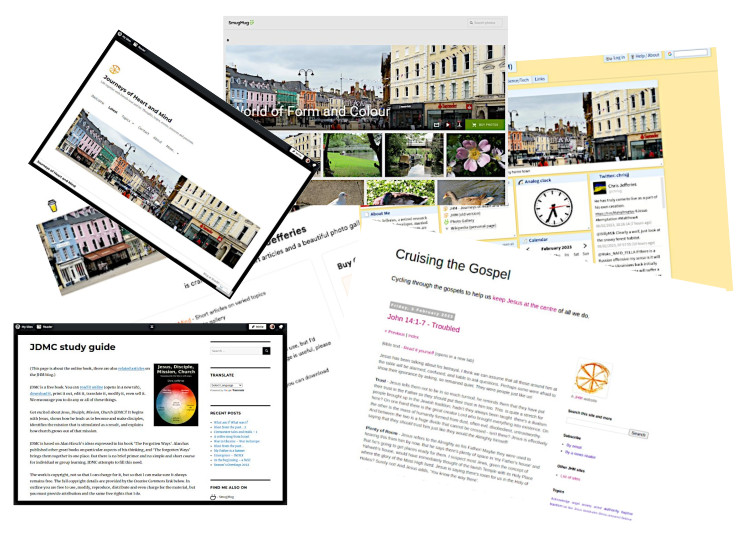
This is a moribund blog that I’m in the process of restarting. I’m not sure yet whether to continue it in its present form, or to roll it into Journeys of Heart and Mind (JHM) as a topic in its own right. Currently I’m inclined to keep it as it is, and perhaps generate some PDFs from each book I complete. See it at gospel.scilla.org.uk .
Gateway
My Gateway site is mainly for my own use, but it’s full of links about Cirencester (my home town in England), local time and weather, some Christian links, local and national news, science and technology links and so forth. Some of you might like to take a peek. If so, head to gate.scilla.org.uk .
JDMC
JDMC stands for Jesus, Disciple, Mission, Church and is an introduction to Alan Hirsch’s Forgotten Ways. To learn more and download a copy to print (or read online), visit jdmc.scilla.org.uk . I need to update this booklet and plan to when I have time, unfortunately the web links in the PDF open OK, but using the browser to return take you back to the title page; I’ve been unable to fix this so far. If you open the links in a new tab you’ll be OK, but it’s easy to forget.
Journeys of Heart and mind
I intend to continue with this more or less as it stands. That means a mix of topics will appear here, articles about all of the things that motivate me as they occur to me (so in no particular order). I sum these topics up on my Twitter profile as biology, web, science, technology, family, faith, history, and travel. Others include photography, astronomy, spaceflight, archaeology and a few more. One thing I will add is a way of seeing just posts on one of these topics at a time, I think that will be useful; not everyone wants to see everything. You’re reading on this site at the moment.
Photos
I use Smugmug to display my photos and will continue with this, but I need to rearrange things in topic folders to make it more usable. Visit photos.scilla.org.uk to browse my all time favourites.
Twitter
My main Twitter account is ChrisJJ, but I have a second account, JHM. I haven’t used the JHM account for a long while, but might post tweets about faith topics there, and everything else on ChrisJJ. My mind is far from made up on this as there are quite a few pros and cons.
By showering less often I’m cutting my water use to less than half, and turning down the flow rate reduces water use by about half again.
I’ve just watched the latest ‘Just have a think’ video from Dave Borlace. I really enjoy his videos – they are well produced, clear, uncompromising, polite, thorough … well, you get the idea. The latest one asks what we can do individually to help reduce the pace of climate change, and he describes a survey that shows most people are just waiting for someone else to do something about it.
That rings true!
Here’s the video, watch it, then scroll on down and read my personal take on, ‘What can I do?’ I believe we can have a large impact – if we all pull together.
What can I do?
I’m going to share one idea with you, something I’ve been doing for a long time now, and something I’m finding quite easy that also makes a big difference. Just remember though, this one idea is just an example. Maybe you can think of something in your own life that you could change that would also have a useful impact.
I used to shower every day, after all it takes less time, water and energy than having a bath and that has to be a good thing, right? Well, yes.
But for a number of years now, I’ve made a point of showering once every two or three days, turning down the water flow, turning down the temperature, and also minimising my use of shower gel. I still enjoy my showers, the temperature’s warm enough to be pleasant, I’m not advocating cold showers!
So how does this help?
Much more than you might think. By showering less often I’m cutting my water use to less than half, and turning down the flow rate reduces water use by about half again. So I’m using only 25% as much overall. Turning down the temperature a little combined with the reduced water use reduces the heating energy required to perhaps just 20%. I only use shower gel under my arms and around the more personal parts of my body, cutting consumption by 50% or maybe a bit more. Combined with showering less often my use of shower gel is therefore down to 20 or 25% overall.
Bear in mind that shower gel takes energy to manufacture as do the plastic bottles that it comes in, as does disposing of the empties. Add in the energy cost of producing and supplying water, and of removing and treating the waste water, and it all begins to add up.
I hope this illustrates the energy savings that can be achieved by one, small change in one person’s lifestyle. And there are other benefits too. For example, my skin microbiome is probably more healthy for the reduced frequency and coverage of shower gel. If we all did this, and thought of other ways to reduce our individual energy use, we could make a huge difference.
Don’t just leave it to others. Work out what you can do – and make a difference!
I’ve always been interested in their symmetry, their beautiful shapes, and their infinite variety
Since I first saw a photograph of a snowflake under the microscope, I’ve always been interested in their symmetry, their beautiful shapes, and their infinite variety. But never had I imagined that it would be possible to create such snowflakes in the lab or control their growth to order.
Meet Ken Libbrecht, the snowflake guy. He began by investigating how they form, and can now build snowflakes more or less to order. Amazing! Watch this video in which Ken demonstrates his work to Derek Muller on Veritasium.
Ken has discovered so much about the conditions that cause snowflakes to form. He also understands the subtleties of humidity, temperature and so on that produce different kinds of snowflake growth, why they show the six-fold radial symmetry that they do, why they branch at particular places, and why individual ‘arms’ of a snowflake are almost identical to one another while different snowflakes are unique.
A computer program that simulates coding and inheritance on the one hand, and neural function on the other, permits the emulation of simple animal-like organisms
Today I want to share two striking YouTube videos that I found recently. Maybe you’d like to watch them yourself.
Introduction – The animation shows the molecular structure of DNA, rotating so you can visualise it more easily. Watson and Crick famously published this structure in April 1953.
DNA contains the genetic information that specifies the nature of plants, animals and other life forms. Each species has it’s own form of this DNA ‘instruction book’. Amongst other things, a species’ DNA controls the basic structure of the brain just as it does for other body parts. But here’s an interesting fact: The coding and behaviour of DNA can be simulated by strings of characters stored in a computer.
Brains involve cells called neurons with connections between them, and neural networks running on a computer can behave in a similar way to a very simple brain. Building a computer program that simulates coding and inheritance on the one hand, and neural function on the other, permits the emulation of simple animal-like organisms, and there are applications out there that do just this.
First example – One such program is Minute Labs’ Evolution Simulator (check out their YouTube to see it in action).
Second example – Another program, and I want to focus mainly on this one, is from David Randall Miller. He wrote a particularly fascinating simulator, see his YouTube demo and explanation below for some quite deep insights. It’s a long video, but breaks into logical chunks for easier viewing; I suggest viewing the first section and continuing if it seems interesting.
It’s a really helpful approach for anyone wanting to better understand evolution. It assumes only fundamental levels of the topics, but will enhance your appreciation of maths and computing while also demonstrating the basics of genetics, inheritance, simple neural networks, and animal behaviour. That’s quite a lot of benefit from just one video!
Some questions to ask yourself…
What new understandings did you gain?
Did you disagree with anything?
If so, why?
What conclusions did you draw about the nature of living things?
The focus moves from advertising, costly payments and central control to an absence of these things
There’s more than one way of doing most things, and write.as is an alternative way of writing stuff online. Whether you want to create a blog, a story, or just private notes, write.as is well worth a look.
It’s part of a long standing move by some web users away from the commercial world of Google, Facebook, Twitter and so on, towards a very different model of which Wikipedia is the best known example. The focus moves from advertising, costly payments and central control to an absence of these things.
If you like freedom, privacy and simplicity, you’ll find all three at write.as . I suggest you take a quick look around, you can begin with a simple page I put together in less than five minutes – write.as/chrisjj
I came across this marble machine today, somebody posted the link to Mastodon, I watched it once, and absolutely had to write about it here. What an amazing device. It does lose its marbles – well, a few of them anyway towards the end.
The astonishing Marble Machine
What is Mastodon, I hear you cry? It’s sort of a bit like Twitter, but is an open, free and distributed system. Wikipedia, the fount of (almost) all knowledge knows what it is. (Wikipedia even knows about the Marble Machine.)
Things have come a very long way in less than 12 years!
Here’s a bit of history for you – SpaceX’s Crew Dragon vehicle is currently docked to the International Space Station (ISS) having safely delivered two NASA astronauts, bringing the number of crew on the ISS to five. The rocket used to put Crew Dragon into orbit was SpaceX’s workhorse – Falcon 9.
But you already knew that, right?
Well, on 29th September 2008 I posted an item about SpaceX’s first successful launch to orbit using their Falcon 1. Things have come a very long way in less than 12 years!
In the next few days I’ll try to write a piece about SpaceX’s Crew Dragon flight – watch this space (pun not intended).
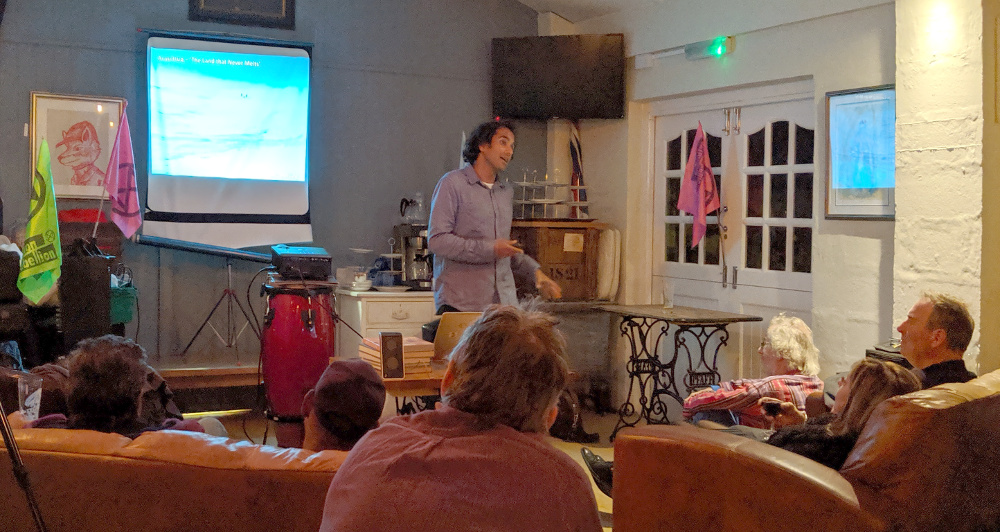
I went to a meeting at the Golden Cross in Cirencester a few days ago. We enjoyed a great presentation from Vijay Shah who spoke about his experiences in Arctic regions where climate change has been particularly severe. He also outlined other aspects of climate change including its causes and actions we might take to limit it and the damage it’s doing. Vijay pointed out that there are individual actions we can take in terms of our diet, modes of transport and so forth, and there are industrial and government actions that can be taken too. In the excellent discussion afterwards some of these individual and local matters were raised from the floor.
It was good to talk with others at the meeting, I was surprised by the wide variety of ages, professions, and opinions represented. And I was prompted to think about some new ideas that the talk sparked in my own thinking as I listened, chatted, and again as I walked home afterwards.
Some are original, others are already being widely discussed, some were mentioned at the meeting, but I present them here in the hope they will encourage others to think creatively about what is possible. Here are some of those ideas:
Streetlights – LED streetlights are becoming common in towns and villages, replacing the less efficient high-pressure sodium lamps just as they in turn replaced the older sodium and mercury lamps installed in the 1960s and ’70s.
But why not go further? Instead of drawing power from underground cables, why not fit lithium-ion batteries in the streetlight posts and top the lamp off with a solar panel and a wind generator? The one-off cost savings of not providing a mains power connection, and the lifelong savings of electrical energy would help offset the additional manufacturing cost. Once installed, the street lighting would be entirely green.
Greening the desert – Some deserts have ready supplies of seawater nearby, parts of the Sahara, the Kalahari, the west coast of South America, and regions of Southern Australia spring to mind. Building wind farms and solar farms in these coastal deserts would allow for green desalination, green pumping of the fresh water far inland, and the literal greening of large areas of desert. Not only could the land be used for crops, it might also be possible to establish areas of forest, thus sequestering significant amounts of carbon. And evapotranspiration would reduce the temperature and increase the humidity of the climate downwind of the greened zones. If a sufficient area could be greened in this way, clouds might form and reflect away some of the incoming solar energy
Solar car parks – Many towns and cities have public parking areas, asphalt ‘deserts’ where cars bake in the summer heat while we are shopping or working. Why not cover these areas with solar farms supported on frameworks above the cars and pedestrians? Most towns could generate as much power this way as would a small solar farm in the countryside. As a bonus, radiant heat transfer would be partially blocked from the covered area, so parked cars would stay cooler on hot days, and warmer on cold nights. And pedestrians would get shelter from rain and snow.
Using electric cars to balance demand – Electric cars have considerable amounts of energy storage and this could be used to help smooth power peaks and troughs. Cars plugged in overnight at home or during the day in town and workplace car parks would absorb wind power when excess is available, and return some of it to the grid at times of peak demand. Combined with dedicated battery storage facilities, this would make a change to fully renewable energy supplies possible.
Generating methane – Elon Musk is considering using green electrical energy to extract carbon dioxide from the air and combine it with hydrogen from water to generate methane and oxygen. Using the methane as a fuel would consume oxygen and produce carbon dioxide and water – a closed system. Originally this idea was intended to allow refuelling of SpaceX’s Starship on the surface of Mars, but he is now looking at the idea of using the same process on Earth to fuel the spacecraft. Extending the idea, methane has potential to be used as a storable fuel for air, sea and land travel. Clearly, as methane is a potent greenhouse gas, it will be essential to burn it in an oxygen-rich manner to make sure none escapes.
Using ocean trenches – Why not place organic materials (including plastic waste) in the subduction zones in deep ocean trenches where the material would be buried as layers of silt are deposited naturally, and in the very long term would be carried down by plate tectonics and processed by heat and pressure into simpler, harmless molecules.
Solar farms in polar regions – This is, perhaps, the oddest of ideas -but aspects of it may have some merit. Incoming radiation from the sun comes from low in the sky during a polar summer. Solar panels would need to be angled close to vertical and would throw very long shadows; they would need to track the sun across the sky, east to west. The shadows would provide some cooling by absorbing incoming solar energy, reducing the melting of ice and snow in the shadows. But what to do with the electrical power? I suggest radiators at the focus of parabolic reflectors pointing vertically upwards, sending the energy back into space. The atmosphere is transparent at visible, radio, and some infra-red wavelengths. Rather than trying to cover large areas, the idea would be to protect specific areas at risk of losing the white, reflective cover of snow and ice. This scheme might be a bit zany, but perhaps it will spark other minds to come up with more practical alternatives.
Solar rooftops – By no means a new idea, but many industrial and commercial buildings do not currently have solar power generation installed. Reduced taxation could encourage more rooftops to supply energy in this way, and it would be generated in towns and cities, right where it is needed. Lobby governments and local authorities to encourage this.
Burying organic matter – Organic waste and/or purpose grown biomass could be air dried and packed into disused coal mines or other available spaces. Sequestered in this way, the carbon content would be removed from the atmosphere, reducing the levels of carbon dioxide that drive global heating.
Over to you! – Maybe you can come up with some green energy ideas of your own; this planet needs all the good ideas we can provide. Anything that reduces our level of consumption or enables us to live in harmony with the natural world should be publicised and adopted as widely as possible. If you have a good idea, leave a comment and tell us about it. And make sure to share it as widely as you can.






 Journeys of Heart and Mind