I don’t know the age of this house, but it is clearly a timber-framed structure and some of those main timbers have adjusted comprehensively to the action of gravity over several centuries.
What’s in an image? Sometimes quite a lot, more than meets the eye.
I’m posting an image every two days (or as often as I can). A photo, an image from the internet, a diagram or a map. Whatever takes my fancy.
Click to enlarge
Here’s Cirencester’s wonkiest house – well, one of them. Until the 18th century, many buildings would have been constructed of timber, and we all know that timber is prone to warp even after seasoning, and it also responds to pressure and stress by slowly changing its shape.
Modern engineered wooden products generally avoid these issues. For example, plywood is in layers with the grain running in different directions from layer to layer. A thin sheet of wood is weak along the line of the grain, in that direction it will split easily when bent. But it will resist bending and splitting if rotated 90°. So multiple sheets glued together can be strong in all directions.
A timber-framed house
I don’t know the age of this house in Dollar Street, but it is clearly a timber-framed structure and some of those main timbers have adjusted comprehensively to the action of gravity over several centuries. Look at the glazing in the windows, for example, compare the windows with their fellows, side-by-side and up and down. See what I mean? At some point a layer of render was added to hide and protect the timbers so these are no longer visible.
The building is unoccupied at present, but I imagine it’s safe enough. Imagine how the new owners in due course will struggle to make right-angled furniture fit into walls and floors at odd angles
What about us?
Are we sometimes a little bit like this house? Do the pressures of life, sustained over years, even decades, cause us to be a little distorted? Is it difficult for other people with their right-angled opinions and requirements to fit into our expectations given our out-of-true alignments? Is the truth about us sometimes plastered over and hidden from view?
Or might it be the other way around? Am I, are you, straight and true and the fault lies with everyone else?
Cirencester
For convenience, here’s a list of all the Cirencester area images:
If you enjoyed this or found it useful, please like, comment, and share below. (If you don’t see those links, click the article’s title above the main photo and they will appear.) Send a link to friends who might enjoy the article or benefit from it – Thanks! My material is free to reuse (see conditions), but a coffee is always welcome and encourages me to write more often!
So let’s look at some examples… But do bear in mind that the retrieval process may be quite slow. Time travel takes time.
Time travel would be interesting, but we can be pretty sure it can’t be done. However, history lets us visit the past in a sense. And when it comes to the web, there’s always the amazing Wayback Machine.
The Wayback Machine archives websites and stores them for future use, and anyone can use it to see past versions of sites, or visit sites that are no longer available. Also, anyone can enter a web address and ask for it to be archived.
The Wayback Machine has had a torrid time with DDoS attacks and data theft over the last few weeks, but it’s all fixed and working again as of 14th October (though in read-only mode for the time being).
So let’s look at some examples. Click the links below to check them out, but do bear in mind that the retrieval process may be quite slow. Time travel takes time:
Why not explore some old websites for yourself? Just visit web.archive.org and search for a website you like or one that no longer exists.
What serious uses does it have?
The Wayback Machine (or Web Archive) serves a number of useful purposes beyond viewing old versions of websites for fun.
Historical research
For checking accountability
Verification
As legal evidence
Viewing websites that no longer exist
For further details, read the Wikipedia article on the Wayback Machine.
Useful? Interesting?
If you enjoyed this or found it useful, please like, comment, and share below. (If you don’t see those links, click the article’s title above the main photo and they will appear.) Send a link to friends who might enjoy the article or benefit from it – Thanks! My material is free to reuse (see conditions), but a coffee is always welcome and encourages me to write more often!
The gap has been closing little by little from both the astronomical and biological sides. But though it’s narrower now than ever before, it’s still a gap.
How did life begin? It seems possible, even very likely, that simple chemistry has the potential to generate life given the right conditions and plenty of time.
There’s always been a big puzzle over the origin of life here on Earth. Life is everywhere and in a vast array of forms. From the simplest archaea and bacteria, to the giant redwood and the humble grass in the field, the blue whale down to the smallest mite. So rich in variety, so wide in its presence from the deepest oceans to the highest mountains. Life is amazing!
The processes of evolution are well understood and impossible to deny; so puzzles over the many forms of life, its adaptability, and changes in the forms we see coming and going over deep time are clearly understood and well explained by biologists. (When did you last see a dinosaur?)
But how did it all start?
Ah! That has always been the unexplained mystery. Once we have a simple, replicating form of life on the planet we can see it might thrive, spread and grow in complexity.
There are various proposals. Perhaps it arrived in an asteroid kicked off Mars or somewhere else. But that does no more than move the origin to a different place in the Solar System. Maybe it all began at mid-ocean ridges where hot mineral-laden springs flow from hot rock layers below the surface. Perhaps, yes.
We know that many of the precursors for life exist out among the stars. Here in the Solar System, comets and asteroids are often richly endowed with amino acids, ribonucleotides, and all sorts of smaller precursors. These are the building blocks of proteins, RNA, DNA and so forth. We understand how these precursors can form spontaneously given simpler materials like water, methane, ammonia, compounds including atoms of phosphorus, sulphur and so forth. It just takes chance interactions, time, and a source of energy like ultraviolet light. The basic ingredients are there in the gas clouds that condense to form new stars and the material orbiting in disks around them.
All of these things are fairly well understood, but there’s a gap in our understanding between the presence of the components and the presence of life. The gap has been closing little by little from both the astronomical and biological sides. But though it’s narrower now than ever before, it’s still a gap.
Life in a computer?
Well, yes! And, no.
Some clever work by Blaise Agüera y Arcas, a Google vice-president of engineering, has uncovered an intriguing process. Setting a very simple ‘machine’ running random code (no meaningful program whatsoever) and waiting for something to happen, shows that eventually some very simple self-replicating code will appear in the system, and once it exists it replicates very quickly and then slowly increases in complexity. It’s not biological life of course, but it has all the qualities that we would recognise as lifelike. It replicates itself, different forms of replicating code compete with one another, they evolve, and they grow more and more complex. This doesn’t show us in any detail how biological forms got started, but it demonstrates that self-replication could happen in principle, and given enough time that it’s almost inevitable.
For the detail and background you should listen to Sean Carroll interviewing Blaise, the conversation is absolutely fascinating.
If you enjoyed this or found it useful, please like, comment, and share below. (If you don’t see those links, click the article’s title above the main photo and they will appear.) Send a link to friends who might enjoy the article or benefit from it – Thanks! My material is free to reuse (see conditions), but a coffee is always welcome and encourages me to write more often!
Images fade, especially if exposed to light, they are susceptible to damage by fire, water, mechanical action and so forth.
For some years now I’ve been transferring family photos, videos and documents to digital storage in an attempt to preserve the information. There are pros and cons to both physical storage and digital storage and we’ll discuss those in this article.
But first, lets take a look at an example photo.
An old photo from my collection – May 1969
The image above is from a 35 mm transparency. It shows my fellow students on the Bath University Horticulture degree course the year before we graduated. We were visiting a commercial horticultural business and there’s a TV personality in the image as well. (One of our lecturers, Peter Thoday, later became well known as the narrator in the TV series, The Victorian Kitchen Garden. He’s at the back of the group on the right in the photo, tall and with very dark hair.)
Details of the photos and how I manage them
Quite a few of the old photos I have are colour transparencies; these come in different sizes depending on the type of camera and film that were used. The majority are on 35 mm film stock, with sprocket holes along two sides; these engage with the film transport mechanism in the camera. After the film was processed and dried it was cut into individual frames and mounted in card or plastic frames. My film scanner can handle mounted and unmounted slides and saves them as digital image files.
Once I have the images in digital format I remove slides from their frames and check the frame numbers exposed on the film when it was manufactured. This makes it easy to get the slides into correct sequence as they may have been reordered accidentally or even deliberately when they were projected in the past. Having confidence that the photos are correctly in sequence makes it much more likely that I can eventually arrange the films into longer sequences based on events, people and places in the images. This is a work of reconstruction, sometimes easy, sometimes very difficult. I keep notes of what I have done and why, for my own reference and for anyone else who might find the information useful later. I’ve got better at doing this with experience.
Advantages and disadvantages of physical storage
The original negatives and transparencies contain more information than digital copies. For one thing, the dynamic range is greater and the resolution is always going to be a little higher. Scanning processes are very good indeed these days, but they’ll never be absolutely perfect.
On the other hand, originals deteriorate over long time periods. Images fade, especially if exposed to light, they are susceptible to damage by fire, water, mechanical action and so forth. And as each image is unique, if it’s lost or damaged there is no way to recover it.
And two final points – storing negatives, transparencies and prints takes a lot of space, more and more as the numbers increase. And viewing them becomes an issue, only a few people can view them at a time.
Advantages and disadvantages of digital storage
Digital copies of the images can be almost as good as the originals for most purposes, and digital processing can improve colours and remove blemishes when the originals are faded, scratched or have dust that is strongly attached to the surface. In these cases, the digital copy may be more acceptable than the original.
Digital storage is increasingly cheap and capacious, so a very large collection of photos can be stored on a cheap, tiny SD card. This in turn makes it possible to have multiple copies in multiple locations, providing security far beyond anything possible with the originals. Remote storage on Dropbox or similar facilities takes this a step further. Multiple copies and remote storage both make it possible for many people to be able to view the images independently and from wherever they happen to be.
Perhaps the biggest downside of digital storage is the need to constantly move images from old storage media to newer technology. How many of us have devices to read data from a floppy disk or an old CD? Remote storage helps again because the company offering the service takes on the task of managing data storage and retrieval and moving to newer technologies whenever necessary.
And there’s a hidden factor here too, the images need to be stored in a file format that is still readable on current devices. JPG and PNG are widely used and may be readable by future devices for a very long time, but nothing is certain and it may become necessary to re-save the images in a different file format in future. This would be a major task for a large image collection.
My approach to all this
I’ve thought about this a lot. Currently, everything is stored in high quality JPG format. Yes, I know there are very slight compression artefacts in JPG, but unless the images are repeatedly edited and re-saved this is not an issue in practical terms. I use an Epson Perfection V600 Photo scanner which for me is a good compromise between quality and price. The images are stored initially on my laptop and automatically to Dropbox, and I back up my laptop on an external hard drive at intervals. Other members of the family have their own copies of some of the data, though keeping this refreshed has been a problem.
Something I have not yet fully resolved is what happens when I’m no longer able to manage all this data. Of course, at that point the future of the images will no longer be of personal interest. Nonetheless, I’d like to have some kind of plan in place, perhaps handing on access to my Dropbox account would be a good way forward.
If you enjoyed this or found it useful, please like, comment, and share below. (If you don’t see those links, click the article’s title above the main photo and they will appear.) Send a link to friends who might enjoy the article or benefit from it – Thanks! My material is free to reuse (see conditions), but a coffee is always welcome and encourages me to write more often!
Bluesky … reminds me of Twitter in those early days, with quite polite conversation on all sorts of topics that interest me.
X (used to be Twitter) is no longer one of the sites I use. Not only have I stopped using it, but I also closed down my account. I joined Twitter in 2008 and for more than 15 years it served me very well indeed. But since Elon Musk bought it, the service it offers has become less and less what I want or need.
There are a number of alternatives, and I’ve chosen Bluesky. It reminds me of Twitter in those early days, with quite polite conversation on all sorts of topics that interest me. The major drawback currently is that there are only 6 million or so users, but the numbers are growing quickly now, especially here in the UK. In July 2023 there were 200 thousand users, twelve moths later in July 2024 this had grown to 5.9 million, an increase of nearly thirty times. It’s a long, long way short of X’s 192.5 million. Another increase of thirty times this year would put Bluesky on almost the same number of users as X; that’s not going to happen, but realistically it might grow by another 3, 4, or 5 times. And who knows what will happen in 2026, 2027…
So what, in the end, made me leave?
There are several factors.
I used Twitter as a very up-to-the-minute news source. Type in the name of any town, for example, and up would pop the latest posts by anyone there at the time. This was also great for learning about ongoing events – the Olympics, Cricket, the Russo-Ukrainian war. That no longer works on X, the news function is cluttered up with so much nonsense and opinion that it’s no longer useful in that way – at least, not to me.
Arrogant rudeness, sometimes of the most extreme kind. It’s everywhere on X but very rare on Bluesky. Often, on X, posts like this are targeted spam (see the next item).
Spam, sometimes targeted to a receptive group of some kind, sometimes just random. There seems to be a lot of this on X these days. I don’t know about you, but I can do without spam!
Misinformation and disinformation is problematic on X. So anything you read may or may not be true.
I like watching YouTube videos and I dare say you do too. SpaceX used to post their rocket launches in high definition on YouTube, but now they’ve moved to X, initially in lower quality. SpaceX’s progress is something I want to keep track of, but from now on I’ll be watching these developments on third-party YouTube channels like Everyday Astronaut, Marcus House, NASA Spaceflight, WAI, and others.
Bluesky and other social networks suffer from the same issues to varying degrees. But Bluesky has strong policies and controls in place, they seem to me to be far more effective than any such controls in X. For more information on how Bluesky is designed and managed, read the Wikipedia article about it.
Useful? Interesting?
If you enjoyed this or found it useful, please like, comment, and share below. (If you don’t see those links, click the article’s title above the main photo and they will appear.) Send a link to friends who might enjoy the article or benefit from it – Thanks! My material is free to reuse (see conditions), but a coffee is always welcome and encourages me to write more often!
Many satellites are launched every year for profit-making purposes … TV broadcasting, imaging, weather forecasting, and internet provision.
Some time ago I was asked, ‘Why explore space?’
It’s a good question; space exploration is very expensive, surely we could spend the money on better and more important things? Surprisingly, perhaps, spaceflight has become a very profitable industry. Although exploration per se remains almost entirely government funded, exploration in past decades has sparked the profitable space industries that exist today.
Taking the world as a whole, we spend a very large amount of money on space exploration, US$117 billion in 2023. It’s fair to say that the USA almost certainly spends more than any other nation, and China and India both have major space programs, so does Europe (taken as a whole) through the joint ESA programmes (ESA is not part of the EU, however). Russia and Japan are major players too. You can view the figures as a bar chart from Statista.
It’s not quite as simple as it sounds, though. For one thing, material and human resources are much more expensive in some countries than in others, so US$1 billion buys a lot less in the USA or Europe or Australia than it does in China, or India, or Brazil.
Another thing to consider is that space research, spaceflight, and space exploration are not all about spending a lot of money, they are also activities that can generate a great deal of income. Economics is complex and difficult.
I think it may help us if we briefly review the history of space exploration.
The history of spaceflight
We have to go back to ancient and medieval times to find the first hints that people wanted to travel beyond the Earth. Even thousands of years ago, some people thought about leaving Earth behind. The Bible describes Elijah being taken up in a fiery chariot. The Koran describes Mohammed on a winged horse. The Greek, Icarus, wanted to fly high above the Earth. Dante’s ‘Divine Comedy’ in 1320 describes a journey to the heavens. ‘Kepler’s Dream’ in 1608 describes how Earth would look from the Moon. In 1657 Cyrano de Bergerac described a journey from Earth to the Moon.
Of course, much of this was fanciful in various ways, but people were thinking about it. Science fiction became popular in the 19th and, especially, the 20th century and some of the ideas discussed seemed quite plausible. Engineering experiments with solid and liquid fuelled rockets began in the early 20th century, and that’s when some people began risking money (and sometimes their lives) to make progress with early rockets. Costs were involved, but no income was generated.
By 1944 the wartime German government could see the tide had turned against them, with losses on the Russian front and in North Africa. Italy had fallen to the Allies and by the middle of the year southern and northern France had been invaded and German forces were struggling to hold on. Germany had been developing new weapons for some time, and now they began to use them in a final attempt to reverse impending defeat. Jet aircraft, the first cruise missile (the V-1) and the first rocket capable of reaching space (the V-2, the first ballistic missile) all came into play at this late stage of the war. Firing the V-2 vertically in a test, Nazi Germany became the first nation to reach space at 174.6 kilometres (108.5 miles) on 20 June 1944. The rocket entered space vertically and fell straight back as it didn’t have sufficient fuel to attempt the horizontal velocity necessary to go into orbit.
After Germany’s defeat in May 1945 there was a scramble by the USA, the Soviet Union, and to a lesser degree by the UK to capture unflown V-2s, plans and information, construction and test facilities, as well as the engineers and technicians behind the technology.
Rocket technology was developed further, both for use as a weapon and also for scientific research and space exploration. This has led to many nations engaging in spaceflight and space exploration in the late 20th and early 21st centuries.
Recent developments
So now we have set the scene. Space exploration has become technically possible. It remains difficult and expensive, though the development of advanced and miniaturised electronics and computers for control, and improved fuels, materials, and designs have reduced the costs and look set to reduce them even more substantially in future. One major change in the last decade is that we now have the first reusable rocket boosters. SpaceX is already flying some of its Falcon 9 boosters more than twenty times. The costs savings are enormous and other rocket companies are trying to catch up.
Given all of this, why would we want to explore space?
Reasons for exploring space
First, it’s worth mentioning that the reasons for exploring space are the same as those for exploring more generally. People are born explorers: the youngest infant begins exploring the environment as soon as they can crawl. There are only two requirements – an ability to move from one place to another, and a desire to find out what lies further away.
Given the ability we now have to reach ever further into space, we just naturally want to investigate what is there and understand it to the best of our ability. These days, automatic systems can travel to dangerous and hard to reach places and return images and measurements without the presence of human travellers. So we have good images and many kinds of measurement from every large body in the Solar System, and growing numbers of the smaller asteroids and comets. But automated systems have limitations in terms of decision making and judgement, limitations that require the presence of people. These limitations are more severe than first appears given the great distances involved in exploring space. When a rover on the Moon takes an image, we may be able to view it within a few seconds and send instructions on what to do next. On Mars it might take twenty minutes to receive the image and another 20 minutes for the instruction to reach the rover. So a Mars rover needs to navigate and make decisions on avoiding obstacles semi-autonomously.
So far we have travelled only to Earth orbit and to the Moon, but the urge to go further remains. We’re a nosy and inquisitive race; we want to know more, we want to find out, we love to solve mysteries.
The benefits so far
This is unlikely to be an exhaustive list, there are many benefits already and new ones keep moving from theory to practice. I’ll list those I can think of below.
Photographing the Earth’s surface from orbit. This benefits mapping, weather forecasting, resource discovery, agriculture, military intelligence and much, much more.
Understanding geology by comparing Earth rocks and minerals with those on the Moon, other planets, rocky moons, and so on. We are learning how Earth and the other planets formed, and how long ago.
Astronomy has advanced as telescopes are operated from space. Earth’s atmosphere causes reduced image clarity and blocks many wavelengths of light, X-rays, and other forms of radiant energy. Light pollution from cities is also avoided by putting a telescope into orbit. It also becomes far easier to identify smaller objects that might collide with Earth and potentially cause serious damage and loss of life.
Probes have travelled to distant solar system objects to return images and sometimes samples of surface material.
Manufacturing in micro-gravity can produce medical, engineering and scientific materials that simply cannot be made on Earth. Ultra pure proteins have aided medical science enormously in some areas, helping scientists understand protein structures for example, or manufacturing life-saving antibodies and drugs.
Understanding the inhospitable conditions of space itself and the other planets in our solar system provides a perspective that helps us value what we have here on Earth.
Communications systems have benefitted enormously from spaceflight. From TV satellites providing hundreds of high-resolution channels, to satellite internet availability for ships, aircraft and remote regions, the exploration of space has provided the technology behind these improvements. Good internet access for remote areas improves disaster rescue, allowing much quicker responses.
Satellite navigation has transformed many aspects of land, air and sea travel. Who wants to manage without their satnav while driving?
Spin-off technologies like solar panels, stronger materials such as carbon fibre, recycling and purification of air and water were all developed first because of space exploration and are now proving invaluable here on the ground as well.
New resources are becoming available as a result of space exploration. Rare and expensive metals from asteroids, ices from comets and the moons of planets in the outer Solar System are likely to become useful in the near- to mid-term future. This is not yet commercially viable, but will become so as space transport systems develop further.
I hope that brief round up will help my readers understand some of the why-questions around space exploration. In the early days it was an expensive operation, funded by governments, and often justified by military considerations. Today, much space activity is done by companies with a profit motive. Launch services are now largely commercial in nature, so too is the transport of people and materials to and from Earth orbit and even now to and from the Moon. And finally, many satellites are launched every year for profit-making purposes as well – TV broadcasting, imaging, weather forecasting, and internet provision to name just a few.
What’s in an image? Sometimes quite a lot, more than meets the eye.
I’m posting an image every day (or as often as I can). A photo, an image from the internet, a diagram or a map. Whatever takes my fancy.
Roof timbers
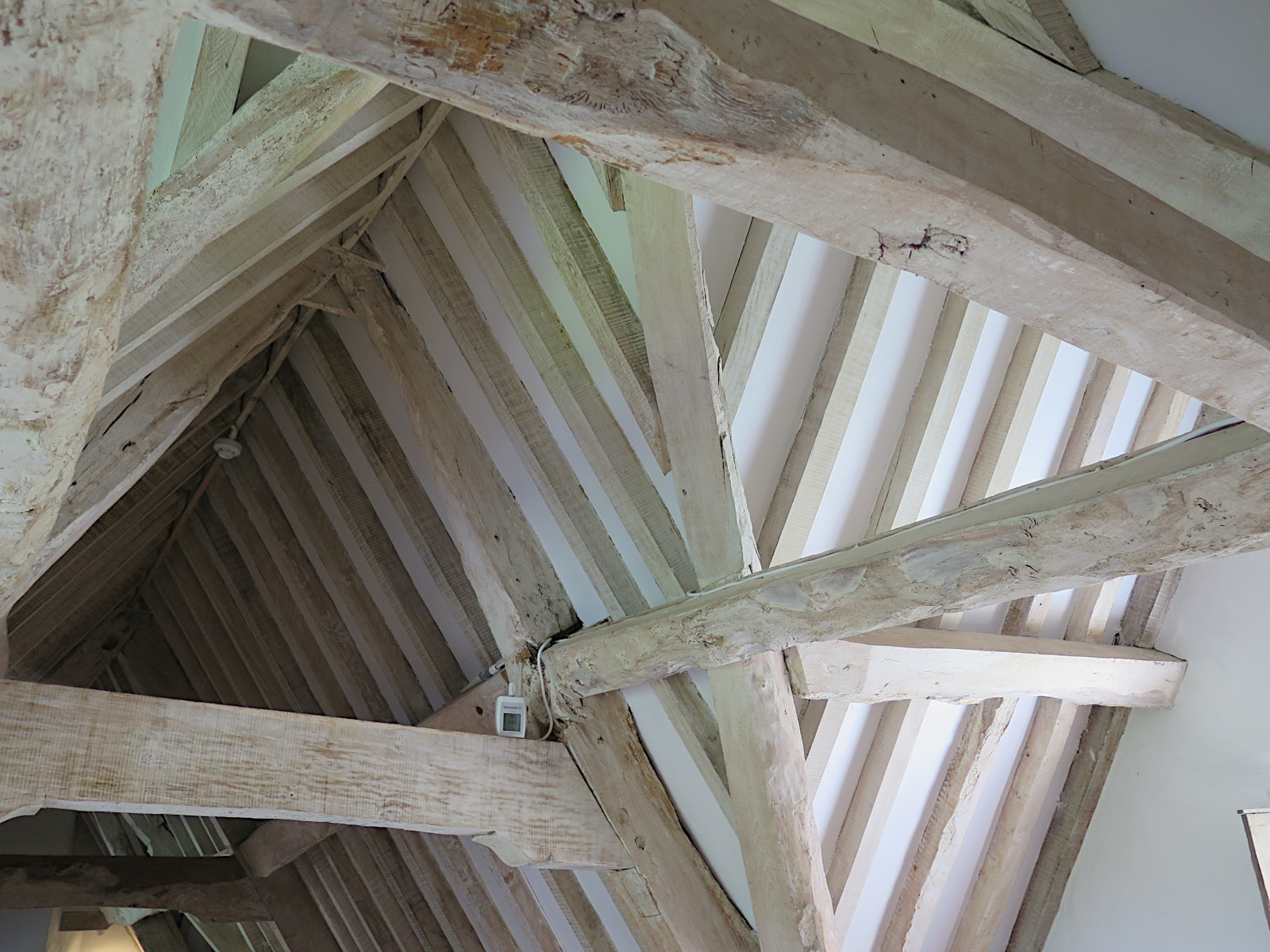
How would we manage without roof timbers? They are by far the most common form of support for tiles, slates, thatch, or any other waterproof roof covering. The roof timbers in the photo are a couple of hundred years old, but they’re not significantly different from Medieval or even Roman roof timbers. Even today, although the timbers are much slimmer and are pre-manufactured as truss structures, the principle remains that a wooden roof frame is constructed and then covered to form a roof. Good ideas tend to last a long time!
Is the same true for some of our institutions? From parliaments to town councils, from universities to infant schools, and from multinational corporations to village shops, many of the fundamental patterns are inherited from past generations. If it works well, why change it?
What other examples can you think of? But if you don’t want to ponder that question, just click on the image and enjoy those amazing roof timbers in more detail.
Themed image collections
The links below will take you to the first post in each collection
If you enjoyed this or found it useful, please like, comment, and share below. (If you don’t see those links, click the article’s title above the main photo and they will appear.) Send a link to friends who might enjoy the article or benefit from it – Thanks! My material is free to reuse (see conditions), but a coffee is always welcome and encourages me to write more often!
What’s in an image? Sometimes quite a lot, more than meets the eye.
I’m posting an image every day (or as often as I can). A photo, an image from the internet, a diagram or a map. Whatever takes my fancy.
Windows have multiple functions, they let in light and they provide a view, if they can be opened they provide fresh air and allow a room to cool down, when they’re closed they prevent rain from entering and enable sunshine to warm the room.
Windows have been around almost as long as houses. At first the only opening was the way in and out of the building – think of a tent or an igloo, or an Iron-Age thatched hut. Later, other openings, too small and high to walk through, took over the functions of letting in light and so forth, and the doorway could then be closed off with a curtain or a wooden door.
Today we take all of this for granted, of course. As you know, I like to find parallels between the objects in the images and anything else that comes to mind. So today, I’d like to point out the parallel between a window allowing light and fresh air into a room and whatever it is that lets thoughts and fresh ideas into our minds. Some people are more observant than others, some of us have minds that are closed to certain ideas but open to others.
This time I’ll avoid drawing conclusions, but I invite you to give it some thought and share your own ideas and ponderings below.
Themed image collections
The links below will take you to the first post in each collection
If you enjoyed this or found it useful, please like, comment, and share below. (If you don’t see those links, click the article’s title above the main photo and they will appear.) Send a link to friends who might enjoy the article or benefit from it – Thanks! My material is free to reuse (see conditions), but a coffee is always welcome and encourages me to write more often!
This new space launch system may well be the means by which we really do make spaceflight far cheaper and colonise, not just Mars, but any part of the Solar System that we wish.
It occurred to me that many highly significant events, situations and occasions pass us by almost unnoticed, only to burst into history and affect our lives rather later. I thought it might be fun to look at some of these, perhaps some historical examples. but also things going on today that might loom very much larger in future. I’m going to start with an article on some spaceflight technology that’s in the news precisely because it may be the start of human expansion into the Solar System.
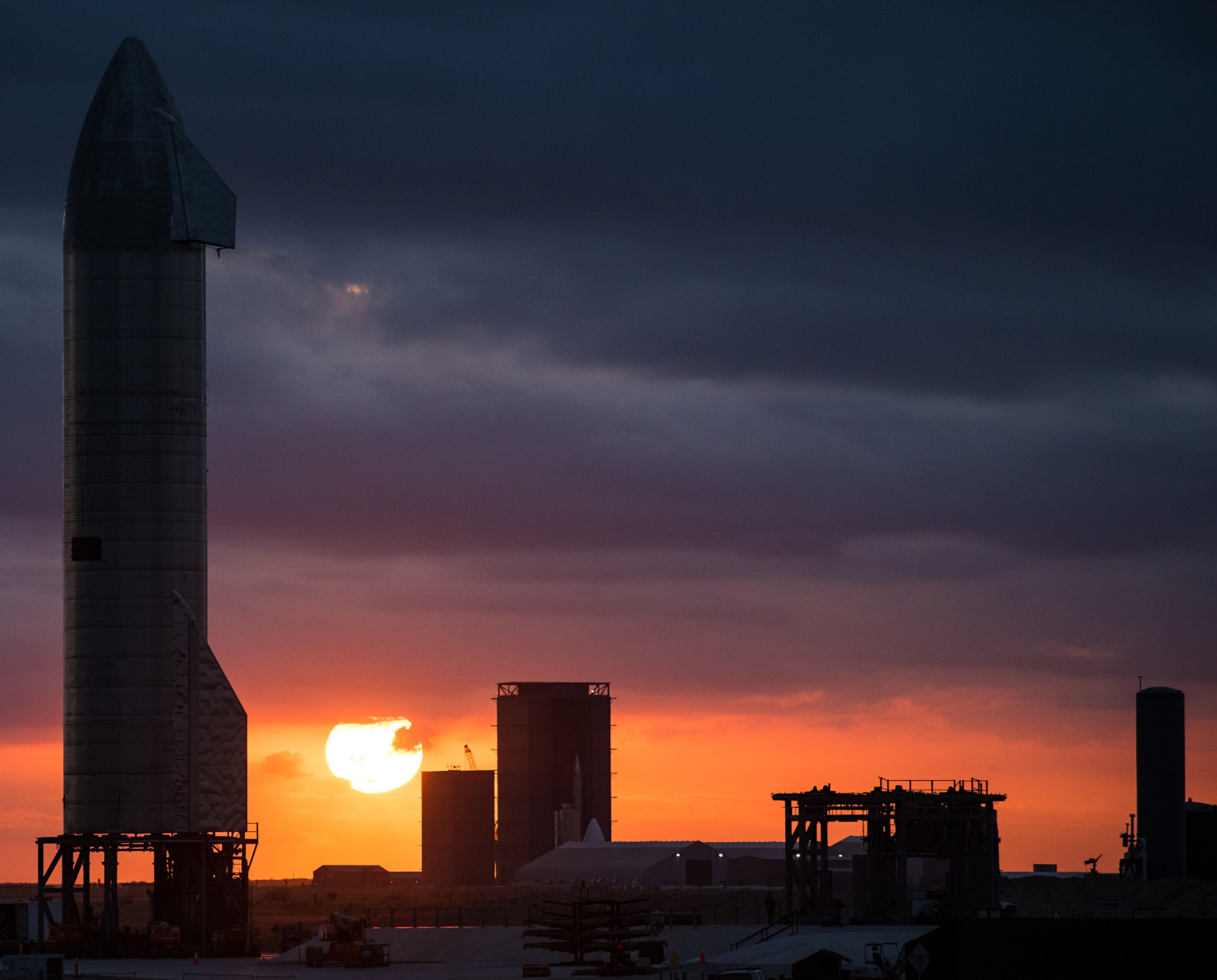
SN9, an early prototype of Starship
Because I posted just five days ago on Starship‘s planned integrated test flight (IFT-4), and because of how that flight went (stunningly successfully) , now might be a good time to look at the significance of Starship in general and this test flight in particular.
Why was Starship built?
Good question. I’m glad you asked! SpaceX is by far the foremost builder and operator of space launch vehicles. So far in 2024 they’ve launched 52% of all rockets worldwide, and their share is growing. No other American rocket company and no other nation comes close!
The rationale behind their Falcon 9 was to build a reusable rocket to reduce the cost of launches. And although only the first stage and the fairings proved to be recoverable, that is still far, far more economical than building new for every launch. Falcon Heavy increased the payload capacity by using three boosters together.
The next step is to build a fully reusable system that will reduce kilogram to orbit costs by another massive factor and will make it possible to send over 100 tonnes to any destination in the Solar System. A further goal is to use this new system to build a self-sufficient city on Mars of, perhaps, a million or more people. That’s why Starship is being developed.
Integrated Flight Test Four (IFT-4)
Well, what can I say? The purpose of this flight was to go beyond IFT-3 which was a successful launch, but both the Super Heavy booster and the Starship orbiter were lost on their return through the atmosphere.
What was so remarkable about IFT-4 is that both parts of Starship survived. Super Heavy made it back to a precise location over the Gulf of Mexico (close to the launch site), and Starship made it half way around the world and also succeeded in reaching the ocean surface at essentially zero velocity and then plunged into the water.
The loss of both parts of the system was intentional and the flight provided useful data for further improvements. In the case of Super Heavy it may be possible to recover it following IFT-5, the launch tower doubles up as a catch tower, to grab the returning booster in mid-air. Starship suffered a lot of thermal damage, parts of it even melting, but despite that it made a good approach for a catch attempt to be tried later in the test programme.
Further work on both vehicles should improve things. But knowing both are capable of recovery, at least in principle, opens the way for almost certain success in the long term.
What does that imply? This new space launch system may well be the means by which we really do make spaceflight far cheaper and colonise, not just Mars, but any part of the Solar System that we wish.
Yes. Of course. We are a long, long way from colonising other planets. But for the first time it seems we may have taken a step that will enable us to at least try at some point in the future.
Steps in the future
Let’s finish by setting out possible further developments with some guesses about the timescales.
The next test flight, IFT-5, will probably come in late July. Any time between late June and late August seems possible, it’s really hard to say with any certainty.
A Superheavy booster will be successfully caught, if not on IFT-5 then certainly before the end of 2024. Once success is achieved, by mid 2025 it might be completely routine to catch both boosters and Starship spacecraft.
Some time in 2025 we should expect Starships to be reaching orbit with payloads (initially they will be Starlink 2 satellites).
We will also see the beginning of a system of tanker Starships capable of refuelling cargo and passenger Starships to travel to the Moon and Mars. This is not going to remain science fiction for very much longer.
Eventually the heat shield protection needed for Starship to return reliably to Earth will become safe enough that crewed flights can begin.
We might see the Moon Landing version Starship HLS take astronauts to the surface and return them to lunar orbit, but that’s quite some time away, maybe 2030 or later.
Automated Starship landers will carry equipment and supplies to the Moon and to Mars. At first they’ll remain on the surface as they will be a useful source of materials and potential habitats.
People will follow as safety issues are resolved, permanent settlements will become possible in both places.
Fifty years from now Starship and its successors will enable human exploration and settlement throughout the Solar System – on asteroids, moons of Jupiter and Mars, more or less anywhere will become possible.
See also:
List of SpaceX launches (excl Falcon 1 and Starship) – Wikipedia
If you enjoyed this or found it useful, please like, comment, and share below. (If you don’t see those links, click the article’s title above the main photo and they will appear.) Send a link to friends who might enjoy the article or benefit from it – Thanks! My material is free to reuse (see conditions), but a coffee is always welcome and encourages me to write more often!
Barges were able to move goods of all kinds between London and the River Severn via Oxford, Cirencester and Stroud
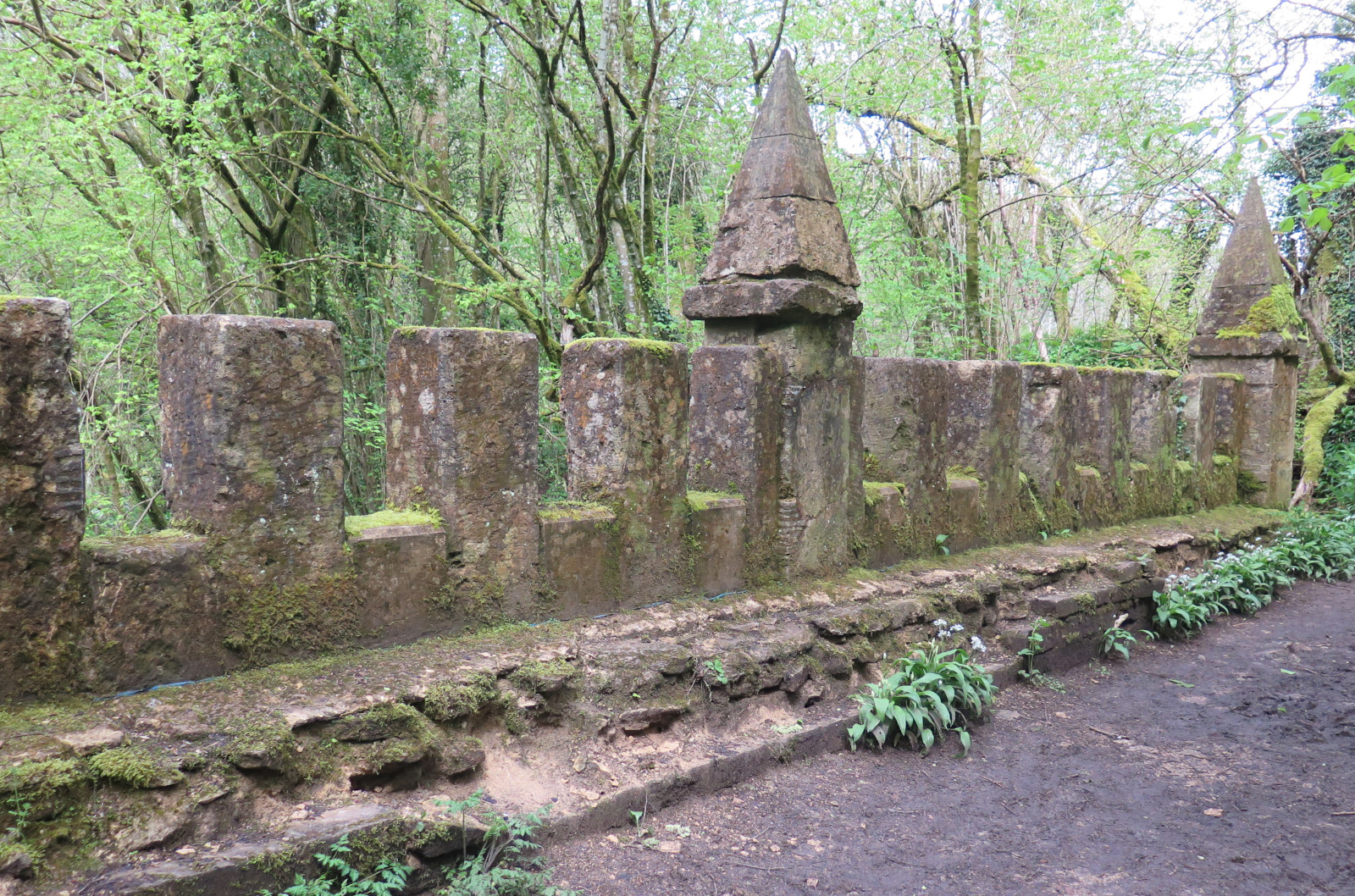
The parapet at the NW tunnel portal (Click image to enlarge)
The Thames & Severn Canal tunnel was opened in April 1789. The work was a major engineering achievement at the time.
There had been serious difficulty with the contractor originally chosen to do the work. But now it was complete, and barges were able to move goods of all kinds between London and the River Severn via Oxford, Cirencester and Stroud.
Here’s a short extract from the Gloucester Journal from 4th May 1789.
By a letter from Cirencester, dated the 19th ult., we learn that a great undertaking of conveying a tunnel sixteen feet high and sixteen feet wide, under Sapperton-hill and Hayley-wood (very high ground) for two miles and a quarter in length, through a very hard rock, lined and arched with brick, is entirely completed, and boats were to pass through it on the 21st ult.
By this opening communication is made between the river Severn, at Framiload, and the Thames near Lechlade, and will be continued over the Thames below St. John’s Bridge, and so to Oxford, etc., and London, for conveyance of coals, goods, etc.
It is now navigable from the Severn to Themsford by way of Stroud, Cirencester, Cricklade, being filled with water for the purpose near forty miles.
At the time of its execution the tunnel was considered a great undertaking; old King George III visited and expressed himself astonished with it, and that part of the canal at the east end of the tunnel is called “The King’s Reach,” probably in consequence of the visit.
The opening of the canal did not take place until the month of December, 1789, and the Journal of Monday, the 30th of that month, gives the following description of the event: —” On Thursday last was effected the greatest object of internal navigation in this kingdom. The Severn was united with the Thames by intermediate canal, ascending by Stroud, through the Vale of Chalford, to the height of 343 feet, by locks there entering a tunnel through the hill of Sapperton, for the length two miles and three furlongs, and descending 22 [sic 16] locks, it joined the Thames near Lechlade.
If you enjoyed this or found it useful, please like, comment, and share below. (If you don’t see those links, click the article’s title above the main photo and they will appear.) Send a link to friends who might enjoy the article or benefit from it – Thanks! My material is free to reuse (see conditions), but a coffee is always welcome and encourages me to write more often!




 Journeys of Heart and Mind

.jpg)