Significant – Starship

This new space launch system may well be the means by which we really do make spaceflight far cheaper and colonise, not just Mars, but any part of the Solar System that we wish.

It occurred to me that many highly significant events, situations and occasions pass us by almost unnoticed, only to burst into history and affect our lives rather later. I thought it might be fun to look at some of these, perhaps some historical examples. but also things going on today that might loom very much larger in future. I’m going to start with an article on some spaceflight technology that’s in the news precisely because it may be the start of human expansion into the Solar System.
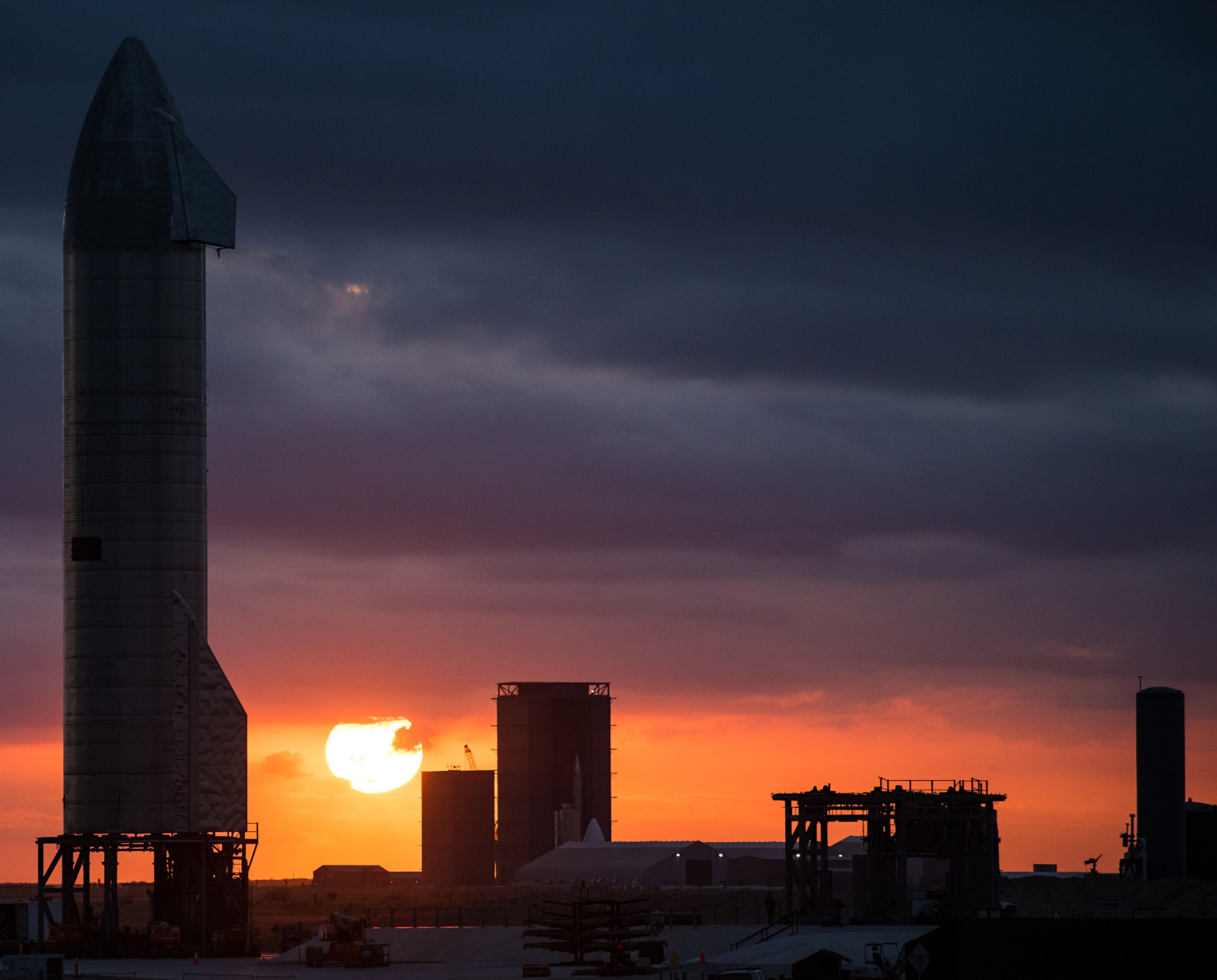
SN9, an early prototype of Starship

Because I posted just five days ago on Starship‘s planned integrated test flight (IFT-4), and because of how that flight went (stunningly successfully) , now might be a good time to look at the significance of Starship in general and this test flight in particular.

Why was Starship built?

Good question. I’m glad you asked! SpaceX is by far the foremost builder and operator of space launch vehicles. So far in 2024 they’ve launched 52% of all rockets worldwide, and their share is growing. No other American rocket company and no other nation comes close!

The rationale behind their Falcon 9 was to build a reusable rocket to reduce the cost of launches. And although only the first stage and the fairings proved to be recoverable, that is still far, far more economical than building new for every launch. Falcon Heavy increased the payload capacity by using three boosters together.

The next step is to build a fully reusable system that will reduce kilogram to orbit costs by another massive factor and will make it possible to send over 100 tonnes to any destination in the Solar System. A further goal is to use this new system to build a self-sufficient city on Mars of, perhaps, a million or more people. That’s why Starship is being developed.

Integrated Flight Test Four (IFT-4)

Well, what can I say? The purpose of this flight was to go beyond IFT-3 which was a successful launch, but both the Super Heavy booster and the Starship orbiter were lost on their return through the atmosphere.

What was so remarkable about IFT-4 is that both parts of Starship survived. Super Heavy made it back to a precise location over the Gulf of Mexico (close to the launch site), and Starship made it half way around the world and also succeeded in reaching the ocean surface at essentially zero velocity and then plunged into the water.

The loss of both parts of the system was intentional and the flight provided useful data for further improvements. In the case of Super Heavy it may be possible to recover it following IFT-5, the launch tower doubles up as a catch tower, to grab the returning booster in mid-air. Starship suffered a lot of thermal damage, parts of it even melting, but despite that it made a good approach for a catch attempt to be tried later in the test programme.

Further work on both vehicles should improve things. But knowing both are capable of recovery, at least in principle, opens the way for almost certain success in the long term.

What does that imply? This new space launch system may well be the means by which we really do make spaceflight far cheaper and colonise, not just Mars, but any part of the Solar System that we wish.

Yes. Of course. We are a long, long way from colonising other planets. But for the first time it seems we may have taken a step that will enable us to at least try at some point in the future.

Steps in the future

Let’s finish by setting out possible further developments with some guesses about the timescales.

  1. The next test flight, IFT-5, will probably come in late July. Any time between late June and late August seems possible, it’s really hard to say with any certainty.
  2. A Superheavy booster will be successfully caught, if not on IFT-5 then certainly before the end of 2024. Once success is achieved, by mid 2025 it might be completely routine to catch both boosters and Starship spacecraft.
  3. Some time in 2025 we should expect Starships to be reaching orbit with payloads (initially they will be Starlink 2 satellites).
  4. We will also see the beginning of a system of tanker Starships capable of refuelling cargo and passenger Starships to travel to the Moon and Mars. This is not going to remain science fiction for very much longer.
  5. Eventually the heat shield protection needed for Starship to return reliably to Earth will become safe enough that crewed flights can begin.
  6. We might see the Moon Landing version Starship HLS take astronauts to the surface and return them to lunar orbit, but that’s quite some time away, maybe 2030 or later.
  7. Automated Starship landers will carry equipment and supplies to the Moon and to Mars. At first they’ll remain on the surface as they will be a useful source of materials and potential habitats.
  8. People will follow as safety issues are resolved, permanent settlements will become possible in both places.
  9. Fifty years from now Starship and its successors will enable human exploration and settlement throughout the Solar System – on asteroids, moons of Jupiter and Mars, more or less anywhere will become possible.
See also:

Useful? Interesting?

If you enjoyed this or found it useful, please like, comment, and share below. (If you don’t see those links, click the article’s title above the main photo and they will appear.) Send a link to friends who might enjoy the article or benefit from it – Thanks! My material is free to reuse (see conditions), but a coffee is always welcome and encourages me to write more often!

Opening the Sapperton tunnel

Barges were able to move goods of all kinds between London and the River Severn via Oxford, Cirencester and Stroud

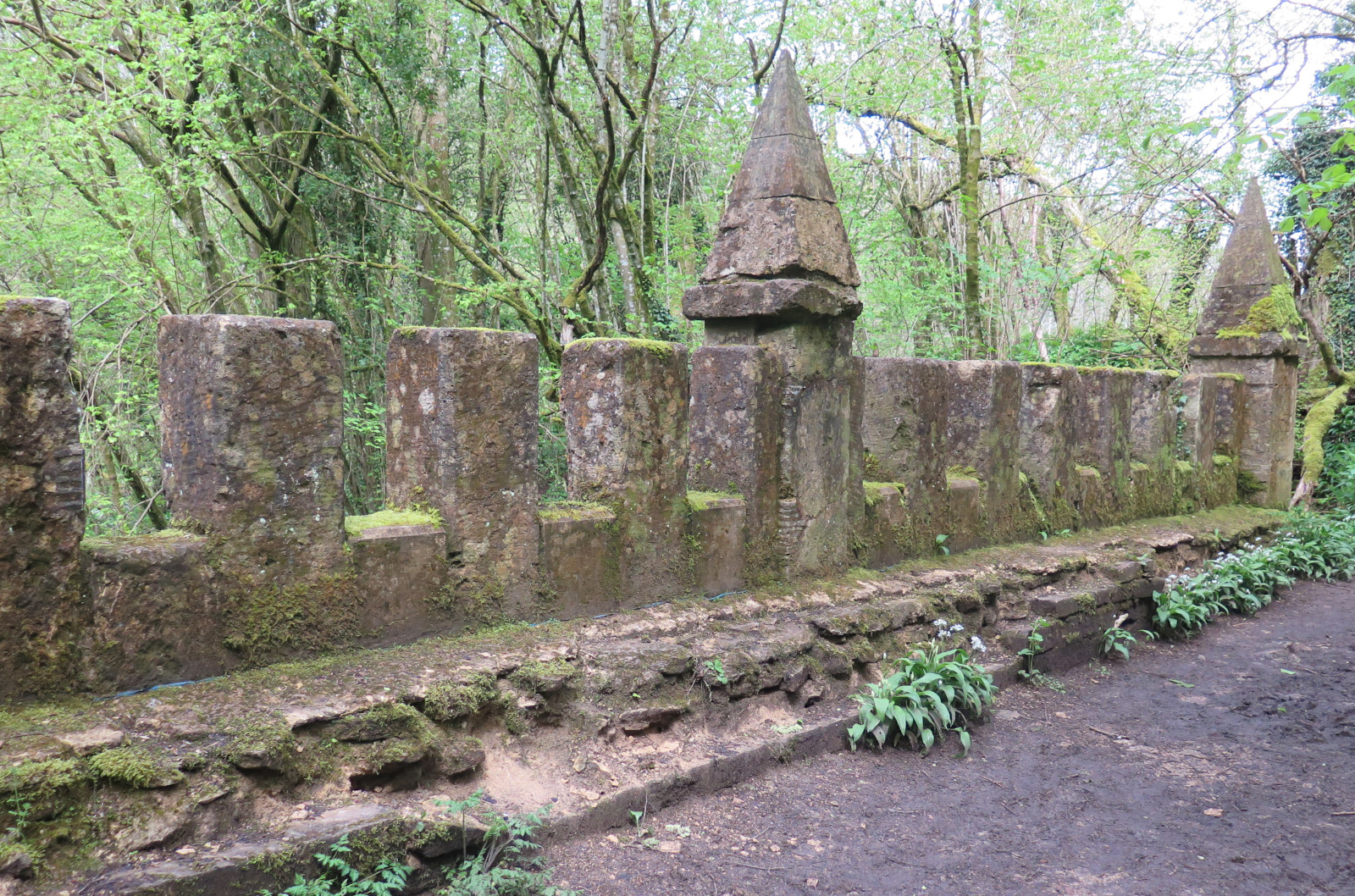
The parapet at the NW tunnel portal
(Click image to enlarge)

The Thames & Severn Canal tunnel was opened in April 1789. The work was a major engineering achievement at the time.

There had been serious difficulty with the contractor originally chosen to do the work. But now it was complete, and barges were able to move goods of all kinds between London and the River Severn via Oxford, Cirencester and Stroud.

Here’s a short extract from the Gloucester Journal from 4th May 1789.

By a letter from Cirencester, dated the 19th ult., we learn that a great undertaking of conveying a tunnel sixteen feet high and sixteen feet wide, under Sapperton-hill and Hayley-wood (very high ground) for two miles and a quarter in length, through a very hard rock, lined and arched with brick, is entirely completed, and boats were to pass through it on the 21st ult.

By this opening communication is made between the river Severn, at Framiload, and the Thames near Lechlade, and will be continued over the Thames below St. John’s Bridge, and so to Oxford, etc., and London, for conveyance of coals, goods, etc.

It is now navigable from the Severn to Themsford by way of Stroud, Cirencester, Cricklade, being filled with water for the purpose near forty miles.

At the time of its execution the tunnel was considered a great undertaking; old King George III visited and expressed himself astonished with it, and that part of the canal at the east end of the tunnel is called “The King’s Reach,” probably in consequence of the visit.

The opening of the canal did not take place until the month of December, 1789, and the Journal of Monday, the 30th of that month, gives the following description of the event: —” On Thursday last was effected the greatest object of internal navigation in this kingdom. The Severn was united with the Thames by intermediate canal, ascending by Stroud, through the Vale of Chalford, to the height of 343 feet, by locks there entering a tunnel through the hill of Sapperton, for the length two miles and three furlongs, and descending 22 [sic 16] locks, it joined the Thames near Lechlade.

(Read the entire article from Cotswold Canals in Pictures)

See also:
From the web:

Useful? Interesting?

If you enjoyed this or found it useful, please like, comment, and share below. (If you don’t see those links, click the article’s title above the main photo and they will appear.) Send a link to friends who might enjoy the article or benefit from it – Thanks! My material is free to reuse (see conditions), but a coffee is always welcome and encourages me to write more often!
The biggest Mach diamonds ever!

Together, all these engines produce 75.9 MN of thrust, much more than Saturn 5’s 34.5 MN.

The first question you might want answered as you read this title will be, ‘What on Earth is a ‘Mach diamond’?’ I’m glad you asked.

If you’re interested in rockets and spaceflight you may already know. Where there are rocket engines, there will be Mach diamonds (also known as ‘shock diamonds’). They are formed by the high velocity of the gases leaving a powerful jet or rocket engine. The shock waves created by this process interact with the ambient air around the nozzle, sculpting the exhaust into angled zones. When seen from the side, these appear as a repeated diamond pattern.

Mach diamonds from an F-16 on afterburner – Image from Wikimedia

The largest rocket ever built is SpaceX’s Super Heavy booster designed to lift Starship to a high altitude on the first part of its journey to orbital velocity. This booster is powered by 33 Raptor engines clustered closely together; they behave rather like a single engine with a 9 m diameter nozzle. When the rocket flew for the second time in 2023, giant Mach diamonds appeared, 9 m across and 6 m in length. These truly are the world’s biggest Mach diamonds ever – by a very considerable margin.

Super Heavy’s engines – SpaceX

This view shows all 33 Raptors firing shortly after liftoff on the 2nd flight test (IFT-2). Each engine bell has a diameter of 1.3 m and the rocket itself has a diameter of 9 m. Together, all these engines produce 75.9 MN of thrust, much more than Saturn 5’s 34.5 MN.

IFT-2 – BocaChicaGal

Here’s an image of the IFT-2 vehicle shortly after launch. The first Mach diamond is very sharply defined, subsequent diamonds less so as the exhaust plume slows, cools and becomes more ragged. Four can be clearly identified with some hints of a fifth and sixth.

So what is happening here? How are the diamonds generated?

Because a rocket engine is all about producing thrust, the velocity of the exhaust is paramount. Rocket engines are designed to maximise velocity and in doing so they minimise pressure. Inside the combustion chamber, pressures are extremely high; but the bell shape of a rocket nozzle expands the gases and directs them downwards. The pressure inside the exiting plume is much lower than the ambient air pressure. This pressure difference ‘squeezes’ the plume and prevents it spreading out sideways.

Higher in the atmosphere, air pressure is lower and the mach diamonds vanish; as atmospheric pressure drops away towards the vacuum of space, the exhaust plume spreads out sideways more and more because the exhaust gas is now at a higher pressure than the diminishing, surrounding air. Notice how the spacing of the diamonds decreases with distance from the rocket. This is because the exhaust velocity is falling off as the plume interacts and mixes with the air around it.

That’s the essence of the process in everyday language. Check the links below if you want more technical detail.

See also:

Blast from the past… 8

We are often in situations where we’re amongst people we recognise, but know almost nothing about.

< Previous | Index | Next >

Notes from bygone years – Julys duly remembered
Hint: Click on the thumbnails for larger images.

A year ago

On 7th July 2022 I noted that ‘the Conservative party is in a state of confusion right now’. Not a lot has changed in the last twelve months; it seems the Conservative ship is still foundering. I included a picture of a sinking ship in my article, here it is again. I also argued for a general election as soon as possible and we’re still waiting on that one! So the big question now is, ‘Will the Conservatives still be in power in July 2024?’ Hard to say, isn’t it! In my judgement it’s very unlikely, but we’ll have to wait and see. The last possible date for the next general election is 28th February 2025. (See the original post.)

Graphic of a sinking ship

<Jun 2022Aug 2022>

Two years ago
Starship’s first launch, 20th April 2023 – Image from Wikimedia

In July 2021, SpaceX‘s Superheavy Booster 3 was being tested at Boca Chica in Texas. They continue to develop and build boosters (and Starships too) at a prodigious rate, and have already launched the full stack on it’s first test flight. That flight failed to reach orbit, and caused serious damage to the launch mount but, following repairs, they are very nearly ready for a second attempt and have made a lot of changes following lessons learned from flight 1.

<Jun 2021Aug 2021>

Five years ago
The JDMC cover

In July 2018 I shared an extract from my short guide, JDMC. I emphasised the work of the Holy Spirit in church life and looked at ways we can recognise and value his activity.

I didn’t want JDMC to be only about what we do, but more significantly about what Jesus does. (Read the original article)

<Jun 2018 Aug 2018>

Ten years ago
Ambience Cafe, St Neots

Research shows we are often in situations where we’re amongst people we recognise, but know almost nothing about. In July 2013 I was thinking about this and how I might notice and engage with such people. (Read the original article)


<Jun 2013Aug 2013>

Fifteen years ago
Still from a video about the hymn

In July 2008 I wrote about the famous Welsh hymn, ‘Dyma gariad fel y moroedd’ or in English ‘Here is love vast as the ocean’. Read about the hymn’s origins and listen to it in the original article.


<Jun 2008Aug 2008>

Twenty years ago
Crow’s nest on HMS Warrior

July 2003 saw us meeting at home to listen to what the Spirit would say and watch what he would do. And of course, we were not disappointed. Afterwards I posted ‘Fallen and lifted up‘ to capture something of that evening.


<Jun 2003Aug 2003>

Twenty-five years ago
Kimbolton Market Place

In July 1998 we visited Kimbolton, just a short distance from our home in Tilbrook. Although it’s a village, Kimbolton always seemed much more like a small town with a market place and Kimbolton Castle, now a private school.


<Jun 1998Aug 1998>

Thirty years ago
The Sealed Knot

In July 1993 Judy, Debbie and Beth went to see a Sealed-Knot re-enactment of a Civil War battle. I didn’t go to this as I was probably at work at the time.


<Jun 1993Aug 1993>

Thirty-five years ago
Mum and Mickey

In July 1988 My Mum was sixty and we had a party at The Catherine Wheel pub in Bibury. Here she is unwrapping a present – a Mickey Mouse landline telephone. She had always wanted one of these!


<Jun 1988Aug 1988>

Forty years ago
Apple pollen tubes

In July 1983 my mathematician friend, Phil, and I had a scientific paper published. Phil built a mathematical model for the effect of temperature on apple pollen tubes. This was based on experimental measurements I’d made in spring 1982.

<Jun 1983Aug 1983

Forty-five years ago

In July 1978 Beth was just two months old (whoops, I think I just gave her age away). We were living in a terraced house in Yatton and I was working on plum and apple pollination.

<Jun 1978Aug 1978>

Fifty years ago
Belland Drive in Charlton Kings

In July 1973 I inspected the base for a greenhouse with my father-in-law, Ron Hill. Here we are, having a good look. As you can see, Ron’s garden in Charlton Kings was beautifully maintained.


<Jun 1973Aug 1973>

Fifty-five years ago

In July 1968 I celebrated my 20th birthday. I don’t remember the occasion, but it would have involved a bit of a party with my Mum and Dad, my three sisters, Judy, and possibly her parents and brother too. From my current perspective it seems a very long time ago!

<Jun 1968Aug 1968>

Sixty years ago
A beach on the Welsh coast

In July 1963 I was 14 years old and we might have been on holiday, but more likely it would have been August. In any case, here’s my Dad taking a photo of the family on the beach on the coast of Ceredigion, Wales.


<Jun 1963Aug 1963>

Sixty-five years ago

In July 1958 I turned ten-years-old, and I’d finished my fifth year of junior education. It was the summer holiday, hooray!

<Jun 1958Aug 1958>

Seventy years ago

In July 1953 I was four, turning five and hadn’t yet started school. Mum, Dad, my little sister, Cindy, and I lived in Queen Anne’s Road on the Beeches estate in Cirencester.

<Jun 1953Aug 1953>

Seventy-five years ago

July 1948 was the month I was born. I was one of the first two children to be delivered at Cirencester’s new maternity hospital. It’s now the main building of today’s Cirencester Hospital.

<Jun 1948Aug 1948>

Eighty years ago

On 29th July 1943 my Dad cycled home from school at the end of term. It was his last day of full-time education.

<Jun 1943Aug 1943>

< Previous | Index | Next >

Quick note on AGI

Following my recent post on AGI dangers (AGI – Hopeful and less hopeful news) I want to draw attention to a Guardian podcast that I think everyone should listen to.

The podcast discusses whether it may be possible to develop AGI without causing an existential threat to humanity. This is a hugely important issue, we all need to be informed and we should all have an opinion.