The Starship programme

All the booster engines lit correctly and stage separation was successful. The boostback burn was good too, but the landing burn failed and Superheavy was lost.

SpaceX Starship (Wikimedia)

Science and technology – 7

< Previous | Index | Next >

Click to enlarge

SpaceX’s Starship programme is an attempt to build space launch and transport equipment to open up the Solar System for travel and cargo delivery at greatly reduced cost, and increased capacity and frequency. It seems a good time to collect the details together in one place because SpaceX is now almost ready to put Starship into orbit and launch Starlink satellites from it. That’s a very significant development.

Progress so far can be divided into three major phases that SpaceX terms ‘Blocks’. Think of them as versions. Block Zero began the development of early forms of hardware, Block One continued this to test all aspects of flight and landing, and Block Two has just ended with the very successful Flight 11, and now Block Three has begun. Three kinds of hardware are being developed for each block- Stage Zero is the ground launch equipment, the launch mounts, fuel storage and loading facilities, and the launch control and monitoring equipment. Stage One is the Superheavy Booster that places the Starship orbital vehicle into flight above the bulk of the atmosphere, while Stage Two is Starship itself which accelerates to orbital velocity or beyond. Specialised versions of Stage Two will act as orbital fuel tankers, and eventually land on the Moon, Mars and perhaps other destinations. I list below, only flights regarded as at least partially successful. Let’s step though them in sequence. It’s also well worth watching Scott Manley’s video overview of the entire Starship test program.

Block Zero

Flight 0A (3rd April 2019) (There are no videos) – The first flight used Starhopper, a reduced size, single-engined, test vehicle with an early version of the Raptor engine burning liquid methane and liquid oxygen. It was a tethered hop and reached the giddy height of 0.3 m. But this was enough to prove the engine and its control systems were performing correctly.

Flight 0B (5th April 2019) (There are no videos) -Starhopper’s second flight, tethered again and reaching a height of 1 m. SpaceX had no Flight number designations for these tethered hops.

Flight 1 (25th July 2019) (There are no videos)- This time Starhopper flew untethered, reached a height of 20 m, and landed safely. This proved engine gimballing was adequate for a controlled ascent and descent.

Flight 2 (27th August 2019) (Video) – This was Starhopper’s final flight, reaching 150 m and travelling horizontally before safely landing proving horizontal movements could be well-controlled. It was retired after this flight.

Flight 3 (4th August 2020) (Video) – The first flight of a full size Starship (SN5), another 150 m hop, the payload section was absent and a steel mass simulator was carried instead, still using just a single Raptor engine. Once again, the proven flight envelope was increased, this time with a vehicle of similar size and weight to a Starship returning from orbit.

Flight 4 (3rd September 2020) (Video) – 150 m hop, Starship (SN6), a similar flight to SN5.

Flight 5 (9th December 2020) (Video) – 12.5 km, Starship (SN8) had a successful launch and flight but failed landing. The mass simulator was replaced by a nose cone and control flaps this time, and three Raptor engines were installed. The new belly flop and flip manoevres succeeded on their first attempt, but the landing failed. This flight climbed to the same altitude as the highest passenger planes.

Flight 6 (3rd March 2021) (Video) – 10 km, Starship (SN9) Similar success and failure to Flight 5.

Flight 7 (3rd March 2021) (Video) – 10 km, Starship (SN10). This was the first successful landing, though it was a very heavy landing and the damaged ship exploded soon after landing.

Flight 8 (30th March 2021) (Video) – 10 km, Starship (SN11). The vehicle exploded during descent.

Flight 9 (5th May 2021) (Video) – 10 km Starship (SN15). This was the first completely successful flight and landing. There was a fire in the engine compartment after landing, but this was eventually extinguished and the landed Starship survived. So now SpaceX had a design that could could complete the horizontal descent, flip to a vertical position at low altitude, and land.

Block One

Block One flights began in April 2023, the objective was to move to flying both the Superheavy booster and the Starship orbital vehicle together, having already mastered the horizontal fall of Starship and the flip manoevre needed to bring it back for a landing. It’s worth looking at Scott Manley’s excellent video summary of the Block One series of flights.

Integrated Flight Test 1 (20th April 2023) (Video) (Scott Manley’s analysis) – Orbital test fight, the combined craft managed to take off with twice the thrust of the Saturn 5 Moon rocket, though five of the thirty-three booster engines failed and the Starship failed to separate from the booster. So most of the flight objectives were met. This represented a huge step forward for Starship; SpaceX now had a system that could lift off and reach the upper atmosphere. Unfortunately the launch all but destroyed the launch pad (stage 0).

Integrated Flight Test 2 (18th November 2023) (Video) – This time all the booster engines lit correctly and stage separation was successful. But both stages were lost. Stage separation was another large step forward for Starship.

Integrated Flight Test 3 (14th March 2024) (Video) – This time all the booster engines lit correctly and fired for the full intended flight duration. Stage separation was successful too and Starship could have achieved orbit had its six engines been allowed to fire just a little longer. However, the ship failed during its brutal re-entry.

Integrated Flight Test 4 (18th November 2023) (Video) – This time all the booster engines lit correctly and stage separation was successful. The boostback burn was good too, but the landing burn failed and Superheavy was lost shortly before it was expected to land. Meanwhile, Starship fired all six engines for stage separation and the boost to almost orbital velocity. For safety reasons there was again no attempt to reach full orbit on this flight. but the Starship started to re-enter the atmosphere over the Indian Ocean before reaching Australia. The Pez dispenser cargo door opened, but failed to close fully. Starship re-entered under control of the flaps but didn’t attempt a landing burn. This flight took the project forward just as far as intended, so a good result and an excellent preparation for following flights. SpaceX had demonstrated atmospheric re-entry under flap control.

Flight Test 5 (13th October 2024) (Video) (Scott Manley’s analysis) – The Superheavy Booster delivered Starship to the upper atmosphere correctly, returned to the launch site, and was successfully caught for the first time, another huge step forward. Starship made a safe atmospheric re-entry and splash down in the Indian Ocean on target and under control. This was the first time both the booster and Starship completed a full mission.

Flight Test 6 (19th November 2024) (Video) – The Superheavy Booster was diverted from a catch attempt and landed in the ocean because the catch mechanism on the tower signalled it was unready. Starship re-lit one of its Raptor engines in flight and splashed down successfully and on target in the Indian Ocean. The re-light is important because it builds confidence that a fully orbital Starship would be able to deorbit in a properly planned way and not come down unpredictably, endangering people and property on the ground.

Block Two

Block Two flights began with flight test 7. The Block Two Superheavy Booster and Block Two Starship are redesigns based on lessons learned from flying the Block One versions.

Flight Test 7 (16th January 2025) (Video) (Scott Manley’s analysis) – The Superheavy Booster flew nearly perfectly and was caught successfully by the arms on the launch tower as with Flight Test 5. However, Starship suffered some engine failures and was destroyed before performing the engine relight and other tests it was flown to perform.

Flight Test 8 (6th March 2025) (Video) (Scott Manley’s analysis) – The Superheavy Booster performed well again and was caught by the tower arms. But Starship lost control and was destroyed again. At this point SpaceX have a successful booster design but the ship is still not reliable.

Flight Test 9 (27th May 2025) (Video) (Scott Manley’s analysis) – This time, the Superheavy Booster flew flawlessly but was deliberately not caught on this flight. It was brought back at an experimentally higher angle of attack. Starship fired all six engines for the full time expected and then shut them down cleanly.

Flight Test 10 (26th August 2025) (Video) (Scott Manley’s analysis)- One of Superheavy’s centre engines was deliberately disabled and it used an off-centre to complete a successful landing burn over the Gulf of Mexico. There was no attempt to catch Superheavy, but the test showed that it could have been caught even using the off-centre engine. Starship fired a single engine briefly to demonstrate it could have been safely de-orbited if required, and some dummy Starlink satellites were deployed successfully as well. Despite an unexpected explosion during re-entry, the vehicle survived, performed the landing flip manoevre and touched down successfully and on target in the Indian Ocean.

Flight Test 11 (13th October 2025) (Video) (Scott Manley’s analysis)- This was the most successful test flight so far. Both the Booster and the Ship performed flawlessly and met all objectives. The dummy satellites were released, an engine was re-lit in space and the ocean landing was perfect as well.

Block three

The first Block Three flight is expected early in 2026. Stages 0, 1 and 2 will all be fresh designs and we expect further advances including orbital flights releasing a new version of the Starlink satellites, more booster catches, and the first Starship catches as well. There may be tests of fuel transfer between ships, tests of Moon landing hardware, and the first launches of Starships to Mars, possibly with a crew of robots. Get ready for an exciting time.

For a taste of what may be to come, take a look at AlphaTech’s latest video.

See also:

< Previous | Index | Next >

Useful? Interesting?

If you enjoyed this or found it useful, please like, comment, and share below. My material is free to reuse (see conditions), but a coffee is always welcome!

You might also like:

SpaceX takes another step

Up, up and away!

Science and technology – INDEX

(See indexes on other topics)

This index links to my posts on science and technology topics.

SpaceX Starship

Science is the study of the natural world, covering matter, energy and the multitude of interactions they can be involved in. Technology draws from scientific results to create useful tools and processes.

So, for example, astronomy is scientific, but space flight is technological; geology is scientific but creating a building with stone is technological.

Bike balancing robot

It may become possible to train a robot by simply showing it a task and correcting it when it makes mistakes. This would be far quicker than having to program the actions in the traditional way.

Institute of Astronomy, Cambridge (Wikimedia)

Science and technology – 6

< Previous | Index | Next >

Click to enlarge

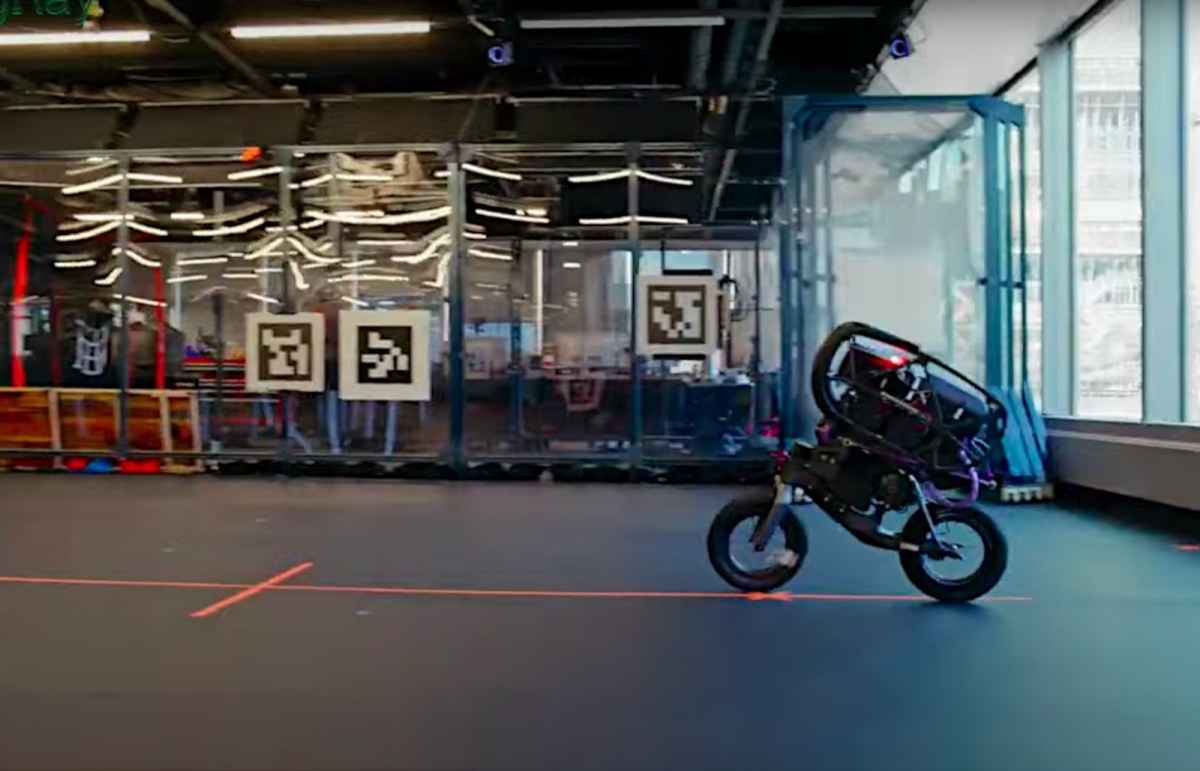
Here’s a robot doing the kinds of things well-programmed robots can do. You might think nothing of it, we’ve all seen videos of robots dancing, jumping and performing difficult tasks and manipulations. But this bike-balancer is a bit different. It has an AI system with a feedback mechanism that learns how to balance better and better with practice. This is how all animals with nervous systems learn new behaviours and improve their performance at practical tasks and skills. It’s still nowhere near Artificial General Intelligence (AGI) but it might be a small step along the way.

With this achievement under their belts, the developers will undoubtedly try the same method to develop robots that can handle tasks like juggling, sorting items, removing incorrect objects from a moving belt, or bolting two items together using a spanner. It may become possible to train a robot by simply showing it a task and correcting it when it makes mistakes. This would be far quicker than having to program the actions in the traditional way. It would probably be impossible to know how the robot makes decisions on the best movements to get a particular job done, but that’s true with training people to do jobs too. Very often, the how is not important providing the result is reliable and effective.

See also:

< Previous | Index | Next >

Useful? Interesting?

If you enjoyed this or found it useful, please like, comment, and share below. My material is free to reuse (see conditions), but a coffee is always welcome!

You might also like:

Evidence of life? Perhaps…

If the discovery bears up under closer scrutiny (and I think that’s quite likely), it will go down as one of those great discoveries in the history of astronomy and science generally.

Institute of Astronomy, Cambridge (Wikimedia)

Science and technology – 5

< Previous | Index | Next >

Cambridge IoA
(Wikimedia)

There have been rumours of life found on other planets circling other stars, sometimes presented on YouTube or elsewhere as amazing or even terrifying discoveries. But they were just sensationalist rumours. But now, for the first time, here’s something a bit more credible.

Watch the video below from Cambridge University, this is a brief presentation by Professor Nikku Madhusudhan on the probable discovery of a biomarker molecule DMS in a planetary system. Further work at Cambridge and elsewhere will throw more light on this soon, And yes, the pun was intended in this case!

It’s definitely exciting news, but I must emphasise that further checking and more data is essential. But if the discovery bears up under closer scrutiny (and I think that’s quite likely), it will go down as one of those great discoveries in the history of astronomy and science generally.

< Previous | Index | Next >

Useful? Interesting?

If you enjoyed this or found it useful, please like, comment, and share below. My material is free to reuse (see conditions), but a coffee is always welcome!

Asteroid heading our way

There is absolutely no need to panic. If you’ve heard about this and are worried, calm down and read on for the simple facts and where to go for more detail.

Image: Wikimedia

Science and technology – 4

< Previous | Index | Next >

Asteroid track
(Wikimedia)

There is absolutely no need to panic. If you’ve heard about this and are worried, calm down and read on for the simple facts and where to go for more detail.

I imagine almost everyone will have heard about this asteroid by now. News stories have varied from rather scary to suggesting the risk is extremely tiny, so letߴs begin by setting out the most important things to know:

  • The full name of the asteroid is 2024 YR4
  • It will pass Earth in 2028, but will definitely miss
  • It has about a 2% chance of hitting Earth in 2032
  • It therefore has a 98% chance of missing entirely in 2032
  • As we define its orbit better, the chance of a hit is likely to drop to zero
  • If the chance of a hit becomes large, we can probably nudge it to miss

If it does become clear that the asteroid will hit Earth, here are some further important things to know:

  • We already know the ground track along which it would hit
  • It would most likely fall in the Atlantic Ocean
  • If so, it would cause a very large tsunami
  • It might fall in South America or Africa and make a crater 1.5 km wide
  • It would destroy everything over a much larger area outside the crater
  • We would have plenty of time to move people out of the way, either from coastal areas in the event of an ocean hit, or from the impact zone if the asteroid hit land. Clearly, many lives could be saved but it would be very costly.
See also:

Having set out those basic facts as we know them in late February 2025, I’m not going to discuss things in more detail. Instead, I’ll list some good sources for further information. These are very roughly in order of the usefulness and detail provided. Simplest at the top, more detail as you go down the list.

< Previous | Index | Next >

Useful? Interesting?

If you enjoyed this or found it useful, please like, comment, and share below. My material is free to reuse (see conditions), but a coffee is always welcome!

Greenshifting

Plants (secondary) trap some of the energy in sunlight and use it to grow and to store in chemical form. And animals (tertiary) obtain energy by eating plants or other animals.

Image: Wikimedia

Science and technology – 3

< Previous | Index | Next >

Solar farm
(Wikimedia)

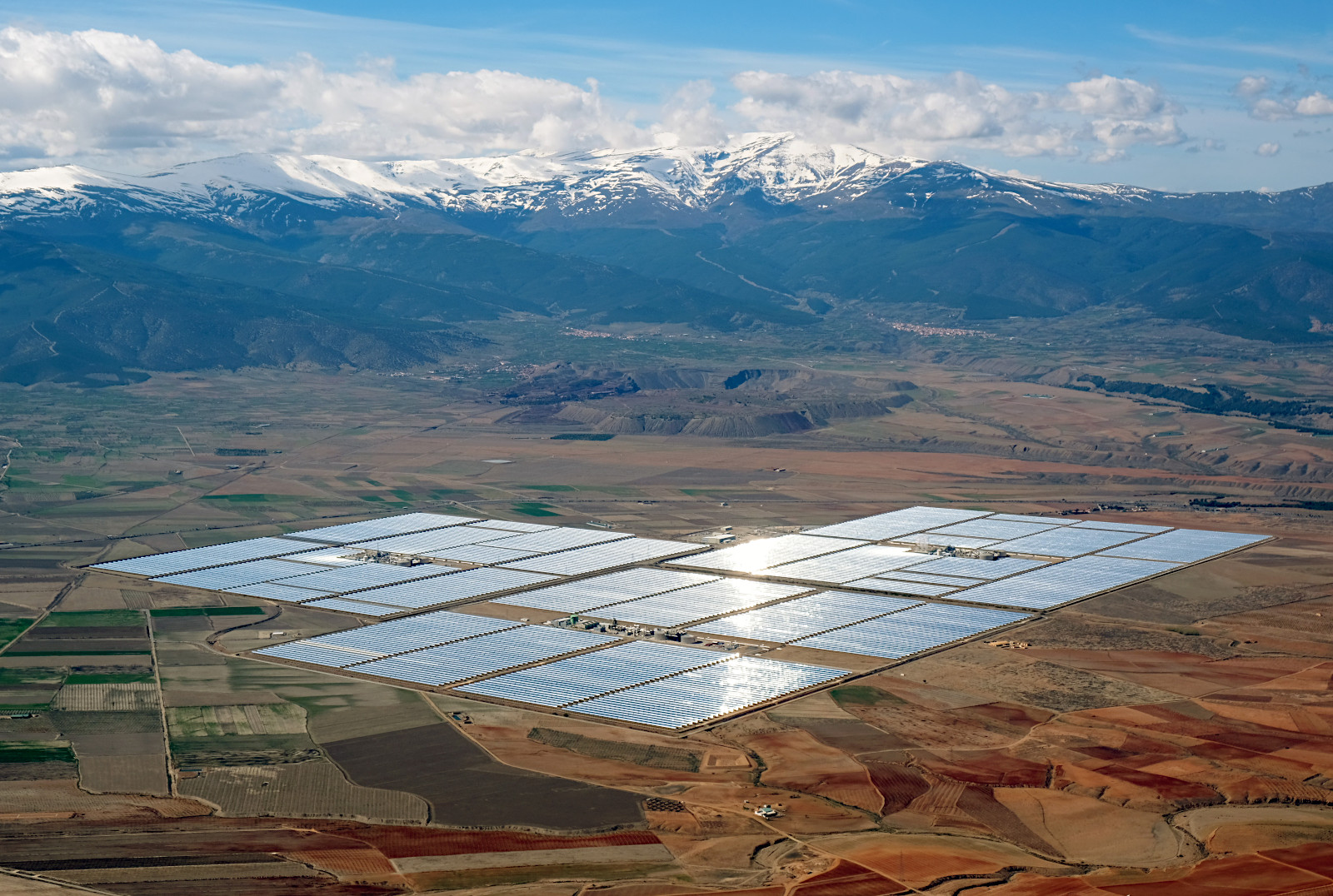
We’ve just had a heat pump system installed in our home and it is so, so different from the old, gas-fired boiler that used to keep us warm in winter. I’ll give you some details about it in another article. But the main reason I’m writing is to explore what it means to be migrating towards clean, green energy; and what it means if we fail. But before we can focus on any of that, we need to understand where our energy comes from and where it goes.

Primary energy sources

We all use energy every day, as a species. And just like all other forms of life, that energy comes almost entirely from rearrangements within atomic nuclei. There are two ways this can happen – nuclear fusion and nuclear fission. Fusion is what happens in the centre of the sun where hydrogen atoms are combining to form helium, releasing a lot of heat in the process. Fission is what happens suddenly in a nuclear bomb or slowly in a nuclear reactor. Heavy atoms fall apart and release energy as they do so. The rule is that heavy elements release energy if they break apart (fission), while light elements release energy if they join together (fusion). Elements in the middle mass range around iron don’t break apart or join together easily and produce little or no energy if forced to do so. Indeed, sometimes these elements might require energy.

The sun’s energy comes from fusion in the core and is eventually released as sunshine. Sunshine heats the Earth’s surface and winds are caused as air masses expand or contract due to temperature changes. Waves, in turn, are caused by wind crossing water surfaces.

Some of the Earth’s inner energy comes from the spontaneous fission of heavy elements in the core and mantle, and some is remnant heat from Earth’s formation 4.5 billion years ago; that core energy is released in the form of volcanoes, earthquakes, and hot springs.

Tidal energy is the final source we need to consider. This is the result of gravitational forces from the Sun and Moon causing bulges in the oceans, the Earth revolves daily beneath these ocean bulges and the water depth varies as the state of the tide changes throughout the day.

It’s also gravitational contraction that gets the centre of a star dense enough and hot enough for fusion to begin in the first place. That’s it for primary energy sources. All of these count as green energy as none of them release carbon dioxide.

We can collect solar or wind energy, for example, with a clear conscience, also geothermal energy, hydroelectric power, hot springs, tidal power, or nuclear. There may be issues with all of these, but none of those issues have anything to do with releasing greenhouse gases.

Plants and animals

Everything else is what I call secondary or tertiary energy. Plants (secondary) trap some of the energy in sunlight and use it to grow and to store in chemical form. And animals (tertiary) obtain energy by eating plants or other animals. These too can be counted as green. The natural world runs on light from the sun, and all the carbon dioxide released is balanced by the light trapping mechanism of plants that uses carbon dioxide from the air and water from the ground and releases oxygen. The carbon is used to create the structural elements of wood and all the living tissues of plants and animals. Most of this is recycled naturally by decay within a few years or decades, and the carbon balance of the Earth doesn’t change. Except sometimes carbon containing materials were trapped long term in geological deposits of coal, oil and natural gas. This sequestration of carbon compensated for the continual, slow warming faced by the planet as the sun increased its output of light and heat over geological time.

Deep time

All stars grow brighter and hotter as they age, a perfectly natural and well understood process that we don’t need to consider here – except to mention that it happens. Rising temperatures cause shifts in a planet’s climate, and if it goes far enough a planet can become very hot, lose its water to space, and become a roasting desert like Venus.

This did not happen to the Earth because the continual, slow removal of carbon from the surface kept carbon dioxide levels low and significantly reduced the greenhouse effect.

Early human technology

Early human technologies did not involve the use of coal, oil or gas. When fire was first discovered and tamed for human use, the only fuels were wood and various kinds of plant and animal oils and fats. Our technology remained green, using only recently captured energy.

But around 4000 years ago, people began to discover surface deposits of coal and oil. The Romans and the Chinese knew of coal and used it on a small scale as a fuel.

We were still remaining green on the whole. The industrial revolution began with water power to mill grains, process wool into cloth, and so on. The first industrial towns were always built in valleys where there were rivers of sufficient size to power the machinery. Up to this time it’s difficult to find much change in atmospheric carbon dioxide levels in, for example, ice cores or ancient timber. When carbon fuel was needed for processes needing extreme heat (eg iron smelting, pottery firing), charcoal was used; this was made by incomplete burning of wood in an oxygen poor environment.

But then came steam power!

Advancing industrial growth

It soon became clear that charcoal was not available in sufficient amounts to be a suitable fuel for burgeoning industry. Instead, coal began to be mined in ever-increasing quantites to feed iron and steel works, power pumps to move water from mines, and more and more to power transport. Railways and shipping consumed ever larger amounts of carbon in the form of coal. Oxygen was consumed and carbon dioxide released – and at that point the human race started on a dangerous path towards climate change. At first the increase in carbon dioxide levels was imperceptible and so was the increase in average temperatures.

And that is where we were 100 years ago.

Oil is not mainly carbon, like coal. It has almost two hydrogen atoms to every carbon in its structure so it’s slightly more green than coal. Hydrogen oxide (aka water) is a less powerful greenhouse gas than carbon dioxide. Gases are even better than oil, methane is best of all as it contains four hydrogens to every carbon.

But to be fully green we must move all our energy production to solar, wind, nuclear, and tidal energy supplies. There are financial incentives to make the move too. To burn coal, oil or gas at a power station you must construct the power plant and transmission lines and then continually buy the raw materials to burn to generate power.

Wind turbines, solar panels and hydro also involve building infrastructure, but the fuels to run them – sunshine and wind – are free. This makes the energy they supply to the power grid much cheaper than energy from non-green technologies.

The economical costs of mining or drilling, as well as the health and environmental costs of emissions from non-green energy sources renders the move to greener energy an absolute no-brainer. And that’s before we start to take into account the serious risks of a warmer climate. These include rising sea-levels; unlivably high temperatures; heavier and unpredictable rain; forest fires; spreading of deserts; and harsher and more frequent cyclones and hurricanes. All of these horrors are already with us and are worsening year on year by larger and larger amounts.

Back-pedalling furiously cannot save us now. But it’s not too late to moderate the damage, eventually stabilise the problems we face, and see a gradual return to what was once normal. But we absolutely must act now, the longer we leave it, the worse it will get.

See also:

< Previous | Index | Next >

Useful? Interesting?

If you enjoyed this or found it useful, please like, comment, and share below. My material is free to reuse (see conditions), but a coffee is always welcome!

Supersonic flight

A smaller development and test version is already flying and has just made its first supersonic flight. This is the Boom XB-1.

Image: Wikimedia

Science and technology – 2

< Previous | Index | Next >

History

Most people know that Concorde was a joint UK/France development that resulted in a commercial supersonic passenger plane. It was technically successful and carried passengers across the Atlantic from 1976 until 2003, but for several reasons it was never commercially successful. There was also a Soviet version, the Tupolev Tu-144 that crashed spectacularly at the Paris Airshow in 1973.

But today, both Concorde and the Tu-144 are history.

Present development

Not so many readers will be aware of a commercial project to design and build a new supersonic passenger plane, or that a smaller development and test version is already flying and has just made its first supersonic flight. This is the Boom XB-1, specifically designed to cause less noise and, amusingly considering the company’s name, less transonic boom audible from the ground.

So far the project is going well; the test-flight program is well underway with promising results so far. The full-size airliner (Overture) would be substantially smaller than Concorde and carry fewer passengers, but if successful in service a larger model might be considered.

See also:

< Previous | Index | Next >

Useful? Interesting?

If you enjoyed this or found it useful, please like, comment, and share below. My material is free to reuse (see conditions), but a coffee is always welcome!

Science and technology – 1

Getting enough sleep is important of course, but the quality of our sleeping matters too. Good exercise, diet and quiet, undisturbed surroundings are helpful factors.

< No previous item | Index | Next >

Larger view

Welcome to a new feature on JHM, a series of articles on science and technology. I’ve posted articles like this before, but not as a regular series. From now on science and technology articles will be easier to find and browse with their own index.

This time, we look at the topic of sleep.

Sleeping well

Why sleep matters

Sleeping well is clearly important. We all know that lack of sleep makes us tired, perhaps a bit grumpy, and affects our ability to focus. We’re more inclined to doze off, and microsleeps lasting a second or so can be absolutely deadly (quite literally) for someone trying to drive or use heavy machinery.

But there are longer term health effects too (see the Nature article listed below).

Improving your sleep

The New Scientist articles cover many aspects of sleep. Getting enough sleep is important of course, but the quality of our sleeping matters too. Good exercise, diet and quiet, undisturbed surroundings are helpful factors. It’s useful to consider how our time awake will affect our sleep. There are hormonal effects affecting both falling asleep and waking up – melatonin and cortisol – so we need to consider those as well.

In terms of practical advice, useful tips include – using bright lighting in the morning (especially in wintertime), and dim lighting in the evenings – keeping the bedroom cool and dark – avoid eating and drinking late in the evening and be wary of late caffeine intake – avoid stress near bedtime if possible.

Surprisingly, perhaps, your gut microbiome is another factor, and it works both ways. Sleep patterns can affect the microbiome, but a healthy microbiome helps provide better sleep.

Going deeper

The links below provide further reading. The New Scientist link will give you an overview with introductions to all the articles, though if you want the full text you’ll need a subscription or access to the printed version Many libraries will have a copy.

The other two links are free for the full text.

See also:

< No previous item | Index | Next >

Useful? Interesting?

If you enjoyed this or found it useful, please like, comment, and share below. My material is free to reuse (see conditions), but a coffee is always welcome!