Image 120 – What’s in an image? Sometimes quite a lot, more than meets the eye. I’m posting an image every day or so.
Enlarge
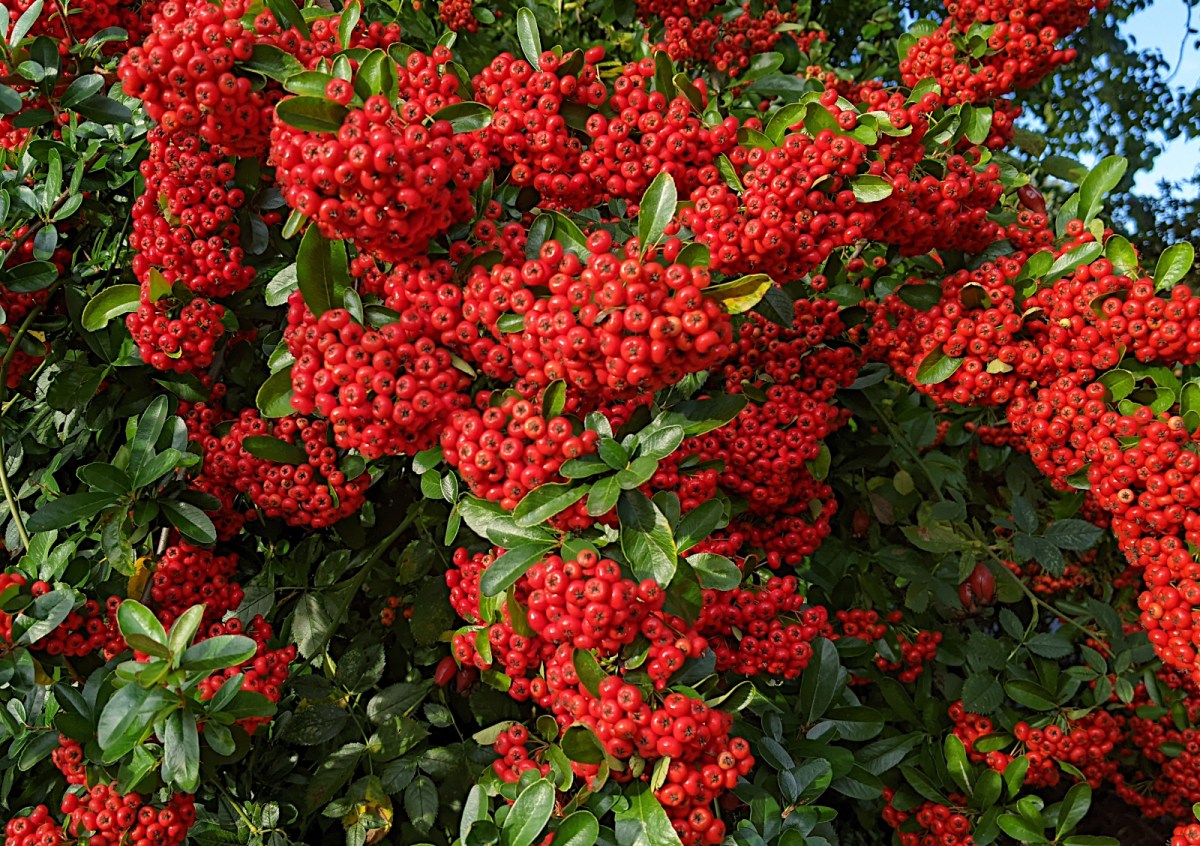
Firethorn (botanical name Pyracantha) is a widely-grown garden shrub with small white flowers in the spring and glorious, usually red or orange fruit that often persist into January or later. They are eaten by birds however, and in a hard winter the fruit may all be consumed before Christmas. The fruit are pomes with the same structure as very tiny apples (they make excellent ‘apples’ for the fruit bowl in a dolls house). The flesh is edible but is mealy and bland, the seeds are slightly poisonous though a small number are very unlikely to be harmful.
The example in the photo was growing in Waitrose car park in Cirencester, pretty much on the line of the Roman City wall. As you walk into the car park from Sheep Street, look to your right as you pass the outdoor seating and tables and you’ll spot a low, stone wall. This was built directly above the Roman wall to show where it was and its alignment, there’s a piece of Roman stone on top of it and an explanatory sign, with further historical information on the wall of the supermarket nearby.
The road to Aquae Sulis (Roman Bath) left Corinium through a gateway nearby and later became the old Tetbury Road for a couple of miles. The Roman route continues across what is now Cotswold Airport.
When: 25th October 2023 Where: Sheep Street, Cirencester
If you enjoyed this or found it useful, please like, comment, and share below. (If you don’t see those links, click the article’s title above the main photo and they will appear.) Send a link to friends who might enjoy the article or benefit from it – Thanks! My material is free to reuse (see conditions), but a coffee is always welcome and encourages me to write more often!
These plants are easy to look after, almost indestructible really. They grow quite happily indoors or out in a British summer, and they flower easily and abundantly around November.
Image 114 – What’s in an image? Sometimes quite a lot, more than meets the eye. I’m posting an image every day or so.
Enlarge
This is our Christmas cactus, Schlumbergera spp. We’ve had it for quite a few years now, probably around fifteen at a guess. These plants are easy to look after, almost indestructible really. They grow quite happily indoors or out in a British summer, and they flower easily and abundantly around November; despite the name, you might need to work quite hard to hold them back to flower over Christmas.
They’re also very easy to propagate. At any time of year, break off a mature pad by twisting it round and round until it separates. Rest it against the side of a small pot nearly full of compost ( the base of the pad can be pushed a millimetre or two into the compost). Keep the compost moist until the cutting has rooted, and as it grows, repot it into a larger container. A good plan is to root three or four pads in one pot, evenly spaced around the rim. You’ll get more balanced growth that way.
If you produce new plants in January or February, and give them plenty of warmth and light (but not too much full sun), they may flower the same year. If they don’t, they’ll certainly flower the following year and every year after that; the plant in the photo is about six-years-old. These Christmas cacti make lovely little gifts for friends and family.
When: 27th November 2023 Where: At home, Cirencester
If you enjoyed this or found it useful, please like, comment, and share below. (If you don’t see those links, click the article’s title above the main photo and they will appear.) Send a link to friends who might enjoy the article or benefit from it – Thanks! My material is free to reuse (see conditions), but a coffee is always welcome and encourages me to write more often!
Image 107 – What’s in an image? Sometimes quite a lot, more than meets the eye. I’m posting an image every day or so.
Larger view
Winter storms occasionally bring down mature trees, even if they are healthy. That happened on the road between Stratton and Cirencester on 21st December 2023. The picture shows the clearing up afterwards. The car driver had a very frightening experience and a lucky escape; the tree trunk crushed the right hand side of the bonnet and I imagine the car was a write-off. Amazingly the windscreen was undamaged and the driver presumably shaken but unhurt.
The road was completely blocked by the trunk and branches of this large, mature lime tree, but the team worked quickly and it was clear again later the same day.
Life is full of unexpected events, most of them entirely harmless, some of them inconvenient, and occasionally something that shakes us up and makes us think about life in a different way, at least for a time. It’s probably good for us to face these think-about-life-differently events once in a while. It helps us to realise that some things are important, that we should do the things that matter most right away, that we should not fritter away our time, that life really is precious, and that we should be sympathetic to those who have suffered unexpectedly in life.
I suppose in the end the important thing is to love others regardless of whether they are close family, complete strangers, or somewhere in between. Everybody matters!
When: 21st December 2023 Where: Cirencester, Gloucestershire
Cirencester
For convenience, here’s a list of all the Cirencester area images:
If you enjoyed this or found it useful, please like, comment, and share below. (If you don’t see those links, click the article’s title above the main photo and they will appear.) Send a link to friends who might enjoy the article or benefit from it – Thanks! My material is free to reuse (see conditions), but a coffee is always welcome and encourages me to write more often!
We spent Christmas Day in Cheltenham with Judy’s Mum and Dad. We had the usual fun, a great Christmas dinner, lots of presents to unwrap, and a gas fire that kept the room as hot as a sauna! (1989)
June 2024 (6 months before publishing this article)
Click to enlarge
I’ve decided to include an even more recent section from now on, as that will allow us to enjoy a summer photo when it’s winter, and a winter photo when it’s summer.
This is from a walk I did on 11th June, along the towpath of the Stroudwater Canal on the edge of Stonehouse. This restored section of canal has a newly built railway bridge, and the canal stretches out to include a small lake called ‘The Ocean’, home to all manner of wildlife.
I enjoy a long walk now and then, perhaps ten or twelve miles; I still find this quite easy and very relaxing as well as interesting. I’ll continue as long as I can.
Erin, our cat, had come to the end of her life, the tumour was very large, she was no longer responding to steroid treatment, so we took her to the vet on 1st December and buried her in the garden on 2nd.
Donna was acting as a ‘guinea pig’ for a trial her brother, Paul, was running at the University of Bath. We drove over there and I sat in the car in heavy rain reading while Donna and Paul were working away in the lab. And throughout the month I scanned and organised a fair number of old 35 mm transparencies, mostly Judy’s but some of mine too.
We visited the family in Yorkshire over New Year having had Christmas at our house with Isobel, Paul and Vanessa.
We listened to Handel’s Messiah in Gloucester Cathedral, two of our friends were singing in the choir and it was a great performance.
There was a memorial service at Cirencester Baptist Church for my friend Stephen and a gathering later at the Corinium Hotel. I shall always remember the long conversations he and I had, it was a privilege to have known him.
We visited the family in Yorkshire in the middle of the month and had a great time with all sorts of different things to see and do, including a visit to Fairfax House in York.
Tony’s Parkinson’s was making him confused now, he’d been puzzled about there being two Donna’s.
We voted in the General Election and stayed up to watch the initial results coming in, but felt disappointed as it became clear the Conservatives had won again.
And we visited York just before Christmas, including going to an ice-hockey match in Hull with Debbie, Steve, Aidan and Sara. That was great fun, lots of action, fast and furious.
I’d had an ankle injury in 2013, and it was now feeling much improved, more comfortable than at any time since before I damaged it. We visited Anglesey Abbey around the middle of the month and enjoyed the garden there. Donna was struggling with too much to do; she was busy with teacher training, helping out at the Food Bank and finding church life and the small group unsatisfactory and time consuming as well.
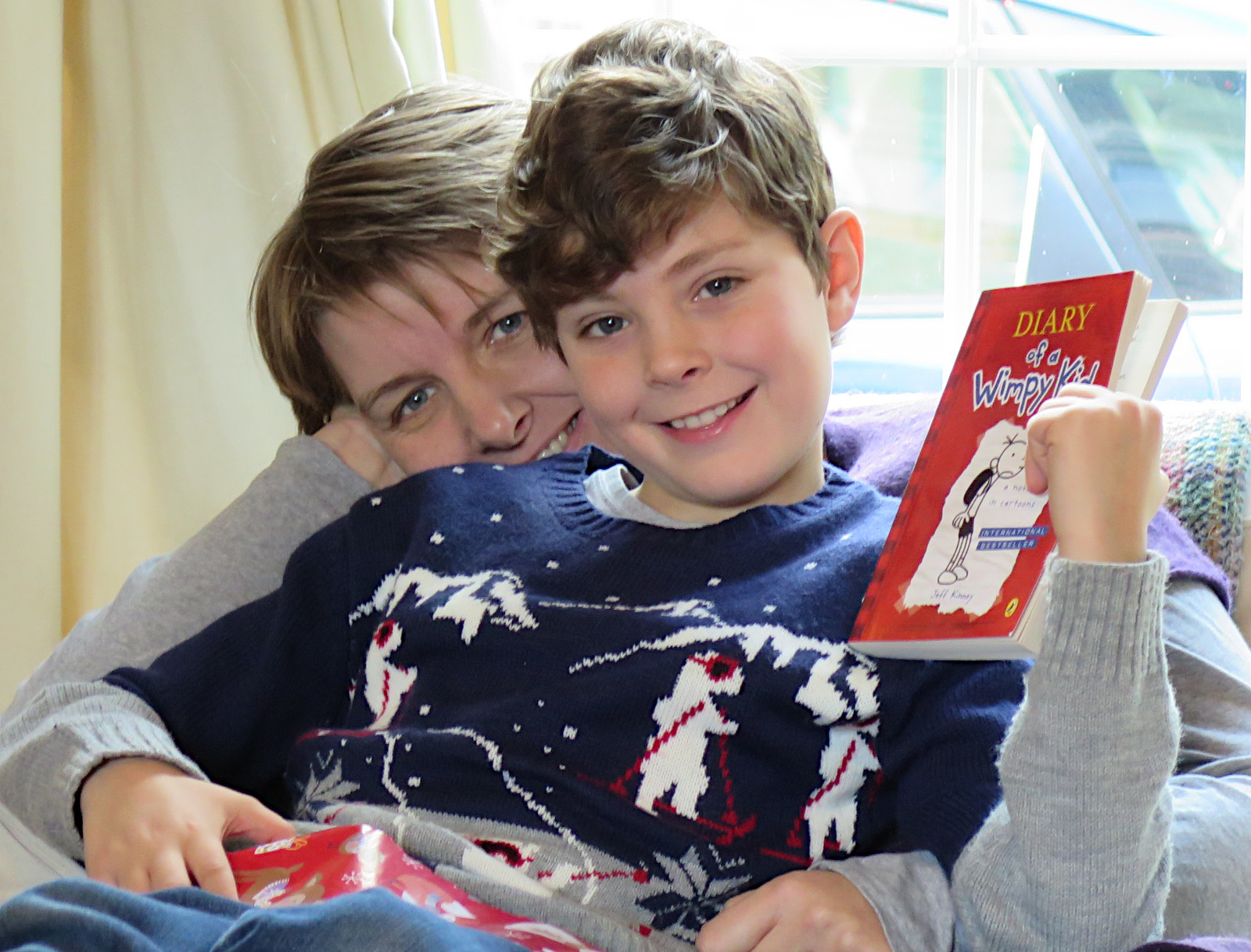
We spent Christmas in York this year staying first with Debbie, then with Beth and Paz, the photo was taken at Debbie’s. Then after Christmas we visited Paul and Vanessa in Weston. A busy end to the year, but a very satisfactory one!
JHM:Simple Church went on sale. World events: Japan launched a sample return spacecraft to Ryugu ; and The Pakistani Taliban killed at least 145 people, mostly schoolchildren in Peshawar.
The building in the picture was where I worked when I started my employment at Unilever in April 1998. And here it is nearly eleven years later, being demolished in December 2009! Needless to say, our department had already been moved to alternative offices on the same site. I wrote in my journal,
‘The demolition has started in earnest now, they’re breaking up the concrete cladding and exposing the reinforced columns and floors. Quite a few of the familiar interiors are visible now; it’s weird to see.’
Play Doh!
We visited York on 20th December to see my daughters and their families, having the usual great time, this year at Beth and Paz’s home in Fulford. Meredith and Aidan enjoyed the Play Doh Factory.
We were on holiday in Thailand from 26th November until 10th December. On 26th December a huge tsunami hit the beach where we’d been staying (Khao Lak). Possibly as many as 10 000 people died on this part of the coastline, the worst hit part of Thailand; it felt like a very narrow escape!
We spent Christmas Day with Donna’s Mum and Dad in High Wycombe, then travelled west to Cirencester. And on Boxing Day we visited Cindy and Paul’s home at Bibury, a few miles east of Ciren. In the photo you can see Paz, Cindy and Beth all looking happy.
We’d also had pre-Christmas meals with Unilever colleagues earlier in the month.
Truffles (our new cat) had settled in well by this time. She was a young adult, not a kitten, and had struggled at first with a cat flap, but once she got the hang of it I think she really appreciated the freedom it gave her.
World events:Tori Murden became the first woman to row the Atlantic Ocean alone; and Boris Yeltsin resigned leaving Vladimir Putin as acting president of Russia.
Judy’s Mum and Dad came to visit us for Christmas dinner this year. Judy was almost back to normal, having made a good recovery following an operation to remove a bowel tumour, and then further illness caused by failed chemotherapy. Despite all this she had now bounced back really well.
This December we spent Christmas Day in Cheltenham with Judy’s Mum and Dad. We had the usual fun, a great Christmas dinner, lots of presents to unwrap, and a gas fire that kept the room as hot as a sauna!
We might have visited Cirencester later in the day to see my Mum and Dad before heading back home to Yatton.
At this time I was still working in my spare time on educational Sinclair Spectrum games for the Clever Clogs series from Computer Tutor, while employed at Long Ashton Research Station in their Plant Science Division.
World events: The Bhopal disaster in India killed 23 000+ people and injured over half a million; and the networking company Cisco Systems was formed.
At this time I was still studying pollen tube development in apple and pear cultivars at Long Ashton Research Station. Judy was at home working hard at managing the house and looking after the chilren; Debbie was four-years-old and Beth was just seven months.
I was working for Ken Stott at Long Ashton Research Station, partly on willow and poplar growth rates, but also helping Ray Williams in the Pomology Group doing interesting studies on apple pollination. Judy was working on human erythrocyte membrane proteins in the Biochemistry Lab in Woodland Road, Bristol.
Judy and I were living in a rented flat in Belmont Road, still saving for a deposit for a house but now in the knowledge we’d secured a mortgage. We began considering where we might find a house we could afford.
World events:Cyclone Tracy caused severe damage to Darwin, Australia; and Malta became a republic.
Judy and I were both in our final year at University, in Judy’s case at Aberystwyth where she celebrated an early Christmas party with friends (from left – Little Mary, Maggs, Big Mary, Jan, and two faces I know but can’t put names to. Judy isn’t in the picture as she took the photo).
This was the final Christmas before we were married, and 1970 would also be our graduation year.
World events: The Boeing 747 jumbo jet made its first passenger flight; and oil was discovered in the Norwegian sector of the North Sea.
I was lucky enough to be able to go on a School Cruise on an old troopship, the ‘Dunera’. We travelled by coach to London, then train to Dover, ferry to Calais, and train all the way to Venice where we boarded the ship. The route took us past Corfu and we visited Athens, Rhodes, and Istanbul. The photo shows the party looking at Lindos from above before boarding the coach again to walk through the village streets and make our way up the Acropolis.
World events:Martin Luther King Jr. was awarded the Nobel Peace Prize; and the US F-111 supersonic attack aircraft made its first flight.
My first term at Cirencester Grammar School came to an end and we enjoyed our Christmas holidays. I think I felt settled in by this time, and knew most of the other children in my class well enough.
I was in my second year at Querns School, and the end of the first term was approaching. We were still living on the Beeches Estate in Cirencester – Daddy, Mummy, me and little Cindy who was just three-years-old.
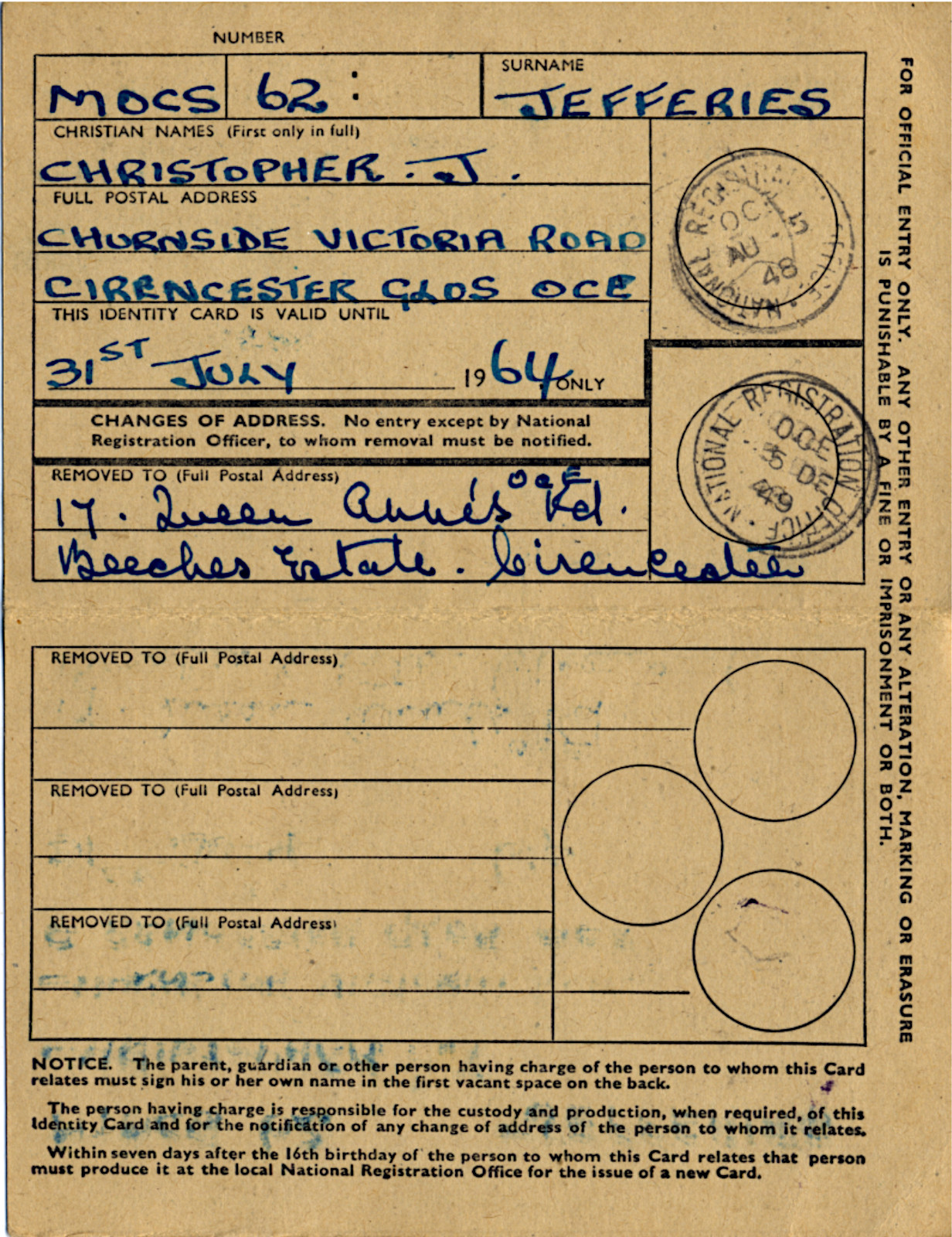
Mummy, Daddy and I moved house! We had been lodging with my grandparents in Victoria Road, Cirencester. But on 5th December we were able to move into a newly built council house on the Beeches Estate just the other side of the river. I had a change of address on my identity card (see whole card).
I don’t remember any of this, though, I was less than a year and a half old!
World events: The government of China moved to Taiwan; and UHF TV was broadcast daily for the first time.
Dad said goodbye to his friend Joe at the railway station on 4th of December; Joe was posted elsewhere. Mum and Dad were both annoyed by Dad’s CO lecturing him about their relationship.
On 9th, Dad travelled to Belfast by bus, then train to Larne, and boat to Stranraer reaching Carlisle at 01:15 on 10th. He was posted to Skendleby in Lincolnshire, another radar station, finally arriving there on 11th December. Mum and Dad began writing frequent letters to one another and Dad spent Christmas and New Year at Skendleby.
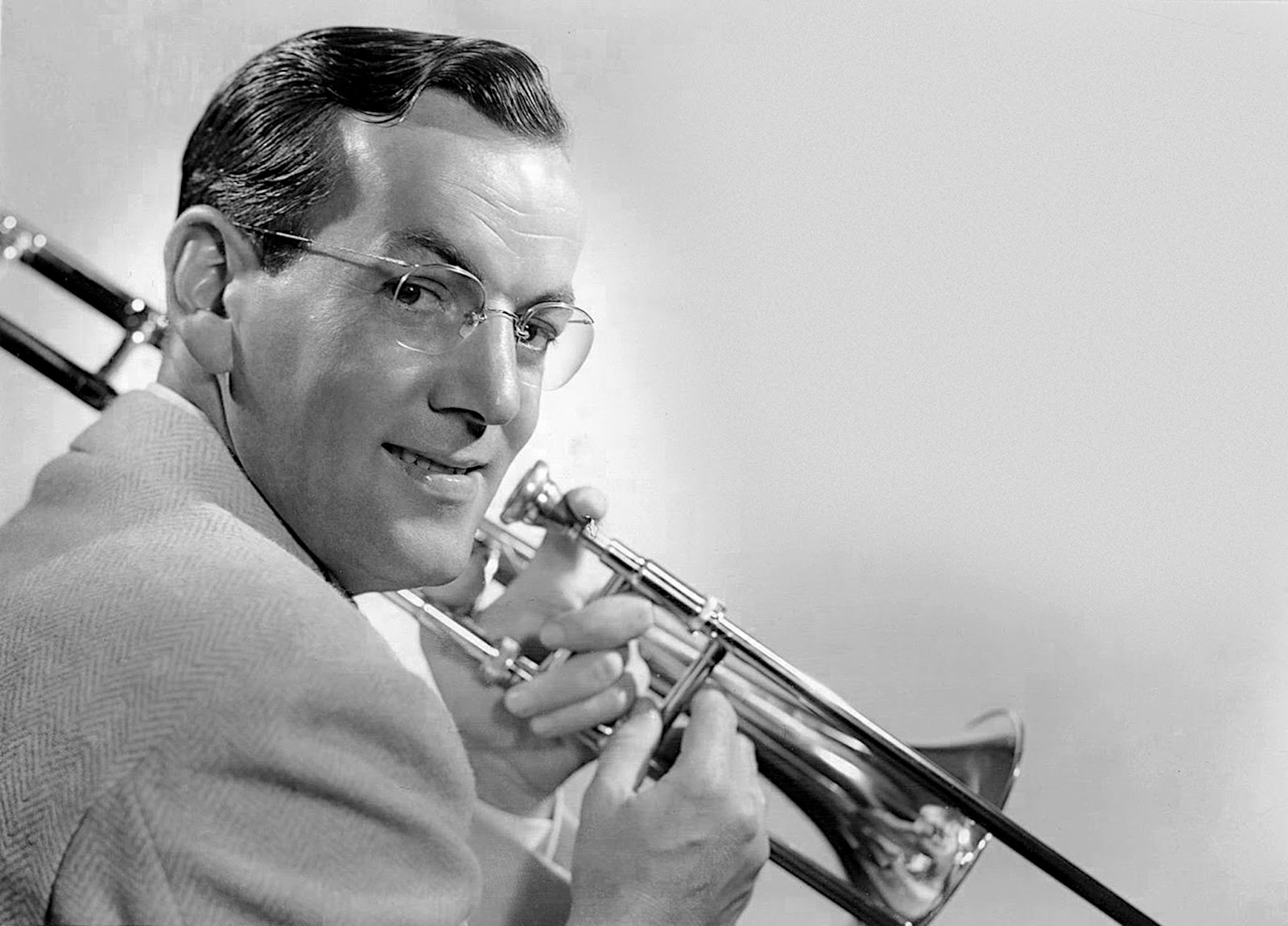
World events: The Soviet Union changed Turkish place names in Crimea to Russian; and Glenn Miller‘s plane was lost over the Channel en route to Paris.
If you enjoyed this or found it useful, please like, comment, and share below. (If you don’t see those links, click the article’s title above the main photo and they will appear.) Send a link to friends who might enjoy the article or benefit from it – Thanks! My material is free to reuse (see conditions), but a coffee is always welcome and encourages me to write more often!
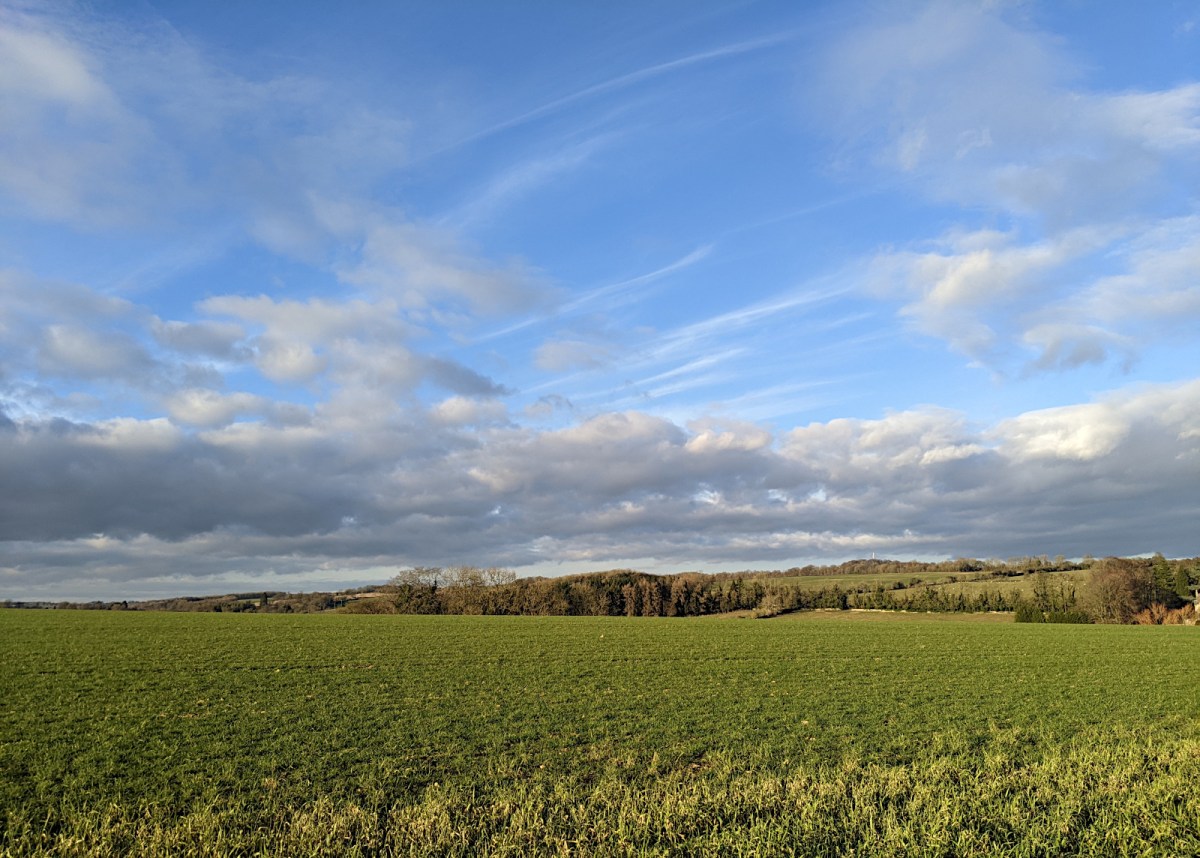
One of the joys of these walks is the sky. Sometimes it’s grey and overcast, sometimes it’s blue from horizon to horizon, but sometimes it’s full of interesting cloud formations at various heights.
Image 103 – What’s in an image? Sometimes quite a lot, more than meets the eye. I’m posting an image every day or so.
Larger view
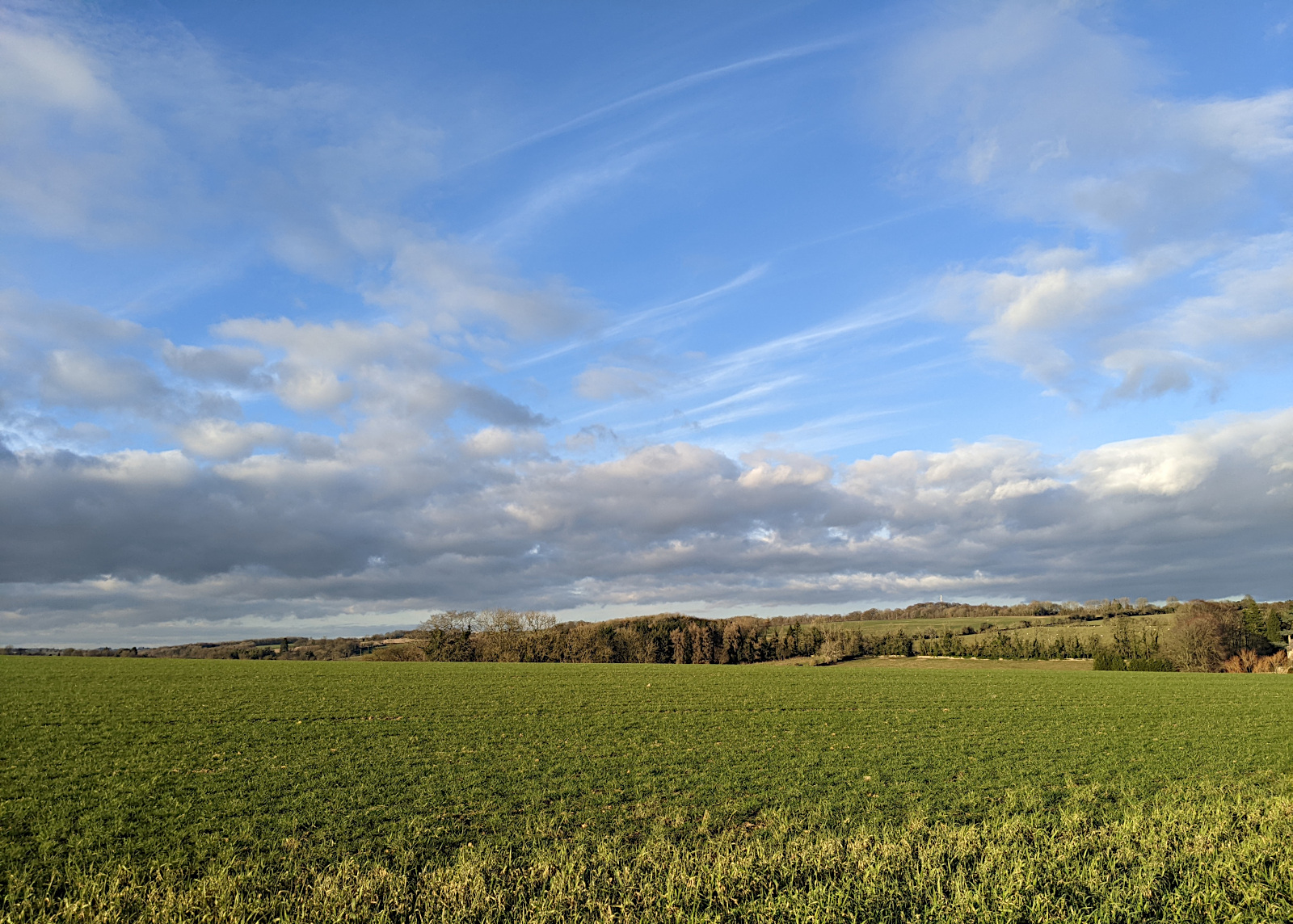
Traditional Cotswold fields were quite small, but as in many parts of the UK, farmers have removed hedgerows to combine small fields into larger ones that can be more efficiently cultivated, planted, and managed. Although this has some deleterious effects on wildlife and biodiversity, it does create some big skies. Here is an example.
This field is an easy walk west from Stratton where I live, along a permitted route along a stony track. I come out this way from time to time to enjoy the wide open spaces, to look at the nearby polo fields, to listen to the larks that nest here in considerable numbers, and to watch them rise higher and higher before plummeting down to land.
And one of the joys of these walks is the sky. Sometimes it’s grey and overcast, sometimes it’s blue from horizon to horizon, but sometimes it’s full of interesting cloud formations at various heights.
This wonderful world is full of beauty in big skies and also in tiny details. And it’s always different, no two days are alike.
When: 19th January 2024 Where: North-west of Cirencester
Favourites
For convenience, here’s a list of my favourite images:
If you enjoyed this or found it useful, please like, comment, and share below. (If you don’t see those links, click the article’s title above the main photo and they will appear.) Send a link to friends who might enjoy the article or benefit from it – Thanks! My material is free to reuse (see conditions), but a coffee is always welcome and encourages me to write more often!
The seeds are not released until spring, and all winter long, these white ‘beards’ can be seen in Cotswold hedges, adding a touch of interest in an otherwise rather drab time of year.
Image 100 – What’s in an image? Sometimes quite a lot, more than meets the eye. I’m posting an image every day or so.
Click to enlarge
These are the seeds of Clematis vitalba or ‘Old Man’s Beard’. This plant grows abundantly in Cotswold hedgerows, tolerating the limey soils in the region. In the summertime it doesn’t stand out, but if you know what to look for you can see its characteristic leaves and its stems winding through hedgerow plants and the lower branches of trees. The flowers are quite insignificant too, unlike the Clematis in garden centres, bred for large and showy flowers.
But wild Clematis comes into its own in the autumn; the seeds are hairy, as you can see, enabling them to blow away in the wind. If they land in a suitable spot they will germinate, put out a shoot with leaves, and try to find some support to climb up. But the seeds are not released until spring, and all winter long, these white ‘beards’ can be seen in Cotswold hedges, adding a touch of interest in an otherwise rather drab time of year.
The colourful garden Clematis cultivars were once propagated by grafting onto the wild seedlings as they were not easy to root as cuttings. But these days cuttings are the norm; with modern rooting hormones and high humidity conditions they root and grow very well indeed.
If you enjoyed this or found it useful, please like, comment, and share below. (If you don’t see those links, click the article’s title above the main photo and they will appear.) Send a link to friends who might enjoy the article or benefit from it – Thanks! My material is free to reuse (see conditions), but a coffee is always welcome and encourages me to write more often!
As the group size grows, the dynamics change; ten to twenty people will chat together (like the group in the photo), though sometimes there will be more than one conversation going on.
Image 99 – What’s in an image? Sometimes quite a lot, more than meets the eye. I’m posting an image every day or so.
Click to enlarge
People like to sit in the sun and chat. Social interaction is central to human nature with group sizes anywhere between two and a hundred; more than a hundred becomes a crowd in which there are some people who don’t know one another at all. And the larger the crowd, the more anonymous the experience becomes.
Group dynamics
A group of two or three has the potential to be quite intimate; close friends who trust one another may share things they wouldn’t discuss more widely.
As the group size grows, the dynamics change; ten to twenty people will chat together (like the group in the photo), though sometimes there will be more than one conversation going on. Generally most people will have something to say; the intimacy is lost, but everyone has a chance to join in.
As group size increases beyond twenty, to say thirty or forty, it’s no longer possible for everyone to hear. If it’s an informal gathering, people will break into smaller groups to chat and often there will be a few left out, not engaging with others at all. Or if it’s a more formal gathering a chairperson may manage things and individuals will take turns to make their points.
Sharing food and drink
The people in the photo are eating and drinking together, this is helpful in getting a group to relax. Here, things are completely informal, but in more formal groups of this size or larger it may help to provide tea and coffee, or even a buffet. This relaxes everyone.
Right-sizing
If you are planning a group meeting for a specific purpose it’s beneficial to consider group size and how it affects things. Often we do this automatically, these group dynamics are so familiar that we don’t need to make any special effort to get it right. Sometimes it’s useful to break a big group up into smaller ones, sitting people at tables of six or so to make sure everyone is able to talk and interact while also being part of something bigger (perhaps with a speaker at the front from time to time). This enables a focus/discuss/focus/discuss dynamic which can be very useful.
When: 21st June 2024 Where: Weston-super-Mare, North Somerset, England
Favourites
For convenience, here’s a list of my favourite images:
If you enjoyed this or found it useful, please like, comment, and share below. (If you don’t see those links, click the article’s title above the main photo and they will appear.) Send a link to friends who might enjoy the article or benefit from it – Thanks! My material is free to reuse (see conditions), but a coffee is always welcome and encourages me to write more often!
If you enjoyed this or found it useful, please like, comment, and share below. (If you don’t see those links, click the article’s title above the main photo and they will appear.) Send a link to friends who might enjoy the article or benefit from it – Thanks! My material is free to reuse (see conditions), but a coffee is always welcome and encourages me to write more often!
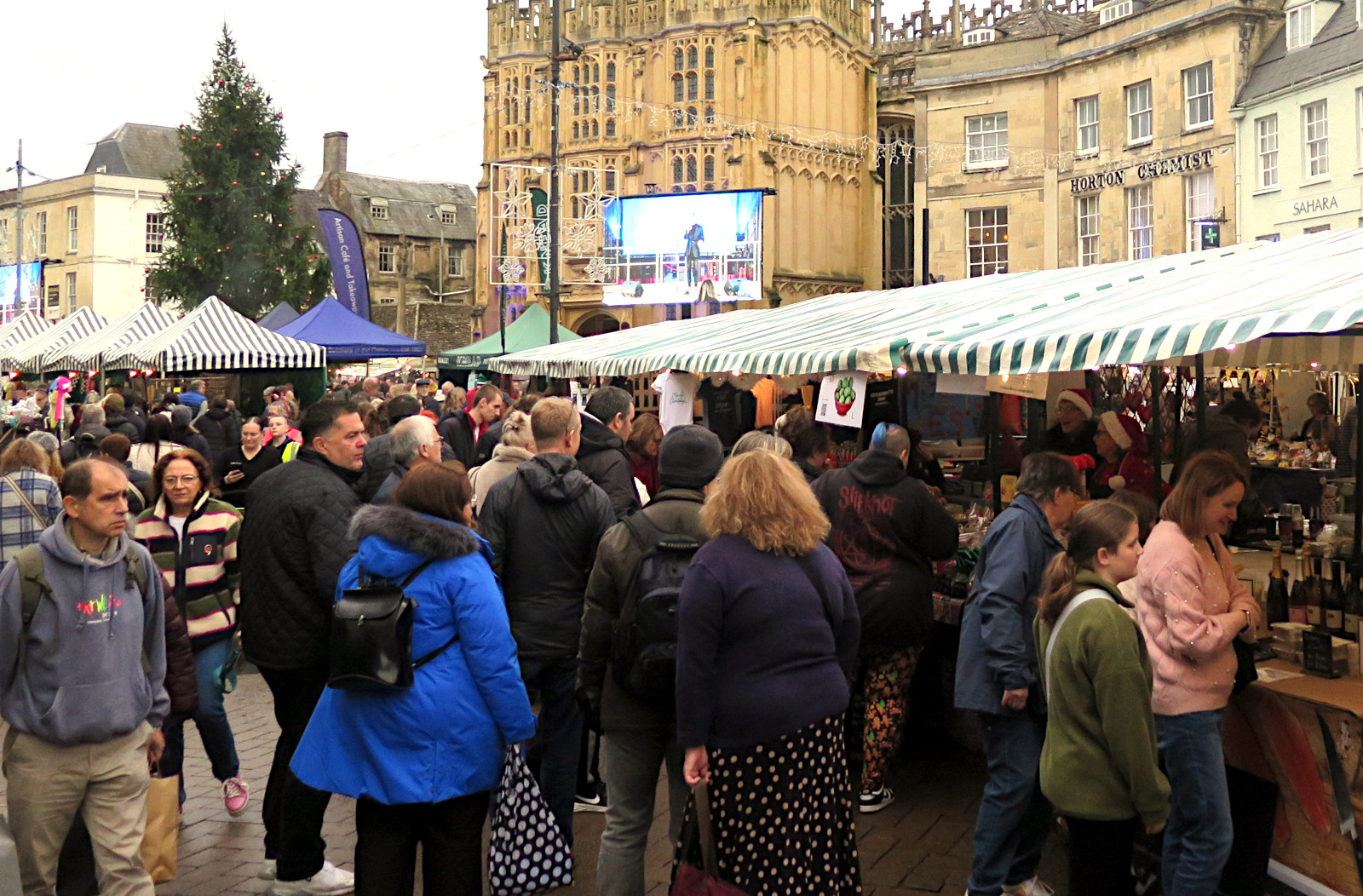
Everything imaginable is on sale, delicious foods, jigsaws, Cotswold beers, British and French cheeses, hand-crafted items from socks to coasters, picture frames, baskets, and much, much more.
Image 97 – What’s in an image? Sometimes quite a lot, more than meets the eye. I’m posting an image every day or so.
This is Cirencester’s annual Advent Market, when streets in the centre of the town are closed to traffic for two days and market stalls appear in place of the traffic. Everything imaginable is on sale, delicious foods, jigsaws, Cotswold beers, British and French cheeses, hand-crafted items from socks to coasters, picture frames, baskets, and much, much more. There’s live music and it’s the time of year when the town’s Christmas lights are turned on for the first time.
Donna and I walked into town to see what was happening, we had sausage sandwiches and coffees for lunch at Hugh’s first, then walked around to check out the market stalls.
People love events like this, clearly. It was heaving with far more people than we usually see in town. All ages were represented, people came in from the local villages as well and it was so packed that it was sometimes difficult to see what was on display.
Here’s a short video clip to give you a sense of the atmosphere at the Advent Market. I had to hunt out a less crowded area on the fringe to record this!
When: 30th November 2024 Where: Cirencester Market Place
If you enjoyed this or found it useful, please like, comment, and share below. (If you don’t see those links, click the article’s title above the main photo and they will appear.) Send a link to friends who might enjoy the article or benefit from it – Thanks! My material is free to reuse (see conditions), but a coffee is always welcome and encourages me to write more often!
Is a rose with raindrops on its petals any less beautiful than a rose with dry petals? No, in fact many would say it looks even better with a few raindrops on it.
Image 96 – What’s in an image? Sometimes quite a lot, more than meets the eye. I’m posting an image every day or so.
Click to enlarge
‘What’s in a name? That which we call a rose, By any other name would smell as sweet‘
William Shakespeare, Romeo and Juliet
Juliet spoke these words of Romeo, his surname was a practical issue between rival families, but she loved him regardless.
Is a rose with raindrops on its petals any less beautiful than a rose with dry petals? No, in fact many would say it looks even better with a few raindrops on it. They emphasise its freshness, and they highlight its apparent fragility while revealing an unexpected robustness.
A rose in the rain is a lovely thing! I hope you like this one; I just had to take a photo. The cultivar is ‘Queen of Sweden’ and it was released in 2004 by David Austin.
When: 8th September 2024 Where: Anglesey Abbey, Cambridgeshire, England
If you enjoyed this or found it useful, please like, comment, and share below. (If you don’t see those links, click the article’s title above the main photo and they will appear.) Send a link to friends who might enjoy the article or benefit from it – Thanks! My material is free to reuse (see conditions), but a coffee is always welcome and encourages me to write more often!















 Journeys of Heart and Mind

,_Cisco_San_Jose_Main_Campus.jpg)


