What’s in an image? Sometimes quite a lot, more than meets the eye. I’m posting an image every few days.
Click to enlarge
Here are two flowering plants with colours on opposite sides of the colour wheel. They’re very distant relatives; the yellow Narcissus (daffodil) is a monocot, the purply-blue Streptocarpus is a dicot. You can’t get much further apart in the family tree of flowering plants, but they look well together.
These two plants simply could not survive in one another’s home territory. The Narcissus needs plenty of moisture, produces leaves in late winter, is not troubled by frost, and flowers in the springtime. It also appreciates some bright sunshine.. Streptocarpus cannot take any degree of frost at all, and is touchy about water. Not enough and it will wilt and die, too much and… wait for it… It will wilt and die! It likes the soil to dry out completely and then have a real drenching, but do not water it again until the soil is really dry. It likes shade or partial shade, but not full sunshine.
Adaptation
The fact that these two plants like such different conditions is nothing to do with the fact they are very distant relatives. All plants growing in the wild are well adapted to the soil type, climate, other plants and animals of the places they inhabit. Natural selection over many, many generations will ensure that this is so. It’s only the survivors that will have a chance to produce seeds. By definition, the next generation comes only from the plants that survived the current generation. Survivors thrive; the rest die out.
Climate change
And this in turn is one of the challenges life faces in the changing climate we are creating. The climate has changed dramatically in the past, but it has always happened slowly, usually taking tens of thousands of years to shift from ice age to interglacial, or from desert to semi-desert to grassland to forest. A species may seem to move north or south, east or west, remaining in the climate zone that suits it best. But what is actually happening is that as a climate zone shifts geographically, conditions become less suitable in one area and more hospitable in another. Perhaps the species manages to survive a little further north than before but struggles and dies on the southern edge of its old range.
This process takes time, but the global warming trends we see due to greenhouse gas releases are many times faster than any natural climate change. Populations cannot respond fast enough under such circumstances; they go into decline and die out – the species may then become extinct, gone forever.
If you enjoyed this or found it useful, please like, comment, and share below. (If you don’t see those links, click the article’s title above the main photo and they will appear.) Send a link to friends who might enjoy the article or benefit from it – Thanks! My material is free to reuse (see conditions), but a coffee is always welcome and encourages me to write more often!
I was allowed to return after fifteen minutes to find a tired Mum and a sleeping daughter. They were able to come home a few days later. How exciting to be no longer just a married couple, but now a young family! (1975)
Dec 2024 (3 months before publishing this article)
I’ve decided to add one more section here to further extend the seasonal interest – so welcome to what happened three months ago. If it becomes onerous or not interesting enough, I might drop it again. Consider it experimental.
Click to enlarge
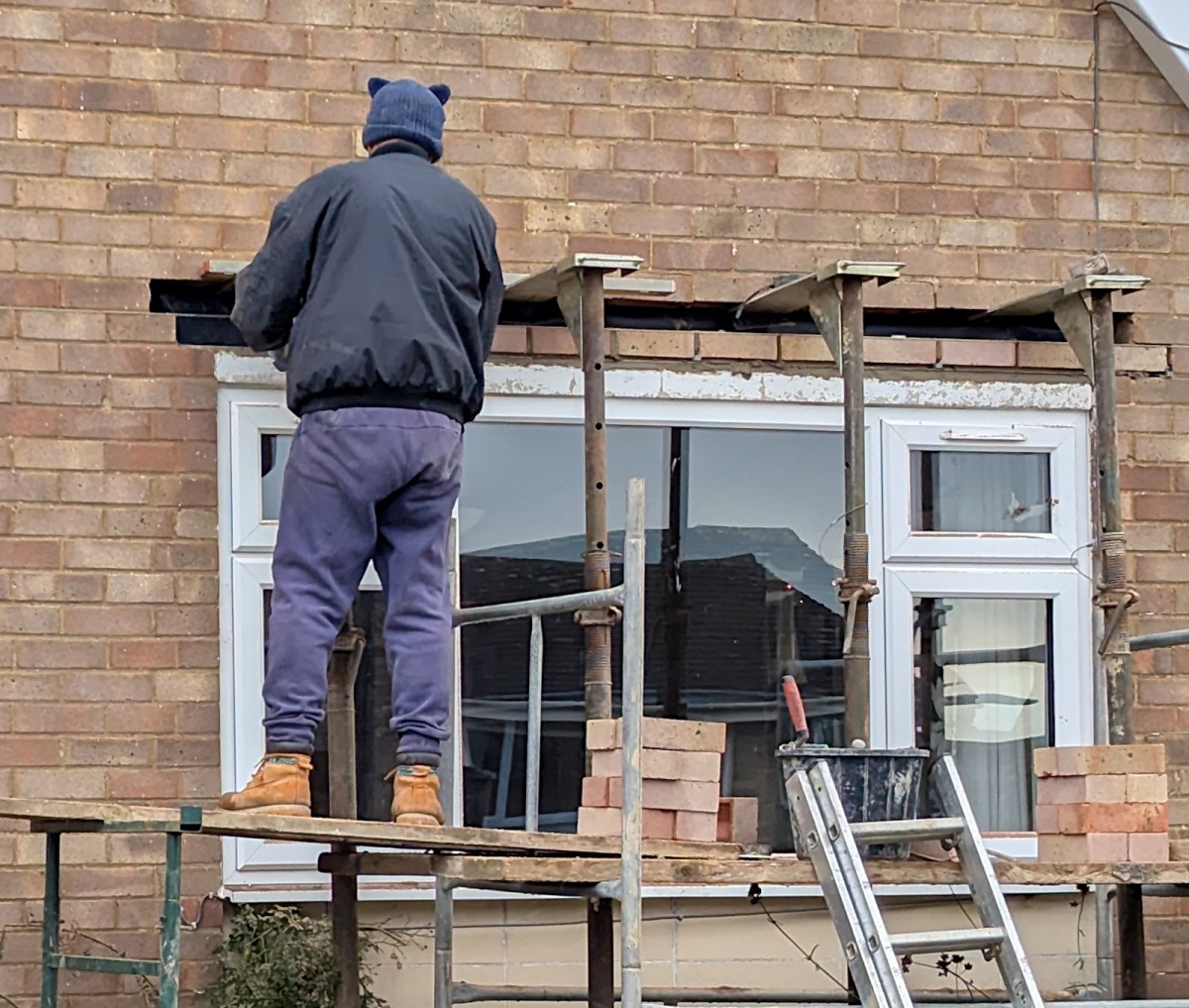
We received designs for our enlarged bedroom window with opening panes, the very narrow existing window was too small for an openable section and in midsummer it got too hot; we’d like to let in some fresh air while we’re asleep. Work on the house improvements and repairs started this month as well. We were preparing for a heat-pump installation on 16th, but that was delayed until January 27th so we had to survive a lack of central heating for a little longer than we’d hoped.
I collected my season’s greetings cards from the printer and wrote and posted some of them, I hand delivered the rest. Donna ran a 10 km race at Westonbirt on 15th, her longest run so far (it was a gallant effort, a run/walk, as she needs more training to do that distance without breaks along the way).
We visited York on 21st and 22nd, to spend time with my daughters and our four grandchildren. It’s always good to see them, but it’s quite a long journey and we don’t get there as often as we’d like.
JHM: I posted 17 haiku on COVID-19; and a forward look on the war in Ukraine. World events: Bashar al-Assad fled Damascus after being overthrown; and the Parker Solar Probe broke the record for the closest pass of the Sun.
On 7th, we drove down to St Neots where we have many friends, including Kevin. He had married Lariana who we also know, a few weeks earlier in South Africa, and it was wonderful to be there for the UK celebration and to meet Lariana’s son for the first time. What a lovely occasion!
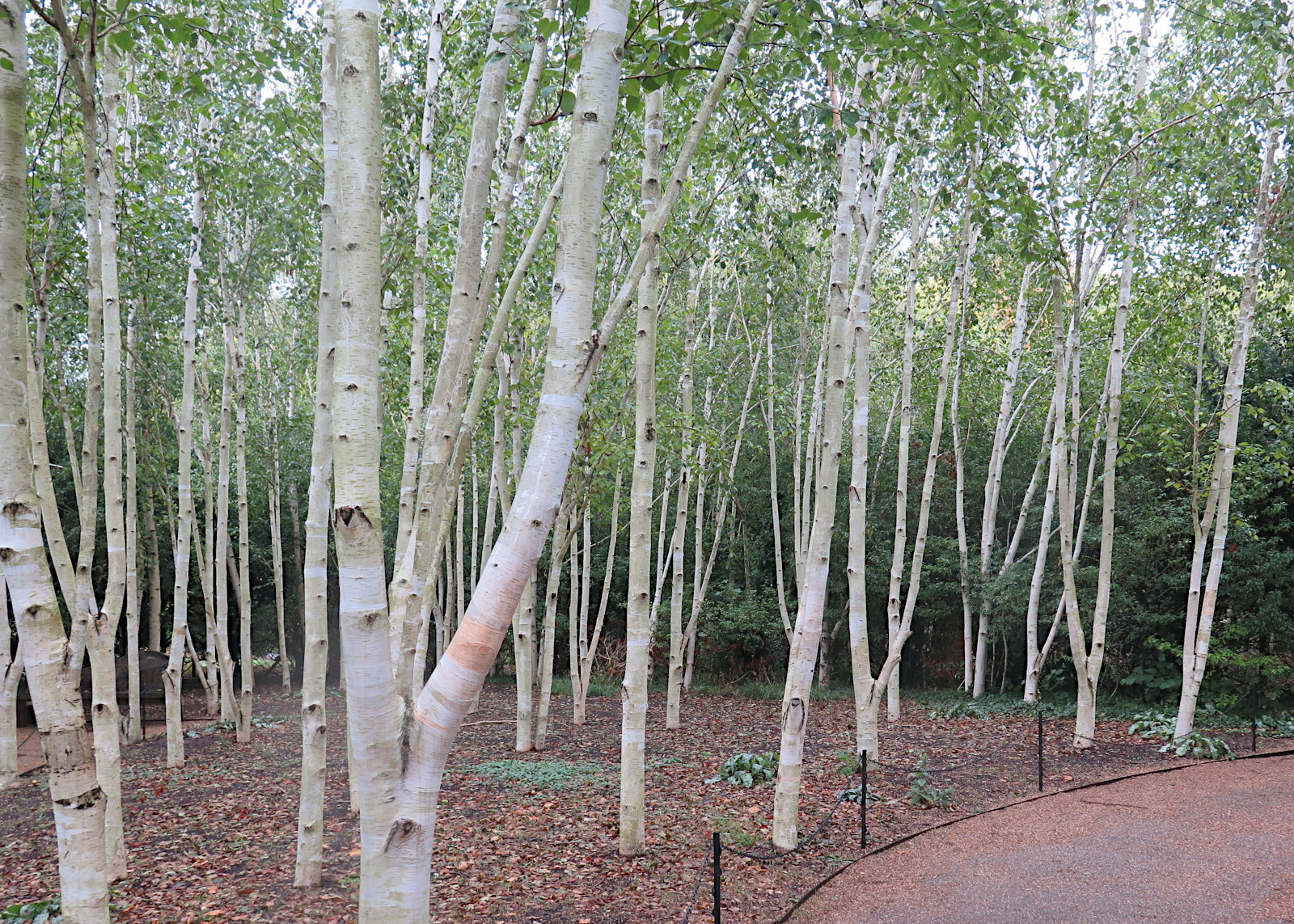
We stayed overnight and spent the following morning at Anglesey Abbey, a National Trust house and garden that we love, but have not been able to visit for some years. The photo shows some silver birch trees growing alongside Anglesey’s Winter Walk – so beautiful. In the spring, there’s a dense cover of maroon tulips beneath these trees.
And finally we were able to spend more time with Kevin and Lariana before driving home to Cirencester.
I bought a refurbished Pixel 7 phone to replace my old Pixel 3. I was very pleased with it once I’d transferred all my data across and got everything arranged to my satisfaction.
I completed the task of transcribing Dad’s diaries and continued scanning old 35 mm films.
Highlights of the month for me were the sinking of another Russian ship by Ukrainian drone boats, the third flight of Starship, and a visit to The Newt and its Roman villa reconstruction (see photo above).
This month I watched live video as NASA astronauts launched to the International Space Station on SpaceX Crew-6, Isobel’s brother Will died in Glasgow after a long illness, and Greenshop Solar sent an engineer to survey our property for solar panels. We had a day in Bristol on 18th when we visited the old docks area and enjoyed a stroll down Park Street, and we drove to Weston on 31st and stayed for a week, so more on that in the April Blast from the past.
We walked in Cirencester Park on a dry, sunny but cold day. The photo shows one of the sculptures that was on display there and on the far right, the Broad Ride leads down the hill into Cirencester. You can see the Parish Church Tower at the far end. The Park is a lovely feature of the town, and because some of the local footpaths from home lead into the park much further west, it means Broad Ride and some of the side trails are alternative ways to walk into town and back.
We were helping to look after Donna’s Dad, Tony. He was suffering from Parkinson’s and the dementia that typically comes with it when it’s fairly advanced. Sometimes he worried about things that he was imagining, but playing YouTubes on the TV distracted him most wonderfully if they were on his favourite topics – wild birds, motor bikes, places he knows and so on.
COVID-19 took off in the UK in March, Donna and I were taking precautions early in the month, but by the end of March government lockdowns were under way as well. It seemed a great blessing that Tony was at home and, as carers, we could visit as part of the household. Otherwise Tony would have had to go into care as Isobel could no longer manage on her own, and then it would have become impossible to visit him. Public reaction to COVID-19 was sometimes odd, there was a run on loo rolls in the shops, for example! Many supermarket shelves became empty.
My new computer arrived, a System 76 Gazelle laptop running Ubuntu; Donna and I celebrated our 22nd wedding anniversary, and by the end of the month we were beginning to discover what living with COVID-19 was going to be like.
World events: The WHO declared COVID-19 to be a pandemic; and by 24th the United Kingdom was in lockdown.
On 14th March I drove up to Thorganby for the day and returned in the evening. It was great to see the family and share lunch with them. The photo was taken at the playing field on the southern edge of the village.
In St Neots I continued meeting with several different groups of friends. Mo had lost his job and they had not even paid him for the hours he’d done. Sue was worried about not having been tithing, but I pointed out that we’re a royal priesthood, so we should be receiving tithes and taxes, not paying them! John was understanding more and more about Jesus’ teaching on how to live life and how it’s about people, not organisations.
Eclipse in cloud
There was a partial solar eclipse on 20th, and I sponsored Debbie who was eating on £1/day for a week.
JHM: I wrote about watching a potter; and about pictures and music. World events: Ancient cities including Nimrud were destroyed by ISIS; and the Dawn probe orbited Ceres, the first visit to a dwarf planet.
I retired from Unilever, my last day was on 26th when there was a leaving ‘do’ at lunchtime, the photo shows my boss, Pete, chuckling. He was probably about to make a funny remark at my expense! I’d taken a lot of photos earlier in the month for memories of the Colworth Research site, it was a grand old house with landscaped gardens and felt a bit like working on a National Trust property!
Beth, Paz and Meredith visited on 31st, perhaps on their way south from York for some time with Paz’s parents in Hastings. St Neots is about half way so it made a good place to break the journey.
I was working for Unilever Research, helping with web development tasks as part of the Knowledge Systems Group (KSG). The photo was taken from my desk, probably on my Nokia phone. This building would later be demolished (see Nov 2009).
World events: China passed a law to prevent Taiwan becoming independent; and the dwarf planet Makemake was discovered.
The garden wall at the front of the house was cracked and leaning, and also narrowed the entrance making it harder to park our two cars side-by-side. So I knocked it down – goodbye wall! The car you can see is my Ford Sierra, bought at Harrison Ford in Weston-super-Mare. We always referred to him as ‘Harry’.
This month we bought tiles for our planned new kitchen, Debbie had a birthday party in Bristol, Beth was working at Axbridge Court and writing up her archaeology project, and I was at several Unilever computing meetings and a three day Java conference in London.
World events: Sony released the Playstation 2; and Vladimir Putin was elected President of Russia.
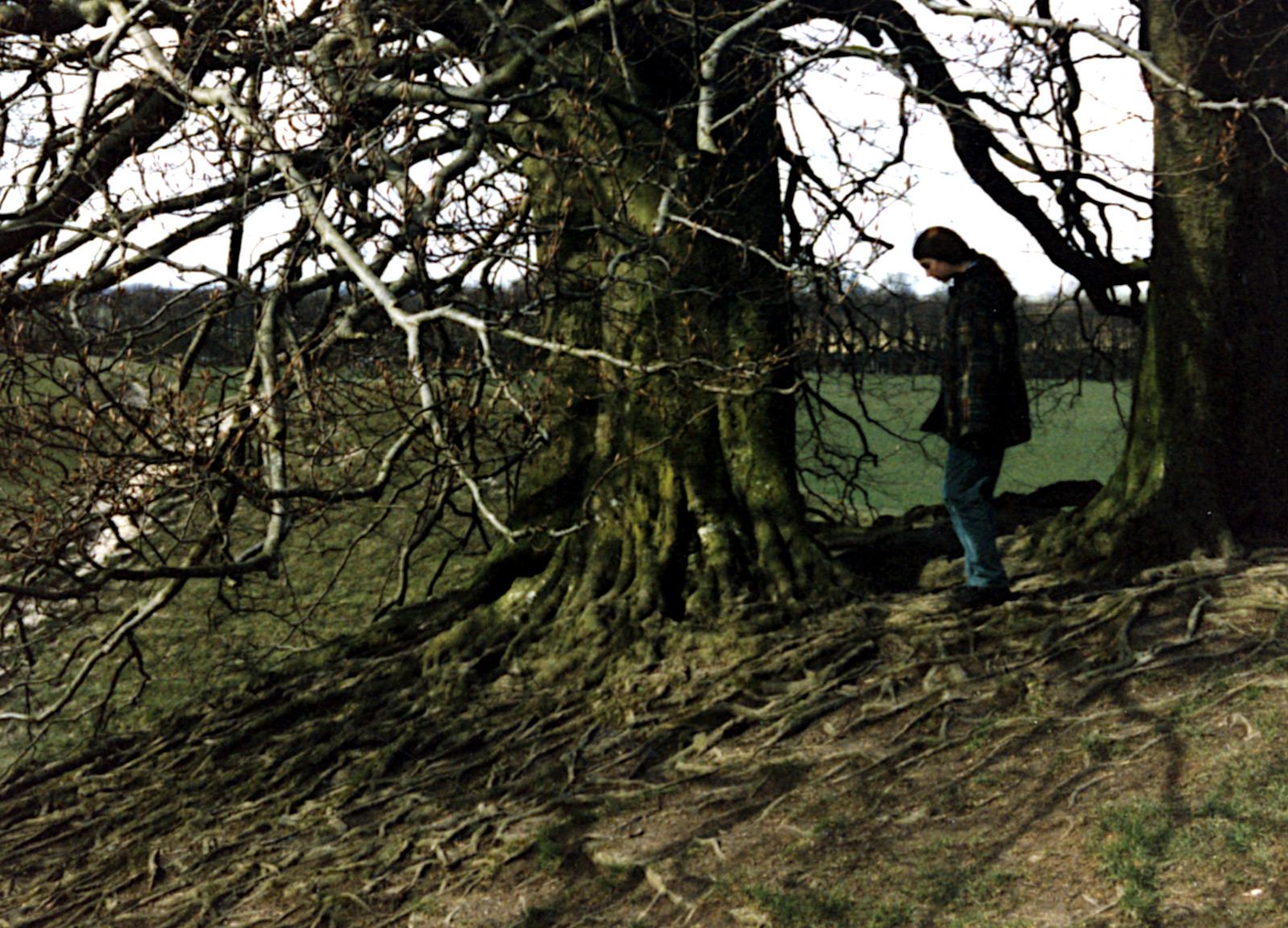
Judy and the girls did some trips together while I was at work, the photo shows Beth on a visit to Avebury.
Although she was still very fit, Judy couldn’t really handle the pace or the stress of teaching and had given up her job. The staff at Cotham Grammar School had made a retirement collection and given the money to her, specifically to visit Paris which she had always wanted to do.
We flew out from Lulsgate and stayed in a tiny, backstreet hotel. The room had a restricted view onto an inner courtyard, but we spent very little time there and were out and about in the city a great deal. One day, we climbed up the first two stages of the Eiffel Tower and I was very impressed that Judy managed to make it all the way quite easily. The weather was perfect, three sunny, warm days. On 23rd we sent a postcard of the Arc de Triomphe to my Mum and Dad in Cirencester.
There was some serious storm damage along the sea-front in Clevedon, we went to take a look and were suitably impressed. On 16th Debbie and Beth performed at the Colston Hall with the Nailsea orchestra.
And on 25th we spent the morning in Charlton Kings with Judy’s Mum and Dad, and the afternoon with mine in Cirencester at Churnside. Cindy came too with little Sebastian.
World events: Police sealed off Brixton after poll tax protests; and Imelda Marcos went on trial.
We were living at 22 Rectory Drive in Yatton, between Bristol and Weston-super-Mare. Debbie had her tenth birthday and Beth was approaching seven.
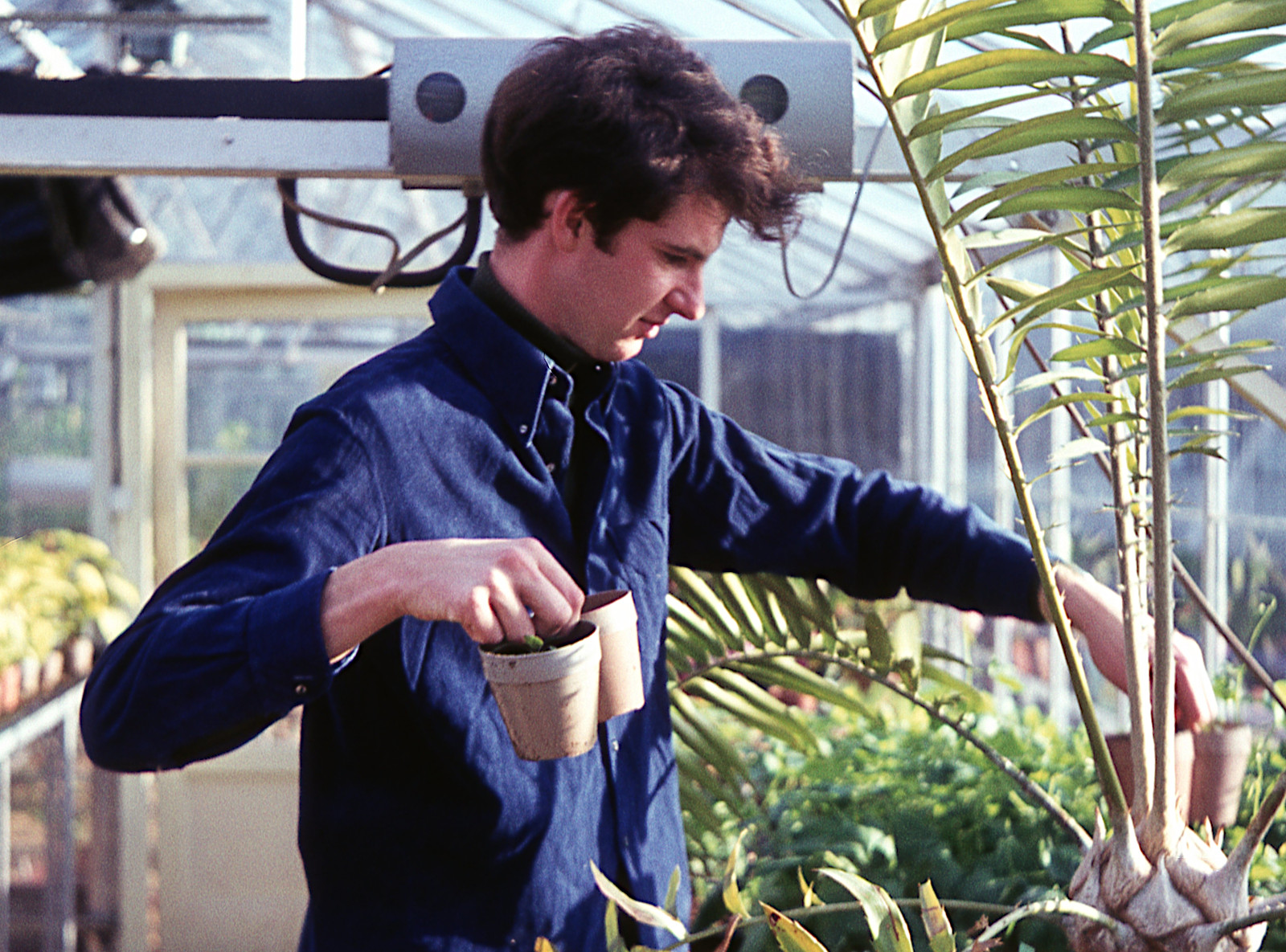
I was working for the Plant Science Division at Long Ashton Research Station, though to be honest the project I’d suggested was not going very well. I don’t think anyone was surprised, it was ambitious and tricky to achieve; I needed to cut frozen sections, treat them with an antibody attached to a fluorescent marker to localise the plant hormone gibberellin, and then examine them in the frozen state.
World events: The GNU Manifesto for a free computer operating system was published; and Mikhail Gorbachev became leader of the Soviet Union..
Beth was approaching two-years old, and Debbie was five on 12th. This shot was taken in the lounge of our house in Rectory Drive, Yatton. I’ve cropped it wide so you can see some of the girl’s toys as well as some details in the kitchen beyond. Judy was at home with the girls at this time, but considering teaching again as soon as Beth was old enough. I was working at Long Ashton Research Station.
Most of our local shopping was done in Yatton’s Precinct, a small paved square surrounded by small shops and a compact Somerfield supermarket with a small car park nearby. This was an easy walk from home and had all the essentials, we banked at NatWest on the corner there, bought bread at Pullins Bakery on the High Street, and there was a good hardware shop at the other end of the village.
Debbie was born on 12th March at Bristol Maternity Hospital which was in Queen Victoria House, Redland Hill at that time, a large, red brick building. I was with Judy almost up to the birth, but she was getting exhausted and it was decided there should a surgical intervention to speed things up and I was politely told to leave.
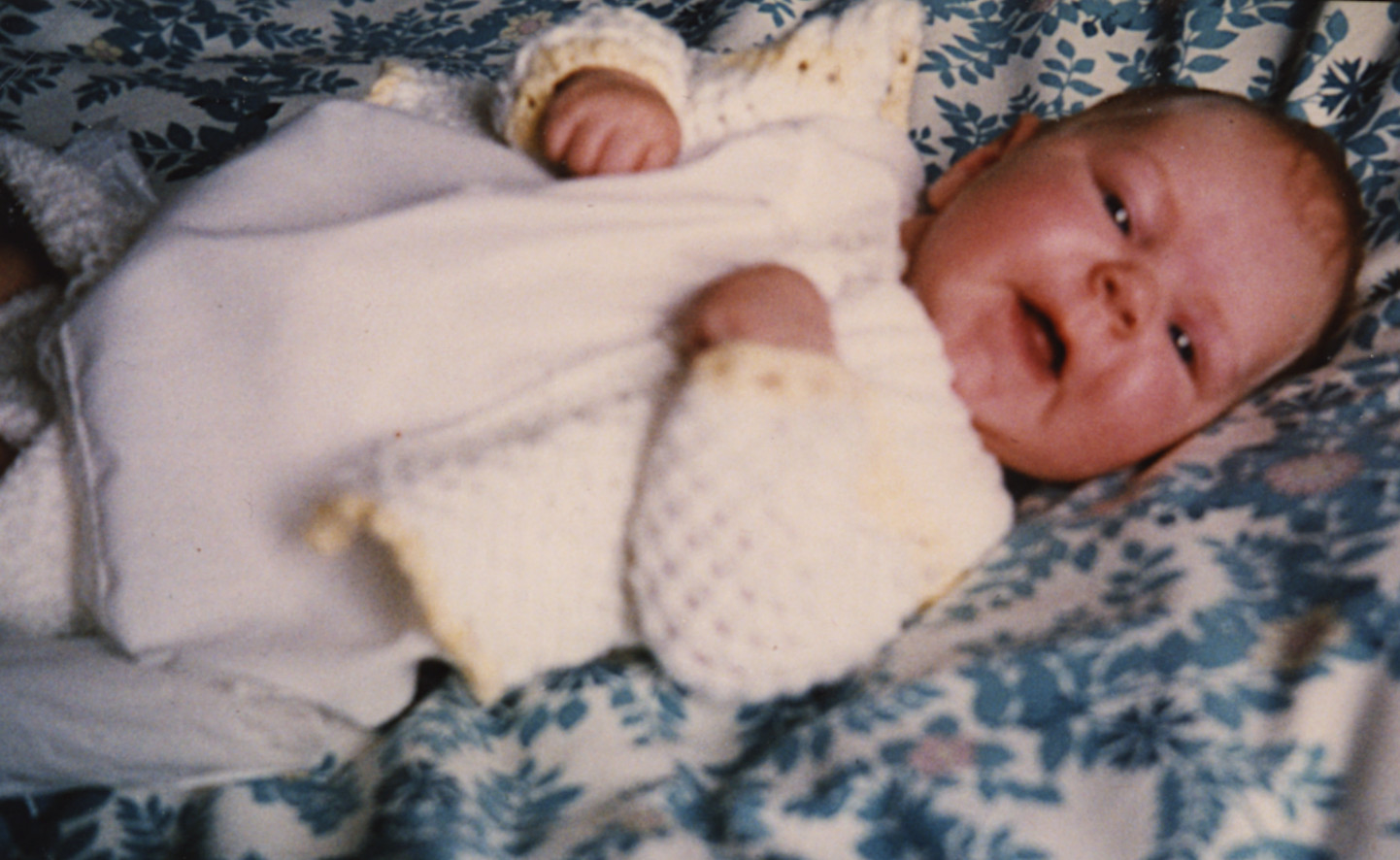
I was allowed to return after fifteen minutes to find a tired Mum and a sleeping daughter. They were able to come home a few days later. How exciting to be no longer just a married couple, but now a young family! The photo is the earliest I could find, but Debbie was clearly a couple of months old by then.
On 28th we travelled to Lincolnshire with Judy’s Mum and Dad for her brother, Frank’s, wedding to Kathy the following day. This was Debbie’s first journey – she probably slept most of the way!
On 17th March I was still collecting data from my final year project, but I’d already written up the results of three trials and it was too late to fully analyse the fourth trial as the project report needed to be submitted.
I was sharing ‘digs’ on Widcombe Hill with my friend Pete, we had a shared room upstairs in the home of Colonel and Mrs Boss. Pete was having treatment for a tuberculosis infection in a kidney, he’d had part of one kidney removed and was now taking tablets daily and needing regular injections as well. Fortunately Mrs Boss was a nurse and was able to administer the injections.
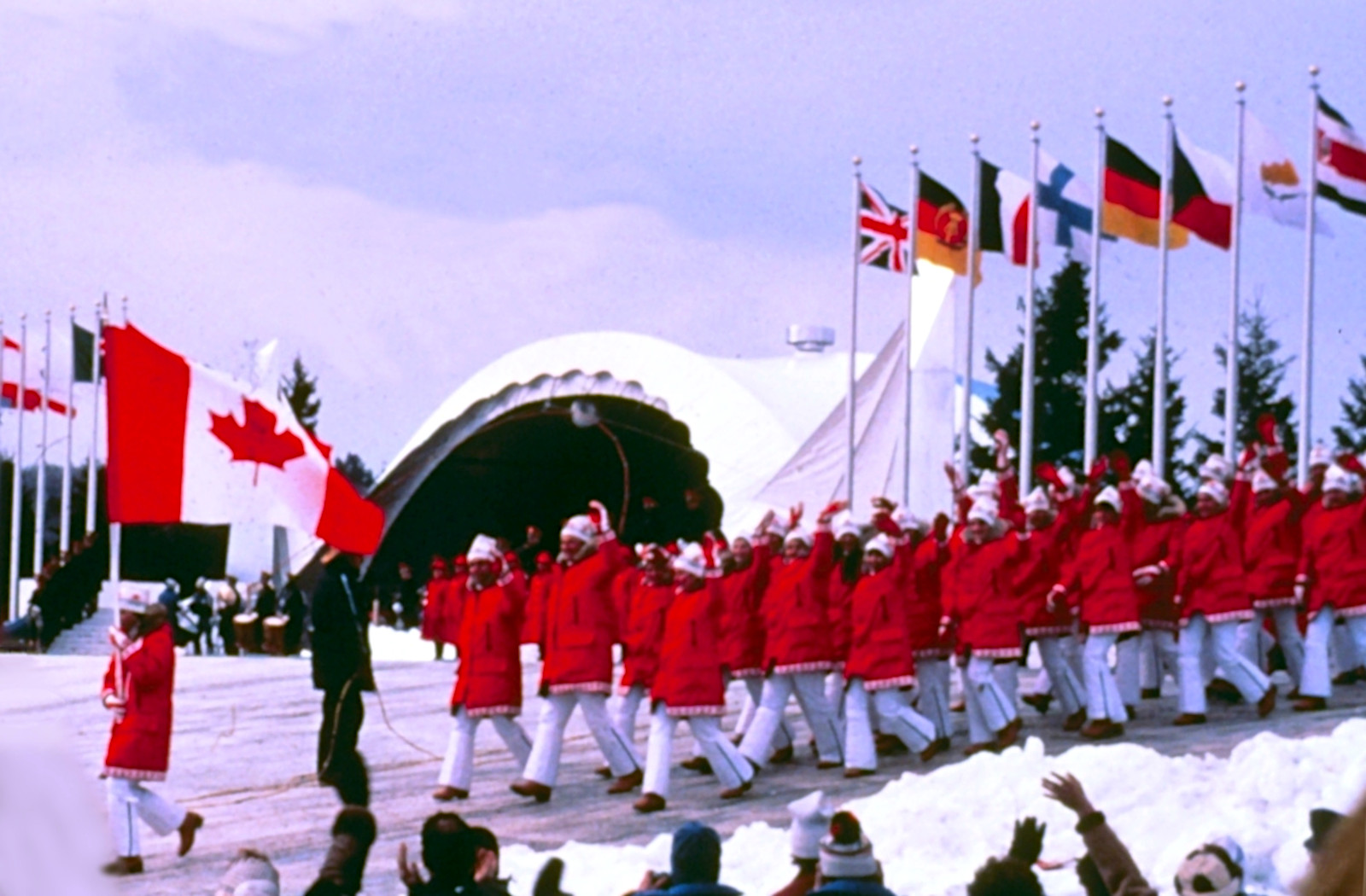
There were deep snow-drifts at the beginning of the month. Around 13th of March I was on a Lower Sixth day trip to London. We visited the GPO Tower and took the lift up to the rotating restaurant at the top (it was open to the public in those days).
Towards the end of the month I went on a week’s biology field course at Brantwood House overlooking Coniston Water, returning in April. We stayed in the old home of John Ruskin; it’s no longer a field centre, but is managed today by the National Trust, but back then we had the run of the place!
It may have been around this time we moved from the Beeches Estate to 37 Victoria Road (Churnside), previously my grandparents home. Parts of the house were always cold in the winter, particularly the hall and the kitchen, I remember. Dad had two paraffin heaters to help keep the place warmer, and this is the user manual for the Aladdin heater that was usually in the kitchen. In March it was only lit on particularly cold days.
I was in my second year at Querns School. On one occasion, I don’t know when, I clearly remember being dropped off in the morning by my Grandpa’s chauffeur (Cooper). This happened sometimes, though usually Mum or Dad would take me to school; when I was older I used to ride my bike instead. Dad had given me a note and told me to give it to Mr Cooper and my six-year-old mind told me this was terribly important.
I jumped out of the car and thanked Cooper, but completely forgot the note. I burst into tears and ran back towards the car yelling, ‘Mr Cooper, Mr Cooper’. The car had already started to move, but he heard me, stopped, and I gave him the note. Later, Dad told me it wasn’t that important and I shouldn’t have got so upset about it. He told me that Cooper had mentioned that I ‘took on so’.
On 10th March, all BBC medium wave broadcasts changed to new, internationally agreed wavelengths. This tuning diagram was printed in the Radio Times and Dad kept it as a guide to future listening.
Mum and Dad had a valve radio in a brown, wood effect, bakelite case (I still have it). Although I don’t remember it from 1950, I do remember ‘Listen with Mother’, probably from 1952 or ’53 and later. I also remember ‘Uncle Mac’ broadcasting children’s music selections. And in 1957, when I was nine, I remember hearing the ‘beeps’ from Sputnik picked up by the radio telescope at Jodrell Bank. All of this on the same little radio. But I was only twenty months when the frequencies changed.
World events: The first VW Microbus rolled off the assembly line; and Egypt demanded that Britain remove all its troops from the Suez Canal.
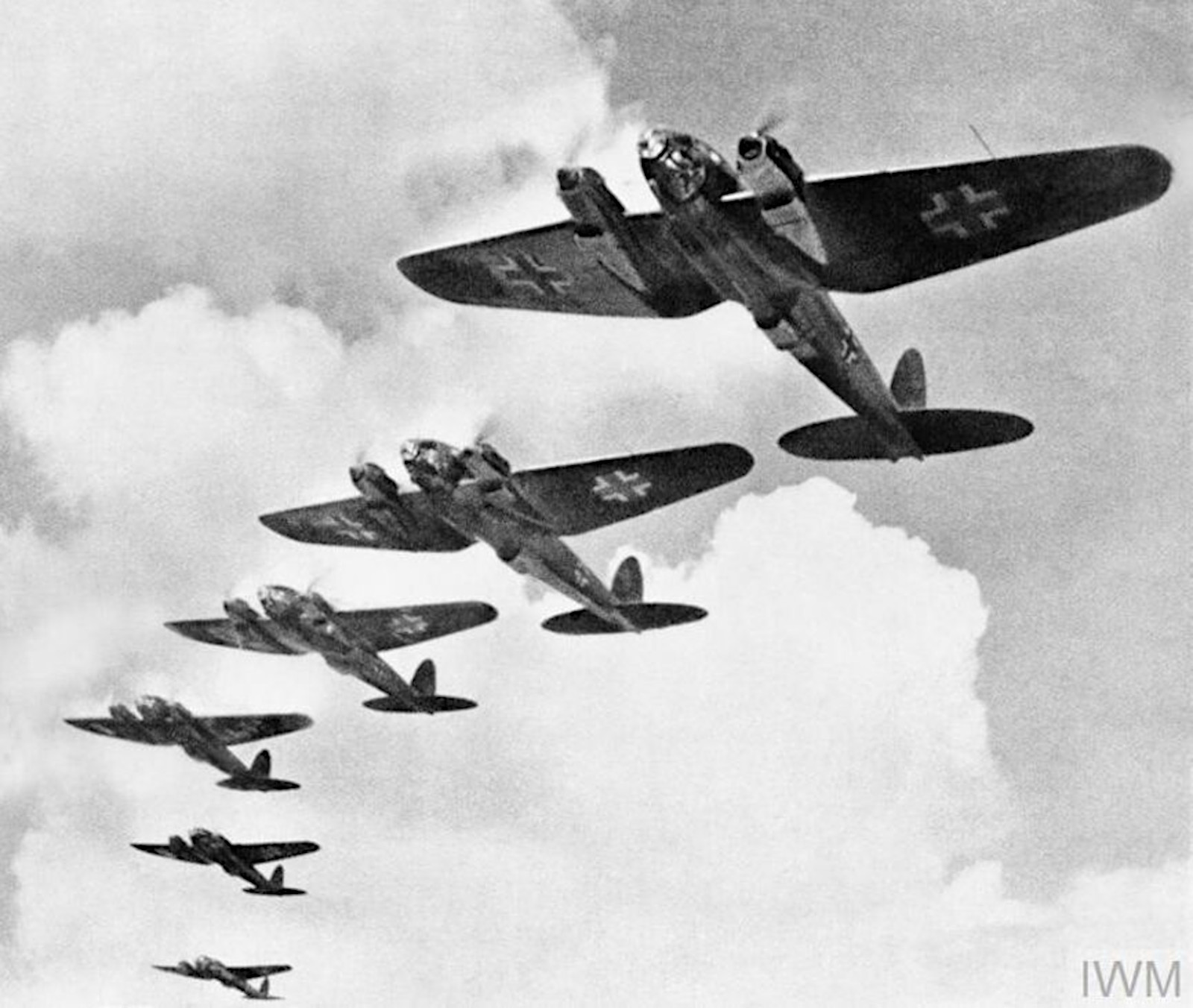
The 4th, 17th and 20th are noted in Dad’s diary as busy nights with ‘much hostile activity’ in the area covered by their radar equipment. On 4th he was ‘up all night’, and on 20th a German Ju 88 was ‘knocked down’ by a British fighter.There were lots of letters to and from Lilias during this month, and also some from Dad’s friend Joe Speakman.
On 22nd Dad went down to Alford in an RAF truck and caught a morning train to Kings Cross. After lunch he caught the 2.30 from St Pancras to Bedford and changed for Cardington with some service friends. He played piano in the NAAFI and the following day had some trade tests at Cardington and was found wanting in maths. The image shows a distant view of Cardington as it might have looked when Dad was there.
Then, on 28th he was back in Cirencester on leave meeting old friends and family, driving Guv (his father) around the Jefferies’ nurseries in Siddington, Somerford Keynes and Watermoor.
Last month (use the Feb 1940 link below) I described the ground floor of the John Jefferies shop at 2 Castle Street in 1940 (my memories are from the 1950s, but little would have changed since 1940). This time I’ll describe an office on the first floor.
A wooden staircase ran up from the ground floor, heading south, then north again with a small landing half way up. Turning right from the top of these stairs, then through the door on the left would take you into my Grandpa’s office. His full name was Edward Arthur Jefferies, know as ‘Ted’ to my Granny Norah (‘Nor’), or ‘Guv’ to her and to many other members of the family. He was the head of the business at the time, having taken over when his uncle William Jefferies retired or died.
Grandpa’s office had a window overlooking the Market Place and Cricklade Street. The window was at an angle on the corner of the building, just above the customer entrance which also came out at an angle on the corner. There was a large streetlight just outside the window, which always intrigued me. (The photo taken in 1915 shows Jefferies shop on the right, you can see the angled entrance and office window above. The pavement below was always known as ‘Jefferies Corner’).
Grandpa had a wooden desk with, I think, a leather insert and an expanse of blotting paper. He also had a set of rubber stamps hanging from a sort of roundabout, and an ink pad. He would always let me sit on his lap and use the stamps on some scrap paper. And one stamp had adjustable sections that could be turned to stamp the correct date, though I was never allowed to alter those.
More about the first floor next time…
World events: The Soviet Union and Finland signed a peace treaty; and Hitler and Mussolini met at the Brenner Pass to celebrate their pact.
If you enjoyed this or found it useful, please like, comment, and share below. (If you don’t see those links, click the article’s title above the main photo and they will appear.) Send a link to friends who might enjoy the article or benefit from it – Thanks! My material is free to reuse (see conditions), but a coffee is always welcome and encourages me to write more often!
Beth was 1¾ this month, and Debbie was almost 5-years-old. We were living at 22 Rectory Drive in Yatton at that time and Debbie would have settled in at the Infants School and made a fair number of friends. (1980)
August 2024 (6 months before publishing this article)
Click to enlarge
We were on our annual family holiday, this time at Portrush in Northern Ireland. On 5th of the month we drove to the Giant’s Causeway and spent a very interesting time looking around. Then we visited the Carrick-a-Rede rope bridge. This was quite an experience as well.
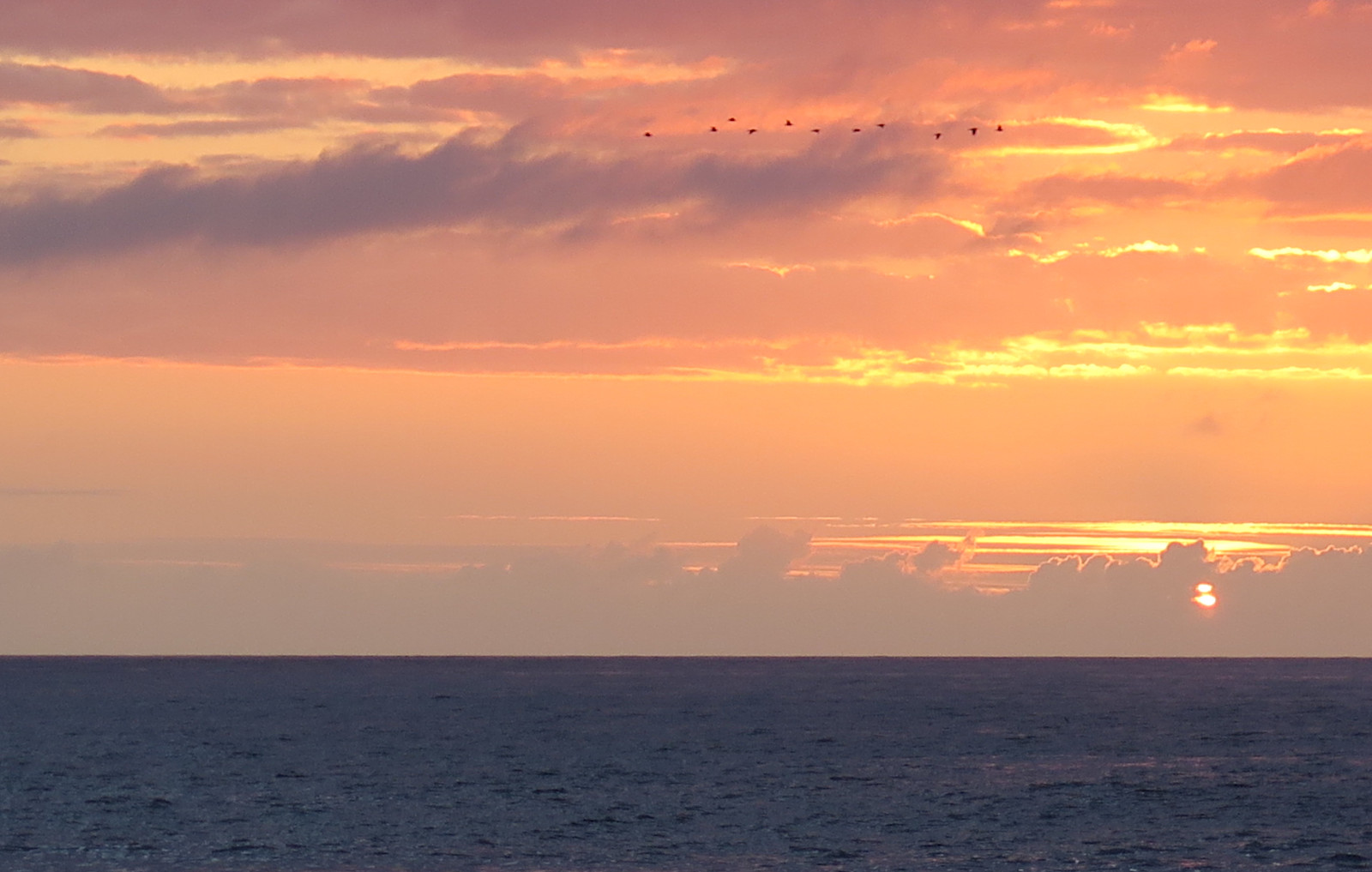
On the evening of 5th, Paz cooked steak for those who wanted it, and later I strolled around the harbour. The sunset was magnificent and I took a lot of photos, including the view of birds heading home as the sun sets.
Gas mains were being replaced in Cirencester. A team was going around, street by street, digging up the roads and pavements and fitting large bore, yellow, plastic pipes – where possible passing them through the old metal pipework they are replacing. Disruption was considerable for a week or two until the work was done and the team moved to a another street. Each property lost gas for only a few hours. Overall the work continued for months.
Cavendish House in Cheltenham closed down in February. Shopping has moved on these days and department stores are dying. I remember going to Cavendish house with my parents as a child, with my first wife before and after we were married, and noting that it was still trading much more recently – but now, it’s gone!
And we visited ‘Nature in Art‘ at Twigworth this month, too; a lovely old house with art exhibits indoors, but also many interesting installations in the gardens.
We drove up to York for a visit and to watch the Fulford School musical, ‘Beauty and the Beast’. Meredith was the beast, Verity played the part of Belle’s father, and Sara was one of the young lady ‘hangers on’ of the villain of the piece, Gaston.
It was very well done by everyone; we were highly impressed. I’d have loved to take some photos, but these days it’s not permitted.
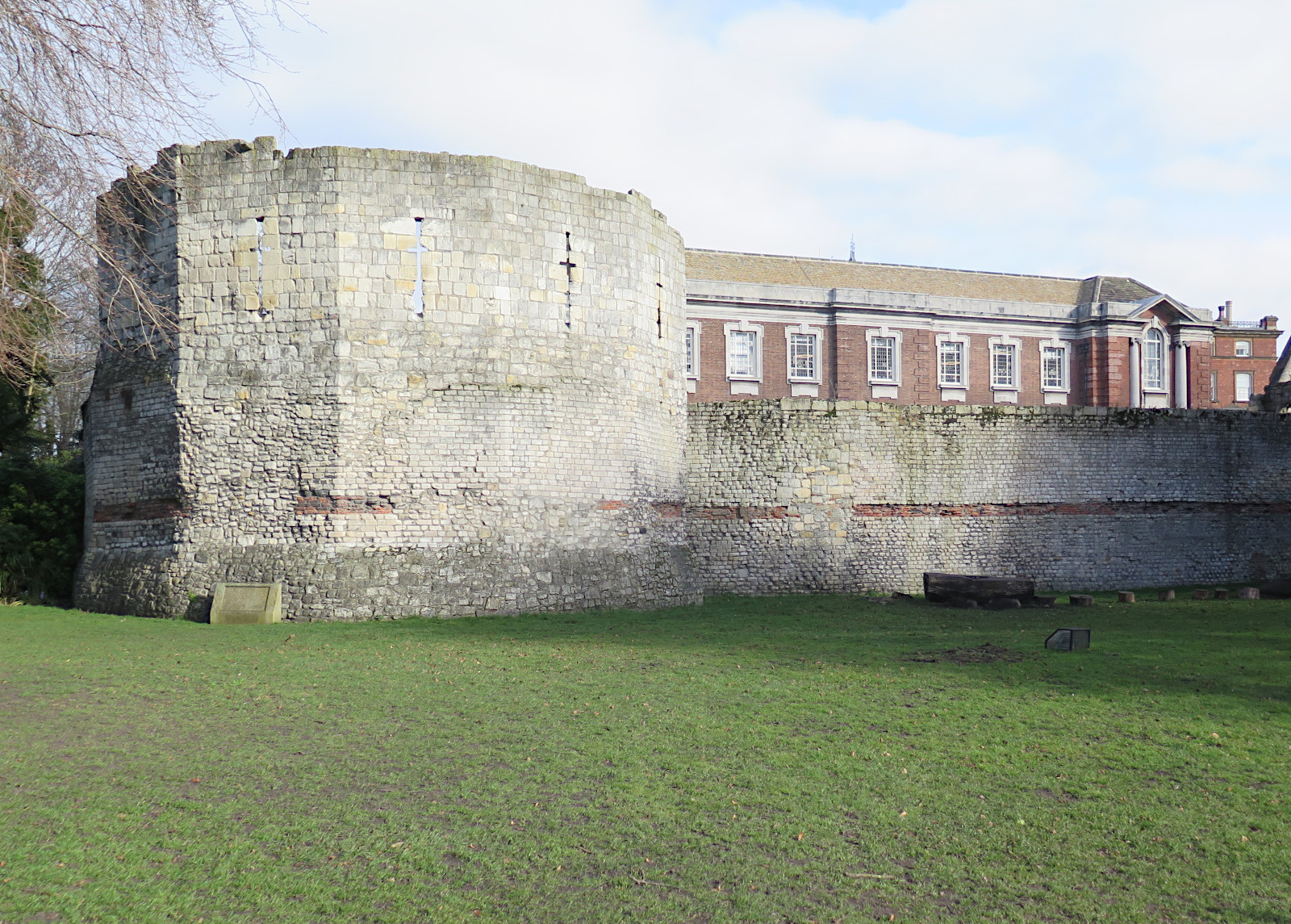
The day after the musical we explored the city centre including All Saints Church and the Museum Gardens. The photo, taken in the Gardens, shows part of the Roman fort dated to 107-108 CE, along with a surviving tower, ‘The Multangular Tower’. The Roman masonry consists of small blocks of stone and the red strip of Roman brick. The much larger stones above are medieval. Click the photo for a clearer view of these details.
On 11th it was clear that there had been more than a thousand coronavirus deaths in China, and although the rate of infection had been reduced it was still around 6% per day. This all seemed rather worrying. By 19th the virus was being called COVID-19 and it seemed to me that we were on a knife-edge between containing the infection or facing a world-wide endemic disease like a very serious kind of flu.
I was pulled over by the police after missing an exit on a roundabout in Gloucester and braking hard. They were very nice about it. After checking my licence and finding it clean they wished me a nice day and sent me on my way.
My sister Cindy held a book signing event in Cirencester at a local bookshop; in the photo she is squeezed between copies of her latest book and various toys and other items. (Find a copy of Cindy’s novel.)
During the month I met often with my friends Mo and Sue Urbano at their home in Eynesbury, and also with a group of friends at local coffee shops. These were useful times of growing together in following Jesus to the best of our abilities. There were other people too and there are snippets of the conversations in my journal. This was a busy period in my life.
We visited Broadstone to stay with Donna’s parents, and Paul and Vanessa came down from Weston-super-Mare as well. We walked on the beach with them at Sandbanks to get some exercise.
We were living in St Neots at this time, in the old village of Eaton Ford, once in Befordshire but now incorporated into the town as part of Cambridgeshire.
Unilever Colworth’s Christian Union (CU) met every Monday lunchtime and of course the meetings were not denominational in any way since we were all from different places and denominations (or in my case from no denomination at all). This was one of the features that made it so good.
Peter Farmer visited us and stayed the night on 6th, in 2009 he had been visiting one region of Britain every month to find out how people were meeting and reaching out. Quite a project! The following day we had a great meeting at Moggerhanger House.
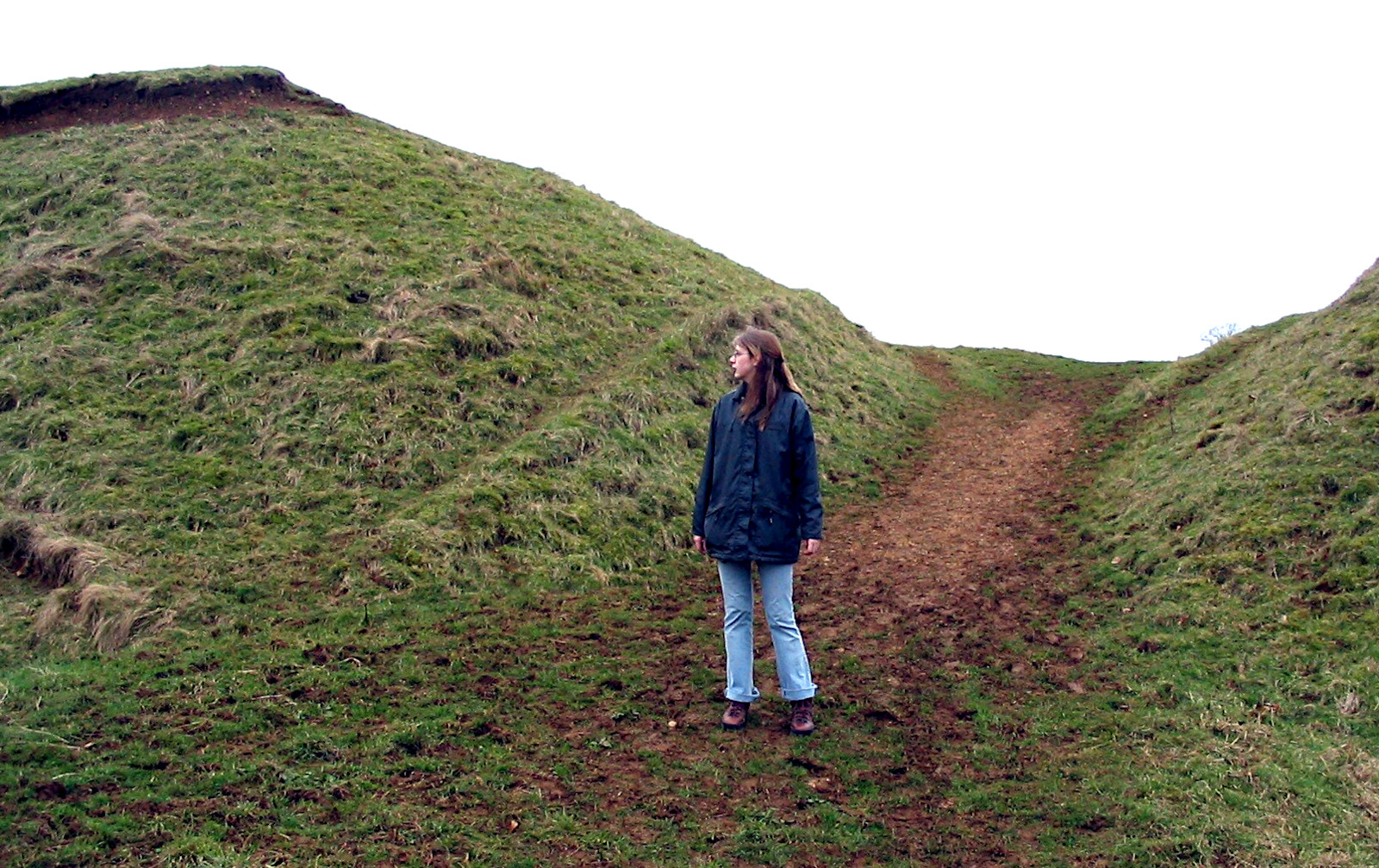
Driving cross country, I visited Debbie and Steve in Chipping Sodbury; Debbie and I walked to the nearby Iron Age hill fort which is very well-preserved. I didn’t even know it was there! There’s a double mound and a deep ditch between them; in the photo Debbie is standing in the entrance across one of the earthworks.
I had recently bought a new Nokia 6230 phone. It seems primitive indeed as I write this in 2025, but at the time it was an impressive little device. The iPhone appeared in 2007 and changed phones forever.
World events:North Korea announced it had nuclear weapons; and YouTube was founded (but not yet operating).
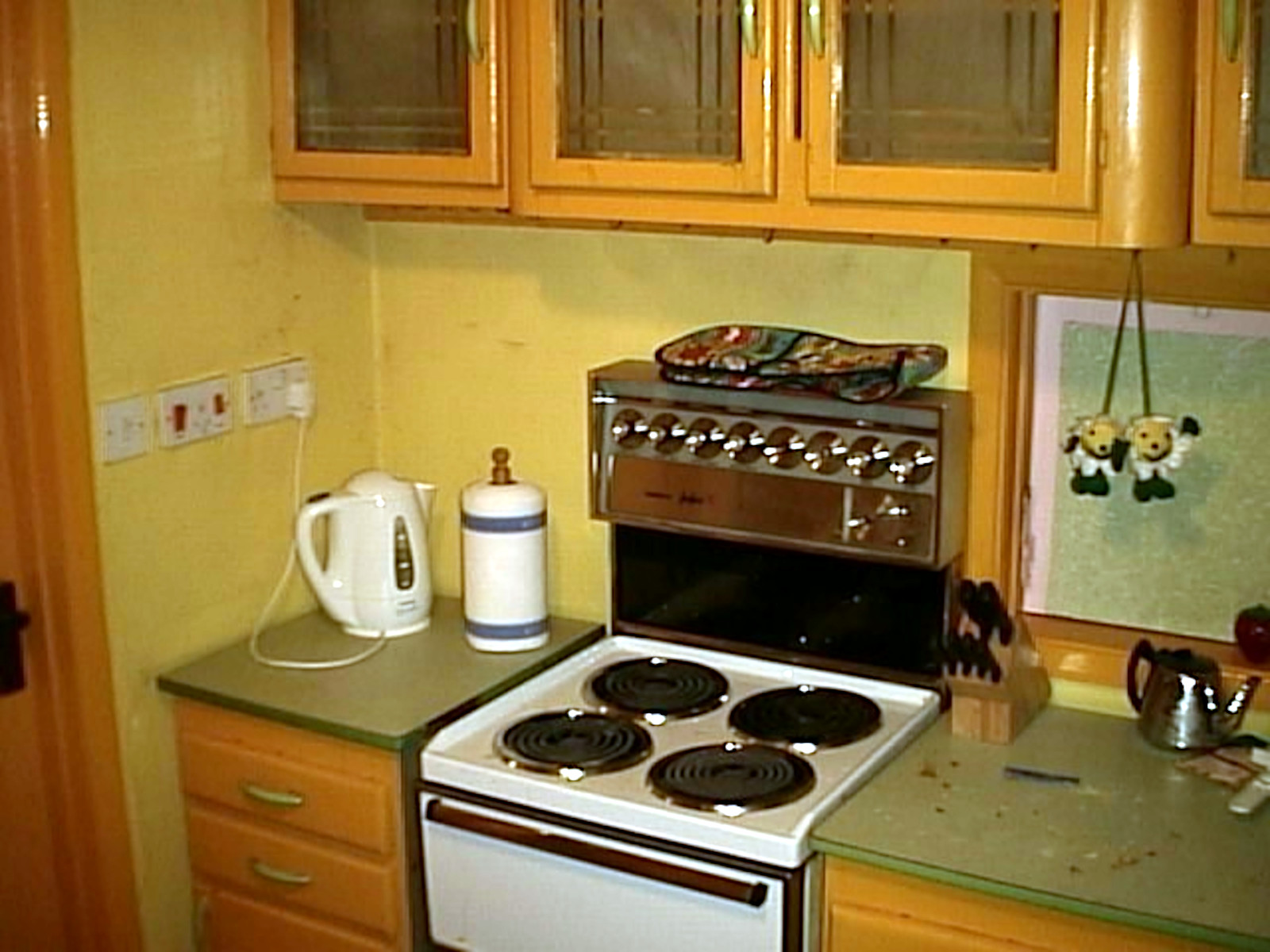
This is the kitchen, still as it was when we moved into our new home in Eaton Ford, St Neots. One of the things we’ll always remember is that the earthing on the cooker was faulty and it was sometimes possible to get a bit of a jolt from a metal pan handle. Renewing the kitchen was high on our to-do list and a few days after this photo was taken, we began taking down the old units and redecorating ready for the kitchen fitters to start work.
Near Calais
Towards the end of the month we travelled to Calais with the Open Door Church Small Group we were part of. Here we are walking along the coast path south-west of the town, I think. It was a good weekend break and fun to all be together. I can recommend it as a way to cement friendships, doing anything together is helpful.
Despite Judy’s best intentions, she had to give up working at Cotham Grammar School because of the stress and demanding hours. She was still not fully fit after some issues with chemotherapy in late 1994. Apart from her teaching job she was in really good shape and able to live perfectly normally.
For the first time in ages we were able to spend time together as a family in the evenings and weekends and that was a real joy for me and our daughters, Debbie and Beth, now 20 and 17 years old.
World events:Steve Fossett landed in Canada, the first person to fly solo across the Pacific by balloon; and Barings Bank in the UK collapsed.
On 10th of the month Debbie took a leading role in the Larchmount Players pantomime production of Tom the Piper’s Son in Yatton Methodist Church Hall. She did really well, a great performance. There were two further performances the following Saturday.
On the 20th we visited Judy’s parents in Cheltenham during the day and mine in Cirencester in the evening before driving back home.
We were living at 22 Rectory Drive in Yatton, between Bristol and Weston-super-Mare. Debbie was nearly ten years old and Beth still six.
My Uncle Dick received a letter (image above) about a book published in Cirencester in 1911. Nobody seemed to want this book at the time and my Dad gave it to me in February 1985, I was working as a microscopist and the book is about microscopy. In January 2017, I asked again if the Corinium Museum would like to have it, and this time they were interested so that’s where it can be found today. If you wish, you can read the letter, the book, and the museum form online.
Beth was 1¾ this month, and Debbie was almost 5-years-old. We were living at 22 Rectory Drive in Yatton at that time and Debbie would have settled in at the Infants School and made a fair number of friends. Judy was at home, looking after the house and I was working at Long Ashton Research Station.
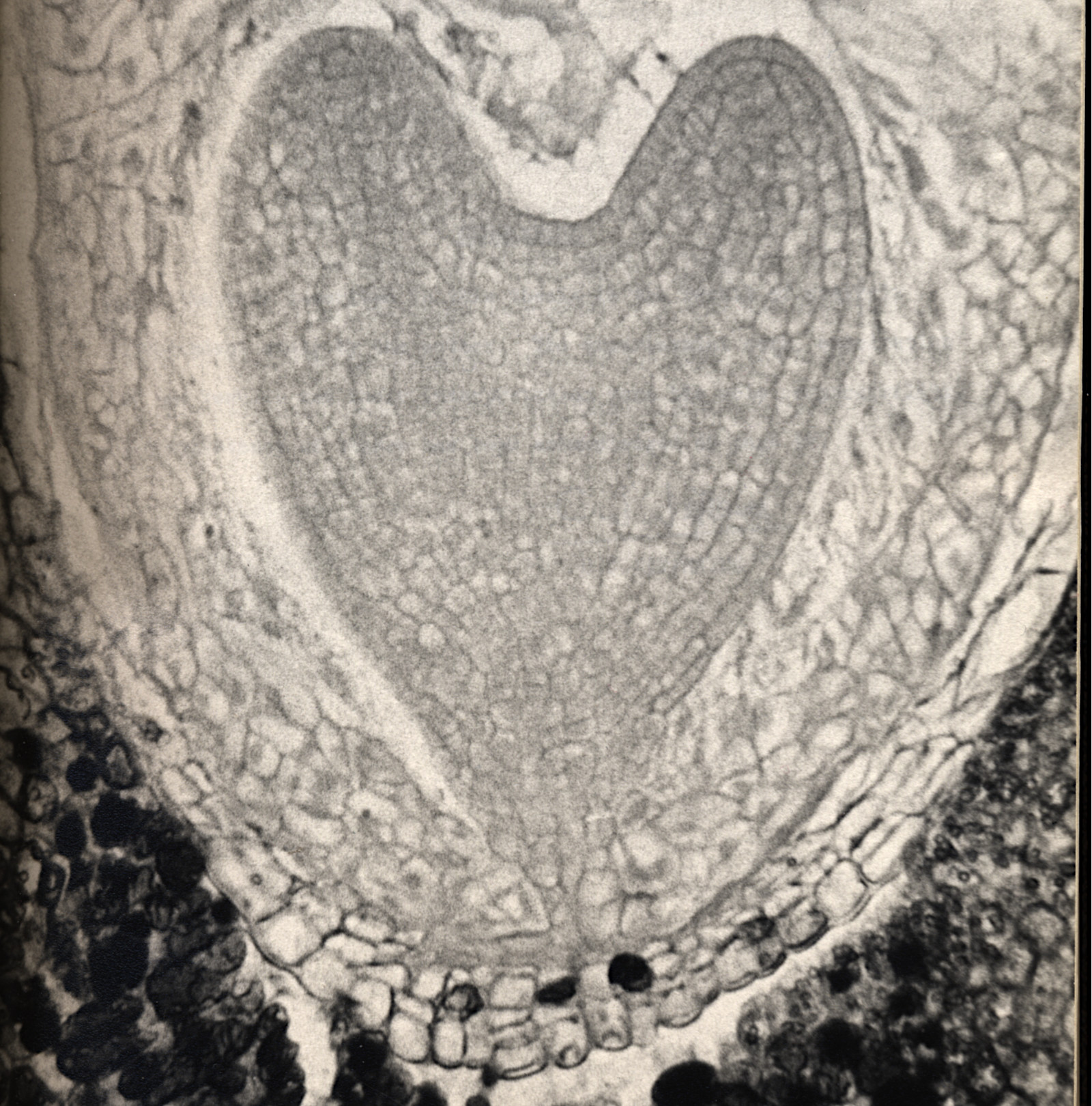
I was considering ways to localise the plant hormone family of gibberellins in sections of plant tissue. The Pomology Division in which I worked was being closed down and the options were redundancy or a move to East Malling Research Station in Kent where pomology research was to continue.
Judy was looking (and feeling) very pregnant by this time. But she was in good health and there were no issues. The ante-natal classes had been helpful and we’d accumulated a lot of freebies and gifts and had bought necessary items ourselves as well. There were baby clothes and blankets, little booties and sterilising kits and bottles and teats and all the other things we thought we’d need. All this stuff fitted neatly in the basketwork crib Judy had made.
My MSc thesis was with the binders at this point. It was good to have all that paperwork and typing and drawing of diagrams (see photo) and charts behind me before the baby arrived!
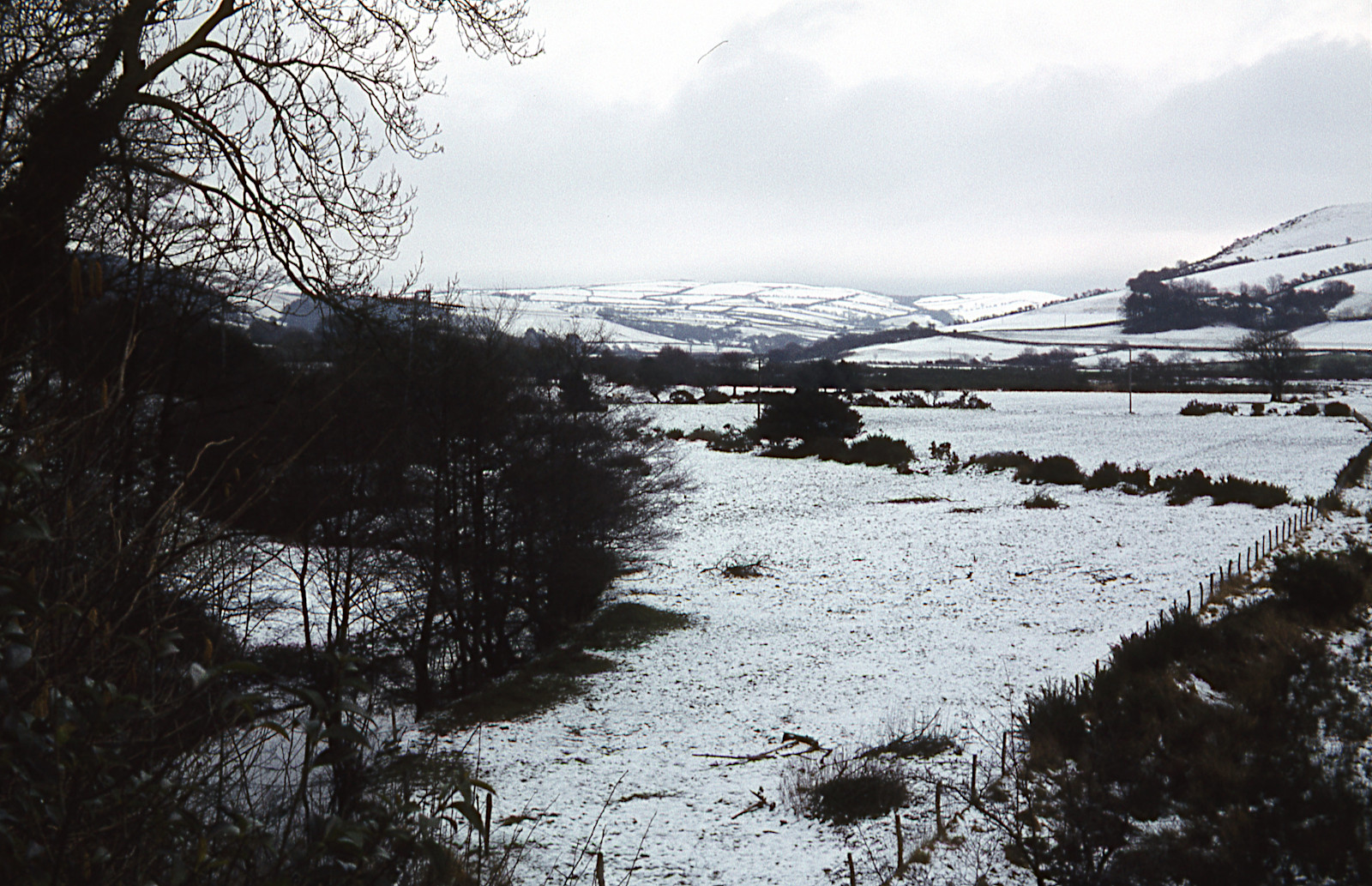
I can’t be certain, but I believe this photo was taken by Judy on her way home from Aberystwyth (where she was at university) to Cheltenham, probably on a Black and White coach. That would be appropriate as the countryside looks black and white as well! I was in my final term at Bath University, and we were both working towards our finals.
World events: Tourists died in an avalanche at Val-d’Isère, France; and Richard Branson founded the Virgin Group as a discount mail-order record retailer.
Cousin Sue had her 21st birthday party on 6th of the month and Granny-in-Ireland’s 67th birthday was on 9th (she was my Mum’s mother).
School continued through February, it was my second term in the Lower Sixth, studying for A levels in Biology, Chemistry and Physics. My sister Cindy was also at the Grammar School, in the third year I think. Ruth and Rachael were still at junior school (Querns School).
World events:The Gambia became independent of the UK; and Ranger 8 crashed on the Moon after photographing possible astronaut landing sites.
One of my favourite toys at this time was Meccano; I’d had small amounts of this as birthday and Christmas presents. There were red bendy steel sheets in various sizes, green strips, dozens of nuts and bolts, wheels, axles – what fun for an eleven-year-old! But around this time I was given large quantities of second-hand Meccano parts, hand-me-downs from my cousins Tim and Jeremy. That was so exciting!
World events: The first CERN particle accelerator became operational in Geneva; and the Hollywood Walk of Fame was established.
We were living at 17 Queen Anne’s Road on Cirencester’s Beeches Estate. There were two conifers, one outside our house and another outside our next door neighbours, the Watts family.
There had been more of these trees, planted when the estate was built; but children being children the young trees had been tweaked and pulled about and most had eventually died. Mum and Mrs Watts would run out and chase the boys away, and had managed to save our two trees.
I was six-years-old and my sister Cindy was three.
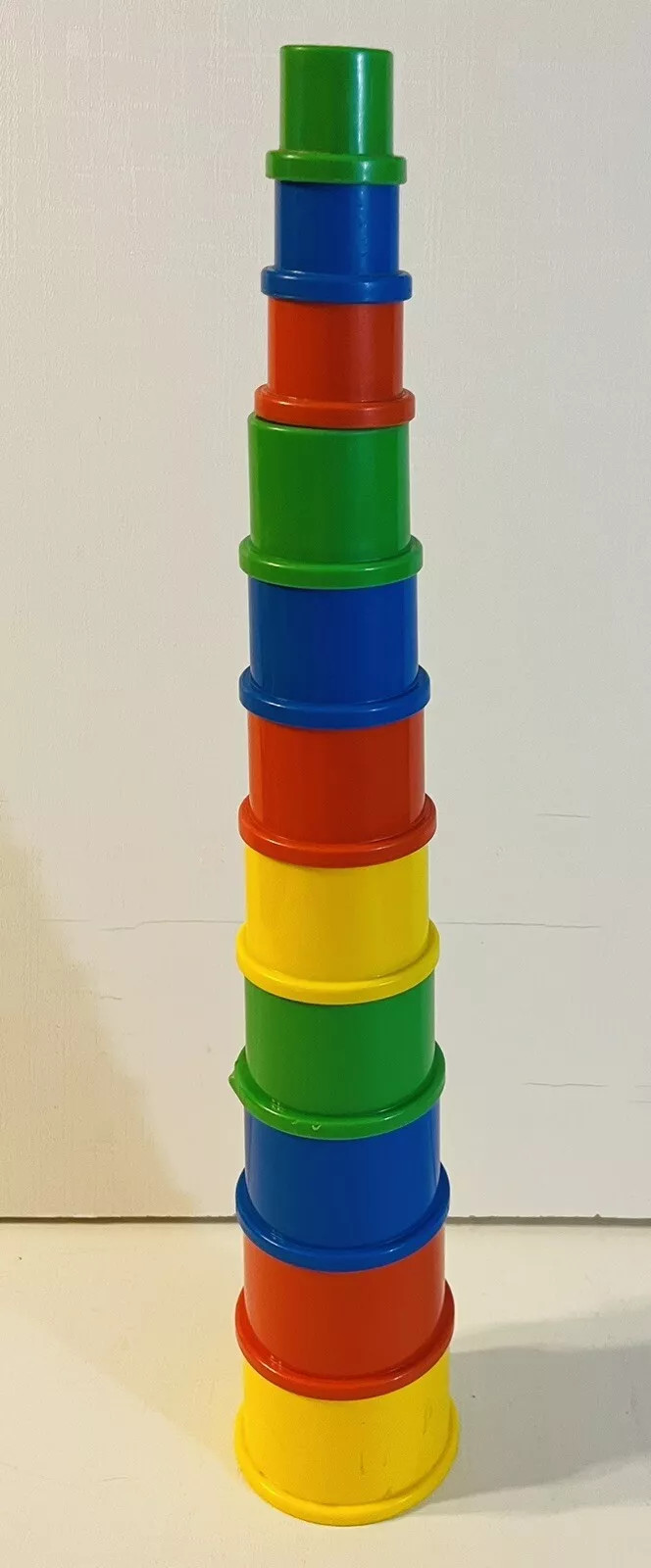
We were a little family in our own, rented council house on the Beeches estate. I had a cardboard box, open at the top, containing my toys. I remember (from later) that there was a nesting stack of bakelite pots in different colours.
You could put them inside each other (I probably watched Mum or Dad do this) or you could make a tower with them (and I’m sure I enjoyed pushing the tower over).
World events:Chiang Kai-shek was re-elected president of the Republic of China; and in New York a credit card (Diners Club) was first used.
On 3rd February Dad travelled back to Skendleby, in Lincolnshire where he was a radar operator on a Chain Home RAF site. It was about a mile north-east of the village, but is not marked on the map, of course.
Mum and Dad continued to write often, on 17th he was troubled to learn that she was unwell and might need surgery that would result in her not being able to have children. On 24th he heard that she would not need the operation after all. He writes in his diary, expressing his extreme relief; and had she needed that op, I wouldn’t be here to write this now!
World events: An oral version of penicillin was announced; and Roosevelt, Churchill and Stalin met at the Yalta Conference.
John Jefferies & Son Ltd had a florists shop on the corner of Cirencester Market Place and Castle Street, now the Vodafone shop. In February 1940 we can assume the vegetable-seed trade was good as the wartime population would have been growing their own produce on every available scrap of land. The ‘Dig for Victory‘ campaign would have encouraged this.
Entering the front door on the corner, there was a space for customers, with a service counter on the right and a private door opposite the shop’s display windows. Through the door and turning right, was a small, almost triangular outdoor space where buckets of cut flowers were stored, and there was always a smell of cooking emanating from the kitchens of Viner’s Restaurant next door in Castle Street.
Turning left instead brought you to a wooden staircase leading to offices on the floor above. There were also steps (possibly stone) leading down to the cellar.
If you enjoyed this or found it useful, please like, comment, and share below. (If you don’t see those links, click the article’s title above the main photo and they will appear.) Send a link to friends who might enjoy the article or benefit from it – Thanks! My material is free to reuse (see conditions), but a coffee is always welcome and encourages me to write more often!
I shall try not to be absent for long periods, and I may post more items like the one you’re reading now – me thinking aloud about what to do next and how to do it.
Change is good as long as it’s not just change for change’s sake. Writing this blog has seen quite a lot of change over the decades and it’s time for another tweak, I think.
There have been lean times when I’ve posted nothing for several months, and over the last couple of years I’ve been posting almost daily. It’s not exhausting – I love writing – but it has taken chunks of time out of other activities. Something else I realise has been choked off a little by the daily habit is the opportunity to write at greater length on topics that might benefit from that.
There are some older topics I want to revisit and extend. An example of that is the series on walking the Cotswold Canals.
So I think, going forward, there will be days when I post nothing because I’m working on something a bit more expansive. Some topics might be best served by writing a short series on the same theme. We’ll see. I’m very much expecting to decide these things on the spur of the moment.
I shall try not to be absent for long periods, and I may post more items like the one you’re reading now – me thinking aloud about what to do next and how to do it. I hope that won’t be too boring!
[This] image featured in NASA’s Astronomy Picture of the Day for 25th January 2025. Visit the website and have a browse around, there are so many fine images here!
This might be the most striking photo you’ll ever see of a comet. OK, I dare say there will be better images out there, but this one is still pretty amazing.
The image featured in NASA’s Astronomy Picture of the Day for 25th January 2025. Visit the website and have a browse around, there are so many fine images here!
If you look closely (click the thumbnail and expand it as far as it will go) you’ll see plenty of stars in the image, too. Of course, they are way, way in the background far beyond the Solar System whereas the comet is right here inside the system along with the Sun, Planets, Moon, me and you.
If you enjoyed this or found it useful, please like, comment, and share below. (If you don’t see those links, click the article’s title above the main photo and they will appear.) Send a link to friends who might enjoy the article or benefit from it – Thanks! My material is free to reuse (see conditions), but a coffee is always welcome and encourages me to write more often!
Lichens are the main food source for a variety of animal species from small mites and insects to the remarkably large reindeer. They tend to be protein-poor but may be rich in carbohydrates.
Image 130 – What’s in an image? Sometimes quite a lot, more than meets the eye. I’m posting an image every day or so.
Enlarge
Lichens are amazing. They’re always small, they grow in slowly expanding colonies, and they consist of cooperating fungi and algae. A number of different species of fungi can grow like this, combined with various yeasts and bacteria. The assemblage often looks like a simple plant, often almost flat, but sometimes filamentous, branching or in the form of flakes. Circular forms like the one in the image are common. The Wikipedia article listed below has photos of a range of different forms.
The grey colony in the photo has grown out from the centre ‘cleaning’ other life forms from the surface of the underlying limestone and spreading out further around the perimeter. The black lichen was destroyed as the grey lichen crossed over it, but new colonies of the black lichen have established on the clean rock left behind. The situation is dynamic, but very slow. Return for another photo a month later and little will have changed.
Lichens are the main food source for a variety of animal species from small mites and insects to the remarkably large reindeer. They tend to be protein-poor but may be rich in carbohydrates.
If you enjoyed this or found it useful, please like, comment, and share below. (If you don’t see those links, click the article’s title above the main photo and they will appear.) Send a link to friends who might enjoy the article or benefit from it – Thanks! My material is free to reuse (see conditions), but a coffee is always welcome and encourages me to write more often!
Getting enough sleep is important of course, but the quality of our sleeping matters too. Good exercise, diet and quiet, undisturbed surroundings are helpful factors.
Welcome to a new feature on JHM, a series of articles on science and technology. I’ve posted articles like this before, but not as a regular series. From now on science and technology articles will be easier to find and browse with their own index.
This time, we look at the topic of sleep.
Sleeping well
Why sleep matters
Sleeping well is clearly important. We all know that lack of sleep makes us tired, perhaps a bit grumpy, and affects our ability to focus. We’re more inclined to doze off, and microsleeps lasting a second or so can be absolutely deadly (quite literally) for someone trying to drive or use heavy machinery.
But there are longer term health effects too (see the Nature article listed below).
Improving your sleep
The New Scientist articles cover many aspects of sleep. Getting enough sleep is important of course, but the quality of our sleeping matters too. Good exercise, diet and quiet, undisturbed surroundings are helpful factors. It’s useful to consider how our time awake will affect our sleep. There are hormonal effects affecting both falling asleep and waking up – melatonin and cortisol – so we need to consider those as well.
In terms of practical advice, useful tips include – using bright lighting in the morning (especially in wintertime), and dim lighting in the evenings – keeping the bedroom cool and dark – avoid eating and drinking late in the evening and be wary of late caffeine intake – avoid stress near bedtime if possible.
Surprisingly, perhaps, your gut microbiome is another factor, and it works both ways. Sleep patterns can affect the microbiome, but a healthy microbiome helps provide better sleep.
Going deeper
The links below provide further reading. The New Scientist link will give you an overview with introductions to all the articles, though if you want the full text you’ll need a subscription or access to the printed version Many libraries will have a copy.
If you enjoyed this or found it useful, please like, comment, and share below. (If you don’t see those links, click the article’s title above the main photo and they will appear.) Send a link to friends who might enjoy the article or benefit from it – Thanks! My material is free to reuse (see conditions), but a coffee is always welcome and encourages me to write more often!
July 2024 (6 months before publishing this article)
Click to enlarge
Here’s a touch of July during chilly January! Last year we decided to buy a greenhouse for overwintering house plants, growing cuttings, and extending the season for things like tomatoes. The kit of parts arrived some time ago, and finally it was being installed on the base prepared earlier.
We were in Yorkshire on 1st, stayed with Debbie and Steve for the night, visited Beth and Paz on 2nd, and then drove home in the afternoon.
Later in the month I made good progress scanning old photos; this is a great memory jogger, helping me piece together some of my life and that of those around me. There’s nothing better than documentary information, whether that’s photographic, video, sound, or in written form. Some of the results appear in these Blast from the past posts.
The image shows an original transparency alongside the scanned version. The colour match looks pretty good.
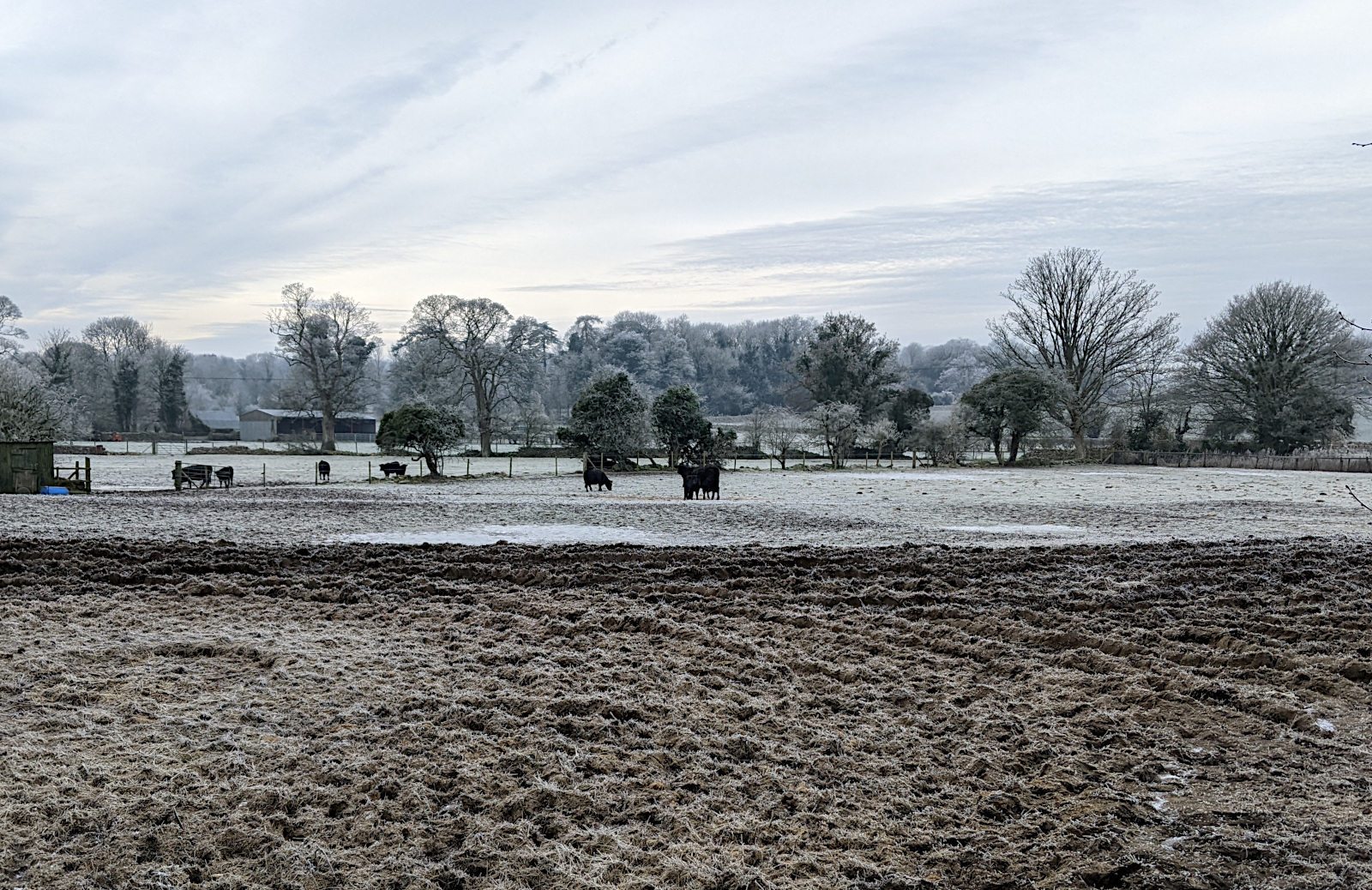
We had some crisp, frosty conditions during January that made the countryside look really beautiful.
Towards the end of the month I discovered some reddish bumps on my left shoulder, mostly at the front with a few at the back. I had various thoughts about what it might be, and in the end found out it was shingles. I had no discomfort or pain, just the rash, and the GP prescribed a course of antivirals and antihistamine.
It was strange to think that the virus had been inactive in some nerve cells since I was a child!
I visited my friend Stephen in Gloucester Hospital, and he seemed in good spirits and to be doing well, he was looking forward to getting back home as soon as possible after his surgery.
I managed to get some video of our cat, Erin, chasing her tail. Cats and dogs both do this sometimes, especially when they are young. And I was trying different methods of making still images from my old VHS videos that I had on my laptop as ISO images. The VLC media player seemed the way to go and I was pleased with some of the results I was getting.
I was tracking the progress of several space missions; Dawn was closing in on the minor planet Ceres in the Asteroid Belt, while New Horizons was beginning the science phase of its mission to Pluto and Charon, and there was hope that the Philae Lander would soon wake up.
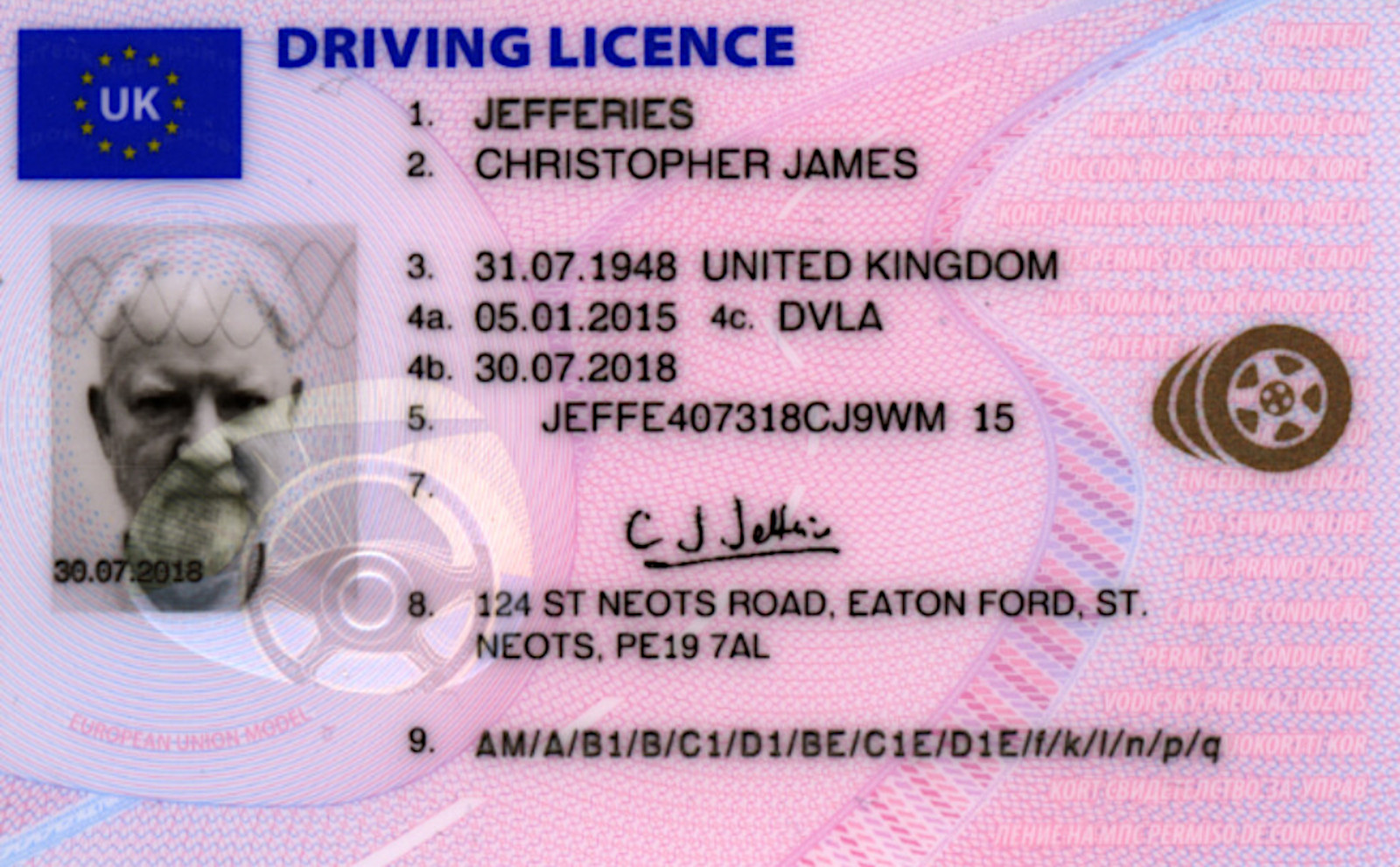
I had a new driving licence through the post from DVLA. Unlike my current licence, this one proudly displayed the EU emblem in the upper left. Like almost half the voters in the referendum, I voted to remain in the EU. Leaving was a terrible mistake.
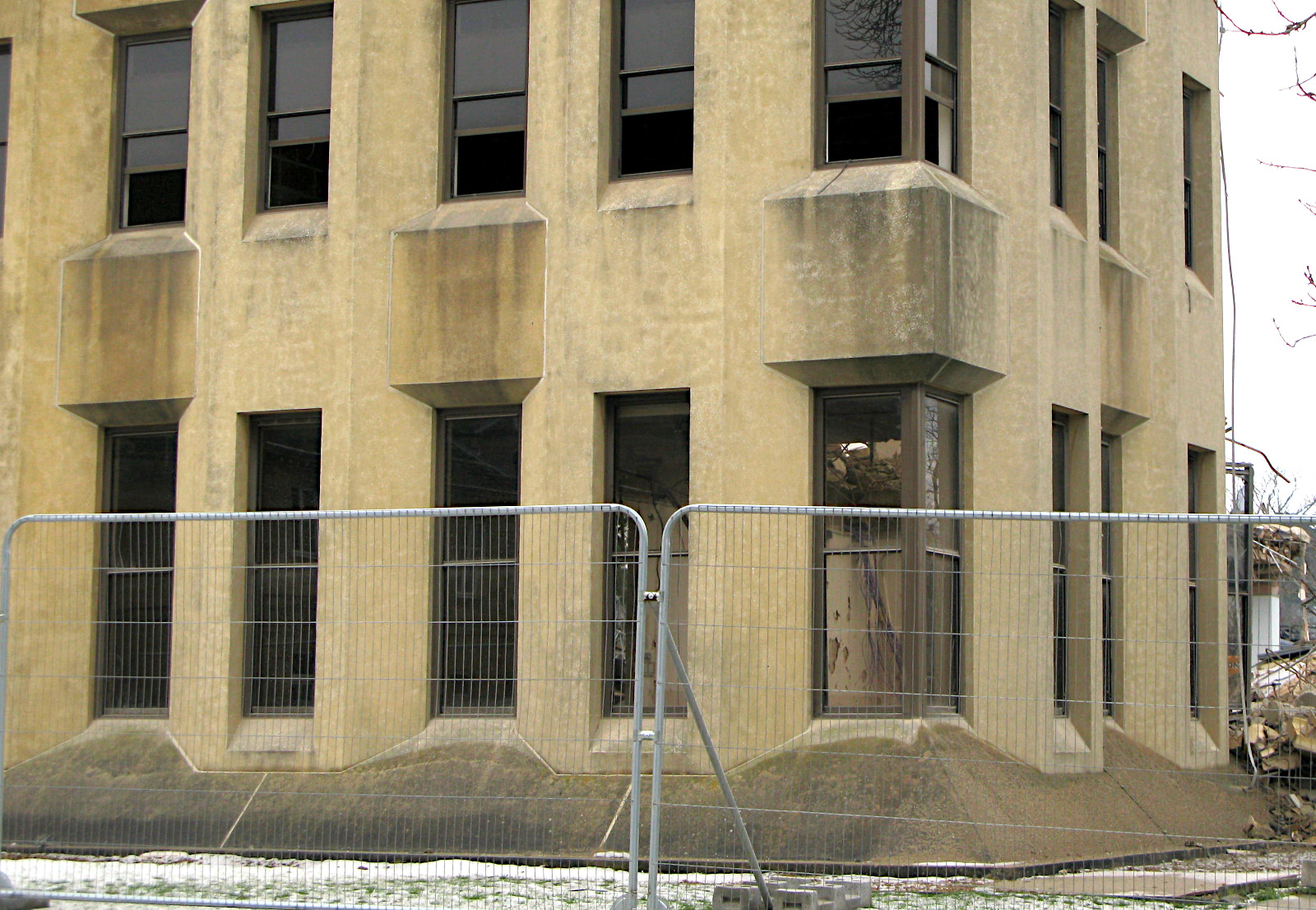
The demolition of the building where I first worked on joining Unilever was almost complete. And the very last piece still standing contained the ground-floor corner window where my desk had been! It seemed strange to see the old Knowledge Systems Group office (KSG) vanish! By the end of January there was nothing left.
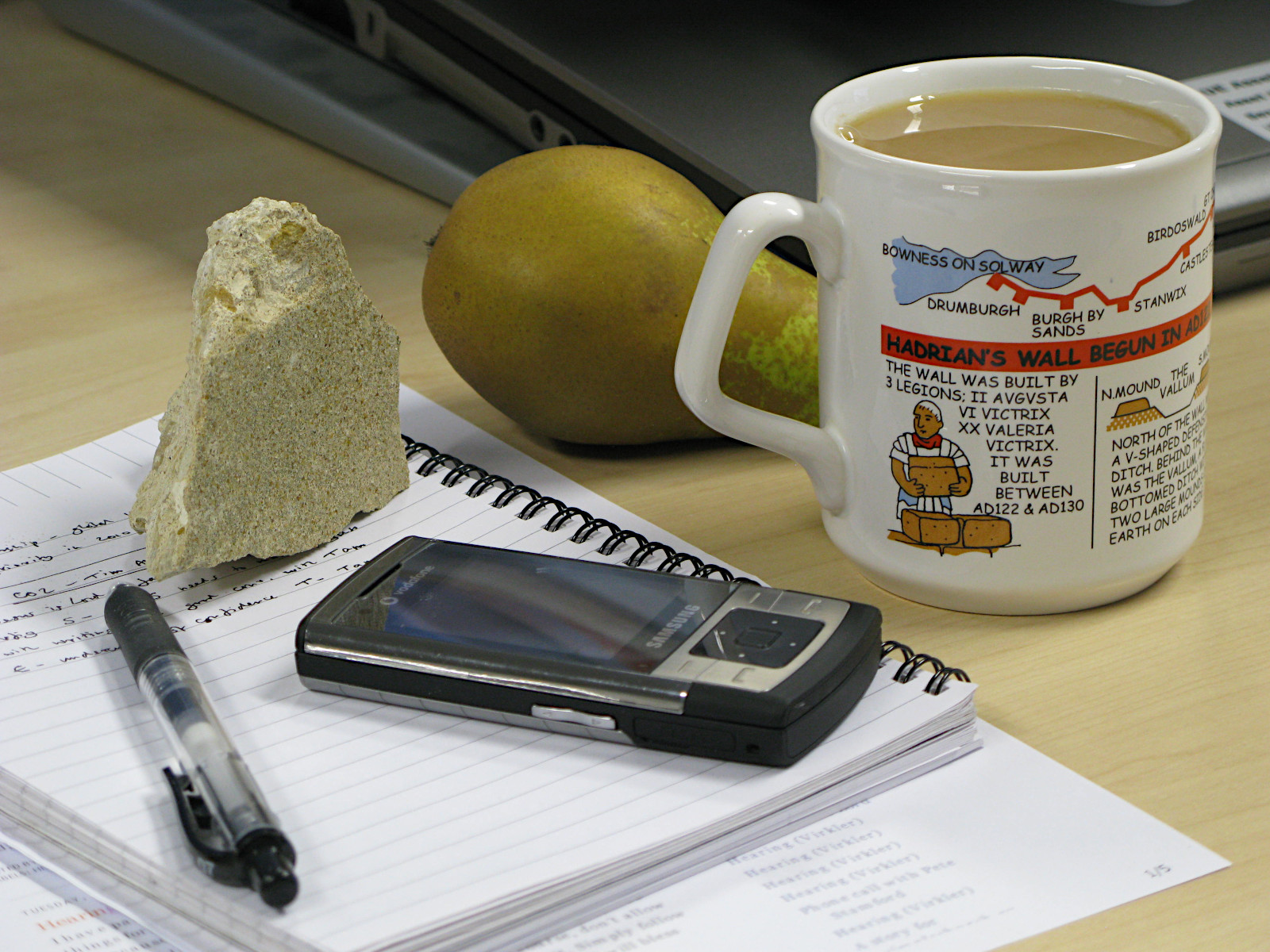
Office still life
The photo (right) shows items on my desk on 24th, including a mug of tea, a Conference pear, my Samsung Steel phone, notebook, roller pen – and a piece of the old building rescued from the cleared site!
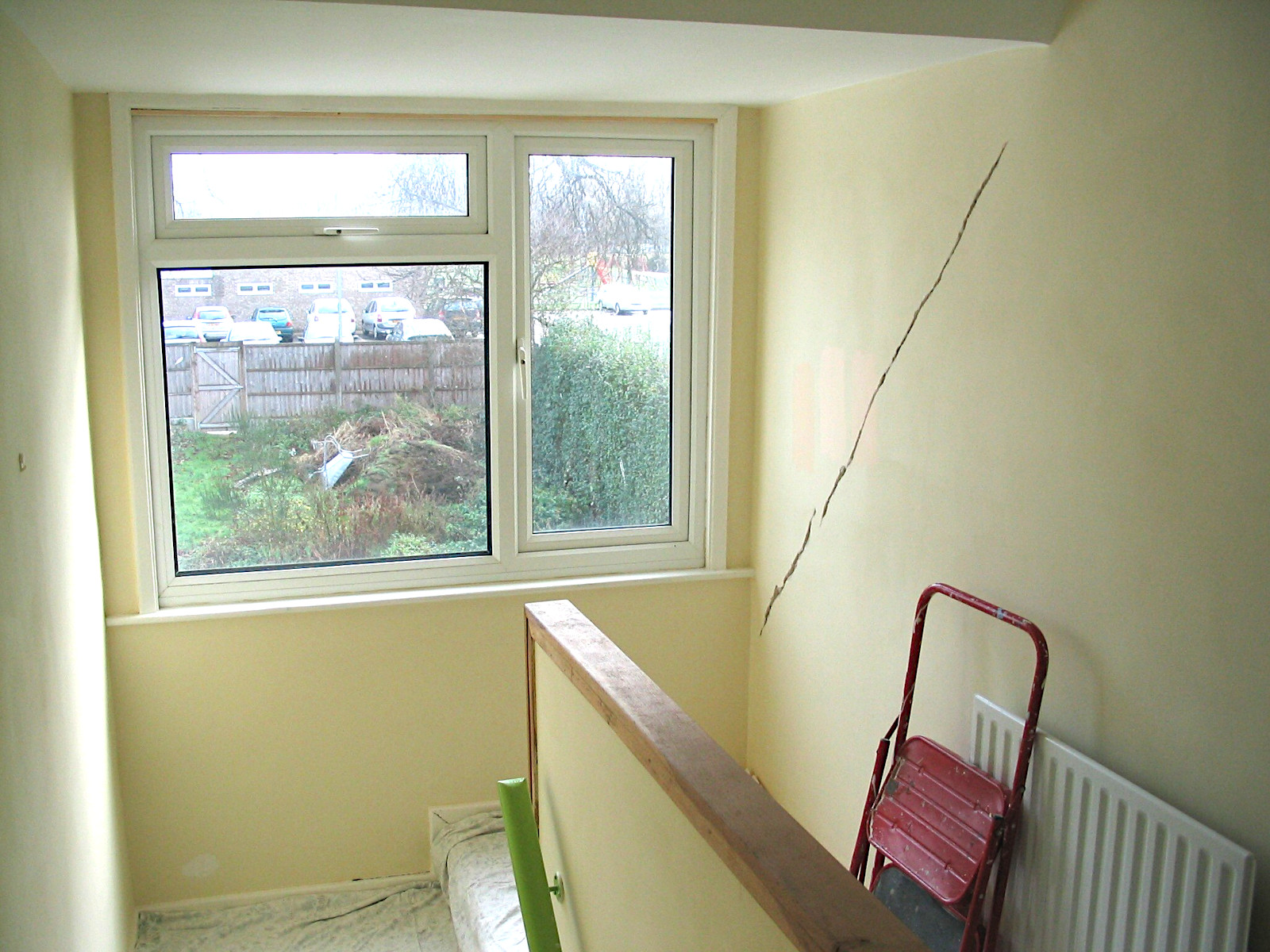
I was busy with some decorating in the hall, stairs and landing of our house in St Neots, there were cracks that became very wide when I scraped out the loose plaster, so those had to be filled and sanded down before I could begin to apply paint. But by the end of the month things were looking a lot better and we preferred the new colour to the pale yellow we had used before.
Unilever was restructuring the computing departments within research and this affected the Web Team where I was working. It seemed we would survive as a group, and with a similar remit, but within a very different organisational structure and changed leadership. We were in the process of understanding how we’d be affected going forward.
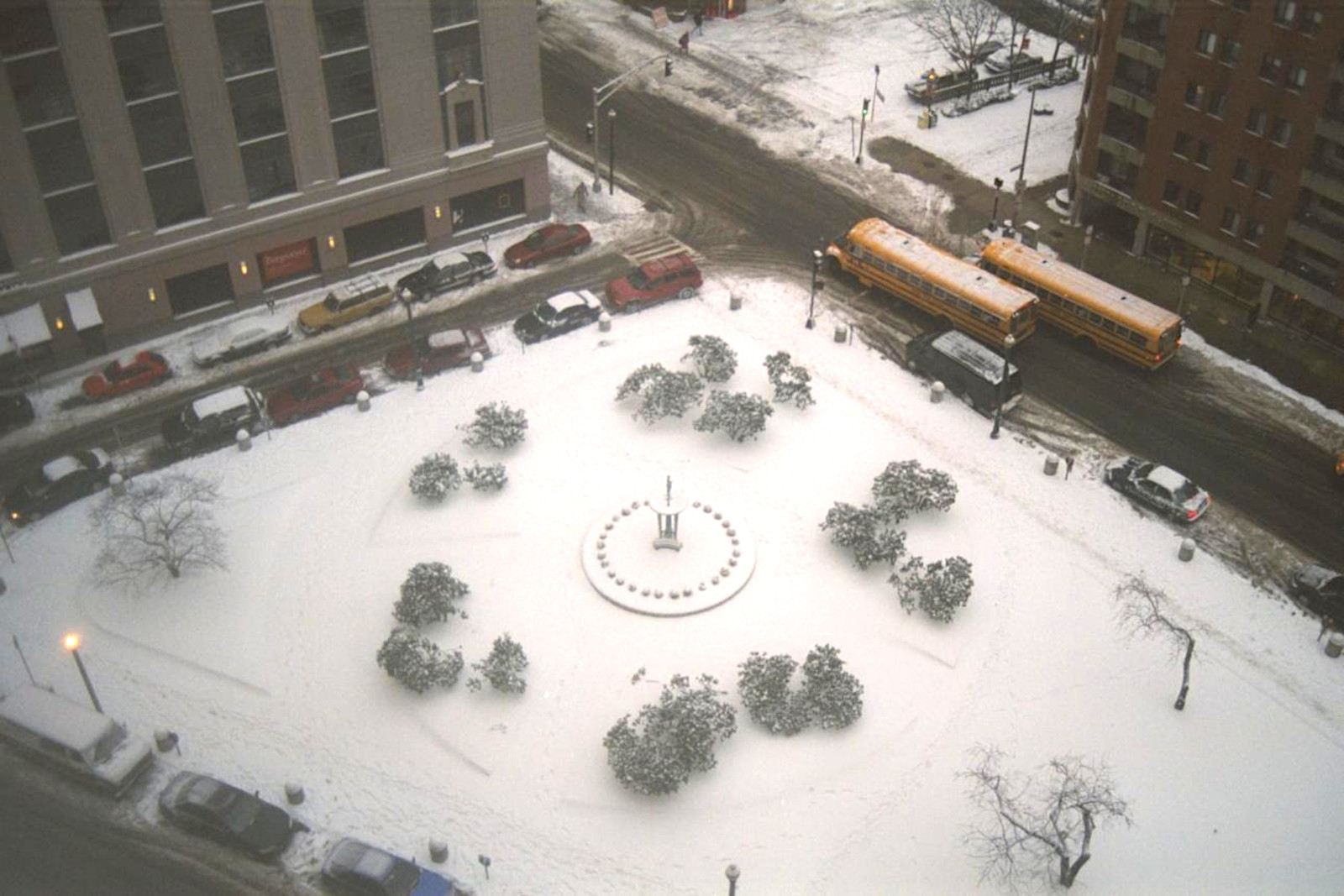
On Sunday 23rd I flew to Boston with my boss, Pete Keeley. We were picked up from home by a Unilever car and driven to Heathrow for a business class flight, then from the airport by cab to our rooms in the Boston Park Plaza. We were attending a Sun Microsystems conference on their Java Development Tools and the various uses for Java. There was a heavy snowfall while we were in Boston and we tried walking through it to explore the city before flying home; that was quite an experience!
At home, I walked some of the nearby streets and footpaths around the old A1 at Crosshall on the edge of St Neots. Although I’d got my bearings pretty much for the main streets in the town, some of the smaller footpaths were still new to me.
Judy had recovered well from surgery and an issue with chemotherapy for her bowel cancer and returned to work at Cotham Grammar School teaching biology. She very much wanted to teach until June to see her students through their exams. Debbie, Beth and I supported her as best we could, but teaching is a tough, stressful, tiring career and I think we all wondered if it might be too much. Nevertheless, she got off to a great start with her usual determination.
World events: Austria, Finland and Sweden joined the European Union; and Valeri Polyakov completed a year aboard the Mir space station, a duration record.
I began designing the LARS System configuration for the PCs at work. It would be beneficial to have all the research station’s machines set up the same way so staff would have a familiar environment wherever they were working.
Judy ordered some double-glazed windows to replace the worst of the house’s original decaying wooden window frames. This was a much needed improvement.
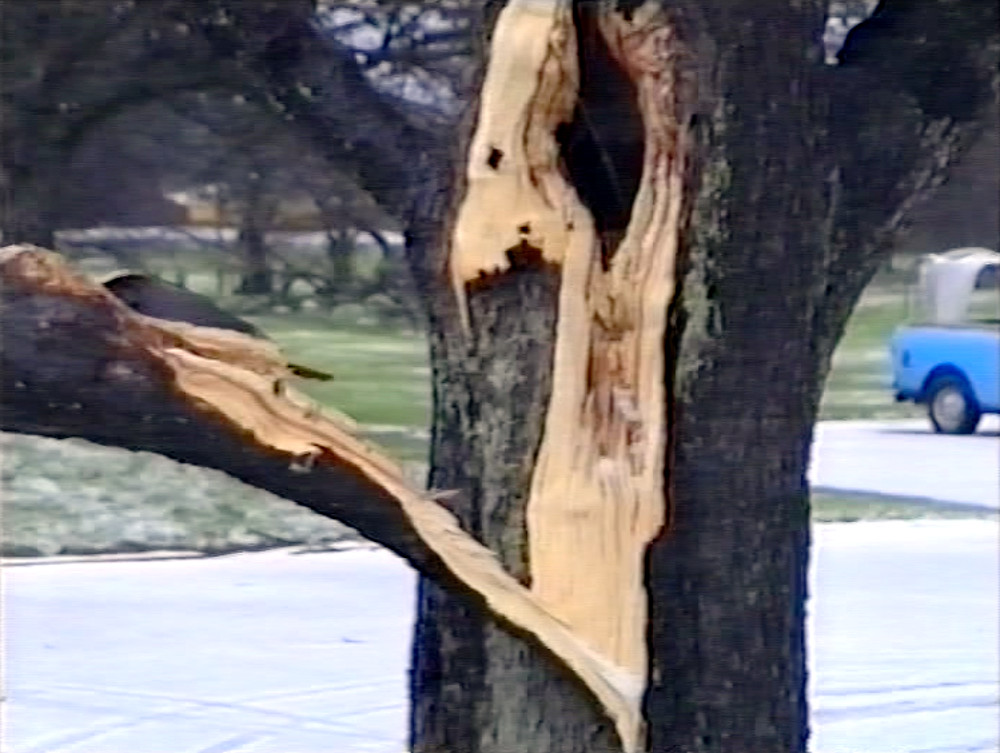
A severe storm caused damage to trees and buildings overnight on 25th January at the Research Station. Trees fell or had branches torn off and roofs were damaged.
World events: Commercial customers first had access to the internet in the USA and the Netherlands; and the Morris Worm caused issues on Unix computers.
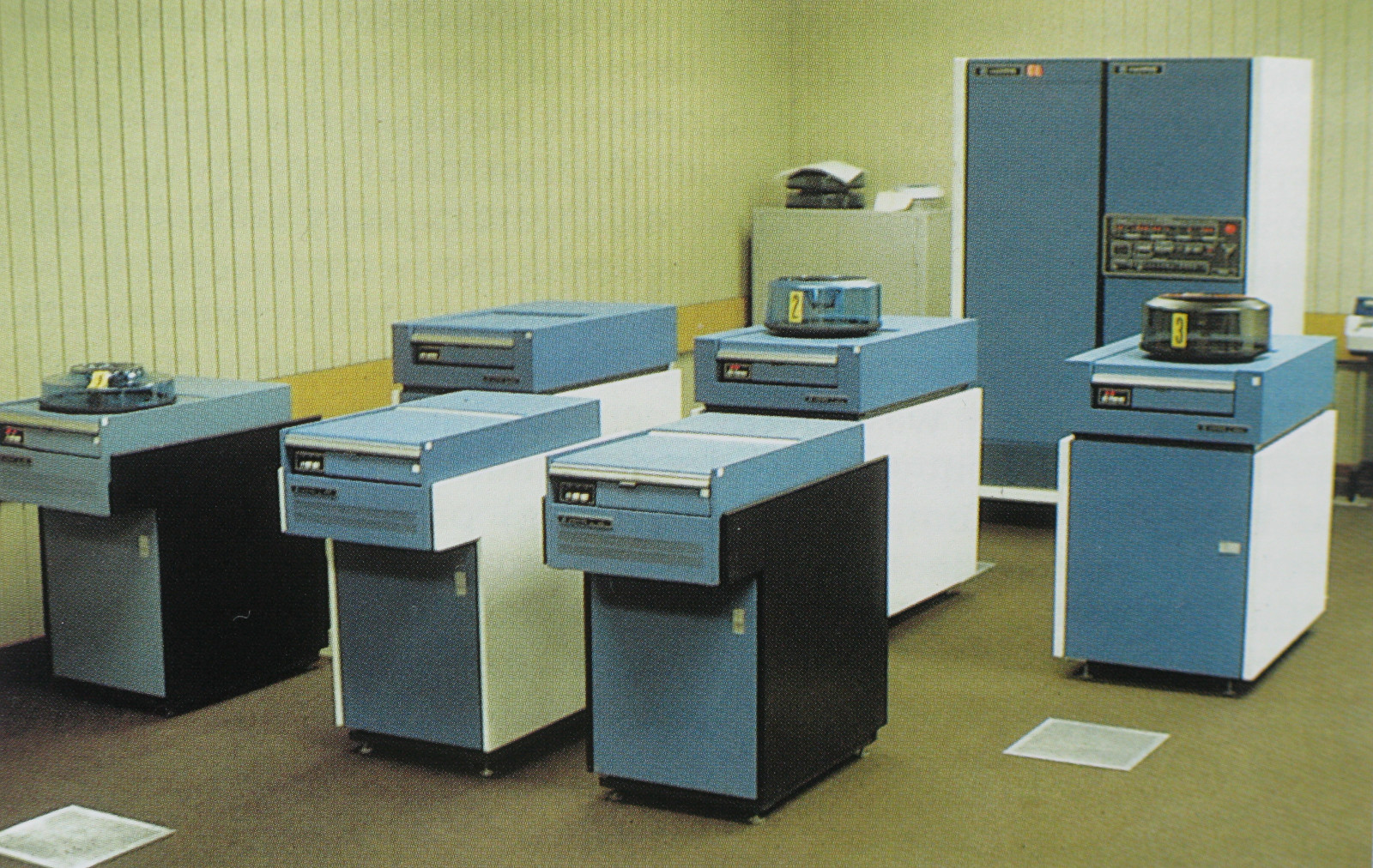
I was the Computer Representative for the Plant Science Division at Long Ashton Research Station. This involved liaising between the Computing Group at Rothamsted and the research staff at LARS. Desktop personal computers were just beginning to appear, but computing at Long Ashton depended on the Research Council’s VAX/VMS systems.
Judy was teaching Biology at Cotham Grammar School in Bristol. Debbie was nine-years-old and Beth was six, they were collected from school every day by a friend and then Judy picked them up on her way home.
World events: The Internet’s Domain Name System was created; and Ronald Reagan was sworn in for a second term as US President.
One of our research papers appeared in January, based on work done in 1978, here are the details:
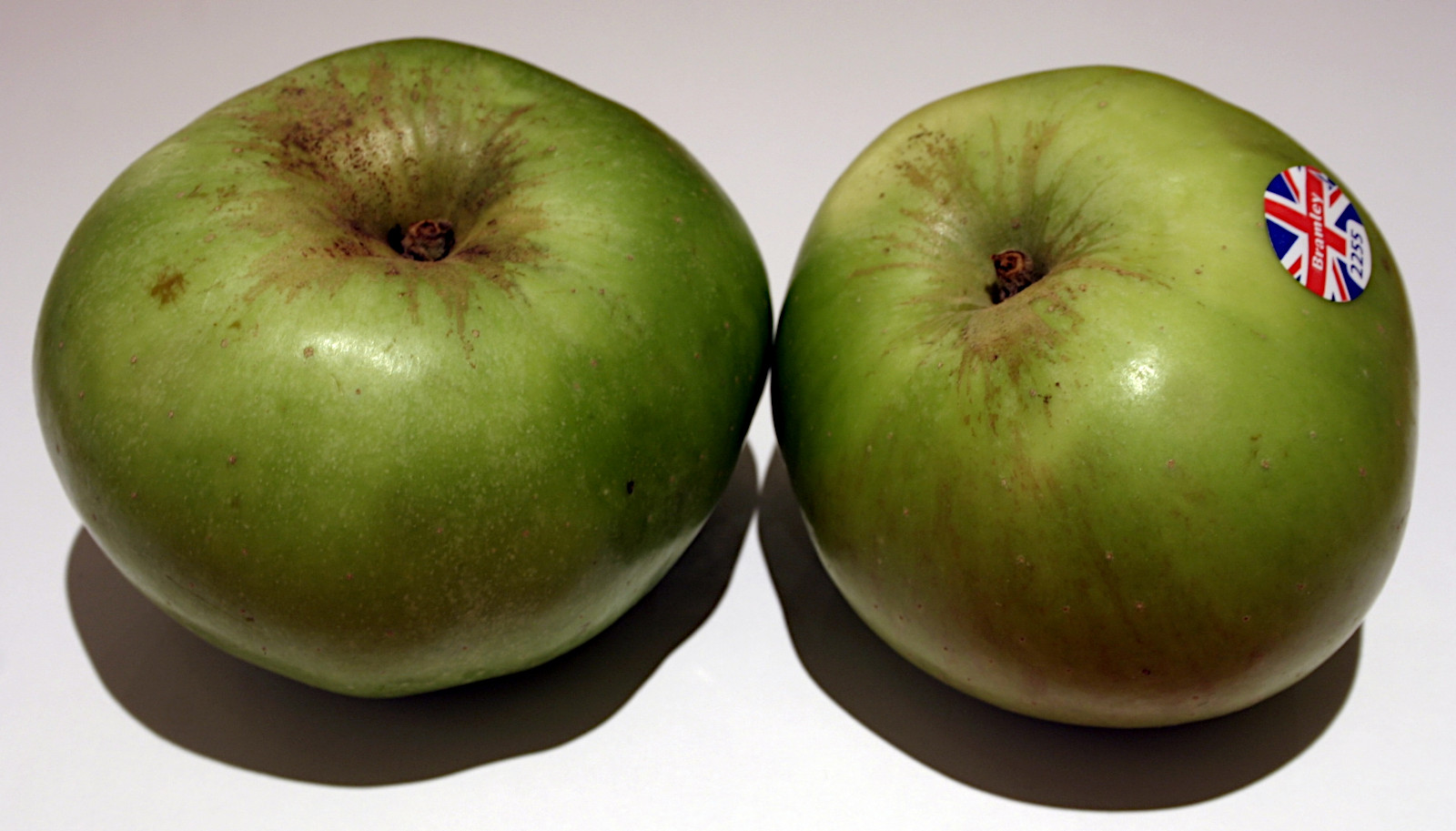
Williams RR, Arnold GM, Flook VA, Jefferies CJ. The effect of picking date on blossoming and fruit set in the following year for the apple cv Bramley’s Seedling. Journal of Horticultural Science. 1980 Jan 1;55(4):359-62.
I enjoyed the scientific work while it lasted. We didn’t know it at the time, but the Research Station was to close 23 years later and is now a housing estate.
World events:GPS time began on 6th January; and Andrei Sakharov was arrested in Moscow.
During this period I had gathered and processed information for my master’s thesis on plum flower and fruit development. The experimental work was complete, a lot of photographic processing was behind me and I had just had copies of the thesis bound and submitted in December. Now it was a matter of waiting for the viva and a decision by Bristol University.
Judy was expecting a baby in March and she had made a basketwork cane crib as well as knitting various baby clothes – all in non-committal yellow and white as we had no idea whether to expect a boy or a girl.
World events: Guilty verdicts were returned over Watergate; and work on the Channel Tunnel was abandoned.
My final year project at Bath University was an experiment in propagation of Bergenia, and I needed to go in over the holidays to take measurements. After New Year, but before our new terms began, Judy was able to come to Bath with me on one of these occasions.
I began my second term in the lower sixth at Cirencester Grammar School, studying chemistry, biology and physics and additional maths.
I was finding A Level Chemistry tougher than I’d expected. It was one of my favourite subjects at O Level when everything had seemed very logical and precise, but organic chemistry was new and seemed more flexible and varied. Physics was OK, but getting more mathematical, and biology was completely new as I had not been able to do all three at O Level.
In January it was back to school for my second term in the First Form at Cirencester Grammar School. We were all properly in our stride by now while my sister, Cindy was in her fourth year at Querns School, and Ruth and Rachael were at home with Mummy, not at school at all yet. I was eleven-years-old, Cindy was eight, Ruth four, and Rachael three.
The page from my maths exercise book suggests I was pretty good at adding decimals!
World events: Construction of the Aswan Dam began in Egypt; and Jacques Piccard and Don Walsh descended almost 11 km into the Mariana Trench in the bathyscaphe Trieste.
I was six and in my second year at Querns School, starting the second term.
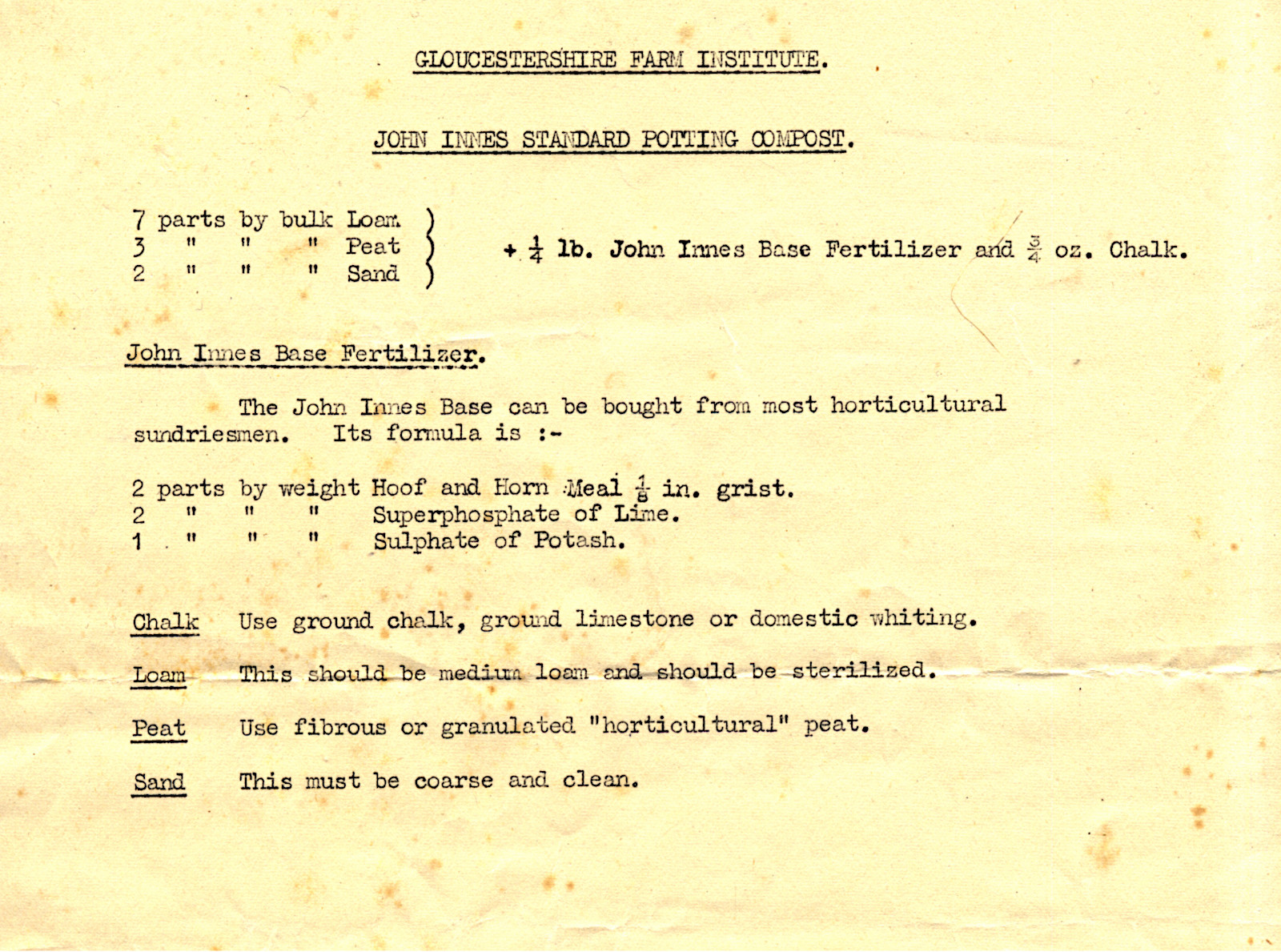
Daddy worked at Watermoor Nursery as the foreman assisted by Miss Brown. They took cuttings, split larger herbaceous plants, and kept the rows hoed and watered. They would have had extra help at busy times. The recipe for John Innes compost would have been used by them around this time.
World events:USS Nautilus, the first nuclear-powered submarine began sea trials; and the Soviet Union announced the end of the war between the USSR and Germany.
I was eighteen-months-old at the end of January, walking and talking no doubt. We must have been getting settled in our new council house, 17 Queen Anne’s Road on the Beeches Estate. I imagine we had mostly second-hand furniture or cheap utility items.
This is the cover of a seed catalogue of the period, rescued I believe by my father from the office of my Uncle, R W Jefferies after his death. He was in charge of the seed department and had great stacks of documents on his desk, recent items on top and older material buried further down. It all had to be cleared, of course, but Dad and his brother Bob kept some of the more interesting items.
Mum and Dad wrote often to one another, a phone call was possible, but didn’t always go through, was difficult, and not very private.
On radar, Dad mentions tracking a group of 5 V1 cruise missiles (‘Buzz Bombs’) on 3rd January, and a group of more than two hundred German aircraft on 16th. He heard on 17th that Warsaw had been taken by the Russians.
On Wednesday 24th he travelled to Cirencester by train on leave, returning on duty in early February.
World events: The Soviet Union began the East Prussian Offensive, to eliminate German forces there; and Adolf Hitler made his last public speech on radio.
Mike (aka ‘Tigger’ and later my Dad) was thirteen-years-old and starting a new term at either Cirencester Grammar School, or Rendcomb College. Lilias (later my Mum) would have been eleven, living in Coagh, County Tyrone with her mother Selina and little sister, Annabelle (about two). Lilias would also have have been starting a new school term, in her case at the village school.
If you enjoyed this or found it useful, please like, comment, and share below. (If you don’t see those links, click the article’s title above the main photo and they will appear.) Send a link to friends who might enjoy the article or benefit from it – Thanks! My material is free to reuse (see conditions), but a coffee is always welcome and encourages me to write more often!
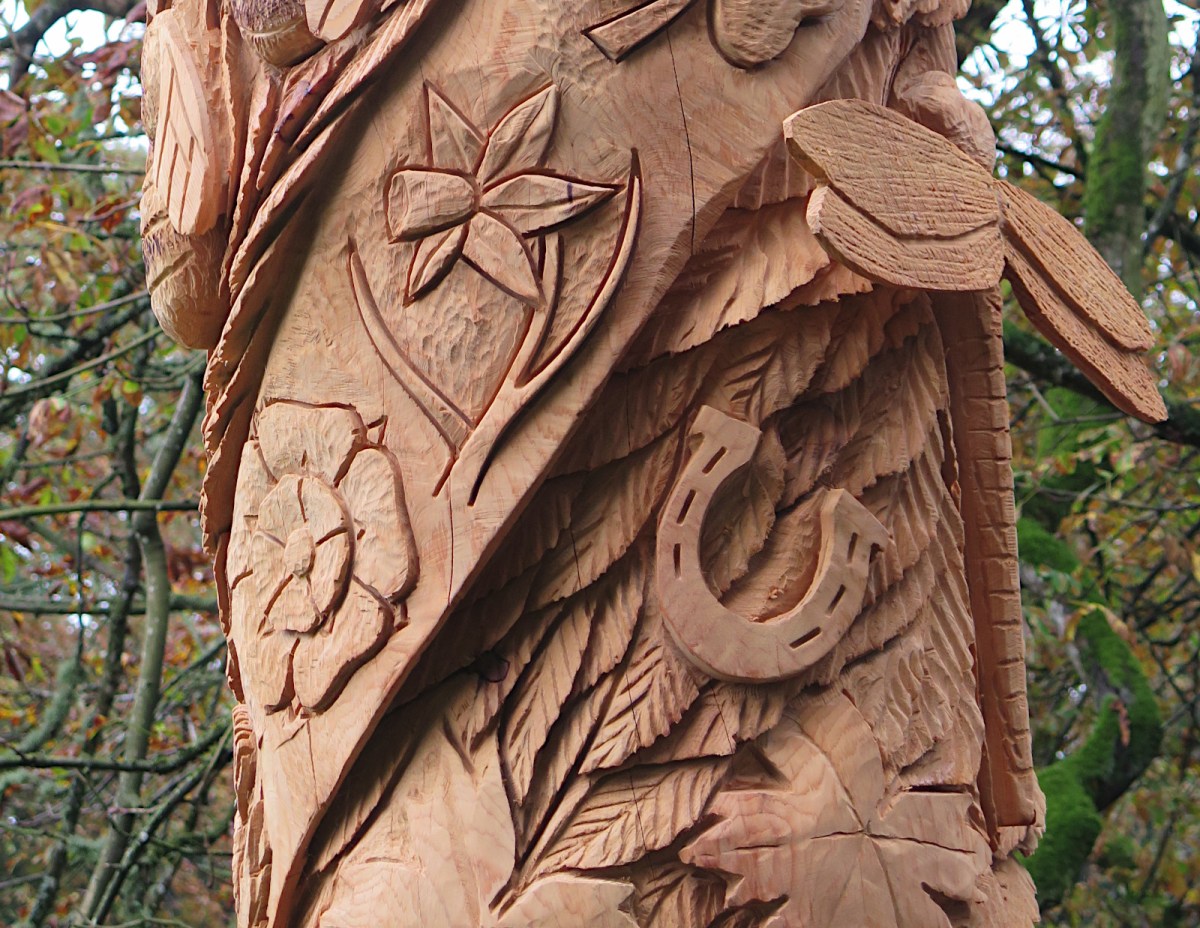
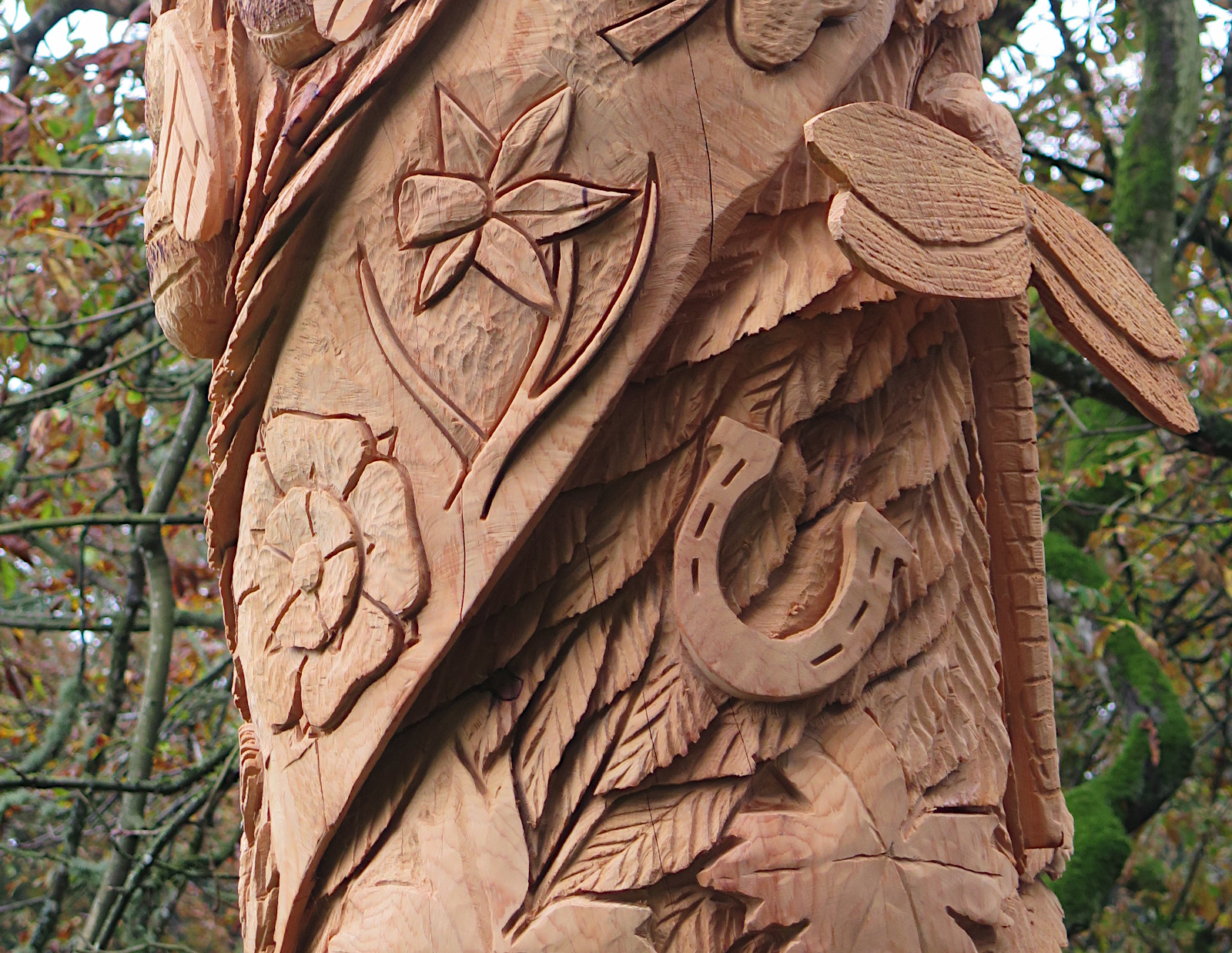
The tree was topped, the branches trimmed off, and [the sculptor] was asked to work on the standing trunk in situ. He rose to this challenge and came up trumps, the photo shows some of the detail.
Image 124 – What’s in an image? Sometimes quite a lot, more than meets the eye. I’m posting an image every day or so.
Enlarge
We have a skilled sculptor in Cirencester who specialises in carving large pieces of timber. He was called in work on a tree that had died in Cirencester Park. But instead of felling the tree and then asking him to work on the horizontal trunk (something he’s done to great effect in the past), this time the tree was topped, the branches trimmed off, and he was asked to work on the standing trunk in situ. He rose to this challenge and came up trumps, the photo shows some of the detail.
I never cease to be astonished at the way an artist can imagine a finished work before it exists and bring it to life in any medium – oil paint, watercolour, wood, stone. It’s a kind of magic. The human brain is so creative. People have been doing this kind of thing for many generations; think of Michelangelo, or the stone and bronze artists of Greece and Rome. No animal is capable of converting material into an image like this, or even imagining that such a thing is possible.
If you enjoyed this or found it useful, please like, comment, and share below. (If you don’t see those links, click the article’s title above the main photo and they will appear.) Send a link to friends who might enjoy the article or benefit from it – Thanks! My material is free to reuse (see conditions), but a coffee is always welcome and encourages me to write more often!
We had the right gear for staying dry in rain, mud and heavily dripping vegetation, so we were warm and comfortable amid the fragrance of wet grass and decaying leaves.
Image 121 – What’s in an image? Sometimes quite a lot, more than meets the eye. I’m posting an image every day or so.
Enlarge
There is a saying amongst the walking fraternity, that ‘There’s no such thing as bad weather, just bad kit’. Here are two of my friends, the three of us were out for a lovely walk in wet weather in the Cotswolds. We had the right gear for staying dry in rain, mud and heavily dripping vegetation, so we were warm and comfortable amid the fragrance of wet grass and decaying leaves.
Perhaps this not not everyone’s favourite activity, but we loved it! Damp October days like this one are good for spotting early autumn colour on the trees as well as mushrooms and toadstools amongst the fallen leaves and blades of grass. There is so much to see everywhere you look.
When: 19th October 2023 Where: Near Edgeworth, Cotswolds
If you enjoyed this or found it useful, please like, comment, and share below. (If you don’t see those links, click the article’s title above the main photo and they will appear.) Send a link to friends who might enjoy the article or benefit from it – Thanks! My material is free to reuse (see conditions), but a coffee is always welcome and encourages me to write more often!































 Journeys of Heart and Mind


