The Lauriston Hotel

I took this photo of the Lauriston Hotel in Weston-super-Mare where I stayed for a week with my parents and grandparents when I was about two-years-old.

Part 40 – Blast from the past

The Lauriston Hotel


< Previous
 | Index | Next >

December 2025

LARS Reunion Christmas lunch (click any image to enlarge)

On 2nd December Donna and I visited Bristol and Clifton Golf Club for the annual Christmas dinner for retired Long Ashton Research Station (LARS) staff. It was wonderful to see so many familiar faces, older of course yet clearly still the people I remembered. Of course, as we age we all change under the influence of new experiences, getting to know so many new friends and aquaintances, yet all the old patterns and habits are still there, faces instantly recognised, voices still sounding the same, facial expressions just as remembered from decades previously.

Sunset over Stratton

There were some glorious skies during December. I captured this view on the evening of 12th, walking around Stratton. In December the sun sets early here in the UK where the latitude is fairly high.

JHM: I wrote about an amazing photo of a volcano in Chile; and considered the effect of fog. World events:  EU leaders approved a €90bn ($105bn) loan for Ukraine for the next two years; and Israel became the first country to recognize Somaliland.

< Nov 2025 – Jan 2026 > (Jump to 2011)

September 2025

Restoring Dock Lock

I did a canal walk along part of the Stroudwater Canal with my friends Al and Phil. We began by taking a look at Dock Lock, east of Stonehouse, It was under repair as the canal restoration steadily heads towards Saul Junction where the waterway will be reconnected to the national canal nework.

We walked from Dock Lock right into the centre of Stroud, stopping for lunch and coffee next to the Canal at Ebley en route. It was mostly dry with the odd shower.

Albion Street

The second photo shows Albion Street in Stratton where a lovely double-rainbow jostled for attention with telephone cables and local properties.

JHM: I wrote about clouds reflected in water; and about a wooden jigsaw. World events: There was a serious funicular derailment in Portugal; and a UN inquiry found that Israel had committed genocide in Gaza.

< Aug 2025 – Oct 2025 >

March 2025

Canal entering the tunnel at Sapperton

On 15th Donna dropped me off at the Daneway Inn at Sapperton and I walked east along the short section of the Thames and Severn Canal to the tunnel portal. I then walked the above ground course of the canal tunnel to Sapperton, through Hailey Wood and on to the Coates portal following the canal again as closely as possible to Siddington, and then along the Cirencester Arm to meet Donna in town and walk back to Stratton together. It was a 15 mile walk in all as I diverted several times to see the canal at various points where it’s not possible to follow the towpath.

I had my laptop rebuilt and had it back on 5th, now with a 2 TB SSD and the original HDD for internal backup. I hooked it up to our Wi-Fi and began streaming data back from Dropbox.

Gumstool Brook website

Another task this month was to transfer the Gumstool Brook website fully over to Nick Henderson. This was completed on 21st and it’s a relief to have passed on the responsibility.

Aidan was travelling and exploring in Columbia this month, very adventurous and exciting for him. He seemed to be doing well, making some friends with other young people doing much the same thing, and having a generally awesome time.

JHM: I wrote about a new terraced garden at Blenheim Palace; and installing our heat pump. World events:  The Trump administration paused military aid to Ukraine; and Israel launched widespread aerial bombardments and attacks on the Gaza Strip.

< Feb 2025 – Apr 2025 >

March 2024

The Lauriston Hotel

I took this photo of the Lauriston Hotel in Weston-super-Mare where I stayed for a week with my parents and grandparents when I was about two-years-old.

I ordered a refurbished Google Pixel 7 phone to replace my old Pixel 3, and I continued scanning photos and documents. Paul and Vanessa visited with the dogs, I took them to see the old amphitheatre but it was too muddy. We bought a second-hand ‘Rollator‘ from Minchinhampton for Isobel so she can sit down at a moment’s notice if she comes over dizzy.

The Roman villa

On 16th we visited the Newt in Somerset where the reconstructed Roman Villa was amazing to visit. It’s complete, based on the ground plan of the remains of an original nearby and built using methods that would have been familiar to Roman builders. It’s complete with mosaic floors, an upstairs section, and wall paintings, furniture etc in the Roman style as well. The Master’s office looks as if he’s just been called away and might return at any moment. Amazing!

World events:  Sweden officially joined NATO; and an Artificial Intelligence Act was passed by the European Union.

< Feb 2024 – Apr 2024 >

March 2021

Primer/undercoat in the hall

We were beginning to see the first signs of relaxation of the strictest rules of COVID-19 isolation here in the UK. After isolation and 20 million vaccine doses, hospital admissions, and total numbers of patients were both beginning to fall. I got a bit of decorating done while some restrictions remained in place; the photo shows a first coat of primer/undercoat on a door frame in the hallway.

SpaceX seemed to be doing well now. Starship SN10 landed rather heavily, caught fire, then later blew up. SN11 was nearly ready to make another attempt within a few weeks, hopefully without the explosion! And I was busy updating the MainEvents files.

In Paul and Vanessa’s garden

We visited Paul and Vanessa in Weston -super-Mare and sat chatting in their garden, we can only do this because we’re in the same COVID ‘bubble’, regulations are due to ease further soon and we’ll be able to start meeting outdoors with friends and family more often and more freely.

World events: Pope Francis met with Grand Ayatollah Ali al-Sistani in Najaf, Iraq. The first-ever meeting between a pope and a grand ayatollah; and the number of COVID-19 vaccinations administered worldwide exceeded 500 million.

< Feb 2021 – Apr 2021 >

March 2016

Great Ouse floods

There was flooding in St Neots as the Great Ouse spilled out over the surrounding low-lying land. This happens quite often, one year in four or five and usually in the winter or spring. It rarely causes damage as most buildings are above the danger area.

We were meeting regularly with Roger and Carolyn’s Small Group on Tuesdays, these were fairly open and flexible meetings, almost always with a shared meal. sometimes at our house, Roger and Carolyn’s, the Bresnen’s, Leanne’s, or at the Open Door Office in Eaton Ford. Meetings at the office were becoming more common, and at someone’s home rather less so, a trend I regretted. I was also meeting regularly with Jim and Kevin, and sometimes Sean would join us as well. At a meeting on 9th I gave some thought to what it means to be sons of the Most High. How come some sons (or daughters) can be leaders. elders or teachers, but others not; how can one son or daughter have some kind of authority over other sons or daughters?

We were helping Peter and Dadka in practical ways, and also our friend Darryn who was living in our flat up at Stone Hill. Dadka got a new job at Lidl’s in Eaton Socon and Peter returned to work driving the concrete mixing lorry following recovery from a leg injury.

Melford Hall

We also visited our friends Ken and Gayna in Yoxford on 26th, we don’t get to see them often these days so this was a special opportunity not to be missed. On 27th we visited Melford Hall, an Elizabethan building, though parts of the building are much older, going back to before 1065.

JHM: I wrote about Ben Scott and the Calais camp; and about Belgium’s pain. World events: Barack Obama visited Cuba, the first time a sitting US president had visited the island since Calvin Coolidge in 1928; and Radovan Karadžić was sentenced to 40 years in prison for genocide and crimes against humanity.

< Feb 2016 – Apr 2016 >

March 2011

Common reed

Walking along the bank of the River Great Ouse, I got some great photos of common reed flower heads (Phragmites australis). So delicate and pretty, especially when lit from behind on a bright, sunny day. They might be very effective (with their long stalks) for removing cobwebs from high corners around the house. Some time I might harvest a few to try.

Rivermill

Further upstream I got another nice shot, this time of the River Mill Inn in Eaton Socon.

Debbie and the children

We visited Debbie and family on 12th for her birthday. It’s always good to see them. Beth and Paz also came over so we saw the entire family and I did a short walk with Paz across the local fields.

Towards the end of the month preparations began for a new footbridge across the River Great Ouse between Eaton Socon and the secondary school and Tesco Extra in Eynesbury.

JHM: I wrote about a gathering at Moggerhanger; and thought about a blessing and a curse expressed in the beatitudes. World events: An earthquake in Japan caused a tsunami damaging several reactors at the Fukushima Daiichi Nuclear Power Plant; and protests across Syria sparked the Syrian Civil War.

< Feb 2011 – Apr 2011 > (Jump to 1971) (Jump to top)

March 2006

The old bridge

We had the ceilings and walls plastered in the passageway to the back door, the guy who did the work was cheap but did an awful job, even plastering over cables and so on, I was appalled! We decided to let him finish, pay him, and then decide what to do next. And the old wooden footbridge from Riverside Park to Eynesbury was about to be replaced with a new, steel bridge.

I set up a new server in the KSG collection, this one (named Hazel) provided space for virtual machines that we used to investigate Linux, and versions of Windows beyond those we normally use. I was also trying to get my head around the spreadsheets used to manage the Colworth phone bills, though I didn’t know enough about Excel to do the job and didn’t have time to learn it.

On most Fridays I drove down to Cirencester early and came home late to spend some time with Dad. His health, however, was the main issue during this month; on 30th March (or around that date) he was taken ill at the Little Chef at the Burford Road services. He was enjoying a meal there when he stopped eating and looked very unwell. He was in pain, the staff were worried and called an ambulance, and he was taken to Gloucestershire Royal Hospital for tests and treatment.

Donna and I travelled down to see him on 31st and by that time he was terminally ill with a dissected aorta. He died peacefully with the family gathered around the bed on 2nd April. He was the last member of the Jefferies family to live in Cirencester until Donna and I returned there ten years later in 2016.

World events: NASA’s Mars Reconnaissance Orbiter entered orbit around Mars; and the website Twitter was launched for microblogging and social networking.

< Feb 2006 – Apr 2006 >

March 2001

Tony painting the landing ceiling

Donna’s Mum and Dad came to visit us and helped us with some decorating. The photo shows Donna’s Dad, Tony, putting a roller coat of brilliant white emulsion on the ceiling of the stairwell.

Mir re-enters

Also this month there was a major event in spaceflight, Russia de-orbited their Mir Space Station over the Pacific Ocean. It was the largest spacecraft so far deorbited and re-entered the Earth’s atmosphere over the South Pacific on 23rd March 2001.

Open Door

We were involved at Open Door Church in St Neots at this time, going to the Sunday meetings at Ernulf School and weekday cell group meetings one evening each week. I was not happy in the Sunday meetings, feeling unable to contribute fully; the cell group was more relaxed, friendly and personal.

World events: The Taliban government of Afghanistan began destroying the Buddhas of Bamiyan; and Apple Inc. released the Mac OS X operating system for Mac computers.

< Feb 2001 – Apr 2001 >

March 1996

Donna and I were growing closer and closer in March, in one sense this was wonderful, but we both felt the need to take things quite slowly because it was so soon after Judy’s death and we didn’t want to make things harder than necessary for my family. Debbie and Beth seemed to be coping surprisingly well, but there were my sisters and Mum and Dad to consider as well. We both came to a clear decision about wanting to be married. Debbie was a little anxious that she’d lose touch with Beth and with me, but no fear of that, we have a three-way video chat most Sunday evenings (30 years later!)

My Nigerian friend Elfrida died unexpectedly from a brain haemorrhage leaving Francis and the children without a wife and mother. This was a shock, there was no advance warning as we’d had with the loss of Judy, and no time to plan or adjust or to communicate or prepare. It was so very much a surprise.

Comet Hyakutake (Wikimedia)

I spotted Comet Hyakutake for the first time on 23rd March. It passed Earth at about a tenth of the distance of the Sun so was very bright and easy to spot in the early evening sky.

World events: The Dunblane school massacre took place in Scotland; and the IMF approved a $10.2 billion loan to Russia for economic reform.

< Feb 1996 – Apr 1996 >

March 1991

Eleanor’s Christening day

Pretty much the entire family descended on Ruth and Martin’s house in Holmer Green on 10th March for a party and a good old chat followed by their daughter, Eleanor’s, Christening.

The video is an unedited view from a VHS copy of my Sony Hi-8 original. It only covers the gathering at their home, you’ll get glimpses and voices of many people who are no longer with us as well as much younger versions of those of us who remain. A real trip down memory lane! (If you’re not a family member you’ll probably find the video utterly boring!)

Debbie and Sarah

On 11th, Debbie and her friend Sarah Fido played clarinet at a concert in Bristol’s Colston Hall (now renamed Bristol Beacon). The orchestra played really well, much, much better than most youth orchestras.

Presents

The 12th was Debbie’s birthday so it was time to open presents. This year they included a collapsible umbrella.

Helicopter Museum

And on 31st we had a day visit from my Mum and Dad who brought Dan Holme with them from Cirencester. We drove over to Weston -super-Mare and visited the Helicopter Museum on the Westland helicopter site there.

World events: Massive demonstrations were held against Slobodan Milošević in Belgrade; and Germany formally regained complete independence after France, the UK, the USA and the USSR relinquished all remaining rights to the country.

< Feb 1991 – Apr 1991 > (Jump to 1971) (Jump to 2011)

March 1986

Birthday cake

Judy made Debbie a cake for her 11th birthday (12th March).

The previous owners of our house had planted a row of conifers along the front of the property and they were becoming too large; I decided to remove them before they got too big to tackle.

Tree removal

It was quite a major task, but I cut them off about a metre above ground level, removed all the side branches, and then used the trunks for leverage after digging round them and cutting through the main roots. They made a lovely bonfire at the bottom of the garden!

World events: The first paper was published describing the atomic force microscope invented the previous year; and on 13th March, Microsoft Corporation held its initial public offering of stock shares.

< Feb 1986 – Apr 1986 >

March 1981

Debbie and her 6th birthday cake

Debbie was six on 12th March, Judy had made her a cottage cake with hollyhocks and other garden plants growing outside. She had a lot of friends round for her party (the friends had multiplied quickly when she began school in 1980).

Debbie reading to Beth

Later in the month, here’s Debbie (now at school and becoming good at reading) reading a bedtime story to her sister, Beth and three other characters who don’t really seem to be paying much attention to the story.

World events: The first London Marathon was held, with 7,500 runners; and there was an assassination attempt on Ronald Reagan.

< Feb 1981 – Apr 1981 >

March 1976

Cray-1 (Wikimedia)

My Mum and Dad came to visit us on 13th March, the day after Debbie’s first birthday.

At work I was writing up the previous year’s research on flower and fruit development and nutrient transfer in developing plum fruit as well as the problem of gum production in plums which affects fruit quality and marketability. These and other results were published in the Long Ashton Annual Report for 1975, published during 1976.

World events: The Cray-1 was released as the first commercially developed supercomputer; and  Harold Wilson resigned as Prime Minister of the United Kingdom.

< Feb 1976 – Apr 1976 >

March 1971

20 Belmont Road (Google Maps)

Judy and I moved into an unfurnished flat at 20 Belmont Road in St Andrews, Bristol, perhaps on 10th. The photo shows the building; our flat contained the two windows at the right hand end of the middle floor.

It was great to have a lot more space than our cramped bed-sit in Clifton, it was great to have our own bath, it was great to have our own loo even though that was on the landing just outside the door to our flat, and it was great to have a proper kitchen instead of the tiny cupboard/kitchen in the bed-sit. We had no furniture (but quickly bought an extendable table and four chairs from a second-hand shop on the nearby Gloucester Road) and we bought our own electric cooker with four rings, a grill and a clock/timer for the oven. We bought a double bed with the £60 my grandmother had given us as a wedding present, telling us ‘You spend a third of your life in bed, so make sure it’s a good one that will support your backs properly and last well’.

We felt we were off to a good start now, our rent was lower than before, we were able to begin buying our own furniture, and had room for our books, records, photos and other possessions. We both had steady jobs and were able to save some money most months to build a deposit for eventually buying a house of our own. And, of course, we still had our car, Pumpkin (so called because Judy’s Dad had once remarked that if I was still at their house after midnight at 18 Hales Close in Cheltenham, my Ford Anglia 100E might turn into a pumpkin).

World events: The Pakistani army occupied East Pakistan; and  Joe Frazier defeated Muhammad Ali in a 15-round boxing match at Madison Square Garden.

< Feb 1971 – Apr 1971 > (Jump to 1951) (Jump to 1991)

March 1966

Founders service

The Grammar School Founders and Benefactors Memorial Service was held on 3rd March. The whole school and many parents turned up for the occasion at Cirencester Parish Church. The front cover of the order of service is shown at the left (click to enlarge), or you can view the entire document as a PDF.

World events: The British Government announced plans for monetary decimalisation; and NASA’s Gemini 8 docked in space, with an Agena target vehicle. The first time this was achieved.

< Feb 1966 – Apr 1966 >

March 1961

TB inoculation certificate

My entire school year was tested for sensitivity and resistance to tuberculosis. If we were found to be susceptible we were inoculated. This included me, and I ended up with a large hole in my upper arm where I was inoculated, when the family GP saw this he told Mum that if I’d remained uninoculated and had been infected with the virus later in life I would almost certainly have died as a result. The hole filled in eventually, but I still have the scar (along with many others my age, I suspect).

TB is now a real rarity in western nations as almost everyone has received the vaccination or has recovered from an infection.

World events: Kurenivka mudslide: A dam burst in Kiev, USSR, killing 145; and black and white £5 notes ceased to be legal tender in the UK.

< Feb 1961 – Apr 1961 >

March 1956

Fairey Delta 2

I was approaching six-years-old and in the third year at Querns Junior School, the Spring Term ended in late March. Most of our lessons were arithmetic or English, reading and writing more widely and competently now as we grew older. We were also starting to learn some history, geography, art, religion, music and science, not as formal, dedicated lessons but rather as a sort of general knowledge.

World events:  Morocco declared independence from France; and Britain’s Fairey Delta 2 broke the World Air Speed Record, raising it to 1,132 mph (1,822 km/h) or Mach 1.73.

< Feb 1956 – Apr 1956 >

March 1951

UNIVAC I (Wikimedia)

I was now nearly 2¾ and, no doubt into everything. No specific memories remain, of course, except for one. I know it was early in my life because I was wearing a blue leather harness with three silver bells on the front. I had to wear this for safety if I was walking along the pavement, ie not riding in the pushchair. I remember being in Purley Avenue, just around the corner from Victoria Road where Granny and Grandpa lived. We were walking towards Victoria Road and had reached the footpath that runs between the gardens of Victoria Road and Purley Road (the path is still there today in 2026). I got very cross about wearing the harness; I probably had a tantrum. Dad said I could walk without it but if I did I must hold his hand – and that’s what happened.

I suppose it’s quite possible I was told about this when I was older, but it certainly feels like a memory. There are several other events I seem to remember from about the same age or even a little younger.

World events:  In the Korean War’s Operation Ripper, United Nations troops recaptured Seoul for the second time; and Remington Rand delivered the first UNIVAC I computer to the United States Census Bureau.

< Feb 1951 – Apr 1951 > (Jump to 1930s) (Jump to 1971)

March 1946

Largo Bay (Image: IWM (FL 14532))

Mike, at 19-years-old was still worried about Lilias’ health and in particular that they might not be able to have a family if surgery became necessary. On 6th March he packed and addressed his kit and boarded the HMS Largo Bay (an anti-aircraft frigate) at 11:00 on 7th. It seems the food and the hammocks were not great, and he was put in charge of deck welfare.

They were due to leave at 10:00 on 8th, but the crew went on strike so everyone had to disembark and return to Santa Cruz. On 11th they were to leave at midnight on the train to Calcutta but this, too, was cancelled. They returned to Largo Bay on 13th and finally left at 09:00 on 14th. This time Mike was appointed ‘Ablution Cleaner’. They passed Ceylon (now Sri Lanka) on 17th, putting the clocks forward 30 minutes every day until 19th.

The 22nd was an interesting day, they went ashore in an amphibious DUKW and saw Rangoon which was ‘much knocked about’. Mike saw his first rickshaw and some Japanese prisoners. The clocks were set an hour earlier here. He attended a Japanese War Crimes Trial on 23rd; and on 24th the ship sailed again but with the addition of Indian troops making it very hard to find enough space for sleeping.

Mike reached Singapore on the afternoon of 27th March. He had one letter from Lilias on 28th and thought that a lot of others had been lost. But 12 more arrived on 29th and a further 5 on 30th.

World events:  British troops withdrew from Iran according to an agreement, the Soviets did not; and in Fulton, Missouri, Winston Churchill spoke about the Iron Curtain.

< Feb 1946 – Apr 1946 >

March 1941

John, Richard, Robert

John and Bob joined the Army and Dick joined the Royal Navy. All three served as officers during the Second World War, and all three survived the experience without injury. The photo was taken in 1939 before they left home. Presumably there would have been a similar image from the front, too, unfortunately lost I think.

While they were away Churnside must have seemed a very empty house with just Guv, Nor and Mike (who was still at school aged 15). The older brothers were in their 30s and 40s and would have been home on leave from time to time, but not all at once.

World events:  In WWII, Rommel launched his first offensive in Cyrenaica; and in the Battle of Cape Matapan British naval forces defeated an Italian fleet, sinking 5 warships.

< Feb 1941 – Apr 1946 >

1930-1939

Wolseley 6

This Wolseley car was bought my my grandfather in the 1930s. I believe it came from Steels Garage in Dyer Street and Lewis Lane. In the photo it’s parked outside 35 Victoria Road, next door to 37 (Churnside) where my grandparents lived. I think I travelled in this car when I was a small child and it was later replaced with an Austin Somerset which I also remember.

World events: (March 1936): In violation of treaties, Nazi Germany reoccupied the Rhineland. (March 1931): The British viceroy of India and Mohandas Gandhi signed the Gandhi–Irwin Pact.

<< 1930s >> (Jump to 1800s) (Jump to 1951)

1900-1929

Employment agreement

Click the agreement to enlarge it. The document was signed on 19th March 1920. The cottage it refers to was empty when I remember it as a teenager, but it was always known as ‘The Carter’s Cottage’ and its last resident might well have been the William Richard Robinson mentioned here. I took a look inside when I was about 16-years-old and doing holiday work on the rose nursery a few hundred metres north of it (where Tesco Extra stands today). It seemed sound and was unlocked, but was very dusty, cobwebby and empty inside.

The rent in 1920 was 3/- per week, that’s 15p per week; with the large garden it might have been rented today for perhaps £1500 per month. Two and a half thousand times as much, that’s inflation for you! When Donna and I moved to Cirencester in 2016 the cottage was still standing and in use, although Watermoor Nursery had been sold and a housing estate built there. The cottage was demolished a few years ago and the land now houses three or four modern homes.

Notice that the agreement is signed by Mr Robinson, by my grandfather, Edward Arthur Jefferies and by his uncle, William John Jefferies.

World events (March 1926): Robert H. Goddard launched the first liquid-fuel rocket, at Auburn, Massachusetts.(March 1921): The Treaty of Versailles forces Germany to pay war reparations. (March 1916): US President Woodrow Wilson sent 12,000 US troops over the U.S.–Mexico border to pursue Pancho Villa(March 1911): The first congressional appropriation was made for what would become the United States Air Force (March 1906): Romanian inventor Traian Vuia becomes the first person to achieve an unassisted takeoff in a powered monoplane. (January 1901): Irish nationalist demonstrators were ejected by police from the House of Commons of the United Kingdom in London.

<< 1900-1929 >>

1800-1899

Edward Jefferies

My great-grandfather, Edward Jefferies was born in 1849 in Cirencester. In the baptismal record his father, John Jefferies, was listed as a Nurseryman living at Querns Cottage. Presumably John and Alice lived in the cottage when John worked as a nursery manager for Richard Gregory. After taking over the business, John may have built Minerva Villa on nursery land at the junction of the Avenue and Tower Street and the family moved there from Querns Cottage. Alternatively Minerva villa might have been built by Richard Gregory. Either way, Edward would have lived in Querns Cottage as a young child but would also have remembered Minerva Villa as an older child.

Edward married Mary Elizabeth Hedges in 1875 and they lived at 10 Tower Street (within sight of Minerva Villa), Mary’s wedding dress was in the possession of her daughter-in-law, my grandmother, Nor. She, in turn handed it over to my Mum, Lilias who passed it on to my sister, Rachael. As it was difficult to save the delicate and aging silk, it was finally sold to a Museum.

Edward worked as a Seedsman in the family business, and died aged just 35 (he was buried in Chesterton Cemetery, recorded as having died in Bournemouth). Although we don’t know the cause of death, it was quite likely to have been tuberculosis (consumption) as patients were often encouraged to move to a seaside town where cleaner air, bright sunshine, and rest from work were thought to offer a real chance of recovery.

Family connections:

  • Parents – John and Alice Jefferies (nee Freeth)
  • Born – 13th May 1849 (baptised 24th June 1849)
  • Died – 20th January 1885 (buried on 24th January)
  • Married – 8th July 1875 to Mary Elizabeth Hedges
  • Siblings – William John (1880), Julia Anne (1851)
  • Children – Edward Arthur (1879), Herbert Cyril (1880), Elsie Margaret (1883)

World events (February 1881): Kansas became the first U.S. state to prohibit all alcoholic beverages. (February 1861): The Confederate States of America was formed. (February 1841): The Act of Union (British North America Act1840) was proclaimed in Canada. (February 1821): In Mexico, Peace between viceroyalty troops and insurgents was proclaimed in Mexico (the Embrace of Acatempan). (February 1801): William Pitt the Younger resigned as UK Prime Minister.

<< 1800-1899 >> (Jump to top) (Jump to 1930s)

1500-1799

Wool trade (Wikimedia)

In 1500 the wool trade was still thriving in Cirencester and the countryside in the area was partly devoted to raising sheep. A slow decline had begun towards the end of the previous century and was continuing, but there was still plenty of profit in the wool trade in 1500 f0r decades to come. The decline was partly due to a growing preference for Spanish Merino wool over the wool from the Cotswold Lion breed.

Cotswold Lion (Wikimedia)

There were two main sources for wool. Cirencester Abbey controlled a good portion of the land around the area suitable for raising sheep (mainly the higher ground as this was well drained). Sheep don’t do well if their feet are frequently wet. The other source for wool was the privately owned and farmed land. Both sources sent wool to Cirencester for sale following shearing time and in rather large quantities. After sale to wool merchants the wool was baled up for export or for further processing locally (the Abbey may have done this in house). Wherever it went, the wool had to be washed and dried, carded with teasles, spun into woollen thread, dyed and then woven into fine cloth. The Cotswold sheep produced wool of particularly high yield and quality so it was in great demand. Much of the exported wool was processed, woven and sold in Flemish lands (today’s Belgium and the Netherlands).

The Kings of England at this time were also focused on trade and export so encouraged this wool trade as it brought useful income to England and could be taxed to increase royal revenues. The 1500s were mostly times of peace, stability, and industry in England. Cirencester Parish Church began to be rebuilt from 1514, and the earlier rivalry between townsfolk and the Abbots calmed down as there was adequate income for both to prosper.

The South Porch (now the main entrance to the Parish Church) was built by the abbey around this time, mainly as office space for the Abbey’s business connections with the town and its surroundings. If it had been paid for and built by town guilds there would have been carved crests and shields for the various guilds, but there’s nothing of that sort anywhere in the building. A small bridge over the Churn in Gloucester Street was known as Gilden Bridge but appears to have no connection with guilds or the building and use of the South Porch.

The old street

At this time the porch was separated from the Parish Church by a narrow street, the two being connected later by new walls and roofing. The heavy doors on the east and west sides of the porch show where this old street passed through, and it can be traced some distance on the east even today.

Continuing east

Some of the names of the old town streets are still known; in the following list I’ll provide the old name first in Tudor spelling, and then the current name in brackets:

  • Abbot Strete – (Coxwell Street)
  • Batel Strete – (Thomas Street)*
  • Castell Strete – (Castle Street)
  • Cheping Strete – (The Market Place)
  • Cricklade Strete -(Cricklade Street)
  • Dole-halle Strete – (Dollar Street)
  • Dyar Strete – (Dyer Street)
  • Foss, the – (Lewis Lane)
  • Goseditch Street – (Gosditch Street)
  • Inch-thrope – (Cecily Hill)
  • New Strete – (Querns Lane)
  • Shoter Strete – (Sheep Street)
  • St Laurens Strete – (Gloucester Street)

*Batel Strete may refer to the 7th century Battle of Cirencester between Cwichelm and Penda. The name far precedes the English Civil War battle in Cirencester between Cavaliers and Roundheads.

The source for these street names (and some additional names and details not included here) is ‘A History of Cirencester’ by Welbore St. Clare Baddeley, page 213, published in 1924.

World events (Mar 1731): The Treaty of Vienna was signed between the Holy Roman Empire, Great Britain, the Dutch Republic and Spain. (Apr 1701): Mecklenburg-Strelitz was created as a north German duchy. (Mar 1631): The siege of the Protestant German city of Magdeburg by the Catholic League began and lasted for more than two months before the city fell and the inhabitants were massacred. (Mar 1601): The treason trial for five secondary participants in Essex’s Rebellion was held in London. All five were found guilty. (Mar 1531): King Henry VIII gives royal assent to the Poisoning Act 1530 which provided for the boiling to death of people convicted of poisioning others. (Mar 1501): Portuguese navigator João da Nova discovered Ascension Island.

< Previous|Index|Next

Useful? Interesting?

If you enjoyed this or found it useful, please like, comment, and share below. (If you don’t see those links, click the article’s title above the main photo and they will appear.) Send a link to friends who might enjoy the article or benefit from it – Thanks! My material is free to reuse (see conditions), but a coffee is always welcome and encourages me to write more often!

The Bingham Library

The new library in Dyer Street had a meeting room with seating for 200 people, but it quickly became clear that a larger meeting place was needed. And this is one of the reasons that Bingham decided to fund the Bingham Hall.

The Bingham Library

< Previous | Index | Next >

Image of the day – 193

What’s in an image? Sometimes quite a lot, more than meets the eye. I’m posting an image every week or so.

Bingham Library

Cirencester’s Bingham Library building is now the Town Council Offices and the Tourist Information Centre. When I was a pupil at Cirencester Grammar School in Victoria Road, this grand old building was still the town’s main library. I remember walking to it from the family home at 37 Victoria Road, often to return books and take out different ones on science fiction, astronomy, or whatever interested me at the time; sometimes to visit the reference library to read articles from Encyclopaedia Britannica and make notes for Geography essays on coffee, rice or tea production in exotic places.

Daniel George Bingham

Blue plaque (click to enlarge)

The Bingham Hall in King Street as well as the Bingham Library in Dyer Street were built as town amenities and improvements by Daniel George Bingham. For more details of his life and career, click the blue plaque on the right.

Bingham worked in railway management, first at Cirencester, later at Paddington in London, and finally in Utrecht in the Netherlands where he became wealthy. He visited Cirencester briefly but quite regularly and spent part of his wealth providing the library in 1905 and the Hall in 1908. He and his wife Jane had friends and family in Utrecht so they were always keen to remain living there, though clearly Bingham retained a fondness for his town of birth – Cirencester.

From the beginning, the new library in Dyer Street had a meeting room with seating for 200 people, but it quickly became clear that a larger meeting place was needed. And this is one of the reasons that Bingham decided to fund the Bingham Hall to provide expanded facilities for meetings, dinners, theatre, music, and even a rifle range. I remember being in the Army Cadets in the sixth form at the Grammar School and taking part in target practice with .22 calibre rifles in the Bingham Hall rifle range. Morning assemblies were held in the main hall at the Bingham Hall, also school theatrical productions and musical performances.

What about us?

Few of us will ever have enough money to contribute something major like Bingham did. But most of us can afford to buy a little extra food and put it into the Food Bank receptacle as we leave the supermarket. Or we can join a local organisation helping others in some way, or keeping the local environment tidy. We all have the capability to improve our fellow citizens’ well-being in some way, it may cost no more than a little thought and a simple action.

So why not join in? Bingham did. We all can!

See also:

< Previous | Index | Next >

You might also like:

Useful? Interesting?

If you enjoyed this or found it useful, please like, comment, and share below. (If you don’t see those links, click the article’s title above the main photo and they will appear.) Send a link to friends who might enjoy the article or benefit from it – Thanks! My material is free to reuse (see conditions), but a coffee is always welcome and encourages me to write more often!
A recommended site

In first-century Jewish society, a woman approaching a rabbi — in public, uninvited, without the mediation of a husband or male relative — was itself an act that would raise eyebrows and clench jaws.

Chris Dryden’s website

< Previous | Index | Next >

On the web – 1

CD’s website

Sometimes I read something so good that I want to share it with my readers. This happened recently with one of Christoper Dryden’s posts. When I asked if I might republish it here, he very generously agreed. But I’m having second thoughts. Not about sharing it, but about sharing it in full. I think it will be better to share enough that my readers will want to go and read the rest on CD’s blog.

The extract

Reading: Mark 5:21-43

ContextWhat social barriers does the bleeding woman overcome to reach Jesus, and why is this significant?

This scripture does not indicate the social barrier, but we can infer the following: she has a disease, which doesn’t make her socially acceptable for starters. The nature of the disease, apparently, would make her unclean, so she shouldn’t be seen in public. Touching the garment of Jesus would be considered scandalous and outrageous cos the belief was that those touched by the unclean would be unclean themselves. She’s a social outcast, and she should know her place and deal with the fact that she’s worse off for looking to get her problem sorted, only for it not to work out. She’s a woman, that also ain’t becoming of someone who wishes to approach this guy. Seen in that light, the amount she’s overcome to reach out speaks volumes about the level of faith she has that one touch could make all the difference. It explains Jesus’ own commentary on the situation, namely that her faith has made her whole. And as I reflect on that, there’s the nudge to consider what level of faith can be exercised to trust Jesus. And also, there’s a challenge of how we can demonstrate and declare, for the benefit of other social outcasts, that their issues can be solved by reaching out to touch Jesus, who is near them?

In first-century Jewish society, a woman approaching a rabbi — in public, uninvited, without the mediation of a husband or male relative — was itself an act that would raise eyebrows and clench jaws. Layer on top of that the twelve years of haemorrhaging, which under the Levitical code rendered her perpetually ritually unclean (Leviticus 15:25-27), and you start to appreciate what she was carrying before she ever took a single step toward Jesus. It wasn’t just a physical condition. It was a sentence. Twelve years of isolation. Twelve years of being untouchable. Twelve years of being told, in effect, that she didn’t qualify.

She had also spent everything she had on physicians who left her worse off, not better. So not only is she socially marginalised, she is financially spent and medically hopeless. She has nothing left to lose. And that, right there, might be the very thing that unlocks her faith. When you’ve exhausted every other option, the audacity to reach for Jesus becomes a lot less surprising.

Seen in that light, the amount she’s overcome to reach out speaks volumes about the faith she has that a single touch could make all the difference. It explains Jesus’ own commentary on the situation: her faith has made her whole. And as I reflect on that, there’s a nudge to consider what level of faith is required to trust Jesus. And also, there’s a challenge of how we can demonstrate and declare, for the benefit of other social outcasts, that their issues can be solved by reaching out to touch Jesus, who is near them?

Someone might feel like they don’t qualify. They feel like they’ve been told — by circumstance, by history, by the voice in their own head — that the door to Jesus isn’t for them. This woman’s story is a loud and clear rebuttal of that lie. She reached, He responded, and the power that went out of Him was not accidental. He knew. He always knows. And He is never contaminated by what comes to Him, broken and desperate. He is only ever transformative.

Content: How does Jesus treat both the synagogue leader and the unclean woman with equal dignity?

What a fascinating word – dignity. Let’s get ourselves a running definition or walking, if we prefer the strolling approach.  Dignity is about worth, value and honour. To treat people with dignity is to confer on them a sense that they are of worth and value and should be duly honoured…

Reading more

My hope is that you’ll want to read the whole thing. Don’t miss the opportunity, you will not regret it! And if you like Dryden’s writing as much as I do, you’ll bookmark his site and keep coming back for more.

< Previous | Index | Next >

You might also like:

Useful? Interesting?

If you enjoyed this or found it useful, please like, comment, and share below. (If you don’t see those links, click the article’s title above the main photo and they will appear.) Send a link to friends who might enjoy the article or benefit from it – Thanks! My material is free to reuse (see conditions), but a coffee is always welcome and encourages me to write more often!
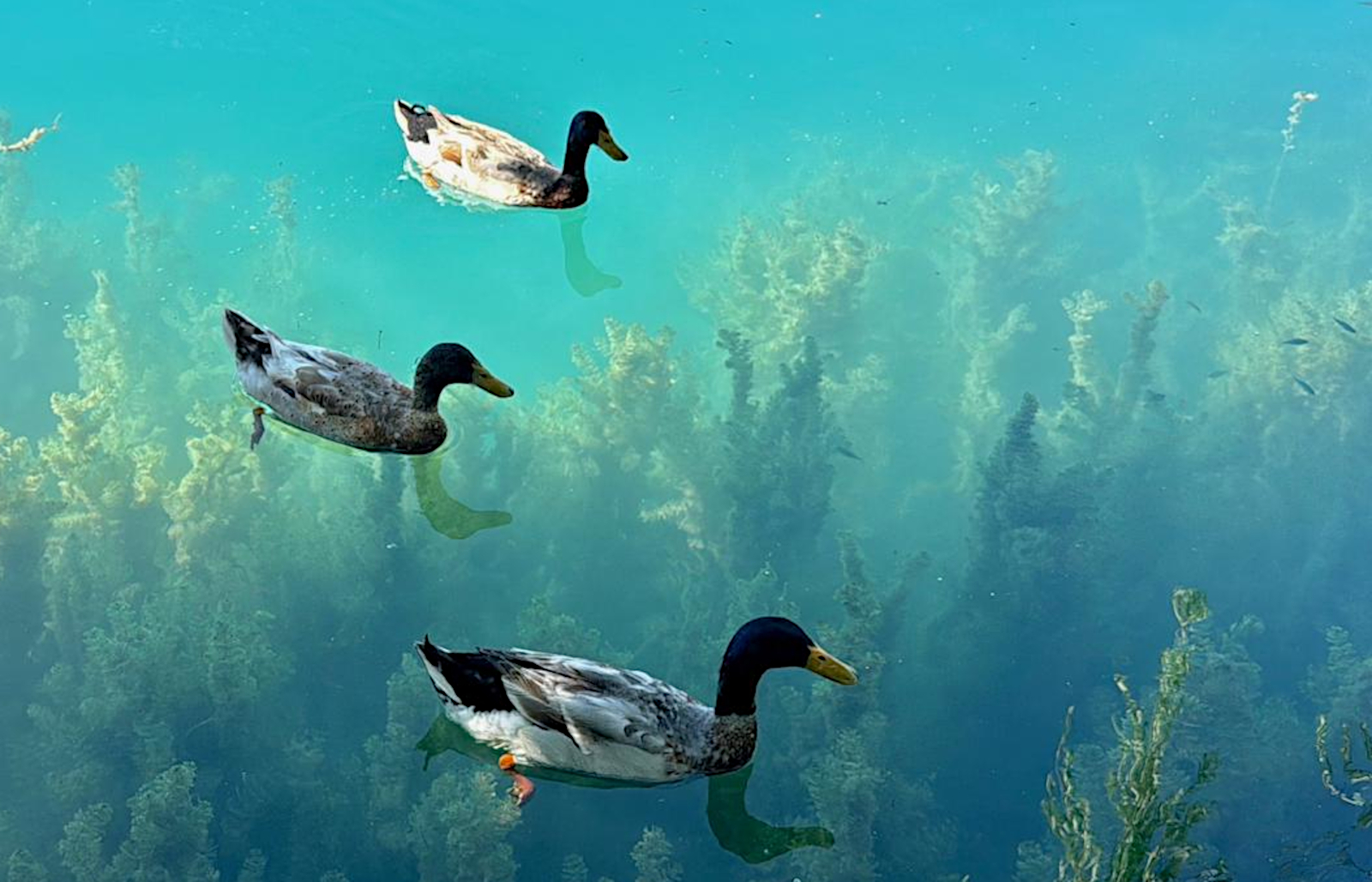
Life always wins out

All forms of life are precious and we depend on many of them to provide food, purify water, generate the oxygen we need to breathe, clean away life forms that have died, and much, much more.

Fallen tree, climbing ivy

< Previous | Index | Next >

Image of the day – 192

What’s in an image? Sometimes quite a lot, more than meets the eye. I’m posting an image every few days.

Fallen tree, climbing ivy

This old tree trunk, clearly felled by chainsaw, is being colonised by ivy. Once the tree stood tall and strong and it’s likely that ivy clung to its trunk and branches. Now the tree lies on the ground, entirely dead, but ivy still uses the trunk as a support to grow upwards to continue to reach the light.

No giving up

Life is not in the habit of giving up, generations come and go, no individual tree, person, or anything else lasts for ever, not even a species. But life itself adapts, changes, and takes advantage of what went before. There has been life on planet Earth for around four billion years, that’s only 500 million years after the planet itself was formed. And it’s developed enormously in variety and complexity since chemistry first gave rise to biology.

We’re still filling in the gaps in what we know, but our knowledge is expanding and the gaps are shrinking. What we do know is that living things are very good at taking advantage of circumstances. That’s what the ivy is doing on the dead tree trunk. The need for sunlight is critically important for plants as the energy from that light allows them to build sugars from water and carbon dioxide. A stock of sugars enables them to survive the nights where the sun is absent, and survive the long, dark, cold, winter months as well.

All forms of life are precious and we depend on many of them to provide food, purify water, generate the oxygen we need to breathe, clean away life forms that have died, and much, much more.

Animals of all kinds and sizes ultimately depend on the sugars made by plants. Many animals feed on plants, stealing their sugars in a variety of forms, some feed on other animals, stealing sugars in secondhand forms; some, like us humans, eat both plants and animals. But almost all life depends ultimately on sunlight for its supply of energy.

That same great source of light also informs us, lets us see. Without light, eyes would be of no value whatsoever. Without light we would all be profoundly blind.

Jesus said, ‘I am the light of the world’. What does he mean by that? Is he saying that he is a light without which we’d be profoundly blind?

I think that’s exactly what he’s saying. Light is essential for vision and vital energy. The sun enables physical vision and energy. Jesus provides another kind of vision and energy. Search it out! It’s not too hard to find.

See also:

< Previous | Index | Next >

You might also like:

Useful? Interesting?

If you enjoyed this or found it useful, please like, comment, and share below. (If you don’t see those links, click the article’s title above the main photo and they will appear.) Send a link to friends who might enjoy the article or benefit from it – Thanks! My material is free to reuse (see conditions), but a coffee is always welcome and encourages me to write more often!
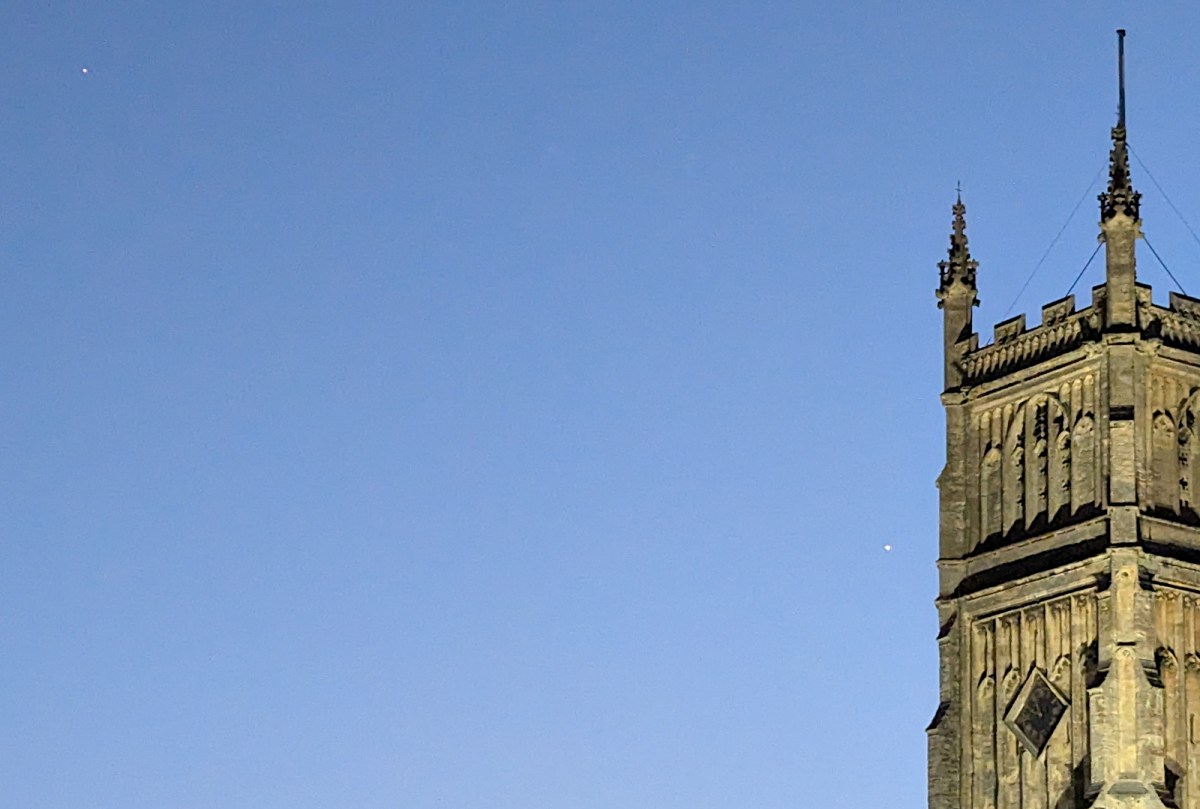
Leading the sheep

The need to accept one another as beloved brothers and sisters will start to seem more important than having this or that position accepted. The body will work together better, there will be less confrontation and more building going on.

Shepherd and sheep (Wikimedia)

< PreviousIndexNext>

8 – activating church

Shepherd and sheep (Wikimedia) -Click images to enlarge

Continuing the flow of church life and growth, where evangelists have been at work there will be a gathering of people following Jesus to the best of their ability; some will be absolute beginners. There are bound to be some difficulties and rough edges: some may come off track, stop coming to meetings and drift away. There may be disagreements, even angry arguments. There will certainly be differences of opinion and misunderstandings; friction and differing perspectives. And there may be some who will say, ‘Don’t go that way, come this way, it’s a much easier path.’

Where there is someone with a strong shepherding gift, all of these issues will be addressed, usually in straightforward, kind and helpful ways. People will be encouraged to understand alternative points of view even though they may strongly disagree. Those who wander away will be visited, given an opportunity to explain difficulties, ask questions and be encouraged even if they decide not to return. The need to accept one another as beloved brothers and sisters will start to seem more important than having this or that position accepted. The body will work together better, there will be less confrontation and more building going on.

Although Paul’s greatest gifting may have been apostolic and he was strong also in the prophetic, you can see the shepherd in him as he shows concern for the Corinthians who were losing their way. And I can imagine James, speaking about the widows and orphans saying, ‘Hey, these people need your help and love too. You’re watching them suffer and doing nothing to show them you care about them.’ Shepherds are always alert and ready to intervene when there’s a need.

We’re at a strong disadvantage here in Britain, our agricultural history has shepherds but no tradition of leading sheep. Instead our custom is to round them up and drive them in the way we want them to go. We use sheepdogs to help us frighten the sheep into submission. Take a look at the photo in this article, the shepherd is in front and the sheep are following, that would not happen in the UK, or in France, the USA, Australia or New Zealand. The photo is from Poland where some shepherds work like the traditional pastoralists in Israel and Arab nations. When Paul writes about the gift of a shepherd he’s not thinking about rounding up or driving a herd of anxious and scared sheep with the help of a descendent of the wolf family! There may be difficult moments where someone with a shepherd gift has to act very firmly to protect someone else from continuing unkind, selfish or unthinking behaviour, but hopefully these will be rare exceptions.

Why follow?

So why do sheep follow a shepherd? It’s because the shepherd knows what the sheep need, and the sheep know that the shepherd knows what they need. What do sheep need? They need grass to eat, water to drink, and safety from predators. Sheep are far from stupid, they soon learn that the shepherd will take them to green pastures, streams of living (ie flowing) water, and if a predator comes close the shepherd will drive it away.

And that, my friends, pretty much describes the gift of Shepherd in the life of the church. If you are a gift of Shepherd in the church nobody will be afraid of you. They will know from experience that your habit is to lead them to places where they will be able to thrive and grow in peace and safety. Places where they will be fed truth and have access to the living water, and that every kind of predator will either be won over or chased off.

Do you have this gift?

Yes, as with apostle, prophet and evangelist, we all have this gift to some degree. You cannot be like Jesus without having some level of shepherd about you. Jesus is the origin and source of all the gifts we’re discussing in this series. If you believe him and follow him then Christ is in you. And if the perfect Shepherd is in you then you are going to reflect that at some level.

Psalm 23

This famous Psalm sums it up really well. If you have a well-developed and deep gift of shepherd you will be a living example of Psalm 23 in action. The psalm describes how you will make the people around you feel.

How the gift of shepherd has been misunderstood

In the 20th and 21st centuries the word ‘pastor’ has been used (or misused) to identify people who may (or may not) have a shepherding gift. Often it is used to mean something like a manager or director – as if church is a sort of business enterprise. A Pastor in this sense is heavily loaded with many duties. He is the person where the buck stops – financially and managerially. He (for it’s usually a man) is expected to fix every problem, and solve every issue. The Pastor may have a team under him, often described as elders, people he can delegate to, call on for help when needed, and share the responsibilities with. Neither the pastor nor the elders will necessarily be shepherds in the sense I’ve outlined in this article. Some of them might be, but much of their time and effort is likely to be spent on management tasks.

Meanwhile any true shepherds in the congregation may not be identified, and might struggle to fulfil the role Jesus has bestowed on them. It’s a double-bind, in which shepherds and those who need the care of a shepherd are both frustrated.

Check the Daily Meditations link below to see some of the thoughts of a shepherd’s heart. Next time, we’ll take a look at the gift of teacher, that will round off APEST for us:

Apostle
Prophet
Evangelist
Shepherd
Teacher

After thinking about the teaching gift, we’ll take a look at how all five APEST gifts can be seen in the nature and teaching of Jesus himself.

See also:

< PreviousIndexNext>

You might also like:

Useful? Interesting?

If you enjoyed this or found it useful, please like, comment, and share below. (If you don’t see those links, click the article’s title above the main photo and they will appear.) Send a link to friends who might enjoy the article or benefit from it – Thanks! My material is free to reuse (see conditions), but a coffee is always welcome and encourages me to write more often!