The photos were not taken from quite the same place, the landscape is more established and natural than it was 64 years ago, there has been a modification to the overspill structure.
What’s in an image? Sometimes quite a lot, more than meets the eye.
I’m posting an image every two days (or as often as I can). A photo, an image from the internet, a diagram or a map. Whatever takes my fancy.
Click to enlarge
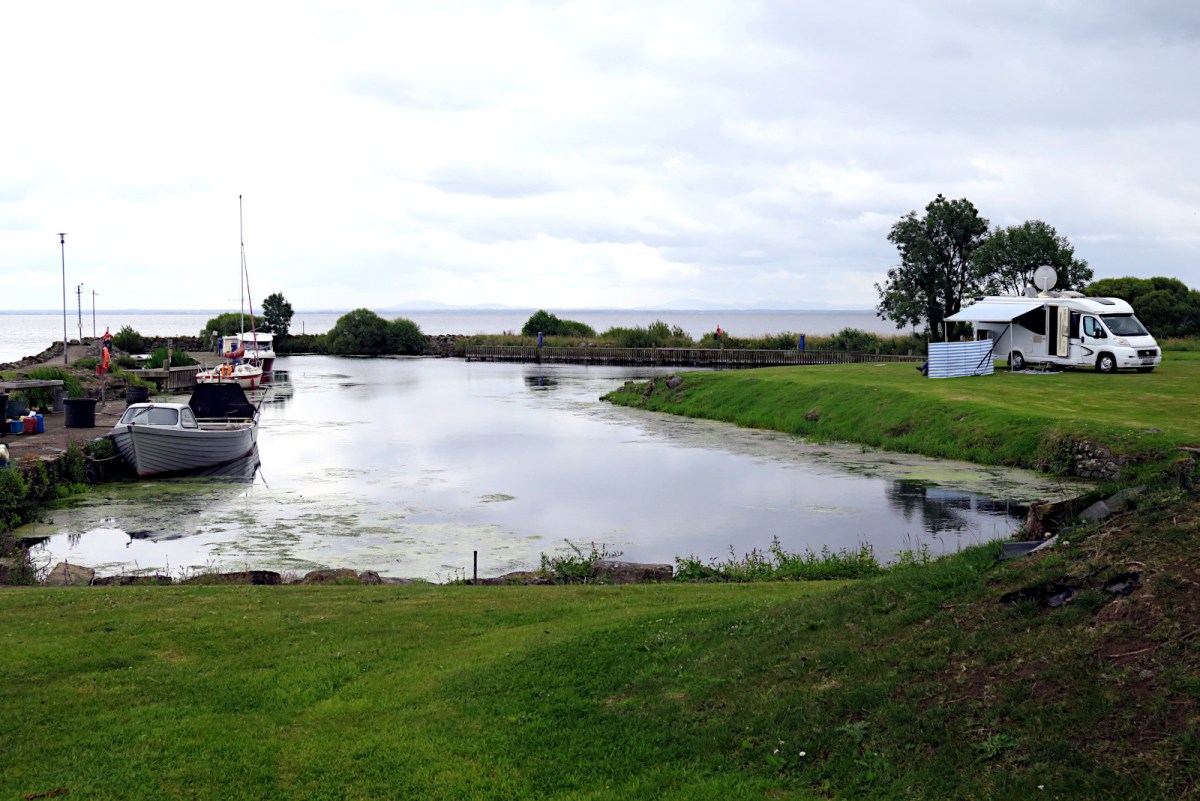
This is the Spelga Dam in the mountains of Mourne. The reason I’m including it here is that I took a photo of it when I was quite young and that earlier shot is below for comparison and additional interest.
I took the old photo when I’d just turned twelve, and the recent one when I’d just turned seventy-six, so they’re almost precisely sixty-four years apart. So what has changed in that time? Not much, really! I have changed far more in that time than the dam and its surroundings have done. The photos were not taken from quite the same place, the landscape is more established and natural than it was 64 years ago, there has been a modification to the overspill structure, and the concrete of the dam is more discoloured – but that’s about it. The dam might well be there in another 64 years, I will not!
Images from our Irish holiday 2024
For convenience, here’s a list of all the Irish holiday images:
If you enjoyed this or found it useful, please like, comment, and share below. (If you don’t see those links, click the article’s title above the main photo and they will appear.) Send a link to friends who might enjoy the article or benefit from it – Thanks! My material is free to reuse (see conditions), but a coffee is always welcome and encourages me to write more often!
What’s in an image? Sometimes quite a lot, more than meets the eye.
I’m posting an image every two days (or as often as I can). A photo, an image from the internet, a diagram or a map. Whatever takes my fancy.
(I plan to return to some more images from our Irish holiday for a while, before getting back to more Cirencester images in the near future.)
Click to enlarge
I felt I really had to share this delightful little farmhouse window with you. Donna had booked an AirBNB near Castlewellan and it was right next to the farmhouse across a little, cobbled yard.
I love the heavy, stone construction and the little wooden frame – so rustic, so pretty, and a young conifer is trying to get in on the act in the lower left corner. This looks like a window that would invite you in if you were a friend, but sternly resist if you were trying to break in or up to no good! I’ve never before thought of windows as having personalities – but this one certainly does!
Images from our Irish holiday 2024
For convenience, here’s a list of all the Irish holiday images:
If you enjoyed this or found it useful, please like, comment, and share below. (If you don’t see those links, click the article’s title above the main photo and they will appear.) Send a link to friends who might enjoy the article or benefit from it – Thanks! My material is free to reuse (see conditions), but a coffee is always welcome and encourages me to write more often!
Cicero pointed all this out most eloquently. As a philosopher he thought things through carefully and deeply and then expressed his ideas clearly, giving plenty of reasons and examples.
The great Roman orator, lawyer, politician, philosopher and author, Cicero has left us a great legacy. He wrote on many topics that are as relevant today as they were when he dictated them to his trusted slave, Tiro.
Tiro was a gifted and hard working person in his own right – he invented a form of shorthand and left a good deal of written material that has survived. He was given his freedom by Cicero but chose to continue working for him. One piece of work dictated by Cicero concerns the good and bad motives people may have. He considered how becoming feared and becoming liked can both bring benefits, but the first is dangerous while the second is not.
When a person is feared, they may find a wide circle of supporters to do their bidding. Think in terms of Vladimir Putin, generally the people around him do his bidding because they do not wish to fall from a high window or drink poisonous tea. There are plenty of people who have died or nearly died because they have crossed Putin in some way – from Sergei Skripal to Yevgeny Prigozhin. Many political opponents have died while imprisoned. Examples like these cause others in Putin’s circle to be carefully obedient. Yet Putin himself is always in danger and must live under a permanent cloud, fearful that at any moment he will be toppled from power and most likely be murdered in the process.
On the other hand, live a life in which you are surrounded by friends who love you because of your kindness and thoughtfulness, and you will also have a wide circle to work with you and for you, but you will have far fewer anxieties, fears, and sleepless nights.
Cicero pointed all this out most eloquently. As a philosopher he thought things through carefully and deeply and then expressed his ideas clearly, giving plenty of reasons and examples. What Cicero must have realised (but did not express) is that most of us, most of the time, are feared by some yet liked by others. Cicero himself was no exception. He had political enemies and was murdered by the roadside as he attempted to flee from Italy.
There are three ways to learn more about Cicero, and it’s well worth doing so. Many of his arguments are as interesting and useful today as they were two thousand years ago (we would write 2000, Tiro would have written MM).
One way is to read Cicero’s writings for yourself. Much has been lost no doubt, but much has been preserved too – often thanks, in part, to Tiro. A second way is to read what historians and commentators have written about him. The third way, and perhaps the one that is most fun, is to read Robert Harris’s famous and fascinating Cicero trilogy. Yes, it’s fiction; but it’s skillfully woven around what we know of the characters portrayed.
Notes from bygone years – October (Noctober after dark?). Hint: Click on the thumbnails for larger images.
October 2023 (1 year before publishing this article)
Text from a Herculaneum scroll
An exciting scientific paper published in the journal Nature described how X-ray data and clever data manipulation had made it possible to recover small scraps of text from scrolls lost when Vesuvius erupted in October 79 CE. Hope was expressed that it might become possible to recover much larger sections of text, or even whole scrolls.
Our cat, Erin, was not feeling well; due to a tumour she was not eating very well and often threw up afterwards. She was losing weight quickly as a result. The vet suggested a steroid injection to see if it would help her cope better, but it would clearly be only temporary relief. It seemed well worth a try and during the second half of the month she seemed very much her old self again.
We visited Westonbirt Arboretum on 23rd October to enjoy the autumn colours, and Donna’s Uncle Ken died on 26th after a long illness.
I began intermittent fasting, only eating between 11:00 and 21:00, as part of a Zoe trial. I’ve changed the timing slightly, but I’m still following the principle two years later.
There was a Roman Army historical display in the old amphitheatre on 2nd October, it was great fun to watch the events going on and look at the Roman equipment. They fired a melon from a ballista and it sailed right out of the arena. Seeing a crowd at the amphitheatre gave me a sense of scale and made the place look much larger. The crowd in the photo is using about a third of the seating space.
On Mondays I enjoyed meeting my friend Stephen for a walk, a coffee, and a chat.
I spent some time working out the route of the old canal through the built-up parts of Cirencester, it was an interesting exercise, poring over old maps.
We were also helping Donna’s Mum and Dad quite a lot, I get on well with Tony; we’ve always enjoyed chatting and he seems to trust me. He was mostly wheelchair-bound at this time as his Parkinson’s progressed, but on a good day he could still do quite a lot for himself.
On 19th I joined the People’s Vote march in London, quite an experience!
My friends Jim and Pam ran a church Mums and Tots group (Puddles) in St Neots. Jim ask me to take a set of photos of each mum with their child for official use by the group, here’s a more general shot that I included for them.
I was meeting frequently with different people, there was the Open Door small group once a week, coffee shop meetings with some friends in town, meetings with my friends Jim, Sean and Kevin rotating around our three homes. It was all good and seemed useful, but three such different groups!
Donna’s Mum and Dad came to stay for a weekend in the middle of the month and we drove over to Olney for a walk and then to Stoke Bruerne to look at the canal and the ladder of locks. There were some great autumn colours on the day. The photo shows Isobel, Tony and Donna on a bridge.
At the end of the month we visited Cirencester to visit my Mum and Dad, and while we were there we popped over to Westonbirt Arboretum to look at the autumn colours. There’s always a wonderful display there, and the trees were more or less at their best.
These are the web development servers in the open plan office where I worked as part of the Web Team. Today these would all be virtual servers hosted at a data centre elsewhere in the company. It was very useful to have multiple copies of each website, one for the developers to work on, another for testing purposes, and a third for the live service.
Things seemed to go from bad to worse with Judy’s colon cancer. In October (I think) she began the first of three courses of chemotherapy (5-fluorouracil) to shrink the metastases and slow them down. This was expected to give her at least a couple of extra years of healthy life. But after starting the first course she became quite unwell and the doctors discovered that she lacked an enzyme that normally enables the body to dispose of the drug. She had to spend some weeks in hospital, quite dangerously ill for some of them.
I had been working in Long Ashton’s Electron Microscopy Lab, helping to manage the instruments and operating the Scanning Electron Microscope (SEM) for staff unable to do the work themselves. But with a further reshuffle at work I’d been moved to the Computing Section and was now working on MS-DOS and developing the environment that became the LARS System.
The Good News Crusade came to Portishead and a number of us from Yatton and Claverham were involved. There were several days of the Crusade itself, and then we (and others) arranged some post-Crusade meetings as well.
Mum and Dad had a late touring holiday along the Devon and Cornwall coast. Dad took several 35 mm transparency films of that holiday.
We were living in our flat at 20 Belmont Road, and I already had a Scottish Widows life assurance policy as a first step towards securing a mortgage. We were still not well-placed despite having quite a lot of available reserves in our joint bank savings account.
I was back in Bath University and the fourth year was underway with the final exams looming after Easter. Judy’s position was similar, back at Aber (Aberystwyth) for her third and final year. She took the photo from a ground floor window in Alexandra Hall on the Aber seafront as the sun was setting.
The autumn term meant the start of my time in the Lower Sixth at Cirencester Grammar School. During half-term a friend and I dug a hole in the Lower Garden just east of the footpath behind Churnside (37 Victoria Road). We found some Roman stonework, small pieces of burnt clay, pieces of a broken amphora rim, and a small piece of Samian ware with a failed repair, also a piece of tegula (roof tile). We had no idea this was a bad thing to do!
I was in my first term at Cirencester Grammar School. Amongst other subjects I had to learn some Latin, it wasn’t my favourite subject at the time. The image shows a Latin exercise in which I managed to get seven correct answers out of nine. I think my favourite subjects were maths, geography and chemistry.
World events:Luna 3 returned the first images of the far side of the Moon; and Astérix the Gaul first appeared in a French comic.
Cindy turned three and I was in my second year at Querns School; we were living on the Beeches Estate in Cirencester. 17 Queen Anne’s Road was a three-bedroom semi so I had my own room. Mum and Dad’s room had a special feature, a wall-mounted electric fire with two switches. I never saw this heater in use, but there was also a two bar plug-in electric fire that was used downstairs on very cold days in the winter.
I was 1¼-years-old, and life went on well enough as far as I’m aware. We were living in my grandparents house in Victoria Road, Cirencester and Dad was busy working on the nurseries, part of the old family business founded in 1795.
As October passed and Mum and Dad spent more time together, they became what today we would call ‘an item’. His brother Bob, an army officer and 15 years older than Dad, was married to Betty from the town of Dungannon 13 miles south of Coagh. Dad visited them from time to time, but spent much of his off-duty time with Lilias and her family.
World events: The first German Me 262 jet fighter was shot down; and Warsaw was destroyed by the occupying German forces.
If you enjoyed this or found it useful, please like, comment, and share below. (If you don’t see those links, click the article’s title above the main photo and they will appear.) Send a link to friends who might enjoy the article or benefit from it – Thanks! My material is free to reuse (see conditions), but a coffee is always welcome and encourages me to write more often!
If you’re interested in the future of society and human culture (and who is not?) then you’ll be fascinated to hear what Sean has to say in this podcast episode.
A recent Sean Carroll podcast considers the future, and in particular how humanity lives and how this may change. He discusses the nature of predictability, and its limits. Fascinating stuff!
Sean Carroll is an American theoretical physicist and philosopher specialising in quantum mechanics, cosmology, and the philosophy of science. He’s the Homewood Professor of Natural Philosophy at Johns Hopkins University.
He’s also active on the internet with his website, Preposterous Universe and interviews experts on a host of topics on his podcast Mindscape. For fuller details about Sean and his work, it’s worth reading the Wikipedia article about him and/or visiting his website (both linked below).
Episode 270
Most episodes of the podcast are interviews with scientists, philosophers and others. But Episode 270 is a solo appearance in which Sean thinks aloud on a topic by himself, and that’s not to say he ignores the ideas and work of others – far from it. He discusses his own ideas and those of others, explaining why the early stages of exponential growth may not be easily distinguishable from other kinds of curve such as asymptotic (where growth eventually slow and creeps ever closer to a maximum) or even a singularity or a phase transition (where growth may suddenly settle into a new and altogether different pattern).
Sean unpacks a lot of ideas here, and he’s careful to express his thoughts in ways that most people will be able to understand and digest. Sean is a mathematician (a necessary skill for any physicist) but even non-mathematicians will be able to follow his arguments here.
If you’re interested in the future of society and human culture (and who is not?) then you’ll be fascinated to hear what Sean has to say in this podcast episode. He will certainly cut the ground out from under your feet if you hold the opinion that we will go on expanding and thriving indefinitely.
If you enjoyed this or found it useful, please like, comment, and share below. (If you don’t see those links, click the article’s title above the main photo and they will appear.) Send a link to friends who might enjoy the article or benefit from it – Thanks! My material is free to reuse (see conditions), but a coffee is always welcome and encourages me to write more often!