Who am I? What do I do?

We have a character and a nature as well as a lifetime of learning and practice based on those things. My behaviour, and your behaviour (what we do) is based on our characters and our experiences (who we are).

A steel girder structure

< PreviousIndexNext>

4 – activating church

A steel girder structure (Click images to enlarge)

We’ve thought now about the foundations of church and we’ve considered things that are often seen as foundational, yet are not. These are important distinctions. This time we’ll start to consider what follows from this.

The most import thing that follows is recognising we are not here to tell one another what to do or how to go about it. I do what he calls me to do, and you do what he calls you to do. There are no hierarchies in church life. We all have a place and a function, but we don’t tell one another what to do, or when, or how. This doesn’t mean we can’t talk about it, encourager is a ministry gift and we’d struggle without it sometimes. But there are no people managers in church life, or rather, there is only one and his name is Jesus.

First I need to explain what I mean by ‘who we are’ on the one hand, and ‘what we do’ on the other. Basically, all people can be defined by who they are and by what they do. But to me, being is fundamental, doing much less so; I believe that’s true for all people because what we do springs ultimately from who we are.

If you want an example, look no further than Donald Trump. He bullies people and nations, he often seems to act or speak before thinking things through, and he’s always looking for ‘a deal’ that will benefit him, or the USA in some way. Why does he behave like this? Because it’s in his nature, and his lived experience is based on his nature as well, so what he does is natural but is also amplified and reinforced by a long life of living that way. Think about Claude Monet, Adolf Hitler, Albert Einstein, Isambard Kingdom Brunel or Charles Dickens; their actions sprang from their personalities and natures; they began with character and their behaviour found its source there.

We’re all fundamentally like that. We have a character and a nature as well as a lifetime of learning and practice based on those things. My behaviour, and yours (what we do) is based on our characters and our experiences (who we are). I might be better than you at creating websites or conducting biological experiments. You will undoubtedly be better than me in other areas of life and ability, our abilities and actions spring from our natures and characters. What we do, and indeed what we can do comes from who we are, supported by much practice.

Who am I and what do I do in church?

Am I defined by what I do or by who I am? What makes me significant in church life? It’s no different than any other aspect of my life. I am defined by who I am.

I’m a child of my Father in heaven, I’m a brother (or a sister) of Jesus, I’ve been filled with his Spirit. I’m much more now than just a biological specimen in an organic body that will eventually fail. This is why I’m significant. If I matter to Papa, and to Jesus, and contain their Holy Spirit, and will live eternally in them and without the necessity of a physical body, what can I add to that by what I do?

So let’s look at the detail; what do I do? I continue for a little while longer in this frail, physical body. I read and study the Bible, I write blog posts that I hope may open up a new world for some of my readers, I care about my daughters and their families, I try to be a blessing and a guide and a help to my friends, to the people I meet as I live my life, I do my best to be kind and helpful to others. Is my significance in any of these things, or even all of it taken together? No, I don’t think it is. I do these things because of the significance I have in Christ. He is my source and my destination. He is the first and the last, the beginning and the end, I can do all things in him (Phil 4:13), and apart from him I can do nothing whatsoever (John 15:5).

Just as in the rest of life I’m defined by who I am, not by what I do. But over the two millennia between Jesus walking this Earth and my doing so, something fundamental has shifted. Jesus always taught that we’re defined by who we are. So did Paul, so did the other apostles. Paul wrote that he was laying foundations and that the only possible foundation is Christ (1 Cor 3:11). None of them said anything about studying the Bible, reading it every day, having clearly defined leaders, meeting in special buildings, or celebrating special days; all of that was invented by people who thought what we do matters and that right activity should be the guiding principle. But the people who had met with Jesus and been deeply changed by those encounters knew better! ‘I’m a son, a daughter, a much-loved child of Papa in Heaven. That’s the only thing that truly matters. That’s who I am, and I’ve been filled with the Spirit for my daily guidance, the Spirit of Christ is in me. Every day the Holy Spirit turns me to point in the right direction, and all I have to do is take a step. Tomorrow he’ll adjust the direction and I’ll take another step. I don’t need more detail than that, I don’t have to plan (though he does), but I just step out daily in faith.

Writing things down can clarify our thinking, it can be helpful and satisfying. That’s what’s happened here for me, I think. I’ve been making a conscious effort over the last few weeks to dig as deep as I can into this topic and try to come up with observations and understanding that will help me (and my readers) stand on the only foundation (Jesus) that is strong enough to provide his people with everything they need to grow and thrive and live in newness and freshness every single day. What we do can never support us in this, the best we can do will never be enough. we’re going to need the best that Jesus offers. Then, and only then, can church function as he intends it to. This, for me, is a statement of faith, I’ll go on standing on the only foundation worth choosing, that is… Jesus and when I finally leave this world, I will still stand on him and continue to draw from his strength and direction.

I don’t want to live my life according to tasks that need to be done (though there are always plenty of those!) I want to live my life out of Who I am in Christ. Isn’t that why John writes that ‘without Christ I can do … nothing’? And also Paul, that ‘I can do all things in Christ who strengthens me’?

I really do feel that this is essential for all my brothers and sisters also, but that it’s somehow been squeezed out of much of the teaching of the churches almost everywhere because doing the right things seems more important and more fundamental; in truth what we do is empty, it’s only as good as our own abilities and strengths and choices. I am not interested in programmes because I know that when I’m walking with Jesus, programmes are unhelpful. I believe, deep down, I’ve been called to recognise the difference between being and doing and share it whenever possible (not necessarily with words but perhaps more by behaviour). And I feel that as believers we are called to community so that we can listen to Jesus and the Spirit together and share what we are hearing and seeing day by day. And for that reason I greatly miss meetings where there are no leaders, and everyone present is waiting to hear what Jesus has to say about things and speak, sing, dance in whatever way will express what he is saying to his gathered body. Without us he is just a head, we are his body turning his thoughts and purposes into action. What future does a headless body have? None at all! No sense of direction, no sense of purpose, and quite unable to grow in the fruit of the Spirit – love, joy, peace, patience, kindness, goodness, fidelity (or faithfulness), gentleness, and self control.

So for the next few weeks I plan to continue digging into this stuff as deeply as I can, sticking close to Jesus along the way. I’m going to live in the presence as fully as possible and make notes on anything I hear or see so I can revisit them later. Will you join me in standing on the one, true foundation who is Jesus? We can live this adventure together in him!

I pray for abundant grace and peace to all my readers here on Journeys of Heart and Mind. And I urge you all to pay more attention to who you are, and a whole lot less on your activities. You just need to know that there is someone in charge and that you are part of a team, you don’t need to understand the overall strategy, you do need to let yourself be turned to the right direction and then step out for today. And you need a very simple faith that expects the one in charge to adjust your direction again tomorrow so that you can take one more step. You don’t need to plan, you don’t need to understand, you don’t need to be aware of your role or the big picture.

A question

Ask yourself, ‘Who am I?’ (Don’t ask, ‘What am I doing?’) Also, ask Jesus, ‘Who am I?’ He knows the answer better than you. If you ask him, ‘What should I be doing?’ he’ll say , ‘Don’t worry about that, Papa will make sure you know when the time comes. Meanwhile you are my sister, my brother, we have the same Father. He guides me with a little nudge here and a word there. You know what it’s like when you listen to a piece of music on Spotify or iTunes. You click Start or press the button and nothing happens – until it does! There’s an opening chord, a drumbeat, and the melody begins. And you recognise it instantly and join in singing at the top of your voice. It’s the old, old song of love, joy and peace, patience, kindness, overwelming goodness and faithfulness, gentleness and self-control, the great and familiar song you remember so well from Galatians 5:22-23! You were not being asked to do something difficult or learn something new! You are learning, quite simply, to be obedient.

A dream?

One night a few weeks ago I had a dream, I rarely wake up remembering a dream, but this was an exception. I was living in Cirencester during the Second World War (I’m not that old, but in the dream it was during the war). I was working with a construction crew on a specialised site of some kind, we were building several structures out of steel girders according to a plan we’d been given. We had no idea what they were for. When these objects were finished we had to move them to Stamford in Lincolnshire.

I don’t know how well you know Stamford, but Donna and I had friends there when we lived in St Neots so we know the town well. It’s like a Cotswold town in many ways as it lies on the same band of oolitic limestone that is so familiar here in the Cotswolds. I have no idea how we moved these building-sized steel structures from Cirencester to Stamford! But it didn’t seem to be a problem in the dream.

But when we arrived we found a site already prepared where they were a perfect fit and a team of workers who were expecting them to arrive and knew exactly what to do with them. That was all we needed to know and we just travelled back to Cirencester understanding that there was a designer somewhere who’d done the planning and had made all the necessary arrangements.

See also:

< PreviousIndexNext>


Useful? Interesting?

If you enjoyed this or found it useful, please like, comment, and share below. (If you don’t see those links, click the article’s title above the main photo and they will appear.) Send a link to friends who might enjoy the article or benefit from it – Thanks! My material is free to reuse (see conditions), but a coffee is always welcome and encourages me to write more often!

You might also like:

Wrong foundations

He’s the alpha and omega, first and last, top and bottom; the church begins in him and ends in him. He saves us and now supports us but he also commands us; we are complete in him, but without him we are – nothing.

Don’t build here!

< PreviousIndexNext>

3 – activating church

Don’t build here! (Click images to enlarge)

In the last part, we looked at the foundations of church, and the purpose of those foundations. We paid some attention to Paul’s teaching about Christ himself being the only possible and dependable foundation, this time we’ll look at some alternatives that have been tried over the last couple of thousand years, and why they haven’t worked.

Two thousand years ago

It’s worth noting, in passing, that although we don’t have precise dates, it’s now almost exactly 2000 years since Jesus began calling his first disciples from among the families of fishermen along the shores of Galilee. 2028, 2029 and 2030 will likely be 2000 years since he was walking in Galilee or Judea with his twelve closest followers, healing the sick, teaching the crowds, and dining with tax collectors or pharisees. What a thought!

Six months ago I wrote about the apostolic gift and how one of the main tasks and gifts of an apostle is to go out into the world to tell people about Jesus, explain his nature and character, call them to follow him, and show them how to meet together as a church and how to relate to church in other places. It’s a call to create networks of people following Jesus and communicating from group to group within the network. The foundation and the building standing on it are intimately connected; the church is structurally and functionally part of Christ.

Other possible foundations?

Paul tells us Christ is the only possible foundation, so the foundation can’t be anything that’s not a person. it cannot be faith, for example. it can’t be the bible. it can’t be doctrine, or teaching. Jesus himself is the way, the truth and the life, so these are also attributes of the foundation and therefore of church. Yet faith, doctrine and teaching have often been regarded as foundational. Well, they are not.

Nor can we regard praise or worship or prayer as the foundations of church. they are essential parts of what church does, but they don’t sustain us or provide us with any sort of support. No kind of activity can replace Christ, not bible reading or study, not the apostolic gift, not prophecy, not mission, not the work of a shepherd or of a teacher. All of these are useful, indeed I’d say essential, but they are not the foundation of church, merely useful outcomes and practices that will be found to be present wherever church is standing solidly on Christ.

Love, faith, and hope remain, so these are the only plausible candidates. but the greatest of these is love. Of these, only one is a person. We are told ‘God is love’. But Jesus and the father are one. Jesus said, ‘If you’ve seen me, you’ve seen the father’. so Jesus is the foundation, or Papa is, take your pick. Or the spirit is the foundation because he’s the spirit of Christ. Build on any other foundation at your peril! Anything else is merely shifting sand, not solid, reliable, load-bearing rock.

Think also about the foundation stone, the cornerstone. having laid a foundation first, the corner stone is large, heavy and sets the position and direction of all the other stones or bricks. all of these must sit centrally on the foundation, anything that veers off line will not be supported properly and will fail eventually. The cornerstone marks the position of the corner itself and the direction of two of the sides. It remains visible when the foundations themselves become hidden underground. And the cornerstone may have a carved inscription saying when it was laid and by whom. What are the words on the cornerstone of the church? Probably they would be along the lines of:

This stone was laid at the death and resurrection of Yahshua ha-Mashiach*. It stands upon the corner of the foundation and is the first visible evidence of the church being built from the living stones of his people. It will stand for all time.

*Yahshua ha-Mashiach, usually written Jeshua ha-Mashiach is Hebrew and translates into English as Jesus the Messiah or Jesus Christ or Jesus the Anointed One. The names Yahoshua (Hebrew) or Jeshua (Aramaic) literally mean Yahweh saves or Jehovah saves. Jesus is far more than just the foundation, he’s also the head of the body, head of the church. He’s the alpha and omega, first and last, top and bottom; the church begins in him and ends in him. He saves us and now supports us but he also commands us; we are complete in him, but without him we are – nothing.

Over the two millennia since Jesus’ time in a human body, church has repeatedly turned away from him and attempted to stand on almost anything else. How he must long for us to stop doing that!

Nor is church built on leadership of any kind other than that of Jesus himself. Yes, there have been great leaders in church history, but they have always pointed to Christ first and last; there is no room for emperors or kings, no need for governors or great statesmen.

Truly, as Paul taught, there is only one possible foundation – Jesus the anointed one. The only person who has ever been fully human yet at the same time also fully God.

Please note, I am not suggesting that Bible study or the gift of evangelist or various kinds of leaders are not useful, or unhelpful or wrong; I’m simply arguing that they are not in themselves foundational. If we use these things as foundations, the structure of church will crumble and everything we build will fall. And that is precisely as it ought to be.

Chain blog or a series?

I’m still hoping other writers will join me here in sharing their thoughts on What does Jesus mean to me and how do I respond to him? This is my third contribution and I’m not sure what to do for the best. Perhaps I’ll invite a further batch of possible contributors, perhaps I’ll also spin off my three contributions as a series on the topic Church foundations or something similar. Meanwhile don’t be shy, read the chain blog instructions and just start writing. You’ll help me out enormously! Thanks.

See also:

< PreviousIndexNext>


Useful? Interesting?

If you enjoyed this or found it useful, please like, comment, and share below. (If you don’t see those links, click the article’s title above the main photo and they will appear.) Send a link to friends who might enjoy the article or benefit from it – Thanks! My material is free to reuse (see conditions), but a coffee is always welcome and encourages me to write more often!

You might also like:

Becoming like the foundation

In the process of standing on Christ we will see a revelation of who we are because who we are matters, far more than we sometimes think … There are no ifs and buts here. We live because he lives, we love because he first loved us.

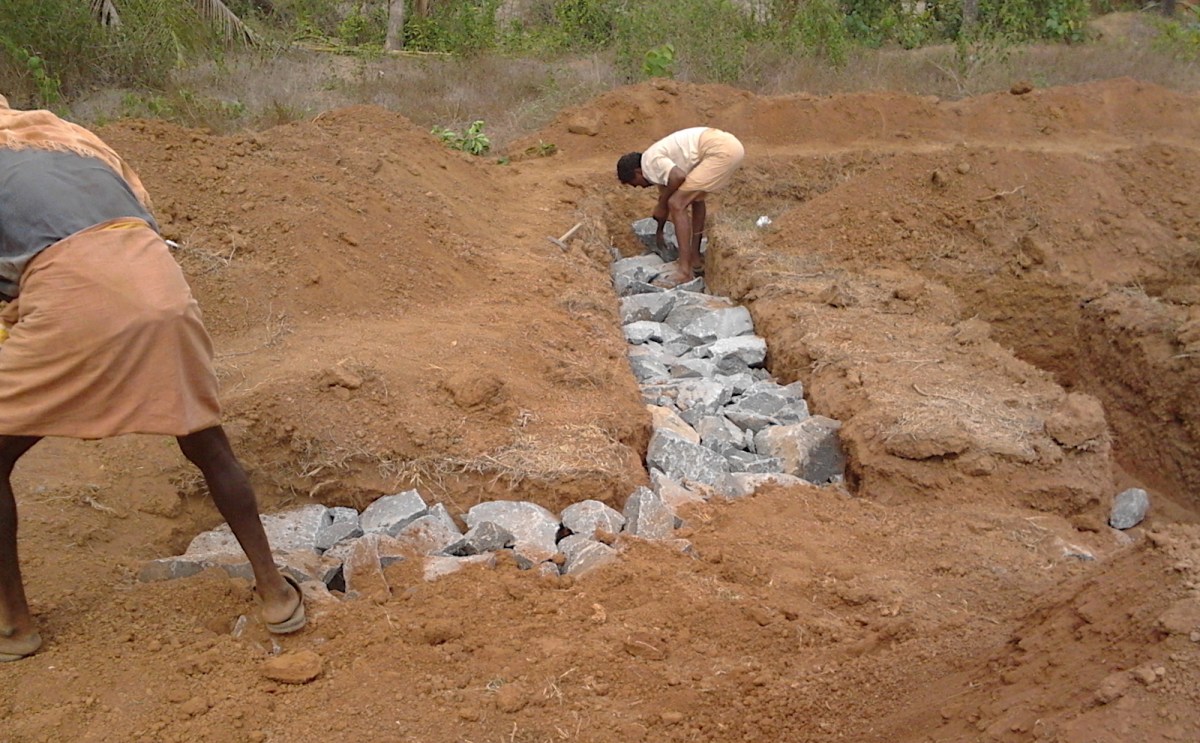
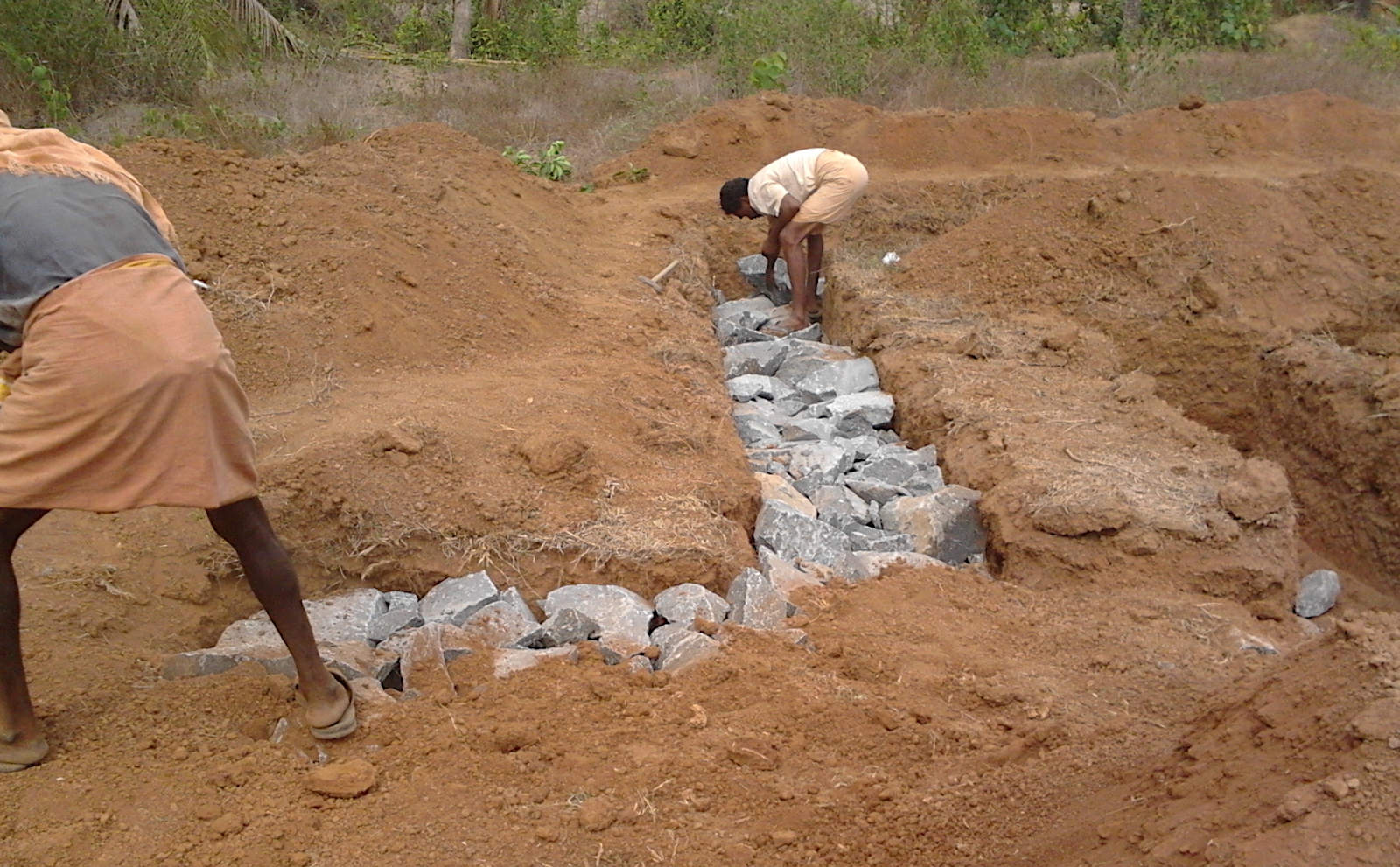
Rubble foundation (Wikimedia)

< PreviousIndexNext >

2 – activating church

Rubble foundation (Click images to enlarge)

Six months ago I wrote about the apostolic gift and how one of the main giftings of an apostle was to go out into the world to tell people about Jesus, teach them about his nature and character, call them to follow Jesus, and show them how to meet together as a church and how to relate to church in other places. It’s a call to create networks of people following Jesus and communicating from group to group within the network. Paul is one of the finest examples we have of an apostle at work in this way, but the best example of all is, of course, Jesus himself. He travelled much further than Paul to start his building work. He came all the way from sitting beside his Father in heaven, to call, teach and eventually die here on this little planet called Earth. Then he returned in order to send his spirit, his Holy Spirit, back here to be with his followers. The Holy Spirit began working in and through the disciples in Jerusalem, and a little later made himself known to Paul as he was travelling to Damascus. He called Paul as an apostle to go on spreading the message about Jesus further and further around the Mediterranean.

Paul not only took out the message about Jesus, he also understood much about being an apostle and how apostolic people are all called to continue this work. And Paul also understood a lot more about church life and the gifts of prophet, evangelist, shepherd and teacher and how these different giftings work together. He also understood clearly that the first part of building something involves foundations. A lot of his letters are about this work of church building, guiding people in the difficult work of getting along together, discovering their giftings, and allowing the Holy Spirit to draw them deeper and further in works of service. All of this was important then – but it’s just as important today in the places we live our lives.

I want to look at this process in much more detail. We are not Jesus, we are not even Paul, is this something we dare to attempt? Is there any chance of success for you or me if we’re called to embark on this process? If you are called to reveal people to Christ, then yes, there’s every chance of success, if you are called to some other ministry gift then you’d be barking up the wrong tree! We must all do whatever we are called to do. But there is not one single Christian alive today who has no work to do and not a single one of us lacking the gifting with which to do it. Unfortunately, because of the way we tend to build church today, we rarely think about foundations and it’s not hard to find people who do not feel or act as if they have work to do and the gifting necessary to accomplish it. For such people, church may feel like a social group, a place for study, or a weekly sing-along. But it’s not supposed to be like that. It is supposed to be a building site where something very special is being raised up on an even more special foundation. It should be a place busy with cement mixers, cranes for heavy lifting, and skilled workers well practised in all the necessary skills.

I might come back to the topic of callings and giftings later, but I feel I should address the idea of foundations first, so the rest of this post will be devoted to that topic. So what is a foundation for?

The purpose of foundations

When we talk about foundations, we are talking about digging holes in the ground and filling them with somethig solid and capable of bearing a heavy load without shifting or giving way.

Modern foundations are dug by a powered excavator and filled with freshly mixed concrete. But in Roman times, the trenches were dug by hand and for massive structures like temples and amphitheatres large blocks of stone were placed in the trench to support the structure that would be built on top. For smaller houses and shops, rubble foundations would suffice (like those in the photo). The foundation stones were normally larger than the stones that would be used for the building as it rose above the ground surface. It wasn’t much of an issue if the walls were built of smaller material, but if the foundation layer shifted during or after construction the building might collapse. A foundation needs to be seriously strong, deep and firm – unyielding.

There’s an old hymn that I remember from childhood, it was sometimes used during school assembly, but was also used on Sunday services at church. Here’s the first verse.

The church's one foundation
Is Jesus Christ her Lord;
She is his new creation
By water and the Word:
From heav'n he came and sought her
To be his holy bride;
With his own blood he bought her,
And for her life he died.

You can hear this grand old hymn sung with all the words on YouTube if you wish:

The first two lines are straight from Paul.

In 1 Corinthians 3:10-11 he tells us clearly that the only foundation is Jesus and in verses 12 to 14 he warns us to use only the best materials if we are called to build. The build quality will be tested by fire. And in verses 16 and 17 he says we ourselves are Yahweh’s Temple, a holy place. Another way to put this is that we ourselves are the church, it’s not a structure of mere bricks, but a structure of living stones – his people. We are bonded together like the stonework of any strong building and we stand together on the strong foundation of Christ himself. Read the whole chapter (it’s quite short), try to apply what Paul is saying to your own life, imagine sitting down with him over a coffee and discussing it.

We are to be built up together in love for we are to be like Jesus who is in turn like the Father. What is the substance of the church? It is love. the Father is love at its source, at its root. Jesus is love sent from heaven and expressed in his life. Read any of the gospels and you’ll find him loving his followers and the crowds who gathered in very real and practical ways. We are to continue his work, building in love, loving one another and loving the other people around us in this world. Nothing else matters more than this!

Another way of saying that we are living stones would be to say we are loving stones. We should be fervent lovers of Papa, of Jesus, of one another, of the worldly people around us, and even fervent lovers of our enemies. That is the only way of sharing Jesus; to be taken seriously we must be like him in every way. I, you, we, must all become accurate impersonators of Jesus. If we have no love, we have…nothing!

Until we begin living this new life we’ve been granted, loving everyone we meet, we’ll remain failed imitators of Christ and church will remain just an inorganic structure – rigid, cold, hard, unyielding and utterly unattractive to people in our communities who need to be loved. So let’s get to it! What are we waiting for?

But remember, it starts with the foundation of a loving Saviour, Jesus himself. Let’s stand on him, feel his love for us individually and together, and share his love for the confused, the unloved and the unlovable. Then, and only then, will we begin to see real growth. This will be growth of our own character, growth of the living stones around us, and growth of the church as others are drawn in by a love they have never previously seen or expected.

Do you see why foundations are so important? We become like the foundation we stand upon. If we don’t stand on Jesus we cannot expect to stand at all. In the process of standing on Christ we will see a revelation of who we are because who we are matters, far more than we sometimes think. If you’re a chip off the block of Jesus you’ll find yourself loving as he loves, building as he builds, dying as he died, yet living eternally as he lives. There are no ifs and buts here. We live because he lives, we love because he first loved us.

Who are you? Who am I? We are little pieces of him – that’s what ‘Christian’ means; it was a derogatory term applied to followers of Christ by the Greek and Roman pagans in the early years of the church. We are ‘little Christs’, no more, no less. This is our future, our inheritance, to be like the Master. Everything else comes out of who I am, who you are.

See also:

< PreviousIndexInstructionsNext>


Useful? Interesting?

If you enjoyed this or found it useful, please like, comment, and share below. (If you don’t see those links, click the article’s title above the main photo and they will appear.) Send a link to friends who might enjoy the article or benefit from it – Thanks! My material is free to reuse (see conditions), but a coffee is always welcome and encourages me to write more often!

You might also like:

What does Jesus mean to me and how do I respond to him?

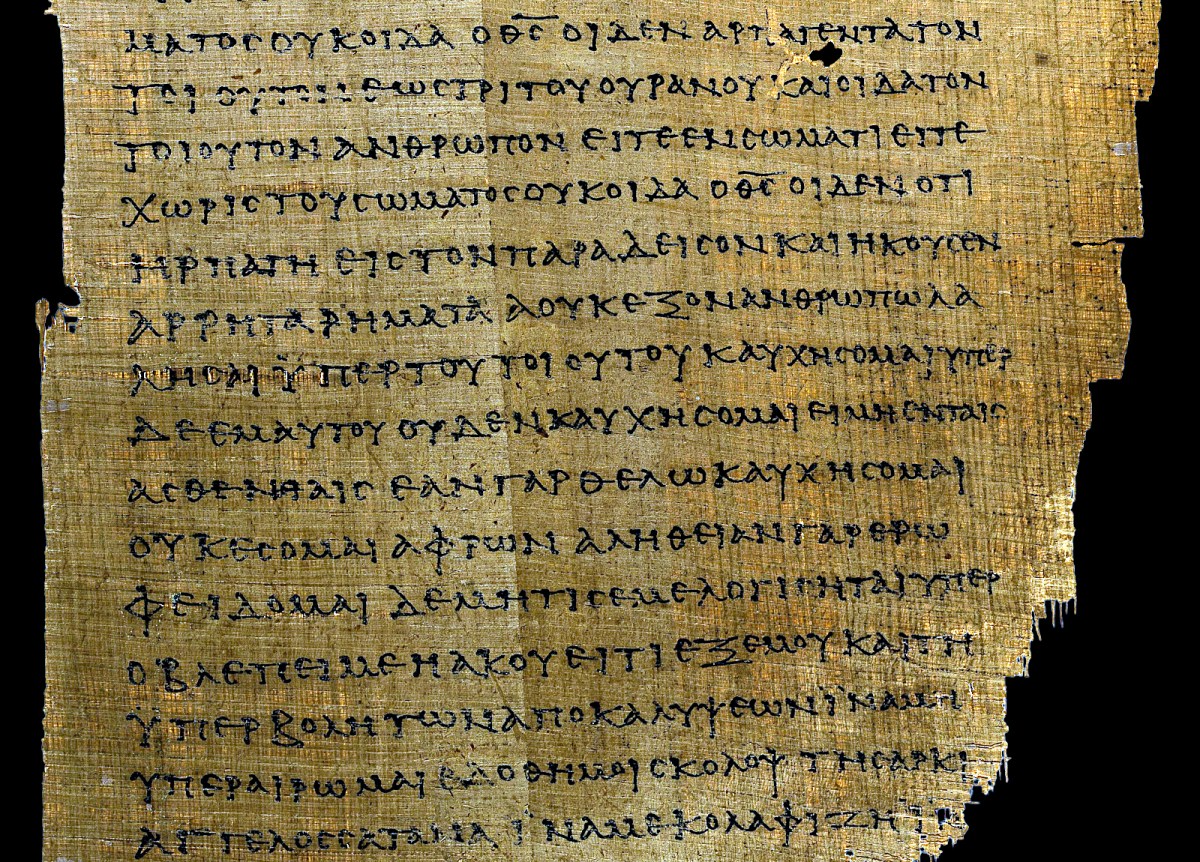
Text of an early Greek New Testament (Wikimedia)


< No earlier posts – IndexNext >

1 – activating church

To answer those two simple questions I need to be be honest with myself and also be honest with you, my readers.

What does Jesus mean to me?

He means the world to me. In all seriousness I have to say he is my source, my inspiration, my guide and teacher, and the essence of all I want to be. Jesus once said, ‘I am the Way, the Truth, and the Life’; for me that sums him up extremely well.

Text of an early Greek New Testament (Wikimedia)

Jesus is someone we must all make up our own minds about. He’s an historical person, not only is his life and death described in the four gospels in all versions of the Bible, and by his teachings presented throughout the New Testament, he is attested by Roman, Jewish, and Muslim authors as well. Josephus writes about him in his famous history of the Roman war against Judea and the destruction of the Jerusalem Temple in 70 AD. The apostle Paul writes about him too and was mightily influenced by him although they never met, though Paul did experience Jesus in spiritual ways. And the Roman authors Tacitus, Suetonius, and Pliny the Younger all wrote about him; so did Mohammed, and Jesus (Isa) is mentioned in the Koran and in other Muslim books and teachings and is regarded as an important prophet.

But for me, and many other followers of Jesus, he is far more than a figure from history and far more than an apostle, a prophet, an evangelist, a shepherd, and a teacher (though he is all of those things). Jesus taught his followers about his spiritual Father, Yahweh, the God of Israel, about the Holy Spirit who would come and rest upon them and live within them, the Spirit he would send to guide them after he, the Son, returned to be with the Father again. I have received this Holy Spirit, the Spirit of Christ, myself. I’ve been changed, I cannot deny that.

How do I respond to him?

In the late 1960s and early 1970s I began following him as best I could, learning more and more about him and what he wanted of me along the way. I’m writing about this in another series of articles that is not yet finished.

I’ve gradually discovered along the way that he wants me to follow him, to grow in my understanding of how foundational he is, who he is and how he leads and guides me. So my response is as full and complete as I can manage. I make mistakes along the way, I’m still learning at 77-years-old, I’ll never know him fully in this life, but I am still making progress. One of the things I do is write articles like this one, hoping a little of his light will shine out in my life and help to reach those around me every day. I try to listen, both in my reading of the Bible and many other books written about Jesus down the ages. I can see glimpses of him in other people who followed him in past times (St Patrick, for example).

In the time remaining to me (it will be far shorter than the 77 years I’ve already had, unless I make it to 155-years-old which seems highly implausible. Ha!) In those final years of my life on this planet I want to get to know him even better and learn to serve and follow him ever more fully. Jesus is love in person, so the better I get at loving those around me, the more like him I will become. So that is my ultimate goal – to serve him by becoming more and more like him. That, I think, is the only sensible way to respond to him.

I could go into the practicalities in endless detail, but I could never do better (or even half as well) as Henry Drummond. Do leave your thoughts below, and any questions you might have. I’ll try to respond to all your reactions in my replies.


< No earlier posts – IndexNext >