An early photo

The dog in the photo was Chloe, a wire-haired fox terrier. Although it’s a fine day, the waves look fairly energetic suggesting strong winds across the Irish Sea.

< Previous | Index | Next >

Image of the day – 153

What’s in an image? Sometimes quite a lot, more than meets the eye. I’m posting an image every few days.

Click to enlarge

This is a photo of my younger sister, Ruth. Bear in mind that I’ll be 77 this summer, and you can deduce right away that the photo is quite old! I took it on a beach in mid-Wales, I believe in 1963 so it’s worn well. Ruth was building a lovely sand castle; Mum and Dad were on the beach nearby, as were my other two sisters, the weather was sunny and warm, and all was well with the world. It usually is when you’re on holiday!

But what else can we learn from this image?

Well, you might notice it’s a bit blurry, that’s because it was taken with a cheap Kodak Starmite camera with no focus control and a cheap lens. But what you can’t see is that the original was poorly framed and had a sloping horizon so I had to crop it for a better composition. The original is a Kodachrome transparency on 127 roll film. It’s dusty and I had use GIMP to clean it up.

But there are other things we can see. The bucket is red plastic, but the spade has a wooden handle and a painted steel blade. That alone would give an approximate date, given that plastic buckets were a recent innovation while wood and steel spades would have been similarly replaced with plastic only a little later. The flags were paper with wooden sticks.

Just think of this from a waste point of view. Only the bucket in this image would have produced waste that could not recycle itself. The spade, the flags, the clothes Ruth is wearing, even her footwear, when discarded would gradually rust or be digested by soil bacteria. Most of it would be gone within a few decades, though the rubber soles might take a tad longer. But the plastic bucket will still exist in some form unless it was incinerated. Most likely it’s still in landfill somewhere near Cirencester as that’s where we lived at the time.

The dog in the photo was Chloe, a wire-haired fox terrier. Although it’s a fine day, the waves look fairly energetic suggesting strong winds across the Irish Sea.

I have other early photos, mostly on black and white emulsions of the Ilford FP series, but a few others in colour.

See also:

< Previous | Index | Next >

Useful? Interesting?

If you enjoyed this or found it useful, please like, comment, and share below. My material is free to reuse (see conditions), but a coffee is always welcome!

You might also like:

Hoarfrost on Cotoneaster berries

During a summer night, molecules of water in the air condense as droplets of water on leaves, we call it dew. But on a cold winter’s night the water condenses as ice and we call it frost.

< Previous | Index | Next >

Image of the day – 152

What’s in an image? Sometimes quite a lot, more than meets the eye. I’m posting an image every few days.

Click to enlarge

It’s a pretty picture, isn’t it? Red berries in wintertime, covered with glistening ice crystals. I used this photo once for a Christmas card. The ice is very decorative, and it’s easy to understand why we talk about icing on a cake (frosting in the USA).

The ice crystals form as the air cools at night. Air can hold significant amounts of water in gaseous form, but the precise amount depends on the temperature of the air; warm air can hold much more water than cold air. That’s why water condenses on cold surfaces. Take something out of the fridge and leave it in a warm room, and five minutes later it will be covered in droplets of water. That water was in the air but you couldn’t see it or feel it because water vapour is a gas.

During a summer night, molecules of water in the air condense as droplets of water on leaves, we call it dew. But on a cold winter’s night the water condenses as ice and we call it frost. Hoar frost, or rime, forms slowly over a number of hours and the kind of ice crystals that form is dependent on humidity, pressure and rate of temperature change. It can be quite subtle (view ‘The snowflake designer’ below for the details).

See also:

< Previous | Index | Next >

Useful? Interesting?

If you enjoyed this or found it useful, please like, comment, and share below. My material is free to reuse (see conditions), but a coffee is always welcome!

You might also like:

Nearly a year ago now…

The Sopwith Pup

The navy and the army (the Royal Flying Corp was part of the army) ordered numbers of the planes and they served well until superseded.

< Previous | Index | Next >

Image of the day – 151

What’s in an image? Sometimes quite a lot, more than meets the eye. I’m posting an image every few days.

Click to enlarge

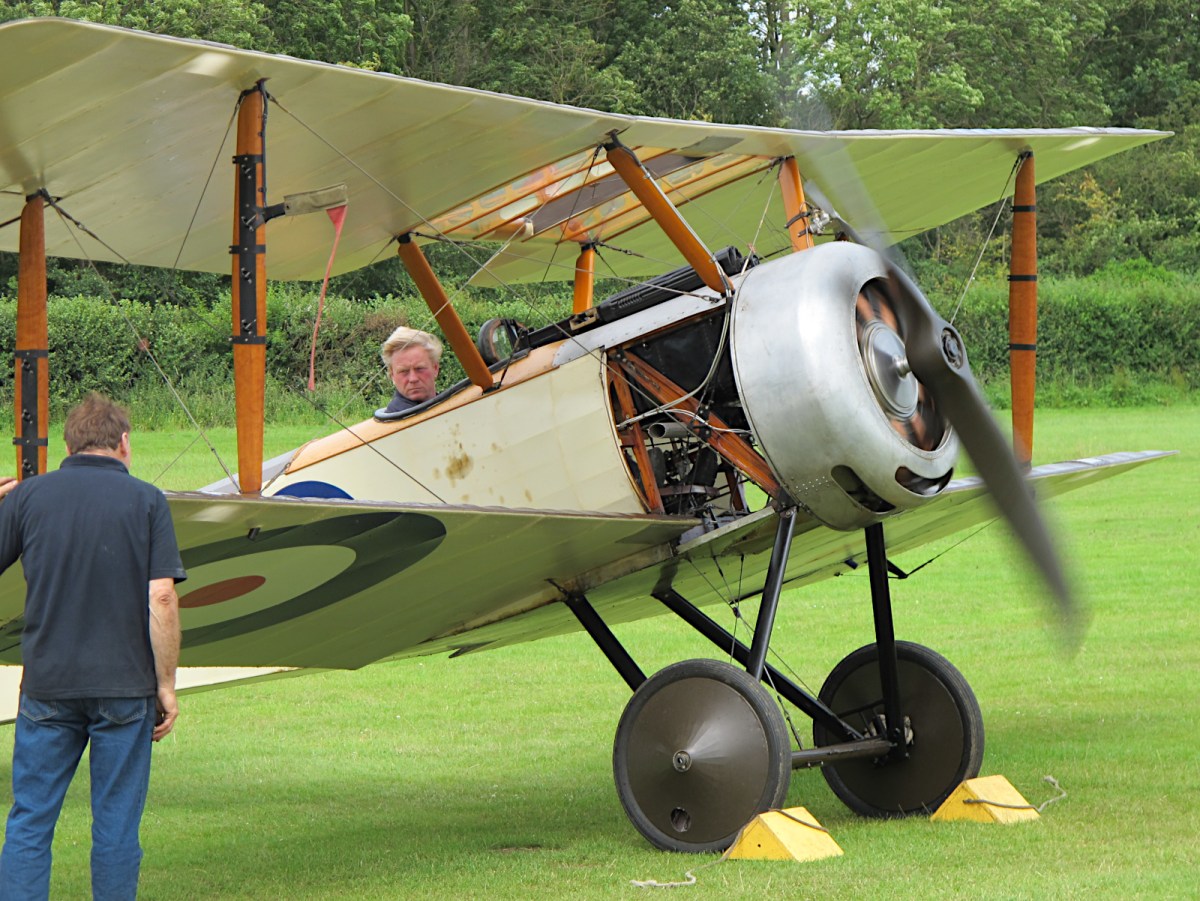
This lovely old aeroplane is a Sopwith Pup, as used by the Royal Flying Corp during the First World War. Sopwith was a major British aircraft manufacturer of the day. This aircraft is still flying from time to time in England where it’s based at Old Warden Airfield, itself a survivor of the First World War. This particular aircraft was built after the war and modified back to the fighter configuration.

In the photo the engine is being tested after maintenance, so a couple of side panels have been removed for inspection. The propeller was spinning, you can see the motion blur in the image.

Here’s the same aircraft in action.

Design and construction

Based on a smaller, earlier aircraft, Sopwith designed the larger Pup as a fighter in 1915 with the first prototype appearing in 1916. Both the navy and the army (the Royal Flying Corp was part of the army) ordered numbers of the planes and they served well until superseded and transferred for training purposes as newer, more effective fighting planes rapidly evolved.

This aircraft was much lighter than its German counterparts. It could take off and land on grass surfaces, in quite short distances. The Pup was very manoeuvrable, had a tight turning circle, and a high service ceiling for those times.

The Pups were replaced with Sopwith Camels during 1917.

Old Warden Aerodrome

Old Warden was a First World War air station, as already mentioned. It lies just north of Shefford and south-east of Bedford. Today it’s the home of the Shuttleworth collection of old aircraft and motor vehicles, a very fine and famous collection with a long history, originally as a private collection, but now open to the public. The old aircraft are frequently rolled out, and often one or more are performing in the air.

Everything that’s not active on a particular day is stored in a series of First World War hangers and those are all open to visit as a museum with informative explanatory material on display as well. There is active maintenance and restoration going on, and some of that may be on display too.

If you’re interested in this sort of thing, and are in the area, I highly recommend popping over for a visit.

See also:

< Previous | Index | Next >

Useful? Interesting?

If you enjoyed this or found it useful, please like, comment, and share below. My material is free to reuse (see conditions), but a coffee is always welcome!

You might also like:

Nearly a year ago now…

Pasqueflower

Plants are available from garden centres and will grow happily in your garden given the right conditions. These plants belong to the buttercup family and are near relatives of the anemones.

< Previous | Index | Next >

Image of the day – 150

What’s in an image? Sometimes quite a lot, more than meets the eye. I’m posting an image every few days.

Click to enlarge

This makes it three in a row for flower images. The pasqueflower (Pulsatilla vulgaris) grows wild in the Cotswolds on dry grassland areas open to full sunshine. It was once quite common, and although not actually threatened, is something of a rarity these days. There’s a Cotwold dry valley site near Cirencester where there’s a reasonably large colony, but to keep the plants safe, the location is not advertised. However, plants are available from garden centres and will grow happily in your garden given the right conditions. These plants belong to the buttercup family and are near relatives of the anemones.

Protecting endangered or rare species (both plants and animals) is of ever growing importance. There are several ways species come under pressure and we’ll look at those first.

Challenges to survival

Habitat loss is the primary cause of decline for many plants, including the pasqueflower. Land improvement, especially the use of fertilisers to increase crop yields, is an issue for plants adapted to poorer soils.

Physical removal of plants or hunting of animals is an issue too. Most species can cope with limited amounts of removal, but if population levels fall drastically, there are real dangers. The dodo died out on the island of Mauritius following hunting by European sailors. The flightless birds were unafraid as they had no natural predators, so they didn’t run away from their hunters. They were welcome fresh meat after weeks at sea on salt beef.

Ecological damage also causes harm, sometimes unexpectedly. After the dodo became extinct, a tree species mysteriously stopped reproducing. Gradually the population was reduced to only older trees. It turned out that the fruit contained toughly seeds with tough shells that would only germinate after passing through the gut of a dodo. Links like this between organisms can be critical.

Climate change is another danger, especially for plants. If climate change is slow organisms can change the range of places where they grow; if it’s fast, animals might adapt, but some plants may need an entire year to move a few metres.

Pollution is a further serious issue and can exacerbate the other problems already mentioned above.

Diseases of both plants and animals can become pandemic and risk extinction, especially when populations are already stressed by droughts, loss of habitat, or pollution.

Attitudes

Given all of the above, what should our attitude be to the current situation?

Some people will shrug their shoulders. – Perhaps they don’t understand the peril the world faces, or they don’t understand the need to help the natural world recover. Or maybe they just feel there is nothing they can do about it.

Others may understand enough of the science to realise there is a danger, to see that it can be reduced (if not entirely averted), and to take some personal actions to help.

Biologists, ecologists, nature enthusiasts, and climate scientists understand only too well what is happening. Usually, they will be trying to communicate the issues whenever and wherever they can.

Followers of Jesus, and people of other faiths will often understand that we should do all we can to protect this world we live in, and live in ways that will reduce the damage.

All of the groups mentioned here are either responding already, or need help to see and understand that the natural world needs our help and that every single one of us can make a difference. Education and commitment are the way forward, so please share this post with anyone you know who might be influenced by it.

See also:

< Previous | Index | Next >

Useful? Interesting?

If you enjoyed this or found it useful, please like, comment, and share below. My material is free to reuse (see conditions), but a coffee is always welcome!

You might like these posts too…

The heart of a tulip

I worked as a professional botanist when I was in my twenties and thirties, studying and publishing scientific papers on pollen and pollination.

< Previous | Index | Next >

Image of the day – 149

What’s in an image? Sometimes quite a lot, more than meets the eye. I’m posting an image every few days.

Click to enlarge

I have another flower image for you today. This one shows the centre of a tulip flower in more detail than you might normally see. I’ve placed the centre of the flower towards the lower right of the frame so you can see more of the petals towards the upper left. You’ll notice that the petals are yellow near the centre, orange a bit further out, and pink further out again. What a beautiful combination!

The reproductive parts

Tulips are monoecious, a botanical term that means each plant produces both male and female reproductive tissues. The female part of a tulip flower has three stigmas in the centre. Unlike animals and some more primitive plants, the male reproduction process doesn’t involve motile sperm. Instead, pollen is released as a yellow dust, sometimes dry and carried by the wind but in the case of tulips and many other plants, sticky and carried by flying insects.

Flowers work as attractive beacons for pollinating insects, they’re usually brightly coloured, are often fragrant which helps insects detect them from a distance, and provide food – sugary nectar at the base of the petals, and pollen. Bees collect the pollen and carry it back to the hive as a protein rich food for their larvae. Plants produce more pollen than necessary and can spare some in return for the pollen transport provided by the bees. The pollen grains stick to the pollinating insects and as they visit flower after flower, some of the pollen is transferred from the anthers of one plant to the stigmas of another. This cross-pollination is exactly what the plant needs for the female tissues to develop further and produce viable seeds.

Tulips have five of these anthers, and if you enlarge the image and peer closely you can see yellow dust clinging to them. That dust is the pollen.

Intricate

It’s an astonishingly intricate process in which the plants depend on the insects and the insects depend on the plants. I could go into much greater detail; I worked as a professional botanist when I was in my twenties and thirties, studying and publishing scientific papers on pollen and pollination. Maybe some time I’ll write a bit more about that.

Next time you see tulips in the park, at a florist or supermarket, or in your garden – just think about the intricate interactions going on right there!

See also:

  • Pollen – Wikipedia (contains a more detailed photo of a tulip anther with pollen, about ¼ of the way down the article. Hint: compare the Wikipedia photo with mine.)

< Previous | Index | Next >

Useful? Interesting?

If you enjoyed this or found it useful, please like, comment, and share below. My material is free to reuse (see conditions), but a coffee is always welcome!

You might like these posts too…

A glorious colour contrast

The climate has changed dramatically in the past, but it has always happened slowly, usually taking tens of thousands of years.

< Previous | Index | Next >

Image of the day – 148

What’s in an image? Sometimes quite a lot, more than meets the eye. I’m posting an image every few days.

Click to enlarge

Here are two flowering plants with colours on opposite sides of the colour wheel. They’re very distant relatives; the yellow Narcissus (daffodil) is a monocot, the purply-blue Streptocarpus is a dicot. You can’t get much further apart in the family tree of flowering plants, but they look well together.

These two plants simply could not survive in one another’s home territory. The Narcissus needs plenty of moisture, produces leaves in late winter, is not troubled by frost, and flowers in the springtime. It also appreciates some bright sunshine.. Streptocarpus cannot take any degree of frost at all, and is touchy about water. Not enough and it will wilt and die, too much and… wait for it… It will wilt and die! It likes the soil to dry out completely and then have a real drenching, but do not water it again until the soil is really dry. It likes shade or partial shade, but not full sunshine.

Adaptation

The fact that these two plants like such different conditions is nothing to do with the fact they are very distant relatives. All plants growing in the wild are well adapted to the soil type, climate, other plants and animals of the places they inhabit. Natural selection over many, many generations will ensure that this is so. It’s only the survivors that will have a chance to produce seeds. By definition, the next generation comes only from the plants that survived the current generation. Survivors thrive; the rest die out.

Climate change

And this in turn is one of the challenges life faces in the changing climate we are creating. The climate has changed dramatically in the past, but it has always happened slowly, usually taking tens of thousands of years to shift from ice age to interglacial, or from desert to semi-desert to grassland to forest. A species may seem to move north or south, east or west, remaining in the climate zone that suits it best. But what is actually happening is that as a climate zone shifts geographically, conditions become less suitable in one area and more hospitable in another. Perhaps the species manages to survive a little further north than before but struggles and dies on the southern edge of its old range.

This process takes time, but the global warming trends we see due to greenhouse gas releases are many times faster than any natural climate change. Populations cannot respond fast enough under such circumstances; they go into decline and die out – the species may then become extinct, gone forever.

See also:

< Previous | Index | Next >

Useful? Interesting?

If you enjoyed this or found it useful, please like, comment, and share below. My material is free to reuse (see conditions), but a coffee is always welcome!

You might like these posts too…

Bare trees along the horizon

Trying to make out any details when the sun is shining in your face is really difficult. But if you turn around so the sun is behind you, shining over your shoulder, it illuminates everything you can see.

< Previous | Index | Next >

Image of the day – 147

What’s in an image? Sometimes quite a lot, more than meets the eye. I’m posting an image every few days.

Click to enlarge

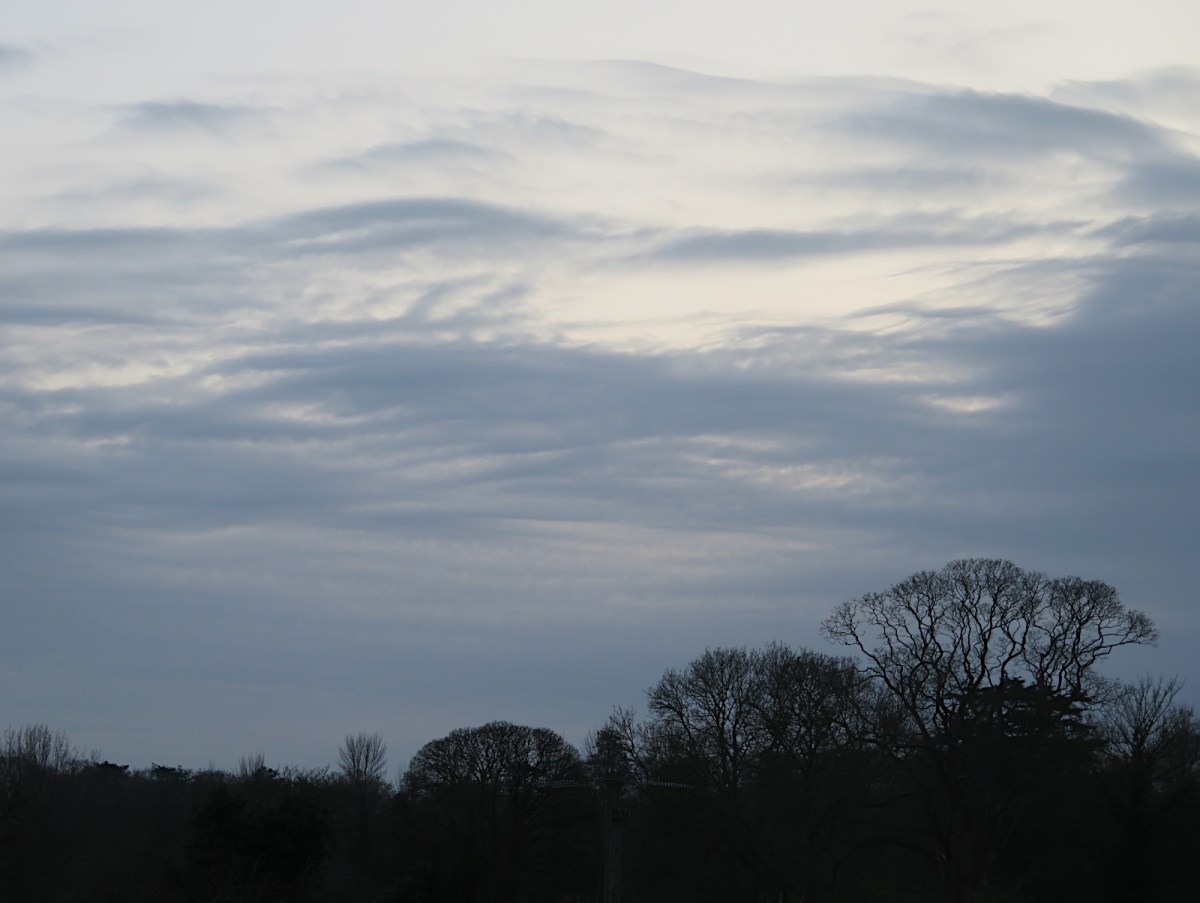
This photo was taken on 6th March, it was a grey evening, the sun had set and the only hint remaining was a touch of pinkness in the areas not shrouded in cloud. The ground around me as I walked was already well into dusk.

Details remaining visible

The only details visible were in the edges of the cloud against the fading sky, and the branches of the leafless trees. But what exquisite details those were! Delicate differences in the shades of grey in the clouds, and a wonderful filigree pattern in the branches, varying from one tree to the next.

It’s a subdued scene, still and inactive, but delightful for all that.

Light and dark

In broad daylight the picture would have been so different! The grassy fields this side of the row of trees would have been vibrant green, the sky would have been bright blue and the clouds white or perhaps grey with white edges.

Another kind of light and dark

If you follow Journeys of Heart and Mind regularly you’ll know that I do my best to follow Jesus. I’m not going to say much about that here, maybe I’ll write another article to explain a bit more.

But I will mention here that this image reminds me that Jesus talked to his followers about light and darkness. Imagine the view in the photo if the sun had been visible just above the trees. The brightness would have been quite blinding, trying to make out any details when the sun is shining in your face is really difficult. But if you turn around so the sun is behind you, shining over your shoulder, it illuminates everything you can see and the detail is crisp and sharp, things are well defined, there’s no glare, there are no shadows unless you look to one side or down at your feet.

Light can dazzle us and hide things from view, or it can make things much, much clearer. It all depends which way you look.

Jesus is like that too, I find. If I look towards him I am dazzled indeed! If instead I look towards the places he’s illuminating, I can see everything very clearly. I need to do both, I need to be dazzled by him, but I also need the clarity provided by his light as it falls on the world around me. There’s a double benefit, he dazzles me, but he also informs me.

See also:

< Previous | Index | Next >

Useful? Interesting?

If you enjoyed this or found it useful, please like, comment, and share below. My material is free to reuse (see conditions), but a coffee is always welcome!

You might like these posts too…

Terraced border at Blenheim

Much of this slope is being managed by rows of stones so that each section of soil will have a reduced slope. Trailing plants like Aubretia can be planted behind the stones.

< Previous | Index | Next >

Image of the day – 146

What’s in an image? Sometimes quite a lot, more than meets the eye. I’m posting an image every few days.

What to do with a sloping garden

Click to enlarge

There are many things that need managing in gardens great and small; one of these things is a slope. If your garden is on a hillside and the slope is steep, you will need to create a winding path to exchange steepness for distance, or as an alternative, build some steps. If you have a sloping flower bed you can make a bank and plant ground cover plants to stabilise the soil and reduce erosion, or you could build a rock garden.

Terracing

In this photo, you can see the initial phase in construction of a third way of dealing with a sloping border – a terraced border. Much of this slope is being managed by rows of stones so that each section of soil will have a reduced slope. Trailing plants like Aubretia can be planted behind the stones, or low shrubs or herbaceous plants could be planted in the lower tiers with tall plants and small trees such as Acer cultivars at the back. The terraced area in the photo will look lovely as it becomes established with some mature plants. Perhaps I’ll go back in future to take more photos for comparison.

A rockery

A rockery would be designed differently, the stones would be carefully placed in a naturalistic way with alpines growing amongst them, but not hiding them. Again, taller bushes and small trees would fit well at the top, concealing the fact the the ‘outcrop’ of rock is of limited height. A well-built rockery should respect overall angles of bedding planes, even though no such planes really exist. But making it look as if they do can give a fine impression of structure. Each stone needs to be angled in two dimensions to fit with angles of all the others. They must all lean backward or forward at the same angle, and they must lie from side to side in agreement as well.

It’s usually best for the stones to lie backwards rather than forwards, they will be much more stable and better supported, but they will also proved better opportunities for planting after the stones are all in place. Careful planting can hide the gaps between some of the stones, giving the appearance of much larger blocks of stone. It’s very convincing if done well!

A hillside

If the garden is large enough, a winding path with several terraced or rockery sections (perhaps both) can be very pleasing. This is a great way of using a hillside, though few of us can afford such an expansive space. But it’s a great idea for shopping centres, university campuses, industrial sites, and parks where there is already a natural slope large enough for this kind of feature.

See also:

< Previous | Index | Next >

Useful? Interesting?

If you enjoyed this or found it useful, please like, comment, and share below. My material is free to reuse (see conditions), but a coffee is always welcome!

You might like these posts too…

A view of ancient remains

Cirencester is the site of Britain’s second city in Roman times, Corinium … The row of trees beyond the lake is close to the Roman city wall.

< Previous | Index | Next >

Image of the day – 145

What’s in an image? Sometimes quite a lot, more than meets the eye. I’m posting an image every few days.

Click to enlarge

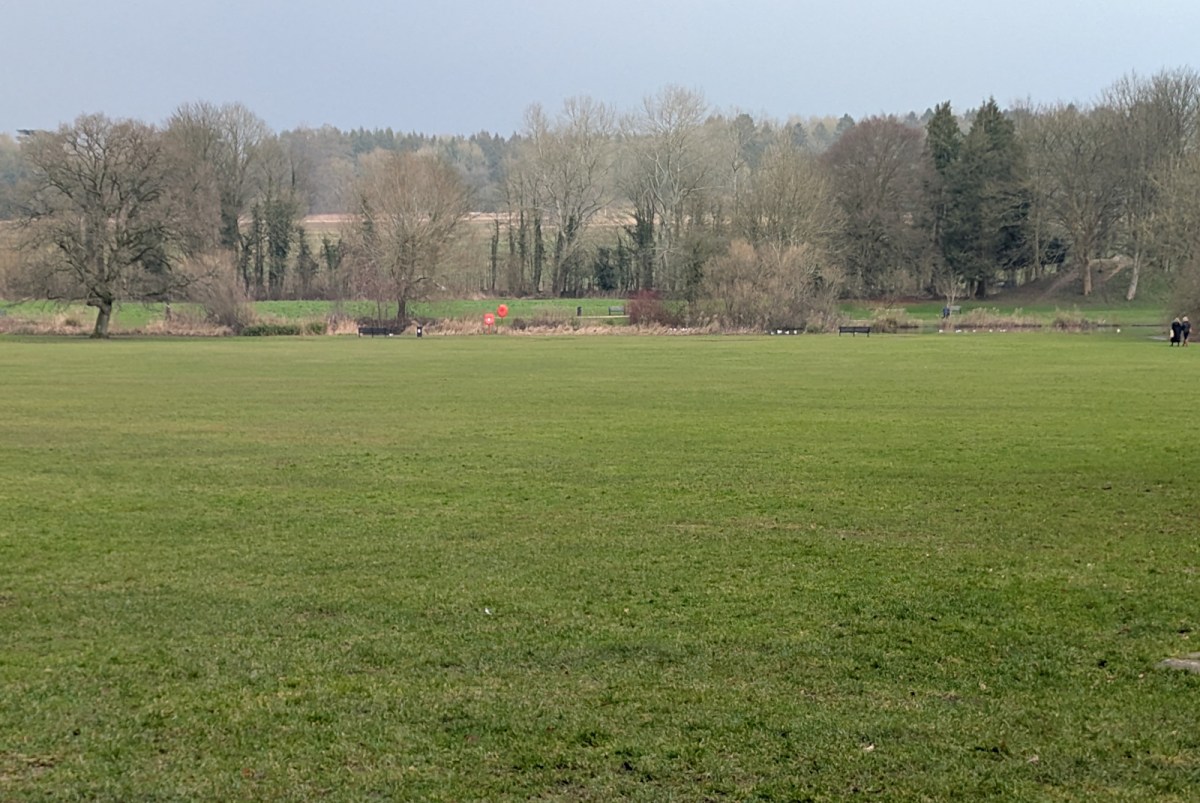
What’s in an image? And indeed what’s in a field? Let’s take it a stage at a time.

The Abbey

The grass in the foreground is part of one of Cirencester’s public parks, the Abbey Grounds. As the name suggests, this is part of the medieval abbey; the abbey buildings and the great abbey church are out of sight behind you in this view. All of those abbey remains are invisible, remaining as only foundations. After the dissolution of the abbeys by Henry VIII, the stonework was pulled down and re-used as building material as the town developed.

You are looking north-east. The first thing you can see beyond the grassed area is a stretch of water. This was dug by the monks to widen and deepen a branch of the River Churn to form a lake to supply fish. You will need to expand the image to see it clearly, it’s marked by benches, life buoys and low vegetation. The two figures in the extreme right are a good guide, they are just our side of the lake.

Abbey House

Also behind us in this view stood Abbey House, demolished in the 1960s. The Abbey land was later owned by the Chester-Master family who built the house, and the park was their private garden. There is one remaining structure from that time in the photo; the large mound at the extreme right covers the ice house built and used by the Chester-Masters.

The Romans

Cirencester is the site of Britain’s second city in Roman times – Corinium, or to give it its full name, Corinium Dobunnorum. The row of trees beyond the lake is close to the Roman city wall. Roman stone was also robbed to build structures in the later town, but out of site to the right of the ice house is a substantial bank and underlying that, the remaining Roman masonry. Some of it has been excavated and remains visible today. If you are visiting the town it’s well worth a look.

While we’re thinking of the Romans, the Abbey Grounds lie entirely within the Roman city and there’s almost certainly more to be discovered here. Just beyond the row of trees mentioned above is another branch of the River Churn. This, and the city wall would together have formed a barrier sufficient to force all traffic in and out of the city through the five large city gates.

Tar Barrow Field

The rising land beyond the line of trees up to the woodland along the sky line is known locally as Tar Barrow Field. ‘Tar’ is probably a corruption of ‘Thor’. The barrows would have been Neolithic or possibly Saxon, but the Medieval inhabitants clearly thought the Norse god Thor was involved in some way. There was also a Roman temple in this field and that would have been reached by a road or footpath from the Roman gate over what is today London Road.

Take a look yourself

If you are visiting Cirencester and interested in the town’s background and history, consider visiting the Corinium Museum (linked below). In addition to checking out the museum itself, you can pick up leaflets about historical sites to visit around the town.

See also:

< Previous | Index | Next >

Useful? Interesting?

If you enjoyed this or found it useful, please like, comment, and share below. My material is free to reuse (see conditions), but a coffee is always welcome!

Installing our heatpump

It all took longer than we expected and some changes had to be made to the design as events unfolded, but by the beginning of February the new system was in and working.

< Previous | Index | Next >

Image of the day – 144

What’s in an image? Sometimes quite a lot, more than meets the eye. I’m posting an image every day or so.

Click to enlarge

At the end of January our heat pump was installed, and before long we had warm radiators and underfloor heating, something we’d missed since our gas boiler developed a fault in October. At the time our first thought was to get the boiler repaired, the part would cost £500 and the labour would be a similar amount and at the end of the process we’d still have a seven-year-old boiler and we’d still be burning gas. We wanted to avoid using gas if possible because we want to reduce the amount of carbon-dioxide we produce.

There is a substantial government grant to make heat pumps a more attractive idea, so we thought it made sense to take advantage of it. After discussing it with our energy supplier, Octopus Energy, one of their surveyors visited, made a plan of the rooms, specified the required changes to our radiators, planned for pipe runs and siting of equipment, and we were ready to roll.

It all took longer than we expected and some changes had to be made to the design as events unfolded, but by the beginning of February the new system was in and working.

A different kind of heat

Our old heating system used a gas boiler, it could produce a lot of heat quickly on demand, so we had a series of thermostats to turn radiators and heated floors on and off as required to keep rooms at the right temperature. At night and during the middle of the day a time clock turned the system off entirely to save money, then came back on half an hour before we arrived home after work and half an hour before we woke up in the morning.

The new system is on all the time. A room thermostat increases or reduces the flow rate to keep the house at whatever temperature we set, and starting from cold it can take several days to achieve the set temperature. We’re beginning to like this way of working; the house stays at the temperature we prefer, around 19 C, and it only rises higher if the outside temperature is high. In that case the heat pump stops heating the house and just provides hot water.

Energy bills

It’s still early days to assess how our heating bill will change. The heat pump is an electrical system so our electricity bill will rise, but our gas bill will now be zero. The heat pump cools down outside air by extracting energy from it, and pushes that energy into our radiators and hot water tank. One kilowatt of electricity can push about four kilowatts of heat into our home, and as we have solar panels on our roof and a storage battery, some of that energy can come from the roof even at night. There is no environmental effect, we’re not producing carbon dioxide and the heat we steal from outside leaks back out again over time. The better our house is insulated, the slower it will leak and the less electricity we will need to maintain the temperature difference between the cold outside and the warm inside.

When we buy electrical power from the grid to pump heat (mainly in midwinter), that grid power is more than 50% green as well; so even that is far better than burning gas to keep warm.

Image of the day 144

This is the 144th ‘Image of the day’ I’ve posted. That is what we’d have called a gross when I was a child. Ten eggs in a box was ten, but twelve eggs in a box was a dozen and six was half a dozen. We still use those terms. A baker’s dozen was thirteen, a dozen with one extra for good measure. And a dozen dozen also had a special name – a gross. 12 x 12 = 144. So today there is a gross of ‘Images of the day’ on the Journeys of Heart and Mind website!

I wonder if I’ll ever reach a great gross, ie a dozen gross, or 1728 ‘Images of the day’?

See also:

< Previous | Index | Next >

Useful? Interesting?

If you enjoyed this or found it useful, please like, comment, and share below. My material is free to reuse (see conditions), but a coffee is always welcome!