Blast from the past… 9

Judy had a job at Bristol University in the Biochemistry Department, while I was working at Long Ashton Research Station on pollination.

< Previous | Index | Next >

Notes from bygone years – Augusts one after another
Hint: Click on the thumbnails for larger images.

A year ago

Ukraine was making exceptional progress against the Russian Army’s invasion in August 2022. I was encouraged to see this and wrote in my journal:

‘Ukraine is making serious inroads into the Russian held parts of Kherson and Zaporizhzhia and Russian forces are redeploying from the Luhansk/Donetsk region, and I suspect they’re more vulnerable while moving than they are when dug in. Perhaps Ukraine can keep them shuttling back and forth between the regions, nibbling away at them all the time. But other reports suggest the Russian economy is in serious trouble too, unemployment is severe now and despite higher prices for oil and gas, the profits are down because of reduced sales.’
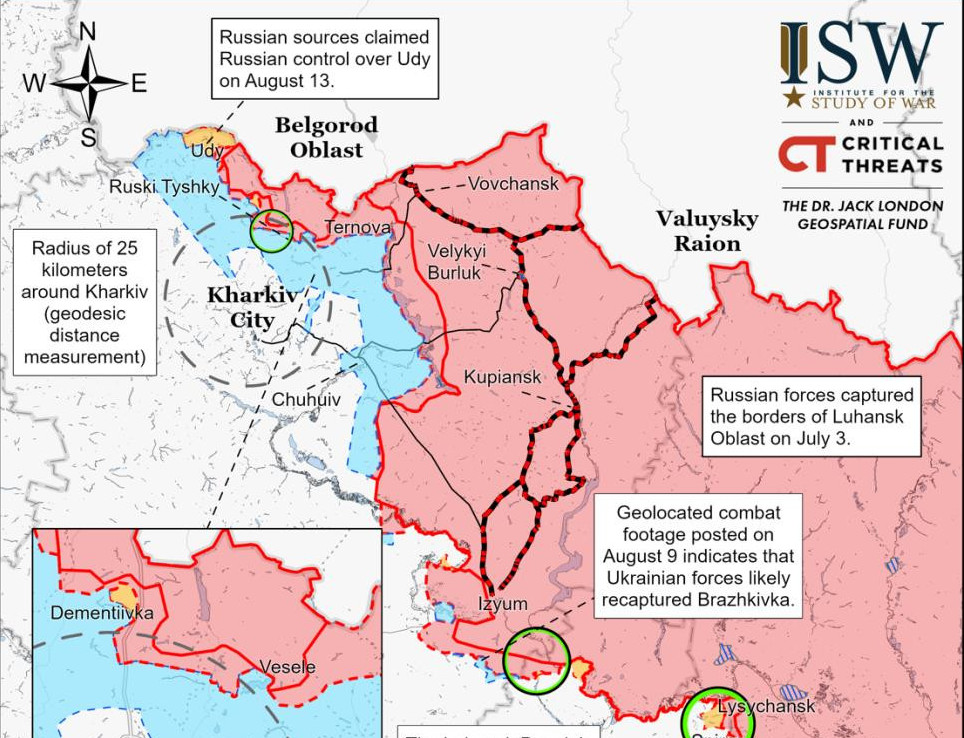
The map was provided by ISW

A year on, all that remains true, and the Russian economy, army, and politics continue in (probably terminal) decline.

<Jul 2022 – Sep 2022>

Two years ago
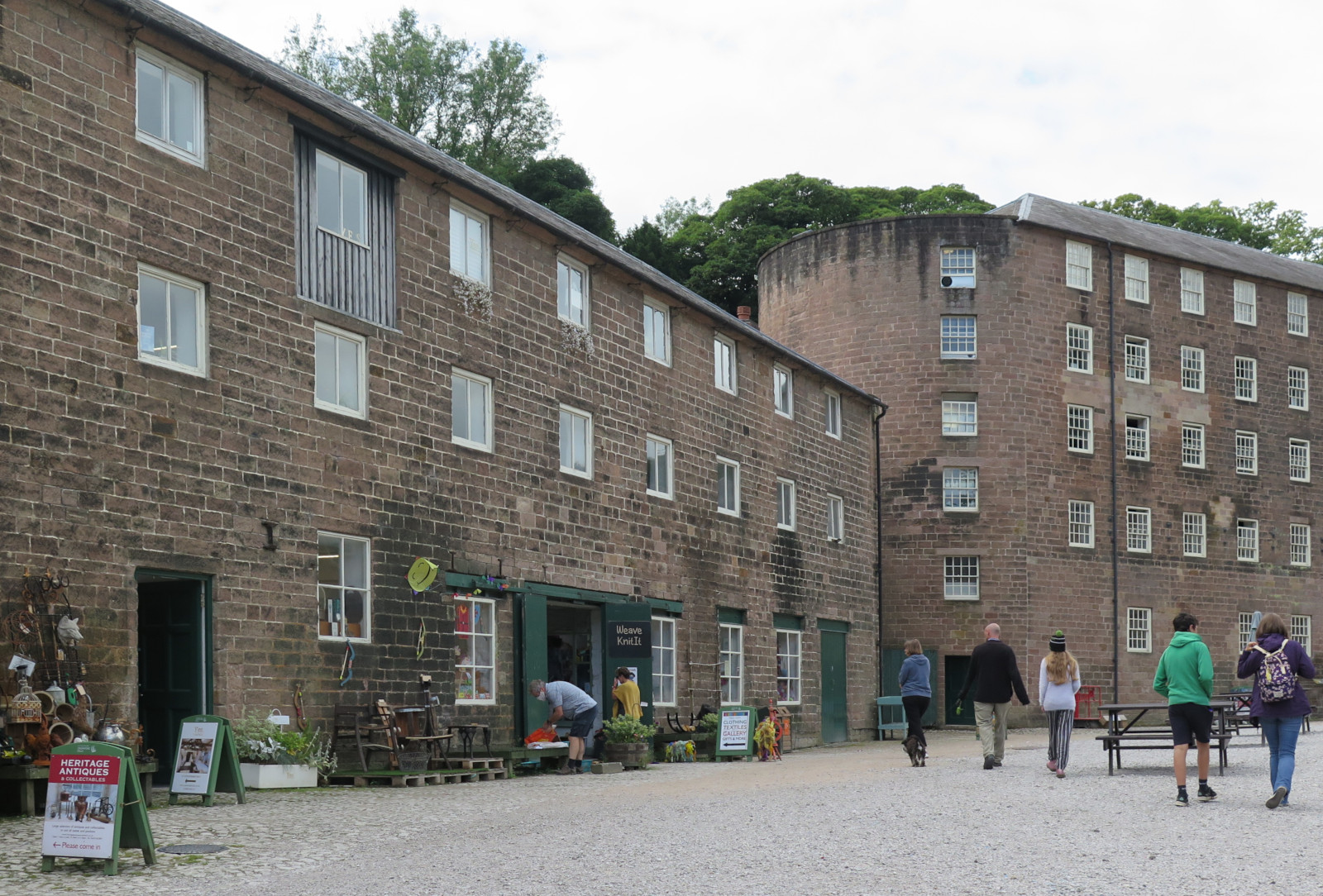
Cromford Mills, partly restored

On 5th August 2021 we were on holiday with the family and visited Cromford Mills where Richard Arkwright built the world’s first water-powered factory to manufacture cotton thread.

It was fascinating to see the buildings and surroundings and to think about the industrial revolution.

<Jul 2021 – Sep 2021>

Five years ago
The cable car at Tracouet

In August 2018, as in 2021 (above) we were on holiday with the family, this time in Switzerland. Some of us took a cable-car to Tracouet, 850 m above the little town of Nendaz. We walked back down, enjoying some beautiful views; it took around three hours.


<Jul 2018 – Sep 2018>

Ten years ago
Sharing bread

In August 2013 I wrote about the way in which all followers of Jesus are called to be leaders – but perhaps not in quite the way we usually think. (Read the original article)


<Jul 2013 – Sep 2013>

Fifteen years ago
Dan and Kerry

In August 2008 – Dan and Kerry were married and there was a big family party. Fifteen years on Dan and Kerry are going strong, and everyone is that much older. Some of those present on the day are no longer with us, sadly.


<Jul 2008 – Sep 2008>

Twenty years ago
Valleys and mountains

In August 2003 – We met in Eaton Ford and what we were shown has remained with me ever since. The Holy Spirit told us to ‘look out and look up’, and that has turned out to be the best possible advice and guidance in every situation.


<Jul 2003 – Sep 2003>

Twenty-five years ago

In August 1998 – My daughter Beth married Paz (clearly August is a good month for weddings).

Reception in a quarry

The ceremony was held at the register office in Bristol, everyone gathered in Quaker’s Friars and then made our way to the Registry Office together. After the official parts and signing the register, we all left for photos outside.

Then we all drove to Axbridge where the reception was held in a nearby quarry, a delightful setting (though unusual) and the weather was (mostly) kind. There were showers around, but there was also quite a bit of sunshine. Dad had a ‘head-umbrella’ which he enjoyed using when it rained, and eventually we all gave up and made our way to the village hall backup location.


<Jul 1998 – Sep 1998>

Thirty years ago

In August 1993 we spent our family holiday in North Wales.

The family in Llangollen

We walked over the canal bridge near Llangollen, took a ride on a steam train, travelled in a canal barge pulled by a horse, visited museums, gardens, a castle and a lot more. All the usual holiday things people do. (See a video clip)


<Jul 1993 – Sep 1993>

Thirty-five years ago
Beth and Grandpa

In August 1988 we visited my parents in Cirencester. The photo shows Beth and her Grandpa, they’re chuckling about a giant snail Grandpa has in a glass tank. There was often something interesting to see on these visits!


<Jul 1988 – Sep 1998>

Forty years ago

In August 1983 Debbie and Beth were enjoying the school holiday, Judy was enjoying a break from teaching Biology at Cotham Grammar School, and I was continuing research into pollen tube growth at Long Ashton Research Station. We probably went on holiday for a couple of weeks, most likely in North Wales.


<Jul 1983 – Sep 1983>

Forty-five years ago

In August 1978 Debbie and Beth were both three; three years old in Debbie’s case, and Beth was just three months.

<Jul 1978 – Sep 1978>

Fifty years ago

In August 1973 Judy and I had been married less than three years and were living in a flat in Belmont Road, Bristol. Judy had a job at Bristol University as a research assistant at the University Biochemistry Department in Woodland Road, while I was working at Long Ashton Research Station on apple and pear pollination.

<Jul 1973 – Sep 1973>

Fifty-five years ago
A commercial glasshouse

In August 1968 I was a student at the University of Bath, studying for my first degree in Horticulture. The photo is a commercial glasshouse seen on one of our visits.


<Jul 1968 – Sep 1968>

Sixty years ago

In August 1963 I had quite a surprise. The family were on holiday at Aberporth on Cardigan Bay and we’d gone to Pembroke for the day. We saw one of the last RAF Short Sunderland flying boats retired at Pembroke Dock. We also took a look at Pembroke Castle and imagine my shock when walking round the outside of one of the towers, who should I almost bump into but my physics teacher from school!

<Jul 1963 – Sep 1963>

Sixty-five years ago

In August 1958 the US nuclear submarine, ‘Nautilus‘ became the first vessel to pass underneath the ice at the North Pole. Meanwhile it was my school holidays, between the fifth and sixth years at Querns School (a junior school in Querns Lane, Cirencester).

<Jul 1958 – Sep 1958>

Seventy years ago

In August 1953 I’d just turned five and was learning that I’d be starting school in September. That seemed like a lifetime away so I probably gave it very little thought, but it was going to be a major point of change in my life.

<Jul 1953 – Sep 1953>

Seventy-five years ago

In August 1948 I was in my first month of life. I don’t remember it of course! We were living with my grandparents in Victoria Road, Cirencester while Mum and Dad waited to reach the top of the waiting list for a newly built council house on the Beeches Estate.

<Jul 1948 – Sep 1948>

Eighty years ago

In August 1943 Dad wrote in his diary for Saturday 7th, ‘Our American soldier billitee (sic) arrived though I didn’t see him’. I didn’t know my grandparents had hosted a USA serviceman until I read that diary entry just a moment ago!

<Jul 1943 – Sep 1943>

< Previous | Index | Next >

Pompeii is expanding

As time passes we are learning more and more about the town’s Roman structure, even in parts excavated decades ago.

We are all aware of the story of Pompeii, the Roman town near Vesuvius that was buried in 79 AD when the volcano erupted. So how can an ancient town be expanding?

Much of the old city remains to be excavated; about a third of the site remains untouched. Recently, work began on an entire city block surrounded by four of the Roman streets. And although little has been uncovered so far, the tops of the Roman buildings are beginning to appear as the solidified volcanic ash is carefully removed. Even better – this new excavation is near the centre of the old town, so finding out what lies hidden there may be even more exciting than a dig in the outskirts.

Plan of Pompeii – From Wikimedia

As time passes we are learning more and more about the town’s Roman structure, even in parts excavated decades ago, new discoveries add to our knowledge all the time. An earthquake 27 years before the famous eruption damaged a house next to the public baths. Work to extend the baths involved demolishing the remaining structure of the house, but some of the foundations and mosaic pavements were simply covered by the new work and have recently been discovered.

The above is based on the Current World Archaeology article listed below, please read the article for more detail.

Further information

What am I? What was I?

The stonework to turn doorways into windows suggests a change of use at some time after the building was first erected

This dilapidated, old building, of lovely Cotswold limestone (including the roof) stands inside Cirencester Park at the end of Barton Lane. It’s part of The Barton Farm, along with the ancient nearby dovecote and magnificent, old barn.

But what was its original purpose? If it could speak it would no doubt have an interesting tale to tell. What might it say?

A row of cottages

I was row of cottages, full of the sounds of children playing in the sunshine, chopping and stirring sounds from a kitchen table indoors, smoke rising into the air from my chimneys. How many families lived in me? How many were born here, lived and worked here, died here?

Stables

I was a row of stables, my partly built up doorways were once open and inside each one was a stall for a horse. Inside I would have smelled of horses, sweat, droppings, and in a room at the back I would have had the aroma of well cared-for leather – saddles, harness, heavy collars for pulling.

Storage shed

I was a place where valuable implements were stored and cared for. Oiled steel hoes, shovels, spades and rakes with well-worn wooden handles. An old plough, a harrow, scythes. Or perhaps I was used to store fruit from the orchard, and sacks of seed for sowing crops in winter or spring.

A base for farm workers

I was a bothy where the farm workers would gather to eat bread and cheese and perhaps a mug of cider. I’d be used for breakfast, a mid morning break, or a mug of hot tea on a cold afternoon, a shelter from heavy rain. Perhaps there was banter, silly tasks given to the youngest worker, ‘Go and fetch me the glass hammer from the big house, ask the Master for it – politely like’.

There are some clues

The stonework to turn doorways into windows suggests a change of use at some time after the building was first erected. There are two brick chimneys, so clearly there were regular fires. Maybe the far end was a dwelling while the right end was a workshop, or a smithy, or a place for basket-making, or laundry.

If you have other thoughts on what this place might once have been, or you live locally and know for sure, why not leave a comment?

War in Ukraine – War in Europe

Despite repeated assurances that no invasion was planned, Russian forces crossed the border into Ukraine on 24th February 2022. As the tanks and support vehicles rolled towards Kyiv, paratroops were dropped to take the city’s Hostomel Airport.

On 24th February, 2022, Russian forces moved into Ukraine, despite Russia’s repeated assurances that they had no such intention. That moment represented a step change in Russian relations, not just with Ukraine, but with the rest of Europe and the entire world. The tanks, personnel carriers, and self-propelled howitzers rolled across the border from Russia and from Belarus, much as the German tanks had rolled across Eastern Poland and into the Soviet Union 80 years earlier.

Informed opinion among Western military and government thinkers was that Ukrainian forces would buckle, the government would fall within a few days, President Zelensky would be captured or would flee, and a new, puppet regime would be set up by the Russians. There would be almost no resistance, defeat would be swift and complete. Everyone was wrong-footed, Ukraine resisted, Zelensky stayed in Kyiv, and the Russian invasion stalled. And here we are ten months after the invasion, and Ukraine’s army has the upper hand having forced three or four major Russian retreats (it depends how you count them).

Map of Ukraine before the 2022 Russian invasion (From Wikimedia)
Why did Russia invade?

Logical, reasonable thinking always begins with unbiased observation; but there’s an inbuilt human tendency to instead begin with our own opinions which may or may not be biased, and then to look for things that will back those up. There are plenty of examples all around us: for example the tobacco industry in the 1970’s and 80’s had the opinion that smoking provided them with solid profits and was not harmful to health and looked for ways to argue against any evidence for harm. That’s just human nature.

And that’s exactly how Russia’s invasion of Ukraine began. The Russian government began with assumed opinions about history and about NATO intending to harm Russia. Next, serious attempts to justify these positions were made: Russia was the origin of Ukraine which was therefore no more than a Russian region along with the Baltic states and some other parts of the old Soviet Union; NATO was not a defensive organisation but had expansive territorial ambitions, the West wanted to destroy Russia.

On the basis of these assumptions political arguments were made by Vladimir Putin and his supporters, that bringing Ukraine back into line would return territory that had always been Russian, would expose Ukraine’s military weakness, prevent NATO expansion, be welcomed by the majority of Ukrainian citizens, and be tacitly accepted by a weak-minded West. And on that basis, after building up forces along the Ukrainian borders with Russia and with Belarus, the ‘Special Military Operation’ began. Mr Putin’s miscalculations were exposed very quickly. Ukrainian citizens did not support Russia; the Ukrainian forces were much stronger than expected; the West including the EU and USA supported Ukraine in practical ways and applied sanctions; Sweden and Finland were alarmed and applied to join NATO.

Stages of the war

Despite repeated assurances that no invasion was planned, Russian forces crossed the border into Ukraine on 24th February 2022. As the tanks and support vehicles rolled towards Kyiv, paratroops were dropped to take the city’s Hostomel Airport. The plan was to capture the city quickly, arrest President Zelensky, install a puppet regime, and then mop up the remnants of the fleeing Ukrainian forces. But that didn’t work out well for the Russians.

The paratroops were defeated at the airport and the city of Kyiv did not fall. The armoured columns and their support vehicles and troops were badly mauled by the Ukrainians and were forced to retreat north across the border and east as far as Kharkiv, and something of a stalemate resulted in the north. In the south, Russian forces fanned out from Crimea and took the coastline of the Sea of Azov, capturing Kherson. Ukrainian forces were able to stop the Russian advance before the cities of Mykolaev and Zaporizhzhia. In the east, Russia expanded their hold on Luhansk and eastern Donetsk, and captured the city of Mariupol.

For some time there was a stalemate in terms of territory, with relentless Russian shelling of settlements along the line of control. During this period the Ukrainian forces grew stronger with aid and materiel from the West, particularly the USA but also the UK and other European and some non-European powers. At the same time Russia was weakened by a heavy toll on both troops and equipment.

As a result of astute leadership and good use of Western precision armaments, Ukraine became strong enough to push the Russians back, initially in the north, and then also in the south where Russian forces had to retreat from Kherson. This seems to be a development that is still ongoing as we approach the beginning of 2023. There are signs that Ukraine is growing stronger while Russia continues to grow weaker. It’s likely that we’ll see further Ukrainian military successes and Russian forces holding less and less territory. What is harder to predict is how the Russian government, armed forces, and population will react as these failures become more and more clear for all to see.

An analysis to consider

Here’s a video of Michael McFaul speaking at Stanford University. He is familiar with government figures including presidents Putin, Zelensky, and Biden; he understands their thinking; he presents a shrewd and well considered analysis of the situation – one that is well worth watching. I’m not going to write anything here in the way of conclusions; far better to settle back and listen to McFaul’s thoughts and ponder his arguments and conclusions for yourself. His address therefore forms the conclusion to my article.

The truth is the truth

Unexpected results are always disappointing and sometimes very harmful

Let’s talk about truth.

Truth is like the stars in the sky above, sometimes cloudy skies hide the stars from view, but we know they’re still there. And when the clouds move away we see them clearly again, they remain the same, the constellations are still recognisable. It’s possible to navigate by the stars, they are dependable and reliable.

Truth is reliable too; when we navigate according to the truth our decisions and choices will produce the expected results. If we are fed untruth, our choices will produce unexpected results. And unexpected results are always disappointing and sometimes very harmful – to us and to others.

In this world we are surrounded by a great deal of untruth. It puzzles me that so many people assume that misinformation will result in good choices. We see it everywhere – in politics, in business, in warfare, in daily life. Let’s look at a few examples:

  • Russia’s war in Ukraine – From the very beginning truth has been discarded. Russian leaders have deliberately ‘adjusted’ history, results of battles, and their motives. Perhaps they believe their own claims! So many decisions on goals, strategy and tactics have been based on untruth and the disastrous results are plain to see.
  • Brexit – From the very beginning truth has been discarded. British leaders have deliberately ‘adjusted’ history, results of policy changes, and their intentions. Perhaps they believe their own claims! So many decisions on goals, legal positions and rule changes have been based on untruth and the disastrous results are plain to see.
  • Anti-vaccination campaigns – From the very beginning truth has been discarded. Campaigners have deliberately ‘adjusted’ the science, results of trials, and their fears. Perhaps they believe their own claims! So many decisions on messages, responses to other views and serious dangers have been based on untruth and the disastrous results are plain to see.
  • Climate change denial – From the very beginning truth has been discarded. Deniers have deliberately ‘adjusted’ evidence, results of scientific study, and their arguments. Perhaps they believe their own claims! So many decisions on arguments, scientific reasoning and inferences have been based on untruth and the disastrous results are plain to see.

Do you see a pattern here? You may disagree with me strongly on any or all of my assertions above, but the plain fact remains that if you fail to see the truth about something, deliberately or not, and you base your actions on the flimsy foundations of error, lies, or misinformation (your own or from others), you will fail. Sooner or later bad choices will result in bad outcomes. They always do.

Claiming something to be true when it’s false will never, in the long term, work in your favour or in mine.

Truth matters. Let’s value it, search it out, base our choices on it, and benefit from the best outcomes available to us.