Today, a lot of high street shops have closed as the retail trade has moved more and more towards business online. The future of high streets and shopping arcades is now in doubt.
What’s in an image? Sometimes quite a lot, more than meets the eye.
I’m posting an image every two days (or as often as I can). A photo, an image from the internet, a diagram or a map. Whatever takes my fancy.
Click to enlarge
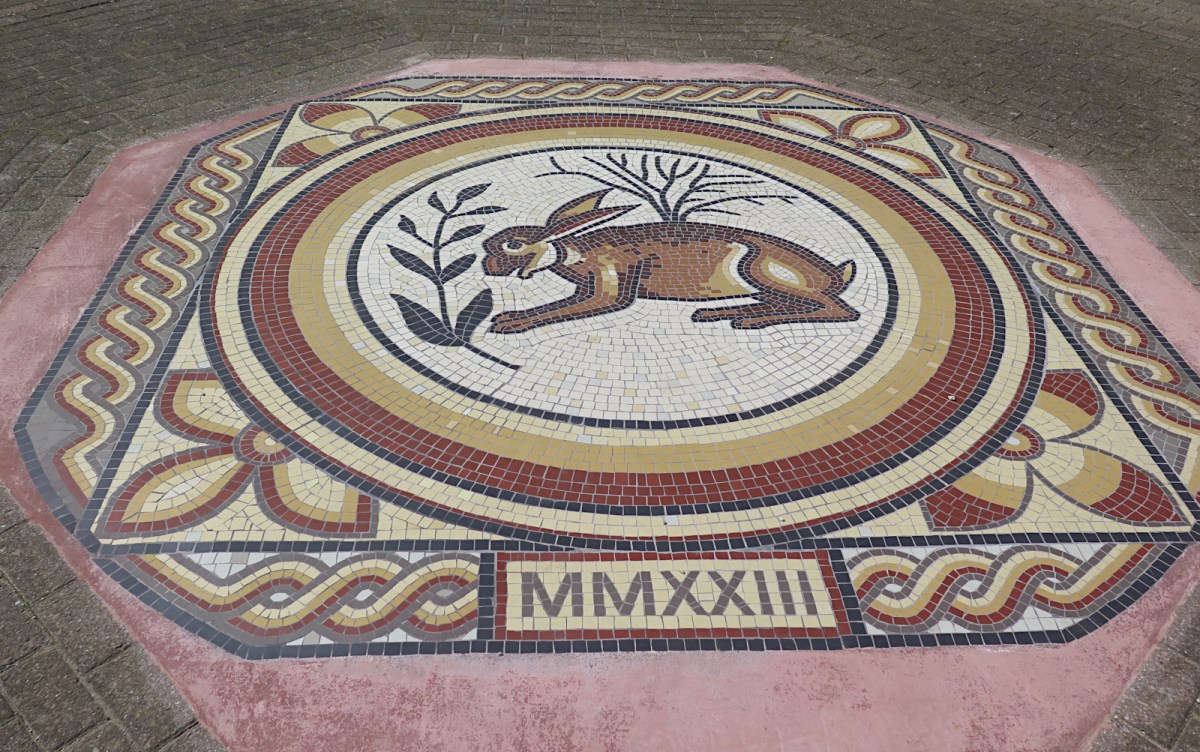
Towns are always continuing their growth and development to make them more suitable for the current inhabitants. The photo shows Bishops Walk, a covered shopping area linking Cricklade Street with the Brewery car park and the pedestrian space containing the modern version of the hare mosaic. It was opened in 1990, thirty-four years ago.
Today, a lot of high street shops have closed as the retail trade has moved more and more towards business online. The future of high streets and shopping arcades is now in doubt, I wonder if Bishops Walk will still be here in a further thirty-four years. Perhaps it will find alternative uses, or perhaps it will be replaced by some new structure.
For the time being it seems safe enough, shopping under cover is possible in all weathers; and some of the businesses in Bishops Walk appear to be thriving. I wish this place all the best for the future.
Cirencester
For convenience, here’s a list of all the Cirencester area images:
If you enjoyed this or found it useful, please like, comment, and share below. (If you don’t see those links, click the article’s title above the main photo and they will appear.) Send a link to friends who might enjoy the article or benefit from it – Thanks! My material is free to reuse (see conditions), but a coffee is always welcome and encourages me to write more often!
Living in Cirencester always gives me a sense of history and the slow but unstoppable passing of the years and centuries. Will the hare mosaic still be available to see 1700 years from now?
What’s in an image? Sometimes quite a lot, more than meets the eye.
I’m posting an image every two days (or as often as I can). A photo, an image from the internet, a diagram or a map. Whatever takes my fancy.
Click to enlarge
This is the same hare that we looked at in the previous Image of the Day, but this time it’s a modern interpretation of the Roman original, installed in a public space between Brewery Arts and Waterstones bookshop.
It’s great to have the hare mosaic out in the open for visitors to the town to discover as they explore; perhaps it will encourage some of them to visit the Corinium Museum to view the original as well. But I wonder what the owners of the town house where the mosaic was found would have thought about public display some 1700 years in their future!
Living in Cirencester always gives me a sense of history and the slow but unstoppable passing of the years and centuries. Will the hare mosaic still be available to see 1700 years from now, in the year 3724? Will the town even exist in 3724? What language will be spoken here in 3724? Certainly not 21st century English! Will we have cities on the Moon, Mars, and beyond by then? Deep time, both backwards and forwards, a fascinating topic to ponder!
If you enjoyed this or found it useful, please like, comment, and share below. (If you don’t see those links, click the article’s title above the main photo and they will appear.) Send a link to friends who might enjoy the article or benefit from it – Thanks! My material is free to reuse (see conditions), but a coffee is always welcome and encourages me to write more often!
What’s in an image? Sometimes quite a lot, more than meets the eye.
I’m posting an image every day (or as often as I can). A photo, an image from the internet, a diagram or a map. Whatever takes my fancy.
Fish and chips
Food! You can’t live without it, it provides the energy for all your conscious activities and also the energy to keep your body working – the brain, the liver, lungs, heart, kidneys, even the digestive tract that digests your food – all the organs need energy to do their various essential jobs that you rarely think about.
But also, too much food is bad for you, the wrong kind of food is bad for you, and when you eat it makes a huge difference to health, wellbeing, and even the length of your life.
There’s plenty of good advice out there, but many of us fail to follow it. If you haven’t thought about this very much, right now is a good time to start. Where to look? The UK’s NHS provides some good ideas. So too does ZOE. Maybe watch a ZOE video, pick one that seems interesting to you.
Food – Enjoy it, but rule it. Don’t let it rule you!
PS – Think about others too. If you can afford it, donate some items to your local foodbank (most supermarkets have donation points). And if you are unable to afford what you need, get along to a local foodbank and ask for help. The Trussell Trust is one of the big organisations, search for a local branch. Or search Google for other options.
Themed image collections
The links below will take you to the first post in each collection
If you enjoyed this or found it useful, please like, comment, and share below. (If you don’t see those links, click the article’s title above the main photo and they will appear.) Send a link to friends who might enjoy the article or benefit from it – Thanks! My material is free to reuse (see conditions), but a coffee is always welcome and encourages me to write more often!
What’s in an image? Sometimes quite a lot, more than meets the eye.
I’m posting an image every day (or as often as I can). It might be a photo I took, an image from Wikipedia, NASA, or some other open source, a diagram or a map. Whatever takes my fancy.
The Library at Lydiard House
This photo is a shot of the Library at Lydiard House near Swindon. The house and the park around it are owned and managed by Swindon Borough Council as a facility for local people. It’s well maintained and well used for many indoor and outdoor purposes.
The house was built in the 17th and 18th centuries by the Tregoze family. While we were looking around the house, I spotted bound copies of ‘The Works of Ruskin‘, filling several shelves.
Themed image collections
The links below will take you to the first post in each collection
If you enjoyed this or found it useful, please like, comment, and share below. (If you don’t see those links, click the article’s title above the main photo and they will appear.) Send a link to friends who might enjoy the article or benefit from it – Thanks! My material is free to reuse (see conditions), but a coffee is always welcome and encourages me to write more often!
What’s in an image? Sometimes quite a lot, more than meets the eye.
I’m posting an image every day (or as often as I can). It might be a photo I took, an image from Wikipedia, NASA, or some other open source, a diagram or a map. Whatever takes my fancy.
Cerney Wick round house (left) and me on the right
I take photos far more often than I am photographed. On 11th July I was out walking with two friends, and one of them took this photo of me. We were following part of the Thames and Severn Canal; the building at upper-left is one of the five round houses built by the canal company for some of their lock keepers and lengthmen. This particular round house is close to the village of Cerney Wick.
If you enjoyed this or found it useful, please like, comment, and share below. (If you don’t see those links, click the article’s title above the main photo and they will appear.) Send a link to friends who might enjoy the article or benefit from it – Thanks! My material is free to reuse (see conditions), but a coffee is always welcome and encourages me to write more often!
What’s in an image? Sometimes quite a lot, more than meets the eye.
I’m posting an image each day, or as often as I can; a photo I took, an image from Wikipedia, NASA, or some other open source, a diagram or a map. Whatever takes my fancy. This is the second in the series.
The robin at Pretty and Pip
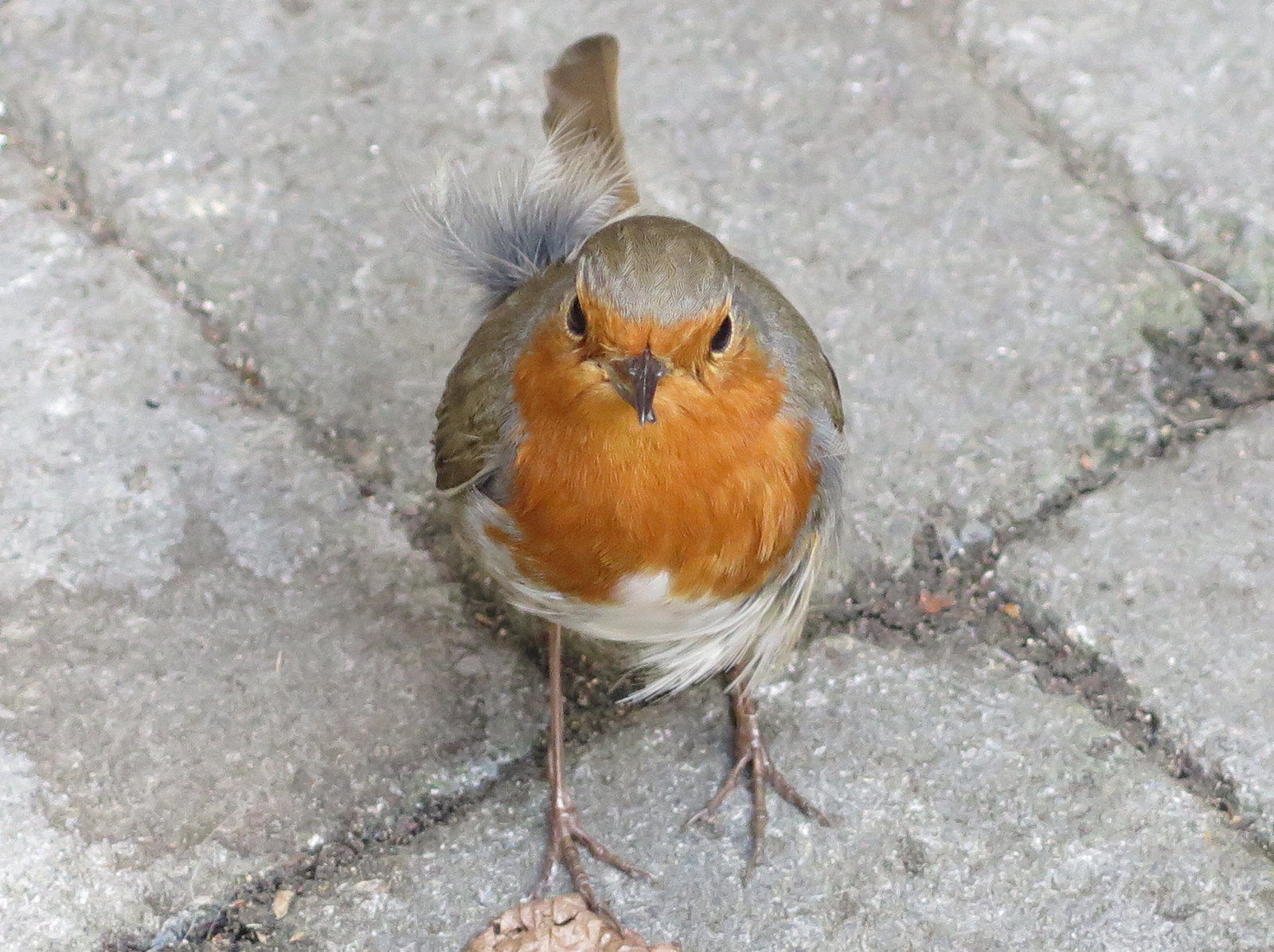
Pretty & Pip is one of my favourite coffee shops in Cirencester. I wrote ‘therobin‘ because he’s always there, in their lovely courtyard. If I didn’t know the guy that owns and manages this place I might even think the robin ran it! He certainly thinks he belongs there, and he does a pretty good job of picking up cake crumbs and generally keeping the place spick and span.
But come on mate, get preening! How do you expect to find an attractive female robin with scruffy, untidy feathers like that?
Favourites
For convenience, here’s a list of my favourite images:
If you enjoyed this or found it useful, please like, comment, and share below. (If you don’t see those links, click the article’s title above the main photo and they will appear.) Send a link to friends who might enjoy the article or benefit from it – Thanks! My material is free to reuse (see conditions), but a coffee is always welcome and encourages me to write more often!
What’s in an image? Sometimes quite a lot, more than meets the eye.
I’m going to post an image each day, or as often as I can; a photo I took, an image from Wikipedia, NASA, or some other open source, a diagram or a map. Whatever takes my fancy. This is the first in what may become a long series.
Roadworks on the A417, at the Air Balloon Roundabout
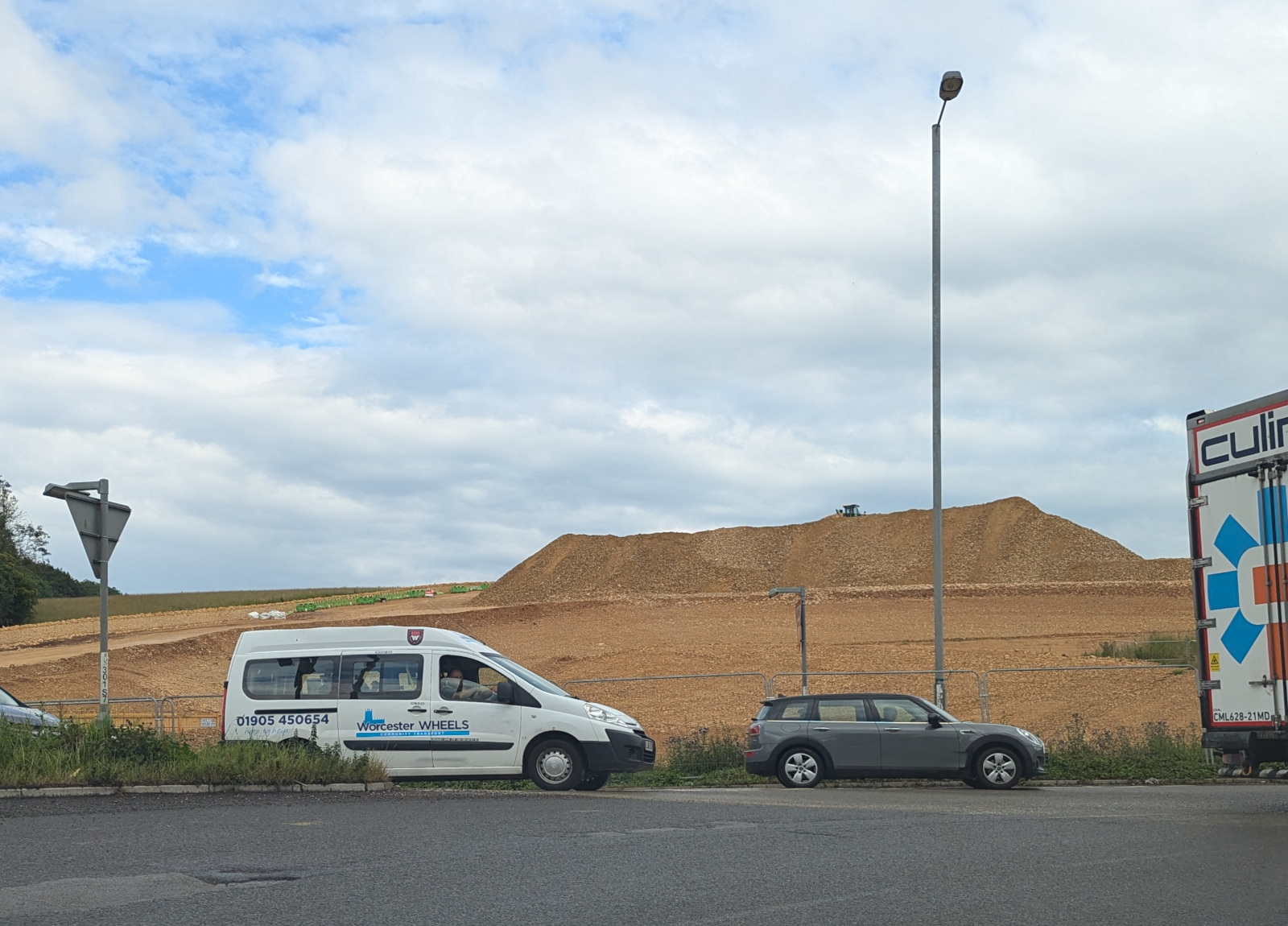
The scarp slope of the Cotswolds is steep, and roads usually have to twist and turn to reduce the slope to acceptable levels. A new section of dual carriagway is being built near the village of Birdlip, to complete the link from the M4 near Swindon to the M5 near Gloucester.
It’s involved the demolition of a famous old landmark, the ‘Air Balloon’ pub, and the amount of rock being moved is astronomical. All of this to smooth out a course for the new road that will let it make the 300 m climb in one, long, sweeping bend. The completion date is estimated to be Spring 2027.
Cirencester
For convenience, here’s a list of all the Cirencester area images:
If you enjoyed this or found it useful, please like, comment, and share below. (If you don’t see those links, click the article’s title above the main photo and they will appear.) Send a link to friends who might enjoy the article or benefit from it – Thanks! My material is free to reuse (see conditions), but a coffee is always welcome and encourages me to write more often!
When the canal is navigable all the way back to Saul Junction, there will be significant canal traffic and the bridges as well as the locks will need to be used fairly frequently.
In this fourth section of the canal walk, we continue along Stroudwater Navigation. Although the canal is in working condition along most of this section it is not yet connected to any other navigable waterway except for part of the Thames and Severn Canal that we’ll cover later.
This walk is 5.0 km (3.1 miles)
In the previous article we passed under the new Jubilee Railway Bridge and reached The Ocean. (Hint: Click the map icons for larger, draggable and scalable versions. Click the photos for full size, too.)
The map marker points to The Ocean at the end point of the previous walk. You can access the towpath from the A419 via Court Farm Mews, but if you arrive by car I suggest parking on Boakes Drive or one of the roads connected to it. You can walk past St Cyr’s church to the canal, and cross the Ocean swing bridge to reach the towpath. All of this will be clear if you expand the map.
While you’re in this area you might like to walk through the nature conservation area. There are good views of the canal from Nutshell Bridge as well, accessible by footpath from the towpath (more on that shortly) or from the churchyard. When you are ready, walk east along the towpath, leaving The Ocean behind and passing under Nutshell Bridge.
Looking back to Nutshell Bridge
There is no direct access to the bridge from the towpath, but about 60 m beyond the bridge, look for a narrow footpath leading away from the canal. If you want to access the bridge from here, take this footpath, turn right onto a similar path at the four-way crossing, then right again to cross the bridge. Retrace your steps to return to the towpath. Next you’ll pass Boakes Drive (photo below) where modern, brick-built homes have enhanced surroundings provided by the canal, you might even see boats in the canal at this point, although currently they can only travel moderate distances.
Boats on the canal at Boakes Drive
A little further on again you pass under Stonehouse Bridge with its murals. This modern bridge carries the Stonehouse to Leonard Stanley, Dursley and Nailsworth road. It was built by Gloucestershire County County in 1999.
Stonehouse to Ebley Mill
This section is 2.0 km (1.2 miles)
Ryeford Bridge and a canal workboat
After one further bridge and some woodland on the left bank, look out for ‘Skew Bridge’. This is an old iron Midland Railway bridge that crosses over the canal at an angle (hence ‘skew’). The railway was closed in 1966 and now the bridge carries a cycle route. Immediately after Skew Bridge, the A419 passes over the canal, as does Ryford Road North, this time on a fine, slightly humped, stone bridge with a brick parapet (photo above). As you continue, look for the Ryeford footbridge with white, criss-cross pattern sides, and then you’ll pass under the black gantry of a pipeline bridge.
The next point of interest is a little further on; the Ryford double-lock with three lock gates was built to allow a greater rise in a short distance. Walking on from the double lock brings you to a part of the canal undergoing dredging (at the time of writing).
Dredging is an essential form of maintenance because canals typically get shallower over time due to a build up of silt on the bottom. Dredging when necessary restores the full depth of the canal allowing deeper draught vessels to use the canal.
In the event of active dredging, signs will re-route you to the towpath further along to avoid dangerous areas and allow the work to continue uninterrupted.
Passing under Oil Mills Bridge brings you to an attractive housing development with homes and gardens along the opposite bank. After the canal was opened, industry spread to this area (Ebley) from the Stroud direction, you’ll see plenty of evidence for this. The chimney of Ebley Mills is particularly impressive, and even the newer, residential blocks echo the shapes of the warehouses of the past. This is a good place for a coffee and a snack with pleasant indoor and outdoor seating. Cross the Ebley Wharf Bridge to the little square (expand the map, the pointer marks the bridge) and you’ll find Kitsch coffee-bar (K coffee-bar on the sign). Check it out on Trip Advisor or just take my word for it.
One other feature you might wonder about is the single lock gate across the canal, but there’s no lock! It’s part of an ingenious flood-prevention measure, diverting flood water to the River Frome whenever that becomes necessary.
Ebley Mill to Stroud
This section is 1.8 km (1.1 miles)
Now for the final section of this canal walk. Continue walking east from Ebley Mill along the towpath which takes you between the canal and the River Frome. You will pass Queen Elizabeth II Playing Field on your right, quite likely you’ll see the children’s play area with its ‘canal boat’. I walked over to take a look at this, it’s evidently inspired by Stroudwater Navigation and no doubt much enjoyed by younger children.
Ella’s boat and other murals
Hilly Orchard Footbridge is another, black, girder structure on brick piers; the towpath passes underneath. This is followed by Dudbridge Road Bridge carrying the A419; as you walk underneath this large, concrete bridge you’ll see a lot of fine murals painted by local schoolchildren, many of them showing refreshing, young humour at its best. One of my favourites is ‘Ella’s Boat’ making big waves washing over the sides of a bridge. It’s hard to work out which way the boat is moving, but it’s definitely travelling much too fast for the Stroudwater Navigation!
Chestnut Lane Bridge
After the A419 bridge and its memorable artwork you will reach Dudbridge Lock and then Foundry Lock. This pair of locks needs further repair after initial restoration some time ago. Several other things are going on here, there’s a turbine generating electricity between the two locks as well as a water discharge to Ruscombe Brook and two weirs. Continuing the walk you will pass Chestnut Lane Bridge and then Lodgemore Lane Bridge, many of the opening bridges can be operated by anyone holding the correct key. With the canal in its present state the bridges rarely need to be opened, but in a few year’s time, when the canal is navigable all the way back to Saul Junction, there will be significant canal traffic and the bridges as well as the locks will need to be used fairly frequently. This will bring new challenges with water supply and traffic management.
As you return to a more industrial area, you will pass through an opening in a dressed-stone wall. As you do so, look carefully at the stonework on the left side of this entrance. The deep, horizontal grooves in the stone were caused by the rubbing of barge tow ropes over many years of use. They are a visible relic of the passing of countless barges, bargees, horses and ropes over a couple of centuries!
Thames and Severn shake hands
Just a short distance more and you will come to a monument by the towpath (open the map below, the marker points to the monument). This is the end of the Stroudwater Navigation. We are now in Stroud where coal from South Wales and the Forest of Dean would have been brought by barge from the north and west bank of the River Severn for use in Stroud’s many spinning and cloth weaving mills. Traditionally these had been water powered, but the arrival of steam power required coal, and this could be obtained more cheaply than before once the canal had been built with some of the cost savings providing profit for the canal owners and barge operators.
The Thames and Severn Canal was constructed to continue the waterway further east to make it possible to take goods from Stroud to Lechlade on the River Thames. It opened in 1789, ten years after the Stroudwater Navigation. The next part in this series will continue eastwards from the shaking hands monument as we explore the Thames and Severn Canal.
Canal walk 4 is complete, so thanks for coming along.
If you enjoyed this or found it useful, please like, comment, and share below. (If you don’t see those links, click the article’s title above the main photo and they will appear.) Send a link to friends who might enjoy the article or benefit from it – Thanks! My material is free to reuse (see conditions), but a coffee is always welcome and encourages me to write more often!
Heading further south-east from the A38 roundabout we cover the ‘Missing Mile’ and then reach a section under heavy repair, and finally a section that is actually navigable. Read about it in this third article.
In the previous article we reached the short, new section of canal inside the A38 roundabout. (Hint: Click the map icons for larger, draggable and scalable versions. Click the photos for full size, too.)
This time. we begin from the gate between the field and the centre of the roundabout; the map marker points to your initial position on the roundabout. Facing the roundabout, turn right and cross the exit and entrance of Fromebridge Mill, then follow the footpath along the right-hand carriageway of the A38. This is not a pleasant walk, but fortunately it’s not long.
Look out for the point where the road crosses the river, and 50 m beyond that you need to cross both carriageways (with great care, one carriageway at a time, the traffic can be fast). Find the footpath through the gate on the other side of the road. The map marker points to the path and the photo below will help you identify the gate you need.
Start of the path along the Frome
This footpath runs along the south-east bank of the River Frome and gradually approaches the M5 motorway which you’ll soon see and hear ahead of you. If you spot any markers for the Thames and Severn Way you can safely follow them for now.
The Stroudwater Navigation canal is filled in at this point and was some distance beyond the river but running roughly parallel. This is part of the section called the ‘Missing Mile’, the remainder of it is the other side of the M5. The river runs under the motorway, while the footpath passes through a tunnel alongside the river. Sometimes water and mud collects just inside the tunnel entrance; hopefully your footwear will be up to the task of passing this point and you’ll emerge on the eastern side of the M5.
Taking the canal under the M5
You’ve just walked beneath the M5, but how will the canal manage it? The original canal passed some distance north-east of the footpath tunnel and it would very expensive indeed to build a new route under the motorway. However, the River Frome passes under the M5 and it was decided that the best solution is to divert the canal from its old route and share the channel used by the river. A barrier will be built under the road to separate the river and canal from one another.
The Missing Mile will need to be re-dug, but along a slightly different route to take the canal from the A38 roundabout to the M5 crossing, and then joining up with the remaining canal by another new section returning to its original route again.
The gravelled track
Meanwhile our walk takes us along the river bank until we reach a road called Springhill in the village of Churchend. Turn left on to the road and in a short distance, take the gravelled track on the left (see photo).
At the far end of the short track you will come out near to a brick bridge. This is Westfield Bridge, part of the original canal and it marks the other end of the missing mile.
The map marker is centred on the middle of the bridge. Standing on the bridge and looking left you will see the course of the new section and work ongoing in preparation for excavating the channel. Looking right you will will see restoration under way on the original canal as it continues eastwards. The brickwork for Westfield Lock (aka John Robinson Lock) is under reconstruction right by the bridge (photo below). The Missing Mile is all behind you now!
Westfield Lock
At the bridge, look for any temporary signs for the towpath (a public footpath at this point). The path might be before or after crossing the bridge; if possible, you need to turn right (east) from the bridge along the canal. Note: if the footpath is closed because of the ongoing work, the alternative is to return down the track back to the road and turn left up the hill to Pike Bridge. But assuming the footpath is open, along the way you’ll see a lot of work ongoing to restore the old canal to a working state. Several locks are being actively worked on. The footpath takes you up to Pike Bride where you can look back to get an excellent view of the ongoing work. Cross the bridge and you’ll see the continuing canal in water and in good condition.
Onward to The Ocean
Follow the towpath east from Pike Bridge, after passing Pike Lock on your right, the first thing to note is the riveted, iron narrowboat ‘Leviathan’, used until the 1990s as a workboat by restoration volunteers. Another 150 m brings you to Blunder Lock, very close to the A419 road and the second in a ladder of locks – Pike, Blunder and Newtown. Blunder Lock probably got its name because it was dug to the wrong depth by the engineer, despite clear and detailed instructions.
Bond’s Mill
Another 90 m brings us to Newtown Lock and we start to get away from the A419; the tow path takes us through an idyllic, wooded area with a peaceful canal full of water as it would have been as a working waterway. Bond’s Mill is the next landmark and the unusual two-storey World War II pillbox is notable. It’s worth stopping for a while if you have time. Sometimes the pill box is open, but if not there are useful information boards on the outside.
Ocean Jubillee Bridge
Soon after Bond’s Mill comes a major achievement, the Ocean Jubilee Bridge. The canal was here before the railway, of course, and when the railway was built, they simply constructed a bridge to cross the canal, just as they would to cross a river or a road. The canal went out of use, largely due to competition from the much faster and more efficient railways; over time the bridge needed replacement. When the time came to do this, the railway engineers decided that a culvert would suffice, with the embankment extended over it. This left the disused canal in a state where it could not be restored without building a new bridge. Network Rail engineers did exactly that, and the result is what you see today.
And, finally for this part of our canal journey, walk under the bridge and take a look at the widening of the canal at this point. This body of water, a haven for wildlife of all kinds, has been known for a very long time as ‘The Ocean’. Nobody knows for sure how or why it acquired that name, but it might have been the largest body of open water known to the local people.
That’s it for Canal walk 3, thanks for travelling with me.
If you enjoyed this or found it useful, please like, comment, and share below. (If you don’t see those links, click the article’s title above the main photo and they will appear.) Send a link to friends who might enjoy the article or benefit from it – Thanks! My material is free to reuse (see conditions), but a coffee is always welcome and encourages me to write more often!
Heading further south-east from Saul Junction there are several little pieces in good shape, and a lot of repair work ongoing. You can read all about that work right here in this second article.
Saul Junction
Saul Junction Marina
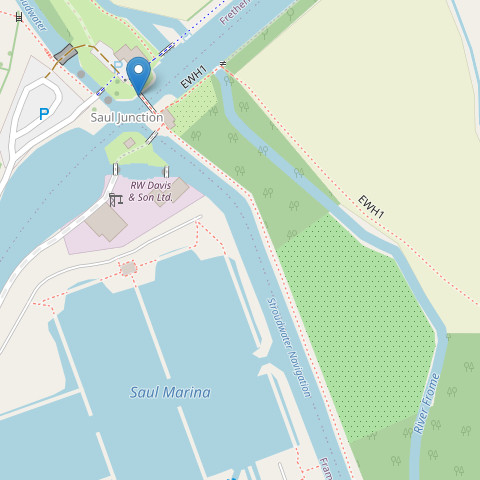
As mentioned in the previous article, the Stroudwater Navigation continues straight across the much larger Gloucester and Sharpness Canal. Looking south-east across the ship canal you can clearly see Stroudwater Navigation continuing, not only full of water, but still in use. We’ll cross the footbridge and follow it from that point. (Hint: Click the map icons for larger, draggable and scalable versions. Click the photos for full size, too.)
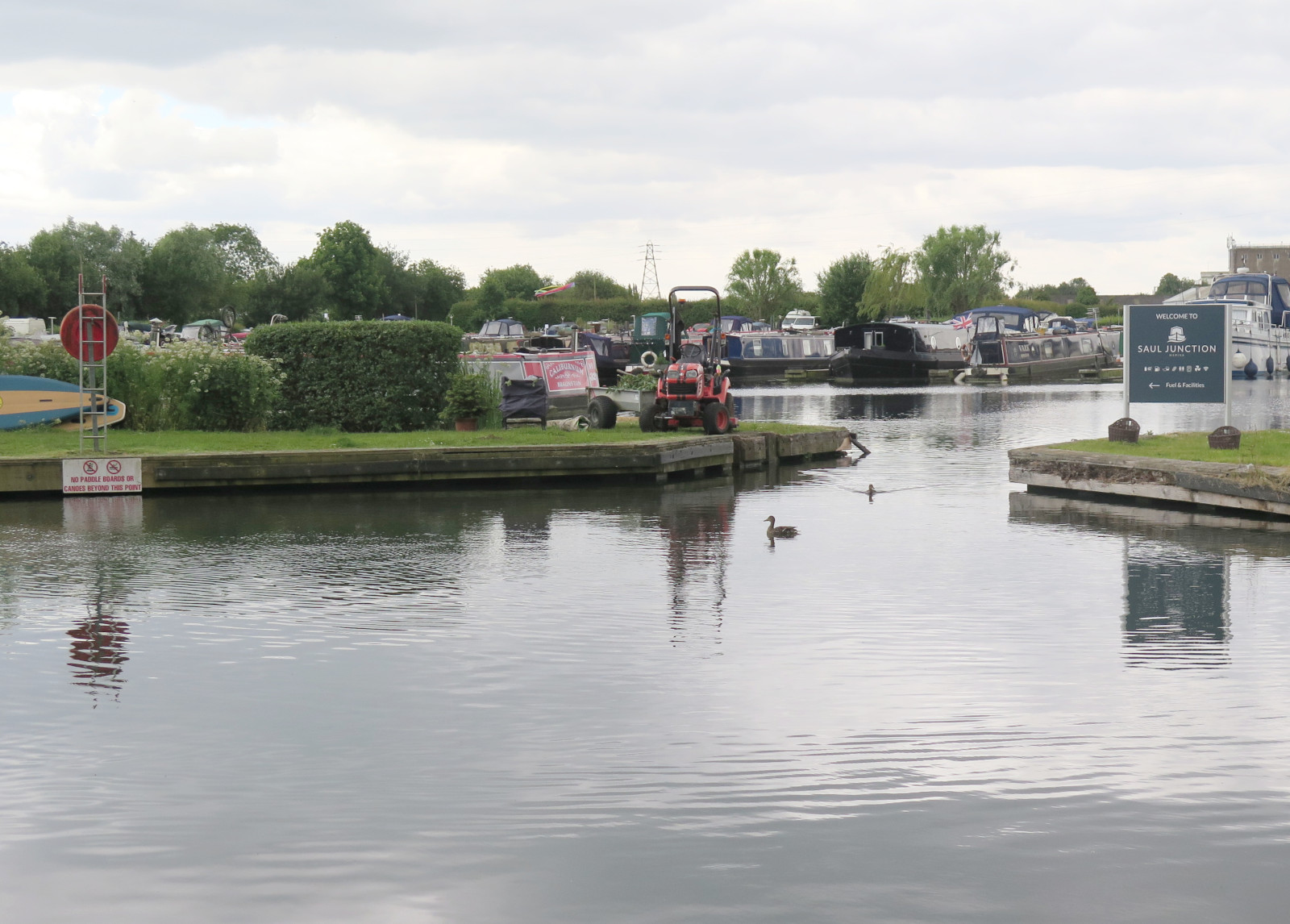
Walking south-east across the footbridge (see pointer on map) there is a right-hand bend and then an opening from the canal to a thriving marina.
The canal itself is very wide at this point and there are many moored boats alongside the towpath, The photo shows the widened Stroudwater Navigation in the foreground and the marina entrance. From here, the towpath continues to Walk Bridge.
Originally built as a swing bridge, Walk Bridge was replaced by a concrete and brick constuction, so a new opening bridge must be constructed to replace it. Cross the road and it’s clear that the canal is still in water at this point, but there’s no towpath. Enter the field by the stile, turn left, and walk diagonally across the field to the far side leaving the canal behind and to your right.
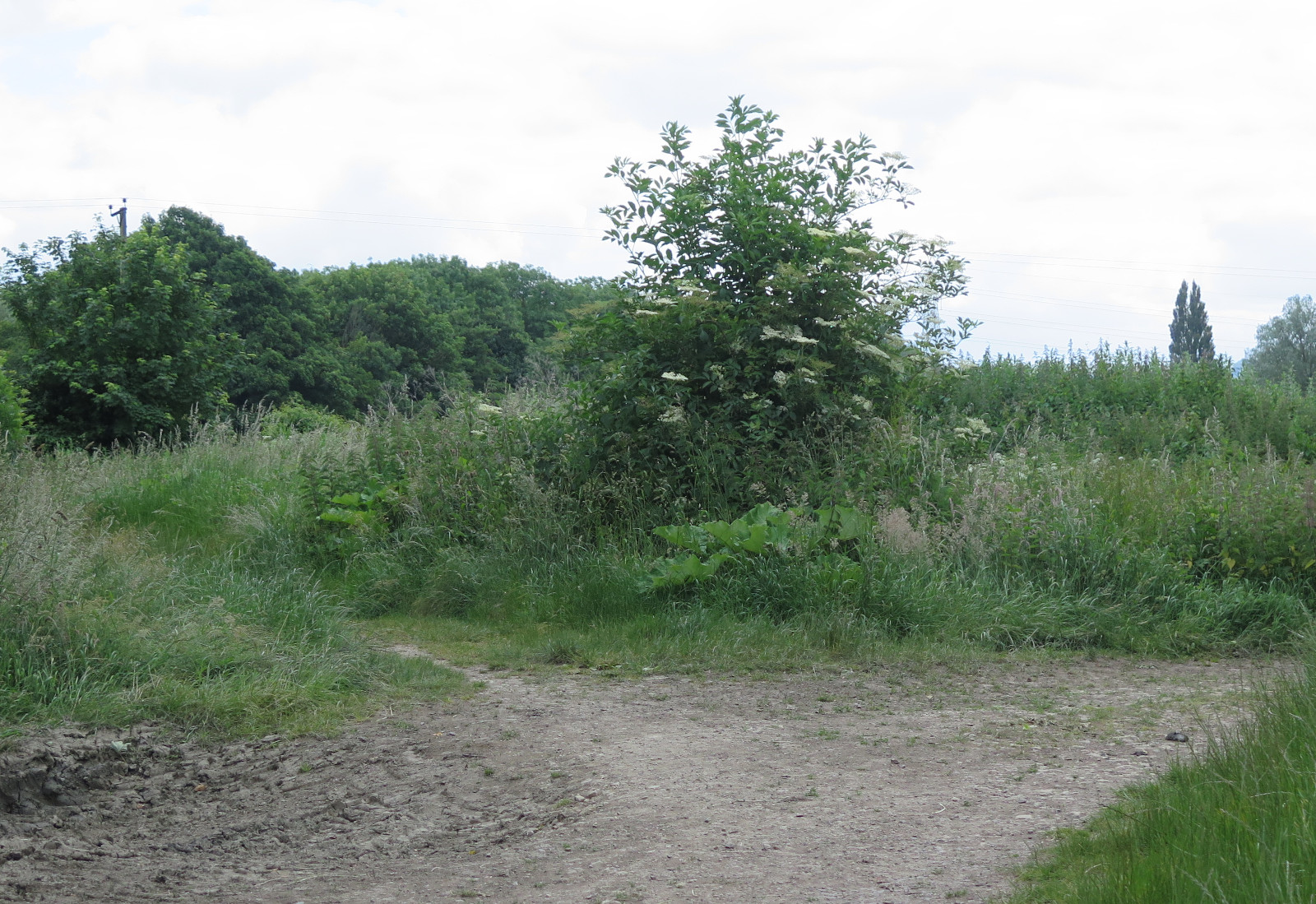
This brings us to Whitminster Bridge and Lock where there’s another glimpse of the canal’s remains. The photo below shows the point marked on the map. Turning a couple of metres right along the farm track will give you a view of the old canal lock. There was another swing bridge at this point.
Easy to go wrong here!
The small footpath to the left in the photo is part of the towpath and this is the route to take next. As you follow this path you’ll see the River Frome on your left. The canal has been filled in and would have been on the right.
The path and the river both bend to the right and then the path enters a strip of woodland along the river bank.
Through the wood
The path is poor, with large potholes filled with mud after prolonged rain. Care is needed and there are many roots that form real trip hazards, but the woodland doesn’t continue for very long (250 m or so) so slow and careful won’t reduce progress very much overall.
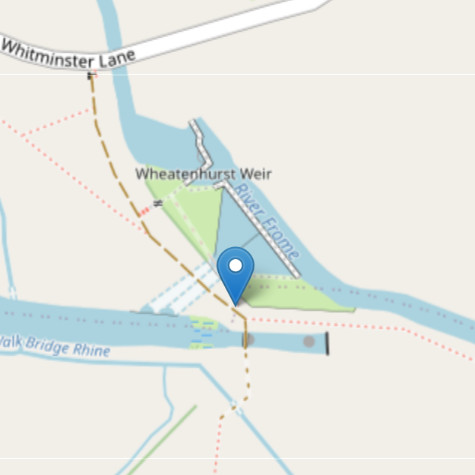
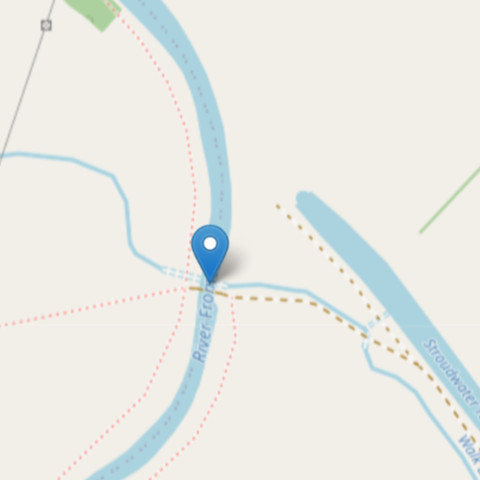
Once again, the river and footpath bend to the right, look for a concrete farm bridge (photo) across the river and take it, you’ll soon have the canal on your right. There was an aqueduct close to this point where the canal crossed over the river, but it no longer exists and the canal has been filled in for a short distance.
The map marker points to the bridge mentioned above; if you expand the map you can see the end of the woodland at top left and the canal section in water as well as the filled in part.
That looks more like a canal now!
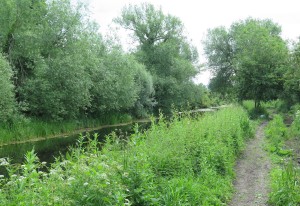
The next major feature is a crossroads of tracks and footpaths, there’s a post here with a blue Cotswold Canals sign which you should follow. The canal is in water again at this point, stand on the track where it crosses the canal and you can see it for a long way in both directions. you’ll also have a clear view of the canal as you continue along the towpath (photo). At the time of writing dredging work is underway on some days. If you’re unlucky parts of the towpath will be closed and you’ll be redirected. But most likely it will be open (and is always open at weekends and on summer evenings).
On to the bridge and pillbox
The final section of this walk is quite straightforward – just keep following the towpath. There are some interesting things along the way though, and an unexpected treat at the end as well. On your way you may see evidence of the dredging work still active along this section.
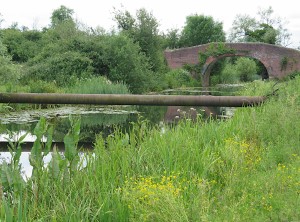
When you come to a stile, cross it into the next field and continue on the towpath. A little further and you’ll notice a large pipe acros the canal and just beyond it a brick-built bridge, this is ‘Occupation Bridge’. The pipeline was constructed during World War II, part of a network to carry aviation fuel for the RAF. It is still in use and will need to be diverted beneath the canal.
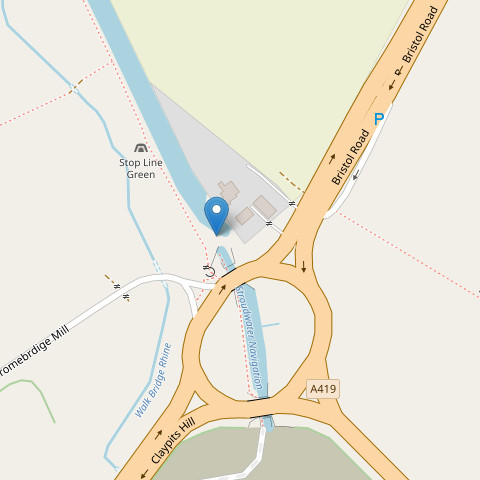
Beyond the bridge you’ll find a pillbox (also WW II) near the right bank of the waterway, and shortly afterwards you’ll arrive at the destination for this article, the A38 roundabout. Here comes the unexpected treat I mentioned earlier. Make your way through the galvanised steel gate and turn left, a short downhill scramble. Here you can pick up the towpath again and explore a newly built section of canal crossing the centre of the roundabout. So astonishing to see a newly built canal in the middle of a major intersection!
The canal here was built by National Highways who also constructed the roundabout. When you reach the far side you’ll see that the canal currently ends at this point. The ‘Missing Mile’ begins here and we’ll explore it in the next article, ‘Canal Walk 3’.
If you enjoyed this or found it useful, please like, comment, and share below. (If you don’t see those links, click the article’s title above the main photo and they will appear.) Send a link to friends who might enjoy the article or benefit from it – Thanks! My material is free to reuse (see conditions), but a coffee is always welcome and encourages me to write more often!






 Journeys of Heart and Mind