I never thought I would say this. But I approve of some of Boris Johnson’s actions. But let me be a bit more specific; I disapprove strongly of almost everything he did as Prime Minister, but there is one exception:
I like the way he stood up to Russia and clearly understood that enabling Ukraine to win and standing firm against Russia’s objectives and actions was necessary to Europe’s (and the UK’s) long term safety. Although that is all in the past now, we should still be analysing the European situation as it is today, and facing it by planning and acting wisely in our own and our neighbour’s best interests.
With that in mind, I urge you to watch the video below, in which Jonathan Fink interviews the researcher, political analyst, member of the RUSI think tank and author, Dr Benjamin Tallis. It’s a fascinating, and I think important, conversation. The thinking exposed by the interview is crucial to the survival of our way of life in a very dangerous world.
If you enjoyed this or found it useful, please like, comment, and share below. (If you don’t see those links, click the article’s title above the main photo and they will appear.) Send a link to friends who might enjoy the article or benefit from it – Thanks! My material is free to reuse (see conditions), but a coffee is always welcome and encourages me to write more often!
Yara has a lovely way with words, especially when you consider that she had to learn English first. Or maybe she expresses herself in a Ukrainian way that English speakers don’t expect.
Here’s more from Yara in Kyiv and her weekly Sunday messages. She stays strong and determined, reporting on events, Ukrainian art and literature, sharing photos and sometimes a video.
I wanted to mention Yara from Ukraine again (aka StrategyWoman) because I’d like you, my readers, to better understand what she and others in Ukraine have to deal with every day. Normal for Ukrainians is not the same as normal in the West – far from it. Yara lives in Kyiv, hears the drones and missiles coming in every night, and the air raid sirens. Her life is not like yours (unless, perhaps, you also live in Ukraine or another country under attack).
Here in the UK, and in western nations more generally, most of us have experienced nothing like this since the Second World War, and you would need to be very old to recall those times.
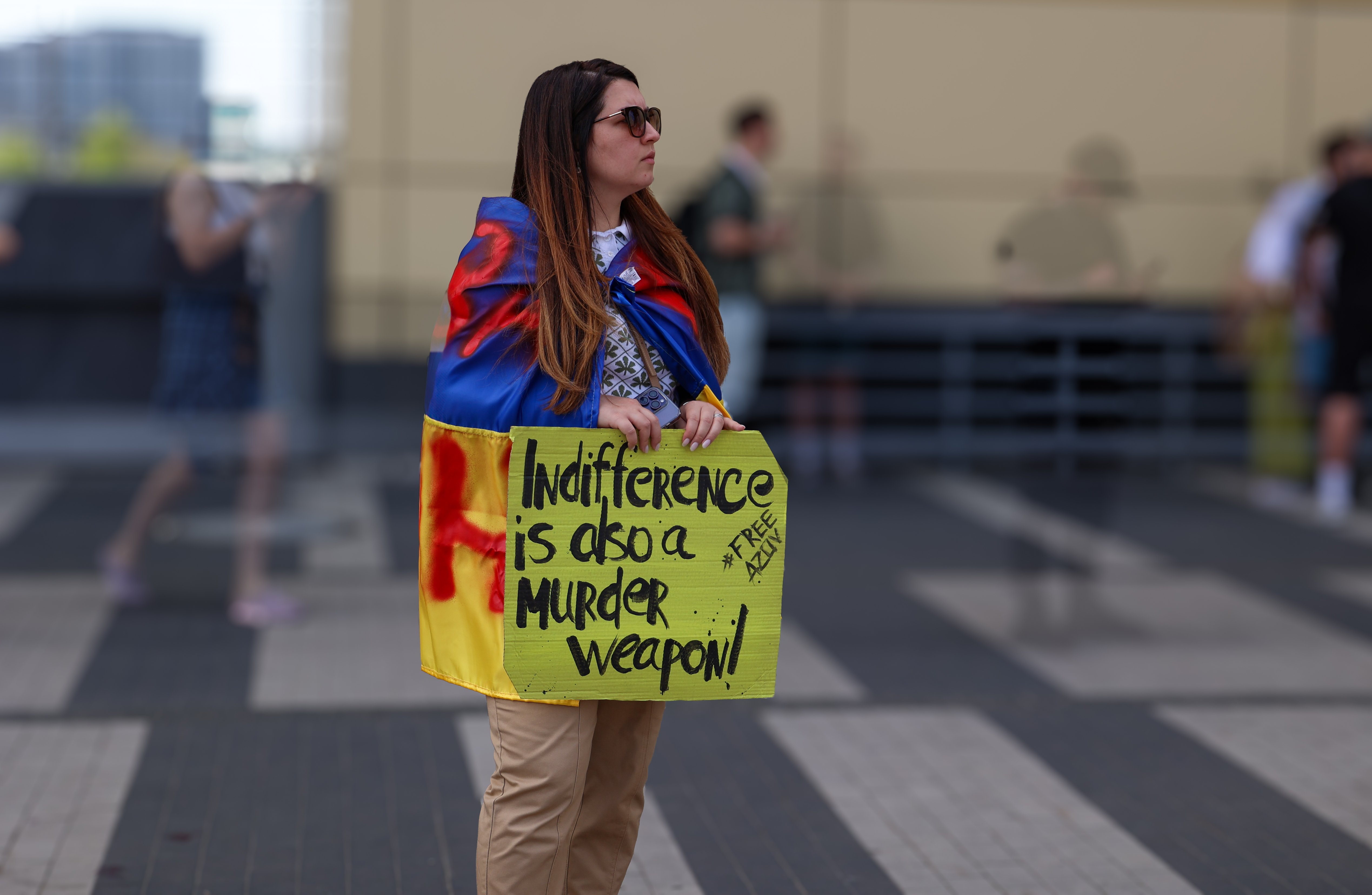
Yara does not ask us to rescue her, that would be to misunderstand her completely. She wants to live in her own country, not escape to somewhere more peaceful (but nor would she blame those who have left Ukraine). What she does hope for is that we in the west won’t forget about Ukraine.
To guard against our forgetting, she posts weekly messages on Sundays. These provide news, but they are always illustrated by beautiful artworks and photos, and she usually explains something from her daily life and from those around her.
Yara has a lovely way with words, especially when you consider that she had to learn English first. Or maybe she expresses herself in a Ukrainian way that English speakers don’t expect. However that may be, her words are fresh in innovative and interesting turns of phrase. For example:
Every support adds a feather to my wings. Yeah, I use these feathers to write you letters.
And she included the picture of feathers in a nest along with the words above.
If you’re willing to read her Sunday letters you are unlikely to be disappointed. For starters, read her 27th October letter for yourself. Even better, sign up to receive her letters regularly, the links are on Yara’s page. Sign up for free, but if you like what you find, do consider supporting her as well.
If only the government had stood firm on the lines it was starting to follow! Instead of succumbing to creatures who were not seeking its reform at all, but its total obliteration.
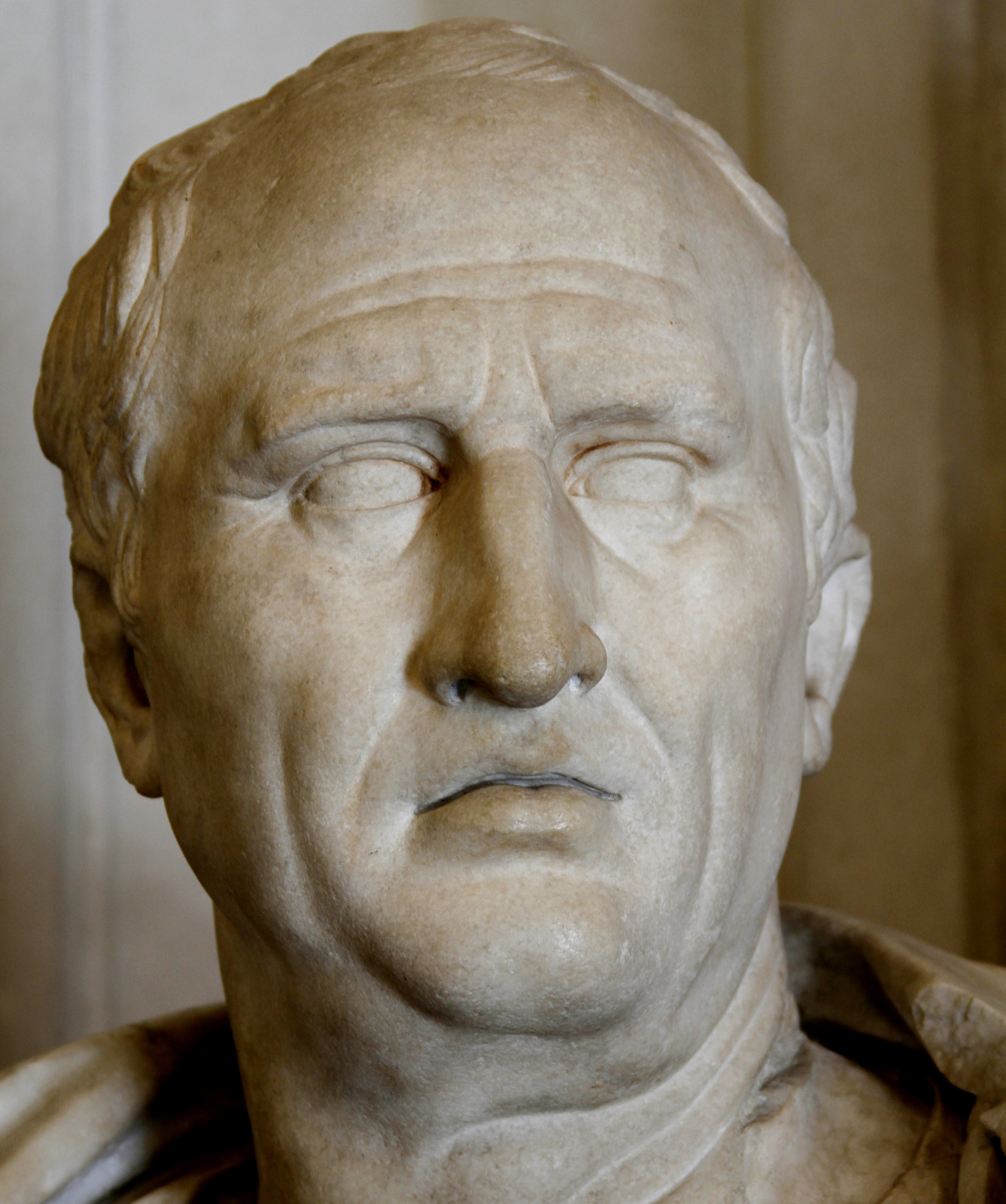
Below is a passage from Cicero’s work ‘On Duties’. We need a bit of background before I quote him. Cicero had been a lawyer, arguing cases for prosecution or defence, and he had a good deal of success in these endeavours. After a successful legal career he went into politics, working his way into the Senate, and then eventually being elected Consul.
But now the political process in Rome has changed, and instead of the Senate and other elected offices of state ruling Rome, the democratic element such as it was has been swept aside, first by a group of three and finally by the Dictatorship of Julius Caesar. Prior to this, a Dictator would be appointed for a limited time in case of great need. But now Caesar has taken the temporary role and made it permanent. (This brief summary leaves out a great deal, for more detail read the Wikipedia articles on Cicero and Caesar.)
The democracy of Senatorial Rome has ended. The dictatorship of Imperial Rome has begun. Cicero clearly understands the danger, and warns against it. Here is what he writes:
As long as our country was still governed by men it had voluntarily elected as its rulers, I was delighted to dedicate all my efforts and thoughts to national affairs. But when the entire government lay under the domination of a single individual, no one else but he any longer had the slightest opportunity to exert statesmanlike influence in any way whatever. Besides, I had lost the friends who had worked with me in the service of the State; and great men they were. When they were gone, I refused to give way to my distress – if I had not resisted by every possible means it would have overwhelmed me. Nor, on the other hand, did I just abandon myself to a life of pleasure; to do that would have been unworthy of an educated man.
If only the government had stood firm on the lines it was starting to follow! Instead of succumbing to creatures who were not seeking its reform at all, but its total obliteration. If things had gone better I should never have been devoting my attention to writing, as I am now. No, I would have been delivering public addresses, as I used to in the days when we still had a government: and if I wrote anything it would have been those speeches – just as I always wrote down and published my speeches after I had delivered them – it would not have been these essays I am engaged in now. Every scrap of my energy, attention and care used to go to politics. So when there was no such thing as politics any more, it was inevitable that my voice should be heard in the Forum and Senate no longer.
Does this sounds a little bit familiar? It should! We can identify democracies in our own times. Germany was a democracy before Adolf Hitler and the National Socialist Party seized power. Russia was a democracy under Boris Yeltsin until the presidency was transferred to a younger Vladimir Putin.
And what about the democracies of the USA and the UK today? They are still democracies for the time being, but how long will they last?
Adolf Hitler and Vladimir Putin came to power in democracies, but then tweaked the rules to give themselves additional powers and longer terms in office. Do we see the same kinds of manoeuvring by Donald Trump and the extreme right in the USA and by right wing politicians like Boris Johnson and Nigel Farage in the UK? So far, people like these have not been able to change electoral processes, but Trump has tried and so far failed, while Johnson and others may have used distortion and misrepresentation.
Intimidation and violence were used as levers of political change in Rome, and those methods are also being employed in our own day. Look at the words and actions of the far right across the world in recent years. We should all be concerned, some of today’s best and most moderate politicians have been elbowed aside – notably in USA’s Republican Party and the UK’s Conservative Party. And the same trend seems to exist everywhere in the wider West.
Just like Cicero, we should be alarmed, and careful, and work against the slide towards authoritarianism and power in the hands of individuals. A very great deal depends on the survival and flourishing of democratic government or we risk sliding into a new dark age of untempered authoritarianism.
Useful? Interesting?
If you enjoyed this or found it useful, please like, comment, and share below. (If you don’t see those links, click the article’s title above the main photo and they will appear.) Send a link to friends who might enjoy the article or benefit from it – Thanks! My material is free to reuse (see conditions), but a coffee is always welcome and encourages me to write more often!
I’m not going to add any comment of my own here; both videos speak for themselves, they are eloquent.
Please watch these two videos, one from Times Radio, the other from Anna who publishes a daily video about events in Ukraine as it struggles against the continuing Russian invasion and partial occupation of its land. Watch them to the end, and pass on the link to this article or to the videos themselves. Let family members, friends, and local politicians see this for themselves. Thank you.
First the news and discussion on Times Radio:
And next, an impassioned plea from Anna:
I’m not going to add any comment of my own here; both videos speak for themselves, they are eloquent. It is, I believe, well beyond time for the collective West to face down the evil regime in the Kremlin much more directly, much more effectively, and with greater and growing determination.
The actions ordered daily by Russian political and military leaders are not acceptable in any way.
Sometimes the worst things are done when the perpetrators are most afraid; and right now I think Putin is very much afraid.
This is a message of despair from a brave Ukrainian lady who deserves so much better. All Ukrainians deserve so much better. Yet I know the despair will be temporary.
A photo from Yara’s message
Yara has an irrepressible nature and despite the terrible circumstances I know she will regain a measure of hope and want to share Ukrainian culture and art with her readers again quite soon.
Please do read her message for today. Below I’ve copied a reply to it that I posted there a few minutes ago. I think there is growing cause for hope, and that’s what I wrote about and want to emphasise.
But before I share that reply: What can you do to help? Visit Yara’s site and take a good look around, read some of her other, more upbeat, messages. Consider becoming a supporting member, buy her a coffee, leave her a reply to one or more of her posts. Contact your government representative asking them to do more. In the UK write to your MP. Hint: Write again after our upcoming elections, you might find you have a different MP.
My reply
Wanting better for you, Yara. Wanting better for Kharkiv. Wanting better for every part of Ukraine.
Sometimes the worst things are done when the perpetrators are most afraid; and right now I think Putin is very much afraid.
Everything in Russia is beginning to fall apart – in fact, more than ‘beginning’. The evidence is everywhere.
There is a big shake up in the Russian Army, many senior officers are being arrested, perhaps because Putin fears a coup. Shaking things up does not make an army more effective. Just the opposite.
Inflation is ‘under control’ according to Putin. He is ignoring something like 8% inflation per month. How long can he pretend?
Crime rates are spiralling out of control.
Buildings are collapsing (not bombed, just badly built and lacking maintenance).
Roads and railways are broken, water supplies are broken, power supplies are broken, Ukraine is destroying oil refineries. Nothing is being repaired because so many skilled people either left Russia, or have been sent to die in Ukraine.
Nearly half the Black Sea Fleet is on holiday, resting peacefully on the sea bed.
Aircraft, air defence, airfields are being destroyed daily.
The war is going badly, very badly in fact.
What will happen next?
Putin’s time is probably short now, everything is going wrong for him.
Ukraine’s nightmare might end very suddenly, though nobody knows when. It could be in a year’s time, or just a month, or a week, or it might be tomorrow.
None of this affects how you feel right now, so you (like so many in Ukraine) will have to suffer longer. But feelings change day by day, One day, hope will grow like a tree in the springtime. Hope will blossom and flourish. But perhaps not today.
I know you, like all Ukrainians, will cling to hope until it’s no longer needed. Then you will all be able to sing, and dance, and have parties in the street, and then start on the huge task of rebuilding your shattered lives and towns and cities.
Nobody asks your permission or opinion, and suddenly people and places you love are injured and damaged by bombs and missiles.
Today I want to bring you news from Ukraine. I’m going to do this by giving you a glimpse through the eyes of Yaroslava Antipina who lives in Kyiv; if you want to know about a topic, the best sources always include local people.
The image above shows one of Yara’s pages on the web, here (and elsewhere) she writes regularly to inform her readers about the war, but also about Ukraine and Ukrainians. She shows us the architecture, the places she visits, the art galleries and museums and cathedrals and much, much more. Like all Ukrainians, and like my parent’s generation in the UK, Yara knows what it’s like to be thrust unwillingly into armed conflict. Nobody asks your permission or opinion, and suddenly people and places you love are injured and damaged by bombs and missiles.
But that’s enough from me today. I’m simply going to re-post Yara’s latest Sunday message to her followers. I recommend and urge you to read more of her material, you can find her in various places.
–oOo–
Hi!
I am writing to you from sunny Kyiv. The weather is mild and gentle, and on such days, it is hard to believe that the war is walking heavily somewhere on our land.
The situation in Kyiv is not so bad compared to frontline or near frontline territories. If you come here, you will see a city that tries hard to live. And you even feel this tension, this strong desire to show everyone, especially the enemy, that we are alive and our spirit is strong.
I have just got this thought…
Do you also feel that my letters are like conversations between two people? I hope so.
Okay, in this letter, you will see photos of Ukrainian artists from the so-called Samarkand era. Samarkand is a city in Uzbekistan. From 1941 to 1944, this city became a home for many Ukrainian artists. I will briefly tell you about this era a bit later in the letter. And the photos are from the exhibition I visited this week.
Petro Sulymenko (1914-1996), Sher-Dor, 1942
Some explanation: Sher-Dor Madrasa is a 17th-century madrasa (Islamic school) in the historical centre of Samarkand.
Let’s talk about the war. I rarely tell you about the situation on the frontline. It is a topic better explained by war experts or military personnel. But this week, I heard and read a lot about it, especially Chasiv Yar, so I decided to figure out why Chasiv Yar is so important for the russians.
So, Chasiv Yar is a city in Donetsk Oblast. About 13,000 people lived here, but as of early April, about 700 remained. It is the highest point for hundreds of kilometres around. The city stands on hills that protect it from the east and south like defensive walls.
Chasiv Yar is the ‘gateway’’ to the cities of Kostiantynivka (7 km to the west) and Kramatorsk (25 km to the northwest). If the russian forces manage to capture Chasiv Yar, they will have the opportunity to launch an offensive on them and other settlements of Donetsk Oblast, which still are controlled by Ukraine. You can read a short review in Politico or a detailed explanation of the importance of Chasiv Yar in The New York Times.
I want to add a few lines about the situation in Chasiv Yar now. Of the 700 people still living in the city, 80-85% are older people who refused to evacuate. Their main argument is that this is their home, and they want to stay here till the end.
Since February 2023, Chasiv Yar has had no gas and water supply, electricity, and poor mobile phone connection. Those who have stayed here rely on generators and water from wells to keep themselves alive.
All high-rise buildings in Chasiv Yar have been damaged by shelling; 80% of the damages are critical.
–oOo–
There are four more images of beautiful paintings and more informative text, but I want to encourage you to see those on Yara’s site… Thank you!
Times Radio interviews General Sir Richard Shirreff
Why do I think everyone should see it? Britain has done more to help Ukraine than many Western nations. So have Poland, France, Germany, Canada, the Baltic States, Finland, Norway and Sweden.
But we need to do so much more. If we do not, we are risking a future war between Russia and NATO. That, of course, is the last thing we want to happen, but if we don’t prepare for the worst case now, it may happen anyway, and partly (even largely) because of our lack of preparedness.
If you want to face down the playground bully you need more friends than he has, and preferably a larger, heavier stick to fight with. We have friends, but right now we are brandishing a twig and hoping the bully will turn away in fear.
He will not.
Sir Richard makes this very clear. That’s why we all need the chance to hear and evaluate what he has to say.
The main thing that is necessary, and therefore the first thing to address, is to decide what outcome we want to see. How do we want this war to end?
Here in the democratic world, we claim to be helping Ukraine. But are we really doing enough? I think we began rather late, but after (and even before) the Russian invasion in February 2022 we did make some efforts to help Ukraine with arms and ammunition. And two final questions, ‘Why does it matter anyway?’ and ‘What more should we do?’
In thinking this through there are several things to be considered. Let’s deal with those briefly before discussing in more detail whether we are helping Ukraine enough.
The democratic world
We often hear people talk about ‘The West‘ as a catch-all term for the USA, Europe, and any other similar democracies around the globe. This would include the UK, Canada, Australia, New Zealand, Japan, South Korea and I could list more. ‘The democratic world’ is not the way we usually express it, but I think it’s a more accurate term than ‘The West’.
Ukraine
Most of us know where Ukraine is, particularly following the Russian invasion. Regular news coverage has given most people a reasonable level of knowledge about the place geographically, socially and historically. But we need to acknowledge that there are two distinct understandings of Ukraine. The democratic world accepts that Ukraine became an independent nation when the Soviet Union broke apart in 1991. Ukraine is also recognised by the UN and other international bodies, with borders widely accepted to include Crimea and the Donbas. But the current Russian leadership has a different view, claiming that Ukraine remains part of the Russian World and should be brought back into the fold, by force if necessary.
Countries that don’t identify as part of either the democratic world or the Russian world also view Ukraine in one of those two ways depending on the strength of their association with Russia. North Korea and Iran, for example, accept the Russian version. Many countries in South America, Africa, the Middle East, and Asia take the view of the democratic world, but by no means all. Voting at the UN reveals where the balance of opinion lies – and it’s not with Russia.
Helping Ukraine
Aid of various kinds has been provided to Ukraine. There has been financial support to the Ukrainian government to help with provision of public services and for reconstruction following Russian destruction of power supplies, hospitals, schools, industries and housing. At the same time a wide range of sanctions have been applied to Russian trade and we can see this as support for Ukraine as well.
Additionally there has been considerable help in the supply of weapons and ammunition to help Ukraine fend off Russian attacks; but this has come with strict limits (don’t use what we are giving you to strike targets inside Russia). Limiting the use of weapons in this way is effectively tying the Ukrainian armed force’s hands behind their backs. The argument is that the Democratic World does not want to ‘provoke’ Russia. That’s a serious weakness, not just for Ukraine, but for all of us.
And although European nations and their allies are still providing arms and ammunition, the USA is not, due to internal wrangling in the House of Representatives.
Is there more we should do?
Undoubtedly, yes, much more. The main thing that is necessary, and therefore the first thing to address, is to decide what outcome we want to see. How do we want this war to end? We should have decided this more than two years ago, even before Russian armour, aircraft, supply vehicles, and troops crossed the international border in a drive to Kyiv on 24th February 2022. There are only four possible answers here:
We want Russia to win
We want the war to drag on and on while Russia continues to commit war crimes, destroying towns and cities, targeting essential civilian infrastructure, and killing Ukrainian men, women and children
We want a ceasefire agreement
We want Ukraine to win, ie drive Russia back beyond the 1991 borders
So let’s consider the implications of each outcome.
We want Russia to win
This way lies madness, and I don’t think any democratic country is suggesting it. Even if we ignore the illegality of the war, and even if we ignore what Russia would do next (we can guess, given their actions in Bucha, Mariupol, Bakhmut, Avdiivka and so forth), we should never overlook Russia’s existing threats beyond Ukraine. Serious threats have been expressed towards Finland, the three Baltic States, even Poland; and who is to say it would stop there?
We want the war to drag on
In this case we would have to accept that we’d need to go on supporting Ukraine indefinitely with financial and military aid. That represents a very expensive choice! It would also seem to be an abhorrent and immoral choice as it would allow the civilian suffering to continue indefinitely. Does anyone seriously support such an option?
We want a ceasefire agreement
Ukraine would gain a respite from fighting, and so would Russia; it seems like a good choice that many people would support. But we need to think a bit harder about this option. First, it rewards the illegal hostility and land grab that has already taken place. A ceasefire would put an end to Ukrainian hopes of regaining its occupied territory, territory taken against international law and international recognition of borders. Are we really willing to let Russia benefit from its aggression?
And how long would such a ceasefire last? Russia has declared that it wants all of Ukraine (Reuters). Five or six years for Russia to regain its strength, build up its army and armaments, and what would then stop them from starting a new ‘special military operation’. Up until the day of the invasion in 2022, Russia had been telling the world it had no intention of attacking Ukraine! Putin is not a man of his word. Words mean nothing to him; he’s made that clear over and over again. He would simply ignore any commitments previously made in a ceasefire agreement. Trust him at your peril!
We want Ukraine to win
Considering the arguments above, this has to be a no-brainer. Why isn’t it? The answer is clear – we have not thought it through very thoroughly.
I want Ukraine to win, and I want all the countries that support Ukraine to want them to win too. And further, I want all those countries to let Russia know, in no uncertain terms, that our clearly declared intention is that they should lose this unprovoked, illegal war for which they alone carry the responsibility.
Why is it important that Russia understands this? Simply this, that Mr Putin respects strength and clearly expressed intentions. If he is in any doubt that we will settle for less than a full Russian withdrawal from Ukraine including from Crimea and Donbas, he will procrastinate and continue to fight. He may do that anyway, of course. But he must, if necessary, be forced to leave Ukraine.
Why does it matter anyway?
Russia is militarily weaker that they believed themselves to be two years ago, and Ukraine has proved to be far stronger than Putin expected. Russia will not give up voluntarily, so it’s essential that they are forced to do so. It is essential for Ukraine to win as soon as possible, to save innocent lives, to reduce the financial costs for Ukraine and her supporters, and to put Putin and Russia back into a place where they know they have lost and will be unwilling and unable to try again. It’s essential for peace and security in Eastern Europe, and very possibly in Western Europe too. We must not fail Ukraine and we must not fail ourselves. Democratic people deserve to live in a peaceful world. Autocracies must not, in the end, prevail. Indeed, all people deserve to live in a peaceful and harmonious world.
Please don’t misunderstand me, I would very much like peace and harmony with Russia. But that will not become possible until Russian forces withdraw from Ukraine, and accept that military conquest to extend Russian territory is not acceptable.
Historians remind us that we were in a similar situation in 1938 when Czechoslovakia was forced to give significant border areas to Germany ‘to prevent a wider war’. The disputed land was duly given to Germany, but German forces subsequently moved into the rest of the country and took control anyway. World War II broke out soon afterwards when German forces entered Poland.
And that’s what might happen now. Ukraine would be forced to give significant border areas to Russia ‘to prevent a wider war’. The disputed land would be duly given to Russia, but Russian forces would subsequently move into the rest of the country and take control anyway. World War 3 would break out soon afterwards when Russian forces enter Poland and/or the Baltic States.
Let’s not fall into that trap. We need to say, ‘No’, and say it very clearly indeed. We must not say, ‘OK, settle for part of what you want’. Because Putin will smile, take what we agree, and then take the rest later. And he won’t stop there.
There’s another thing to remember. We are not dealing with a reasonable person. Vladimir Putin has lied before, he has never been trustworthy, when he agrees to something it’s because it will bring him an advantage. He regards keeping his word as a serious weakness. He casually murders those who oppose him – even his friends. It’s hard to imagine permanent peace in Europe as long as Putin is alive and free. Russia cannot change while he is in charge. That, too, should remind us of the run up to World War II.
What more should we do?
We should immediately provide much more military support. France is working to provide more armour and air defence missiles. The United States must be deeply embarrassed at their present inability to provide ammunition and air defence help. Czechia has done really well to arrange to supply more than a million shells.
In parallel, our governments should urgently be ramping up manufacture of ammunition for our own stocks in addition to supplying Ukraine, and we must increase military budgets to innovate and enlarge our armed forces. Perhaps the war will not spread beyond Ukraine, but we cannot assume that. It is always better to be safe than sorry. We must stop acting as if war is far away and can never come closer. The old Boy Scouts motto applies – ‘Be prepared’.
The Russian official line is certain to be rejected and disregarded by most governments, by NATO, by the UN, and by people of goodwill
Just take a look at Russia’s current demands for peace with Ukraine, expressed by Dmitry Medvedev. I’m sure you’ll agree that he puts it rather clearly; does this seem reasonable and fair to you?
The text below is an extract from today’s ISW report on the war in Ukraine. These are the Russian conditions for peace. It’s the official line, published by Dmitry Medvedev, currently Deputy Chairman of the Russian Security Council. This is what he calls a ‘peace formula’, it does have the merit of leaving us in no doubt about what Russia wants.
Medvedev begins the “peace plan” by rhetorically stripping Ukraine of its sovereignty, referring to it as a “former” country and placing the name Ukraine in quotation marks. Medvedev laid out the points of his “peace formula”, which he sardonically described as “calm”, “realistic”, “humane” and “soft.”
The demands are:
Ukraine’s recognition of its military defeat
Complete and unconditional Ukrainian surrender
Full “demilitarization”
Recognition by the entire international community of Ukraine’s “Nazi character”
The “denazification” of Ukraine’s government
A United Nations (UN) statement stripping Ukraine of its status as a sovereign state under international law
A declaration that any successor states to Ukraine will be forbidden to join any military alliances without Russian consent
The resignation of all Ukrainian authorities and immediate provisional parliamentary elections
Ukrainian reparations to be paid to Russia
Official recognition by the interim parliament to be elected following the resignation of Ukraine’s current government that all Ukrainian territory is part of Russia
The adoption of a “reunification” act bringing Ukrainian territory into the Russian Federation
The dissolution of the provisional parliament
UN acceptance of Ukraine’s “reunification” with Russia
In a sense, this can be taken as a reply to the Pope’s recent statement about Ukraine ‘raising the white flag’. The Pope has since backtracked and clarified his statement, but Medvedev is most unlikely to backtrack his response.
The Russian official line is certain to be rejected and disregarded by most governments, by NATO, by the UN, and by people of goodwill throughout most of the globe. It is not acceptable as a starting point for negotiations of any kind, more a vain wish-list that very few can accept. Why, exactly, would Ukraine ‘recognise its military defeat’ when it is very clearly not defeated? And why does Medvedev think the entire world would ‘recognise’ that Ukraine has a ‘Nazi character’? Most of the world would be more likely to perceive such a character in the Russian government’s imperialist ambitions.
Dmitry Medvedev, and more to the point Vladimir Putin, seem to think they can get away with rewriting history, disregarding truth, invading an internationally recognised member state of the UN, breaking international law, and have the entire world let them get away with it. They are deluded. We will not and must not allow it.
How can we get to the reality of life in Russia, when news channels just repeat what the leadership orders or allows?
We are all aware, of course, that there is a war going on between Russia and Ukraine. Russia staged an unprovoked invasion of Ukraine in February 2022; and news of events as they unfold have been presented on TV, radio, newspapers, magazines, and online channels.
We know something about Ukraine, but what do we know about events inside Russia itself? People are aware that Vladimir Putin rules with almost absolute power. He controls the government, the armed forces, and the security organisations. The police and the FSB (just like the Soviet Union’s KGB before them) control almost every aspect of society. Faced with this situation, how can we get to the reality of life in Russia, when news channels just repeat what the leadership orders or allows?
I invite you to look at the Silicon Curtain video below. This particular interview with a Russian expat living in Uzbekistan uncovers some of the internal difficulties currently faced by the Russian people and their government.
Silicon Curtain provides interviews that go deeper than most Western news sources, investigating topics that are not always available by other means. The channel is run by Jonathan Fink who lives in Oxford and read Russian Studies at Edinburgh University. If you find this interview informative and interesting, take a look at the other videos on the Silicon Curtain channel.




 Journeys of Heart and Mind
_01.jpg)
_-_Palazzo_Nuovo_-_Musei_Capitolini_-_Rome_2016.jpg)

