Image of the day – 63

Hares have become something of a feature in the town. Recently the hare tradition has spread to the Cotswolds more generally too.

< Previous | Index | Next >

What’s in an image? Sometimes quite a lot, more than meets the eye.

I’m posting an image every two days (or as often as I can). A photo, an image from the internet, a diagram or a map. Whatever takes my fancy.

The photo shows one of a number of beautifully painted hares around the town. This example stands at the southern end of Riverside Walk where it joins Thomas Street.

A hare featured in a Roman mosaic floor discovered just inside the eastern city wall, part of a very impressive town house. The hare mosaic is now in the Corinium Museum and hares have become something of a feature in the town. Recently the hare tradition has spread to the Cotswolds more generally too.

The mosaic was covered over by an underfloor heating system and a new floor laid on top. The new floor did not survive, but the old floor did, protected as it was by the stonework laid above it.

You might like to watch this video about the hare mosaic, published by the Museum.

See also:
Cirencester

For convenience, here’s a list of all the Cirencester area images:

A417 roadworks, Advent Market, Bishops Walk, Baunton, Canal 1, 2, Castle Street, Christmas lights 1, 2, Church 1, 2, 3, 4, 5, 6, Churn flood, Countryside, Fallen tree, Fleece, Gasworks, Gloucester Street, Hare 1, 2, Hospital, Market Place 1, Phoenix Fest, Riverside Walk, Stone plaque, Stratton Meadow, Tank traps, View, Wonky 1, 2, Yellow Iris

Themed image collections

The links below will take you to the first post in each collection

Cirencester, Favourites, Irish holiday 2024, Roman villa

< Previous | Index | Next >

Useful? Interesting?

If you enjoyed this or found it useful, please like, comment, and share below. (If you don’t see those links, click the article’s title above the main photo and they will appear.) Send a link to friends who might enjoy the article or benefit from it – Thanks! My material is free to reuse (see conditions), but a coffee is always welcome and encourages me to write more often!

Image of the day – 62

In the uneasy relationship between abbey and town, the town had the last laugh when Henry VIII dissolved the abbey.

< Previous | Index | Next >

What’s in an image? Sometimes quite a lot, more than meets the eye.

I’m posting an image every two days (or as often as I can). A photo, an image from the internet, a diagram or a map. Whatever takes my fancy.

Click to enlarge

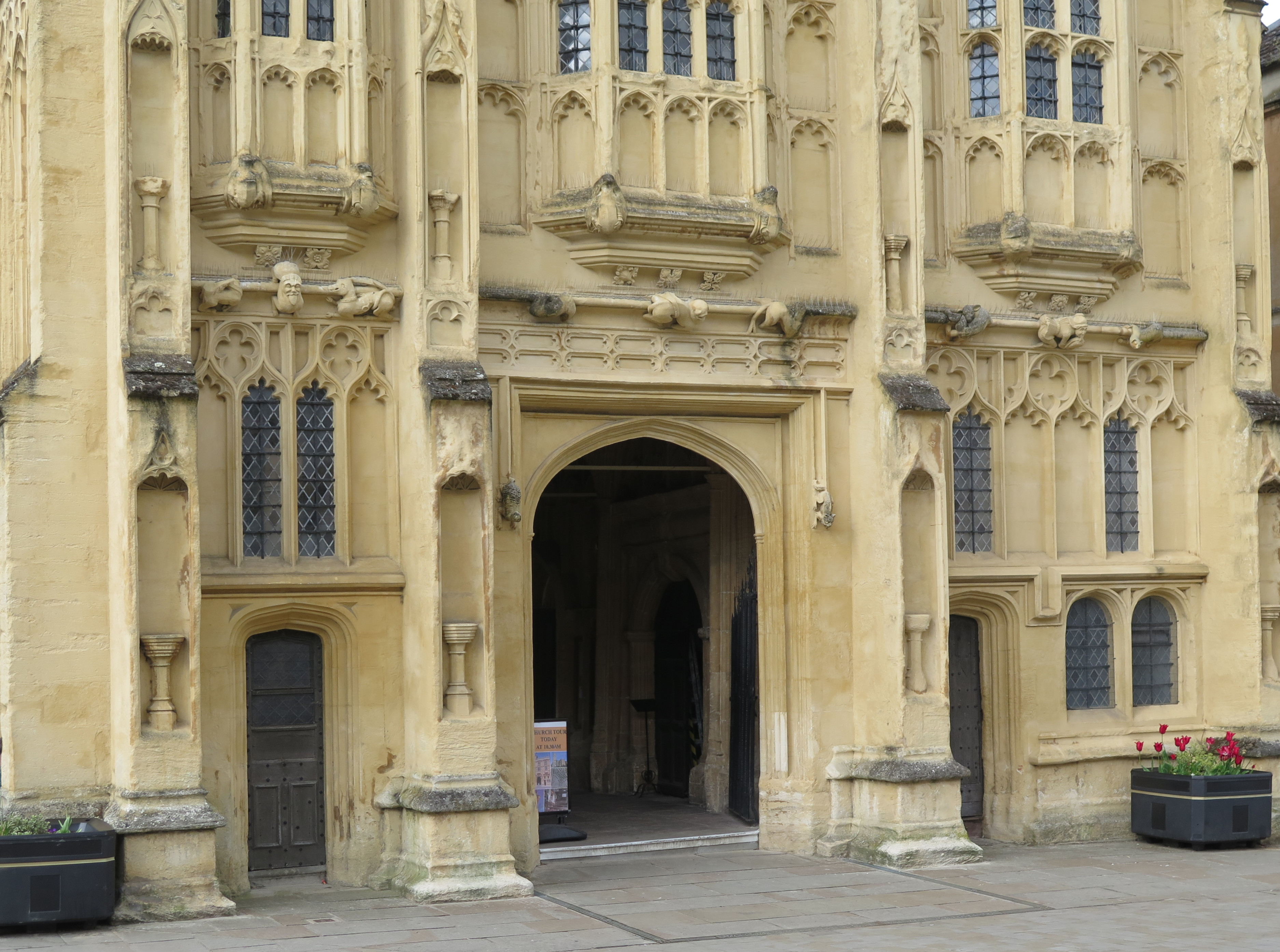
This is the porch of Cirencester’s Parish Church, St John the Baptist. It’s used as the main south entrance into the Church, and the door on the north side is also usually open, but the main West Door is kept closed and bolted. A three storey porch is a rarity, and in fact the two upper floors were once used as the Town Hall. But it seems the porch was built by the nearby Abbey as administrative offices and only attached to the Parish Church after the Abbey was dissolved.

This image shows the front detail, but I’ll post another photo soon showing the entire building. The architecture is interesting, with carved animals both real and imaginary, and niches for statues, now empty.

I think there’s something we can learn from this. There was an uneasy rivalry between the Abbott and the townspeople in medieval times. It’s thought that Cirencester was given a royal charter at one time, but the Abbot got hold of it somehow and destroyed it. Building the administrative centre right in front of the Parish Church makes me wonder about the motives involved in that, as well. Maybe there are other explanations I’m not aware of.

But we should always strive to get on well with those around us. It takes two to argue, but it also takes two to agree and agreement is usually better in the long run. In the uneasy relationship between abbey and town, the town had the last laugh when Henry VIII dissolved the abbey. And the town used the building in the picture and later gave it to the church to be added to the structure as perhaps the grandest church porch in all England!

Cirencester

For convenience, here’s a list of all the Cirencester area images:

A417 roadworks, Advent Market, Bishops Walk, Baunton, Canal 1, 2, Castle Street, Christmas lights 1, 2, Church 1, 2, 3, 4, 5, 6, Churn flood, Countryside, Fallen tree, Fleece, Gasworks, Gloucester Street, Hare 1, 2, Hospital, Market Place 1, Phoenix Fest, Riverside Walk, Stone plaque, Stratton Meadow, Tank traps, View, Wonky 1, 2, Yellow Iris

Themed image collections

The links below will take you to the first post in each collection

Cirencester, Favourites, Irish holiday 2024, Roman villa

< Previous | Index | Next >

Useful? Interesting?

If you enjoyed this or found it useful, please like, comment, and share below. (If you don’t see those links, click the article’s title above the main photo and they will appear.) Send a link to friends who might enjoy the article or benefit from it – Thanks! My material is free to reuse (see conditions), but a coffee is always welcome and encourages me to write more often!
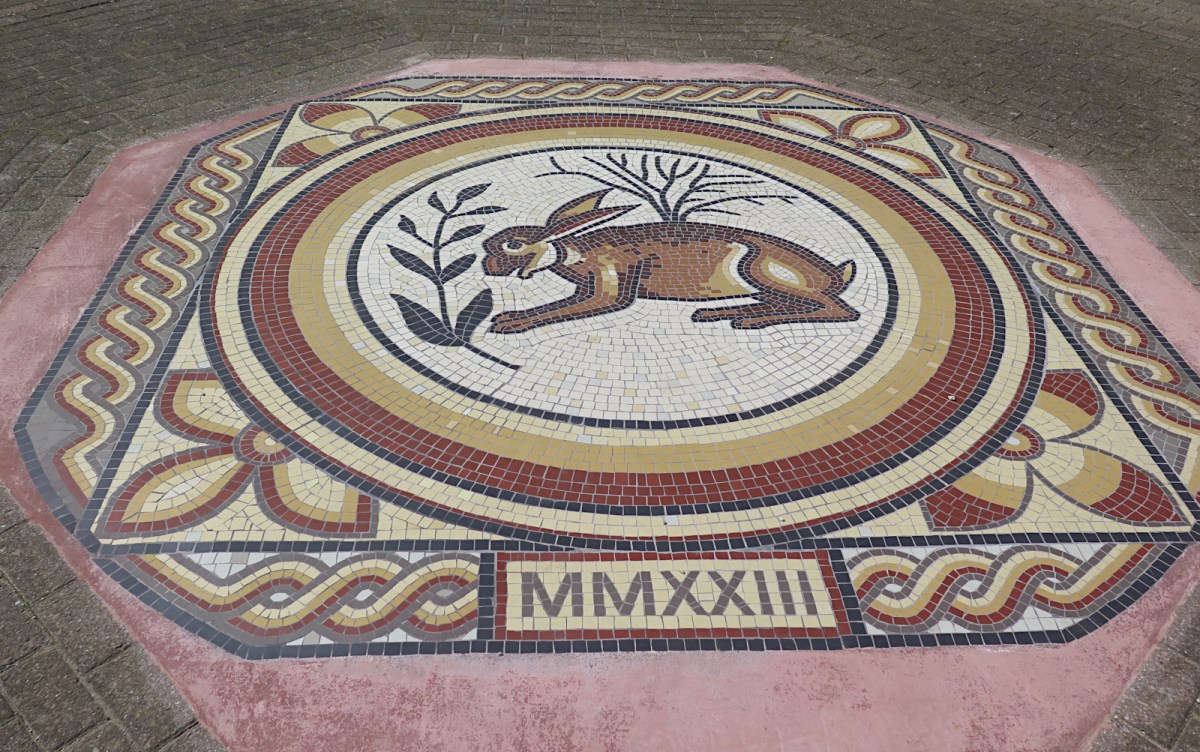
Image of the day – 61

The good news is that the canal is being restored and is already in water again through Stroud.

< Previous | Index | Next >

What’s in an image? Sometimes quite a lot, more than meets the eye.

I’m posting an image every two days (or as often as I can). A photo, an image from the internet, a diagram or a map. Whatever takes my fancy.

Siddington canal bridge

Cirencester and its surroundings have changed dramatically over the years. This old bridge in Siddington takes a country lane over the old Thames and Severn canal. Although the canal is derelict, looking down from the bridge you get a clear view of the ladder of locks that used to be here. The good news is that the canal is being restored and is already in water again through Stroud. It will be reconnected to the national canal network within the next three years or so. Work has also started at the Cotswold water park, repairing the section from the spine road to Latton, and in Lechlade where it joins the Thames.

Sadly, there is no plan to restore any part of the Cirencester Arm of the canal, but it’s possible to trace the route of the towpath almost the entire way from Siddington to the bottom of Querns Hill where Cirencester Wharf used to see the loading and unloading of cargo.

Cirencester

For convenience, here’s a list of all the Cirencester area images:

A417 roadworks, Advent Market, Bishops Walk, Baunton, Canal 1, 2, Castle Street, Christmas lights 1, 2, Church 1, 2, 3, 4, 5, 6, Churn flood, Countryside, Fallen tree, Fleece, Gasworks, Gloucester Street, Hare 1, 2, Hospital, Market Place 1, Phoenix Fest, Riverside Walk, Stone plaque, Stratton Meadow, Tank traps, View, Wonky 1, 2, Yellow Iris

Themed image collections

The links below will take you to the first post in each collection

Cirencester, Favourites, Irish holiday 2024, Roman villa

< Previous | Index | Next >

Useful? Interesting?

If you enjoyed this or found it useful, please like, comment, and share below. (If you don’t see those links, click the article’s title above the main photo and they will appear.) Send a link to friends who might enjoy the article or benefit from it – Thanks! My material is free to reuse (see conditions), but a coffee is always welcome and encourages me to write more often!

Image of the day – 60

Other species…include red kites, you’ll see these frequently in the skies around Cirencester, often flying very low, even over housing estates.

< Previous | Index | Next >

What’s in an image? Sometimes quite a lot, more than meets the eye.

I’m posting an image every two days (or as often as I can). A photo, an image from the internet, a diagram or a map. Whatever takes my fancy.

Yellow flag Iris

These beautiful, water tolerant, native Irises pop up every year in the waterways in and around Cirencester. The photo was taken at the junction of Riverside Walk and Gloucester Street right by Abbey Way Services. The photo was taken in May, just as they were reaching their best.

Although our natural environment is struggling to cope with the many pressures we put on it, some species manage to do quite well. This is one of them. But there are many others that are in danger. Some of these, plants and animals, are fairly stable or even recovering in and around the Cirencester area with careful conservation management. Examples include the lovely snakeshead fritillaries that flower abundantly in North Meadow just south of Cricklade, pasqueflowers in a strong colony to the north of the town near the Stow Road, and the large blue butterfly on a reserve west of the town and on common land near Stroud.

Other species, once rare but now much more common include red kites, you’ll see these frequently in the skies around Cirencester, often flying very low, even over housing estates. Back along Riverside Walk you may be lucky enough to see a heron, a kingfisher, or a little egret.

Cirencester

For convenience, here’s a list of all the Cirencester area images:

A417 roadworks, Advent Market, Bishops Walk, Baunton, Canal 1, 2, Castle Street, Christmas lights 1, 2, Church 1, 2, 3, 4, 5, 6, Churn flood, Countryside, Fallen tree, Fleece, Gasworks, Gloucester Street, Hare 1, 2, Hospital, Market Place 1, Phoenix Fest, Riverside Walk, Stone plaque, Stratton Meadow, Tank traps, View, Wonky 1, 2, Yellow Iris

Themed image collections

The links below will take you to the first post in each collection

Cirencester, Favourites, Irish holiday 2024, Roman villa

< Previous | Index | Next >

Useful? Interesting?

If you enjoyed this or found it useful, please like, comment, and share below. (If you don’t see those links, click the article’s title above the main photo and they will appear.) Send a link to friends who might enjoy the article or benefit from it – Thanks! My material is free to reuse (see conditions), but a coffee is always welcome and encourages me to write more often!

Image of the day – 59

If you could visit the Market Place in 1500 you would struggle to recognise anything other than the Parish Church.

< Previous | Index | Next >

What’s in an image? Sometimes quite a lot, more than meets the eye.

I’m posting an image every two days (or as often as I can). A photo, an image from the internet, a diagram or a map. Whatever takes my fancy.

Christmas lights

This is Cirencester Market Place on 5th January 2021, still in its decorated-for-Christmas state. In the 17th century this space was full of buildings and narrow streets. Roughly where the red car stands, imagine an old inn with a street either side, and beyond it two rows of buildings, Butter Row and Butcher’s Row, so three streets at that point. Many old buildings were destroyed in town improvement schemes over the years. If they still existed today they would attract preservation orders.

If you could visit the Market Place in 1500 you would struggle to recognise anything other than the Parish Church. All the fine, Cotswold stone buildings were constructed more recently than that, the shops and dwellings at that time would have been timber framed with overhanging upstairs floors. The entire look and feel of the place would be different. At that time the Abbey was thriving with the Abbey Church behind the existing Parish Church. The entirety of what is now the Abbey Grounds would have been busy with monks on errands and at work in the gardens, at the fishing lake (still there today), in the mill and bakery and so much more. It was almost a walled town within a town.

In the year 1000, shortly before the Norman invasion, some of Saxon Cirencester may still have been outside the old Roman walls, but there was a Saxon church in the area of the Abbey Grounds and it’s likely that other parts of the Roman City would have been cleared and put to use.

And in the year 500 the Romans had left only 100 years earlier. The city would have been more or less intact, but derelict. Initially, Saxon settlers lived outside the old city walls. Some of those walls would still have been standing, at least in places, and the larger buildings inside the city would have been identifiable – the Basilica, the Forum, and probably Baths and a Theatre (now lost). The Saxons built timber framed houses and farms initially outside the walls. Piles of rubble and stone, no doubt ridden with extensive and impenetrable growths of brambles and trees, would have seemed far less useful than the arable land outside the old walls.

Go back another five hundred years and the area where the town now stands consisted of a flood plain with low gravel banks and the River Churn meandering through. There would have been yellow iris, water mint, alder and willow in wetter areas with other trees on higher ground. The waterways would have been easily forded and the local Dobunni people likely fished in the area and farmed on higher ground nearby. The Roman army constructed the Fosse Way from Exeter to Lincoln and built a timber fort in the eastern part of modern Cirencester. It’s likely that a trading settlement grew up near the fort and the town was officially recognised in 75 CE. By the later Roman period it had become the second largest city in Britain (London was the largest).

All of this took place in and around the area we know today as Cirencester Market Place.

Cirencester

For convenience, here’s a list of all the Cirencester area images:

A417 roadworks, Advent Market, Bishops Walk, Baunton, Canal 1, 2, Castle Street, Christmas lights 1, 2, Church 1, 2, 3, 4, 5, 6, Churn flood, Countryside, Fallen tree, Fleece, Gasworks, Gloucester Street, Hare 1, 2, Hospital, Market Place 1, Phoenix Fest, Riverside Walk, Stone plaque, Stratton Meadow, Tank traps, View, Wonky 1, 2, Yellow Iris

Themed image collections

The links below will take you to the first post in each collection

Cirencester, Favourites, Irish holiday 2024, Roman villa

< Previous | Index | Next >

Useful? Interesting?

If you enjoyed this or found it useful, please like, comment, and share below. (If you don’t see those links, click the article’s title above the main photo and they will appear.) Send a link to friends who might enjoy the article or benefit from it – Thanks! My material is free to reuse (see conditions), but a coffee is always welcome and encourages me to write more often!