Just a short message this time, I read the latest from ‘Aforgetfulsoul’ and she expresses very clearly what it really means to follow Jesus. So if you want some good, wholesome, thought-provoking wisdom, look no further. Here’s a brief extract…
I am excited to think that my life as a believer is not a matter of rigid scheduling of ‘religious’ activities, but is a pattern woven by my Father according to his purposes, where he asks for my yielding, my desire to be attuned to his promptings, my availability to be ‘interrupted’ and to recognise in the smallest event some sign that God is at work and asking me to share it.
But do read the whole article. This is exactly the way I feel about my own life, it’s one of the reasons I often add a tiny, ‘throw-away’ remark in my articles whatever the major topic, drawing attention to spiritual aspects of the everyday things I notice or am involved in. If he’s worth following (and he is) Jesus will be in every little part of my life. Often partly hidden – but there.
We often make things far too complicated. Too structured. Too organised.
Paul’s letter to the Ephesians has sometimes been described as the constitution of the church, but that’s not strictly correct. Paul didn’t write Ephesians to define what church is and is not, so it contains much more than the bare bones of a definition. Constitutions are (relatively) brief but very clearly lay out the essence and limits of something, be it an organisation like a business, a charity, or indeed a nation. They also spell out definitions of terms as well as the concept being defined, as clearly as possible. So if we want a constitution for the church, we must think in terms of something succinct, crystal clear, and complete but not providing unnecessary additional detail.
Why have a constitution?
The church has never truly had a constitution, some might argue it doesn’t need one. But recently I’ve begun to feel it does. Almost every denomination imposes customs and requirements on their adherents, over and above anything that Jesus taught. There are paid leaders and managers, forms of infant baptism, doctrine, so much encrusted over the basics. So much that can be seen as unnecessary when we compare it to the earliest forms of church or to what we learn from the New Testament. Some form of declarative constitution might bring much needed clarity to the confusion.
Over the centuries there have been repeated reforms and corrections, but generally these have resulted in yet more varieties of belief and practice. A constitution might help, we should at least make an attempt to form one.
So first of all, why would we even want a church constitution? There are probably as many definitions as there are denominations, and that’s quite a large number; a constitution provides clarity and a reference point. The Bible, and even just the New Testament is far too detailed to be a definition; yet it contains everything we need to know and does not support the additions and concretions of the last two millenia.
The essentials, but no more
What else can we say about constitutions in general? The key point, I think, is that a constitution should contain everything essential but nothing beyond that. A definition brings clarity and focus. Constitutions are usually amendable both for corrections and for additions or deletions. There is normally an agreed process for amending a constitution.
So where would we begin for the church? As always, we must begin with our source – Jesus himself.
A good start would be to state that church is defined by everything that Jesus is and does and teaches and by nothing beyond that. Having leaders of a particular flavour or style and how we name those leaders are not fundamental. Whether you have a priest, a vicar, a pastor, elders or deacons, those are all secondary features of church life and practice. They cannot form part of the definition.
Let’s begin by saying church is a group of people striving to follow Jesus. I don’t think we can start in any better way.
We’ll make that our primary clause.
Making a start
1 – Church is a group of people striving to follow Jesus.
Let’s check this statement. It’s a group so we’re defining the minimum size to be two. One person alone following Jesus therefore falls outside our definition. And another point in that first statement is that complete success in following Jesus is not an essential of church either, so two or more people doing their best to follow Jesus becomes our initial attempt at defining what church is. We can adjust our primary clause to make this explicit.
1 – Church is a group of two or more people striving to follow Jesus.
Perhaps we need to clarify the relationship between the people that make up church. They are a community, interacting with one another, and cooperating in following Jesus. Let’s add that in as well. And we need to include the idea of making progress, so…
1 – Church is a community of two or more people striving together to follow Jesus ever more closely.
Let’s add some support from the New Testament. Matthew 4:18-21 shows that people are chosen, called, and follow. Also, I now begin to see that there needs to be some statement before this one, declaring that Jesus is our source and foundation. So let’s renumber our clause as 2 to leave room for a new number 1 to be written later. So now we have…
2 – Church is a community of two or more people striving together to follow Jesus ever more closely. (Matthew 4:18-21)
I’ve linked to Bible Gateway for convenience. The link is not part of the constitution, but the Bible verses themselves are.
For now I’d like to adopt that as the first stab at a constitution for the church. We’ll need to expand it by adding further clauses later. Some of these additions will extend the definition while others will limit it. I plan to revisit this topic repeatedly. But for now I’d love to hear suggestions for improvement as well as objections to this initial statement. How should we extend it? What else do you think we should include? What should we leave out? What might future clauses cover?
If you enjoyed this or found it useful, please like, comment, and share below. (If you don’t see those links, click the article’s title above the main photo and they will appear.) Send a link to friends who might enjoy the article or benefit from it – Thanks! My material is free to reuse (see conditions), but a coffee is always welcome and encourages me to write more often!
We didn’t see ourselves as a house church, more as a group of local believers from a range of denominations all wanting to be part of the exciting revival going on in the UK at the time, open to the gifts of the Spirit, but not wanting to become yet another splinter group.
Yatton, the village in Somerset where it all happened
Things were changing. We’d been fairly comfortable at Horsecastle Chapel in Yatton, and we’d learned a great deal and felt loved and made very welcome by the people there. But there were one or two niggles already mentioned in part two of this series. We felt it was not right, and rather unfortunate, that women were not able to take leading roles in meetings, that it was required that women wear hats (a minor thing, but an irritant nonetheless). It began to seem that some of these rules were made by people, not by our Father in heaven, and certainly not by his Son, Jesus. But the greater niggle was that we were not able to move in spiritual ways that were being revealed to us more and more as time went by.
An Anglican home group
For me it came into sharper focus when I went to an Anglican study group. Judy might have come to the same ideas in a different way, but she died in 1995 so I can’t check! I’m not sure we discussed it at the time, but we were moving on closely parallel paths, that I can say with certainty. I wanted to meet some of the Anglicans because I had the feeling there was supposed to be a single church, not a plurality of them. I couldn’t see any way that they could all be brought together, but I wanted to at least get to know some people of other denominations. Going along to the study group seemed a good way to approach this. I soon came to understand that the Holy Spirit was nudging me to go along, and rather quickly I discovered what he had in mind!
Friends and allies
The Anglican study group was held in the home of one of the St Mary’s congregation and was led by the Vicar, Revd Richard Acworth. I don’t remember what was discussed, but I very clearly remember the topic of humility coming up. There was a man in the group who protested, quite strongly, that he was not humble and didn’t intend to become so. I had the impression that he equated ‘humble’ with ‘impoverished’ or ‘weak’ or ‘demeaning’ or some other utterly unattractive idea. I think I was also a bit disappointed by the Vicar’s response.
Also in the group was a woman about my age and as we were leaving I mentioned the humility issue. She agreed quite enthusiastically and we had a brief conversation on the way home; her name was Faith. Judy and I would soon become good friends of Faith and her husband Tony. We shared a lot of views in common concerning Jesus, the Bible, and Church – and this excited me because we were from such different church traditions.
Meeting often
We began meeting quite regularly with Tony and Faith. We were like-minded on so many church matters, and some other things too. we both had young families so most often one of us would walk down to Tony and Faith’s house in Court Avenue in the evening while next time one of them would walk up to our house in Rectory Drive. We would do some Bible study, perhaps sing some of the Christian songs that were so common in those days, and we would pray together. But by far the most important thing we did was to listen to one another and to what the Holy Spirit seemed to be saying to us, sometimes in a whisper, sometimes rather loudly! We invited other people we knew to come and join us, especially Paul and Jenny who lived close as well, so four became six, and there were many other local people with us so on a weekly basis we took turns to host these larger meetings. Sometimes there’d be 20 people in our sitting room, on our sofa and armchairs or sitting on the floor. These were great times of blessing when all of us would feel the presence of the Holy Spirit right with us in every word read or spoken and in every song we sang. We were warned of the dangers we were facing by some of the elders at Horsecastle Chapel, we knew their hearts were in the right place and that the warnings were well-meant; but we knew we were following Jesus so we ignored the advice and warnings and carried on.
Music
Fountain at St Barnabas
Tony is a skilled bass guitarist, Paul was good on a steel-strung 12-string he had, And I would plonk along on a nylon-strung Spanish style acoustic guitar Judy and I had bought at a music shop in Park Street, Bristol while we lived in our flat in Belmont Road. This was an expensive instrument – I think it cost us £27 in 1970 or 1971 (around £540 today) and it replaced the two cheap, second-hand guitars we bought while at university. It seemed better to share one good guitar than to persevere with two older ones that were difficult to tune. Rather later, we were joined quite often by David and Mary Bolster, another couple living nearby. David worked for Scripture Union, and was usually busy with youth work of one kind or another. Judy and I went on a youth retreat with them one year at Wroughton near Swindon to help as assistant leaders, and visited them at a camp at Greatwood near Bridgewater in Somerset. The photo shows Fountain in the Church Hall at St Barnabas in Claverham (from left you can see Paul, Faith, me, Ian on flute, Jenny, Judy and Tony on bass). Ian joined us a little later but was a very useful addition providing a higher pitch in the mix and helping strengthen the melody line.
Tongues
One evening after walking down to Tony and Faith’s, Tony mentioned that he’d received the gift of tongues. We’d read about this in Acts and in some of Paul’s letters to the Greek churches. and we’d read about it in modern times too in books by Colin Urquhart, David Watson, Graham and Betty Pulkingham and others. On hearing this news from Tony I felt mild surprise, delight, frustration and envy all at the same time. So, of course I asked about how it had happened and what it was like. Tony told me he’d been having a bath so was very relaxed and he just started talking scribble. He felt warm and encouraged. As I walked home after that evening at Tony and Faith’s. I gave it a try – I talked some scribble words myself. I learned a valuable lesson right at that point. Was this a gift from the Holy Spirit or was it just me talking scribble and being really foolish. I realised right away that there was no way to tell. And I understood something that I’ve never forgotten since that evening. It’s not about me doing something or not doing something. Specifically, it’s all about Jesus doing something in me, and the only skill needed for that is the simple ability to listen to him and do what he wants, not what I want. This tiny revelation changed my entire life. Everything became real in that moment. In this journey with Jesus it’s not for us to do anything more than rest in his presence. If I do that one thing, consistently, he will do anything else that is necessary. My effort is not required, and life is often far better if I keep well out of the way, especially at moments when he’s touching someone else. My surprise and delight are in order, but never frustration or envy.
As the weeks and months went by, our home meetings grew in numbers, but more importantly in depth and in our appreciation of receiving gifts. We were being invited to bring music and teaching to local churches around the county of Avon and the northern areas of Somerset. We called ourselves ‘Fountain’, played all the latest choruses and songs, as well as some of our own songs and acted out little sketches to help people understand the charismatic revival that was taking hold all around us. Tongues and interpretation became normal for us in meetings, as did prophecy, but the most important things for me were the spirit of caring for one another that grew in our hearts and minds and the determination we all had to follow Jesus in everything.
Jesus provides gifts, but will we open them?
One of those sketches sticks in my mind so I’ll share it with you, Tony played the part of Jesus, and Paul was a typical church member. Tony had a cardboard box wrapped in colourful paper, perhaps with a ribbon tied in a bow. He gave the box to Paul, saying I have a special gift for you. Paul took it and made a point of thanking Tony several times, saying, ‘Oh it’s really lovely, thank you so much, but I don’t think I really deserve it’. He put it down on the table, walked round it, looked at it from all angles and carried on saying how lovely it was. Tony (Jesus) asked, ‘Aren’t you going to open it?’ I chose it specially for you, it’s just what you need, you know.’ Oh no, I couldn’t possibly open it,’ said Paul, ‘That would spoil it, it’s so beautifully wrapped, it would crumple that lovely paper. Jesus responded, but if you don’t open it you won’t find out what it is and you won’t be able to use it. I want you to open it’. And this went on for a while. Then we explained that Jesus has gifts for all of us, but we do need to open them and start using them. And without the gifts being unwrapped and used as intended, Jesus will find it a problem to help us do the work he has in mind for us. His work, building his church, growing his people involves him pouring his grace and love into us so that we can share those things with those around us. He does not want us to be timid. We must gratefully receive everything he has for us. It’s for his glory, not ours and we shouldn’t stand in his way.
Good News Crusade
Another thing we did around the same time was print a monthly local newsletter called ‘Community Spirit’ with details of forthcoming meetings at churches around the area, and any special events in the pipeline too. One of these was a Good News Crusade with a series of pre-Crusade rallies beforehand at a church in Portishead. I recorded many of these meetings on a portable stereo cassette machine, and I produced copies from the originals so they could be passed around the community as widely as necessary.
Not a house church
Eventually we would be hosting home meetings of up to twenty people once a week at our house, Tony and Faith’s, or Paul and Jenny’s and one or two other homes in the nearby village of Claverham. There were other similar house meetings going on (for example the Bank House Fellowship in Clevedon). We didn’t see ourselves as a house church, more as a group of local believers from a range of denominations all wanting to be part of the exciting revival going on in the UK at the time, open to the gifts of the Spirit, but not wanting to become yet another splinter group. Much of the leadership effort at the time was spent on starting new streams of churches, New Frontiers for example or Vineyard, or on the other hand bringing spiritual gifts into the established denominations – Anglican, Catholic, Methodist, Baptist and so on. Both of these efforts became successful and widespread, but from my perspective today I can see very clearly that we made by far the better, and perhaps more obedient choice. We thought the way forward was more about bringing people together in freedom to follow Jesus in flexible ways, while providing information, help and encouragement both in the established churches and chapels in our area, and amongst Jesus followers with no connections to established churches. We were also keen to encourage new and deeper spiritual growth in all the local churches, though our links with some of the larger places were more tenuous than those with the smaller and self-governing groups. I still feel privileged to see things this way – as if I had a narrow escape from taking a wrong path. I think we all had a narrow escape, Jesus was protecting us and whispering to us, ‘Not that way, this way, just follow me!’ Many of the churches and chapels we encouraged still exist and remain active, some of their websites are listed below under the See also: heading.
Prophecy
It wasn’t just Tony, as time went by we all found ourselves receiving spiritual gifts in a variety of ways. For me, visions and prophecy became the main gifts and I well remember the first time I became aware of it.
I was sitting on the floor in Tony and Faith’s front room, it was just the three of us. (so before Paul and Jenny became involved). In my mind I saw us as children playing on a building site. There were muddy puddles and stacks of bricks all around. We took some of the bricks and stacked them up to make little ‘houses’, four bricks for walls and another balanced on top to make a roof. We were happy playing with the bricks together, but just then the builder arrived and spotted us. He walked over and smiled, though we thought he’d be cross with us. Somehow I knew the the builder was a representation of Jesus. And he said to us, don’t play with the bricks but bring them to me because I know how to use them to build real houses. If you bring them to me you’ll save me time and I’ll be able to build faster.
So that’s what we did, and the first real house started to rise! It wasn’t much of a stretch to see that the real house represented the church, and our job was not to build something ourselves but to bring people into Jesus’ presence and watch while he builds the church.
It was an important lesson and a growth point for me personally and perhaps for all of us as a group. And I’ve been used that way in meetings ever since. Sometimes it’s been well received, sometimes not.
The Fisherfolk/Community of Celebration
Around this time we became aware of the Fisherfolk, a music ministry that wrote and recorded many new Christian choruses focusing on spiritual growth, and particularly the receiving and use of spiritual gifts. This was right up our street! We bought the music books with words and, most helpfully with keyboard score and guitar chords as well, we bought the LP recordings and avidly absorbed it all, practicing Fisherfolk and other songs as well as creating some of our own.
But then a special opportunity came up. We learned that a weekend of music, praise and worship was planned at a site in Dorset – Lytchett Minster. There was a field for camping, the Fisherfolk would be playing and there’d be a lot of like-minded people to discuss things with. We booked space for three tents and went along. It turned out to be a time of growth and learning, just as we’d hoped – hugely beneficial, confirming much that we were already doing and encouraging us to continue.
Impressed as we were by the community style of living demonstrated by the Community of Celebration, we briefly toyed with the idea of selling our three homes and buying an old farmhouse with some land around it, Faith, Paul and I thought this would be a great idea, but Judy, Tony and Jenny disagreed and we didn’t follow through on the plan. It was only an idea in the back of our minds, we didn’t even start to look into the practicalities. but without unanimity, it couldn’t get off the ground.
If you enjoyed this or found it useful, please like, comment, and share below. (If you don’t see those links, click the article’s title above the main photo and they will appear.) Send a link to friends who might enjoy the article or benefit from it – Thanks! My material is free to reuse (see conditions), but a coffee is always welcome and encourages me to write more often!
We need to be noticed for our goodness. If we are filled with the spirit of Jesus we will bear the fruit of his spirit; and here’s that fruit – love, joy, peace, patience, kindness, goodness, faithfulness, gentleness, self-control.
My previous post was an image of the day. I wrote about evening mist, and how our lives have a beginning, a middle, and an end, just like a day there’s a certain mistiness about growing old. I ended by writing:
The teaching of Jesus is very logically sound, not testable but also, as far as I can see, internally coherent and free of self contradiction. That quality amazes me, I believe his claims to be true, testable or not. He has convinced me. Maybe he has convinced you too, or maybe not. We have that freedom, and we cannot persuade one another using the scientific approach, good as that is for studying more measurable and therefore testable matters.
If we can’t persuade others using the scientific method of testable hypotheses, how then can we reach those around us? There is a way, of course, so lets take it step by step.
How I live
The first thing to realise is that if we are following Jesus, we are his ambassadors in this world. An ambassador represents one nation by being present in another. Jesus came as an ambassador (and much more than that, of course). He came to represent his Father and his Kingdom here on Earth. He demonstrated Kingdom values and ways as well as talking about them.
I’m an ambassador too, I’m here to represent Jesus and his Kingdom to others. If I’m to represent Jesus I need to be like him as much as possible. So let’s dig into his character for a moment. Why did people 2000 years ago in Israel listen to Jesus? He did speak to individuals and even to crowds, but he also did things that surprised people. He met people’s needs (that will always get attention). He fed hungry people, he listened to lonely people. He healed sick people (that definitely got attention) He told stories (something else that people will listen to). But primarily (and what lay behind everything else) – he loved people and cared about them. So that’s what I aspire to: love people and care about them, meet their needs, feed the hungry, listen to the lonely, heal the sick, and tell good stories. Those are things I try to do as an ambassador for Jesus.
There’s a lot of love but also a good deal of uncaring in this human world of ours. People usually love their close family and their best friends and it’s love that drives us to help, to go the extra mile, to put up with those times when we feel let down or disappointed. But with people we don’t know we may be cautious at first. Some people seem not to care at all about others, appearing to be driven by selfishness alone. But the fact is that almost all of us are a mix, we display love sometimes, at other times or with other people we just don’t care very much.
We need to be noticed for our goodness. If we are filled with the spirit of Jesus we will bear the fruit of his spirit; and here’s that fruit – love, joy, peace, patience, kindness, goodness, faithfulness, gentleness, self-control – this list was written down in Greek by Paul, an early follower of Jesus. Read what he wrote in context.
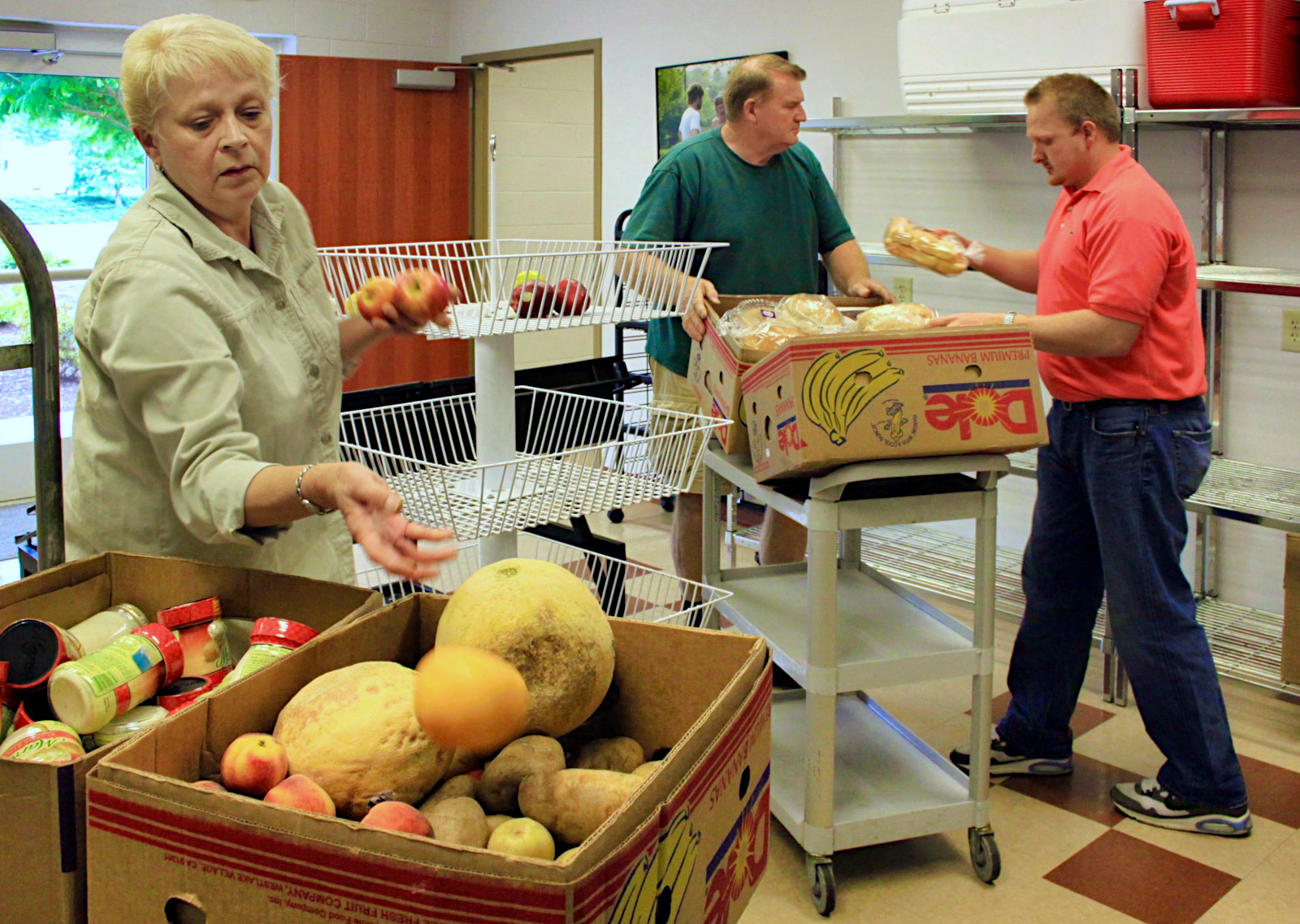
It’s not so much about what I say, it’s about what I do. Helping in a food-bank, for example, picking up litter, planting snowdrops on grass verges, listening, learning to be more like Jesus.
Talking about Jesus
If I walk up to a stranger in the street and start telling them about Jesus, what will happen? Will they listen? I think we all know the answer!
If people notice how I behave and what I do and are surprised about that in some way, they might sometimes ask me about it. And I’ll explain that it’s simply because I’m trying to become more like Jesus. They might ask about that as well.
If I claim to be following Jesus, people will assume that Jesus is like me. That is a huge responsibility. If I fail in how I live, what I say will not be believed. Answering questions is always better than telling people things they may not be eager to hear. Reaching people is a matter of my behaviour being interesting enough to spark the why question and then providing good answers.
If you enjoyed this or found it useful, please like, comment, and share below. (If you don’t see those links, click the article’s title above the main photo and they will appear.) Send a link to friends who might enjoy the article or benefit from it – Thanks! My material is free to reuse (see conditions), but a coffee is always welcome and encourages me to write more often!
If Jesus builds something, then he may ask us to help – but he will be in charge. He will teach us how to build, he will give us tasks he knows we can do.
A gathering
What did Jesus mean when he said, ‘I will build my church’? And what are the implications for us in our attempts to follow him? Here are some thoughts on the word ‘church’ and the action of building.
Aramaic is similar to Hebrew and was probably spoken at home and in the villages in Galilee in Jesus’ day, it was a widely used language in the region and even today is still used in a few areas of, for example, Syria. Jesus would have been taught Hebrew, as all Jewish boys were; this was the language of the Old Testament and was used in the Synagogues. There were some Greek towns and villages in the region, as there were throughout the Mediterranean more generally, so Jesus likely understood Greek. He might have known some Latin as well because that would have been spoken in imperial government and military circles.
In a conversation with his follower, Peter, he may have used an Aramaic word or possibly the Greek equivalent, ekklesia (church); and that’s how it’s recorded in the New Testament (Matthew 16:13-20). As a word it seems to have its roots in daily life; the village or town elders would have gathered as a local council to discuss and manage local affairs. As people meeting together more or less regularly, groups of people following Jesus may have been been given the same label – a gathering, therefore an ekklesia.
In the conversation described by Matthew, Jesus asks his followers, ‘Who do people say the Son of Man is?’ Of all of them, Peter was the most outspoken and would offer an opinion when the more cautious held back. Peter didn’t seem to worry about the risk of giving a wrong answer and looking foolish. So several of them gave the answer to the easy question – ‘Who do people say I am?’. But it was Peter who responded to the much more tricky question – ‘Who do you say I am?’
What Jesus says next seems ambiguous, at any rate the way Matthew describes it is ambiguous. Some people think he’s saying that Peter is the rock that he’ll build his church on. Others think the rock is the truth Peter expressed, the truth that Jesus is the Messiah, the Son of the Most High. Personally, I take the second view.
Jesus says that he will build his ekklesia, his church.
If Jesus builds something, then he may ask us to help – but he will be in charge. He will teach us how to build, he will give us tasks he knows we can do, but he remains the top man, the boss, the giver of instructions. We can’t just build what we want in the way that we want, call it church, and expect him to approve!
So let’s start by asking Jesus to show us what he wants us to do. And then when we each do our part, let’s keep checking with him that what we’re doing or saying is in line with his design. And then, as the job progresses, we’ll be able to gasp with astonishment saying, ‘Wow! This is far more amazing than anything I’d dreamed or imagined!’
It all starts with Jesus. The next step is that we have to learn to follow, to be Disciples. That will will steer us into Mission. And out of the results of mission we will see Church appear and grow.
If you enjoyed this or found it useful, please like, comment, and share below. (If you don’t see those links, click the article’s title above the main photo and they will appear.) Send a link to friends who might enjoy the article or benefit from it – Thanks! My material is free to reuse (see conditions), but a coffee is always welcome and encourages me to write more often!
Good and bad habits alike result from repeated behaviour, and the sessions aim to get you behaving in ways that will form good habits as Jesus’ disciples.
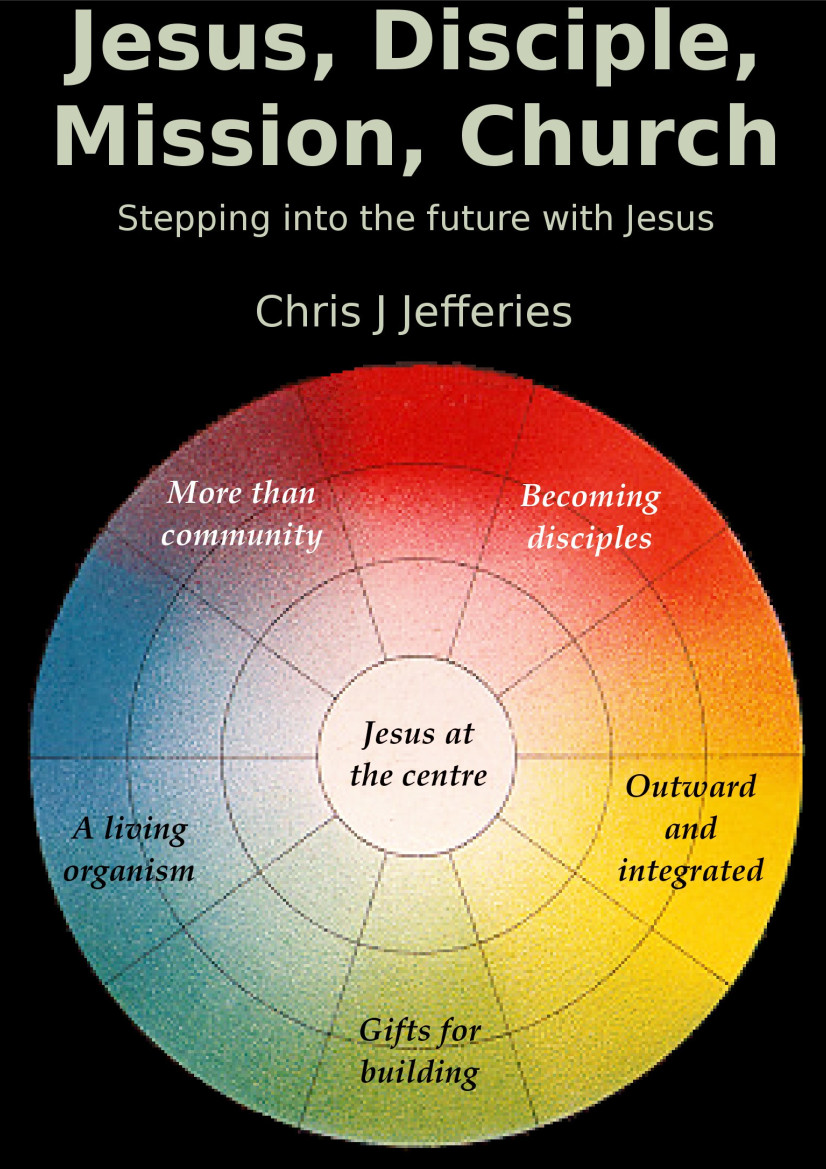
This article is an extract from my short book, Jesus, Disciple, Mission, Church (JDMC). The bite-sized piece below is roughly two percent of the book. It’s the very first section so is a bit different from the rest: there are no questions for readers to ponder, it sets the scene and explains how JDMC might be used.
JDMC cover
This twelve-part guide will help you explore some key ideas from The Forgotten Ways by Alan Hirsch (all of his books are available via this link). Of course, one way to grapple with the material is simply to read Alan’s book, and I highly recommend doing so. And if your church or group wants to discuss and learn together there’s The Forgotten Ways Handbook, also highly recommended, but it’s long and detailed. Another way to start is to read The Shaping of Things to Come, a book that provides a lot of useful background.
But if you need an introductory guide you have come to the right place. JDMC is suitable for individual use, but better for up to six to ten people working together. The guide explains the main points to get you thinking and exploring; if you find it interesting you’ll want to go further so I’ll point out the main sources as we go along. For more information visit Jesus, Disciple, Mission, Church.
I became aware of The Forgotten Ways when Alan spoke at a conference. I read some of his books, began working through the Handbook on my own, and then tried it with others. I wrote JDMC because I sensed the need for something short and simple, and I’m using it very effectively with groups of people I know.
Where might you use this guide?
It works well for groups of interested friends, it could be used by a Christian Union at a workplace or college, or it might suit a home group or small group forming part of a local church. Also, it might serve to inject fresh thinking into any church or denomination, perhaps being worked through by a group of church leaders. But please remember that JDMC only skims the surface. If you like what you find here, please consider going deeper and further using the sources mentioned above and throughout the guide.
What it contains
JDMC consists of the introduction you’re reading right now, a first section to outline the thinking behind The Forgotten Ways, six further parts (one for each forgotten way), three supplements to answer questions readers have asked (not based on Alan Hirsch’s work), and a conclusion. The sessions contain simple, introductory material with questions to get you thinking for yourself. The six forgotten ways can be seen as distinct, but also have a way of weaving themselves together in practice. You may notice this as you work through the guide; take it as evidence that the six ways are inextricably linked and interdependent.
We learn by doing. Good and bad habits alike result from repeated behaviour, and the sessions aim to get you behaving in ways that will form good habits as Jesus’ disciples. Over time, I hope and expect that you will behave yourselves into habits and thinking that will take you further in the journey with Jesus than you may have thought possible or necessary.
Don’t skip the questions, they’re an essential part of the discovery process. Take time to process the material and come up with your own ideas and conclusions. It’s not possible to offer exhaustive Bible references in a short guide. The Bible references I’ve included are merely starting points for exploration. As you read your Bible (and especially the gospels) you are likely to find that other relevant verses and paragraphs leap off the page.
The sessions include related online material including text, audio and video. You can click through to these resources in the version of the discussion guide at jdmc.scilla.org.uk. The guide is free to use so download it, print it, modify it, or give it away; all I ask is that if you distribute it you provide attribution by including the link GetJDMC.scilla.org.uk and apply the same copyright conditions that I do.
This was extracted from Jesus, Disciple, Mission, Church (JDMC), pages 7 and 8. Download the whole thing or read it online – GetJDMC.scilla.org.uk
Useful? Interesting?
If you enjoyed this or found it useful, please like, comment, and share below. (If you don’t see those links, click the article’s title above the main photo and they will appear.) Send a link to friends who might enjoy the article or benefit from it – Thanks! My material is free to reuse (see conditions), but a coffee is always welcome and encourages me to write more often!
There is a synergy, a sparking of abundant life that comes from the interdependence of the parts.
A page from the book
This is a slightly modified copy of an article I wrote in 2014. I’m republishing it because I think it is still useful and deserves another airing. Perhaps it hints at some things we are liable to forget.
The book, Simple Church: Unity Within Diversity, contains twenty-four chapters. Each one discusses a positive aspect of church, something that is an essential part of the whole. Reading from the book I was deeply impacted by Chapter 22 from Kathy Escobar; the chapter is entitled A church that restores dignity where it’s been lost.
She writes:
Jesus calls [Lazarus] out of the tomb, but then he looks to the people around him – his community, friends, and advocates – and says to them ‘unbind him’. Unbind him. Unwrap him. Take off his graveclothes.
I think God calls us to participate in this uncovering-unwrapping-unbinding with each other through healing community.
And it struck me that although church is much more than the sum of its parts, all of the parts need to be actively present. There is a synergy, a sparking of abundant life that comes from the interdependence of the parts. Church is a person, the Bride of Christ.
Like all people, you and I are much more than the sum of hands, ears, spleen, heart, lungs and all the rest. But if any of these were missing we would either die or be unable to fully function. And it’s just the same with the church.
Just consider some of the other chapter themes. The church cherishes Jesus Christ, exhibits personal holiness, counts every member as key, assembles for mutual edification, and knows eternal life is free. Imagine all of those being true in a church that fails to restore dignity where it’s been lost. It would be a church without the active compassion necessary to unbind those who so desperately need it.
Or consider a church that clings to scriptural truth, is most notable for its love and is united in Christ but doesn’t follow the lead of the Holy Spirit. This would be a church that failed to hear where to go and what to do and did everything in its own strength.
Or what about a church that was composed of peacemakers, viewed itself as a people, restored dignity but failed to proclaim the gospel clearly?
The chapters of this book all stand alone and can be read alone. But they often overlap so that there are echoes and glimpses of them in one another. Yet taken together, with no part missing or inactive, they describe a holistic church, a wholesome church and a church that is alive and active and effective in the world. There are other aspects that are not explicitly covered in the book, prayer for example. But these are implied throughout in a variety of ways.
Church is as complex as any living organism, and just like a living organism it is not only complex but also multi-faceted, and astonishingly well constructed. The church is also alive with the life of Christ. And every part contributes!
If you enjoyed this or found it useful, please like, comment, and share below. (If you don’t see those links, click the article’s title above the main photo and they will appear.) Send a link to friends who might enjoy the article or benefit from it – Thanks! My material is free to reuse (see conditions), but a coffee is always welcome and encourages me to write more often!
I’ve just read this short but truly excellent article by Chris Dryden, aka CD, aka DaManCD.
In his inimitable way, he captures the difference between typical church as most people know it, and the living organism of ekklesia as Jesus intends it. There’s an absolute chasm between the two, and Chris clarifies that.
I began to see that whether Jesus was right or wrong in some of his claims, his character came through clearly and I liked what I saw.
Atheist, Muslim, Buddhist, Hindu, Catholic, Baptist – whoever you are, whatever you think, wherever you live, I hope you’ll read along for at least a sentence or two while I consider this question.
Walking along to listen and learn
Is religion necessary? No, personally I think it’s a hindrance. If religion matters at all, it matters only because it always gets in the way of the truth. So attaching yourself to a religion, following religious teaching, calling yourself a Christian or a Muslim or a Buddhist does not, in itself, make you a better person; nor does a name make you acceptable in some way. It merely make you identifiable – part of an organisation.
I follow Jesus, or at least I do my best to follow him (some of the time). All too often I just follow my own inclinations moment by moment, and that sometimes leads to selfishness, hurting other people, and disappointment. If you follow Muhammad, or the Pope, or Buddha – well, good for you! Following a person is always better than following a religion or a philosophy. Do, though, be careful to follow somebody of good character, someone you can trust. The reason I follow Jesus is that he always deals with people wisely, gently, generously, truthfully, and lovingly. I’d like to become like that too. I have no wish to be foolish, harsh, mean, false or hateful – to anybody. I don’t claim to have succeeded in that goal, but it is a goal in my life.
When I first heard about Jesus I was a child. My parents talked about him, and when I went to school we learned more about him. Every school day began with prayers, a Bible reading, and singing a hymn. None of this seemed important at the time, it was just something that happened at school that you had to do – like learning to read and write, or learning multiplication tables and how to add and subtract numbers. It became a bit more formal as the years passed, but it didn’t mean very much as far as I could see. At 14 years old there were confirmation classes (part of learning to be a good Anglican), this too meant nothing to me, it was just something Mum and Dad expected so I sat through it, usually mystified or bored. And at university nothing like this was required any more.
Towards the end of my university course I began reading the Bible. I thought that people were making a mistake following this nonsense and I wanted to find out where they were going wrong. I was an atheist at this time in my life. But as I read I became quite interested by things that Jesus did and said. I began to see that whether Jesus was right or wrong in some of his claims, his character came through clearly and I liked what I saw. He was wise, gentle, generous, truthful and loving – all the things I wanted to be, but could often not manage. This is, of course, only a partial list, but you get the idea – there’s no need to draw up an exhaustive list of character attributes.
And as I read, I gradually realised that this Jesus was probably the best role model and example of living well that I’d ever come across. So I read more. And that is the answer to the question, ‘Why on earth would I follow Jesus?’ For me it’s simply about his character.
I don’t need to write more than that, though I will add that I had started on a journey that would take me a long, long way. But none of the things I’ve learned since have changed that original choice to follow. If anyone starts on that journey they will learn much more about Jesus along the way. When Jesus was walking along the shingle beach of Lake Galilee and spotted some fishermen casting nets into the water; he called to them, ‘Come and follow me and I’ll show you how to fish for people’. They were intrigued, dropped what they were doing, and walked along with him for a while. That is how it starts, the invitation is always there, follow along and he’ll teach you some surprising things about yourself, about who he is, about his character and purpose, and where he is going.
Maybe I’ll write some more later, in another article. But for now, if you do start this journey, are already on it, or don’t even care to begin, I’d just like to bless you and wish you well. Peace, joy, encouragement and hope in your life – in Jesus’ name. He wants those things for you too.
See also:
Take a look for yourself (many versions and languages, all free to read) – Bible Gateway
If you enjoyed this or found it useful, please like, comment, and share below. (If you don’t see those links, click the article’s title above the main photo and they will appear.) Send a link to friends who might enjoy the article or benefit from it – Thanks! My material is free to reuse (see conditions), but a coffee is always welcome and encourages me to write more often!
The English word ‘disciple’ is rather old-fashioned these days, but it has more or less the same meaning as ‘apprentice’.
If you want to learn, here’s one way get started. Or if you are already a follower, it might be a way to go deeper – or even an aid for helping other people to do the same. Don’t worry, I’m not selling anything, and I’m not trying to get you to do anything Jesus didn’t do or anything he wouldn’t want you to do.
JDMC
I’m going to show you part of a short book I wrote some years ago, with a link to the book itself as a free download. The extract follows below, and the entire thing can be read online, printed out, or downloaded as a PDF.
The extract (from page 17)
Becoming disciples
Becoming disciples is important because it’s the main way believers grow to be more like Jesus. It’s not a process with a beginning and an end; it’s ongoing throughout our lives. And we’re not automatically disciples simply because we have believed. Not all of the crowds who listened to Jesus or were healed by him were disciples. Only those who followed him and were greatly changed could claim to be disciples. (Matthew 4:19, Matthew 10:38)
The English word ‘disciple’ is rather old-fashioned these days, but it has more or less the same meaning as ‘apprentice’. In particular it’s all about learning to do the things that the expert is already doing, and Jesus is the expert here. Apprentices don’t just learn from books; this is a hands-on experience. At first, things will often go wrong, but apprentices get better and better by repeatedly doing something under supervision. Expect that to happen to you as Jesus’ apprentice.
Because this change is hard and takes time, Jesus put most of his effort into three years of living closely with a small band of men and women who were prepared to do much more than simply be amazed. They were utterly transformed in those three years. The fact that Jesus worked this way reveals how important making disciples was and is. He put everything he had into those few, and when he returned to the Father they were the ones he continued to work with to reach the nations and build his church. (John 17:6-23) Jesus needs men and women who will become conformed to his image. They are his disciples.
The challenges for us include rejecting false gods such as consumerism, becoming more and more like Jesus, and understanding that we most effectively change by doing, not merely by thinking. Imagine an apprentice plumber who had studied all the books on plumbing but had never bent a pipe or soldered a joint.
To think about
‘We most effectively change by doing, not merely by thinking.’ Is this true in your experience? List some examples. Think about the skills involved in sport, work, music, art. Are there any areas of life in which regular practice doesn’t help?
Useful? Interesting?
If you enjoyed this or found it useful, please like, comment, and share below. (If you don’t see those links, click the article’s title above the main photo and they will appear.) Send a link to friends who might enjoy the article or benefit from it – Thanks! My material is free to reuse (see conditions), but a coffee is always welcome and encourages me to write more often!






 Journeys of Heart and Mind


