Community spirit

We didn’t see ourselves as a house church, more as a group of local believers from a range of denominations all wanting to be part of the exciting revival going on in the UK at the time, open to the gifts of the Spirit, but not wanting to become yet another splinter group.

Yatton, the village in Somerset where it all happened

3 – developing faith

< Previous | Index | Next >

Click images to enlarge

Moving on

Things were changing. We’d been fairly comfortable at Horsecastle Chapel in Yatton, and we’d learned a great deal and felt loved and made very welcome by the people there. But there were one or two niggles already mentioned in part two of this series. We felt it was not right, and rather unfortunate, that women were not able to take leading roles in meetings, that it was required that women wear hats (a minor thing, but an irritant nonetheless). It began to seem that some of these rules were made by people, not by our Father in heaven, and certainly not by his Son, Jesus. But the greater niggle was that we were not able to move in spiritual ways that were being revealed to us more and more as time went by.

An Anglican home group

For me it came into sharper focus when I went to an Anglican study group. Judy might have come to the same ideas in a different way, but she died in 1995 so I can’t check! I’m not sure we discussed it at the time, but we were moving on closely parallel paths, that I can say with certainty. I wanted to meet some of the Anglicans because I had the feeling there was supposed to be a single church, not a plurality of them. I couldn’t see any way that they could all be brought together, but I wanted to at least get to know some people of other denominations. Going along to the study group seemed a good way to approach this. I soon came to understand that the Holy Spirit was nudging me to go along, and rather quickly I discovered what he had in mind!

Friends and allies

The Anglican study group was held in the home of one of the St Mary’s congregation and was led by the Vicar, Revd Richard Acworth. I don’t remember what was discussed, but I very clearly remember the topic of humility coming up. There was a man in the group who protested, quite strongly, that he was not humble and didn’t intend to become so. I had the impression that he equated ‘humble’ with ‘impoverished’ or ‘weak’ or ‘demeaning’ or some other utterly unattractive idea. I think I was also a bit disappointed by the Vicar’s response.

Also in the group was a woman about my age and as we were leaving I mentioned the humility issue. She agreed quite enthusiastically and we had a brief conversation on the way home; her name was Faith. Judy and I would soon become good friends of Faith and her husband Tony. We shared a lot of views in common concerning Jesus, the Bible, and Church – and this excited me because we were from such different church traditions.

Meeting often

We began meeting quite regularly with Tony and Faith. We were like-minded on so many church matters, and some other things too. We both had young families so most often one of us would walk down to Tony and Faith’s house in Court Avenue in the evening while next time one of them would walk up to our house in Rectory Drive. We would do some Bible study, perhaps sing some of the Christian songs that were so common in those days, and we would pray together. But by far the most important thing we did was to listen to one another and to what the Holy Spirit seemed to be saying to us, sometimes in a whisper, sometimes rather loudly! We invited other people we knew to come and join us, especially Paul and Jenny who lived close as well, so four became six; and there were many other local people with us. On a weekly basis we took turns to host these larger meetings. Sometimes there’d be 20 people in our sitting room, on our sofa and armchairs or sitting on the floor. These were great times of blessing when all of us would feel the presence of the Holy Spirit right with us in every word read or spoken and in every song we sang. We were warned of the dangers we were facing by some of the elders at Horsecastle Chapel, we knew their hearts were in the right place and that the warnings were well-meant; but we knew we were following Jesus so we ignored the advice and warnings and carried on.

Music

Fountain at St Barnabas

Tony is a skilled bass guitarist, Paul was good on a steel-strung 12-string he had, And I would plonk along on a nylon-strung Spanish style acoustic guitar Judy and I had bought at a music shop in Park Street, Bristol while we lived in our flat in Belmont Road. This was an expensive instrument – I think it cost us £27 in 1970 or 1971 (around £540 today) and it replaced the two cheap, second-hand guitars we bought while at university. It seemed better to share one good guitar than to persevere with two older ones that were difficult to tune. Rather later, we were joined quite often by David and Mary Bolster, another couple living nearby. David worked for Scripture Union, and was usually busy with youth work of one kind or another. Judy and I went on a youth retreat with them one year at Wroughton near Swindon to help as assistant leaders, and visited them at a camp at Great Wood in the Quantock Hills, Somerset. The photo shows Fountain in the Church Hall at St Barnabas in Claverham (from left you can see Paul, Faith, me, Ian on flute, Jenny, Judy and Tony on bass). Ian joined us a little later but was a very useful addition providing a higher pitch in the mix and helping strengthen the melody line.

Tongues

One evening after walking down to Tony and Faith’s, Tony mentioned that he’d received the gift of tongues. We’d read about this in Acts and in some of Paul’s letters to the Greek churches. and we’d read about it in modern times too in books by Colin Urquhart, David Watson, Graham and Betty Pulkingham and others. On hearing this news from Tony I felt mild surprise, delight, frustration and envy all at the same time. So, of course I asked about how it had happened and what it was like. Tony told me he’d been having a bath so was very relaxed and he just started talking scribble. He felt warm and encouraged. As I walked home after that evening at Tony and Faith’s. I gave it a try – I talked some scribble words myself. I learned a valuable lesson right at that point. Was this a gift from the Holy Spirit or was it just me talking scribble and being really foolish. I realised right away that there was no way to tell. And I understood something that I’ve never forgotten since that evening. It’s not about me doing something or not doing something. Specifically, it’s all about Jesus doing something in me, and the only skill needed for that is the simple ability to listen to him and do what he wants, not what I want. This tiny revelation changed my entire life. Everything became real in that moment. In this journey with Jesus it’s not for us to do anything more than rest in his presence. If I do that one thing, consistently, he will do anything else that is necessary. My effort is not required, and life is often far better if I keep well out of the way, especially at moments when he’s touching someone else. My surprise and delight are in order, but never frustration or envy.

As the weeks and months went by, our home meetings grew in numbers, but more importantly in depth and in our appreciation of receiving gifts. We were being invited to bring music and teaching to local churches around the county of Avon and the northern areas of Somerset. We called ourselves ‘Fountain’, played all the latest choruses and songs, as well as some of our own songs and acted out little sketches to help people understand the charismatic revival that was taking hold all around us. Tongues and interpretation became normal for us in meetings, as did prophecy, but the most important things for me were the spirit of caring for one another that grew in our hearts and minds and the determination we all had to follow Jesus in everything.

Jesus provides gifts, but will we open them?

One of those sketches sticks in my mind so I’ll share it with you, Tony played the part of Jesus, and Paul was a typical church member. Tony had a cardboard box wrapped in colourful paper, perhaps with a ribbon tied in a bow. He gave the box to Paul, saying I have a special gift for you. Paul took it and made a point of thanking Tony several times, saying, ‘Oh it’s really lovely, thank you so much, but I don’t think I really deserve it’. He put it down on the table, walked round it, looked at it from all angles and carried on saying how lovely it was. Tony (Jesus) asked, ‘Aren’t you going to open it?’ I chose it specially for you, it’s just what you need, you know.’ Oh no, I couldn’t possibly open it,’ said Paul, ‘That would spoil it, it’s so beautifully wrapped, it would crumple that lovely paper. Jesus responded, but if you don’t open it you won’t find out what it is and you won’t be able to use it. I want you to open it’. And this went on for a while. Then we explained that Jesus has gifts for all of us, but we do need to open them and start using them. And without the gifts being unwrapped and used as intended, Jesus will find it a problem to help us do the work he has in mind for us. His work, building his church, growing his people involves him pouring his grace and love into us so that we can share those things with those around us. He does not want us to be timid. We must gratefully receive everything he has for us. It’s for his glory, not ours and we shouldn’t stand in his way.

Good News Crusade

Another thing we did around the same time was print a monthly local newsletter called ‘Community Spirit’ with details of forthcoming meetings at churches around the area, and any special events in the pipeline too. One of these was a Good News Crusade with a series of pre-Crusade rallies beforehand at a church in Portishead. I recorded many of these meetings on a portable stereo cassette machine, and I produced copies from the originals so they could be passed around the community as widely as necessary.

Not a house church

Eventually we would be hosting home meetings of up to twenty people once a week at our house, Tony and Faith’s, or Paul and Jenny’s and one or two other homes in the nearby village of Claverham. There were other similar house meetings going on (for example the Bank House Fellowship in Clevedon). We didn’t see ourselves as a house church, more as a group of local believers from a range of denominations all wanting to be part of the exciting revival going on in the UK at the time, open to the gifts of the Spirit, but not wanting to become yet another splinter group. Much of the leadership effort at the time was spent on starting new streams of churches, New Frontiers for example or Vineyard, or on the other hand bringing spiritual gifts into the established denominations – Anglican, Catholic, Methodist, Baptist and so on. Both of these efforts became successful and widespread, but from my perspective today I can see very clearly that we made by far the better, and perhaps more obedient choice. We thought the way forward was more about bringing people together in freedom to follow Jesus in flexible ways, while providing information, help and encouragement both in the established churches and chapels in our area, and amongst Jesus followers with no connections to established churches. We were also keen to encourage new and deeper spiritual growth in all the local churches, though our links with some of the larger places were more tenuous than those with the smaller and self-governing groups. I still feel privileged to see things this way – as if I had a narrow escape from taking a wrong path. I think we all had a narrow escape, Jesus was protecting us and whispering to us, ‘Not that way, this way, just follow me!’ Many of the churches and chapels we encouraged still exist and remain active, some of their websites are listed below under the See also: heading.

Prophecy

It wasn’t just Tony, as time went by we all found ourselves receiving spiritual gifts in a variety of ways. For me, visions and prophecy became the main gifts and I well remember the first time I became aware of it.

I was sitting on the floor in Tony and Faith’s front room, it was just the three of us. (so before Paul and Jenny became involved). In my mind I saw us as children playing on a building site. There were muddy puddles and stacks of bricks all around. We took some of the bricks and stacked them up to make little ‘houses’, four bricks for walls and another balanced on top to make a roof. We were happy playing with the bricks together, but just then the builder arrived and spotted us. He walked over and smiled, though we thought he’d be cross with us. Somehow I knew the the builder was a representation of Jesus. And he said to us, don’t play with the bricks but bring them to me because I know how to use them to build real houses. If you bring them to me you’ll save me time and I’ll be able to build faster.

So that’s what we did, and the first real house started to rise! It wasn’t much of a stretch to see that the real house represented the church, and our job was not to build something ourselves but to bring people into Jesus’ presence and watch while he builds the church.

It was an important lesson and a growth point for me personally and perhaps for all of us as a group. And I’ve been used that way in meetings ever since. Sometimes it’s been well received, sometimes not.

The Fisherfolk/Community of Celebration

Around this time we became aware of the Fisherfolk, a music ministry that wrote and recorded many new Christian choruses focusing on spiritual growth, and particularly the receiving and use of spiritual gifts. This was right up our street! We bought the music books with words and, most helpfully with keyboard score and guitar chords as well, we bought the LP recordings and avidly absorbed it all, practicing Fisherfolk and other songs as well as creating some of our own.

But then a special opportunity came up. We learned that a weekend of music, praise and worship was planned at a site in Dorset – Lytchett Minster. There was a field for camping, the Fisherfolk would be playing and there’d be a lot of like-minded people to discuss things with. We booked space for three tents and went along. It turned out to be a time of growth and learning, just as we’d hoped – hugely beneficial, confirming much that we were already doing and encouraging us to continue.

Impressed as we were by the community style of living demonstrated by the Community of Celebration, we briefly toyed with the idea of selling our three homes and buying an old farmhouse with some land around it, Faith, Paul and I thought this would be a great idea, but Judy, Tony and Jenny disagreed and we didn’t follow through on the plan. It was only an idea in the back of our minds, we didn’t even start to look into the practicalities. but without unanimity, it couldn’t get off the ground.

See also:

< Previous | Index | Next >

Useful? Interesting?

If you enjoyed this or found it useful, please like, comment, and share below. (If you don’t see those links, click the article’s title above the main photo and they will appear.) Send a link to friends who might enjoy the article or benefit from it – Thanks! My material is free to reuse (see conditions), but a coffee is always welcome and encourages me to write more often!

You might also like:

Two welcoming families

Judy and I were hooked, more and more so as we spent further time with the lovely people at Zetland Road. We discovered that the origins of Zetland were with the Brethren as that movement spread from the south-west peninsula of Cornwall and Devon.

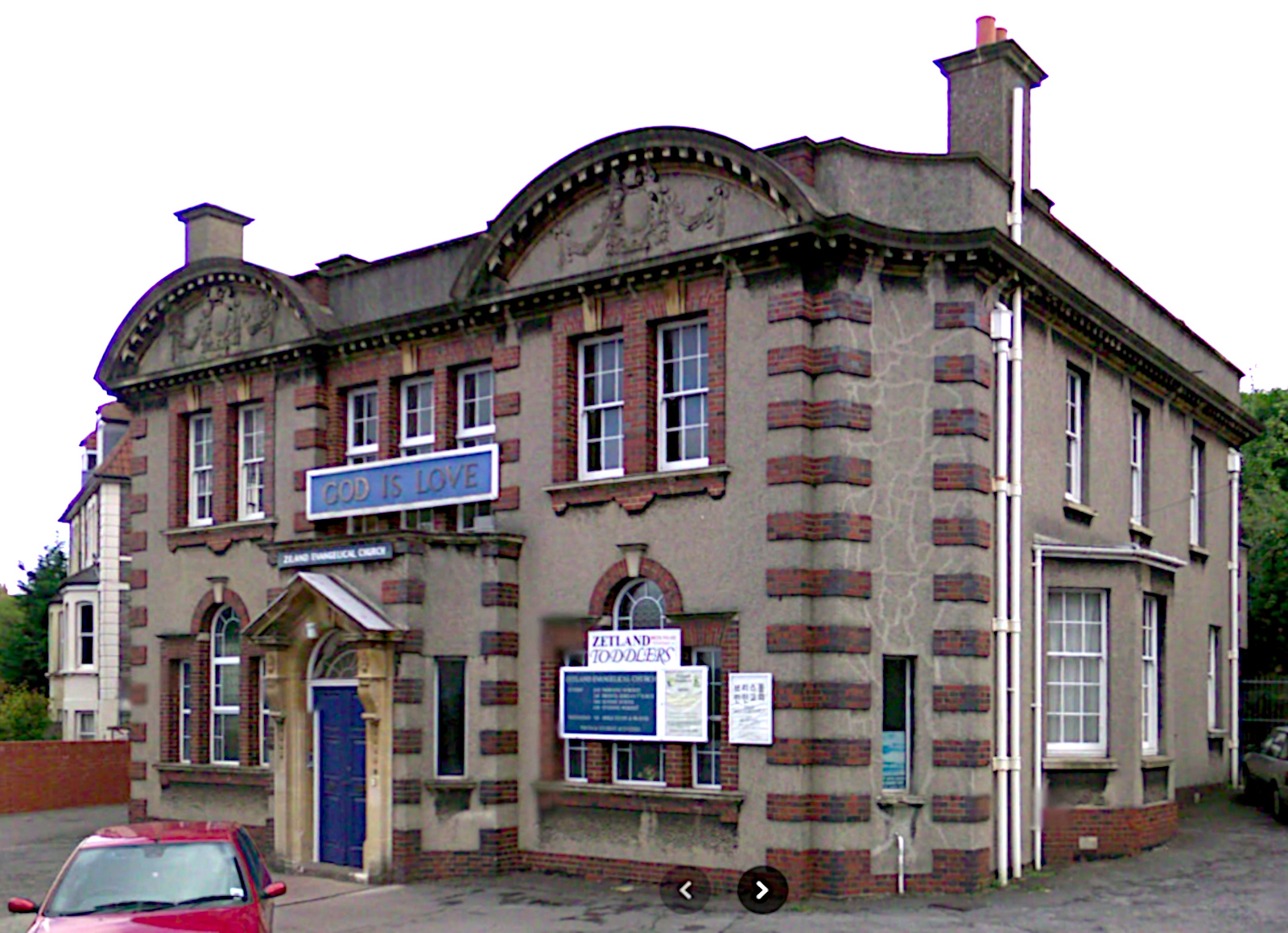
Zetland Road Church – (Both images in this article are from Google maps)

2 – developing faith

< Previous | Index | Next >

Click to enlarge

We left part one of this series with our discovery that the weird-looking place near our flat in St Andrews in Bristol, was in fact Zetland Road Fellowship (now Zetland Evangelical Church) – and not weird at all. Judy and I had hunted high and low, all over the city, and not found what we were looking for. Somehow, we had known all along that we would know the right place when we found it. And so it turned out to be.

Zetland Road Fellowship

The first thing we noticed on walking into Zetland was that several people took the trouble to talk to us. There were smiles and we felt welcome amongst these people. This in itself was a novelty, different from everywhere else we had tried. When the meeting began things were pretty much as expected; there was a welcome, a mix of prayers and hymns, some notices, a Bible reading, thoughts and teaching on topics from the reading, and after the closing prayer an invitation to remain for tea or coffee, a biscuit, and a chat.

The conversation over a drink and biscuit was good too, welcoming, not pushy, but friendly and we had a chance to speak with several different people before we left.

After going along to Zetland for several Sundays, I decided to try an evening meeting on, I think, a Wednesday. I was blown away by what I found there! The text was from one of the books of Samuel and concerned King David, though I no longer remember the details. What I do remember is that it was a passage that I had read for myself in the past and that the way it was explained in the meeting was very striking. I remember being greatly impressed at the convincing thoughts expressed, the fact that there was more to know than I had seen for myself, that what was being said acted like a telescope, helping me see further and in more detail than before. I wanted to hear more – and more was being offered the following week.

Judy and I were hooked, more and more so as we spent further time with the lovely people at Zetland Road. They felt like a welcoming family. We discovered that the origins of Zetland were with the Brethren as that movement spread from the south-west peninsula of Cornwall and Devon. Both Zetland and (later) Horsecastle were Open Brethren assemblies. A lot of small, independent chapels were built in the Bristol area during Victorian times. There were a few things that we questioned privately – the insistence that women should wear hats for example, and the irritating fact that they were not permitted to speak in meetings. To some degree this spoiled the lovely Open Meetings they held once a month. And the belief they had that the spiritual gifts were no longer present in church life was also a problem for us, but they had so much clearly right that we were happy to ignore these niggles. We were not entirely happy, but more than happy enough to stay. Our spiritual and social lives benefitted enormously from being part of the Zetland fellowship. We particularly cherished the experience of each assembly governing itself. There was absolutely no higher level of authority apart from the Bible – no hierarchy whatsoever, no bishops, no pastor, no circuits, no rules, no limitations. From what Judy and I had read in the New Testament this seemed right to us.

We were only with the Zetland Road church for about two years because we wanted to move up the housing ladder from our unfurnished flat in St Andrews, Bristol, to a small mid-terrace 1960’s house in Yatton, twelve or so miles west of the city. Our first daughter, Debbie, was born shortly before the move and was dedicated at Zetland Road Chapel, a simple expression of gratitude not involving water or godparents. We’d already planned to share a caravan in Ilfracombe for a late summer holiday with Cliff and Ginnie, another young couple from the Zetland fellowship, and although we moved to Yatton before that holiday, we were still able to get away with them later. Cliff and Ginnie collected us from Yatton on their way to Ilfracombe (they had a car, we did not), but for the return journey they dropped us off at Barnstaple Railway Station and we caught the train back part way, but the Barnstaple train was delayed and we missed our connection to Yatton, the last one of the day. We had to ask a friend to rescue us from Bridgewater Station.

Horsecastle Chapel

Horsecastle Church

We were absolutely up against the financial buffers when we made our bid for our first house in Yatton. We were only able to offer £7000 and it was a time of rapid inflation which made saving very hard. The asking price was higher than we could afford: quite a lot higher (perhaps £7500 or so, I don’t recall the exact figure). So when we put in our offer of £7000 we expected it to be rejected. Much to our surprise it was accepted straight away without discussion or argument. This seemed strange, but it was exactly what we needed and so we were relieved and excited as well as a little puzzled. But you don’t look a gift-horse in the mouth, so we just said thank you and the paperwork went through.

Two of my friends from work, Ruth and Peter helped us move. We hired a self-drive van and filled it with our hand-me-down three piece suite; our double bed funded by my grandmother, Nor; all our clothes, books, LPs etc; our cheap second hand dining table and four chairs; cooker and more. We set off for Yatton and and then discovered at the first right hand bend that a rear tyre was rubbing under the wheel arch and making a terrible noise. We had to take all right handers as slowly as possible, and with great relief arrived outside our new home.

With Ruth and Peter’s help we soon had everything indoors or stashed in the garage, and Ruth and Peter left us to it. By now it was late on Saturday and the shops had closed. As the evening light began to fail we turned on the light in the lounge only to find there was no bulb! We looked round the entire house and found all the bulbs removed and of course the shops would remain closed all day on Sunday. Finally, I checked the garage and found a bulb in the light fitting there, took it up to the house and fitted it so we had light at last, at least in one room.

Much later, we learned that the previous owners of our new home were Mark and Jean, members of the local Evangelical Chapel (Horsecastle). They had prayed about selling their home and moving to a bigger house in the village, and felt quite certain that they were supposed to accept whatever price we offered them!

What wonderful ways our heavenly Father has, working unexpectedly and often leaving us in ignorance until the time is right for us to know. He really is amazing!

Of course, one of our first thoughts was finding another gathering of people like those we’d been so delighted to find at Zetland. When they knew we were going to live in Yatton, the Zetland folk had told us about Horsecastle Chapel near the railway station in Yatton, and Claverham Chapel in the nearby village of Claverham. They recommended we take a look at these two places. We found we liked both, but Horsecastle was closer and larger so that’s where we ended up (a second welcoming family).

Our time at Horsecastle was good, we were both baptised while we were there, in a small pool underneath the raised dais at the front of the main meeting room. This was an exciting time and an important step in our journeys. For both of us it felt like a time of triumph and of belonging. We learned a lot at Horsecastle, we grew in faith and in knowledge, and we became deeply involved in the church community at a time when our young family was thriving . When our second child (Beth) was born she was duly dedicated at Horsecastle. But not everything was good.

Horsecastle held quarterly meetings when the entire church would meet to discuss planning for the future. We would talk about what had gone well, any issues that needed attention, that sort of thing. There was no single person in charge, no minister, no lead elder or pastor or anything like that. There was a small group of elders, all older men, but their role was informal, limited to providing advice, and perhaps speaking from the front a little more often than others.

At one of these quarterly meetings we discussed the idea of finding and employing someone to lead the church on a full time basis. Judy and I thought this would be an unwise move, and I expressed this as clearly as I could. I suggested that we already had a full-time leader whose name is Jesus, and pointed out that Israel had demanded a king ‘like all the other nations’ and Saul had been chosen, undermining Israel’s reliance on Yahweh alone. It had not worked out well for ancient Israel and it would not work out well for us, either.

In the end, as you might guess, a pastor was appointed. It was a factor that, over time, led Judy and me to feel a little less comfortable at Horsecastle. There were undeniably some good things about the move; the new pastor, Peter Cresswell, initiated an annual Holiday Club for children from the village with fun and exciting Bible-based crafts and activities, sports events in a local field, and these proved very successful. Judy and I helped with the first two of these events.

But more and more we felt sure that the teaching about spiritual gifts having been present in the early church but now no longer active was incorrect, as was the choice of employing a pastor. These niggles turned into something stronger as we began to experience the gifts for ourselves. And it seemed to us that if you are given something, you should also be using it. But that could not be part of our journey with the good folk at Horsecastle. For that we would need a different environment, with different friends, people open to receive, rejoice in and benefit from the presence of the Spirit of Jesus in our meetings and beyond.

How we found those friends, and what happened next will have to wait for the next part of this series.

See also:

< Previous | Index | Next >

Useful? Interesting?

If you enjoyed this or found it useful, please like, comment, and share below. (If you don’t see those links, click the article’s title above the main photo and they will appear.) Send a link to friends who might enjoy the article or benefit from it – Thanks! My material is free to reuse (see conditions), but a coffee is always welcome and encourages me to write more often!

You might also like:

Why did I leave the Anglican Church?

The message from the New Testament seemed clear to me, there was supposed to be just one church, not a multiplicity of flavours brought about through a long series of historical disagreements and splits.

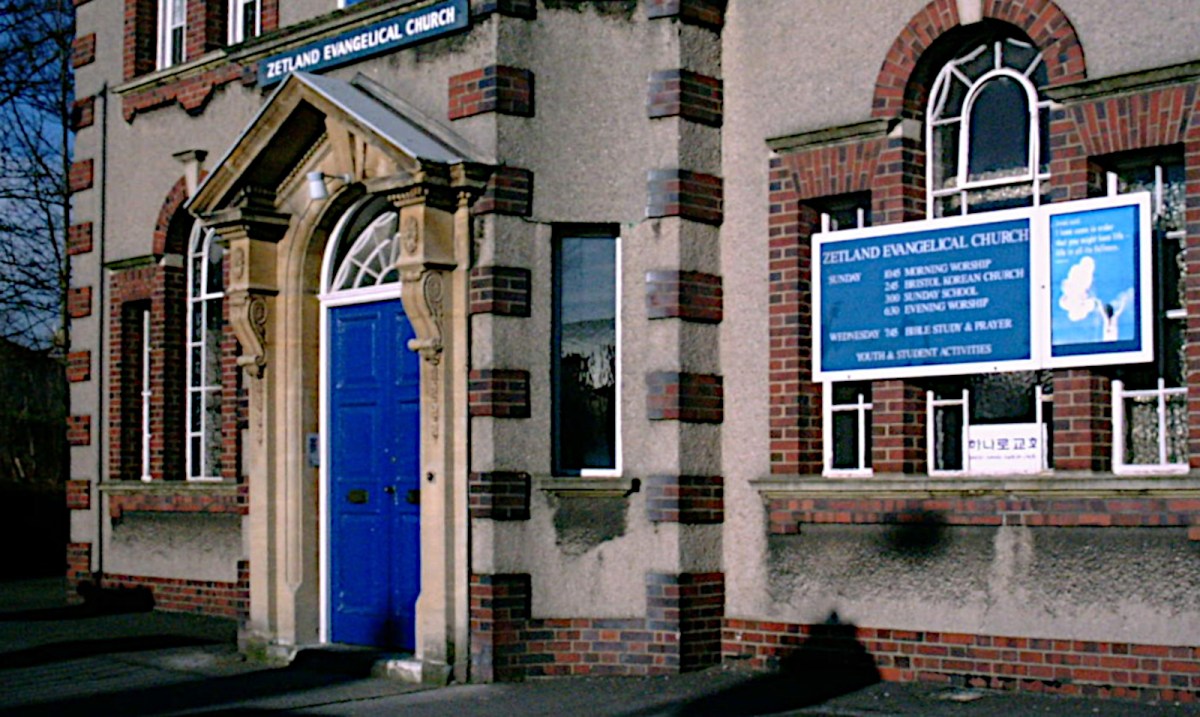
Zetland Evangelical Church in 2002

1 – Developing faith

< Previous | Index | Next >

I was asked this question some time ago, and at first I felt that it somehow missed the point because I tend to feel that I never was an Anglican. But it’s true that in my mid to late teens I would have called myself Anglican – perhaps.

Early rumblings

My first memorable experience of the voice of the Father in my life was when I was around the age of 6 or 7. I was standing by the side wall of the junior school, and I was alone. Perhaps I’d just been dropped off at school in the morning, or maybe I was outside at playtime or lunchtime. I was aware of a deep rumbling sound, like a distant thunderstorm but much more stretched out in time. And it came twice, like two spoken sentences. My parents had talked about ‘God’ sometimes and I knew he lived in a place called ‘heaven’, and I was immediately certain that this rumbling voice was significant and came from this ‘God’ that I later came to see as ‘Father’ or ‘Papa’. I didn’t understand the meaning, but I knew who was speaking and that there was a purpose in it, that he was calling me in some mysterious way. Although puzzled, I also felt special and chosen for a specific task, though I didn’t know what that might be. I have never forgotten this strange experience.

Family background

My parents were Anglicans in the limited sense that they were not Methodists, Baptists, Presbyterians, Salvation Army or anything else. Dad was quite dedicated, jotting brief prayers in his diary and during parts of his life often attending communion at the parish church. I doubt that he made a conscious decision on this, it was just taken for granted, it had been the family tradition as far back as anyone knew. Mum was different, she was used to village life in Northern Ireland and taught Sunday school at the tiny village church, a simple and plain structure. She was uncomfortable with anything remotely high church, but if you’d asked her what she was she might have said Anglican, or Church of Ireland, or just Christian.

I was Christened when I was little and was encouraged to read the Bible as a child, at home, but more so at junior school and later in RE lessons at secondary school. By the age of 13 I was familiar with the outline contents of the Old and New Testaments, and with many of the stories recorded there. In my teens I was expected to attend confirmation classes and went along out of obedience rather than a desire to be there. In due course I was confirmed, though it didn’t mean much to me and life continued as before. I had not yet begun to grapple with what I did and did not believe.

Growing up

As I went through the processes of sitting my O levels and A levels and applying for a place at university, I began to form my own ideas about faith. For a time I rejected faith of any kind, thinking that science would eventually explain everything. Yet I was intrigued by the Bible and began to take what I read there quite seriously. And I didn’t see much there to support Anglicanism or, indeed, denominations of any kind. The message from the New Testament seemed clear to me, there was supposed to be just one church, not a multiplicity of flavours brought about through a long series of historical disagreements and splits. And what about the many stories of healings, and the parables about how we should live, and the Pauline teachings about gifts of the Spirit, and the letters to churches in the Greek world of the time? I was taking all of this seriously, but saw little evidence that the denominations were doing the same. I explored more widely, visiting the Jehovah’s Witnesses, signing up for a Christadelphian magazine, reading books about the Mormons and Christian Science, but none of these avenues seemed to make much sense to me.

Married life

After graduating from university, getting married, and starting full time jobs, Judy and I spent our Sundays in Bristol doing some serious denominational exploration. We went to Sunday services at every church we could find, and never once had a sense of, ‘This is the one!’. We were searching, but not finding.

Zetland Evangelical Church in 2002

In the end, in utter desperation, we tried a weird place just down the road from our flat. In some ways it seemed more odd than any of the other places we’d tried. It had a large sign above the door in blue and gold reading ‘God is Love’, and didn’t look like a church building, more like a large house. This was Zetland Evangelical Church in Bristol, near the railway arches over the Cheltenham Road. We found to our surprise that we were instantly at home! The people there wanted to talk with us, and they shared some of our own thoughts about what we’d been reading in the Bible. We felt welcomed – as if by a large family. We’d found a real community, which is what we’d long hoped for. Not only that, when I went to a mid-week evening meeting I was blown away by teaching about David, perhaps from 2 Samuel, and a section I was familiar with. The fresh insights and explanations were very striking, here were people who knew their topic – and it all made perfect sense.

We still felt there was more, and we were joining one of those denominational ‘splinter groups’ that so perplexed us. But this was by far the best thing yet. At this point in our lives we would not have settled for Anglican or any other church tradition. We were particularly encouraged by the fact that there was no hierarchy at Zetland, there was no single leader, we were all equal, or so it appeared. There was no liturgy, no pastor, and once a month there was a delightful Sunday morning Open Meeting with nobody at the front and where all could contribute a prayer, a hymn, or some teaching. All, that is, except women and children. This was one of several niggling issues that we put to the back of our minds for the time being.

Eventually we discovered much more – but that’s another story.

Explanatory note – Please don’t think that I’m judging or disapproving of denominations and those who are involved with them. In this short article I’m describing how a much younger Chris Jefferies understood things. I have many non-denominational friends, but also friends from New Frontiers, Anglican, and particularly Baptist traditions. Particularly Baptist simply because at the time of writing I take part in a small home group that meets weekly and is part of Cirencester Baptist Church. I’m not a Baptist, I will not (cannot) become a church member. We are all part of one family, the family of those who follow Jesus. We are all brothers and sisters and we have individual perspectives and expressions of what that means. I honour and love each one as part of an undivided whole.

(Much of this article has been cross-posted to Anglicanism.org)

< Previous | Index | Next >