Starship tries again

SpaceX, the world’s foremost space launch company by almost any measure, is attempting to launch Starship tomorrow, 6th June 2024. This launch is Integrated Flight Test Four (IFT-4). Each of the first three flight tests did better than the one before.

Starship (Wikimedia)

SpaceX is part way through the flight test program for its Starship launch vehicle.

IFT-1 cleared the pad (in more ways than one). It lifted off successfully, though very sluggishly and with significant engine failures and it actually blew away large quantities of concrete from the base of the launch platform. It flew to a considerable altitude but had to be destroyed in the upper atmosphere after four minutes of flight.

IFT-2 did a lot better. All engines performed well, the redesigned launch pad survived, and lift off was smooth and the ascent much faster. Starship separated from the Superheavy first stage, but both later failed. Starship flew for eight minutes on the planned trajectory.

IFT-3 was a fully successful launch, Starship separation was smooth and the engines fired to reach the intended trajectory (almost orbit but not quite), and Superheavy fired its engines for a return. Additionally, Starship opened its payload bay door and completed an internal propellant transfer test. But after those successes, both vehicles failed and were destroyed.

IFT-4 – Who knows? We may find out tomorrow or there may be a delay due to poor weather conditions or a last-minute glitch of some sort. When the launch takes place it’s likely that it will do better than IFT-3. Complete success would see Superheavy return to a chosen point above the sea near the launch site and make a catch landing on an imaginary launch tower before plunging into the water; Starship would fly safely to a re-entry point over the Indian Ocean, survive the descent, and possibly make a ‘landing’ attempt over the water.

Spaceflight enthusiasts world wide are all agog to see how it goes.

Assuming complete success of IFT-4, IFT-5 will push the envelope further, probably in mid-July (my best guess), possibly with a booster catch attempt and a Starship insertion into orbit. It might even attempt to release one or more Starlink satellites. But whatever IFT-5 attempts to do will depend on how many of IFT-4’s goals are achieved tomorrow (or whenever the flight takes place).

See also:
  • Watch the launch online – YouTube

Useful? Interesting?

If you enjoyed this or found it useful, please like, comment, and share below. (If you don’t see those links, click the article’s title above the main photo and they will appear.) Send a link to friends who might enjoy the article or benefit from it – Thanks! My material is free to reuse (see conditions), but aΒ coffeeΒ is always welcome and encourages me to write more often!

The work of the Spirit – 3

Now the church is not the same thing as the kingdom, but if church is not part of the kingdom we are in serious trouble!

< Previous | Index | Next >

This article is an extract from my short book, Jesus, Disciple, Mission, Church (JDMC). The bite-sized piece below is roughly two percent of the book.

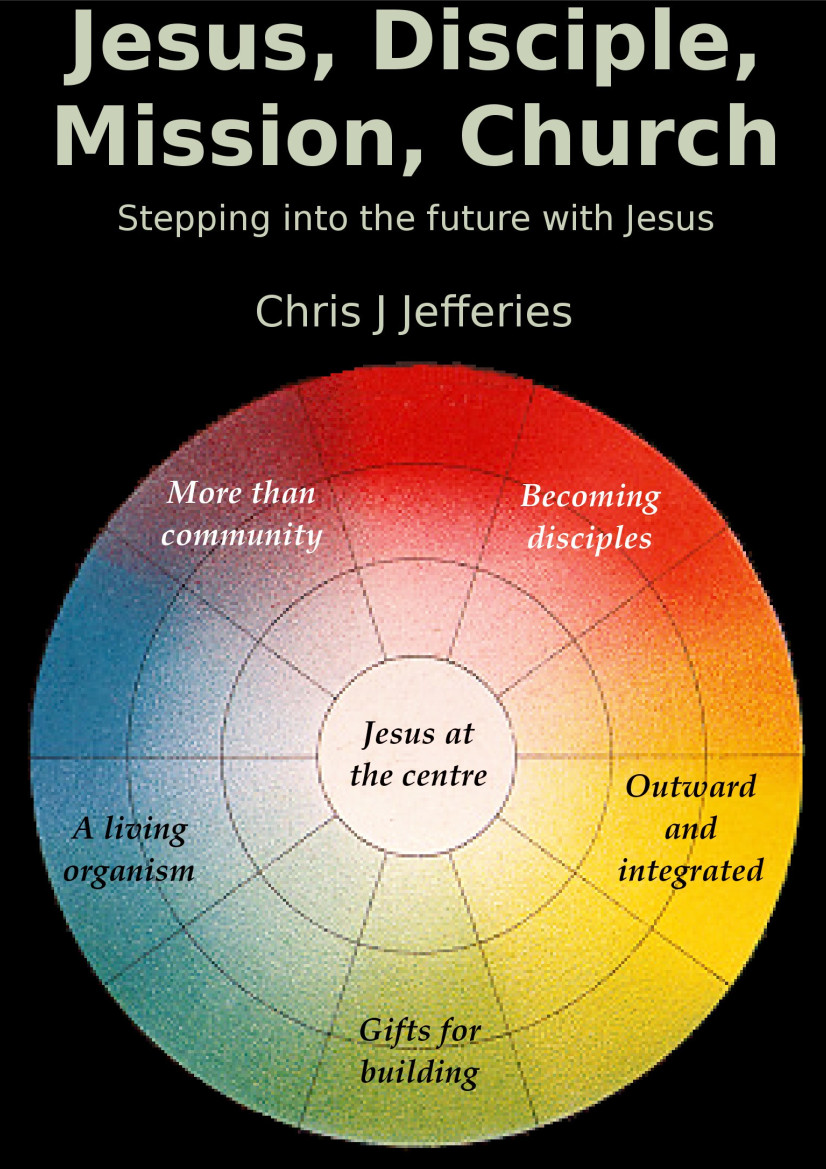
Gifts for building
JDMC cover

It really should be self-evident that the Holy Spirit is involved in the fivefold gifts of service – apostles, prophets, evangelists, shepherds and teachers (APEST). These are gifts indeed, and Christ himself is the giver (Ephesians 4:11-12). Paul explains that we are most certainly one, but that these gifts of grace are handed out in individual measure to each of us (Ephesians 4:1-7). We are one, we all receive, yet we all receive individually as he chooses (1 Corinthians 12:27-30).

And if there’s any doubt in your mind about the role of the Holy Spirit in all this, read 1 Corinthians 12:1-11. Verse 11 is very clear! ‘All these are the work of one and the same Spirit, and he distributes them to each one, just as he determines.’

Jesus himself chooses how to distribute these gifts of service. What gifts can you identify in one another? Tell one another what you see, this is a good way of encouraging one another.

A living organism

We know that we need to see the church as a living entity and not as an organisation or institution built and managed by human ability. But what part does the Holy Spirit play in this?

I must begin by pointing out that only the Spirit of Christ can reveal this truth to us. Jesus often told parables to illustrate the nature of the kingdom of heaven, and some of them involve living things. The kingdom is like yeast or a mustard seed; it grows and develops and expands as only living things can.

Now the church is not the same thing as the kingdom, but if church is not part of the kingdom we are in serious trouble! The church, too, is described as part of a living thing; church is the body and Jesus is the head. It’s significant that a body only remains alive as long as the head is attached. Cut off an arm or a leg and a body may continue to live, but cut off the head and it dies immediately. And how is the church attached to Christ? It is the Holy Spirit who makes the connection; he is the Spirit of Christ, yet he has been implanted in you and me, the members of the church. And he works in us (Luke 12:12, Acts 1:5-8, Romans 8:26) and amongst us (Acts 9:31, 1 Corinthians 14:12, Ephesians 4:3-4) as we gather together. The Spirit of the Head is present within every individual part of the body.

Considering church as you have experienced it, talk about aspects that are like an organism and aspects that are like an organisation. Are there ways you can help things move more towards the organism end of the spectrum? What part might the Holy Spirit play in this?

More than community

We need to work together in a community where we will be significantly stretched by sharing in making tough decisions, facing difficulties, supporting one another, and pressing forward together. The challenges we face will be diverse, but whatever they are we are surely going to need the encouragement and wisdom and guidance and insight of the Holy Spirit. Romans 7:6, 1 Corinthians 2:15, Acts 12:1-19.

We all share in the presence and work of the Spirit in our lives. How does this feed into community life, and in particular how does the Holy Spirit draw the community into facing challenges and difficulties? Talk about your own experiences and those of other people you know.

Some practical help


Many believers and followers of Jesus are familiar with the activity of the Holy Spirit, individually and in meeting together. Others may have little or no personal experience of him. The key to listening is not hard, it’s basically a matter of paying attention. Our lives are often too busy and too rushed to do this, but there’s a simple exercise called Virkler that can help. If you don’t think you’re hearing the Holy Spirit fluently and frequently, why not try Virkler for yourself?

It’s a curious name – why ‘Virkler’? That’s simple! The person who first suggested this straightforward practice is called Mark Virkler.

There are four steps, sometimes called the four keys.

  1. Clear the clutter of everyday things from your mind.
  2. Imagine being in Jesus presence.
  3. Pay attention to the thoughts that pop into your mind.
  4. Write down what you are shown, as you receive it. Review and process the material afterwards.

There’s no space here to explain Virkler in detail, but in my experience it can be extremely helpful. If I feel there’s a need, I’ll write about it in more detail in another article here on JHM. If I do, I’ll place a link to it here.

See also:
  • Jargon and the Holy Spirit – JHM
More sections of JDMC

IntroductionJDMC, what does it contain?Using JDMC – how to approach it

Working together in six waysIntro and Way 1Ways 2, 3 and 4Ways 5 and 6, six ways

Way One, Jesus at the centreJesus at centre 1Jesus at centre 2Jesus at centre 3

Way Two, Becoming disciplesDisciples 1Disciples 2Disciples 3

Way Three, Outward and integratedOutAndInt1, OutAndInt2

Way Four, Gifts for buildingGiftsForBuilding1, GiftsForBuilding2

Way Five, A living organismLivingOrg1, LivingOrg2

More sections will appear here…

The work of the SpiritIntroJesus, disciples, outwardGifts, living, community, help

Other church leadersIntro, bishops, eldersDeacons, pastors, priests

Last wordsThe end can also be the beginning

< Previous | Index | Next >

Read the book

This was extracted from Jesus, Disciple, Mission, Church (JDMC), pages 39 and 40. Download the whole thing or read it online – GetJDMC.scilla.org.uk

More sections of JDMC

IntroductionJDMC, what does it contain?Using JDMC – how to approach it

Working together in six waysIntro and Way 1Ways 2, 3 and 4Ways 5 and 6, six ways

Way One, Jesus at the centreJesus at centre 1Jesus at centre 2Jesus at centre 3

Way Two, Becoming disciplesDisciples 1Disciples 2Disciples 3

Way Three, Outward and integratedOutAndInt1, OutAndInt2

Way Four, Gifts for buildingGiftsForBuilding1, GiftsForBuilding2

Way Five, A living organismLivingOrg1, LivingOrg2

More sections will appear here…

The work of the SpiritIntroJesus, disciples, outwardGifts, living, community, help

Other church leadersIntro, bishops, eldersDeacons, pastors, priests

Last wordsThe end can also be the beginning

Useful? Interesting?

If you enjoyed this or found it useful, please like, comment, and share below. (If you don’t see those links, click the article’s title above the main photo and they will appear.) Send a link to friends who might enjoy the article or benefit from it – Thanks! My material is free to reuse (see conditions), but aΒ coffeeΒ is always welcome and encourages me to write more often!

JDMC extracts – INDEX

This index lists serialised extracts from my short book, Jesus, Disciple, Mission, Church (JDMC).

JDMC cover

(See indexes on other topics)

JDMC cover

This index lists serialised extracts from my short book, Jesus, Disciple, Mission, Church (JDMC). If you want to read just one section, or share it with someone else, the articles below may be the most effective way to do it.

You can also read the blurb, download the whole book for free, or read it online – GetJDMC.scilla.org.uk

More sections of JDMC

IntroductionJDMC, what does it contain?Using JDMC – how to approach it

Working together in six waysIntro and Way 1Ways 2, 3 and 4Ways 5 and 6, six ways

Way One, Jesus at the centreJesus at centre 1Jesus at centre 2Jesus at centre 3

Way Two, Becoming disciplesDisciples 1Disciples 2Disciples 3

Way Three, Outward and integratedOutAndInt1, OutAndInt2

Way Four, Gifts for buildingGiftsForBuilding1, GiftsForBuilding2

Way Five, A living organismLivingOrg1, LivingOrg2

More sections will appear here…

The work of the SpiritIntroJesus, disciples, outwardGifts, living, community, help

Other church leadersIntro, bishops, eldersDeacons, pastors, priests

Last wordsThe end can also be the beginning

Useful? Interesting?

If you enjoyed this or found it useful, please like, comment, and share below. (If you don’t see those links, click the article’s title above the main photo and they will appear.) Send a link to friends who might enjoy the article or benefit from it – Thanks! My material is free to reuse (see conditions), but aΒ coffeeΒ is always welcome and encourages me to write more often!

Canal walk 1 – Severn to Saul Junction

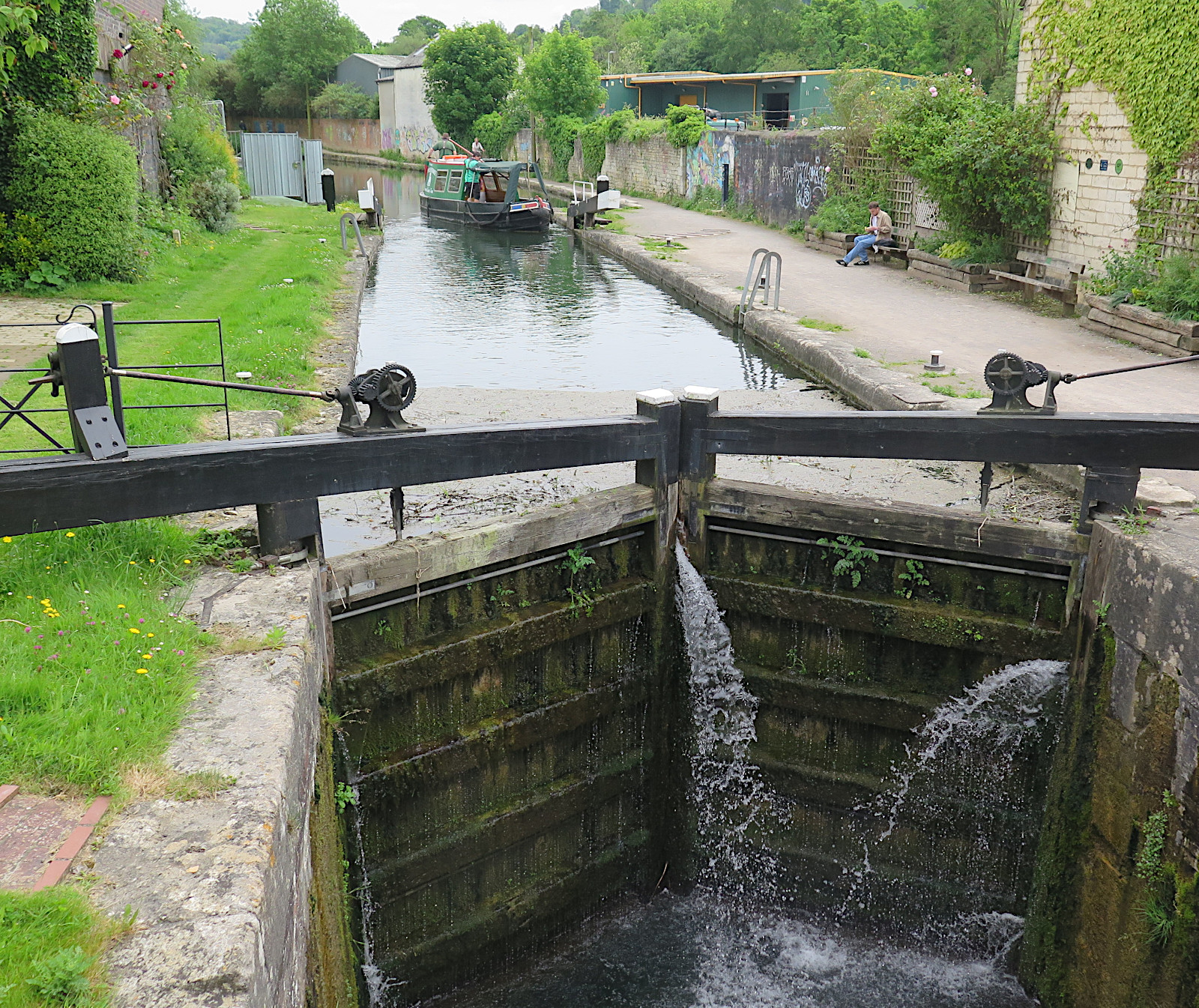
Severn trows were flat-bottomed, single masted sailing vessels, and the Stroudwater canal was wide and deep enough to take them.

< PreviousΒ |Β IndexΒ | Next >

This section of Stroudwater Navigation is not being restored, but it is certainly of historical interest and mostly remains visible on the ground. It’s still possible to walk almost all of the towpath and not too hard to imagine what it might have been like when it was in use.

The connection to the River Severn
The River Severn at Framilode (near high tide)

The physical point where the canal joined the Severn is not accessible as it’s on private land. However, it’s easy to get very close. The River Severn is still tidal at this point, and the canal engineers had to take this into account. Instead of a single lock gate providing access, there were several; this allowed boats to transfer between river and canal for longer periods as the tide ebbed and flowed.

To find this spot on the ground, visit the village of Upper Framilode and look for the point near Lock House where the road crosses the line of the canal, then click the tiny map on the right for a larger, draggable and scalable version. The pointer shows where the canal and river meet, the place where Severn trows and other boats would have entered the canal heading towards Stroud, or exited into the Severn to make their way north towards Gloucester, Hereford and Worcester, or south towards Bristol and the River Wye to Chepstow and Monmouth. If you have time, pop into St Peter’s church in the village and enjoy the simple stained glass and the beautifully painted ceiling. A peaceful place, used by the local community in many interesting ways.

Severn trows were flat-bottomed, single masted sailing vessels, and Stroudwater Navigation was wide and deep enough to take them, with locks sized accordingly.

You can also view a map of the canal from the 1840s to compare with the current map. This, too, is draggable and scalable. If you open two browser windows side-by-side with the modern map in one and the historical map in the other, it’s fascinating to see the many changes that have taken place.

To start the walk south from Upper Framilode, look for the footpath just left of the canal as seen from Canal Row. This is the old towpath and runs between the canal and the row of buildings that grew up along the first 100 m of the canal. Presumably most, if not all, of these buildings sold necessities to the passing canal traffic. I can imagine everything from ale to fresh well water and hens eggs and other garden produce being traded while boats loaded and unloaded or just waited for a lock to fill or empty.

Heading south
View back to Canal Row – from left are the canal, grassy towpath, and row of buildings

The first landmark you will come across is ‘The Ship’ inn. You’ll pass the pub and then its car park, both on the left. After passing it, looking back you’ll see its name painted on the building’s wall. It’s only 250 m or so from the start of the walk.

It’s not hard to imagine the trows travelling to and fro along this section of the canal. No doubt the pub was a popular stop.

The Ship Inn, looking back towards the start

As you can see, this first section of canal is still in water, and along the way you will have noticed the large stones edging the canal. Lock gates and other wooden structures have long since gone, of course, rotted away by the action of rain, fungi and bacteria. Like all human technology, canals must be maintained if they are to continue working. Although there’s still water at this point the canal is certain to be heavily sited up, and reeds, rushes and other water-tolerant and water-dependent plants have colonised very effectively.

Saul Bridge

The map marks the next point on the journey, the place where Moor Street crosses the canal over Saul Bridge. It’s the first bridge you come to and is not far beyond The Ship Inn. Originally this was a swing bridge, but the modern replacement is concrete and brick. Continue along the towpath beyond the bridge and you quickly come to the end of the section of canal remaining in water. The scene changes quite a bit from here on.

The River Frome comes alongside the tow path on the left at a point where the canal (still on the right) becomes dry; you can see this point on the map in the previous section. Don’t be confused! For a while you will see the Frome on the left of the tow path and the dry canal on the right. In places the canal has been filled in and that makes things even more difficult to visualise. Sometimes you can spot the left bank of the canal as a curved ridge, even when it runs through an open, grassy field. The towpath would probably have run along the flat top of this ridge.

River, footpath, and the bank of the canal

Just keep walking on the footpath and you’ll be OK. If you see signs for the Thames and Severn Way, Cotswold Canals Trust, or Saul Junction follow them; they will all guide you along this section of the canal. After the section of infilled canal, there’s a very overgrown part, and finally the footpath opens onto Saul Junction itself.

Here, the Stroudwater Navigation (opened in 1779) continues straight across the much larger Gloucester and Sharpness Canal, which opened in 1827, carries much larger vessels, and connects Gloucester Docks with Sharpness. At Sharpness, vessels can continue on the river to and beyond Bristol. Look across the ship canal where you will see Stroudwater Navigation continuing, not only full of water, but still in use. I’ll write about that next section in a future article.

Once the ship canal was open, it made a much better, non-tidal route to Gloucester or Bristol, and that’s why this section of the Stroudwater Navigation languished and fell out of use. The crews of trows coming and going to Stroud simply had no reason to enter the Severn from Saul Junction after 1827.

See also:

< PreviousΒ |Β IndexΒ | Next >

*This is a great source of canal images, history and all sorts of detail. Highly recommended and well worth exploring!

Useful? Interesting?

If you enjoyed this or found it useful, please like, comment, and share below. (If you don’t see those links, click the article’s title above the main photo and they will appear.) Send a link to friends who might enjoy the article or benefit from it – Thanks! My material is free to reuse (see conditions), but aΒ coffeeΒ is always welcome and encourages me to write more often!

Another message from Yara

Sometimes the worst things are done when the perpetrators are most afraid; and right now I think Putin is very much afraid.

This is a message of despair from a brave Ukrainian lady who deserves so much better. All Ukrainians deserve so much better. Yet I know the despair will be temporary.

A photo from Yara’s message

Yara has an irrepressible nature and despite the terrible circumstances I know she will regain a measure of hope and want to share Ukrainian culture and art with her readers again quite soon.

Please do read her message for today. Below I’ve copied a reply to it that I posted there a few minutes ago. I think there is growing cause for hope, and that’s what I wrote about and want to emphasise.

But before I share that reply: What can you do to help? Visit Yara’s site and take a good look around, read some of her other, more upbeat, messages. Consider becoming a supporting member, buy her a coffee, leave her a reply to one or more of her posts. Contact your government representative asking them to do more. In the UK write to your MP. Hint: Write again after our upcoming elections, you might find you have a different MP.

My reply

Wanting better for you, Yara. Wanting better for Kharkiv. Wanting better for every part of Ukraine.

Sometimes the worst things are done when the perpetrators are most afraid; and right now I think Putin is very much afraid.

Everything in Russia is beginning to fall apart – in fact, more than ‘beginning’. The evidence is everywhere.

  • There is a big shake up in the Russian Army, many senior officers are being arrested, perhaps because Putin fears a coup. Shaking things up does not make an army more effective. Just the opposite.
  • Inflation is ‘under control’ according to Putin. He is ignoring something like 8% inflation per month. How long can he pretend?
  • Crime rates are spiralling out of control.
  • Buildings are collapsing (not bombed, just badly built and lacking maintenance).
  • Roads and railways are broken, water supplies are broken, power supplies are broken, Ukraine is destroying oil refineries. Nothing is being repaired because so many skilled people either left Russia, or have been sent to die in Ukraine.
  • Nearly half the Black Sea Fleet is on holiday, resting peacefully on the sea bed.
  • Aircraft, air defence, airfields are being destroyed daily.
  • The war is going badly, very badly in fact.

What will happen next?

Putin’s time is probably short now, everything is going wrong for him.

Ukraine’s nightmare might end very suddenly, though nobody knows when. It could be in a year’s time, or just a month, or a week, or it might be tomorrow.

None of this affects how you feel right now, so you (like so many in Ukraine) will have to suffer longer. But feelings change day by day, One day, hope will grow like a tree in the springtime. Hope will blossom and flourish. But perhaps not today.

I know you, like all Ukrainians, will cling to hope until it’s no longer needed. Then you will all be able to sing, and dance, and have parties in the street, and then start on the huge task of rebuilding your shattered lives and towns and cities.

Slava Ukraini! Heroyam slava! πŸ‡ΊπŸ‡¦ πŸ‡ΊπŸ‡¦ πŸ‡ΊπŸ‡¦ πŸ‡ΊπŸ‡¦ πŸ‡ΊπŸ‡¦