Taking a good look

Yahweh looks at Ezekiel and asks: ‘Can these bones live?’ Only a wise person would answer this correctly.

Part 3 of a series – ‘The valley of dry bones’

< Dry bones in the valley | Index | Speak to the bones >

‘He guided me back and forth amongst them and I saw a huge number of bones lying on the ground in the valley – very dry bones indeed. He asked me: “Son of man, is it possible for these bones to be alive?” I answered: “Yahweh Almighty, only you know”.’ (Ezekiel 37:2-3)

Take a really good look – Ezekiel is there in the valley and Yahweh leads him about amongst the bones. This is not just a casual look, it’s a really thorough examination of the situation. Notice how Ezekiel is guided back and forth, this is not ‘Go and look and I’ll wait here’ on Yahweh’s part. It’s an intimate togetherness in which they both go, we can almost imagine Ezekiel as a child hand-in-hand with a parent.
I should warn you that the rest of this article might seem very gloomy. But please remember, this is a low point in a deep valley and things get better – much better!

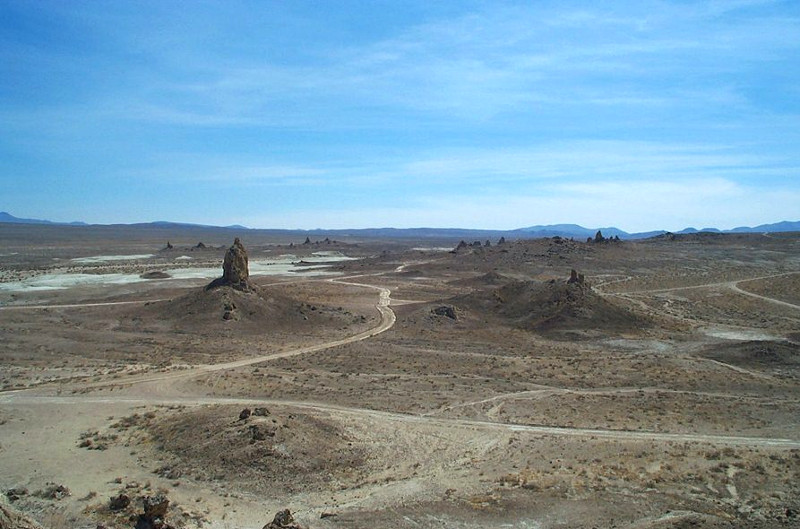
Dry bones lying on the ground
Dry bones lying in the desert. (Image from Wikipedia – original and copyright details)

For Ezekiel this is all about Israel in captivity under Babylon. For us it should also speak about the church in captivity under the thinking and dictates of the world. We can no more shake ourselves free from the influence of the world than Israel could have shaken herself free from Babylon. Yet we need to be free.

Because we are in the world it is very, very natural to apply processes like planning, teaching, organising and structuring, hierarchies, and leadership. We emphasise great presentation and engagement. There is nothing wrong with these methods in themselves, but they do have the sneaky potential to intrude on an intimate walk with Papa day by day. Methods alone are death, Jesus alone is life. Where would you rather be? If you choose both, be aware there may be some conflict – tread carefully!

We can learn from Ezekiel’s thorough examination of the bones. We really do need to be ‘guided back and forth’ amongst the remains of church. How can we encourage abundant church if we don’t first understand the nature of the problem? It’s time to examine the situation very, very carefully and thoroughly. A casual glance is not going to be enough. Father’s guidance is essential, not optional. The good news is that there are people being guided back and forth today; I am aware of some of them but I’m certain there are many more. This is not something we initiate, it’s something Father is initiating, guiding us by the Spirit of Christ to become aware of our situation. A study of church history can open our eyes to the sorts of error we may be tempted to make.

Consider, for example, some of the great movements of the past – the Reformation, the Celtic monastic movement, John Wesley and the beginnings of Methodism, the Welsh Revival, Azusa Street. The pattern is clear; it begins with revelation and fresh ideas, these are widely adopted, there’s a period of stagnation, then fossilisation, then there’s fresh revelation and the pattern repeats. Do we think that our generation is different? Is church today in its final and perfect form? Are we now the pure and unblemished Bride of Christ? Or are we, in our turn, waiting for fresh revelation?

Dry as a bone – Ezekiel sees that there are huge numbers of these bones, but he also notices that they are very dry indeed. This is significant. These are not the remains of something that was recently alive. Think about the process of decay – the muscle and other soft tissue is the first to go, skin and hair takes much longer, sinew and cartilage require even longer, and to get to the stage where the bones are disarticulated and scattered and powder dry takes a very long time indeed.

This is true of the church too. Please don’t miss the point – I’m not saying that individual believers are dead or dry, this is about how we are fitted together and active together – church. What should be a mighty army is dead, dry and scattered; church has been in that state for a long, long time.

So here is Ezekiel, arm in arm with the Almighty Power behind the universe, checking over the state of the remains. And Yahweh looks at Ezekiel and asks: ‘Can these bones live?’ Only a wise person would answer this correctly. Reason tells us dry, scattered bones cannot live – ever. They have already had their chance. But Ezekiel says: ‘You tell me, Lord!’

If only we would stop talking to one another and begin listening to Father together instead. If only!

Death is in the world but life is in Christ. If careful inspection shows dry bones then we need to know that Jesus is our only hope. Every time we have come off the church rails it’s because we’ve turned away from Christ and trusted instead in mission, or training, or… fill in the blanks. We do not need a new programme, we need a new vision of Christ!

When we examine the state of the church and how it needs to change, are we walking arm-in-arm with the King or are we going on our own, for our own ends, in our own wisdom and strength?

How about you?

< Dry bones in the valley | Index | Speak to the bones >

Paul Young Interviews

Watching ‘The Shack’ was an emotional experience, it had me on the edge of tears a number of times.

FaithOrKnowledge

Paul Young’s extraordinary book, The Shack, came out in 2007. I read it at the time and was so impressed that I shared it widely amongst my friends and family.  A film based on the book was released in March in the USA, but here in the UK we had to wait until June.

Donna and I went to see it in Cheltenham on 10th and thought it  was very true to the book. In some ways it’s better than the book! Watching ‘The Shack’ was an emotional experience, it had me on the edge of tears a number of times, and I mentioned the book and the film on Thursday when I met with some friends from Cirencester Baptist Church. One of the people in that meeting, Miriam, told us about an online video she had seen in which the author is interviewed by Nicky Gumbel. This is just one of many interviews out there, my three particular favourites are below, Paul Young has collected others on his own website, and Google will find more with the author, and with the actors in the film,

Meadow cranesbill

One of the plants she wants to encourage is meadow cranesbill, a wild geranium

DailyToast

I was walking through the countryside near our home today, and had a conversation with a man walking his dog. He mentioned that, like us, he and his wife moved into the area earlier this year. His wife is cultivating an area of wild flowers and hoping to attract bumblebees, butterflies and other pollinating insects; one of the plants she wants to encourage is meadow cranesbill, a wild geranium. It’s at its best this time of year, and very pretty.

Photo of a wild bee on a cranesbill flower
A wild bee on a meadow cranesbill flower

On my way home after our conversation I spotted a bee working some cranesbill flowers, and stopped to take the photo above (click for a larger version).

There is such beauty in the natural world; living amongst it is a great privilege, one that we often overlook. This world deserves to be cared for; what can you do to look after your local area? There’s always some positive action you might take, whether you live in a rural area or in the heart of a city.

A Walk in the Cotswolds

A gentle stroll brought us to this stunning view.

DailyToast

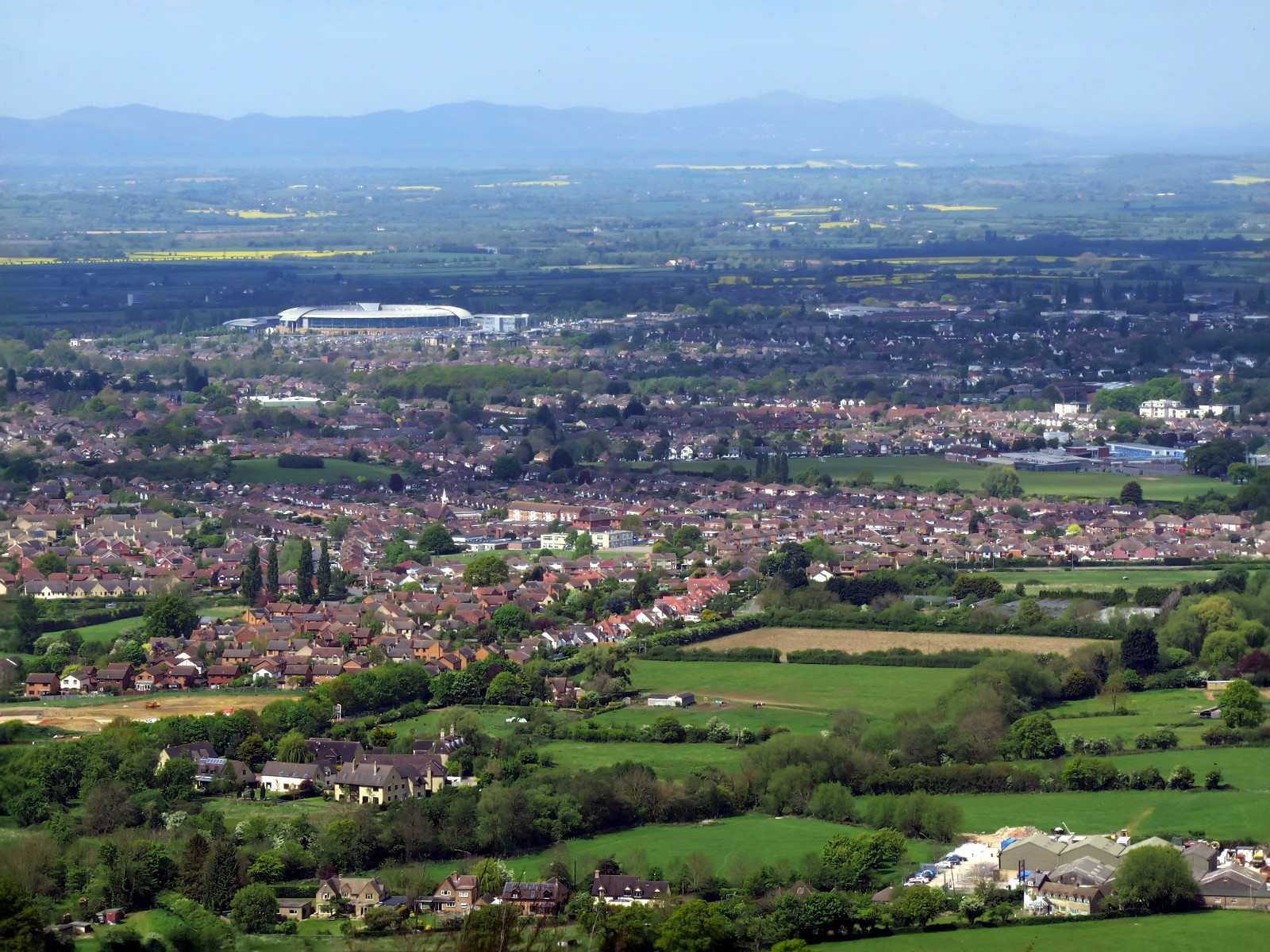
Setting up a new home becomes a bit much eventually, so Donna and I decided to take a break and go for a walk. We chose part of the Cotswold scarp near Leckhampton, and a gentle stroll brought us to this stunning view north over Cheltenham with the Malvern Hills in the distance (about 30 miles away). The ‘flying saucer’ in the upper-left is GCHQ.

IMG_5751-Mod01

There was a heavy fragrance wafting from a nearby field of oilseed rape, the sun was shining, the birds were singing, and all seemed right with the world. What a place! Standing here on the steep north-western edge of the Cotswolds, about 300 m above the Severn Vale below, we had this amazing vista. But turning round and looking the other way revealed rolling farmland and the field of fragrant, vivid yellow rape.

IMG_5740-Mod01

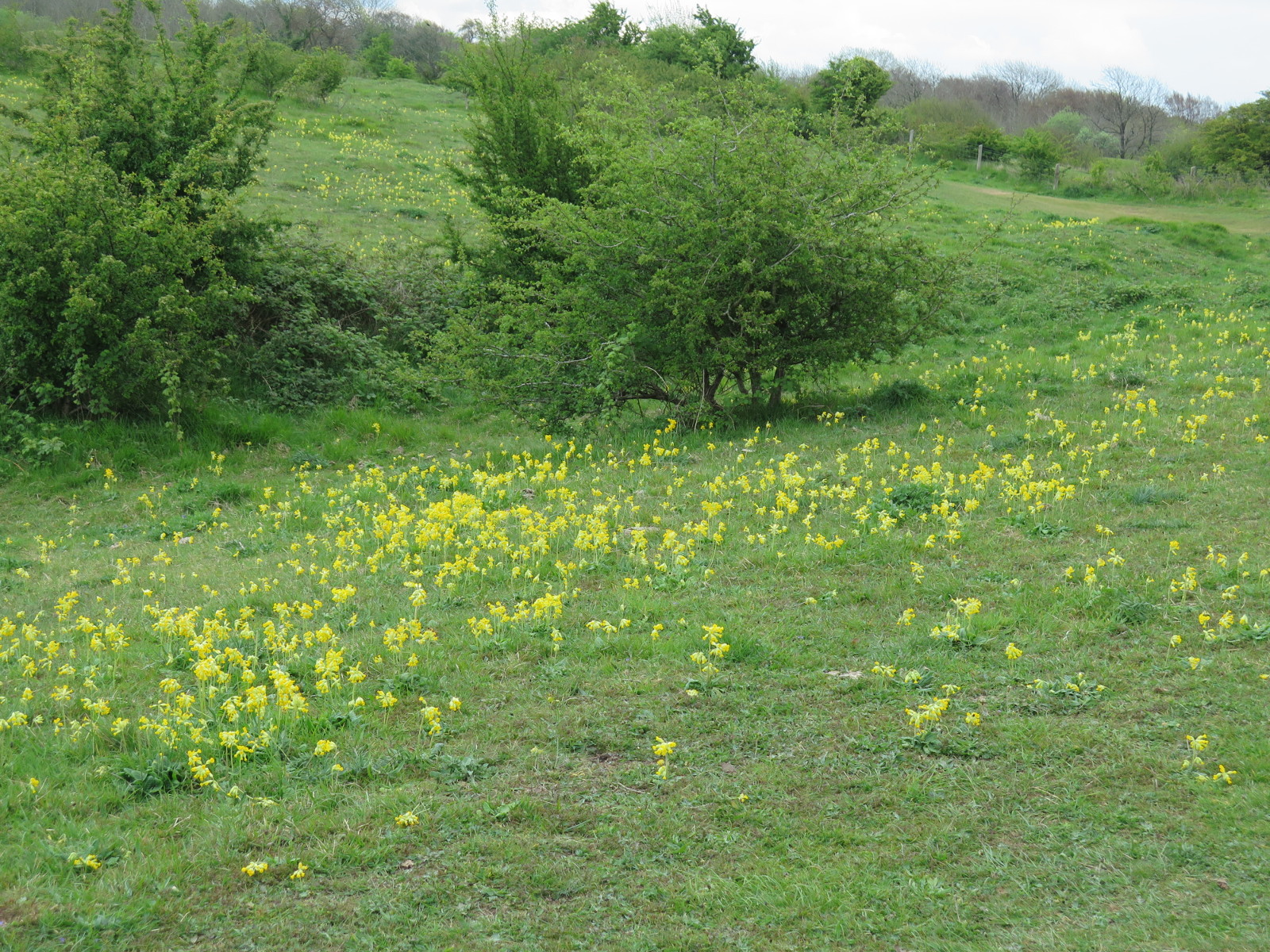
Then we drove on to Crickley Hill Country Park for coffees, and amongst the grass on the hilltop were cowslips in abundance, another yellow flower that grows wild in most of England, wild and pretty but so much less showy than the farmed rape.

IMG_5764-Mod01

We love the Cotswolds! Glad to be living here, but back to unpacking boxes…

A bridge on fire

We are looking forward now, not back.

QuoteMe

“When one burns one’s bridges, what a very nice fire it makes.” – Dylan Thomas

I spotted this quote on the wall in Coffee#1 in Cirencester. I like it – a lot!

I suppose in some ways Donna and I have ‘burned our bridges’ by moving from St Neots to Cirencester. The sense of ‘no going back’ is strong, it cost money and effort to make the move, and the house we loved and lived in now belongs to someone else.

Burning bridges makes it hard to return, to go back to the old ways. Decisions can be open to reversal, but the decision to burn a bridge cannot be reversed. Once burning it’s hard to put out, and once gone it’s hard to replace.

We are looking forward now, not back. Our old friends in St Neots are not forgotten, we will return to visit, but not to remain. We miss many of them already and we know they also miss us; but there are new friends, not yet known. It’s exciting. And because we intend to follow Jesus, and because we understand he wanted us to come here in the first place, we are very confident and excited about what will come next. But the past? The bridge that led that way is smouldering and impassable. Life always goes forwards, never back.

(Older posts are at quotecj.blogspot.com)

Moving House

DailyToast

Well, we did it. We moved from our old home in St Neots, to a small house in Stratton. The old village of Stratton is on the northern edge of Cirencester, mostly between the roads to Gloucester and Cheltenham.

The 18th of April was the big day. We drove down to Cirencester, collected the keys to our new home, and our furniture and boxes of possessions arrived the following day. And I do mean boxes – and boxes – and more boxes – and yet more boxes! The garage is packed to bursting, the house is full of clutter, but we’re sorting through it all and making progress. The lounge is tidy now, the kitchen is functional, and we should have a little more time from now on to explore the area and begin to live our lives again.

Stratton
Click the map to expand and scroll

I’ll be writing again soon to tell you more about the house, the town and the countryside all around.

I love the European Union

DailyToast

Mark Rice-Oxley writes a wonderful piece in the Guardian today, ‘The EU is Sixty‘, in which he enthuses about the wine, the food, the freedom from border checks and visas, and so much more. In particular he writes ‘[The EU] helped my generation fall in love with
Europe’.

Paris1964Not just your generation, Mark. I’ll be 69 next birthday, and I well remember a school trip to Paris in 1964. A passport was necessary and there were about 13 Francs to the Pound. The photo is taken from a street photographer’s post card of our party magically created while we toured the palace and gardens of Versailles.

We had a wonderful week, the Eiffel Tower, Montmartre, the Louvre, the book and picture sellers along the banks of the Seine, getting lost on my own and having to ask the way in French, ‘Ou se trouve la Place de la Republique, s’il vous plait?’ Until I visited Paris on that school trip, Europe was a mysterious place that was far away and not very real. For me, Europe became a real place where trees grew, people lived – it was just like home but different in so many interesting ways.

For me, the EU is a glorious and precious thing. Far from perfect, of course, yet worth preserving. I heartily wish that the UK would remain in the EU and influence it for good. I wish we could see it as a partnership. We Brits are split in our views on this, more or less 50-50. Oh, OK, nearly 52-48 if we have to be pedantic about it, but certainly not the ‘overwhelming majority’ for leave that we hear about sometimes.

I hope we can remain well integrated and on good terms with our neighbours. Half of us wanted that nine months ago. Half of us still do.

Season’s Greetings

chje20121213bo-mod01

Brrrr.. It’s cold outside, so it’s good to be inside with friends and family. Warmth from a heated home is one thing, but the heart warmth from people who love us goes deeper and lasts longer. Spare a thought for those without home or friends or family this winter if you know someone like that, find a way to make them feel loved.

Spread a little happiness, spread a little warmth.

With love to friends and family everywhere.

sig-mod01

PS – See a full size version of the photo


Other years

2025, 2024, 2023202220212020
2019201820172016

Forgotten ways renewed

Whatever your views on faith, discipleship, mission, community or the nature of church, this book will encourage you to fresh thinking.

JDMC

Ten years ago a significant book was written by a guy called Alan Hirsch. He titled it ‘The Forgotten Ways’ and in it he laid out his thinking about a new paradigm to explain the rapid flourishing of movements such as the early church.

forgottenways2

A few days ago a new edition appeared with significant changes following ten further years of thinking about explosive missional movements. Alan has refined the book by adding new examples, making some changes to the terms he uses, and making even more persuasive arguments.

The new version is a great book; read it! Whatever your views on faith, discipleship, mission, community or the nature of church, this book will encourage you to fresh thinking. It will take you down some rarely travelled roads, through unexplored countryside, and it will open new vistas and opportunities.

There are a few links below, you might explore these if you are new to Alan’s thinking. And if you’re familiar with the first edition you’ll certainly want to read the new one.

In the book, Alan writes

The twenty-first century is turning out to be a highly complex phenomenon where terrorism, disruptive technological innovation, environmental crisis, rampant consumerism, discontinuous change, and perilous ideologies confront us at every point. In the face of this upheaval, even the most confident among us would have to admit, in our more honest moments, that the church as we know it faces a very significant adaptive challenge.

He’s absolutely right! But what can we do about it? A very plausible answer will unfold as you read this book.

Faith Camp

‘If you love me you will do what I say’. It doesn’t come a whole lot clearer than that!

FaithOrKnowledge

Donna and I drove to Peterborough last night to visit Faith Camp 2016 and listen to Colin Urquhart’s opening message for the week. Donna likes to get along to some of these large meetings from time to time, and Colin always has good things to say – often about discipleship in one way or another.

This time he spoke about whether we truly love Jesus. We say that we do, but are we willing to obey him? Jesus told his disciples, ‘If you love me you will do what I say’. It doesn’t come a whole lot clearer than that!

ColinUrquhart.jpg

Personally, I don’t favour using structure and hierarchy alongside the fundamental family nature of church. But that doesn’t mean I don’t value the good teaching that can be found wherever and however Jesus’ people gather. And Colin’s teaching was certainly good. Here are a few highlights.

  • Jesus didn’t talk about love, he just did it. Love breeds love over time. All his disciples loved him.
  • We’re not called to examine our own sinful hearts (we can’t see very clearly and are likely to miss a great deal). We are to ask him to search our hearts and show us what we cannot see.
  • If we don’t know ourselves, we can’t do what he wants us to do. We have to deny ourselves daily or we cannot be his disciples.

If you’d like to hear Colin for yourself there’s a selection of recordings on line.