Image of the day – 51

We can imagine the people travelling here for celebrations and for remembering previous generations.

< Previous | Index | Next >

What’s in an image? Sometimes quite a lot, more than meets the eye.

I’m posting an image every day (or as often as I can). A photo, an image from the internet, a diagram or a map. Whatever takes my fancy.

The entrance to Newgrange

This is the entrance to the passage grave at Newgrange near Drogheda, north of Dublin. Some of what you see here is Neolithic; all of the larger stones are ancient, but there has been some recent reconstruction using smaller, fallen stones. The reconstruction has been somewhat controversial. The decorative, spiral carvings are original and are quite typical of Neolithic art in general.

Whatever your opinion about reconstruction, the tomb is most impressive and the nearby museum provides an excellent overview of the site, the construction and purpose of the monument, and its place in the landscape. There are many other Neolithic structures nearby, the entire area seems to have been a special place for the Neolithic people who lived in Ireland at the time it was in use.

We can only speculate, but we can imagine the people travelling here for celebrations and for remembering previous generations. It must have been a busy place during times of festival and ceremony. You know what that’s like; visitors need food and drink, and they may want to take home objects to remind them of their visit. Just as the visitor centre has a restaurant and gift shop as well as a museum, so 3½ thousand years ago, there would have been the same kinds of activity for exactly the same reasons. Food for sale in some shape or form, objects available to take home, as well as explanations about the deep history and purpose of the extraordinary structures in the area. Stories to be told, myths and legends as well as shared and handed-down memories to be recited.

Deep history indeed!


Images from our Irish holiday 2024

For convenience, here’s a list of all the Irish holiday images:

28th Jul – Welsh Botanic Garden, Robin, Fishguard
29th Jul – Wicklow Mts, Glendalough, Powerscourt, Rose, Greystones
30th Jul – Liffey, Temple Bar, St Patrick’s Cathedral
31st Jul – Newgrange, Battle of the Boyne
1st Aug – Monasterboice, Mourne, Thrift, Window
2nd Aug – Spelga Dam, Hydrangea, Pipework, Lough Neagh
3rd Aug – Coagh, Springhill, Portrush
4th Aug – Beach at Portrush
5th Aug – Giant’s Causeway, Carrick-a-Rede, Portrush

Themed image collections

The links below will take you to the first post in each collection

Cirencester, Favourites, Irish holiday 2024, Roman villa

< Previous | Index | Next >

Useful? Interesting?

If you enjoyed this or found it useful, please like, comment, and share below. (If you don’t see those links, click the article’s title above the main photo and they will appear.) Send a link to friends who might enjoy the article or benefit from it – Thanks! My material is free to reuse (see conditions), but a coffee is always welcome and encourages me to write more often!

Image of the day – 50

Jonathan Swift…famously wrote, ‘In Ireland we have enough religion to make us hate but not enough to make us love’.

< Previous | Index | Next >

What’s in an image? Sometimes quite a lot, more than meets the eye.

I’m posting an image every day (or as often as I can). A photo, an image from the internet, a diagram or a map. Whatever takes my fancy.

St Patrick’s Cathedral, Dublin

While we were in Dublin we visited St Patrick’s Cathedral. There are two cathedrals in the city, Christ Church and St Patrick’s. St Patrick’s has an association with the famous author, Jonathan Swift who was Dean and Ordinary here. He famously wrote, ‘In Ireland we have enough religion to make us hate but not enough to make us love’.

The cathedral is beautiful, with much interesting stained glass. It has a long and varied history; astonishingly, Oliver Cromwell used the building to stable his horses. The building has had many ups and downs over the centuries, falling into disrepair and being restored.

The phrase ‘chance your arm’ originated here. In 1492, two feuding families had been in battle and the losing side fled to the cathedral for safety. The winners offered a truce but the losers thought it was trap. A hole was cut in the heavy, wooden door to the building and the leader of the winning side put his arm through to shake hands ‘chancing his arm’ in the process. Everything ended well and the truce was accepted.

Sometimes we might need to do this too – chance our arm. We need to take risks in life in the hope of achieving something useful. ‘Nothing ventured, nothing gained’ is another way of making the same point. Risk it for a biscuit!


Images from our Irish holiday 2024

For convenience, here’s a list of all the Irish holiday images:

28th Jul – Welsh Botanic Garden, Robin, Fishguard
29th Jul – Wicklow Mts, Glendalough, Powerscourt, Rose, Greystones
30th Jul – Liffey, Temple Bar, St Patrick’s Cathedral
31st Jul – Newgrange, Battle of the Boyne
1st Aug – Monasterboice, Mourne, Thrift, Window
2nd Aug – Spelga Dam, Hydrangea, Pipework, Lough Neagh
3rd Aug – Coagh, Springhill, Portrush
4th Aug – Beach at Portrush
5th Aug – Giant’s Causeway, Carrick-a-Rede, Portrush

Themed image collections

The links below will take you to the first post in each collection

Cirencester, Favourites, Irish holiday 2024, Roman villa

< Previous | Index | Next >

Useful? Interesting?

If you enjoyed this or found it useful, please like, comment, and share below. (If you don’t see those links, click the article’s title above the main photo and they will appear.) Send a link to friends who might enjoy the article or benefit from it – Thanks! My material is free to reuse (see conditions), but a coffee is always welcome and encourages me to write more often!

Image of the day – 49

Let’s focus on whatever is sunny and joyful in our current experience – so far as that is possible.

< Previous | Index | Next >

What’s in an image? Sometimes quite a lot, more than meets the eye.

I’m posting an image every day (or as often as I can). A photo, an image from the internet, a diagram or a map. Whatever takes my fancy.

Entrance to a bar in Dublin

Back to Ireland today, this photo is the entrance to a Dublin bar in the centre of the city.

The hanging baskets full of flowers make a lovely contrast against the old stone and brick of the archway. This photo is from the Temple Bar part of Dublin where there are narrow, old streets and passageways. It’s a lively area as well, with gaudily painted walls and doors. It happened to be a bright, sunny day, and this added to the happy, carefree and optimistic atmosphere.

We had walked across one of the bridges over the Liffy from the Customs House to make our way through Temple Bar en route to Dublin Castle and St Patrick’s Cathedral and our mood shifted as we walked.

On a day like this, in a place like this, it seemed impossible to be sad or gloomy. I think optimism and energy are infectious, perhaps sadness and despair are too. So let’s focus on whatever is sunny and joyful in our current experience – so far as that is possible. For an exceptional example of this in the midst of pain, distress and hardship, take a look at Yara’s posts from Kyiv in the heart of battered Ukraine. Even when she writes on a tough topic, there are glimpses of the sunshine in her heart.


Images from our Irish holiday 2024

For convenience, here’s a list of all the Irish holiday images:

28th Jul – Welsh Botanic Garden, Robin, Fishguard
29th Jul – Wicklow Mts, Glendalough, Powerscourt, Rose, Greystones
30th Jul – Liffey, Temple Bar, St Patrick’s Cathedral
31st Jul – Newgrange, Battle of the Boyne
1st Aug – Monasterboice, Mourne, Thrift, Window
2nd Aug – Spelga Dam, Hydrangea, Pipework, Lough Neagh
3rd Aug – Coagh, Springhill, Portrush
4th Aug – Beach at Portrush
5th Aug – Giant’s Causeway, Carrick-a-Rede, Portrush

Themed image collections

The links below will take you to the first post in each collection

Cirencester, Favourites, Irish holiday 2024, Roman villa

< Previous | Index | Next >

Useful? Interesting?

If you enjoyed this or found it useful, please like, comment, and share below. (If you don’t see those links, click the article’s title above the main photo and they will appear.) Send a link to friends who might enjoy the article or benefit from it – Thanks! My material is free to reuse (see conditions), but a coffee is always welcome and encourages me to write more often!
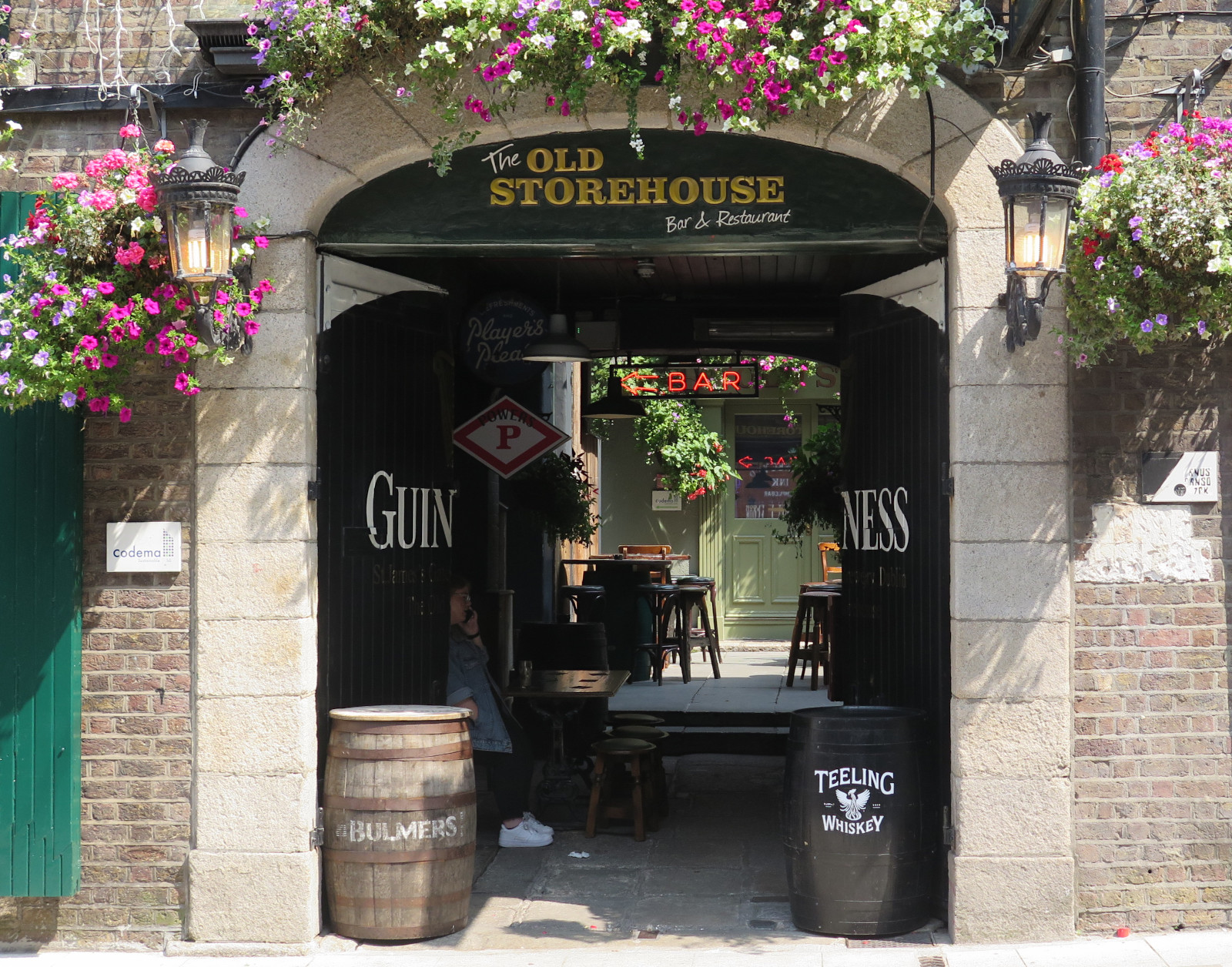
Image of the day – 48

There is a cooking fire raised to a useful working height, [and] rows of hooks for tidy storage of equipment.

< Previous | Index | Next >

What’s in an image? Sometimes quite a lot, more than meets the eye.

I’m posting an image every day (or as often as I can). A photo, an image from the internet, a diagram or a map. Whatever takes my fancy.

So, what’s cooking?

We’ve seen the dining room with its couches and cushions, ideal for reclining when the meal arrives. But how were meals prepared? In the kitchen, of course! In this photo we see the reconstruction of a villa kitchen where the cook (a slave or a hired servant) would do the work required to serve up a suitable meal for the family, and often no doubt for house guests as well.

Clearly, a Roman kitchen couldn’t boast the modern conveniences we all expect today, but think in terms of the people who lived in Britain before and after the Roman period. Iron age people usually lived in round houses with a hearth in the centre. That was it! There might have been a tripod where a cauldron could be hung over the fire or it could be placed on the hearth stones. And Saxon homes were quite similar; they were rectangular rather than circular but there was no dedicated kitchen for preparing food. In this Roman kitchen there are iron racks to keep the pans away from the fire below while letting the heat through. And notice the very practical handle; wooden handles would have scorched and been too hot to hold, so a short piece of wood was used as a temporary handle – genius!

The Roman kitchen looks familiar to us because it’s a separate space in a well-designed and well-built home. There is a cooking fire raised to a useful working height, rows of hooks for tidy storage of equipment, containers of various kinds and sizes, even a wax tablet, perhaps with recipe details or a list of requirements. There was a walk-in larder, not seen in this image, and an oven for baking bread.

Images of the Roman villa

For convenience, here’s a list of all the Roman villa images:

Ceiling, Desk, Dining room, Exterior1, Exterior2, Garden, Kitchen, Mosaic floor, Office, Sitting room

Themed image collections

The links below will take you to the first post in each collection

Cirencester, Favourites, Irish holiday 2024, Roman villa

< Previous | Index | Next >

Useful? Interesting?

If you enjoyed this or found it useful, please like, comment, and share below. (If you don’t see those links, click the article’s title above the main photo and they will appear.) Send a link to friends who might enjoy the article or benefit from it – Thanks! My material is free to reuse (see conditions), but a coffee is always welcome and encourages me to write more often!
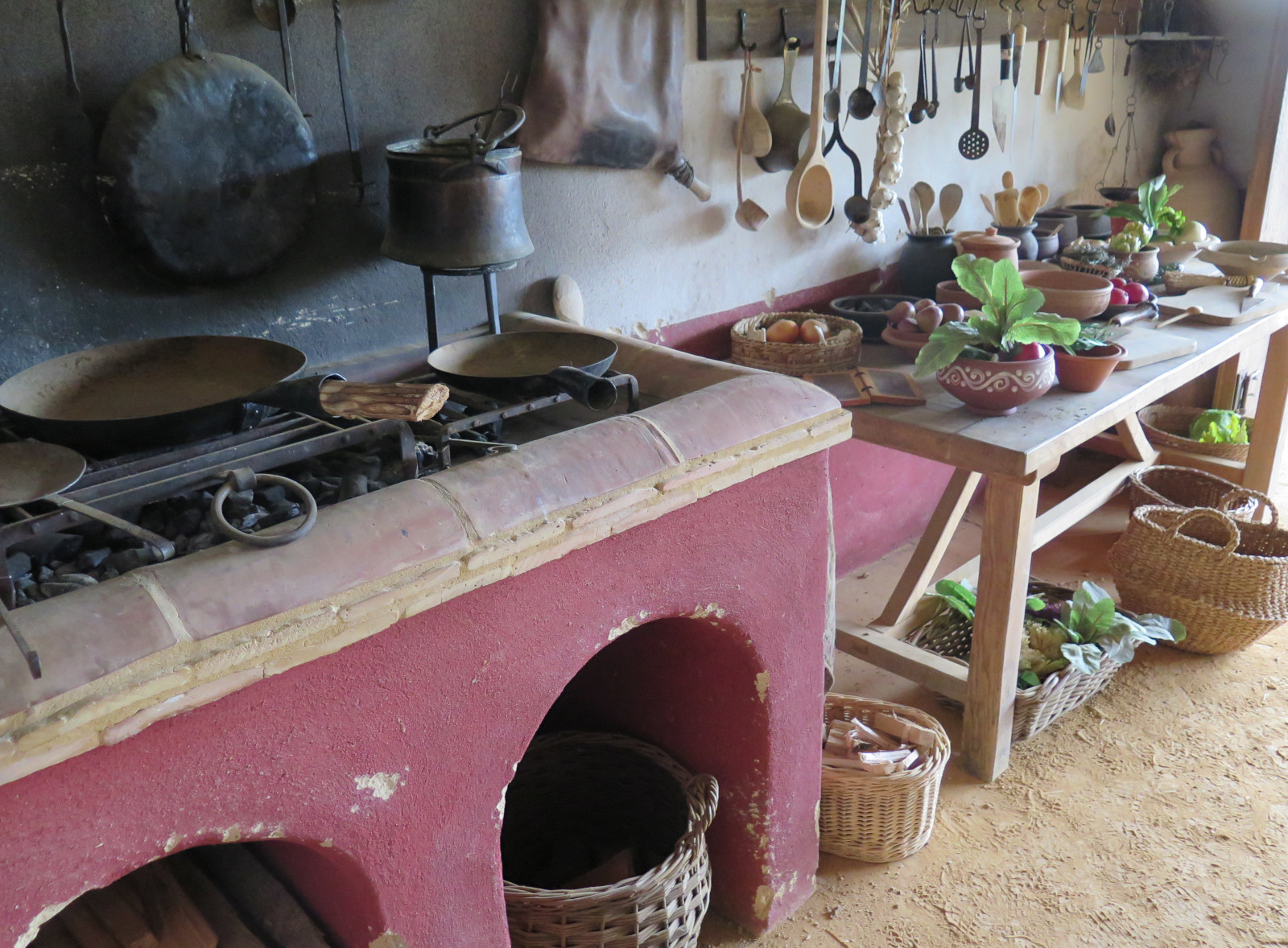
Image of the day – 47

Fashions come and fashions go. As in the Victorian era, Roman interior design might seem fussy to 21st century minds.

< Previous | Index | Next >

What’s in an image? Sometimes quite a lot, more than meets the eye.

I’m posting an image every day (or as often as I can). A photo, an image from the internet, a diagram or a map. Whatever takes my fancy.

An impressive ceiling

Roman ceilings ranged from plain and simple to very impressive. We’re still in the villa’s office here, a room that was required to impress, so the ceiling is moulded with recessed squares and richly decorated. Anyone visiting the Master in his office would know right away that this was a person of some privilege and power, a person not to be messed with.

Fashions come and fashions go. As in the Victorian era, Roman interior design might seem fussy to 21st century minds. We value simplicity and our ceilings are usually white and without decoration. If you could invite a Roman to visit your home today, they would assume you were either weird, or lacking the money to have your ceiling improved. They would also have found walls in plain colours baffling – again a sign of poverty. They would no doubt have been hugely impressed by your ability to conjure up music or a disembodied voice at will, and your TV would have spooked them. Your decor would have been disappointing in the extreme.

Images of the Roman villa

For convenience, here’s a list of all the Roman villa images:

Ceiling, Desk, Dining room, Exterior1, Exterior2, Garden, Kitchen, Mosaic floor, Office, Sitting room

Themed image collections

The links below will take you to the first post in each collection

Cirencester, Favourites, Irish holiday 2024, Roman villa

< Previous | Index | Next >

Useful? Interesting?

If you enjoyed this or found it useful, please like, comment, and share below. (If you don’t see those links, click the article’s title above the main photo and they will appear.) Send a link to friends who might enjoy the article or benefit from it – Thanks! My material is free to reuse (see conditions), but a coffee is always welcome and encourages me to write more often!

Image of the day – 46

The dark rectangle on the sheet of papyrus or vellum is a miniature abacus, a sort of pocket calculator!

< Previous | Index | Next >

What’s in an image? Sometimes quite a lot, more than meets the eye.

I’m posting an image every day (or as often as I can). A photo, an image from the internet, a diagram or a map. Whatever takes my fancy.

Roman office desk

After yesterday’s photo of the office, I thought you might like a closer look at the items on the desk. You can see various scrolls as well as a wax tablet in the middle at the front. The tablet would be used for making notes with a pointed stylus and could be erased with the flattened upper end of the same stylus – very convenient. This tablet is hinged so four writing surfaces are available.

The dark rectangle on the sheet of papyrus is a miniature abacus, a sort of pocket calculator! The papyrus itself has a plan of the property on it. Notice also the glass on the left and the glass decanter on the right (glass was fearfully expensive and therefore an extreme luxury item), several pottery vessels (one containing writing styli), two candlesticks for working after dark, and even some snacks. There’s a bowl of walnuts and another one containing ripe cherries.

Paperwork was just as much of a chore no doubt then as now. Despite the fact that paper had not yet been invented!

Images of the Roman villa

For convenience, here’s a list of all the Roman villa images:

Ceiling, Desk, Dining room, Exterior1, Exterior2, Garden, Kitchen, Mosaic floor, Office, Sitting room

Themed image collections

The links below will take you to the first post in each collection

Cirencester, Favourites, Irish holiday 2024, Roman villa

< Previous | Index | Next >

Useful? Interesting?

If you enjoyed this or found it useful, please like, comment, and share below. (If you don’t see those links, click the article’s title above the main photo and they will appear.) Send a link to friends who might enjoy the article or benefit from it – Thanks! My material is free to reuse (see conditions), but a coffee is always welcome and encourages me to write more often!

Image of the day – 45

In some ways, Roman life would have seemed quite familiar to us, at least the life led by people of reasonable means.

< Previous | Index | Next >

What’s in an image? Sometimes quite a lot, more than meets the eye.

I’m posting an image every day (or as often as I can). A photo, an image from the internet, a diagram or a map. Whatever takes my fancy.

The Master’s office

The villa was a place where the master of the house continued his business while away from the cities. He would have had a small office for working on documents and meeting visiting colleagues and officials; he would also use the office when dealing with estate staff concerning the farming work.

Notice the fairly cluttered desk, the comfortable working chair, and two seats across the desk for visitors. There are cupboards for storage, and even a waste bin. We’ll take a closer look at what’s on the desk in the next Image of the day.

In some ways, Roman life would have seemed quite familiar to us, at least the life led by people of reasonable means. In Saxon and medieval times it’s almost as if the calendar has been turned back, not forwards!

Images of the Roman villa

For convenience, here’s a list of all the Roman villa images:

Ceiling, Desk, Dining room, Exterior1, Exterior2, Garden, Kitchen, Mosaic floor, Office, Sitting room

Themed image collections

The links below will take you to the first post in each collection

Cirencester, Favourites, Irish holiday 2024, Roman villa

< Previous | Index | Next >

Useful? Interesting?

If you enjoyed this or found it useful, please like, comment, and share below. (If you don’t see those links, click the article’s title above the main photo and they will appear.) Send a link to friends who might enjoy the article or benefit from it – Thanks! My material is free to reuse (see conditions), but a coffee is always welcome and encourages me to write more often!

JDMC – What does it contain?

Good and bad habits alike result from repeated behaviour, and the sessions aim to get you behaving in ways that will form good habits as Jesus’ disciples.

< Previous | Index | Next >

This article is an extract from my short book, Jesus, Disciple, Mission, Church (JDMC). The bite-sized piece below is roughly two percent of the book. It’s the very first section so is a bit different from the rest: there are no questions for readers to ponder, it sets the scene and explains how JDMC might be used.

JDMC cover

This twelve-part guide will help you explore some key ideas from The Forgotten Ways by Alan Hirsch (all of his books are available via this link). Of course, one way to grapple with the material is simply to read Alan’s book, and I highly recommend doing so. And if your church or group wants to discuss and learn together there’s The Forgotten Ways Handbook, also highly recommended, but it’s long and detailed. Another way to start is to read The Shaping of Things to Come, a book that provides a lot of useful background.

But if you need an introductory guide you have come to the right place. JDMC is suitable for individual use, but better for up to six to ten people working together. The guide explains the main points to get you thinking and exploring; if you find it interesting you’ll want to go further so I’ll point out the main sources as we go along. For more information visit Jesus, Disciple, Mission, Church.

I became aware of The Forgotten Ways when Alan spoke at a conference. I read some of his books, began working through the Handbook on my own, and then tried it with others. I wrote JDMC because I sensed the need for something short and simple, and I’m using it very effectively with groups of people I know.

Where might you use this guide?

It works well for groups of interested friends, it could be used by a Christian Union at a workplace or college, or it might suit a home group or small group forming part of a local church. Also, it might serve to inject fresh thinking into any church or denomination, perhaps being worked through by a group of church leaders. But please remember that JDMC only skims the surface. If you like what you find here, please consider going deeper and further using the sources mentioned above and throughout the guide.

What it contains

JDMC consists of the introduction you’re reading right now, a first section to outline the thinking behind The Forgotten Ways, six further parts (one for each forgotten way), three supplements to answer questions readers have asked (not based on Alan Hirsch’s work), and a conclusion. The sessions contain simple, introductory material with questions to get you thinking for yourself. The six forgotten ways can be seen as distinct, but also have a way of weaving themselves together in practice. You may notice this as you work through the guide; take it as evidence that the six ways are inextricably linked and interdependent.

We learn by doing. Good and bad habits alike result from repeated behaviour, and the sessions aim to get you behaving in ways that will form good habits as Jesus’ disciples. Over time, I hope and expect that you will behave yourselves into habits and thinking that will take you further in the journey with Jesus than you may have thought possible or necessary.

Don’t skip the questions, they’re an essential part of the discovery process. Take time to process the material and come up with your own ideas and conclusions. It’s not possible to offer exhaustive Bible references in a short guide. The Bible references I’ve included are merely starting points for exploration. As you read your Bible (and especially the gospels) you are likely to find that other relevant verses and paragraphs leap off the page.

The sessions include related online material including text, audio and video. You can click through to these resources in the version of the discussion guide at jdmc.scilla.org.uk. The guide is free to use so download it, print it, modify it, or give it away; all I ask is that if you distribute it you provide attribution by including the link GetJDMC.scilla.org.uk and apply the same copyright conditions that I do.

More sections of JDMC

IntroductionJDMC, what does it contain?Using JDMC – how to approach it

Working together in six waysIntro and Way 1Ways 2, 3 and 4Ways 5 and 6, six ways

Way One, Jesus at the centreJesus at centre 1Jesus at centre 2Jesus at centre 3

Way Two, Becoming disciplesDisciples 1Disciples 2Disciples 3

Way Three, Outward and integratedOutAndInt1, OutAndInt2

Way Four, Gifts for buildingGiftsForBuilding1, GiftsForBuilding2

Way Five, A living organismLivingOrg1, LivingOrg2

More sections will appear here…

The work of the SpiritIntroJesus, disciples, outwardGifts, living, community, help

Other church leadersIntro, bishops, eldersDeacons, pastors, priests

Last wordsThe end can also be the beginning


< Previous | Index | Next >

Read the book

This was extracted from Jesus, Disciple, Mission, Church (JDMC), pages 7 and 8. Download the whole thing or read it online – GetJDMC.scilla.org.uk

Useful? Interesting?

If you enjoyed this or found it useful, please like, comment, and share below. (If you don’t see those links, click the article’s title above the main photo and they will appear.) Send a link to friends who might enjoy the article or benefit from it – Thanks! My material is free to reuse (see conditions), but a coffee is always welcome and encourages me to write more often!
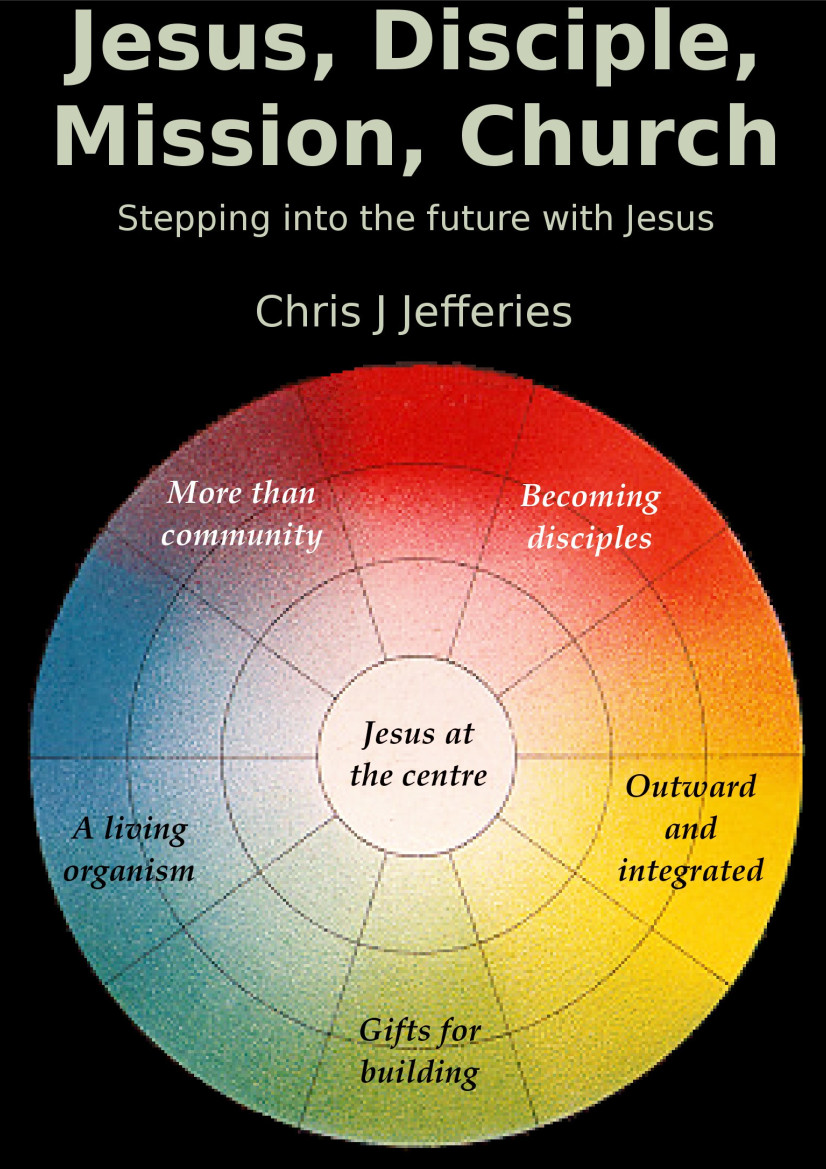
Image of the day – 44

The ancient forests…would have supported populations of wild boar, wolves would have roamed the forests too.

< Previous | Index | Next >

What’s in an image? Sometimes quite a lot, more than meets the eye.

I’m posting an image every day (or as often as I can). A photo, an image from the internet, a diagram or a map. Whatever takes my fancy.

The Roman villa in its surroundings

Here’s another view of the villa, you can see one of the farm outbuildings on the left, and a newly planted vineyard in front of the villa. An access road of pounded stone passes this side of a wooden fence, note the avenue of young trees growing on both sides of this road.

It looks very much the way the original villa would have done in Roman times. Two things really give the game away, though. The young vines have modern protection tubes around them to prevent animal damage (these will be removed onece the vines are three or four years old). And the pattern of modern agriculture in the background is entirely wrong. Roman fields would have been much, much smaller and would not have extended far from the villa. Instead, the more distant parts of this view would have been much more heavily wooded.

Today’s conservationists would love to see parts of our landscape return to the way it was in Roman times. A lot of mature forest was cut down during the days of the British Empire to supply timber for the Royal Navy’s ships, as well as for fuel and the growth of towns and cities. The ancient forests that were lost would have supported populations of wild boar, wolves would have roamed the forests too and would have kept the deer population density lower than it is today. This in turn would have made it more likely that tree and wild flower seeds would have survived and spread more abundantly.

Beavers would have created localised ponds and small lakes that would have naturally regulated water flow, and the natural vegetation would have trapped heavy rainfall and released if gradually, reducing flooding. Almost all the British landscape today is far from it’s natural climax state.

So the view beyond the villa would have been altogether different from the modern landscape in the photo.

Images of the Roman villa

For convenience, here’s a list of all the Roman villa images:

Ceiling, Desk, Dining room, Exterior1, Exterior2, Garden, Kitchen, Mosaic floor, Office, Sitting room

Themed image collections

The links below will take you to the first post in each collection

Cirencester, Favourites, Irish holiday 2024, Roman villa

< Previous | Index | Next >

Useful? Interesting?

If you enjoyed this or found it useful, please like, comment, and share below. (If you don’t see those links, click the article’s title above the main photo and they will appear.) Send a link to friends who might enjoy the article or benefit from it – Thanks! My material is free to reuse (see conditions), but a coffee is always welcome and encourages me to write more often!

Image of the day – 43

It would have been a delight to walk on a floor of this sort, especially with the underfloor heating that wealthy Romans had in their villas and town houses.

< Previous | Index | Next >

What’s in an image? Sometimes quite a lot, more than meets the eye.

I’m posting an image every day (or as often as I can). A photo, an image from the internet, a diagram or a map. Whatever takes my fancy.

A new mosaic floor

Although most of us will have seen Roman tessellated pavements in museums or at excavation sites, few people will have seen a recently laid floor of this kind. What did a new mosaic floor look like? It looked like this one at The Newt in Somerset!

It would have been a delight to walk on a floor of this sort, especially with the underfloor heating that wealthy Romans had in their villas and town houses. Cool in hot weather, but luxuriously warm in a British winter when the furnace outside had been lit and was being tended by a slave or servant, a warm floor was a wonderful thing indeed.

In the upper left, you will notice some musical instruments placed on stools, when the musicians return in a moment they’ll pick up the instruments, sit on the stools, and begin playing. And then the Master and his dinner guests will arrive to enjoy music until they go through to the triclinium for the meal to be served.

Images of the Roman villa

For convenience, here’s a list of all the Roman villa images:

Ceiling, Desk, Dining room, Exterior1, Exterior2, Garden, Kitchen, Mosaic floor, Office, Sitting room

Themed image collections

The links below will take you to the first post in each collection

Cirencester, Favourites, Irish holiday 2024, Roman villa

< Previous | Index | Next >

Useful? Interesting?

If you enjoyed this or found it useful, please like, comment, and share below. (If you don’t see those links, click the article’s title above the main photo and they will appear.) Send a link to friends who might enjoy the article or benefit from it – Thanks! My material is free to reuse (see conditions), but a coffee is always welcome and encourages me to write more often!