An old survivor

Much of the old tree would have survived for while, so the new shoot was shaded and would have grown out at an angle, attracted towards the light. Since then, the new growth has itself become a mature tree.

< Previous | Index | Next >

Image of the day – 138

What’s in an image? Sometimes quite a lot, more than meets the eye. I’m posting an image every day or so.

Click to enlarge

I spotted this old tree when we visited Blenheim Palace today. It’s probably an ancient oak though I didn’t get close enough to check with certainty.

The thickest part, the lumpy-looking base is the remaining stump, all that remains of the original tree that would have grown from an acorn many hundreds of years ago. That tree was a sapling, then a youthful, vigorously growing tree; eventually if became a mature, majestic oak. But then the rot would have set in – literally. Holes made by a woodpecker, or damage from a storm cracking off a branch, gave access to unprotected wood beneath the bark. Insects may have burrowed into the wood, and eventually fungal spores would have germinated and started the decay process in earnest.

The weakened tree would have lost its vigour and been reduced to a hollow stump and failing branches. But finally, a new shoot must have appeared near the base and formed new, young growth. Much of the old tree would have survived for while, so the new shoot was shaded and would have grown out at an angle, attracted towards the light. Since then, the new growth has itself become a mature tree.

Another possibility is that a branch of the original tree survived, and with the other branches missing, grew into the shape we now see. A careful examination of the tree might reveal the truth. But however this curious old tree survived, it certainly has an unusual story to tell!

Donna and I enjoyed our day at Blenheim and will visit again from time to time this year as the seasons roll by. I’ll probably write about the place again.

See also:

< Previous | Index | Next >

Useful? Interesting?

If you enjoyed this or found it useful, please like, comment, and share below. My material is free to reuse (see conditions), but a coffee is always welcome!

Inside out

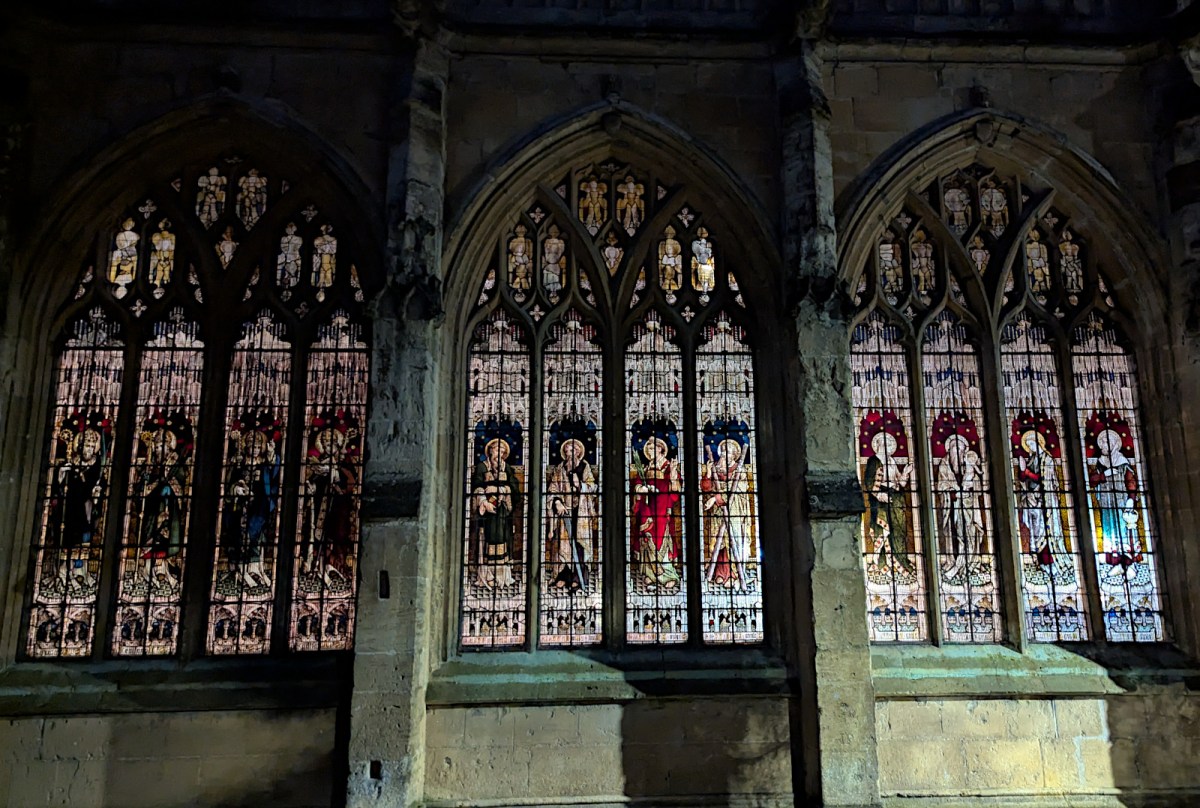
In this photo, taken from outside the church after dark, the relatively bright, modern lighting inside shows up the windows very nicely.

< Previous | Index | Next >

Image of the day – 137

What’s in an image? Sometimes quite a lot, more than meets the eye. I’m posting an image every day or so.

Click to enlarge

These windows are inside-out. They are stained-glass, and part of Cirencester’s Parish Church. When they were built, the idea was that they would look impressive from the interior in a world without anything much brighter than a candle or an oil lamp. Illuminated in daylight and seen from within a relatively dark building, they would have been amazing – and they still are.

But in this photo, taken from outside the church after dark, the relatively bright, modern lighting inside shows up the windows very nicely. The makers could hardly have imagined them being seen in this way!

See also:

< Previous | Index | Next >

Useful? Interesting?

If you enjoyed this or found it useful, please like, comment, and share below. My material is free to reuse (see conditions), but a coffee is always welcome!

From the Stone Age

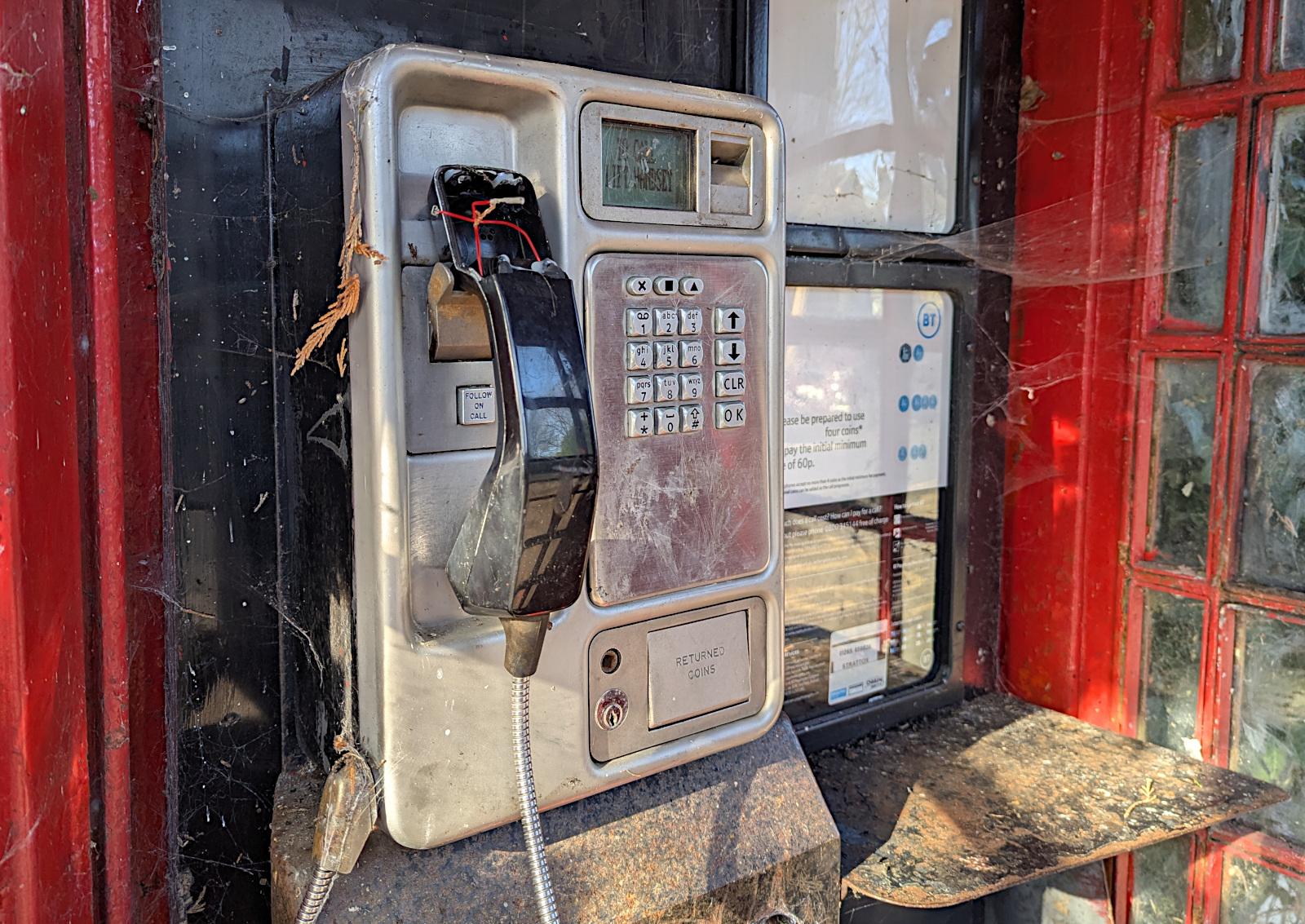
As mobile phones became more affordable and widely available the need for phone boxes vanished. This one was never removed and stands forgotten by the pavement, more or less unnoticed, draped in cobwebs, laden with layers of dust.

< Previous | Index | Next >

Image 136 – What’s in an image? Sometimes quite a lot, more than meets the eye. I’m posting an image every day or so.

Click to enlarge

Stone Age?

Well – Stone Age in terms of communications technology! A long time ago, way, way back in the 1980s, telephone kiosks like this one were widespread in the UK. You can see the red paint for which these phone boxes were so famous.

This particular box stands at the junction of the Gloucester Road and the Cheltenham Road in Stratton, where we live. It must have been quite busy when it was first installed. I well remember standing waiting at a box like this, sometimes there might even have been a queue of three or four people waiting to make a call.

And I remember the standard phone box smell as well. There was always a certain degree of dampness about them, often mixed with stale tobacco smoke. There was a little shelf containing a local residential directory and a yellow pages with business numbers and adverts.

This example of the British Telecom (BT) phone box has seen better days. It was converted with up-to-date equipment that must have replaced the original, black, bakelite handset with its black, enamelled, steel coin-box with Button A and Button B. But as mobile phones became more affordable and widely available the need for phone boxes vanished. This one was never removed and stands forgotten by the pavement, more or less unnoticed, draped in cobwebs, laden with layers of dust.

See also:

< Previous | Index | Next >

Useful? Interesting?

If you enjoyed this or found it useful, please like, comment, and share below. My material is free to reuse (see conditions), but a coffee is always welcome!

The Marine Lake

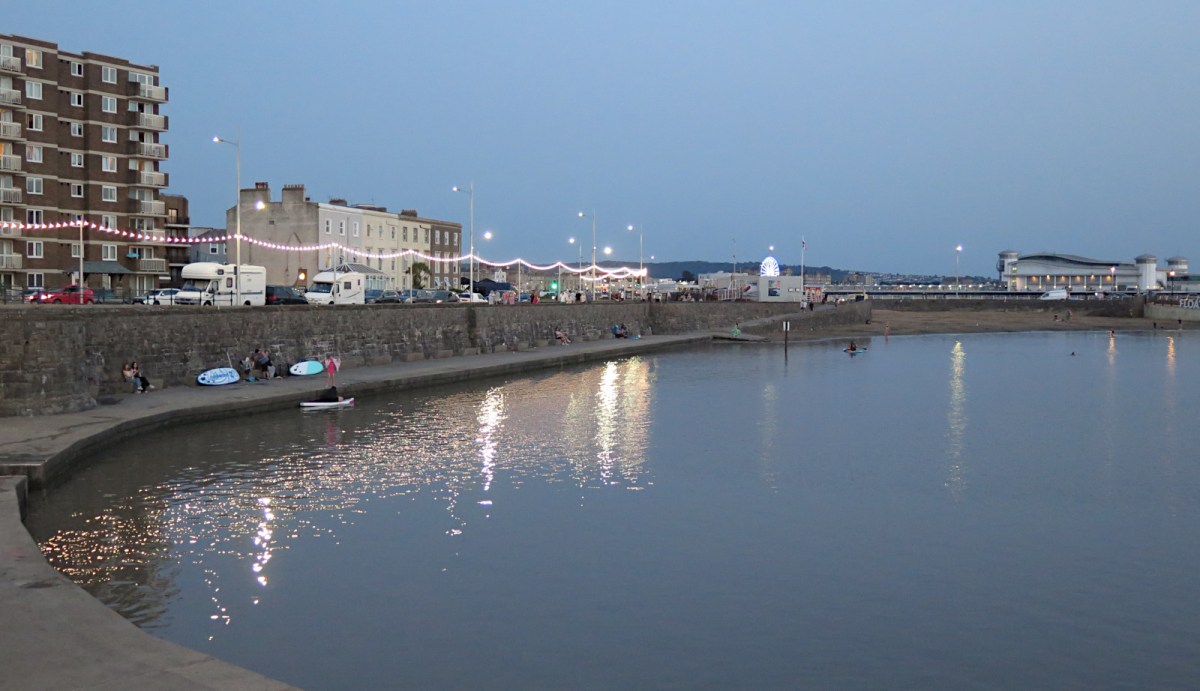
The Marine Lake was built in the 1920s and has just been dredged and refurbished. It’s free to use, and within the lake the tide never goes out, but on every high tide some of the water is replaced to keep it clean.

< Previous | Index | Next >

Image 135 – What’s in an image? Sometimes quite a lot, more than meets the eye. I’m posting an image every day or so.

Click to enlarge

This is one of the jewels of Weston-super-Mare – The Marine Lake. One feature of the coastline here is that it has one of the highest tidal ranges in the world (14.5 m), second only to the Bay of Fundy in Canada, I believe. The beach is very gently shelving as well, so at low tide the sea retreats between two and a half and 3 kilometres!

The Marine Lake was built in the 1920s and has just been dredged and refurbished. It’s free to use, and within the lake the tide never goes out, but on every high tide some of the water is replaced to keep it clean. It’s also large enough for a lot of people to use it at the same time, and it includes a large, sandy beach above the waterline. It’s also right in the heart of busy part of town, with plenty of cafes and restaurants, shops, the big wheel, the pier and much more just a stroll away.

My photo was taken late in the evening after sunset in September so there are few people using the Marine Lake. But believe me, in the middle of the afternoon on a sunny day in July it would be quite crowded. There’s a very long and wide sandy beach stretching north and south of Weston pier, and many people use that for sunbathing or making sandcastles regardless of the state of the tide.

The Marine lake is a marvellous feature. Without it, Weston would not seem like Weston at all!

See also:

< Previous | Index | Next >

Useful? Interesting?

If you enjoyed this or found it useful, please like, comment, and share below. My material is free to reuse (see conditions), but a coffee is always welcome!

Meeting old friends

We all make new friends right through our lives, don’t we? And that’s good. But our old friends, even if we hardly keep in touch, always have a special place in our hearts and minds.

< Previous | Index | Next >

Image 134 – What’s in an image? Sometimes quite a lot, more than meets the eye. I’m posting an image every day or so.

Donna and I are on the right in this selfie, our friends Tony and Faith are there on the left. Donna and I have been married nearly 27 years now and Tony was my best man, but he and I go back a lot further than that.

I moved to Yatton way back in 1975 with my first wife, Judy. Yatton is a large village between Bristol and Weston-super-Mare, and two of the first local people we got to know were Tony and Faith. They became great friends and we were deeply involved in exciting times of rapid and informal church growth in and around the village. Two other local friends, Paul and Jenny, were part of that too and the six of us became close. Later, things moved on and we drifted apart a bit, but we began meeting very frequently again when Judy became ill with cancer. She died at the and of 1995.

We all make new friends right through our lives, don’t we? And that’s good. But our old friends, even if we hardly keep in touch, always have a special place in our hearts and minds. Shared experiences are never forgotten and can always be re-lived in our minds. The gratitude and joy are permanent, the bond remains, those things don’t depend on seeing a person recently or regularly.

I have precious friends all over the globe. I’m really bad at keeping in touch, but I’ll name a few places – Cirencester, Florida, Germany, New Zealand, Nottingham, Stamford, St Neots, Sweden, Texas, and many other places in the UK, of course. And I have other good friends I have yet to meet! Electronic forms of conversation make that entirely possible.

See also:

< Previous | Index | Next >

Useful? Interesting?

If you enjoyed this or found it useful, please like, comment, and share below. My material is free to reuse (see conditions), but a coffee is always welcome!

Wall art in Weston

Some of the other street art includes a giant chicken peering at shoppers around a street corner, and a turtle flying over what looks like a hilly landscape; or is it swimming over an underwater coral reef?

< Previous | Index | Next >

Image 133 – What’s in an image? Sometimes quite a lot, more than meets the eye. I’m posting an image every day or so.

Street art

This painted building is in Weston-super-Mare, near the sea front. There’s a lot of great street art in Weston, some of the best I’ve seen anywhere, and this is just one example of many.

I love the way the sealions’ eyes are also the centres of flowers, and how the blue background is clearly sky in the left of the picture but then becomes water with the goldfish swimming through it on the right, yet the horizon from the left continues on the right. There are so many subtle clues and miscues, it’s a delightful, yet confusing image. What kind of mind can come up with art like this? Although the picture’s on the wall, it’s also off the wall so to speak! And is that a banana I see there? Or is it a yellow eel?

Some of the other street art includes a giant chicken peering at shoppers around a street corner, and a turtle flying over what looks like a hilly landscape; or is it swimming over an underwater coral reef? These are the sorts of paintings that stop you in your tracks because of the enigmas and optical illusions they create.

See also:

< Previous | Index | Next >

Useful? Interesting?

If you enjoyed this or found it useful, please like, comment, and share below. My material is free to reuse (see conditions), but a coffee is always welcome!

Knightstone Causeway

The largest boat you can see is the Steep Holm Ferry. It makes return trips out to Steep Holm island with a stay of ten to twelve hours, and basically it’s the only way to get there unless you have your own seaworthy vessel.

< Previous | Index | Next >

Image 132 – What’s in an image? Sometimes quite a lot, more than meets the eye. I’m posting an image every day or so.

Enlarge
(NASA)

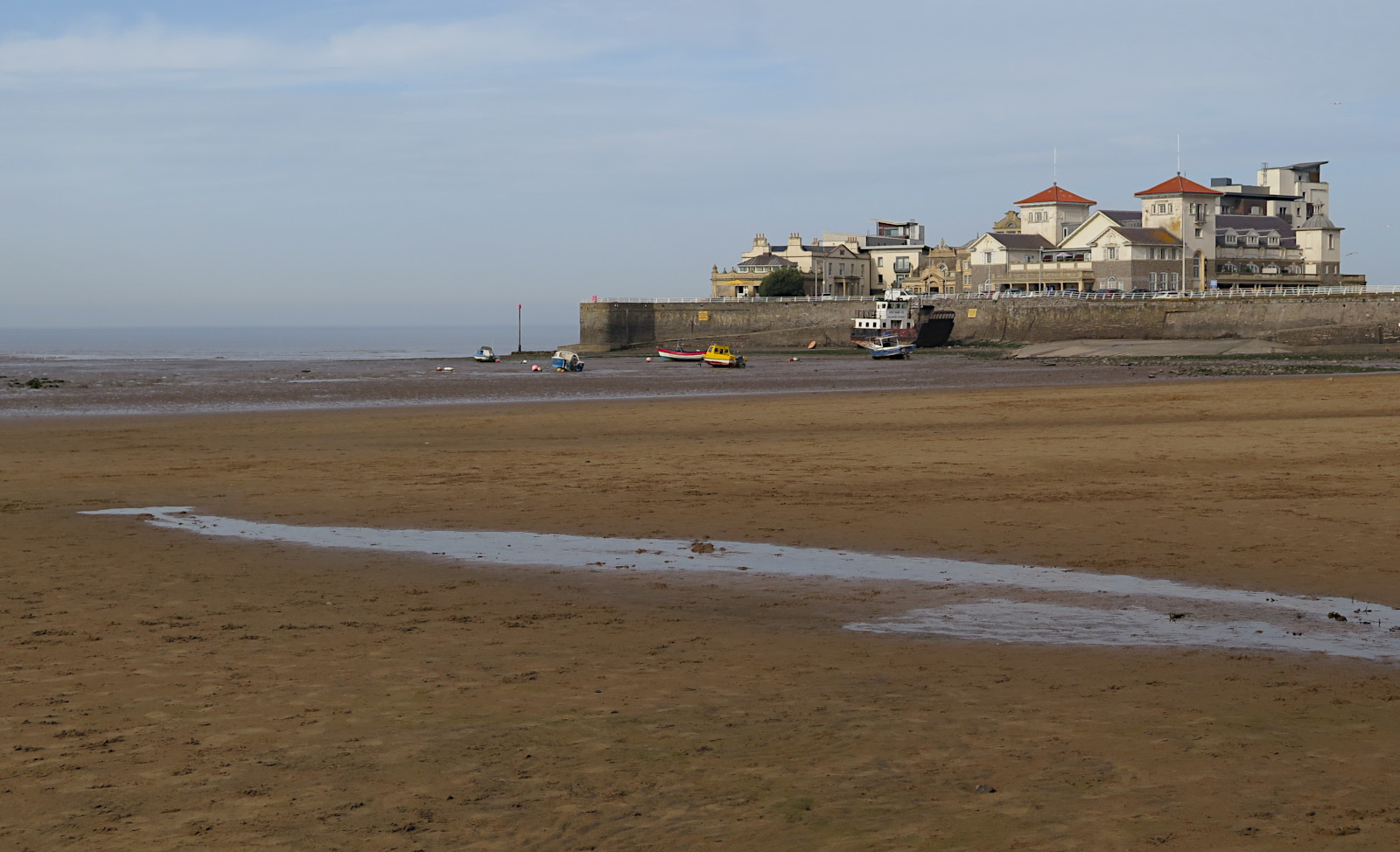
The beach in the photo is at Weston-super-Mare. Beyond it is Knightstone Harbour with boats high and dry because the tide is partly out. And beyond the harbour and the causeway you can see the buildings including Dr Fox’s Tearoom, Knightstone baths, Stones Cafe, and Knightstone Opera House. When we’re in Weston, Donna and I sometimes enjoy breakfast at Stones.

Originally it must have been a sandbank jutting out towards the Severn Estuary, perhaps with a backbone of exposed rock. Today it’s been built up and would barely be recognisable to the local people of two hundred years ago.

The largest boat you can see is the Steep Holm Ferry. It makes return trips out to Steep Holm island with a stay of ten to twelve hours, and basically it’s the only way to get there unless you have your own seaworthy vessel. The water here can’t make up its mind whether it’s the River Severn estuary or the North Somerset coast. It’s sixteen or so kilometres wide, in terms of weather and water conditions it can be treacherous.

See also:

< Previous | Index | Next >

Useful? Interesting?

If you enjoyed this or found it useful, please like, comment, and share below. My material is free to reuse (see conditions), but a coffee is always welcome!

Comet G3 (Atlas)

[This] image featured in NASA’s Astronomy Picture of the Day for 25th January 2025. Visit the website and have a browse around, there are so many fine images here!

< Previous | Index | Next >

Image 131 – What’s in an image? Sometimes quite a lot, more than meets the eye. I’m posting an image every day or so.

Enlarge
(NASA)

This might be the most striking photo you’ll ever see of a comet. OK, I dare say there will be better images out there, but this one is still pretty amazing.

The image featured in NASA’s Astronomy Picture of the Day for 25th January 2025. Visit the website and have a browse around, there are so many fine images here!

If you look closely (click the thumbnail and expand it as far as it will go) you’ll see plenty of stars in the image, too. Of course, they are way, way in the background far beyond the Solar System whereas the comet is right here inside the system along with the Sun, Planets, Moon, me and you.

See also:

< Previous | Index | Next >

Useful? Interesting?

If you enjoyed this or found it useful, please like, comment, and share below. My material is free to reuse (see conditions), but a coffee is always welcome!

Lichens

Lichens are the main food source for a variety of animal species from small mites and insects to the remarkably large reindeer. They tend to be protein-poor but may be rich in carbohydrates.

< Previous | Index | Next >

Image 130 – What’s in an image? Sometimes quite a lot, more than meets the eye. I’m posting an image every day or so.

Enlarge

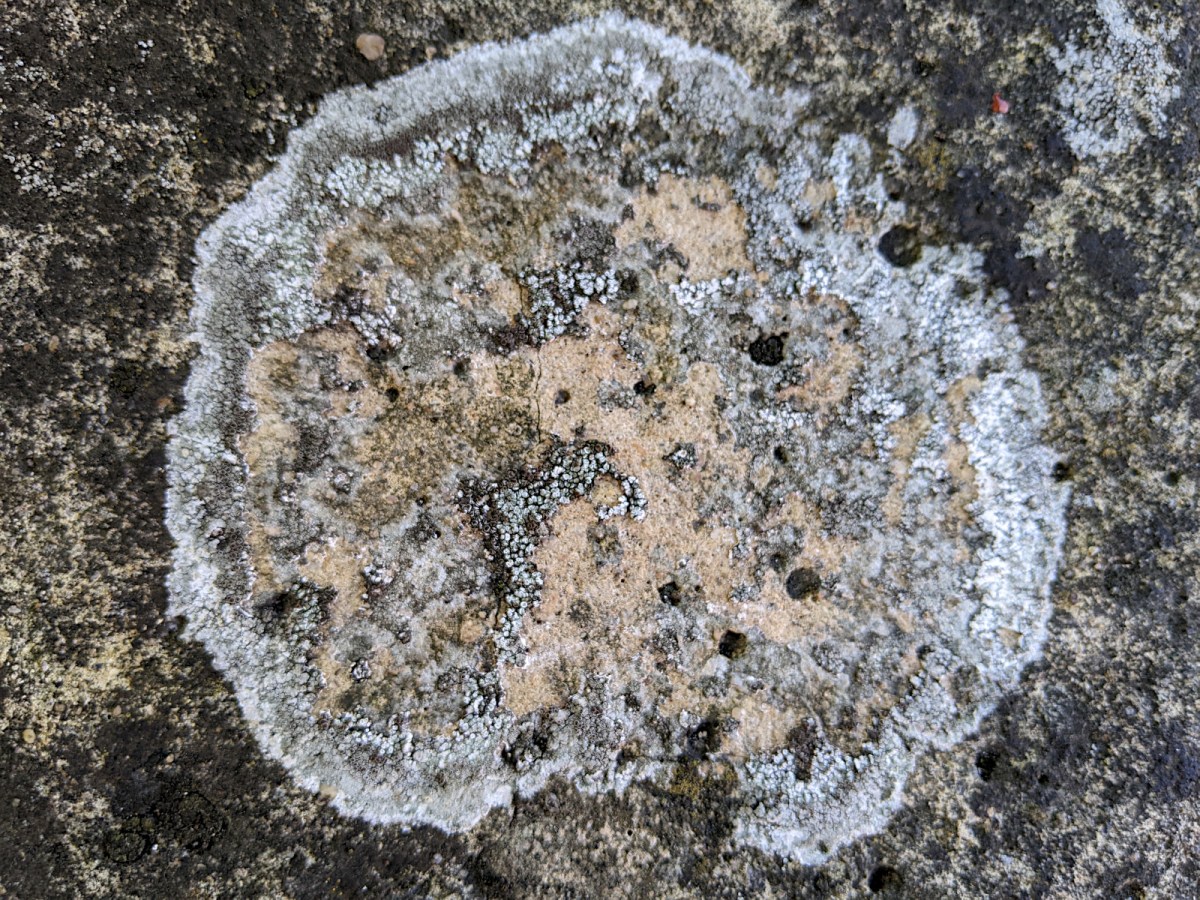
Lichens are amazing. They’re always small, they grow in slowly expanding colonies, and they consist of cooperating fungi and algae. A number of different species of fungi can grow like this, combined with various yeasts and bacteria. The assemblage often looks like a simple plant, often almost flat, but sometimes filamentous, branching or in the form of flakes. Circular forms like the one in the image are common. The Wikipedia article listed below has photos of a range of different forms.

The grey colony in the photo has grown out from the centre ‘cleaning’ other life forms from the surface of the underlying limestone and spreading out further around the perimeter. The black lichen was destroyed as the grey lichen crossed over it, but new colonies of the black lichen have established on the clean rock left behind. The situation is dynamic, but very slow. Return for another photo a month later and little will have changed.

Lichens are the main food source for a variety of animal species from small mites and insects to the remarkably large reindeer. They tend to be protein-poor but may be rich in carbohydrates.

See also:

< Previous | Index | Next >

Useful? Interesting?

If you enjoyed this or found it useful, please like, comment, and share below. My material is free to reuse (see conditions), but a coffee is always welcome!

Really?

Professor J P Hudson offered a prize to anyone who could submit a paper for publication without … a spelling mistake, or a punctuation error, or an unclear phrase. And I don’t think he ever had to pay out the prize.

< Previous | Index | Next >

Image 129 – What’s in an image? Sometimes quite a lot, more than meets the eye. I’m posting an image every day or so.

Enlarge

I was amused when I saw this in a local shop window a couple of years ago. Sometimes we’re not quite as good with words as we should be, and right at the start I admit that I’m just as bad as anyone else. But this one did give me a chuckle. It just begs the question,

‘So.. er… What would unconscious eating be, exactly?’

Just my silly sense of fun!

I think what happens, ever so easily, is that I word something in a way that’s not clear and then cannot, myself, spot the issue. It needs a fresh eye, a fresh mind to spot mistakes like this.

When I worked at Long Ashton Research Station in the 1970s, the Director, Professor J P Hudson, offered a prize to anyone who could submit a paper for publication without him spotting a spelling mistake, or a punctuation error, or an unclear phrase. And I don’t think he ever had to pay out the prize (£5 I think, quite a lot in those days).

Sometimes we need to see what we have written from a new perspective in order to fix or avoid simple mistakes. And sometimes we need the same fresh look at our habits, likes and dislikes, relationships with others, understanding of science, what we believe about the world, the people we meet, and not least, what we believe to be true about spiritual things.

It’s far too easy to go along familiar pathways in our lives without seeing the need to question what we think and say and do.

When: 25th September 2023
Where: Cirencester

See also:

< Previous | Index | Next >

Useful? Interesting?

If you enjoyed this or found it useful, please like, comment, and share below. My material is free to reuse (see conditions), but a coffee is always welcome!