If you enjoyed this or found it useful, please like, comment, and share below. (If you don’t see those links, click the article’s title above the main photo and they will appear.) Send a link to friends who might enjoy the article or benefit from it – Thanks! My material is free to reuse (see conditions), but a coffee is always welcome and encourages me to write more often!
Yara has a lovely way with words, especially when you consider that she had to learn English first. Or maybe she expresses herself in a Ukrainian way that English speakers don’t expect.
Here’s more from Yara in Kyiv and her weekly Sunday messages. She stays strong and determined, reporting on events, Ukrainian art and literature, sharing photos and sometimes a video.
I wanted to mention Yara from Ukraine again (aka StrategyWoman) because I’d like you, my readers, to better understand what she and others in Ukraine have to deal with every day. Normal for Ukrainians is not the same as normal in the West – far from it. Yara lives in Kyiv, hears the drones and missiles coming in every night, and the air raid sirens. Her life is not like yours (unless, perhaps, you also live in Ukraine or another country under attack).
Here in the UK, and in western nations more generally, most of us have experienced nothing like this since the Second World War, and you would need to be very old to recall those times.
Yara does not ask us to rescue her, that would be to misunderstand her completely. She wants to live in her own country, not escape to somewhere more peaceful (but nor would she blame those who have left Ukraine). What she does hope for is that we in the west won’t forget about Ukraine.
To guard against our forgetting, she posts weekly messages on Sundays. These provide news, but they are always illustrated by beautiful artworks and photos, and she usually explains something from her daily life and from those around her.
Yara has a lovely way with words, especially when you consider that she had to learn English first. Or maybe she expresses herself in a Ukrainian way that English speakers don’t expect. However that may be, her words are fresh in innovative and interesting turns of phrase. For example:
Every support adds a feather to my wings. Yeah, I use these feathers to write you letters.
And she included the picture of feathers in a nest along with the words above.
If you’re willing to read her Sunday letters you are unlikely to be disappointed. For starters, read her 27th October letter for yourself. Even better, sign up to receive her letters regularly, the links are on Yara’s page. Sign up for free, but if you like what you find, do consider supporting her as well.
What’s in an image? Sometimes quite a lot, more than meets the eye.
I’m posting an image every two days (or as often as I can). A photo, an image from the internet, a diagram or a map. Whatever takes my fancy.
Christmas lights
This is Cirencester Market Place on 5th January 2021, still in its decorated-for-Christmas state. In the 17th century this space was full of buildings and narrow streets. Roughly where the red car stands, imagine an old inn with a street either side, and beyond it two rows of buildings, Butter Row and Butcher’s Row, so three streets at that point. Many old buildings were destroyed in town improvement schemes over the years. If they still existed today they would attract preservation orders.
If you could visit the Market Place in 1500 you would struggle to recognise anything other than the Parish Church. All the fine, Cotswold stone buildings were constructed more recently than that, the shops and dwellings at that time would have been timber framed with overhanging upstairs floors. The entire look and feel of the place would be different. At that time the Abbey was thriving with the Abbey Church behind the existing Parish Church. The entirety of what is now the Abbey Grounds would have been busy with monks on errands and at work in the gardens, at the fishing lake (still there today), in the mill and bakery and so much more. It was almost a walled town within a town.
In the year 1000, shortly before the Norman invasion, some of Saxon Cirencester may still have been outside the old Roman walls, but there was a Saxon church in the area of the Abbey Grounds and it’s likely that other parts of the Roman City would have been cleared and put to use.
And in the year 500 the Romans had left only 100 years earlier. The city would have been more or less intact, but derelict. Initially, Saxon settlers lived outside the old city walls. Some of those walls would still have been standing, at least in places, and the larger buildings inside the city would have been identifiable – the Basilica, the Forum, and probably Baths and a Theatre (now lost). The Saxons built timber framed houses and farms initially outside the walls. Piles of rubble and stone, no doubt ridden with extensive and impenetrable growths of brambles and trees, would have seemed far less useful than the arable land outside the old walls.
Go back another five hundred years and the area where the town now stands consisted of a flood plain with low gravel banks and the River Churn meandering through. There would have been yellow iris, water mint, alder and willow in wetter areas with other trees on higher ground. The waterways would have been easily forded and the local Dobunni people likely fished in the area and farmed on higher ground nearby. The Roman army constructed the Fosse Way from Exeter to Lincoln and built a timber fort in the eastern part of modern Cirencester. It’s likely that a trading settlement grew up near the fort and the town was officially recognised in 75 CE. By the later Roman period it had become the second largest city in Britain (London was the largest).
All of this took place in and around the area we know today as Cirencester Market Place.
Cirencester
For convenience, here’s a list of all the Cirencester area images:
If you enjoyed this or found it useful, please like, comment, and share below. (If you don’t see those links, click the article’s title above the main photo and they will appear.) Send a link to friends who might enjoy the article or benefit from it – Thanks! My material is free to reuse (see conditions), but a coffee is always welcome and encourages me to write more often!
The stonework to turn doorways into windows suggests a change of use at some time after the building was first erected
This dilapidated, old building, of lovely Cotswold limestone (including the roof) stands inside Cirencester Park at the end of Barton Lane. It’s part of The Barton Farm, along with the ancient nearby dovecote and magnificent, old barn.
But what was its original purpose? If it could speak it would no doubt have an interesting tale to tell. What might it say?
A row of cottages
I was row of cottages, full of the sounds of children playing in the sunshine, chopping and stirring sounds from a kitchen table indoors, smoke rising into the air from my chimneys. How many families lived in me? How many were born here, lived and worked here, died here?
Stables
I was a row of stables, my partly built up doorways were once open and inside each one was a stall for a horse. Inside I would have smelled of horses, sweat, droppings, and in a room at the back I would have had the aroma of well cared-for leather – saddles, harness, heavy collars for pulling.
Storage shed
I was a place where valuable implements were stored and cared for. Oiled steel hoes, shovels, spades and rakes with well-worn wooden handles. An old plough, a harrow, scythes. Or perhaps I was used to store fruit from the orchard, and sacks of seed for sowing crops in winter or spring.
A base for farm workers
I was a bothy where the farm workers would gather to eat bread and cheese and perhaps a mug of cider. I’d be used for breakfast, a mid morning break, or a mug of hot tea on a cold afternoon, a shelter from heavy rain. Perhaps there was banter, silly tasks given to the youngest worker, ‘Go and fetch me the glass hammer from the big house, ask the Master for it – politely like’.
There are some clues
The stonework to turn doorways into windows suggests a change of use at some time after the building was first erected. There are two brick chimneys, so clearly there were regular fires. Maybe the far end was a dwelling while the right end was a workshop, or a smithy, or a place for basket-making, or laundry.
If you have other thoughts on what this place might once have been, or you live locally and know for sure, why not leave a comment?
In September 2002 I wrote one of my earliest blog posts. I mentioned scanning my Dad’s old photos and meeting with other Jesus followers in informal ways.
I thought it would be fun to take a look back at older posts from Journeys of Heart and Mind. So here we go with a blast from the past. I started blogging on 5th February 2002 so it’s time to do some historical trawling! I’ll probably post another of these every now and then.
Five years ago
Here’s my Christmas message from 2017, it was one of the most popular Christmas posts I’ve made. Everyone liked the photo, many of you may remember it.
In December 2012 I was impressed by a TED video I came across. In the video, Ronnie Edry explained how he had inadvertently started a viral peace movement! It’s an amazing tale and very heart-warming.
In September 2002 I wrote one of my earliest blog posts. I mentioned scanning my Dad’s old photos and meeting with other Jesus followers in informal ways: I’m still doing those two things twenty years later!
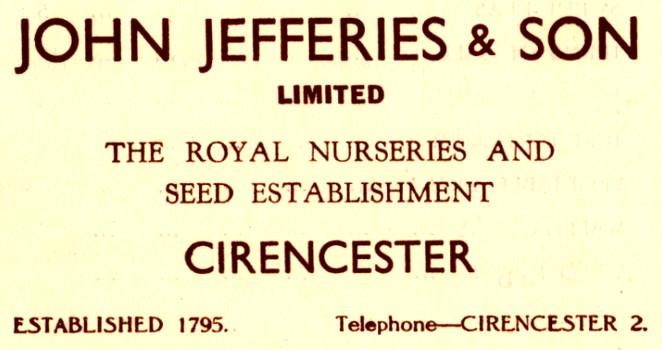
This was the family business, founded in 1795. It prospered for many years, growing and selling nursery stock to other businesses, the government, and to the general public. It ceased trading in 1984 and the garden centre business was sold to Country Gardens PLC, although the company was not officially dissolved until 1994.
The centre of Cirencester has buildings of a variety of ages, from the Roman City Wall (a small part of which is visible in the Abbey Park) to Victorian and more recent constructions. Walking in the town with my camera today, I took some shots of a 19th century development.
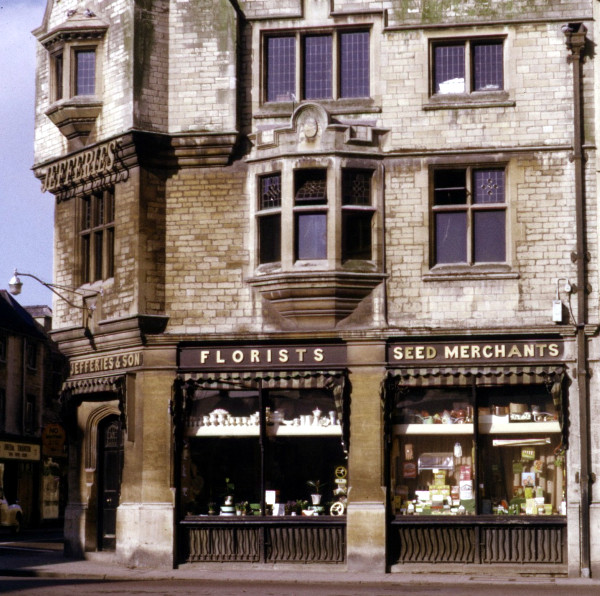
These are the upper floors of a three-storey terrace, a planned development that replaced older properties. The section at the right hand end was used as a florist’s shop for many decades (now Vodafone). I remember it as a child because my father was one of four brothers who owned and ran the shop as part of a larger business with several plant nurseries in the country areas around the town.
The shop had a wonderful cellar, always full of mysterious packages of garden chemicals and other shop stock, and before Christmas there were sometimes hyacinth bulbs being forced for early flowering. There was a marvellous fusty, moist, florist’s aroma in the cellar, but the most exciting thing was the knowledge that the cellar was bigger than the shop floor above. Castle Street was widened when the new development was built, but the cellars of the old buildings were retained. There are stone pillars in the cellar that support the heavy masonry above.
Here’s another view of the same shop from a different angle, the photo was taken by my father in the 1960s. I love the fact that this image includes the shop window displays as these always fascinated me as a young child. I also remember that my grandfather’s office window was above the main door on the corner, and the landscape design office was on the top floor with the small bay window.
And finally, for comparison, here’s another view of the same shop today.







 Journeys of Heart and Mind