Breakfast

Seeds are a good source of protein, healthy fats, fibre, vitamins, and minerals, helping to lower the risks of heart disease, stroke and cancer.

Today I’ll tell you about my breakfast – what I eat, when, and why. If you want to know more, read on…

What’s in it?

The bowl above was my breakfast today and it’s quite typical. Here’s what it contains:

  • First thing into the bowl is always a helping of my own oat-based breakfast mix. I’ll give you the recipe later in case you’d like to try it.
  • Next I add plenty of milk. Oats absorb water and swell so it’s good to provide enough liquid to support that. Usually I use oat milk, but sometimes semi-skimmed dairy milk or a mix of the two.
  • Fruit next. This time I chopped a small banana and added some grapes. Other favourites include blueberries, pear, and segments of satsuma.
  • The final ingredient is a helping of kefir over the fruit (similar to a thin yogurt).
Why those ingredients?

My base mix contains oats, dried fruit, seeds, and nuts. Oats help to control cholesterol, help with blood sugar levels, and support gut health. Dried fruit is a good source of fiber, vitamins, minerals, and antioxidants and may reduce the risk of heart disease and stroke. Seeds are a good source of protein, healthy fats, fibre, vitamins, and minerals, helping to lower the risks of heart disease, stroke and cancer. Nuts have similar benefits to seeds.

Milk is good, especially dairy milk, but oat milk is probably better for the planet. And kefir contains a range of microorganisms that are good for gut health.

Timing

I try to eat breakfast no earlier than 10:30 every morning, often later. I restrict my eating time each day, fasting from 20:30 in the evening until breakfast, so fasting for twelve hours or longer. This is called intermittent fasting, and it gives the gut microbes the time they need to clean up the gut before facing the next day’s meals. There are a number of benefits, perhaps including increased longevity.

Recipe for my base breakfast mix
  • 380 g of fruit and nut mix (I use Grapetree Luxury Fruit and Nut Mix*)
  • 60 g mixed seeds
  • 90 g granola (I use Bio & Me Super Seedy & Nutty*)
  • 800 g rolled oats (Ideally use organic oats as they are free of glyphosate residues)

This makes enough for a large container and lasts me for some time.

*It doesn’t matter which companies you buy from, of course; just try to avoid anything ultra-processed and with plenty of different healthy ingredients.

Final thoughts

This is just the pattern I normally follow for breakfast, but it’s important to be flexible about both what I eat and when. If it’s convenient to eat earlier I’m relaxed about breaking my intermittent fasting. If going on a journey, I might eat at 08:00 instead of 10:30. Sometimes Donna I and might have breakfast in town and I’ll choose a full English or whatever I want. And that’s OK, it’s a normal pattern, not an unbreakable commitment.

See also:

Useful? Interesting?

If you enjoyed this or found it useful, please like, comment, and share below. My material is free to reuse (see conditions), but a coffee is always welcome!

Image of the day – 17

When you eat makes a huge difference to health, wellbeing, and even the length of your life.

< Previous | Index | Next >

What’s in an image? Sometimes quite a lot, more than meets the eye.

I’m posting an image every day (or as often as I can). A photo, an image from the internet, a diagram or a map. Whatever takes my fancy.

Fish and chips

Food! You can’t live without it, it provides the energy for all your conscious activities and also the energy to keep your body working – the brain, the liver, lungs, heart, kidneys, even the digestive tract that digests your food – all the organs need energy to do their various essential jobs that you rarely think about.

But also, too much food is bad for you, the wrong kind of food is bad for you, and when you eat it makes a huge difference to health, wellbeing, and even the length of your life.

There’s plenty of good advice out there, but many of us fail to follow it. If you haven’t thought about this very much, right now is a good time to start. Where to look? The UK’s NHS provides some good ideas. So too does ZOE. Maybe watch a ZOE video, pick one that seems interesting to you.

Food – Enjoy it, but rule it. Don’t let it rule you!

PS – Think about others too. If you can afford it, donate some items to your local foodbank (most supermarkets have donation points). And if you are unable to afford what you need, get along to a local foodbank and ask for help. The Trussell Trust is one of the big organisations, search for a local branch. Or search Google for other options.

Themed image collections

The links below will take you to the first post in each collection

Cirencester, Favourites, Irish holiday 2024, Roman villa

< Previous | Index | Next >

Useful? Interesting?

If you enjoyed this or found it useful, please like, comment, and share below. My material is free to reuse (see conditions), but a coffee is always welcome!

Eat together

We enjoy the flavours and the aromas

Part 5 of a series – Eat together

< Share resources | Index | Spiritual melody >

Most churches in western society have some form of communion service, based on the Bible’s accounts of the final meal that Jesus ate with his disciples. This usually takes the form of a well defined ritual involving bread and wine or fruit juice. But that is not the way Jesus and his followers would have eaten.

EatingTogether2
Eating together (image from Schnucks website)

That final meal was a Jewish Passover and has special significance, but Jesus typically ate with friends in a home, in fields, or on a journey.

Reading about church life in the book of Acts, it’s clear that the norm for the early church was that when they met (usually in someone’s home) a normal meal was part of the process. OpenBible has a list of references about eating together. Bear in mind that ‘breaking bread together’ was a normal way of saying ‘eating together’. The people would have remembered Jesus as they ate bread and drank wine as part of normal life.

Victor Choudhrie’s 5th step for transforming the church is quoted below:

Dispense with wafer-and-sip Holy Communion and promote breaking of bread with simple Agape meals (love feasts) from house to house, that believers take with glad hearts, ‘and the Lord added to His numbers daily’. The Lord served roast lamb, bitter herbs, bread and wine ‘in a house’ for the Last Supper. Father God had lunch with Abraham under a tree and discussed Sarah’s pregnancy, Sodom’s ruin and Lot’s rescue plan. Acts 2:46-47; 1 Cor.11:20-23; Gen Chap 18

So – why does this matter?

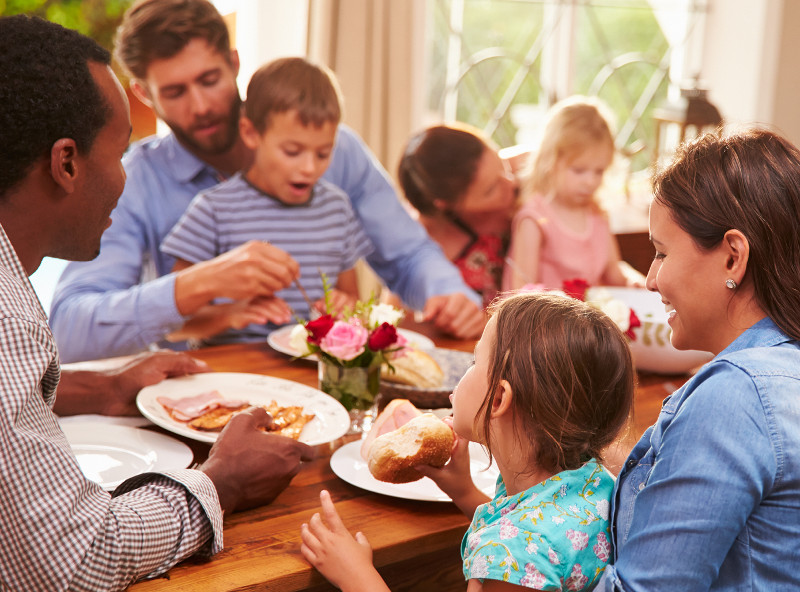
When we eat a meal together everyone contributes to the conversation. We serve one another (‘Would you pass the potato please? Thanks.’) We smile and laugh, we become informal, we enjoy the flavours and the aromas. It’s a fun occasion and everybody, even the youngest, plays an active part. This is a time of bonding, especially when we regularly eat with the same group of people.

If your church has Small Groups, consider eating a meal together when you meet. Simple is good, bring and share, visit everyone’s home in turn, don’t make this into a complex or arduous task for anyone. If there are no small groups just get together regularly as friends. Let the Holy Spirit lead you in this as in everything. Be flexible, don’t make rules, keep it really simple and easy. Meet as often as you can, invite friends who are not yet following Jesus, invite people who have nowhere to go or are lonely or short of money to buy food. Be the good news in the neighbourhood.

Questions:

  • What is preventing you from sharing a meal with others?
  • Who are you going to invite to join you?
  • Church is a family; will eating together make you more or less like a family?

See also:

< Share resources | Index | Spiritual melody >

Lechlade

Breakfast is served a couple of steps away across a stone-paved courtyard.

DailyToast

Lechlade is a delightful Cotswold town on the River Thames; in fact, it sits close to the highest navigable point and the Thames and Severn Canal joins the Thames at Inglesham Lock, just slightly further upstream.

ChJe20160728au-mod01

We stayed in a tiny apartment called ‘The Hayloft‘. Downstairs contains a double bed and an easy chair, upstairs has a loo, hand basin and a shower. Simple and very, very tiny, but really all you need if you’re planning to be out all day as we were. Breakfast is included in the price (we had two nights) and is served in ‘Vera’s Kitchen‘ a couple of steps away across a stone-paved courtyard. The food was lovely; I chose their ‘Cotswold Full English’ which was delicious and kept me going all day. They offer plenty of lighter alternatives.

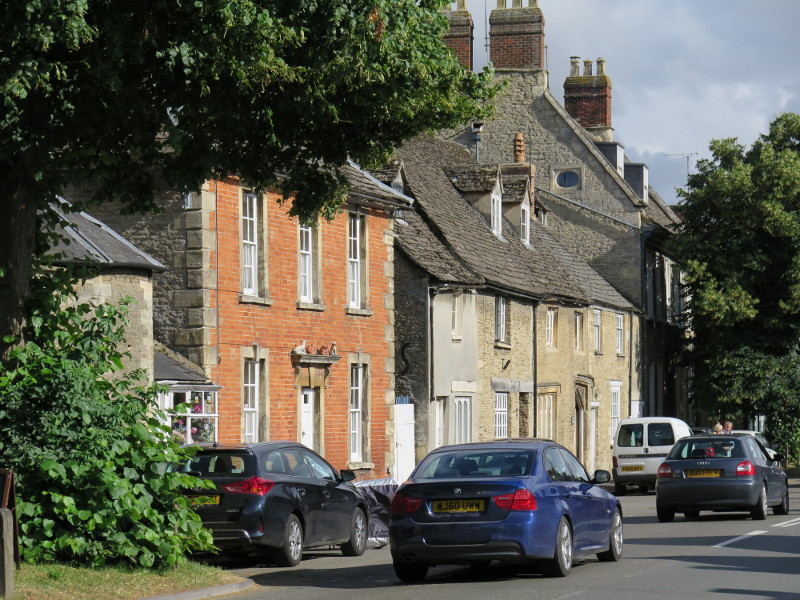
The photo above is a typical scene, the living green of trees and gardens contrasting with the honey and brick of the buildings and also with the modern traffic in the old streets. We enjoyed our stay in this hospitable little corner of the Cotswolds. There are pleasant walks, pub lawns running down to the river, and some nice places to eat.