Installing our heatpump

It all took longer than we expected and some changes had to be made to the design as events unfolded, but by the beginning of February the new system was in and working.

< Previous | Index | Next >

Image of the day – 144

What’s in an image? Sometimes quite a lot, more than meets the eye. I’m posting an image every day or so.

Click to enlarge

At the end of January our heat pump was installed, and before long we had warm radiators and underfloor heating, something we’d missed since our gas boiler developed a fault in October. At the time our first thought was to get the boiler repaired, the part would cost £500 and the labour would be a similar amount and at the end of the process we’d still have a seven-year-old boiler and we’d still be burning gas. We wanted to avoid using gas if possible because we want to reduce the amount of carbon-dioxide we produce.

There is a substantial government grant to make heat pumps a more attractive idea, so we thought it made sense to take advantage of it. After discussing it with our energy supplier, Octopus Energy, one of their surveyors visited, made a plan of the rooms, specified the required changes to our radiators, planned for pipe runs and siting of equipment, and we were ready to roll.

It all took longer than we expected and some changes had to be made to the design as events unfolded, but by the beginning of February the new system was in and working.

A different kind of heat

Our old heating system used a gas boiler, it could produce a lot of heat quickly on demand, so we had a series of thermostats to turn radiators and heated floors on and off as required to keep rooms at the right temperature. At night and during the middle of the day a time clock turned the system off entirely to save money, then came back on half an hour before we arrived home after work and half an hour before we woke up in the morning.

The new system is on all the time. A room thermostat increases or reduces the flow rate to keep the house at whatever temperature we set, and starting from cold it can take several days to achieve the set temperature. We’re beginning to like this way of working; the house stays at the temperature we prefer, around 19 C, and it only rises higher if the outside temperature is high. In that case the heat pump stops heating the house and just provides hot water.

Energy bills

It’s still early days to assess how our heating bill will change. The heat pump is an electrical system so our electricity bill will rise, but our gas bill will now be zero. The heat pump cools down outside air by extracting energy from it, and pushes that energy into our radiators and hot water tank. One kilowatt of electricity can push about four kilowatts of heat into our home, and as we have solar panels on our roof and a storage battery, some of that energy can come from the roof even at night. There is no environmental effect, we’re not producing carbon dioxide and the heat we steal from outside leaks back out again over time. The better our house is insulated, the slower it will leak and the less electricity we will need to maintain the temperature difference between the cold outside and the warm inside.

When we buy electrical power from the grid to pump heat (mainly in midwinter), that grid power is more than 50% green as well; so even that is far better than burning gas to keep warm.

Image of the day 144

This is the 144th ‘Image of the day’ I’ve posted. That is what we’d have called a gross when I was a child. Ten eggs in a box was ten, but twelve eggs in a box was a dozen and six was half a dozen. We still use those terms. A baker’s dozen was thirteen, a dozen with one extra for good measure. And a dozen dozen also had a special name – a gross. 12 x 12 = 144. So today there is a gross of ‘Images of the day’ on the Journeys of Heart and Mind website!

I wonder if I’ll ever reach a great gross, ie a dozen gross, or 1728 ‘Images of the day’?

See also:

< Previous | Index | Next >

Useful? Interesting?

If you enjoyed this or found it useful, please like, comment, and share below. My material is free to reuse (see conditions), but a coffee is always welcome!

Asteroid heading our way

There is absolutely no need to panic. If you’ve heard about this and are worried, calm down and read on for the simple facts and where to go for more detail.

Image: Wikimedia

Science and technology – 4

< Previous | Index | Next >

Asteroid track
(Wikimedia)

There is absolutely no need to panic. If you’ve heard about this and are worried, calm down and read on for the simple facts and where to go for more detail.

I imagine almost everyone will have heard about this asteroid by now. News stories have varied from rather scary to suggesting the risk is extremely tiny, so letߴs begin by setting out the most important things to know:

  • The full name of the asteroid is 2024 YR4
  • It will pass Earth in 2028, but will definitely miss
  • It has about a 2% chance of hitting Earth in 2032
  • It therefore has a 98% chance of missing entirely in 2032
  • As we define its orbit better, the chance of a hit is likely to drop to zero
  • If the chance of a hit becomes large, we can probably nudge it to miss

If it does become clear that the asteroid will hit Earth, here are some further important things to know:

  • We already know the ground track along which it would hit
  • It would most likely fall in the Atlantic Ocean
  • If so, it would cause a very large tsunami
  • It might fall in South America or Africa and make a crater 1.5 km wide
  • It would destroy everything over a much larger area outside the crater
  • We would have plenty of time to move people out of the way, either from coastal areas in the event of an ocean hit, or from the impact zone if the asteroid hit land. Clearly, many lives could be saved but it would be very costly.
See also:

Having set out those basic facts as we know them in late February 2025, I’m not going to discuss things in more detail. Instead, I’ll list some good sources for further information. These are very roughly in order of the usefulness and detail provided. Simplest at the top, more detail as you go down the list.

< Previous | Index | Next >

Useful? Interesting?

If you enjoyed this or found it useful, please like, comment, and share below. My material is free to reuse (see conditions), but a coffee is always welcome!

Greenshifting

Plants (secondary) trap some of the energy in sunlight and use it to grow and to store in chemical form. And animals (tertiary) obtain energy by eating plants or other animals.

Image: Wikimedia

Science and technology – 3

< Previous | Index | Next >

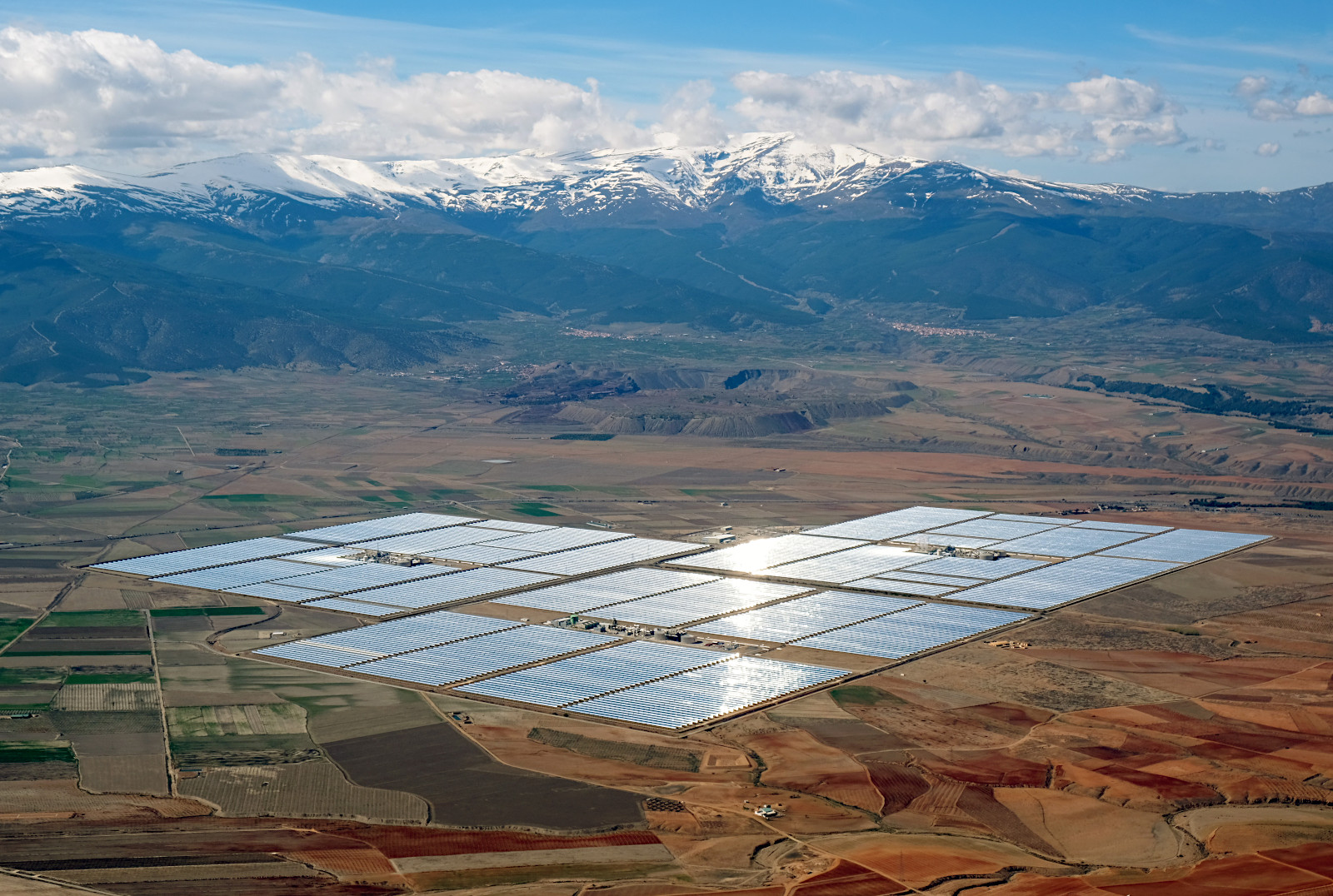
Solar farm
(Wikimedia)

We’ve just had a heat pump system installed in our home and it is so, so different from the old, gas-fired boiler that used to keep us warm in winter. I’ll give you some details about it in another article. But the main reason I’m writing is to explore what it means to be migrating towards clean, green energy; and what it means if we fail. But before we can focus on any of that, we need to understand where our energy comes from and where it goes.

Primary energy sources

We all use energy every day, as a species. And just like all other forms of life, that energy comes almost entirely from rearrangements within atomic nuclei. There are two ways this can happen – nuclear fusion and nuclear fission. Fusion is what happens in the centre of the sun where hydrogen atoms are combining to form helium, releasing a lot of heat in the process. Fission is what happens suddenly in a nuclear bomb or slowly in a nuclear reactor. Heavy atoms fall apart and release energy as they do so. The rule is that heavy elements release energy if they break apart (fission), while light elements release energy if they join together (fusion). Elements in the middle mass range around iron don’t break apart or join together easily and produce little or no energy if forced to do so. Indeed, sometimes these elements might require energy.

The sun’s energy comes from fusion in the core and is eventually released as sunshine. Sunshine heats the Earth’s surface and winds are caused as air masses expand or contract due to temperature changes. Waves, in turn, are caused by wind crossing water surfaces.

Some of the Earth’s inner energy comes from the spontaneous fission of heavy elements in the core and mantle, and some is remnant heat from Earth’s formation 4.5 billion years ago; that core energy is released in the form of volcanoes, earthquakes, and hot springs.

Tidal energy is the final source we need to consider. This is the result of gravitational forces from the Sun and Moon causing bulges in the oceans, the Earth revolves daily beneath these ocean bulges and the water depth varies as the state of the tide changes throughout the day.

It’s also gravitational contraction that gets the centre of a star dense enough and hot enough for fusion to begin in the first place. That’s it for primary energy sources. All of these count as green energy as none of them release carbon dioxide.

We can collect solar or wind energy, for example, with a clear conscience, also geothermal energy, hydroelectric power, hot springs, tidal power, or nuclear. There may be issues with all of these, but none of those issues have anything to do with releasing greenhouse gases.

Plants and animals

Everything else is what I call secondary or tertiary energy. Plants (secondary) trap some of the energy in sunlight and use it to grow and to store in chemical form. And animals (tertiary) obtain energy by eating plants or other animals. These too can be counted as green. The natural world runs on light from the sun, and all the carbon dioxide released is balanced by the light trapping mechanism of plants that uses carbon dioxide from the air and water from the ground and releases oxygen. The carbon is used to create the structural elements of wood and all the living tissues of plants and animals. Most of this is recycled naturally by decay within a few years or decades, and the carbon balance of the Earth doesn’t change. Except sometimes carbon containing materials were trapped long term in geological deposits of coal, oil and natural gas. This sequestration of carbon compensated for the continual, slow warming faced by the planet as the sun increased its output of light and heat over geological time.

Deep time

All stars grow brighter and hotter as they age, a perfectly natural and well understood process that we don’t need to consider here – except to mention that it happens. Rising temperatures cause shifts in a planet’s climate, and if it goes far enough a planet can become very hot, lose its water to space, and become a roasting desert like Venus.

This did not happen to the Earth because the continual, slow removal of carbon from the surface kept carbon dioxide levels low and significantly reduced the greenhouse effect.

Early human technology

Early human technologies did not involve the use of coal, oil or gas. When fire was first discovered and tamed for human use, the only fuels were wood and various kinds of plant and animal oils and fats. Our technology remained green, using only recently captured energy.

But around 4000 years ago, people began to discover surface deposits of coal and oil. The Romans and the Chinese knew of coal and used it on a small scale as a fuel.

We were still remaining green on the whole. The industrial revolution began with water power to mill grains, process wool into cloth, and so on. The first industrial towns were always built in valleys where there were rivers of sufficient size to power the machinery. Up to this time it’s difficult to find much change in atmospheric carbon dioxide levels in, for example, ice cores or ancient timber. When carbon fuel was needed for processes needing extreme heat (eg iron smelting, pottery firing), charcoal was used; this was made by incomplete burning of wood in an oxygen poor environment.

But then came steam power!

Advancing industrial growth

It soon became clear that charcoal was not available in sufficient amounts to be a suitable fuel for burgeoning industry. Instead, coal began to be mined in ever-increasing quantites to feed iron and steel works, power pumps to move water from mines, and more and more to power transport. Railways and shipping consumed ever larger amounts of carbon in the form of coal. Oxygen was consumed and carbon dioxide released – and at that point the human race started on a dangerous path towards climate change. At first the increase in carbon dioxide levels was imperceptible and so was the increase in average temperatures.

And that is where we were 100 years ago.

Oil is not mainly carbon, like coal. It has almost two hydrogen atoms to every carbon in its structure so it’s slightly more green than coal. Hydrogen oxide (aka water) is a less powerful greenhouse gas than carbon dioxide. Gases are even better than oil, methane is best of all as it contains four hydrogens to every carbon.

But to be fully green we must move all our energy production to solar, wind, nuclear, and tidal energy supplies. There are financial incentives to make the move too. To burn coal, oil or gas at a power station you must construct the power plant and transmission lines and then continually buy the raw materials to burn to generate power.

Wind turbines, solar panels and hydro also involve building infrastructure, but the fuels to run them – sunshine and wind – are free. This makes the energy they supply to the power grid much cheaper than energy from non-green technologies.

The economical costs of mining or drilling, as well as the health and environmental costs of emissions from non-green energy sources renders the move to greener energy an absolute no-brainer. And that’s before we start to take into account the serious risks of a warmer climate. These include rising sea-levels; unlivably high temperatures; heavier and unpredictable rain; forest fires; spreading of deserts; and harsher and more frequent cyclones and hurricanes. All of these horrors are already with us and are worsening year on year by larger and larger amounts.

Back-pedalling furiously cannot save us now. But it’s not too late to moderate the damage, eventually stabilise the problems we face, and see a gradual return to what was once normal. But we absolutely must act now, the longer we leave it, the worse it will get.

See also:

< Previous | Index | Next >

Useful? Interesting?

If you enjoyed this or found it useful, please like, comment, and share below. My material is free to reuse (see conditions), but a coffee is always welcome!

Climate change, what can I do?

I was prompted to think about some new ideas

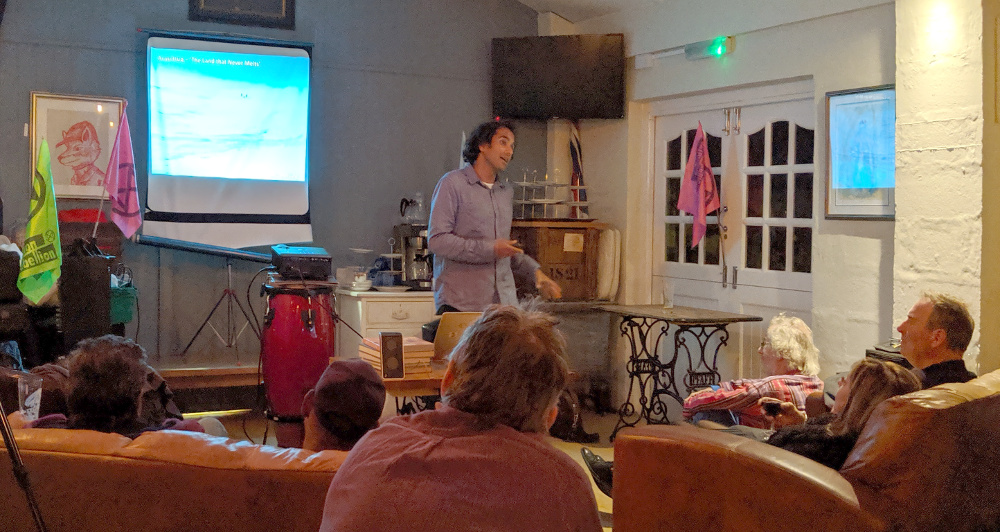
I went to a meeting at the Golden Cross in Cirencester a few days ago. We enjoyed a great presentation from Vijay Shah who spoke about his experiences in Arctic regions where climate change has been particularly severe. He also outlined other aspects of climate change including its causes and actions we might take to limit it and the damage it’s doing. Vijay pointed out that there are individual actions we can take in terms of our diet, modes of transport and so forth, and there are industrial and government actions that can be taken too. In the excellent discussion afterwards some of these individual and local matters were raised from the floor.

It was good to talk with others at the meeting, I was surprised by the wide variety of ages, professions, and opinions represented. And I was prompted to think about some new ideas that the talk sparked in my own thinking as I listened, chatted, and again as I walked home afterwards.

Some are original, others are already being widely discussed, some were mentioned at the meeting, but I present them here in the hope they will encourage others to think creatively about what is possible. Here are some of those ideas:

Streetlights – LED streetlights are becoming common in towns and villages, replacing the less efficient high-pressure sodium lamps just as they in turn replaced the older sodium and mercury lamps installed in the 1960s and ’70s.

But why not go further? Instead of drawing power from underground cables, why not fit lithium-ion batteries in the streetlight posts and top the lamp off with a solar panel and a wind generator? The one-off cost savings of not providing a mains power connection, and the lifelong savings of electrical energy would help offset the additional manufacturing cost. Once installed, the street lighting would be entirely green.

Greening the desert – Some deserts have ready supplies of seawater nearby, parts of the Sahara, the Kalahari, the west coast of South America, and regions of Southern Australia spring to mind. Building wind farms and solar farms in these coastal deserts would allow for green desalination, green pumping of the fresh water far inland, and the literal greening of large areas of desert. Not only could the land be used for crops, it might also be possible to establish areas of forest, thus sequestering significant amounts of carbon. And evapotranspiration would reduce the temperature and increase the humidity of the climate downwind of the greened zones. If a sufficient area could be greened in this way, clouds might form and reflect away some of the incoming solar energy

Solar car parks – Many towns and cities have public parking areas, asphalt ‘deserts’ where cars bake in the summer heat while we are shopping or working. Why not cover these areas with solar farms supported on frameworks above the cars and pedestrians? Most towns could generate as much power this way as would a small solar farm in the countryside. As a bonus, radiant heat transfer would be partially blocked from the covered area, so parked cars would stay cooler on hot days, and warmer on cold nights. And pedestrians would get shelter from rain and snow.

Using electric cars to balance demand – Electric cars have considerable amounts of energy storage and this could be used to help smooth power peaks and troughs. Cars plugged in overnight at home or during the day in town and workplace car parks would absorb wind power when excess is available, and return some of it to the grid at times of peak demand. Combined with dedicated battery storage facilities, this would make a change to fully renewable energy supplies possible.

Generating methane – Elon Musk is considering using green electrical energy to extract carbon dioxide from the air and combine it with hydrogen from water to generate methane and oxygen. Using the methane as a fuel would consume oxygen and produce carbon dioxide and water – a closed system. Originally this idea was intended to allow refuelling of SpaceX’s Starship on the surface of Mars, but he is now looking at the idea of using the same process on Earth to fuel the spacecraft. Extending the idea, methane has potential to be used as a storable fuel for air, sea and land travel. Clearly, as methane is a potent greenhouse gas, it will be essential to burn it in an oxygen-rich manner to make sure none escapes.

Using ocean trenches – Why not place organic materials (including plastic waste) in the subduction zones in deep ocean trenches where the material would be buried as layers of silt are deposited naturally, and in the very long term would be carried down by plate tectonics and processed by heat and pressure into simpler, harmless molecules.

Solar farms in polar regions – This is, perhaps, the oddest of ideas -but aspects of it may have some merit. Incoming radiation from the sun comes from low in the sky during a polar summer. Solar panels would need to be angled close to vertical and would throw very long shadows; they would need to track the sun across the sky, east to west. The shadows would provide some cooling by absorbing incoming solar energy, reducing the melting of ice and snow in the shadows. But what to do with the electrical power? I suggest radiators at the focus of parabolic reflectors pointing vertically upwards, sending the energy back into space. The atmosphere is transparent at visible, radio, and some infra-red wavelengths. Rather than trying to cover large areas, the idea would be to protect specific areas at risk of losing the white, reflective cover of snow and ice. This scheme might be a bit zany, but perhaps it will spark other minds to come up with more practical alternatives.

Solar rooftops – By no means a new idea, but many industrial and commercial buildings do not currently have solar power generation installed. Reduced taxation could encourage more rooftops to supply energy in this way, and it would be generated in towns and cities, right where it is needed. Lobby governments and local authorities to encourage this.

Burying organic matter – Organic waste and/or purpose grown biomass could be air dried and packed into disused coal mines or other available spaces. Sequestered in this way, the carbon content would be removed from the atmosphere, reducing the levels of carbon dioxide that drive global heating.

Over to you! – Maybe you can come up with some green energy ideas of your own; this planet needs all the good ideas we can provide. Anything that reduces our level of consumption or enables us to live in harmony with the natural world should be publicised and adopted as widely as possible. If you have a good idea, leave a comment and tell us about it. And make sure to share it as widely as you can.