This article is an extract from my short book, Jesus, Disciple, Mission, Church (JDMC). The bite-sized piece below is roughly two percent of the book. It’s the very first section so is a bit different from the rest: there are no questions for readers to ponder, it sets the scene and explains how JDMC might be used.
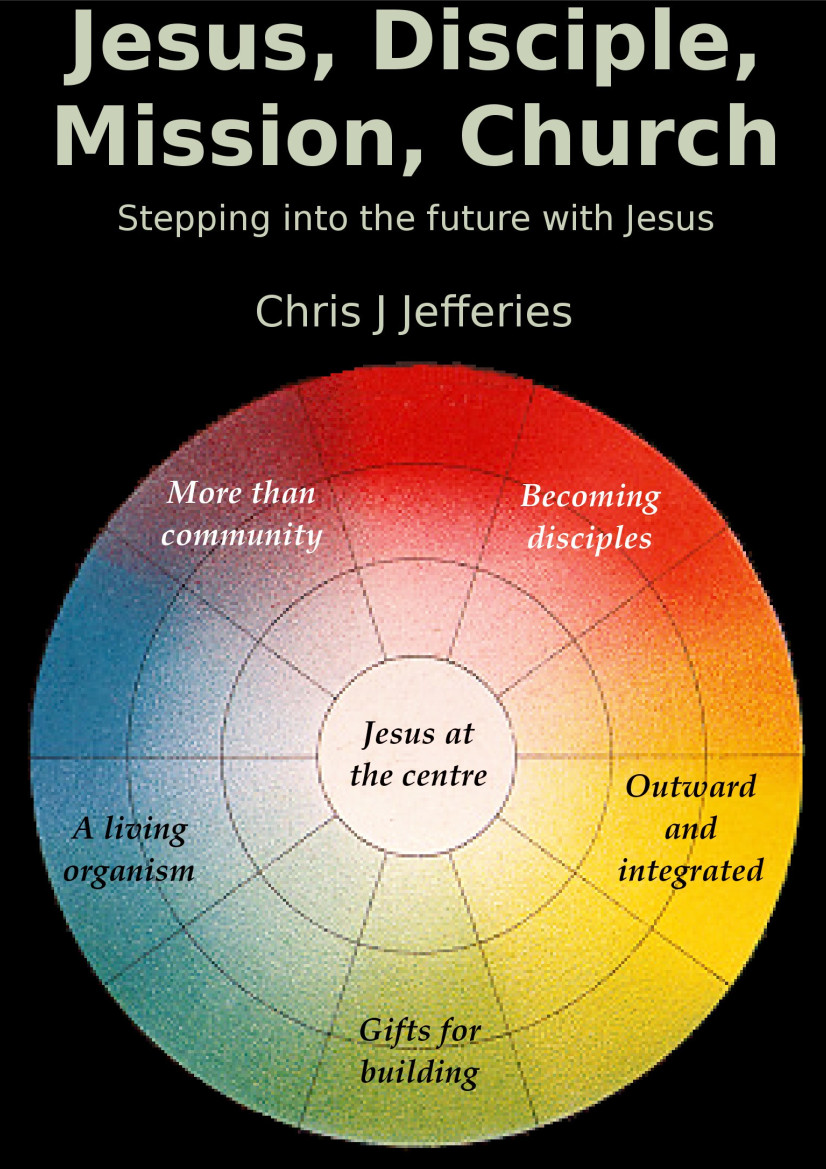
This twelve-part guide will help you explore some key ideas from The Forgotten Ways by Alan Hirsch (all of his books are available via this link). Of course, one way to grapple with the material is simply to read Alan’s book, and I highly recommend doing so. And if your church or group wants to discuss and learn together there’s The Forgotten Ways Handbook, also highly recommended, but it’s long and detailed. Another way to start is to read The Shaping of Things to Come, a book that provides a lot of useful background.
But if you need an introductory guide you have come to the right place. JDMC is suitable for individual use, but better for up to six to ten people working together. The guide explains the main points to get you thinking and exploring; if you find it interesting you’ll want to go further so I’ll point out the main sources as we go along. For more information visit Jesus, Disciple, Mission, Church.
I became aware of The Forgotten Ways when Alan spoke at a conference. I read some of his books, began working through the Handbook on my own, and then tried it with others. I wrote JDMC because I sensed the need for something short and simple, and I’m using it very effectively with groups of people I know.
Where might you use this guide?
It works well for groups of interested friends, it could be used by a Christian Union at a workplace or college, or it might suit a home group or small group forming part of a local church. Also, it might serve to inject fresh thinking into any church or denomination, perhaps being worked through by a group of church leaders. But please remember that JDMC only skims the surface. If you like what you find here, please consider going deeper and further using the sources mentioned above and throughout the guide.
What it contains
JDMC consists of the introduction you’re reading right now, a first section to outline the thinking behind The Forgotten Ways, six further parts (one for each forgotten way), three supplements to answer questions readers have asked (not based on Alan Hirsch’s work), and a conclusion. The sessions contain simple, introductory material with questions to get you thinking for yourself. The six forgotten ways can be seen as distinct, but also have a way of weaving themselves together in practice. You may notice this as you work through the guide; take it as evidence that the six ways are inextricably linked and interdependent.
We learn by doing. Good and bad habits alike result from repeated behaviour, and the sessions aim to get you behaving in ways that will form good habits as Jesus’ disciples. Over time, I hope and expect that you will behave yourselves into habits and thinking that will take you further in the journey with Jesus than you may have thought possible or necessary.
Don’t skip the questions, they’re an essential part of the discovery process. Take time to process the material and come up with your own ideas and conclusions. It’s not possible to offer exhaustive Bible references in a short guide. The Bible references I’ve included are merely starting points for exploration. As you read your Bible (and especially the gospels) you are likely to find that other relevant verses and paragraphs leap off the page.
The sessions include related online material including text, audio and video. You can click through to these resources in the version of the discussion guide at jdmc.scilla.org.uk. The guide is free to use so download it, print it, modify it, or give it away; all I ask is that if you distribute it you provide attribution by including the link GetJDMC.scilla.org.uk and apply the same copyright conditions that I do.
More sections of JDMC
Introduction – JDMC, what does it contain? – Using JDMC – how to approach it
Working together in six ways – Intro and Way 1 – Ways 2, 3 and 4 – Ways 5 and 6, six ways
Way One, Jesus at the centre – Jesus at centre 1 – Jesus at centre 2 – Jesus at centre 3
Way Two, Becoming disciples – Disciples 1 – Disciples 2 – Disciples 3
Way Three, Outward and integrated – OutAndInt1, OutAndInt2
Way Four, Gifts for building – GiftsForBuilding1, GiftsForBuilding2
Way Five, A living organism – LivingOrg1, LivingOrg2
More sections will appear here…
The work of the Spirit – Intro – Jesus, disciples, outward – Gifts, living, community, help
Other church leaders – Intro, bishops, elders – Deacons, pastors, priests
Last words – The end can also be the beginning
Read the book
This was extracted from Jesus, Disciple, Mission, Church (JDMC), pages 7 and 8. Download the whole thing or read it online – GetJDMC.scilla.org.uk
Useful? Interesting?
If you enjoyed this or found it useful, please like, comment, and share below. (If you don’t see those links, click the article’s title above the main photo and they will appear.) Send a link to friends who might enjoy the article or benefit from it – Thanks! My material is free to reuse (see conditions), but a coffee is always welcome and encourages me to write more often! 

 Journeys of Heart and Mind