The Starship programme

All the booster engines lit correctly and stage separation was successful. The boostback burn was good too, but the landing burn failed and Superheavy was lost.

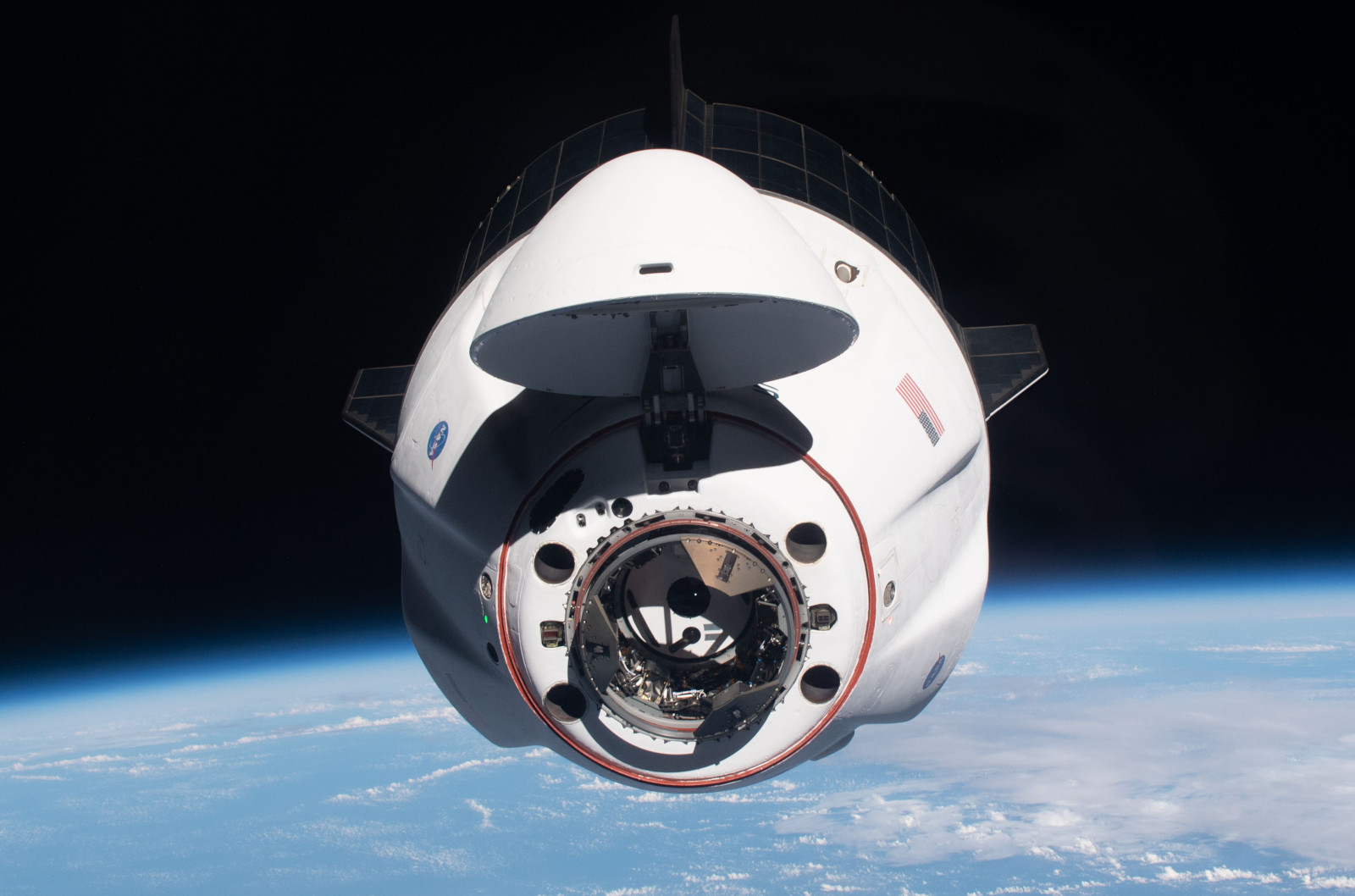
SpaceX Starship (Wikimedia)

Science and technology – 7

< Previous | Index | Next >

Click to enlarge

SpaceX’s Starship programme is an attempt to build space launch and transport equipment to open up the Solar System for travel and cargo delivery at greatly reduced cost, and increased capacity and frequency. It seems a good time to collect the details together in one place because SpaceX is now almost ready to put Starship into orbit and launch Starlink satellites from it. That’s a very significant development.

Progress so far can be divided into three major phases that SpaceX terms ‘Blocks’. Think of them as versions. Block Zero began the development of early forms of hardware, Block One continued this to test all aspects of flight and landing, and Block Two has just ended with the very successful Flight 11, and now Block Three has begun. Three kinds of hardware are being developed for each block- Stage Zero is the ground launch equipment, the launch mounts, fuel storage and loading facilities, and the launch control and monitoring equipment. Stage One is the Superheavy Booster that places the Starship orbital vehicle into flight above the bulk of the atmosphere, while Stage Two is Starship itself which accelerates to orbital velocity or beyond. Specialised versions of Stage Two will act as orbital fuel tankers, and eventually land on the Moon, Mars and perhaps other destinations. I list below, only flights regarded as at least partially successful. Let’s step though them in sequence. It’s also well worth watching Scott Manley’s video overview of the entire Starship test program.

Block Zero

Flight 0A (3rd April 2019) (There are no videos) – The first flight used Starhopper, a reduced size, single-engined, test vehicle with an early version of the Raptor engine burning liquid methane and liquid oxygen. It was a tethered hop and reached the giddy height of 0.3 m. But this was enough to prove the engine and its control systems were performing correctly.

Flight 0B (5th April 2019) (There are no videos) -Starhopper’s second flight, tethered again and reaching a height of 1 m. SpaceX had no Flight number designations for these tethered hops.

Flight 1 (25th July 2019) (There are no videos)- This time Starhopper flew untethered, reached a height of 20 m, and landed safely. This proved engine gimballing was adequate for a controlled ascent and descent.

Flight 2 (27th August 2019) (Video) – This was Starhopper’s final flight, reaching 150 m and travelling horizontally before safely landing proving horizontal movements could be well-controlled. It was retired after this flight.

Flight 3 (4th August 2020) (Video) – The first flight of a full size Starship (SN5), another 150 m hop, the payload section was absent and a steel mass simulator was carried instead, still using just a single Raptor engine. Once again, the proven flight envelope was increased, this time with a vehicle of similar size and weight to a Starship returning from orbit.

Flight 4 (3rd September 2020) (Video) – 150 m hop, Starship (SN6), a similar flight to SN5.

Flight 5 (9th December 2020) (Video) – 12.5 km, Starship (SN8) had a successful launch and flight but failed landing. The mass simulator was replaced by a nose cone and control flaps this time, and three Raptor engines were installed. The new belly flop and flip manoevres succeeded on their first attempt, but the landing failed. This flight climbed to the same altitude as the highest passenger planes.

Flight 6 (3rd March 2021) (Video) – 10 km, Starship (SN9) Similar success and failure to Flight 5.

Flight 7 (3rd March 2021) (Video) – 10 km, Starship (SN10). This was the first successful landing, though it was a very heavy landing and the damaged ship exploded soon after landing.

Flight 8 (30th March 2021) (Video) – 10 km, Starship (SN11). The vehicle exploded during descent.

Flight 9 (5th May 2021) (Video) – 10 km Starship (SN15). This was the first completely successful flight and landing. There was a fire in the engine compartment after landing, but this was eventually extinguished and the landed Starship survived. So now SpaceX had a design that could could complete the horizontal descent, flip to a vertical position at low altitude, and land.

Block One

Block One flights began in April 2023, the objective was to move to flying both the Superheavy booster and the Starship orbital vehicle together, having already mastered the horizontal fall of Starship and the flip manoevre needed to bring it back for a landing. It’s worth looking at Scott Manley’s excellent video summary of the Block One series of flights.

Integrated Flight Test 1 (20th April 2023) (Video) (Scott Manley’s analysis) – Orbital test fight, the combined craft managed to take off with twice the thrust of the Saturn 5 Moon rocket, though five of the thirty-three booster engines failed and the Starship failed to separate from the booster. So most of the flight objectives were met. This represented a huge step forward for Starship; SpaceX now had a system that could lift off and reach the upper atmosphere. Unfortunately the launch all but destroyed the launch pad (stage 0).

Integrated Flight Test 2 (18th November 2023) (Video) – This time all the booster engines lit correctly and stage separation was successful. But both stages were lost. Stage separation was another large step forward for Starship.

Integrated Flight Test 3 (14th March 2024) (Video) – This time all the booster engines lit correctly and fired for the full intended flight duration. Stage separation was successful too and Starship could have achieved orbit had its six engines been allowed to fire just a little longer. However, the ship failed during its brutal re-entry.

Integrated Flight Test 4 (18th November 2023) (Video) – This time all the booster engines lit correctly and stage separation was successful. The boostback burn was good too, but the landing burn failed and Superheavy was lost shortly before it was expected to land. Meanwhile, Starship fired all six engines for stage separation and the boost to almost orbital velocity. For safety reasons there was again no attempt to reach full orbit on this flight. but the Starship started to re-enter the atmosphere over the Indian Ocean before reaching Australia. The Pez dispenser cargo door opened, but failed to close fully. Starship re-entered under control of the flaps but didn’t attempt a landing burn. This flight took the project forward just as far as intended, so a good result and an excellent preparation for following flights. SpaceX had demonstrated atmospheric re-entry under flap control.

Flight Test 5 (13th October 2024) (Video) (Scott Manley’s analysis) – The Superheavy Booster delivered Starship to the upper atmosphere correctly, returned to the launch site, and was successfully caught for the first time, another huge step forward. Starship made a safe atmospheric re-entry and splash down in the Indian Ocean on target and under control. This was the first time both the booster and Starship completed a full mission.

Flight Test 6 (19th November 2024) (Video) – The Superheavy Booster was diverted from a catch attempt and landed in the ocean because the catch mechanism on the tower signalled it was unready. Starship re-lit one of its Raptor engines in flight and splashed down successfully and on target in the Indian Ocean. The re-light is important because it builds confidence that a fully orbital Starship would be able to deorbit in a properly planned way and not come down unpredictably, endangering people and property on the ground.

Block Two

Block Two flights began with flight test 7. The Block Two Superheavy Booster and Block Two Starship are redesigns based on lessons learned from flying the Block One versions.

Flight Test 7 (16th January 2025) (Video) (Scott Manley’s analysis) – The Superheavy Booster flew nearly perfectly and was caught successfully by the arms on the launch tower as with Flight Test 5. However, Starship suffered some engine failures and was destroyed before performing the engine relight and other tests it was flown to perform.

Flight Test 8 (6th March 2025) (Video) (Scott Manley’s analysis) – The Superheavy Booster performed well again and was caught by the tower arms. But Starship lost control and was destroyed again. At this point SpaceX have a successful booster design but the ship is still not reliable.

Flight Test 9 (27th May 2025) (Video) (Scott Manley’s analysis) – This time, the Superheavy Booster flew flawlessly but was deliberately not caught on this flight. It was brought back at an experimentally higher angle of attack. Starship fired all six engines for the full time expected and then shut them down cleanly.

Flight Test 10 (26th August 2025) (Video) (Scott Manley’s analysis)- One of Superheavy’s centre engines was deliberately disabled and it used an off-centre to complete a successful landing burn over the Gulf of Mexico. There was no attempt to catch Superheavy, but the test showed that it could have been caught even using the off-centre engine. Starship fired a single engine briefly to demonstrate it could have been safely de-orbited if required, and some dummy Starlink satellites were deployed successfully as well. Despite an unexpected explosion during re-entry, the vehicle survived, performed the landing flip manoevre and touched down successfully and on target in the Indian Ocean.

Flight Test 11 (13th October 2025) (Video) (Scott Manley’s analysis)- This was the most successful test flight so far. Both the Booster and the Ship performed flawlessly and met all objectives. The dummy satellites were released, an engine was re-lit in space and the ocean landing was perfect as well.

Block three

The first Block Three flight is expected early in 2026. Stages 0, 1 and 2 will all be fresh designs and we expect further advances including orbital flights releasing a new version of the Starlink satellites, more booster catches, and the first Starship catches as well. There may be tests of fuel transfer between ships, tests of Moon landing hardware, and the first launches of Starships to Mars, possibly with a crew of robots. Get ready for an exciting time.

For a taste of what may be to come, take a look at AlphaTech’s latest video.

See also:

< Previous | Index | Next >

Useful? Interesting?

If you enjoyed this or found it useful, please like, comment, and share below. My material is free to reuse (see conditions), but a coffee is always welcome!

You might also like:

SpaceX takes another step

Up, up and away!

The Starship System

SpaceX will want to repeat the launch and landing of a booster at least monthly and then weekly going forward.

SpaceX has just made history by catching a returning Superheavy booster in mid air. Not only is this a milestone for SpaceX and a milestone for spaceflight in general, it was achieved on the first attempt.

Larger view, still from Marcus House video

The now well-known US space company, SpaceX, has made history multiple times, and now they’ve done it again. On 13th October 2024 they launched their Super Heavy booster carrying a Starship on top, this from their private factory/launch site complex at Boca Chica on the coast of Texas right next to the US border with Mexico.

What was new for this 5th test flight, and quite astonishing, was the fact that the booster rocket returned from the edge of space to Boca Chica, and was caught by the launch tower that it had left less than nine minutes earlier. That was time enough to deliver Starship to space, and return. Nobody has ever caught a returning rocket stage before – it’s a world first. And the Super Heavy booster is no lightweight, even empty of fuel it weighs 500 tonnes and it’s the world’s largest launch vehicle. Not only that, once in space Starship accelerated to orbital velocity, flew right across the Caribbean and the Atlantic, across Africa and much of the Pacific, and made a landing with pin-point accuracy in the Indian Ocean.

Why is this useful?

Quite simply, the long term goal is to launch, refuel, and launch again – several times a day. So one reusable booster and an adequate fuel supply could put several Starships into Earth orbit in a single day. Starships are intended to be developed for several different purposes, one of these will be a tanker that can refuel another Starship in orbit and return to Earth empty for another load. Several refuelling trips (at least eight) would result in a fully fuelled Starship in orbit, sufficient to deliver 100 tonnes of cargo or perhaps 50 crew members almost anywhere in the Solar System. (SpaceX claims 150 tons or 100 crew, but we’ll see. I remain conservative in my expectations.)

NASA has already chosen Starship as its human landing system for the return to the Moon. A fully fueled Starship-based Moon lander could collect several astronauts from NASA’s projected lunar space station, carry them and a lot of supplies to a Moon landing, and still have sufficient fuel for the return trip to the NASA Station and on to Earth for recovery and reflight. Today’s booster return was a necessary requirement for this plan to proceed.

What’s next?

Big improvements and lots of practice, that’s what comes next. SpaceX will want to repeat the launch and landing of a Super Heavy at least monthly and then weekly going forward. They will need to make improvements to the boosters until they can be safely and frequently re-used. They will also want to fly Starship into full orbits of Earth and practice re-entry and catching for those too. The heat shield for Starship needs improvement but the next version is already in production and incorporates some of the required changes. Then they will need to fly Starship with cargo (almost certainly the new, larger version of the Starlink satellites) until its safety record is good and it has proven reusability.

After that, they need to design, build and test the tanker and the lunar landing versions of Starship. Next comes flying astronauts to the Moon, and probably in parallel with that, landing cargo on Mars in preparation for sending crew there. This is all a huge ask, but SpaceX keeps surprising us. Can they do it? I don’t know, but if anyone can, SpaceX can.

See also:

Useful? Interesting?

If you enjoyed this or found it useful, please like, comment, and share below. My material is free to reuse (see conditions), but a coffee is always welcome!

Image of the day – 69

I don’t know the age of this house, but it is clearly a timber-framed structure and some of those main timbers have adjusted comprehensively to the action of gravity over several centuries.

< Previous | Index | Next >

What’s in an image? Sometimes quite a lot, more than meets the eye.

I’m posting an image every two days (or as often as I can). A photo, an image from the internet, a diagram or a map. Whatever takes my fancy.

Click to enlarge

Here’s Cirencester’s wonkiest house – well, one of them. Until the 18th century, many buildings would have been constructed of timber, and we all know that timber is prone to warp even after seasoning, and it also responds to pressure and stress by slowly changing its shape.

Modern engineered wooden products generally avoid these issues. For example, plywood is in layers with the grain running in different directions from layer to layer. A thin sheet of wood is weak along the line of the grain, in that direction it will split easily when bent. But it will resist bending and splitting if rotated 90°. So multiple sheets glued together can be strong in all directions.

A timber-framed house

I don’t know the age of this house in Dollar Street, but it is clearly a timber-framed structure and some of those main timbers have adjusted comprehensively to the action of gravity over several centuries. Look at the glazing in the windows, for example, compare the windows with their fellows, side-by-side and up and down. See what I mean? At some point a layer of render was added to hide and protect the timbers so these are no longer visible.

The building is unoccupied at present, but I imagine it’s safe enough. Imagine how the new owners in due course will struggle to make right-angled furniture fit into walls and floors at odd angles

What about us?

Are we sometimes a little bit like this house? Do the pressures of life, sustained over years, even decades, cause us to be a little distorted? Is it difficult for other people with their right-angled opinions and requirements to fit into our expectations given our out-of-true alignments? Is the truth about us sometimes plastered over and hidden from view?

Or might it be the other way around? Am I, are you, straight and true and the fault lies with everyone else?

Cirencester

For convenience, here’s a list of all the Cirencester area images:

A417 roadworks, Advent Market, Bishops Walk, Baunton, Canal 1, 2, Castle Street, Christmas lights 1, 2, Church 1, 2, 3, 4, 5, 6, Churn flood, Countryside, Fallen tree, Fleece, Gasworks, Gloucester Street, Hare 1, 2, Hospital, Market Place 1, Phoenix Fest, Riverside Walk, Stone plaque, Stratton Meadow, Tank traps, View, Wonky 1, 2, Yellow Iris

Themed image collections

The links below will take you to the first post in each collection

Cirencester, Favourites, Irish holiday 2024, Roman villa

< Previous | Index | Next >

Useful? Interesting?

If you enjoyed this or found it useful, please like, comment, and share below. My material is free to reuse (see conditions), but a coffee is always welcome!

Why explore space?

Many satellites are launched every year for profit-making purposes … TV broadcasting, imaging, weather forecasting, and internet provision.

Some time ago I was asked, ‘Why explore space?’

It’s a good question; space exploration is very expensive, surely we could spend the money on better and more important things? Surprisingly, perhaps, spaceflight has become a very profitable industry. Although exploration per se remains almost entirely government funded, exploration in past decades has sparked the profitable space industries that exist today.

Commercial crew transport, SpaceX Dragon (WikiMedia)

Taking the world as a whole, we spend a very large amount of money on space exploration, US$117 billion in 2023. It’s fair to say that the USA almost certainly spends more than any other nation, and China and India both have major space programs, so does Europe (taken as a whole) through the joint ESA programmes (ESA is not part of the EU, however). Russia and Japan are major players too. You can view the figures as a bar chart from Statista.

It’s not quite as simple as it sounds, though. For one thing, material and human resources are much more expensive in some countries than in others, so US$1 billion buys a lot less in the USA or Europe or Australia than it does in China, or India, or Brazil.

Another thing to consider is that space research, spaceflight, and space exploration are not all about spending a lot of money, they are also activities that can generate a great deal of income. Economics is complex and difficult.

I think it may help us if we briefly review the history of space exploration.

The history of spaceflight

We have to go back to ancient and medieval times to find the first hints that people wanted to travel beyond the Earth. Even thousands of years ago, some people thought about leaving Earth behind. The Bible describes Elijah being taken up in a fiery chariot. The Koran describes Mohammed on a winged horse. The Greek, Icarus, wanted to fly high above the Earth. Dante’s ‘Divine Comedy’ in 1320 describes a journey to the heavens. ‘Kepler’s Dream’ in 1608 describes how Earth would look from the Moon. In 1657 Cyrano de Bergerac described a journey from Earth to the Moon.

Of course, much of this was fanciful in various ways, but people were thinking about it. Science fiction became popular in the 19th and, especially, the 20th century and some of the ideas discussed seemed quite plausible. Engineering experiments with solid and liquid fuelled rockets began in the early 20th century, and that’s when some people began risking money (and sometimes their lives) to make progress with early rockets. Costs were involved, but no income was generated.

By 1944 the wartime German government could see the tide had turned against them, with losses on the Russian front and in North Africa. Italy had fallen to the Allies and by the middle of the year southern and northern France had been invaded and German forces were struggling to hold on. Germany had been developing new weapons for some time, and now they began to use them in a final attempt to reverse impending defeat. Jet aircraft, the first cruise missile (the V-1) and the first rocket capable of reaching space (the V-2, the first ballistic missile) all came into play at this late stage of the war. Firing the V-2 vertically in a test, Nazi Germany became the first nation to reach space at  174.6 kilometres (108.5 miles) on 20 June 1944. The rocket entered space vertically and fell straight back as it didn’t have sufficient fuel to attempt the horizontal velocity necessary to go into orbit.

After Germany’s defeat in May 1945 there was a scramble by the USA, the Soviet Union, and to a lesser degree by the UK to capture unflown V-2s, plans and information, construction and test facilities, as well as the engineers and technicians behind the technology.

Rocket technology was developed further, both for use as a weapon and also for scientific research and space exploration. This has led to many nations engaging in spaceflight and space exploration in the late 20th and early 21st centuries.

Recent developments

So now we have set the scene. Space exploration has become technically possible. It remains difficult and expensive, though the development of advanced and miniaturised electronics and computers for control, and improved fuels, materials, and designs have reduced the costs and look set to reduce them even more substantially in future. One major change in the last decade is that we now have the first reusable rocket boosters. SpaceX is already flying some of its Falcon 9 boosters more than twenty times. The costs savings are enormous and other rocket companies are trying to catch up.

Given all of this, why would we want to explore space?

Reasons for exploring space

First, it’s worth mentioning that the reasons for exploring space are the same as those for exploring more generally. People are born explorers: the youngest infant begins exploring the environment as soon as they can crawl. There are only two requirements – an ability to move from one place to another, and a desire to find out what lies further away.

Given the ability we now have to reach ever further into space, we just naturally want to investigate what is there and understand it to the best of our ability. These days, automatic systems can travel to dangerous and hard to reach places and return images and measurements without the presence of human travellers. So we have good images and many kinds of measurement from every large body in the Solar System, and growing numbers of the smaller asteroids and comets. But automated systems have limitations in terms of decision making and judgement, limitations that require the presence of people. These limitations are more severe than first appears given the great distances involved in exploring space. When a rover on the Moon takes an image, we may be able to view it within a few seconds and send instructions on what to do next. On Mars it might take twenty minutes to receive the image and another 20 minutes for the instruction to reach the rover. So a Mars rover needs to navigate and make decisions on avoiding obstacles semi-autonomously.

So far we have travelled only to Earth orbit and to the Moon, but the urge to go further remains. We’re a nosy and inquisitive race; we want to know more, we want to find out, we love to solve mysteries.

The benefits so far

This is unlikely to be an exhaustive list, there are many benefits already and new ones keep moving from theory to practice. I’ll list those I can think of below.

  • Photographing the Earth’s surface from orbit. This benefits mapping, weather forecasting, resource discovery, agriculture, military intelligence and much, much more.
  • Understanding geology by comparing Earth rocks and minerals with those on the Moon, other planets, rocky moons, and so on. We are learning how Earth and the other planets formed, and how long ago.
  • Astronomy has advanced as telescopes are operated from space. Earth’s atmosphere causes reduced image clarity and blocks many wavelengths of light, X-rays, and other forms of radiant energy. Light pollution from cities is also avoided by putting a telescope into orbit. It also becomes far easier to identify smaller objects that might collide with Earth and potentially cause serious damage and loss of life.
  • Probes have travelled to distant solar system objects to return images and sometimes samples of surface material.
  • Manufacturing in micro-gravity can produce medical, engineering and scientific materials that simply cannot be made on Earth. Ultra pure proteins have aided medical science enormously in some areas, helping scientists understand protein structures for example, or manufacturing life-saving antibodies and drugs.
  • Understanding the inhospitable conditions of space itself and the other planets in our solar system provides a perspective that helps us value what we have here on Earth.
  • Communications systems have benefitted enormously from spaceflight. From TV satellites providing hundreds of high-resolution channels, to satellite internet availability for ships, aircraft and remote regions, the exploration of space has provided the technology behind these improvements. Good internet access for remote areas improves disaster rescue, allowing much quicker responses.
  • Satellite navigation has transformed many aspects of land, air and sea travel. Who wants to manage without their satnav while driving?
  • Spin-off technologies like solar panels, stronger materials such as carbon fibre, recycling and purification of air and water were all developed first because of space exploration and are now proving invaluable here on the ground as well.
  • New resources are becoming available as a result of space exploration. Rare and expensive metals from asteroids, ices from comets and the moons of planets in the outer Solar System are likely to become useful in the near- to mid-term future. This is not yet commercially viable, but will become so as space transport systems develop further.

I hope that brief round up will help my readers understand some of the why-questions around space exploration. In the early days it was an expensive operation, funded by governments, and often justified by military considerations. Today, much space activity is done by companies with a profit motive. Launch services are now largely commercial in nature, so too is the transport of people and materials to and from Earth orbit and even now to and from the Moon. And finally, many satellites are launched every year for profit-making purposes as well – TV broadcasting, imaging, weather forecasting, and internet provision to name just a few.

Significant – Starship

This new space launch system may well be the means by which we really do make spaceflight far cheaper and colonise, not just Mars, but any part of the Solar System that we wish.

It occurred to me that many highly significant events, situations and occasions pass us by almost unnoticed, only to burst into history and affect our lives rather later. I thought it might be fun to look at some of these, perhaps some historical examples. but also things going on today that might loom very much larger in future. I’m going to start with an article on some spaceflight technology that’s in the news precisely because it may be the start of human expansion into the Solar System.

SN9, an early prototype of Starship

Because I posted just five days ago on Starship‘s planned integrated test flight (IFT-4), and because of how that flight went (stunningly successfully) , now might be a good time to look at the significance of Starship in general and this test flight in particular.

Why was Starship built?

Good question. I’m glad you asked! SpaceX is by far the foremost builder and operator of space launch vehicles. So far in 2024 they’ve launched 52% of all rockets worldwide, and their share is growing. No other American rocket company and no other nation comes close!

The rationale behind their Falcon 9 was to build a reusable rocket to reduce the cost of launches. And although only the first stage and the fairings proved to be recoverable, that is still far, far more economical than building new for every launch. Falcon Heavy increased the payload capacity by using three boosters together.

The next step is to build a fully reusable system that will reduce kilogram to orbit costs by another massive factor and will make it possible to send over 100 tonnes to any destination in the Solar System. A further goal is to use this new system to build a self-sufficient city on Mars of, perhaps, a million or more people. That’s why Starship is being developed.

Integrated Flight Test Four (IFT-4)

Well, what can I say? The purpose of this flight was to go beyond IFT-3 which was a successful launch, but both the Super Heavy booster and the Starship orbiter were lost on their return through the atmosphere.

What was so remarkable about IFT-4 is that both parts of Starship survived. Super Heavy made it back to a precise location over the Gulf of Mexico (close to the launch site), and Starship made it half way around the world and also succeeded in reaching the ocean surface at essentially zero velocity and then plunged into the water.

The loss of both parts of the system was intentional and the flight provided useful data for further improvements. In the case of Super Heavy it may be possible to recover it following IFT-5, the launch tower doubles up as a catch tower, to grab the returning booster in mid-air. Starship suffered a lot of thermal damage, parts of it even melting, but despite that it made a good approach for a catch attempt to be tried later in the test programme.

Further work on both vehicles should improve things. But knowing both are capable of recovery, at least in principle, opens the way for almost certain success in the long term.

What does that imply? This new space launch system may well be the means by which we really do make spaceflight far cheaper and colonise, not just Mars, but any part of the Solar System that we wish.

Yes. Of course. We are a long, long way from colonising other planets. But for the first time it seems we may have taken a step that will enable us to at least try at some point in the future.

Steps in the future

Let’s finish by setting out possible further developments with some guesses about the timescales.

  1. The next test flight, IFT-5, will probably come in late July. Any time between late June and late August seems possible, it’s really hard to say with any certainty.
  2. A Superheavy booster will be successfully caught, if not on IFT-5 then certainly before the end of 2024. Once success is achieved, by mid 2025 it might be completely routine to catch both boosters and Starship spacecraft.
  3. Some time in 2025 we should expect Starships to be reaching orbit with payloads (initially they will be Starlink 2 satellites).
  4. We will also see the beginning of a system of tanker Starships capable of refuelling cargo and passenger Starships to travel to the Moon and Mars. This is not going to remain science fiction for very much longer.
  5. Eventually the heat shield protection needed for Starship to return reliably to Earth will become safe enough that crewed flights can begin.
  6. We might see the Moon Landing version Starship HLS take astronauts to the surface and return them to lunar orbit, but that’s quite some time away, maybe 2030 or later.
  7. Automated Starship landers will carry equipment and supplies to the Moon and to Mars. At first they’ll remain on the surface as they will be a useful source of materials and potential habitats.
  8. People will follow as safety issues are resolved, permanent settlements will become possible in both places.
  9. Fifty years from now Starship and its successors will enable human exploration and settlement throughout the Solar System – on asteroids, moons of Jupiter and Mars, more or less anywhere will become possible.
See also:

Useful? Interesting?

If you enjoyed this or found it useful, please like, comment, and share below. My material is free to reuse (see conditions), but a coffee is always welcome!

The biggest Mach diamonds ever!

Together, all these engines produce 75.9 MN of thrust, much more than Saturn 5’s 34.5 MN.

The first question you might want answered as you read this title will be, ‘What on Earth is a ‘Mach diamond’?’ I’m glad you asked.

If you’re interested in rockets and spaceflight you may already know. Where there are rocket engines, there will be Mach diamonds (also known as ‘shock diamonds’). They are formed by the high velocity of the gases leaving a powerful jet or rocket engine. The shock waves created by this process interact with the ambient air around the nozzle, sculpting the exhaust into angled zones. When seen from the side, these appear as a repeated diamond pattern.

Mach diamonds from an F-16 on afterburner – Image from Wikimedia

The largest rocket ever built is SpaceX’s Super Heavy booster designed to lift Starship to a high altitude on the first part of its journey to orbital velocity. This booster is powered by 33 Raptor engines clustered closely together; they behave rather like a single engine with a 9 m diameter nozzle. When the rocket flew for the second time in 2023, giant Mach diamonds appeared, 9 m across and 6 m in length. These truly are the world’s biggest Mach diamonds ever – by a very considerable margin.

Super Heavy’s engines – SpaceX

This view shows all 33 Raptors firing shortly after liftoff on the 2nd flight test (IFT-2). Each engine bell has a diameter of 1.3 m and the rocket itself has a diameter of 9 m. Together, all these engines produce 75.9 MN of thrust, much more than Saturn 5’s 34.5 MN.

IFT-2 – BocaChicaGal

Here’s an image of the IFT-2 vehicle shortly after launch. The first Mach diamond is very sharply defined, subsequent diamonds less so as the exhaust plume slows, cools and becomes more ragged. Four can be clearly identified with some hints of a fifth and sixth.

So what is happening here? How are the diamonds generated?

Because a rocket engine is all about producing thrust, the velocity of the exhaust is paramount. Rocket engines are designed to maximise velocity and in doing so they minimise pressure. Inside the combustion chamber, pressures are extremely high; but the bell shape of a rocket nozzle expands the gases and directs them downwards. The pressure inside the exiting plume is much lower than the ambient air pressure. This pressure difference ‘squeezes’ the plume and prevents it spreading out sideways.

Higher in the atmosphere, air pressure is lower and the mach diamonds vanish; as atmospheric pressure drops away towards the vacuum of space, the exhaust plume spreads out sideways more and more because the exhaust gas is now at a higher pressure than the diminishing, surrounding air. Notice how the spacing of the diamonds decreases with distance from the rocket. This is because the exhaust velocity is falling off as the plume interacts and mixes with the air around it.

That’s the essence of the process in everyday language. Check the links below if you want more technical detail.

See also:

Blast from the past… 8

We are often in situations where we’re amongst people we recognise, but know almost nothing about.

< Previous | Index | Next >

Notes from bygone years – Julys duly remembered
Hint: Click on the thumbnails for larger images.

A year ago

On 7th July 2022 I noted that ‘the Conservative party is in a state of confusion right now’. Not a lot has changed in the last twelve months; it seems the Conservative ship is still foundering. I included a picture of a sinking ship in my article, here it is again. I also argued for a general election as soon as possible and we’re still waiting on that one! So the big question now is, ‘Will the Conservatives still be in power in July 2024?’ Hard to say, isn’t it! In my judgement it’s very unlikely, but we’ll have to wait and see. The last possible date for the next general election is 28th February 2025. (See the original post.)

Graphic of a sinking ship

<Jun 2022Aug 2022>

Two years ago
Starship’s first launch, 20th April 2023 – Image from Wikimedia

In July 2021, SpaceX‘s Superheavy Booster 3 was being tested at Boca Chica in Texas. They continue to develop and build boosters (and Starships too) at a prodigious rate, and have already launched the full stack on it’s first test flight. That flight failed to reach orbit, and caused serious damage to the launch mount but, following repairs, they are very nearly ready for a second attempt and have made a lot of changes following lessons learned from flight 1.

<Jun 2021Aug 2021>

Five years ago
The JDMC cover

In July 2018 I shared an extract from my short guide, JDMC. I emphasised the work of the Holy Spirit in church life and looked at ways we can recognise and value his activity.

I didn’t want JDMC to be only about what we do, but more significantly about what Jesus does. (Read the original article)

<Jun 2018 Aug 2018>

Ten years ago
Ambience Cafe, St Neots

Research shows we are often in situations where we’re amongst people we recognise, but know almost nothing about. In July 2013 I was thinking about this and how I might notice and engage with such people. (Read the original article)


<Jun 2013Aug 2013>

Fifteen years ago
Still from a video about the hymn

In July 2008 I wrote about the famous Welsh hymn, ‘Dyma gariad fel y moroedd’ or in English ‘Here is love vast as the ocean’. Read about the hymn’s origins and listen to it in the original article.


<Jun 2008Aug 2008>

Twenty years ago
Crow’s nest on HMS Warrior

July 2003 saw us meeting at home to listen to what the Spirit would say and watch what he would do. And of course, we were not disappointed. Afterwards I posted ‘Fallen and lifted up‘ to capture something of that evening.


<Jun 2003Aug 2003>

Twenty-five years ago
Kimbolton Market Place

In July 1998 we visited Kimbolton, just a short distance from our home in Tilbrook. Although it’s a village, Kimbolton always seemed much more like a small town with a market place and Kimbolton Castle, now a private school.


<Jun 1998Aug 1998>

Thirty years ago
The Sealed Knot

In July 1993 Judy, Debbie and Beth went to see a Sealed-Knot re-enactment of a Civil War battle. I didn’t go to this as I was probably at work at the time.


<Jun 1993Aug 1993>

Thirty-five years ago
Mum and Mickey

In July 1988 My Mum was sixty and we had a party at The Catherine Wheel pub in Bibury. Here she is unwrapping a present – a Mickey Mouse landline telephone. She had always wanted one of these!


<Jun 1988Aug 1988>

Forty years ago
Apple pollen tubes

In July 1983 my mathematician friend, Phil, and I had a scientific paper published. Phil built a mathematical model for the effect of temperature on apple pollen tubes. This was based on experimental measurements I’d made in spring 1982.

<Jun 1983Aug 1983

Forty-five years ago

In July 1978 Beth was just two months old (whoops, I think I just gave her age away). We were living in a terraced house in Yatton and I was working on plum and apple pollination.

<Jun 1978Aug 1978>

Fifty years ago
Belland Drive in Charlton Kings

In July 1973 I inspected the base for a greenhouse with my father-in-law, Ron Hill. Here we are, having a good look. As you can see, Ron’s garden in Charlton Kings was beautifully maintained.


<Jun 1973Aug 1973>

Fifty-five years ago

In July 1968 I celebrated my 20th birthday. I don’t remember the occasion, but it would have involved a bit of a party with my Mum and Dad, my three sisters, Judy, and possibly her parents and brother too. From my current perspective it seems a very long time ago!

<Jun 1968Aug 1968>

Sixty years ago
A beach on the Welsh coast

In July 1963 I was 14 years old and we might have been on holiday, but more likely it would have been August. In any case, here’s my Dad taking a photo of the family on the beach on the coast of Ceredigion, Wales.


<Jun 1963Aug 1963>

Sixty-five years ago

In July 1958 I turned ten-years-old, and I’d finished my fifth year of junior education. It was the summer holiday, hooray!

<Jun 1958Aug 1958>

Seventy years ago

In July 1953 I was four, turning five and hadn’t yet started school. Mum, Dad, my little sister, Cindy, and I lived in Queen Anne’s Road on the Beeches estate in Cirencester.

<Jun 1953Aug 1953>

Seventy-five years ago

July 1948 was the month I was born. I was one of the first two children to be delivered at Cirencester’s new maternity hospital. It’s now the main building of today’s Cirencester Hospital.

<Jun 1948Aug 1948>

Eighty years ago

On 29th July 1943 my Dad cycled home from school at the end of term. It was his last day of full-time education.

<Jun 1943Aug 1943>

< Previous | Index | Next >

Starship launch attempt postponed

** LATEST ** – The next launch attempt is now scheduled for Thursday 20th April. Check the latest news at Spaceflight Now.

Monday’s planned test flight of the Super Heavy booster carrying Starship was called off due to a pressurisation issue caused by a failed valve. The booster’s ability to carry a significant load (like a fully fuelled Starship) depends on the fuel tanks being pressurised at all times. It’s the same process that makes drinks cans so strong despite being very thin walls. An empty can crumples whereas an unopened can is pressurised and is significantly stronger.

If the valve issue can be fixed on Tuesday, there might be a new launch attempt on Wednesday. Watch this space (no pun intended).

See also:

Starship’s first launch

Just a short post this time, to alert anyone who may not know… SpaceX is planning the first ever launch of Starship on an orbital flight tomorrow, Monday 17th April.

There are several places you can watch this attempt live on YouTube. I recommend three of them in particular. If you’re new to all this, try the SpaceX stream. If you’re more knowledgeable you might prefer one of the others.

  • Felix Schlang, a German who moved to Florida to be closer to the action
  • Marcus House, an Australian spaceflight enthusiast in Tasmania
  • SpaceX, the company’s official stream

I just wanted to get this alert out today. I’ll be back after the launch attempt with more thoughts. (More details about Super Heavy and Starship).

Blast from the past… 4

In March 1998, Donna and I were married!

< Previous | Index | Next >

Notes from bygone years – March after March after March

Two years ago

There were no posts in March 2021, but I walked a long section of the old Thames and Severn Canal. The photo shows the towpath on the left and the bed of the canal on the right. The canal is being restored, but it will be a long time before this section can carry barges again.

The old canal and towpath
Five years ago

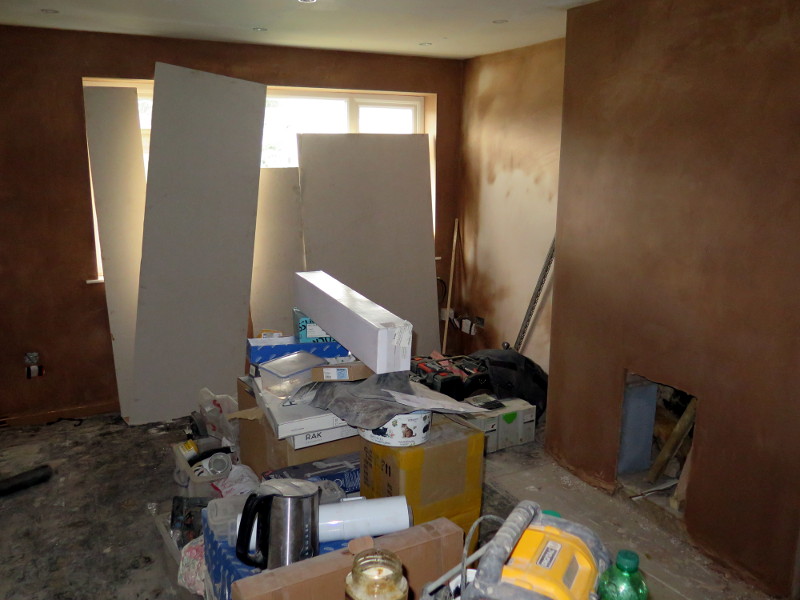
In March 2018 I posted about moving into our new house and adding an extension (‘Our new home in the Cotswolds‘). The building work was disruptive in the extreme, of course. We had to move out for four weeks, and make do with just part of the original space for much longer than that. But it was worth it.

The lounge in chaos
We used to watch TV here!
Ten years ago
Grasshopper landing

In March 2013 I wrote about a TED interview with Elon Musk. Perhaps you haven’t heard of the TED talks, but everybody has heard of Elon. The post is interesting: Musk was already experimentally landing rockets ten years ago, and TED continues to be a great ideas platform. Take a look and explore the links in the original post.

Fifteen years ago

I reported on a meeting at home in March 2008.

Rachael also shared a picture of an old-fashioned plough making furrows. The soil needs to be churned up and overturned before something new can be grown. There is a necessary process of breaking before the land can be used.

We thought about how Father releases us from ourselves. At the beginning he said, ‘Let there be light’; he still speaks those words into his people today and pours light into the darkest places in our hearts.

Twenty years ago

March 2003, another early blog post about a meeting at home. This time there were only two of us, but we heard such a lot! For example, that the tiny stonecrop, the great cedar, and the mighty oak tree were all planted by Father’s hand. The important thing is not to be big or strong, but to be planted by the master.

Twenty-five years ago

And in March 1998, Donna and I were married!

< Previous | Index | Next >