Living fossils

Living fossils can be found and recognised over long periods of geological time, and appear very similar throughout. And they may have little diversity, in other words the species in the group all tend to be similar to one another.

Leaves of Ginkgo biloba, the Maidenhair tree

< Previous | Index | Next >

Image of the day – 172

Every now and again biologists discover a plant or animal that looks uncannily like a known fossil. It’s happened a number of times.

Ginkgo leaves Wikimedia

Living fossils have two main characteristics, although some have a third:

  1. Living organisms that are members of a taxon that has remained recognizable in the fossil record over an unusually long time span.
  2. They show little morphological divergence, whether from early members of the lineage, or among extant species.
  3. They tend to have little taxonomic diversity.[5]

The first two are required for recognition as a living fossil; some authors also require the third, others merely note it as a frequent trait.

To put this more simply, Living fossils can be found and recognised over long periods of geological time, and appear very similar throughout. And they may have little diversity, in other words the species in the group all tend to be similar to one another.

Here are some examples, listed in order of their discovery. In some cases the fossil organism was already known before a living form was discovered, in other cases the living form was known first:

  • Dinoflagellates (1753, worldwide in salt and fresh water)
  • Ginkgo or ‘Maidenhair tree’ (1800s or before, southwestern China)
  • Echinothurioida or ‘Soft sea urchins’ (1870s, southern England)
  • Eomeropidae or ‘Scorpion flies’ (1909, southern Chile)
  • Coelacanth there are two living species (discovered in 1938 in the Indian Ocean) and (late 1990s off Indonesia).
  • Metasequioa ( discovered in 1941 in Hunan, China)
  • Glypheoid lobsters (1970s, Philippines)
  • Jurodidae or ‘Jurodid beetles’ (1996, Siberia)
  • Mymarommatidae or ‘false fairy wasps’ (2007ish, North America)
  • Syntexis libocedrii or ‘cedar wood wasp’ (2011, California to British Columbia)

What else can we learn from this

Two things really. The first thing is that species can sometimes exist for very much longer than normal. And the second thing we learn is that species with astonishingly similar appearance may rise independently more than once. So-called fossil species may be no more than independently arising lines that happen to look very similar.We see the same thing between different living groups, so there’s a marsupial mouse that looks quite like its European namesake. This is known as parallel or convergent evolution.

See also:

< Previous | Index | Next >

Useful? Interesting?

If you enjoyed this or found it useful, please like, comment, and share below. My material is free to reuse (see conditions), but a coffee is always welcome!

You might also like:

A glorious orchid

Orchids grow wild here in the UK, they’re not as showy as many of the tropical ones, and the flowers are far smaller, but they are still beautiful plants.

< Previous | Index | Next >

Image of the day – 167

What’s in an image? Sometimes quite a lot, more than meets the eye. I’m posting an image every few days.

Click to enlarge

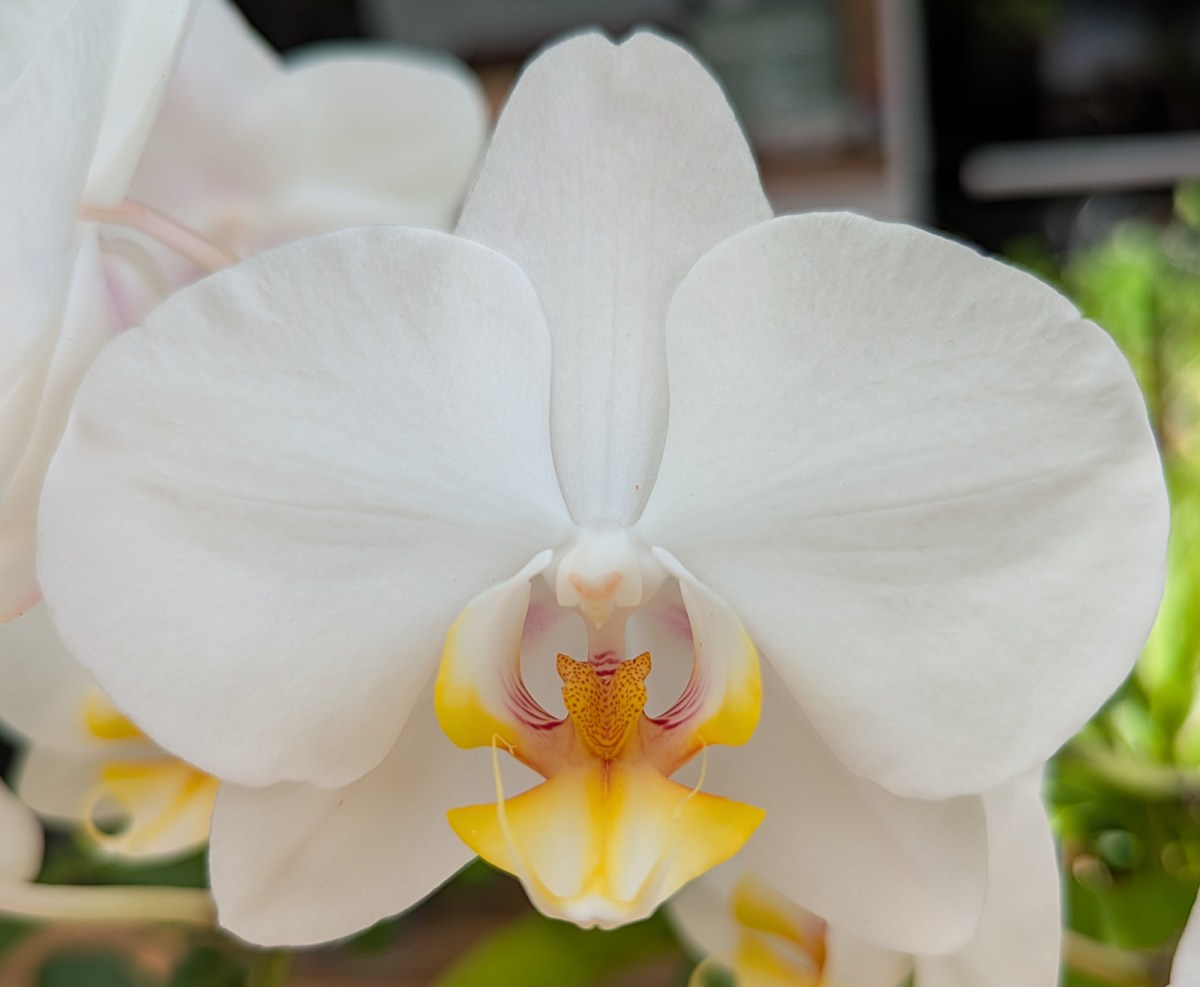
Orchids produce such beautiful flowers, often in great abundance, and they last for months if protected from too much heat and strong sun. This lovely, white Phalaenopsis flowers every year for us, but this year it had a bad plague of scale insect on the backs of the petals and on the leaves.

Scale insects are not hard to deal with as they can be wiped off with a soft tissue moistened with methylated spirit. Or even just wiped away gently with your finger. But you have to be persistent because you need to remove all the adults and then keep on removing the smaller insects until you have broken their reproductive cycle.

Orchids grow wild here in the UK, they’re not as showy as many of the tropical ones, and the flowers are far smaller, but they are still beautiful plants. Some orchids have flowers that mimic insects such as bees, butterflies, and flies. The insects are attracted to the flowers, and sometimes even attempt to mate with them; they act as pollinators, spreading the orchid pollen from one flower to another and so helping the orchid produce viable seed.

See also:

< Previous | Index | Next >

Useful? Interesting?

If you enjoyed this or found it useful, please like, comment, and share below. My material is free to reuse (see conditions), but a coffee is always welcome!

You might also like:

Tired as a dog

Like all dogs, Marple and Maizi spend a lot of time asleep. They sleep at night of course, just like we do; but they also sleep after meals, after walks, and any time they fancy during the day.

< Previous | Index | Next >

Image of the day – 166

What’s in an image? Sometimes quite a lot, more than meets the eye. I’m posting an image every few days.

Click to enlarge

Here’s a five-year-old photo of my brother-in-law Paul’s dog, one of a pair of black Labradors, lovely, soppy, friendly creatures. This one is Marple, I think, though it’s hard to tell them apart without seeing both at the same time – if not Marple, she is Maizi.

Like all dogs, Marple and Maizi spend a lot of time asleep. They sleep at night of course, just like we do; but they also sleep after meals, after walks, and any time they fancy during the day. Apart from doing what they are told they have no responsibilities, no chores, no planning or organising, but plenty of time to rest. And like all carnivores, they mostly want to find something to eat and then rest until hunger pangs set in again. It’s a dog’s life!

Now five years older, at 14-years-old, they sleep even more than before.

Paul and his wife Vanessa live in Weston-super-Mare, a seaside town with a wonderfully long and wide beach and some fine woodland on a hill. Needless to say, Marple and Maizi have always loved visiting both the beach and the woodland. And it’s in those environments that I’ve seen some of the special closeness of interaction between human and dog; the throw, chase, catch, bring back, drop process for example, redone over and over and over again!

The close interaction between people and dogs developed a very long time ago, in his book, ‘Sapiens’, Yuval Noah Harari writes:

We have incontrovertible evidence of domesticated dogs from about 15,000 years ago. They may have joined the human pack thousands of years earlier. Dogs were used for hunting and fighting, and as an alarm system against wild beasts and human intruders. With the passing of generations, the two species co-evolved to communicate well with each other. Dogs that were most attentive to the needs and feelings of their human companions got extra care and food, and were more likely to survive.

Labradors possibly take this cooperative union further than almost any other breed. The bond between dog and owner can be really close. It’s been my privilege to see that very clearly with Paul, his wife Vanessa, and their dogs Maizi and Marple.

See also:

< Previous | Index | Next >

Useful? Interesting?

If you enjoyed this or found it useful, please like, comment, and share below. My material is free to reuse (see conditions), but a coffee is always welcome!

You might also like:

Bumble bee on meadow cranesbill

The photo is sharp enough when enlarged that you can see individual pollen grains on the bee’s black, furry body.

< Previous | Index | Next >

Image of the day – 164

What’s in an image? Sometimes quite a lot, more than meets the eye. I’m posting an image every few days.

Click to enlarge

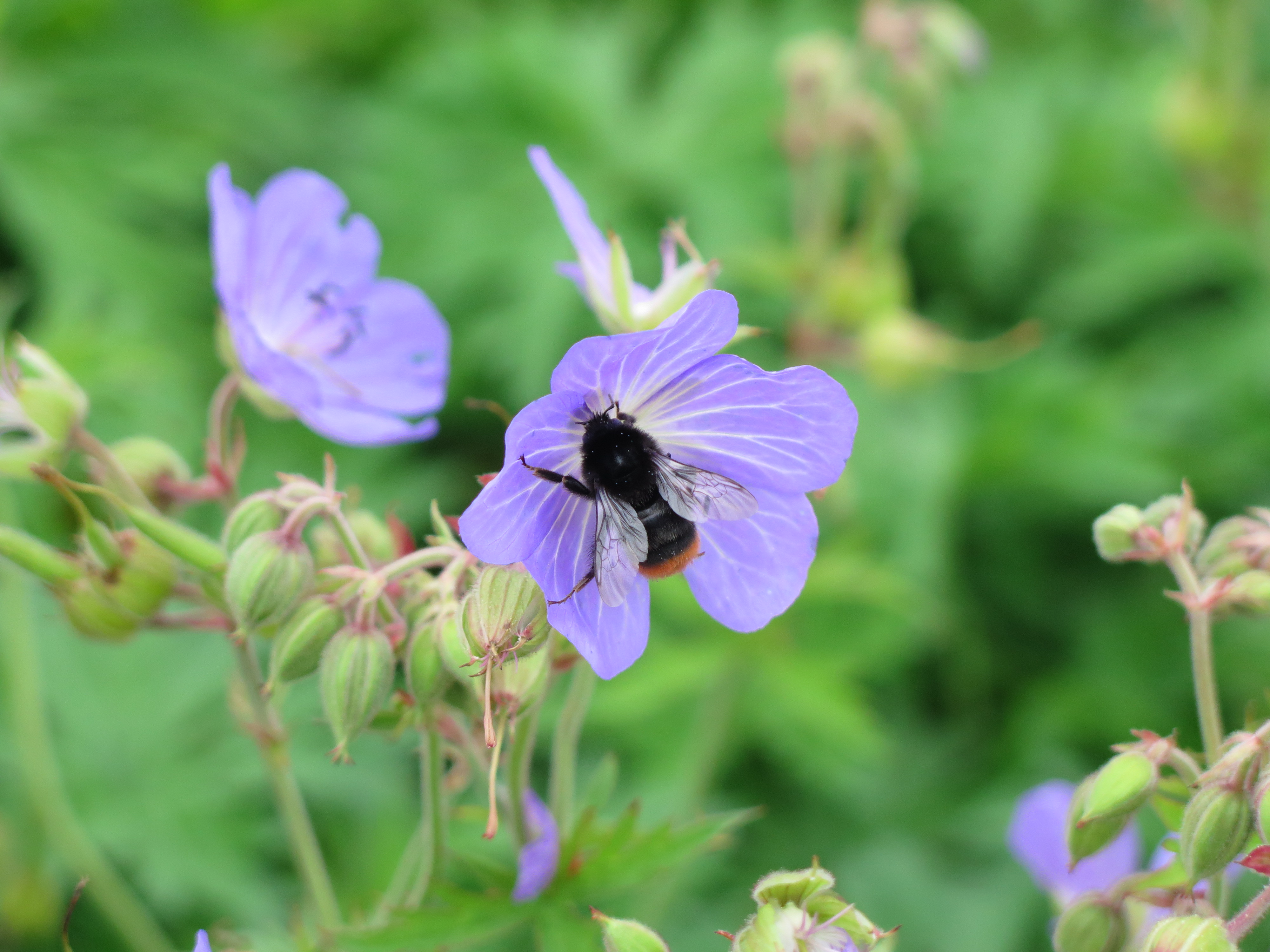
Here’s a bumble bee busy collecting nectar from a meadow cranesbill flower in a field margin just a brief walk from my home. The cranesbills are wild geraniums, close relatives of the pelargoniums; both genera are widely grown as decorative plants in pots or garden borders.

The photo is sharp enough when enlarged that you can see individual pollen grains on the bee’s black, furry body. Click the thumbnail image and stretch it to full size, then look for little white dots on the bee, those are the pollen grains.

Mutual benefit

The bees and flowering plants co-evolved, ancestors of both succeeded best in the presence of the other. Presumably the bee ancestors fed on the pollen of wind pollinated plants, incidentally transferring pollen more efficiently than the wind. And plants that provided sugary solutions and flagged this with colourful leaves near the nectar and pollen source were more successful than those that did not. After a while the insect and plant species were locked into a mutually beneficial relationship. Flowers are wonderfully adapted to attract bees and supply them with energy and a protein source to feed to their larvae. Bees are wonderfully adapted to collect and store nectar and pollen while moving some pollen grains from one flower to another.

See also:

< Previous | Index | Next >

Useful? Interesting?

If you enjoyed this or found it useful, please like, comment, and share below. My material is free to reuse (see conditions), but a coffee is always welcome!

You might also like:

Image of the day – 64

Living in Cirencester always gives me a sense of history and the slow but unstoppable passing of the years and centuries. Will the hare mosaic still be available to see 1700 years from now?

< Previous | Index | Next >

What’s in an image? Sometimes quite a lot, more than meets the eye.

I’m posting an image every two days (or as often as I can). A photo, an image from the internet, a diagram or a map. Whatever takes my fancy.

Click to enlarge

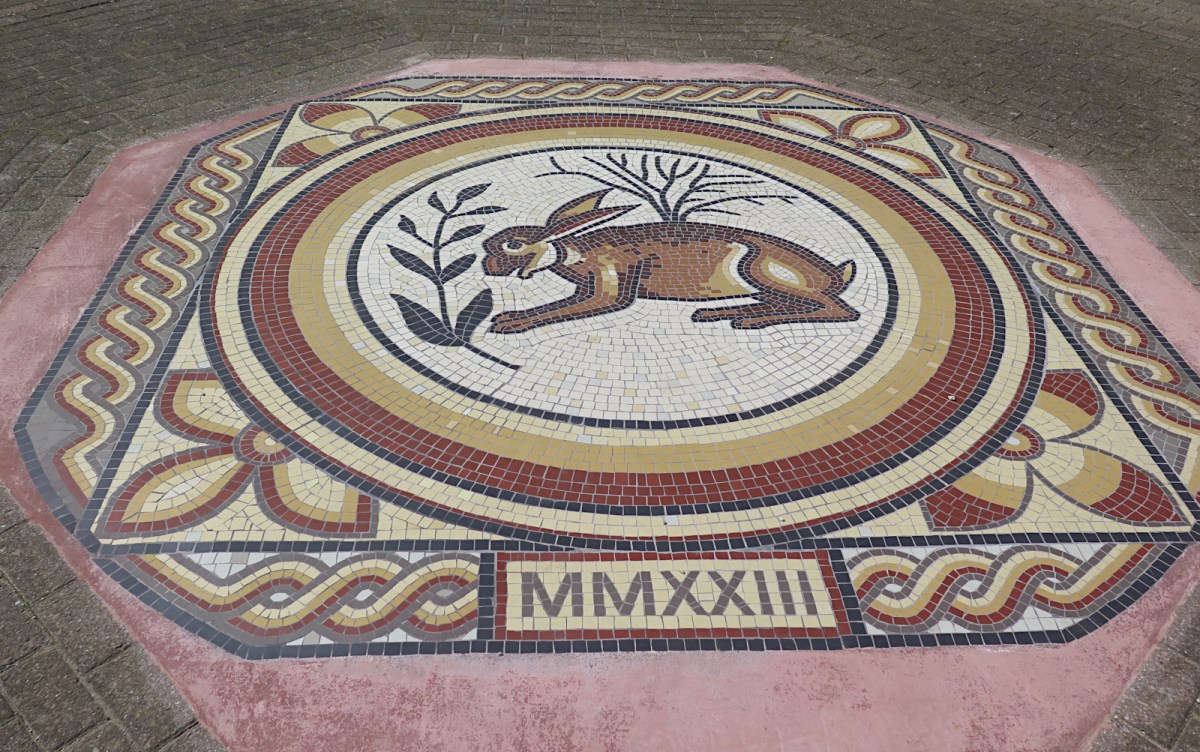
This is the same hare that we looked at in the previous Image of the Day, but this time it’s a modern interpretation of the Roman original, installed in a public space between Brewery Arts and Waterstones bookshop.

It’s great to have the hare mosaic out in the open for visitors to the town to discover as they explore; perhaps it will encourage some of them to visit the Corinium Museum to view the original as well. But I wonder what the owners of the town house where the mosaic was found would have thought about public display some 1700 years in their future!

Living in Cirencester always gives me a sense of history and the slow but unstoppable passing of the years and centuries. Will the hare mosaic still be available to see 1700 years from now, in the year 3724? Will the town even exist in 3724? What language will be spoken here in 3724? Certainly not 21st century English! Will we have cities on the Moon, Mars, and beyond by then? Deep time, both backwards and forwards, a fascinating topic to ponder!

See also:
Cirencester

For convenience, here’s a list of all the Cirencester area images:

A417 roadworks, Advent Market, Bishops Walk, Baunton, Canal 1, 2, Castle Street, Christmas lights 1, 2, Church 1, 2, 3, 4, 5, 6, Churn flood, Countryside, Fallen tree, Fleece, Gasworks, Gloucester Street, Hare 1, 2, Hospital, Market Place 1, Phoenix Fest, Riverside Walk, Stone plaque, Stratton Meadow, Tank traps, View, Wonky 1, 2, Yellow Iris

Themed image collections

The links below will take you to the first post in each collection

Cirencester, Favourites, Irish holiday 2024, Roman villa

< Previous | Index | Next >

Useful? Interesting?

If you enjoyed this or found it useful, please like, comment, and share below. My material is free to reuse (see conditions), but a coffee is always welcome!

Cirencester tales and trails – 1

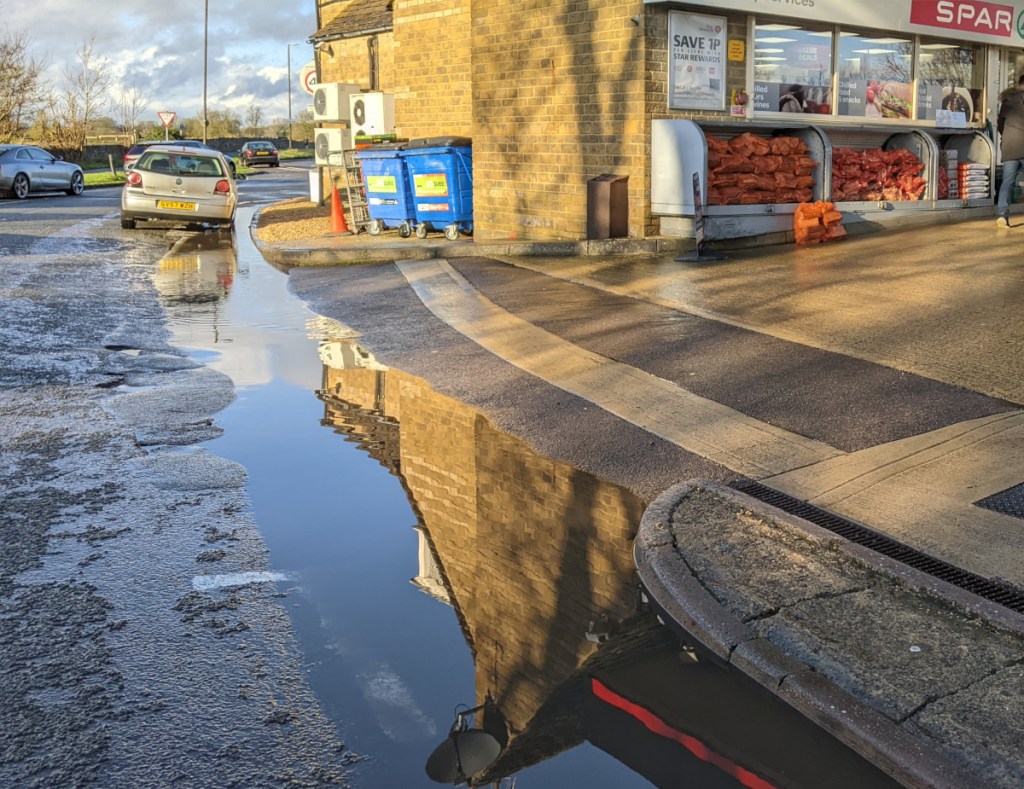
The sun came out and brightened everything up, even the puddles seemed more cheerful

I spend quite a bit of time in Cirencester so sometimes there are short stories to tell (tales), and I walk a lot in and around the local area (trails). Some of these might be interesting, fun, or even useful.

Puddles in the sunshine

Today the weather has been quite mixed, a sort of shall I/shan’t I go out. There was a good deal of rain in the morning, but it cleared a bit by mid morning and I decided to dodge the showers and walk down from Stratton where I live; I got a bit damp on the way, but not really wet. I had a couple of items of food shopping to do, so visited Tesco for those, then it began to rain again and I popped into Fora for coffee and to stay dry.

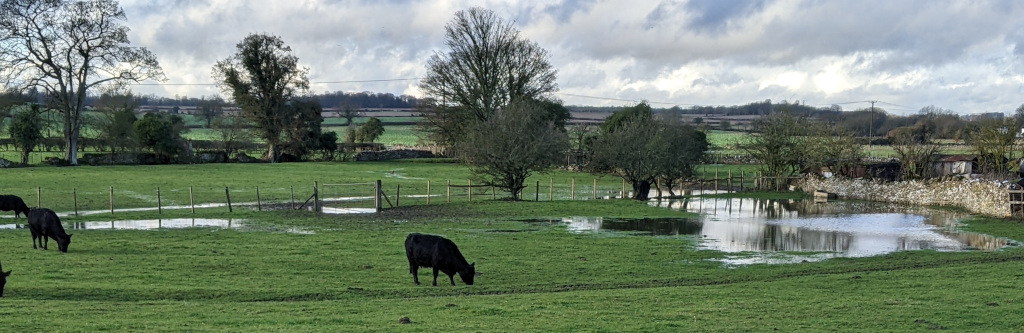
Walking home afterwards, the sun came out and brightened everything up, even the puddles seemed more cheerful. The Dexter cattle in the field west of the Gloucester Road didn’t apparently care about the weather, they didn’t even mind the fact that parts of their field have now become ponds, or even small lakes!

Dexter cattle in a partly flooded field
See also: