A living organism-1

Encourage passion and ownership by telling great stories; invite people to act with boldness and ‘have a go’; involve everyone in planning.

< Previous | Index | Next >

This article is an updated extract from my short book, Jesus, Disciple, Mission, Church (JDMC). The bite-sized piece below is roughly two percent of the book. This is the first part of the fifth forgotten way.

Introduction

The New Testament likens the church and the kingdom of heaven to various other things. These include the human body (1 Corinthians 12:27), farmers’ fields (1 Corinthians 3:9), the effect of yeast (Matthew 13:33), seeds (1 Corinthians 3:6) and trees (Luke 13:18-19). These are great illustrations because church actually does behave quite like a living thing. Church is alive! It is Christ’s body. Of course, church and kingdom are two different things; church is part of the King’s domain, though by no means all of it. But both are alive.

Think about it. The church grows, reproduces and responds to the world around it. It develops and matures; it spreads like seeds or a virus. The good news about Jesus spreads from one receptive person to the next as we talk about it and especially as we live it out. You can see all of this at work in the book of Acts. Some of the most astonishing Jesus movements have had loose network structures and have spread widely and rapidly. Think in terms of a forest or a city of people; each tree or citizen is like a local church while a movement is a network like a forest or city.

Jesus said, ‘I will build my church and the gates of Hades will not prevail against it’ (Matthew 16:18). So what sort of environment has he provided in which this building (or growing) will take place? History shows that whenever there has been major growth in mission there has always been apostolic leadership at work.

It’s very important to encourage real life in church; we need to get the structure right for that and we will have to help the lifelike processes of growing and reproducing come to the fore. To do this, we must avoid too much organisation and control, things we tend to like because they make us feel useful and safe. But we shouldn’t be in control – Jesus should!

Discuss or consider – Talk about the structure and management of what you do. Are there things you need to change? Are there things you should stop doing How might you free people up and encourage more natural processes to take over.

Keep moving on

Think and talk about church as a movement. Aim to plant movements, not churches. Pay attention to stories of great movements past and present, read books about them, get excited about the possibilities.

Begin consciously behaving as a movement. Be fluid and adaptable, ready to take risks, build in lifelike structures, aim to multiply, dream and experiment, look into ways of changing from what you are to what you need to become. Remember that movements are networks; find as many ways as you can of connecting people really widely.

Discuss or consider – What might prevent you from moving forward? Talk about the way you think, your expectations and your goals. Are these as flexible as they need to be? When change becomes necessary, what forces might stand in the way? What is the difference between a movement and a church?

Structure for life

Change or remove anything and everything that stifles real life; good structures are very simple and easy to copy. Think about gardening rather than engineering because gardening involves living things. What is the easiest way to make a city? What is the easiest way to make a forest?

Remember that living things grow by themselves according to the life code (DNA) that is within them. An oak tree cannot produce grains of wheat and an acorn can never grow into a cabbage. In the same way, it’s impossible for the church to produce seeds of injustice and someone who continues to follow Jesus can never grow into a thief. Each grows according to its type. Jesus said we’d be known by the fruit we produce, either good or bad. Aim to produce plentiful, good fruit! (Matthew 7:15-20).

In other words, you don’t need to make the church grow. You can’t! All you can do is help the process start and provide the right conditions. Take good seed, bury it to the right depth in well tilled and manured ground, make sure it has enough water, keep away weeds and pests and your job is done. There will be a good harvest, but it might take a little time and patience.

Make sure leaders give power away, not hold onto it as the world tends to do; leaders should see themselves as servants (Matthew 20:25-28). Encourage every part of your group to think for itself, and give everyone the opportunity to use their gifts and interests freely and fully. What did Paul write about the body of Christ? (Ephesians 4:11-13) Encourage passion and ownership by telling great stories; invite people to act with boldness and ‘have a go’; involve everyone in planning. Celebrate every success; rethink and retry after every failure. Learn from every mistake and look for the positive aspects; never give up.

Share information as widely and openly as possible. Get apostles, prophets, evangelists, shepherds and teachers to explain what they do to everyone. Share any problems and talk about them; if possible become part of a wider network; welcome change whenever it’s needed. Don’t try to turn chaos into order but instead see if you can find meaning in the chaos. You may need to change your point of view or encourage others to say what they think.

It’s best to structure things around the passion, energy and life that you see in people. Everyone is a potential power house in their own, unique way so encourage them to be more active, not less. Don’t build ‘windbreaks’ that slow the wind down, instead build ‘windmills’ that harness its energy. Remove obstructions to active life and, when that is not possible, find alternative pathways to get around them. Build mission and church around people’s interests, and choose meeting times to avoid clashing with social gatherings in the wider community. Let go when something is no longer useful, support new ideas and fresh energy whenever they appear in the group.

Shared beliefs and purposes are great at holding networks together. So form common values, beliefs and practices and help newcomers to understand them. Find simple, clear, memorable ways to talk about them. Share the stories of the group’s origins often and in as many ways as possible. Encourage one another and tell people why you value them.

Discuss or consider – Spend some time right now to dig out the stories of how your group got started. Write these stories down; perhaps someone will
volunteer to collect them in a notebook or folder or post them to a blog.
Also, talk about the ideas in this section. How many of them are you already doing? List examples. Where do you need to do better?

More sections of JDMC

IntroductionJDMC, what does it contain?Using JDMC – how to approach it

Working together in six waysIntro and Way 1Ways 2, 3 and 4Ways 5 and 6, six ways

Way One, Jesus at the centreJesus at centre 1Jesus at centre 2Jesus at centre 3

Way Two, Becoming disciplesDisciples 1Disciples 2Disciples 3

Way Three, Outward and integratedOutAndInt1, OutAndInt2

Way Four, Gifts for buildingGiftsForBuilding1, GiftsForBuilding2

Way Five, A living organismLivingOrg1, LivingOrg2

More sections will appear here…

The work of the SpiritIntroJesus, disciples, outwardGifts, living, community, help

Other church leadersIntro, bishops, eldersDeacons, pastors, priests

Last wordsThe end can also be the beginning

< Previous | Index | Next >

Read the book

This was extracted from Jesus, Disciple, Mission, Church (JDMC), pages 17 and 18. Download the whole thing or read it online – GetJDMC.scilla.org.uk

Useful? Interesting?

If you enjoyed this or found it useful, please like, comment, and share below. (If you don’t see those links, click the article’s title above the main photo and they will appear.) Send a link to friends who might enjoy the article or benefit from it – Thanks! My material is free to reuse (see conditions), but a coffee is always welcome and encourages me to write more often!

Gifts for building-2

Talk together about the gifts you see in one another, give one another feedback; most people are strong in one or more gifts.

< Previous | Index | Next >

This article is an updated extract from my short book, Jesus, Disciple, Mission, Church (JDMC). The bite-sized piece below is roughly two percent of the book. This is the second part of the fourth forgotten way.

B – Activating the forgotten ways (continued)

2 – Encouraging one another
As you go out to reach the world together, put time aside to think and pray about what you are doing. Ask one another questions about how things are going. A weekend retreat now and then will help with this sort of planning and remembering. Don’t slip back from mission and become inward-focussed; it happens all too easily.

Reawaken one another to the gospel, are you drifting away from your first calling as mission-minded people? Avoid becoming lukewarm (Revelation 3:14-22), be wary of busyness and make mission an essential part of life. Mission-focussed prayer helps the six elements work together as they should, so keep mission at the heart of your prayer together. This will help everyone remember that Father stirs up mission and is involved in it. Jesus said we should pray for more workers in the harvest (Luke 10:1-4). Consider prayer walking areas where you’re connecting with people.

Jesus said, ‘I will build my church and the gates of Hades will not prevail against it’ (Matthew 16:18). So what sort of environment has he provided in which this building (or growing) will take place? History shows that whenever there has been major growth in mission there has always been apostolic leadership at work.

Discuss – How are you doing in these areas? Talk together about successes
and failures, ways you might do more or improve your focus. Pray  about it.

C – Identifying purpose

There will be a reason that your group exists, it is likely to be something to do with a shared passion which has been implanted in you by the Spirit for a specific purpose. Read Isaiah 55, and especially verse 11. Find out what you are passionate about, Papa will reveal it to you, and he will walk in it with you as well. Is it a particular function (such as helping the poor, feeding the hungry, or reaching the lonely)? Is it to reach out to a specific area or people group? Whatever it may be, talk about it, pray about it, and ask one another significant questions. Apostolic leadership will help this process.

It takes patience and commitment to discover purpose. Pray regularly, reflect and work together, ask outsiders who are familiar with what you do. Here are some useful questions… Why did the Lord create the group? What was the original dream? How has the group been used? What does the group do best?

Discuss or consider – What is your purpose? If you don’t yet know, agree to spend some time investigating.

D – Growing the gifts

Read and watch material that helps you develop an understanding of the five service gifts – they’re often called ministry gifts (Ephesians 4:11-12). Check out the JDMC section on The APEST gifts as a starting point. Talk together about the gifts you see in one another, give one another feedback; most people are strong in one or more gifts. Recognise that these gifts are not limited to experts, but are distributed throughout the body. If any of the gifts is significantly absent in your group, ask Jesus to bring the right people to join you. There’s no room here to examine all the service gifts in depth, but make time to understand them early.

Use the do it and consider it approach mentioned earlier. Provide books, DVDs and articles and encourage people to go to conferences and workshops. Find suitable networks. Explore ‘For more information’ at the end of this part of JDMC and use the material.

Be careful not to control anyone (Matthew 20:25-28), there’s no need for it and it undermines the life that Father has poured into the group. Instead, just inspire people and let them do what they do best. People don’t have power because it’s been granted by a leader but because it’s been granted by Jesus (Acts 1:8). Look for passion, ask questions, encourage experimentation. Free up time for all this, don’t over-programme, and aim to get the group dreaming.

Discuss or consider – Delegate five people from your group (or five small teams of people) to find out more about the five service gifts. One person or team to investigate one gift. Agree a time to report back, perhaps a week or two.

E – Sparking connections

Apostolic people link others together for positive action (Acts 11:19-30). Encourage them! They are starters, full of ideas, and inspire others. As catalysts, they get people talking and connect those with similar passions. They intuitively keep track of people and relationships. Sometimes they even network networks. If that sounds strange, just think of the internet. It’s called the internet because it networks company, government, and other networks. Apostles sometimes work at that sort of scale – Paul did.

People with an apostolic gift are widely connected and love to put the people they know in touch with one another. Sometimes the results are startling and unpredictable (in a good way). Movements really need people who can do this, it makes it far easier for good ideas to be shared widely and rapidly. A well-connected movement is an agile movement. Not everyone who sparks connections is apostolic, but all apostles are good at this.

scuss – Do you know anyone with this ability to connect people and
build networks? Could you do this too? Like all the gifts of service, this is
part of the church DNA that is in all of us to some degre

Discuss or consider – Do you know anyone with this ability to connect people and build networks? Could you do this too? Like all the gifts of service, this is part of the church DNA that is in all of us to some degree.

Develop and encourage each other

Bounce ideas off one another and keep thinking about the gifts of service. Try to work out where each of you is strongest and encourage any strengths (2 Corinthians 13:11). Tell one another, ‘I noticed you come alongside Steve when he was struggling. It seems to me you have some of the instincts of a shepherd. Well done!’, or, ‘I’m glad you reminded us to pray earlier, we needed to hear that.’ And above all, look for and encourage everyone who shows signs of going out to actively press forward with new things, laying foundations, making a fresh start, stirring people up, drawing out dormant gifts.

More sections of JDMC

IntroductionJDMC, what does it contain?Using JDMC – how to approach it

Working together in six waysIntro and Way 1Ways 2, 3 and 4Ways 5 and 6, six ways

Way One, Jesus at the centreJesus at centre 1Jesus at centre 2Jesus at centre 3

Way Two, Becoming disciplesDisciples 1Disciples 2Disciples 3

Way Three, Outward and integratedOutAndInt1, OutAndInt2

Way Four, Gifts for buildingGiftsForBuilding1, GiftsForBuilding2

Way Five, A living organismLivingOrg1, LivingOrg2

More sections will appear here…

The work of the SpiritIntroJesus, disciples, outwardGifts, living, community, help

Other church leadersIntro, bishops, eldersDeacons, pastors, priests

Last wordsThe end can also be the beginning

< Previous | Index | Next >

Read the book

This was extracted from Jesus, Disciple, Mission, Church (JDMC), pages 17 and 18. Download the whole thing or read it online – GetJDMC.scilla.org.uk

Useful? Interesting?

If you enjoyed this or found it useful, please like, comment, and share below. (If you don’t see those links, click the article’s title above the main photo and they will appear.) Send a link to friends who might enjoy the article or benefit from it – Thanks! My material is free to reuse (see conditions), but a coffee is always welcome and encourages me to write more often!

Gifts for building-1

By watching Jesus at work we see what the Father is like. And by watching us at work people will see what Jesus is like. Now go and turn that theory into practice.

< Previous | Index | Next >

This article is an updated extract from my short book, Jesus, Disciple, Mission, Church (JDMC). The bite-sized piece below is roughly two percent of the book. This makes a start on the fourth forgotten way.

Everything that happens in life depends on its surroundings, and that can have a big impact. Any gardener will tell you that some plants need plenty of sun and a freely draining soil, others need moist and shady conditions, and yet others only grow in acid soils. And of course almost nothing grows in a desert.

Jesus said, ‘I will build my church and the gates of Hades will not prevail against it’ (Matthew 16:18). So what sort of environment has he provided in which this building (or growing) will take place? History shows that whenever there has been major growth in mission there has always been apostolic leadership at work.

Discuss or consider – What do you think an apostle is? What does an apostle do? Don’t worry if you are vague about the work of apostles; church in the West has had little to say about them for a very long time.

Gifts of service

People with an apostolic gift draw the church back to its essential task, guiding it into reaching and changing the world. This work of mission has been forgotten again and again throughout church history. Not only that, apostles stir us up into developing our own gifts and callings.

These people care for the gospel and remind us of its eternal purpose. They pioneer new forms of mission and church, they take care that all six forgotten ways are present and active. They keep things on track, and they offer a nurturing home where other essential gifts can work to good effect. In the list below, each gift produces a suitable environment for the next one.

Work of an Apostle > Work of a Prophet > Work of an Evangelist > Work of
a Shepherd > Work of a Teacher – (APEST).

These are all gifts of service; the purpose of the gifts is for the building up of the church so that we can all become mature (Ephesians 4:11-16). Throughout the long history of the Western church, the apostolic and some other service gifts have been overlooked and only those of pastor (shepherd) and teacher have been widely used. The results have been ineffective and short on impact. There is no space in this section to detail the other gifts, but they’re all covered in Part 9, The APEST gifts.

We’ll look at the five main activities of apostles (A – pioneering mission, B – activating the forgotten ways, C – identifying purpose, D – growing the gifts, and E – making connections). See if you can spot people like this in your own group; they’re almost certainly there. Help them to become active, value them, encourage them. And why not try for yourself? Anyone can do apostolic things at some level, but people with an apostolic gift will revel in them and excel.

Great places to look for inspiring examples are Acts and the New Testament letters. Paul is a wonderful example of the gift of apostle. Read Journeys to Significance for more about Paul. And don’t forget that Jesus reveals in himself all of the gifts from apostle right through to teacher, so look for powerful examples in the gospels too.

Discuss or consider – Can you find at least one or two examples of of each of the five apostolic activities in the New Testament? If you’re stuck, come back to the question after completing the rest of this part of JDMC.

A – Pioneering mission

Releasing new communities is a healthy thing to do, so always have new projects on the go. Dream, pray, form teams, and make a start (Luke 9:1-6). Apostolic stimulation and guidance are needed for this to happen, and it can’t be rushed. Close supervision and micromanagement are very unhelpful.

Try lots of new ideas even if they seem risky: see failure as a chance to learn. It’s useful to think about Christianity as always pioneering things; there are plenty of biblical examples of this; find them and study them. Make and cheer on some heroes (people who will go out and try new things). See how quickly Paul seized an opportunity in Athens (Acts 17:16-34).

Implant the idea of mission in the heart of the community. Tell stories about the early church and the church in China. Suggest everyone reads books like The Starfish and the Spider. Get everyone to consider how to make church simple and reproducible.

Map out the process needed and get people to work through it. Often, the map will emerge later and can be written down when it’s clear.

Discuss or consider – Are you at a stage where you can begin to spawn off new communities? Even if you are a very new group yourselves, you can dream about it, pray about it and talk about it. If you’ve been together for more than a year, ask yourselves, ‘What is holding us back?’

B – Activating the forgotten ways

1 – Thinking it through – This is all about a culture and a way of life. Encourage people to work through JDMC and read The Forgotten Ways; help them understand the ideas they contain. It may not be clear to people at first; parts of it have been forgotten for a long time and are not part of normal church life in the West. Clarify thinking about the entire system, not just the six parts individually. Active mission helps us live out Jesus’ calling. Apostolic people will help a group absorb these ideas by explaining their value and guiding their development.

As a group, think about Father’s work in redeeming his creation through the Son (Revelation 21:5). Read and explore the Bible on this, go to conferences together, listen to recorded teaching, share books and articles about going out and going deep. Retelling stories of success is an inspiring thing to do. It will help you see how you’ve been used, remind you of your calling and make the future clearer. Write down your most exciting stories, ask people for memories, keep photos and make slide shows, interview people and collect the stories in a book.

Here’s the theory – by watching Jesus at work we see what the Father is like. And by watching us at work people will see what Jesus is like. Now go and turn that theory into practice. Demonstrate Jesus’ love and grace to the people around you. To do it you will need to live a life that’s deeply integrated in the local culture.

Discuss or consider – Even if you are a new group, it’s likely you have at least a few stories to tell. Re-share them and write them down now, before they are forgotten. They’ll be useful later!

See also:
More sections of JDMC

IntroductionJDMC, what does it contain?Using JDMC – how to approach it

Working together in six waysIntro and Way 1Ways 2, 3 and 4Ways 5 and 6, six ways

Way One, Jesus at the centreJesus at centre 1Jesus at centre 2Jesus at centre 3

Way Two, Becoming disciplesDisciples 1Disciples 2Disciples 3

Way Three, Outward and integratedOutAndInt1, OutAndInt2

Way Four, Gifts for buildingGiftsForBuilding1, GiftsForBuilding2

Way Five, A living organismLivingOrg1, LivingOrg2

More sections will appear here…

The work of the SpiritIntroJesus, disciples, outwardGifts, living, community, help

Other church leadersIntro, bishops, eldersDeacons, pastors, priests

Last wordsThe end can also be the beginning

< Previous | Index | Next >

Read the book

This was extracted from Jesus, Disciple, Mission, Church (JDMC), pages 17 and 18. Download the whole thing or read it online – GetJDMC.scilla.org.uk

Useful? Interesting?

If you enjoyed this or found it useful, please like, comment, and share below. (If you don’t see those links, click the article’s title above the main photo and they will appear.) Send a link to friends who might enjoy the article or benefit from it – Thanks! My material is free to reuse (see conditions), but a coffee is always welcome and encourages me to write more often!

Outward and integrated-2

By watching Jesus at work we see what the Father is like. And by watching us at work people will see what Jesus is like. Now go and turn that theory into practice.

< Previous | Index | Next >

This article is an updated extract from my short book, Jesus, Disciple, Mission, Church (JDMC). The bite-sized piece below is roughly two percent of the book. This completes the third forgotten way.

Deeply integrated

Become significant in the lives of other people; make the time and commitment for it to happen. Your local culture is an asset, use it to the full; be involved in significant events like weddings, funerals, and parties (John 2:1-10). Develop conversational skills, interact like Jesus did, follow up with people, and build a network of friendships (John 4:5-26). But don’t spread yourself too thinly; devote most of your time to relatively few people so you can get to know them well. Take part in local projects and groups, community gardens, fundraising for a school, helping at a care home, joining a walking group or anything like that.

Discuss or consider – See how many ideas you can list that involve local activities. Choose one or two of them and consider how you could make a start

Tell the story

It’s essential to share the story of the good news with people. This means noticing opportunities as they arise in conversation, loving people deeply, finding out how the Lord has already touched them, and focussing on Jesus. Remember that Father is already at work in people’s lives; try to find out how, listen well, and ask probing questions (Jesus did).

Storytelling is a great tool. Tell some of the stories that Jesus told (the parables) and use your own words to share the things he did and the conversations he had. But don’t forget to tell the stories of Jesus’ work in your own life and those of others you know. People engage with stories and often identify with them and become emotionally involved. As an example, Luke 7:36-50 is a great story to tell to anyone who wants to come closer to Jesus. Build your own collection of favourite stories, learn them well and tell them in your own words when people need to hear them.

Live the life!

We must not only speak the good news, we must live it out too. People will notice straight away if what we say and what we do don’t match. As in everything, just look to Jesus for some examples. He loved life and he loved people (John 11:1-3), he ate and drank with them (Luke 15:1-2), partied with them (John 2:1-11), and demonstrated the love, welcome and joy that is in the Father’s heart. He said, ‘I only do what I see the Father do’.

Here’s the theory – by watching Jesus at work we see what the Father is like. And by watching us at work people will see what Jesus is like. Now go and turn that theory into practice. Demonstrate Jesus’ love and grace to the people around you. To do it you will need to live a life that’s deeply integrated in the local culture.

Holy does not mean distant or stuffy. Jesus is holy and we must follow him into the energy and joy of living as he did. Be light and salt; make people’s lives brighter and better flavoured. Be kind, be thoughtful, love much; maybe there are ways you can turn water into wine (at least figuratively). Eat with people often. Sharing reveals Father’s welcoming nature. Invite the poor and lonely, become known for the best parties in your area.

Discuss or consider – Think about the many ways you could show people that you love them. What about the difficult people who sometimes seem hard to love? How will you behave towards people like that? List some ways to bless and encourage the people you know.

A new faith community

Expect a new faith community to gradually develop as you continue to go deep. Let it grow in its own way; don’t try to mould it into what you have done before; let the community own it. And don’t try to draw people out of their natural culture. Don’t just identify with local people but allow yourself to become one of them. Try to understand which aspects of the community support the gospel and what gets in the way. Focus on ways of rescuing the culture and guiding it towards Father’s purpose for it.

Mission can and should continue from this new community. Send small groups out again to carry the gospel into further new contexts.

Discuss or consider – How will you avoid the temptation to mould new faith communities of your own experience and style of church life? What did Jesus mean when he said, ‘On this rock I will build my church’? (Matthew 16:18) Hint: He didn’t mean he would base it on Peter. What is the basis of church? (check verses 15-17) Who does the building

Probe and challenge

Jesus challenged commonly held views in his own, Jewish, culture. The Samaritans were strongly disliked by Jews – unholy and to be avoided. Jesus came into Jewish culture and lived amongst the people who held these views, but he challenged them. He told the story of the good Samaritan. He had a shocking conversation with a Samaritan woman at the well outside her village; the disciples were quite surprised but afraid to ask him about it (John 4:27). He healed a group of lepers; one of them was a Samaritan. Read what happened next in Luke 17:11-19.

We, too, should sometimes challenge the accepted norms of the local culture. Where there are thought patterns or customs that are strongly against the underlying principles Jesus taught, we can and should find ways to call people to change. But be very careful, where there is no conflict with the way of Jesus we are not justified in calling for change. Victorian missionaries sometimes made this mistake by assuming they should bring their entire culture as part of the good news.

Discuss or consider – Think about missionaries in Africa in the nineteenth century. Which of the following things needed to change and which did not? – Clothing, education, head hunting, nose piercing, body paint, farming, medicine, cursing enemies? How can you avoid making similar mistakes?

Keep on going

It would be a pity to work through this part of the guide and then move on as if nothing had changed. See the material as an opportunity to live life differently in the future. Keep changing, keep moving forward, return to this part of the guide again to check on progress. What has changed in your lives since the last time, what still needs to change?

It’s always possible to go out and deep more than before; so don’t stand still, keep learning and experimenting with new ways of reaching out. Go deeper and deeper into the community and culture you are trying to reach. Remember Jesus’ great command to ‘Go and make disciples of every nation’ (Matthew 28:18-20).

Discuss or consider – What are the main discoveries you made as you worked through this chapter? What will you do differently in future?

More sections of JDMC

IntroductionJDMC, what does it contain?Using JDMC – how to approach it

Working together in six waysIntro and Way 1Ways 2, 3 and 4Ways 5 and 6, six ways

Way One, Jesus at the centreJesus at centre 1Jesus at centre 2Jesus at centre 3

Way Two, Becoming disciplesDisciples 1Disciples 2Disciples 3

Way Three, Outward and integratedOutAndInt1, OutAndInt2

Way Four, Gifts for buildingGiftsForBuilding1, GiftsForBuilding2

Way Five, A living organismLivingOrg1, LivingOrg2

More sections will appear here…

The work of the SpiritIntroJesus, disciples, outwardGifts, living, community, help

Other church leadersIntro, bishops, eldersDeacons, pastors, priests

Last wordsThe end can also be the beginning

< Previous | Index | Next >

Read the book

This was extracted from Jesus, Disciple, Mission, Church (JDMC), pages 17 and 18. Download the whole thing or read it online – GetJDMC.scilla.org.uk

Useful? Interesting?

If you enjoyed this or found it useful, please like, comment, and share below. (If you don’t see those links, click the article’s title above the main photo and they will appear.) Send a link to friends who might enjoy the article or benefit from it – Thanks! My material is free to reuse (see conditions), but a coffee is always welcome and encourages me to write more often!

Outward and integrated-1

If we let him, Jesus will take us first into mission and then into new church life, shaped as he wants it to be. And this will be different depending on whether we live in France or Fiji, inner city or village, or among the poor or rich.

< Previous | Index | Next >

This article is an updated extract from my short book, Jesus, Disciple, Mission, Church (JDMC). The bite-sized piece below is roughly two percent of the book. This time we make a start on the third forgotten way.

Once we are growing as apprentices (disciples), we will quickly realize that there are other steps to be taken. We are not only to be apprentices, we’re also to make more apprentices. On the one hand this is about being mission minded (Matthew 28:19), a people who are always going out into the world. On the other hand it’s about being embedded in the culture around us, a people who are deeply involved (1 Corinthians 9:19-23).

Mission is far more than just a church activity because it’s based on Father’s constant intention to mend and restore creation. We often try to attract or even cajole the world into coming to what we are doing, but Father sends us out. Drawing people in separates them from their culture and friends; to catch lots of fish we must put out to sea where the fish live, not just sit on the pier with a rod and line trying to hook them onto dry land.

Get stuck right in with the business of making disciples and growing in discipleship. (Acts 14:21-22) Don’t wait. Be active right from the start. Then reflect together, pray together and celebrate what Jesus is doing amongst you and around you. What went well? What might have been done better? What can you learn?

Discuss – Think about how you might share in a culture in order to reach
the people there. How fully present will you be among the people you want
to reach? Do you know who they are yet?

Doing it Jesus’ way

Be wary of reforming people, persuading them to wear different clothes, eat different food or change their customs, culture and language. This won’t reveal Christ to them! If you claim to represent Jesus, they will assume that he is like you. Jesus came to live among the ordinary people of Judea and Galilee and he expects us to live among the people around us and identify with them; this demands that we go deep, something Paul understood and practised (1 Corinthians 9:19–23). Jesus shows us how to do it, he ate with Pharisees and tax collectors. He was fully present. He came as a servant and he shared the good news. It’s completely astounding that the Almighty Creator of the universe lived as a man among the village folk of Galilee for thirty years – and nobody noticed! That shows us how deeply he involved himself in the local culture, he became invisible.

Jesus is our example for going out and going deep. These two activities work together so that the gospel (good news) and the church (the gospel people) become firmly embedded in the local community. Rapid expansion is not going to happen any other way. We need to understand that knowing Jesus more deeply will lead us into both going out (Luke 10:1-4) and going deep (Luke 10:5-7). That will affect what church looks like in the place where we live. If we let him, Jesus will take us first into mission and then into new church life, shaped as he wants it to be. And this will be different depending on whether we live in France or Fiji, inner city or village, or among the poor or rich.

Discuss or consider – Will you identify with people as you find them, or will you bring your own culture with you as if that, too, is part of the good news? Jesus came in weakness, he came to give up his life. Talk about what that might mean for you as you follow him.

Getting out there

Getting close to the people we want to connect with is something we can plan for. Living in the locality is a good start. Find out where people gather and go there regularly (Acts 16:13-16, Acts 17:17), if possible go in pairs or small groups. Cafes, sports clubs, pubs, the market place and local parks are all good places to choose. Use these places for your planning meetings and discussions. Walk your dog regularly and get to know the people you meet on the way, take books and study material to the library or a local cafe and read there. Join local clubs and societies that interest you. The more often you are in the same place at the same time the more likely you are to meet the same people and get to know them.

You will need to make space for this in a busy life. Good relationships grow informally over time so be available for that to happen. Stay longer to talk; be willing to go somewhere else when a friend needs help. Make time at weekends when most people relax; simplify and streamline your life to make this possible. reduce the time you spend planning and meeting as a group or church so that you can be more available in the local community.

Be creative and try as many new ideas as you can. A good way to start random conversations with people is to offer them something they don’t expect. Take a container of cupcakes to give away, or hot soup in the winter. Ask people to choose their favourite photo from a folder and then give it to them to take home. You’ll be surprised how open people can be when you do things like this. As you read the gospels, notice how Jesus engaged people.

Ask yourselves questions such as – Where do people gather? Where do they find meaning and identity? Where is the Lord already working? How can I join in? What does good news look like to these people? Think about the groups of people you are being called to reach. Make friends with local influencers and leaders, people who are spiritually open and have good reputations. Again, in the gospels, notice where Jesus went and who he talked with.

Discuss or consider – Talk about some ways you might go out taking love and good news with you. What groups of people do you think you might reach? Think of things that will work among those people. What would be good news for them? Write down these ideas so you can refer back to them later. Take time to pray about it before moving on with the next section.

See also:

Discipleship – Dave Gibbons, Verge

More sections of JDMC

IntroductionJDMC, what does it contain?Using JDMC – how to approach it

Working together in six waysIntro and Way 1Ways 2, 3 and 4Ways 5 and 6, six ways

Way One, Jesus at the centreJesus at centre 1Jesus at centre 2Jesus at centre 3

Way Two, Becoming disciplesDisciples 1Disciples 2Disciples 3

Way Three, Outward and integratedOutAndInt1, OutAndInt2

Way Four, Gifts for buildingGiftsForBuilding1, GiftsForBuilding2

Way Five, A living organismLivingOrg1, LivingOrg2

More sections will appear here…

The work of the SpiritIntroJesus, disciples, outwardGifts, living, community, help

Other church leadersIntro, bishops, eldersDeacons, pastors, priests

Last wordsThe end can also be the beginning

< Previous | Index | Next >

Read the book

This was extracted from Jesus, Disciple, Mission, Church (JDMC), pages 21 and 22. Download the whole thing or read it online – GetJDMC.scilla.org.uk

Useful? Interesting?

If you enjoyed this or found it useful, please like, comment, and share below. (If you don’t see those links, click the article’s title above the main photo and they will appear.) Send a link to friends who might enjoy the article or benefit from it – Thanks! My material is free to reuse (see conditions), but a coffee is always welcome and encourages me to write more often!

Image of the day – 76

Chesterton, Stratton and the Beeches areas stand on slightly higher ground. For this reason, the church tower is visible from the distance wherever the view is not blocked by woodland or buildings.

< Previous | Index | Next >

What’s in an image? Sometimes quite a lot, more than meets the eye.

I’m posting an image every two days (or as often as I can). A photo, an image from the internet, a diagram or a map. Whatever takes my fancy.

(I’ve posted 22 photos of Cirencester recently; I’m going to choose some other topics for a while and will return to images of the town later.)

Click to enlarge

The Parish Church of John Baptist towers (no pun intended) over the rooftops of other buildings in Cirencester in this image. The photo was taken looking east from the top of one of the grassy banks covering the Roman Amphitheatre. The honey-coloured Cotswold stone glows in low, January sunlight from the south.

In the background you can see the low hills that surround the town in most directions; the town itself lies on the lower area where the Churn approaches the Thames, but this lower area is small. The Roman town of Corinium was entirely on flatter land (apart from the amphitheatre); but the modern town has spread further, so Chesterton, Stratton and the Beeches areas stand on slightly higher ground. For this reason, the church tower is visible from the distance wherever the view is not blocked by woodland or buildings.

Cirencester

For convenience, here’s a list of all the Cirencester area images:

A417 roadworks, Advent Market, Bishops Walk, Baunton, Canal 1, 2, Castle Street, Christmas lights 1, 2, Church 1, 2, 3, 4, 5, 6, Churn flood, Countryside, Fallen tree, Fleece, Gasworks, Gloucester Street, Hare 1, 2, Hospital, Market Place 1, Phoenix Fest, Riverside Walk, Stone plaque, Stratton Meadow, Tank traps, View, Wonky 1, 2, Yellow Iris

Themed image collections

The links below will take you to the first post in each collection

Cirencester, Favourites, Irish holiday 2024, Roman villa

< Previous | Index | Next >

Useful? Interesting?

If you enjoyed this or found it useful, please like, comment, and share below. (If you don’t see those links, click the article’s title above the main photo and they will appear.) Send a link to friends who might enjoy the article or benefit from it – Thanks! My material is free to reuse (see conditions), but a coffee is always welcome and encourages me to write more often!

Becoming disciples-3

There’s a real need to put what you are learning into practice. It needs to move from being head knowledge to being something you do.

< Previous | Index | Next >

This article is an extract from my short book, Jesus, Disciple, Mission, Church (JDMC). The bite-sized piece below is roughly one percent of the book. This is the third part of the second forgotten way.

Be active from the start and stay active

Get stuck right in with the business of making disciples and growing in discipleship. (Acts 14:21-22) Don’t wait. Be active right from the start. Then reflect together, pray together and celebrate what Jesus is doing amongst you and around you. What went well? What might have been done better? What can you learn?

Keep going around this loop – action, reflection – action, reflection – do and grow. This can be very helpful, giving people a chance to experiment and learn about strengths and weaknesses, opportunities and threats. Some experiments may work out, others may not. You might find a coach in another group that has already been through this learning process; you might avoid known pitfalls and pick up useful ideas and tips. Do remember, though, that coaching may be helpful but is by no means essential. A small group of people and the Holy Spirit together will always do well.

Discuss or consider – Do you see the value of reflecting on your successes and failures? Have you started doing this yet?

Keeping up the momentum

Don’t lose what you have discovered in this part of the guide. Spend time praying about how you should respond (Matthew 6:6-8); listen to the Holy Spirit (John 14:26). Write down what you hear from him and record any significant thoughts, ideas or plans you have. And spread the benefits; if you found this session useful, encourage others to try it too. (If you’re unfamiliar with purposefully listening to the Spirit, read The work of the Spirit and then
return here.)

As with every section of this guide, there’s a real need to put what you are learning into practice. It needs to move from being head knowledge to being something you do. In fact, it will work much better the other way round; begin with some doing and the head knowledge will gradually crystallise.

So don’t spend too much time theorising and planning. Make some simple choices and get started. There are some ideas in the notes above, and there are some in the sources listed below. But often, the most relevant ideas may be those you think up for yourselves.

Discuss or consider – Is anything holding you back? If so identify it and deal with it. If not, go and make a start on the activities you decided on!

See also:
More sections of JDMC

IntroductionJDMC, what does it contain?Using JDMC – how to approach it

Working together in six waysIntro and Way 1Ways 2, 3 and 4Ways 5 and 6, six ways

Way One, Jesus at the centreJesus at centre 1Jesus at centre 2Jesus at centre 3

Way Two, Becoming disciplesDisciples 1Disciples 2Disciples 3

Way Three, Outward and integratedOutAndInt1, OutAndInt2

Way Four, Gifts for buildingGiftsForBuilding1, GiftsForBuilding2

Way Five, A living organismLivingOrg1, LivingOrg2

More sections will appear here…

The work of the SpiritIntroJesus, disciples, outwardGifts, living, community, help

Other church leadersIntro, bishops, eldersDeacons, pastors, priests

Last wordsThe end can also be the beginning

< Previous | Index | Next >

Read the book

This was extracted from Jesus, Disciple, Mission, Church (JDMC), pages 19 and 20. Download the whole thing or read it online – GetJDMC.scilla.org.uk

Useful? Interesting?

If you enjoyed this or found it useful, please like, comment, and share below. (If you don’t see those links, click the article’s title above the main photo and they will appear.) Send a link to friends who might enjoy the article or benefit from it – Thanks! My material is free to reuse (see conditions), but a coffee is always welcome and encourages me to write more often!
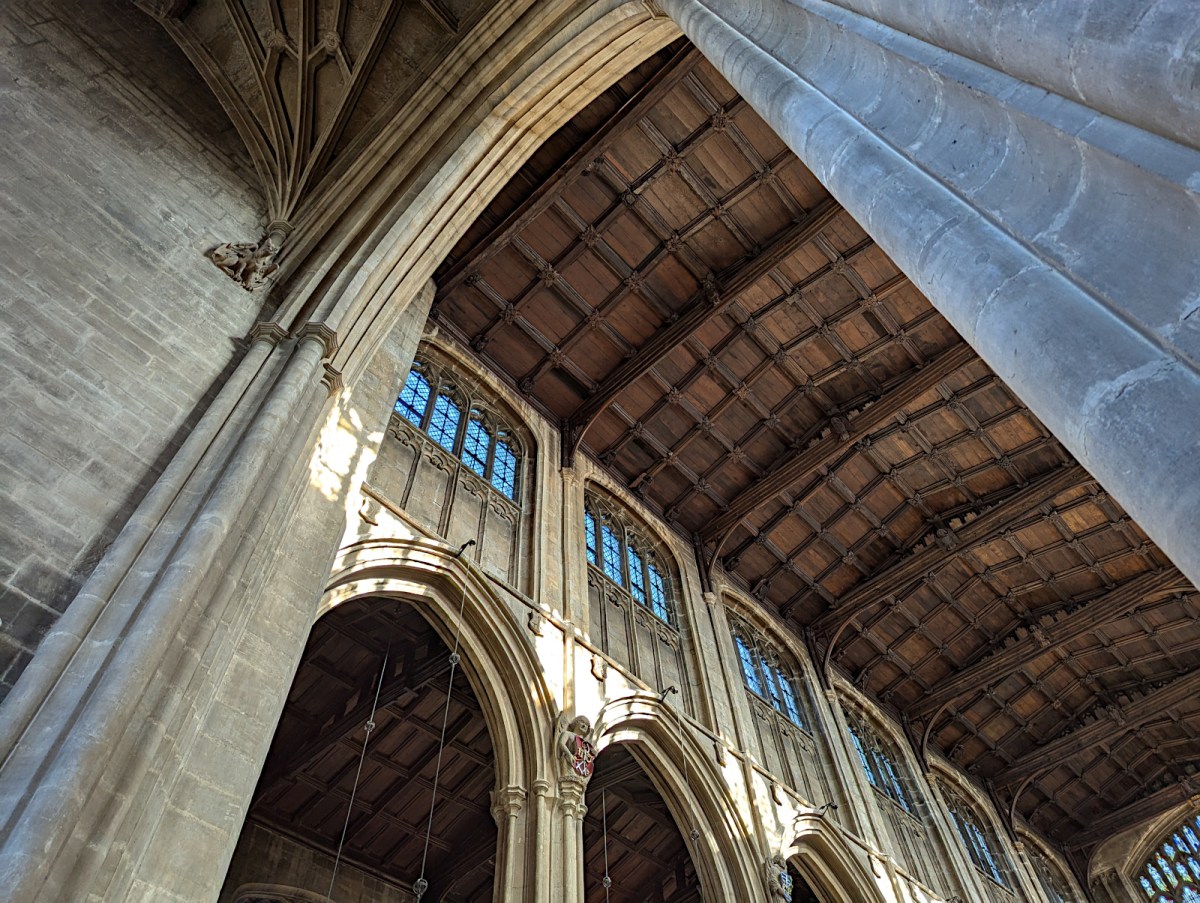
Image of the day – 68

An imaginary, stone creature with wings stares down at you as it helps to support the stone ceiling below the tower.

< Previous | Index | Next >

What’s in an image? Sometimes quite a lot, more than meets the eye.

I’m posting an image every two days (or as often as I can). A photo, an image from the internet, a diagram or a map. Whatever takes my fancy.

Click to enlarge

Here’s a second photo from inside Cirencester’s Parish Church. This time we’re looking up for a view of the nave’s wooden ceiling with it’s interesting construction and wooden boarding that supports the external lead sheets to provide the necessary weather-proofing. The structure is certainly a cut above the average house roof!

If you look to the left of the top of the leftmost stone pillar, you will notice a grotesque figure. An imaginary, stone creature with wings stares down at you as it helps to support the stone ceiling below the tower, this space under the tower forms the West Porch of the building.

You can also see some of the north-facing nave windows just below the wooden ceiling, and sunlit stonework from beams shining through the south-facing nave windows (out of sight in this view).

Cirencester

For convenience, here’s a list of all the Cirencester area images:

A417 roadworks, Advent Market, Bishops Walk, Baunton, Canal 1, 2, Castle Street, Christmas lights 1, 2, Church 1, 2, 3, 4, 5, 6, Churn flood, Countryside, Fallen tree, Fleece, Gasworks, Gloucester Street, Hare 1, 2, Hospital, Market Place 1, Phoenix Fest, Riverside Walk, Stone plaque, Stratton Meadow, Tank traps, View, Wonky 1, 2, Yellow Iris

Themed image collections

The links below will take you to the first post in each collection

Cirencester, Favourites, Irish holiday 2024, Roman villa

< Previous | Index | Next >

Useful? Interesting?

If you enjoyed this or found it useful, please like, comment, and share below. (If you don’t see those links, click the article’s title above the main photo and they will appear.) Send a link to friends who might enjoy the article or benefit from it – Thanks! My material is free to reuse (see conditions), but a coffee is always welcome and encourages me to write more often!

Image of the day – 67

Because the church is so large (one of the largest in England), it’s sometimes called ‘The Cathedral of the Cotswolds’.

< Previous | Index | Next >

What’s in an image? Sometimes quite a lot, more than meets the eye.

I’m posting an image every two days (or as often as I can). A photo, an image from the internet, a diagram or a map. Whatever takes my fancy.

Click to enlarge

This is an interior view of Cirencester’s Parish Church of John Baptist. The long view you see here is the nave with the chancel at the far end (beyond the screen); the chancel is the oldest part of the building, perhaps dating to about 100 years after the Norman invasion; it’s in this area that the Saxon church stood. Alterations and additions were built at various times from the late 12th century through to the mid 16th century, the tower being added at the beginning of the 15th.

The church overlies parts of the Roman city of Corinium, possibly concealing some ‘missing features’. The city would have baths and a theatre as both were important features in Roman times. No trace of either has been found by the archaeologists.

Because the church is so large (one of the largest in England), it’s sometimes called ‘The Cathedral of the Cotswolds’. Nonetheless, it’s just a local parish church.

Cirencester

For convenience, here’s a list of all the Cirencester area images:

A417 roadworks, Advent Market, Bishops Walk, Baunton, Canal 1, 2, Castle Street, Christmas lights 1, 2, Church 1, 2, 3, 4, 5, 6, Churn flood, Countryside, Fallen tree, Fleece, Gasworks, Gloucester Street, Hare 1, 2, Hospital, Market Place 1, Phoenix Fest, Riverside Walk, Stone plaque, Stratton Meadow, Tank traps, View, Wonky 1, 2, Yellow Iris

Themed image collections

The links below will take you to the first post in each collection

Cirencester, Favourites, Irish holiday 2024, Roman villa

< Previous | Index | Next >

Useful? Interesting?

If you enjoyed this or found it useful, please like, comment, and share below. (If you don’t see those links, click the article’s title above the main photo and they will appear.) Send a link to friends who might enjoy the article or benefit from it – Thanks! My material is free to reuse (see conditions), but a coffee is always welcome and encourages me to write more often!
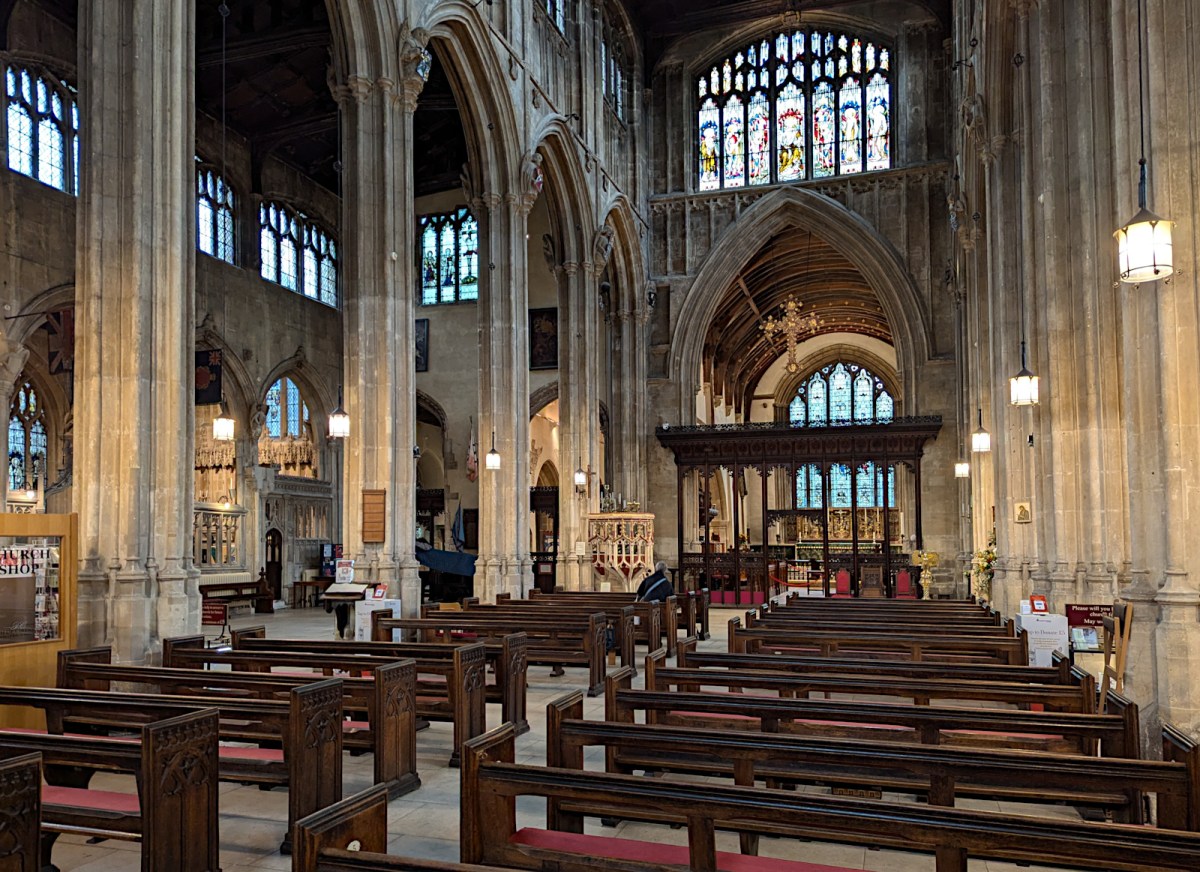
Image of the day – 66

The Parish Church was built beginning in the 12th century, near the site of an earlier Saxon church…It’s by far the largest building in the Market Place and dominates the space.

< Previous | Index | Next >

What’s in an image? Sometimes quite a lot, more than meets the eye.

I’m posting an image every two days (or as often as I can). A photo, an image from the internet, a diagram or a map. Whatever takes my fancy.

Click to enlarge

In an earlier image we saw details of the Parish Church porch. This time we have a view of the entire church, with the porch in the lower right. It appears paler than the rest of the building because it’s had a protective stone paint applied to prevent further weathering; the colour is a good match when the unpainted parts are freshly cleaned.

The Parish Church of St John Baptist was built beginning in the 12th century, near the site of an earlier Saxon church; the tower was added in the 15th century and is the most recent structure. It’s by far the largest building in the Market Place and dominates the space.

Cirencester

For convenience, here’s a list of all the Cirencester area images:

A417 roadworks, Advent Market, Bishops Walk, Baunton, Canal 1, 2, Castle Street, Christmas lights 1, 2, Church 1, 2, 3, 4, 5, 6, Churn flood, Countryside, Fallen tree, Fleece, Gasworks, Gloucester Street, Hare 1, 2, Hospital, Market Place 1, Phoenix Fest, Riverside Walk, Stone plaque, Stratton Meadow, Tank traps, View, Wonky 1, 2, Yellow Iris

Themed image collections

The links below will take you to the first post in each collection

Cirencester, Favourites, Irish holiday 2024, Roman villa

< Previous | Index | Next >

Useful? Interesting?

If you enjoyed this or found it useful, please like, comment, and share below. (If you don’t see those links, click the article’s title above the main photo and they will appear.) Send a link to friends who might enjoy the article or benefit from it – Thanks! My material is free to reuse (see conditions), but a coffee is always welcome and encourages me to write more often!