The UK is a rich mix of people from many cultural backgrounds. That’s why the title is not ‘Christmas Greetings’. Please accept the greetings and replace the word ‘Season’ with whatever you like.
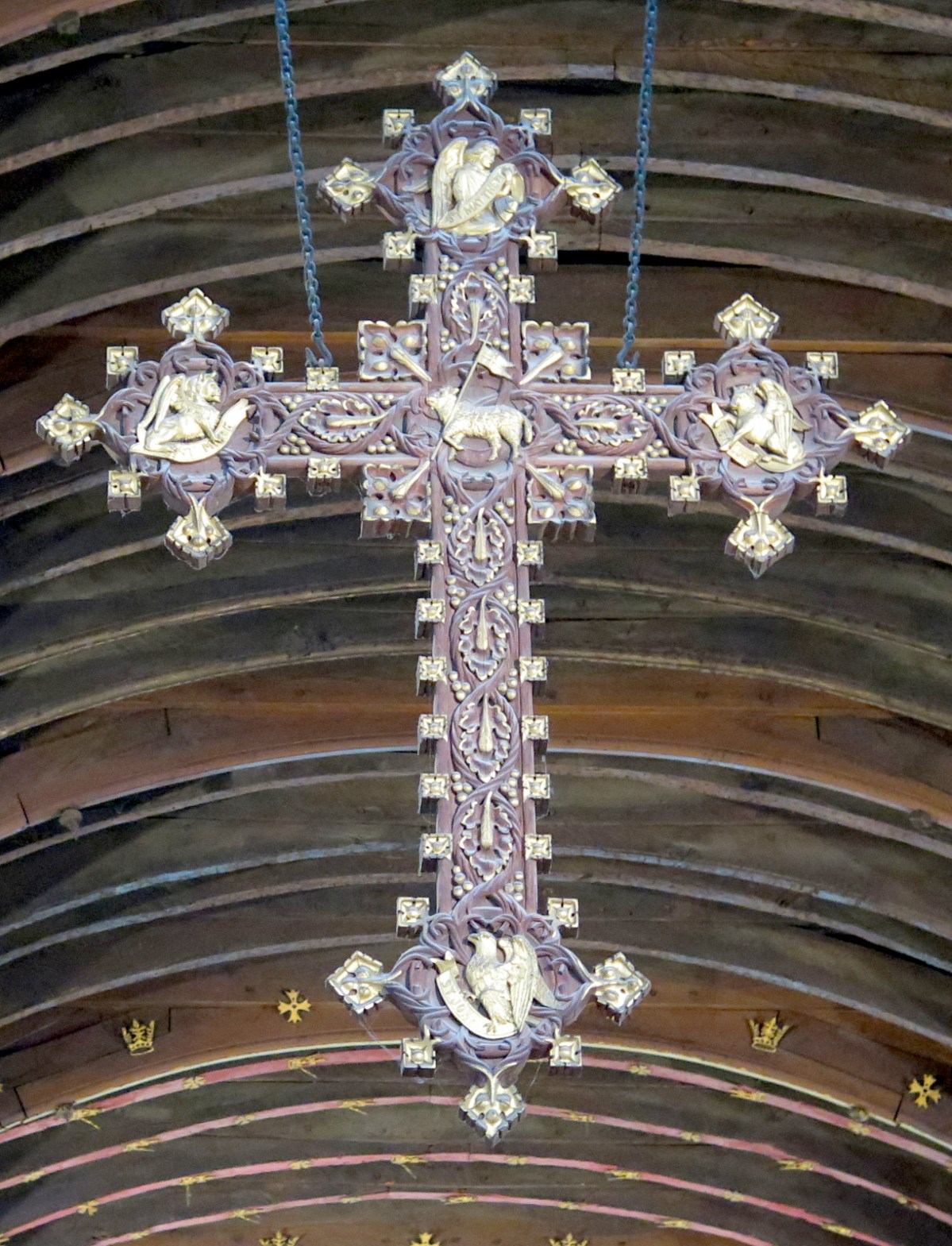
This great cross hangs from the high ceiling between the nave and the chancel of Cirencester Parish Church of St John Baptist.
Click to enlarge
This cross was carved and carefully gilded by craftsmen from Cirencester’s past. It hangs on stout iron chains from the heavy timbers of the chancel roof and for centuries has been the focal point for worshippers sitting in the pews of the nave. At first glance it almost seems to have been studded with jewels, but in fact it’s plain wood with gilded ornamentation.
In the centre of the cross is a lamb carrying a banner marked with the cross of St George. This lamb represents Jesus, the sacrificial ‘lamb of God’. At the top of the upright timber is a winged St Matthew, author of Matthew’s Gospel, at the extreme left of the cross beam is St Mark portrayed as a winged lion and at the right hand end St Luke as a winged ox wearing a crown. Right at the bottom of the upright timber is St John, shown here as an eagle.
More about those images
The lamb with the banner of St. George represents the Agnus Dei (the Lamb of God), symbolising Jesus Christ, and later iconography mixes symbols of sacrifice and victory. Jesus Christ was seen as both sacrificial (the lamb) and a victorious king (the banner).
The winged man represents St. Matthew because his gospel emphasises Christ’s human nature. His account begins with a genealogy of Jesus’ descent from Abraham highlighting his human, earthly origins. The winged aspect signifies divine inspiration of the gospel message and the angelic wings refer to Matthew’s task as a messenger of God’s word.
St. Mark is shown as a winged lion because his gospel starts with the roaring voice of John the Baptist in the wilderness, (roaring like a lion) while the wings refer to the four winged creatures described in the books of Ezekiel and Revelation. The lion represents the strength of Mark’s message and the resurrection of Christ, the wings speak of the four evangelists being guardians of the throne of God.
St. Luke the Evangelist is traditionally symbolized by a winged ox (or bull or calf). The symbol is derived from the four living creatures in the Book of Ezekiel and Revelation, which early Christian tradition associated with the four Gospel writers. The ox was chosen for St. Luke because it was an animal of sacrifice in the Old Testament, representing the sacrificial aspect of Jesus’ ministry, which Luke emphasizes in his Gospel by beginning with the priestly duties of Zechariah. The wings signify that the Gospel message is to be spread throughout the world.
St. John is shown as an eagle because it’s his symbol as one of the four evangelists. His gospel is seen as soaring into theological heights, also true of his visionary writings in the Book of Revelation. And the eagle is associated with divine power, heavenly vision, and spiritual insight as seen in the book of Revelation.
These medieval traditions are all very well, but the carved, gilded cross is also a distraction from the dreadful truth that a wooden cross was an instrument of torture and death. It’s easy to get wrapped up in traditions and forget that Jesus died to provide the opportunity for us to turn back from the brink. The heavy timbers to which Jesus was nailed to die were not ornate or gilded, and there were no traditions portrayed on them. Jesus (Yeshua, Isa) came in simplicity offering a simple opportunity and sharing simple truth. You don’t need a degree in history or theology to follow him, just an open, willing mind and a light touch from his spirit of love and truth.
In that vein, here’s something I add every year, I’ll offer it up to you again now. The UK is a rich mix of people from many cultural backgrounds. That’s why the title is not ‘Christmas Greetings’. Please accept the greetings and replace the word ‘Season’ with whatever you like. If you’re Hindu you could choose Pancha Ganapati, or Jewish friends might go with Hannukah in December, if you’re Muslim you might look forward to the start of the holy month of Rajab; Buddhists might consider Bodhi Day, and there are more groups of people I haven’t mentioned specifically. But whatever you celebrate, please take my greetings as a blessing for the whole of next year – spring, summer, autumn and winter. I’m not here to press you into a new and different tradition. I’m here to dismiss tradition in its entirety and offer love, peace and grace in its place. The teachings of Jesus are simple and there are thoughts about them throughout the articles on this website.
PS – If you like the photo, click the thumbnail for the full size version. Print it out, put it in a frame and hang it on the wall. Give a copy to friends if you think they’d like it; or send them a link to this message.
Teaching is not a bad thing, it’s an essential thing. A well-balanced community living in Jesus’ presence needs to receive truth from apostolic, prophetic, evangelistic, pastoral and teaching gifts.
A new family moved into the village and began to advise and work with Tony, Faith, Paul, Jenny and some of our friends from the next village, Claverham. During this time Judy and I began to feel that things were going a bit off-track. Judy actually wanted nothing to do with the new situation, I decided to go along to the meetings fairly often to keep in touch with our friends. I should add, right at the outset, that I don’t think there was any intention to derail the work that Father was doing amongst us, but rather to enrich it and bring additional knowledge and experience to the mix. But unintentionally this had the effect of changing track with a new focus on teaching that had not been there before. Teaching had never been a notable part of our meetings, we had always been guided mainly by prophecy, and by what we read in the Bible. We were exposed to teaching when we went to larger meetings (the pre-crusade rallies in Portishead for example and visits to Pip’n’Jay in Bristol or the meetings at Post Green), and from the popular books that were doing the rounds (books by Graham Pulkinhgham, Michael Harper, Colin Urquhart, David Watson and others) and we did a small amount of teaching when we were invited to visit local churches as ‘Fountain’. But in our own weekly and daily meetings there was little to no teaching. We were growing and learning together in our exciting faith journey. It was wonderful and extraordinary while it lasted.
But now Alan and Dorothy provided new songs (some of them truly excellent) and Alan taught regularly about how and when and where the meetings should take place as well as material about Jewish customs, feasts and celebrations. Alan and Dorothy came from a background of small gatherings in a different part of the UK (Blyth). So the Spirit-guided growth we had experienced gradually gave way to ideas and processes managed mainly by Alan. Something similar to this has happened over and over again throughout church history. Personally I learned a good deal by seeing it happen both from the outside (because I wasn’t directly involved in the events) and also from the inside (because I was at many of the meetings and had a ringside seat, so to speak). Sometimes I feel I should have shared my thoughts and feelings clearly, but Alan was experienced in meetings of this kind and I was not. I didn’t feel it was my place to interfere, nor was I part of what was happening. When I went along to a meeting I always felt I was accepted partly because I didn’t stir up trouble, but somehow seen as not quite making the grade. Everyone must have been aware that I had some doubts though I was careful not to express them too often or too forcefully. I was, however, grieving about the loss of the sense of direction we’d had together and the subtle shifts in emphasis.
A bad thing can sometimes spark good outcomes
What a strange heading, but it’s true! A few years later my wife Judy was diagnosed with bowel cancer and everything changed. Your friends are always your friends, through good times and bad, so at some point in late spring or early summer 1995 I think, I approached Tony and Faith with this really bad news and invited them to visit and pray with us. And because your friends are always your friends, they were not slow to respond. This coincided with a time when the meetings with Alan and Dorothy were proving rather difficult though I didn’t know that at the time.
Before long Tony and Faith, and Paul and Jenny were coming round for an evening visit at least once a week, and eventually two or even three times a week as Judy’s illness progressed. But what happened during those meetings was astounding and utterly unexpected. Jesus was palpably present every single time we met, and his Spirit was so active amongst us. We experienced prophecy, interpreted tongues, and deep coincidences between songs we were singing, what we were thinking and Bible readings that popped out in the moment. We knew we were right in Father’s presence every time we met. This was holy ground. None of us had experienced anything like it before. The cancer spread and I, for one, had no expectation of physical healing, but Judy and I were both blessed deeply by the renewed presence of our friends and by the experiences in the meetings. It’s fair to say we were all changed by these times together and I know that all of us who remain will never forget it. Judy died on 28th December 1995 and Paul is now no longer with us either. I’m sure all of us learned a lot through the shared experience of those times. Looking back from the perspective I have now, it seems that the change in the meetings following Alan and Dorothy’s arrival combined with the astounding times and experiences as we met again during Judy’s illness, starkly illuminated the difference between living and meeting in our own human wisdom and strength and the freedom we had in the pure presence of Jesus and his Spirit. There’s something further to say about this.
Teaching is not a bad thing, it’s an essential thing. A well-balanced community living in Jesus’ presence needs to receive truth from apostolic, prophetic, evangelistic, pastoral and teaching gifts. If any are missing or if there is an imbalance, any group, no matter how well-meaning, risks derailment in one form or another.
Winding down
After Judy’s death, the five of us continued to meet for a while, and sometimes we were joined by a couple from Clevedon, members of a new local church, and also by Donna (now my second wife) who was a work colleague from Long Ashton Research Station.
These meetings, too, were good but things were still changing. I remain in touch with Tony and Faith occasionally, though less so with Jenny. Donna and I were married a few years later and left the south-west for the east of England, but that’s another story and I’ll share my personal journey of faith there in the next part of this series. Paul and Jenny moved east as well to be closer to more of her family. Tony and Faith still live in the village of Yatton. Donna and I moved west again ten years ago and now live in Cirencester, Gloucestershire.
If you enjoyed this or found it useful, please like, comment, and share below. (If you don’t see those links, click the article’s title above the main photo and they will appear.) Send a link to friends who might enjoy the article or benefit from it – Thanks! My material is free to reuse (see conditions), but a coffee is always welcome and encourages me to write more often!
We didn’t see ourselves as a house church, more as a group of local believers from a range of denominations all wanting to be part of the exciting revival going on in the UK at the time, open to the gifts of the Spirit, but not wanting to become yet another splinter group.
Yatton, the village in Somerset where it all happened
Things were changing. We’d been fairly comfortable at Horsecastle Chapel in Yatton, and we’d learned a great deal and felt loved and made very welcome by the people there. But there were one or two niggles already mentioned in part two of this series. We felt it was not right, and rather unfortunate, that women were not able to take leading roles in meetings, that it was required that women wear hats (a minor thing, but an irritant nonetheless). It began to seem that some of these rules were made by people, not by our Father in heaven, and certainly not by his Son, Jesus. But the greater niggle was that we were not able to move in spiritual ways that were being revealed to us more and more as time went by.
An Anglican home group
For me it came into sharper focus when I went to an Anglican study group. Judy might have come to the same ideas in a different way, but she died in 1995 so I can’t check! I’m not sure we discussed it at the time, but we were moving on closely parallel paths, that I can say with certainty. I wanted to meet some of the Anglicans because I had the feeling there was supposed to be a single church, not a plurality of them. I couldn’t see any way that they could all be brought together, but I wanted to at least get to know some people of other denominations. Going along to the study group seemed a good way to approach this. I soon came to understand that the Holy Spirit was nudging me to go along, and rather quickly I discovered what he had in mind!
Friends and allies
The Anglican study group was held in the home of one of the St Mary’s congregation and was led by the Vicar, Revd Richard Acworth. I don’t remember what was discussed, but I very clearly remember the topic of humility coming up. There was a man in the group who protested, quite strongly, that he was not humble and didn’t intend to become so. I had the impression that he equated ‘humble’ with ‘impoverished’ or ‘weak’ or ‘demeaning’ or some other utterly unattractive idea. I think I was also a bit disappointed by the Vicar’s response.
Also in the group was a woman about my age and as we were leaving I mentioned the humility issue. She agreed quite enthusiastically and we had a brief conversation on the way home; her name was Faith. Judy and I would soon become good friends of Faith and her husband Tony. We shared a lot of views in common concerning Jesus, the Bible, and Church – and this excited me because we were from such different church traditions.
Meeting often
We began meeting quite regularly with Tony and Faith. We were like-minded on so many church matters, and some other things too. we both had young families so most often one of us would walk down to Tony and Faith’s house in Court Avenue in the evening while next time one of them would walk up to our house in Rectory Drive. We would do some Bible study, perhaps sing some of the Christian songs that were so common in those days, and we would pray together. But by far the most important thing we did was to listen to one another and to what the Holy Spirit seemed to be saying to us, sometimes in a whisper, sometimes rather loudly! We invited other people we knew to come and join us, especially Paul and Jenny who lived close as well, so four became six, and there were many other local people with us so on a weekly basis we took turns to host these larger meetings. Sometimes there’d be 20 people in our sitting room, on our sofa and armchairs or sitting on the floor. These were great times of blessing when all of us would feel the presence of the Holy Spirit right with us in every word read or spoken and in every song we sang. We were warned of the dangers we were facing by some of the elders at Horsecastle Chapel, we knew their hearts were in the right place and that the warnings were well-meant; but we knew we were following Jesus so we ignored the advice and warnings and carried on.
Music
Fountain at St Barnabas
Tony is a skilled bass guitarist, Paul was good on a steel-strung 12-string he had, And I would plonk along on a nylon-strung Spanish style acoustic guitar Judy and I had bought at a music shop in Park Street, Bristol while we lived in our flat in Belmont Road. This was an expensive instrument – I think it cost us £27 in 1970 or 1971 (around £540 today) and it replaced the two cheap, second-hand guitars we bought while at university. It seemed better to share one good guitar than to persevere with two older ones that were difficult to tune. Rather later, we were joined quite often by David and Mary Bolster, another couple living nearby. David worked for Scripture Union, and was usually busy with youth work of one kind or another. Judy and I went on a youth retreat with them one year at Wroughton near Swindon to help as assistant leaders, and visited them at a camp at Greatwood near Bridgewater in Somerset. The photo shows Fountain in the Church Hall at St Barnabas in Claverham (from left you can see Paul, Faith, me, Ian on flute, Jenny, Judy and Tony on bass). Ian joined us a little later but was a very useful addition providing a higher pitch in the mix and helping strengthen the melody line.
Tongues
One evening after walking down to Tony and Faith’s, Tony mentioned that he’d received the gift of tongues. We’d read about this in Acts and in some of Paul’s letters to the Greek churches. and we’d read about it in modern times too in books by Colin Urquhart, David Watson, Graham and Betty Pulkingham and others. On hearing this news from Tony I felt mild surprise, delight, frustration and envy all at the same time. So, of course I asked about how it had happened and what it was like. Tony told me he’d been having a bath so was very relaxed and he just started talking scribble. He felt warm and encouraged. As I walked home after that evening at Tony and Faith’s. I gave it a try – I talked some scribble words myself. I learned a valuable lesson right at that point. Was this a gift from the Holy Spirit or was it just me talking scribble and being really foolish. I realised right away that there was no way to tell. And I understood something that I’ve never forgotten since that evening. It’s not about me doing something or not doing something. Specifically, it’s all about Jesus doing something in me, and the only skill needed for that is the simple ability to listen to him and do what he wants, not what I want. This tiny revelation changed my entire life. Everything became real in that moment. In this journey with Jesus it’s not for us to do anything more than rest in his presence. If I do that one thing, consistently, he will do anything else that is necessary. My effort is not required, and life is often far better if I keep well out of the way, especially at moments when he’s touching someone else. My surprise and delight are in order, but never frustration or envy.
As the weeks and months went by, our home meetings grew in numbers, but more importantly in depth and in our appreciation of receiving gifts. We were being invited to bring music and teaching to local churches around the county of Avon and the northern areas of Somerset. We called ourselves ‘Fountain’, played all the latest choruses and songs, as well as some of our own songs and acted out little sketches to help people understand the charismatic revival that was taking hold all around us. Tongues and interpretation became normal for us in meetings, as did prophecy, but the most important things for me were the spirit of caring for one another that grew in our hearts and minds and the determination we all had to follow Jesus in everything.
Jesus provides gifts, but will we open them?
One of those sketches sticks in my mind so I’ll share it with you, Tony played the part of Jesus, and Paul was a typical church member. Tony had a cardboard box wrapped in colourful paper, perhaps with a ribbon tied in a bow. He gave the box to Paul, saying I have a special gift for you. Paul took it and made a point of thanking Tony several times, saying, ‘Oh it’s really lovely, thank you so much, but I don’t think I really deserve it’. He put it down on the table, walked round it, looked at it from all angles and carried on saying how lovely it was. Tony (Jesus) asked, ‘Aren’t you going to open it?’ I chose it specially for you, it’s just what you need, you know.’ Oh no, I couldn’t possibly open it,’ said Paul, ‘That would spoil it, it’s so beautifully wrapped, it would crumple that lovely paper. Jesus responded, but if you don’t open it you won’t find out what it is and you won’t be able to use it. I want you to open it’. And this went on for a while. Then we explained that Jesus has gifts for all of us, but we do need to open them and start using them. And without the gifts being unwrapped and used as intended, Jesus will find it a problem to help us do the work he has in mind for us. His work, building his church, growing his people involves him pouring his grace and love into us so that we can share those things with those around us. He does not want us to be timid. We must gratefully receive everything he has for us. It’s for his glory, not ours and we shouldn’t stand in his way.
Good News Crusade
Another thing we did around the same time was print a monthly local newsletter called ‘Community Spirit’ with details of forthcoming meetings at churches around the area, and any special events in the pipeline too. One of these was a Good News Crusade with a series of pre-Crusade rallies beforehand at a church in Portishead. I recorded many of these meetings on a portable stereo cassette machine, and I produced copies from the originals so they could be passed around the community as widely as necessary.
Not a house church
Eventually we would be hosting home meetings of up to twenty people once a week at our house, Tony and Faith’s, or Paul and Jenny’s and one or two other homes in the nearby village of Claverham. There were other similar house meetings going on (for example the Bank House Fellowship in Clevedon). We didn’t see ourselves as a house church, more as a group of local believers from a range of denominations all wanting to be part of the exciting revival going on in the UK at the time, open to the gifts of the Spirit, but not wanting to become yet another splinter group. Much of the leadership effort at the time was spent on starting new streams of churches, New Frontiers for example or Vineyard, or on the other hand bringing spiritual gifts into the established denominations – Anglican, Catholic, Methodist, Baptist and so on. Both of these efforts became successful and widespread, but from my perspective today I can see very clearly that we made by far the better, and perhaps more obedient choice. We thought the way forward was more about bringing people together in freedom to follow Jesus in flexible ways, while providing information, help and encouragement both in the established churches and chapels in our area, and amongst Jesus followers with no connections to established churches. We were also keen to encourage new and deeper spiritual growth in all the local churches, though our links with some of the larger places were more tenuous than those with the smaller and self-governing groups. I still feel privileged to see things this way – as if I had a narrow escape from taking a wrong path. I think we all had a narrow escape, Jesus was protecting us and whispering to us, ‘Not that way, this way, just follow me!’ Many of the churches and chapels we encouraged still exist and remain active, some of their websites are listed below under the See also: heading.
Prophecy
It wasn’t just Tony, as time went by we all found ourselves receiving spiritual gifts in a variety of ways. For me, visions and prophecy became the main gifts and I well remember the first time I became aware of it.
I was sitting on the floor in Tony and Faith’s front room, it was just the three of us. (so before Paul and Jenny became involved). In my mind I saw us as children playing on a building site. There were muddy puddles and stacks of bricks all around. We took some of the bricks and stacked them up to make little ‘houses’, four bricks for walls and another balanced on top to make a roof. We were happy playing with the bricks together, but just then the builder arrived and spotted us. He walked over and smiled, though we thought he’d be cross with us. Somehow I knew the the builder was a representation of Jesus. And he said to us, don’t play with the bricks but bring them to me because I know how to use them to build real houses. If you bring them to me you’ll save me time and I’ll be able to build faster.
So that’s what we did, and the first real house started to rise! It wasn’t much of a stretch to see that the real house represented the church, and our job was not to build something ourselves but to bring people into Jesus’ presence and watch while he builds the church.
It was an important lesson and a growth point for me personally and perhaps for all of us as a group. And I’ve been used that way in meetings ever since. Sometimes it’s been well received, sometimes not.
The Fisherfolk/Community of Celebration
Around this time we became aware of the Fisherfolk, a music ministry that wrote and recorded many new Christian choruses focusing on spiritual growth, and particularly the receiving and use of spiritual gifts. This was right up our street! We bought the music books with words and, most helpfully with keyboard score and guitar chords as well, we bought the LP recordings and avidly absorbed it all, practicing Fisherfolk and other songs as well as creating some of our own.
But then a special opportunity came up. We learned that a weekend of music, praise and worship was planned at a site in Dorset – Lytchett Minster. There was a field for camping, the Fisherfolk would be playing and there’d be a lot of like-minded people to discuss things with. We booked space for three tents and went along. It turned out to be a time of growth and learning, just as we’d hoped – hugely beneficial, confirming much that we were already doing and encouraging us to continue.
Impressed as we were by the community style of living demonstrated by the Community of Celebration, we briefly toyed with the idea of selling our three homes and buying an old farmhouse with some land around it, Faith, Paul and I thought this would be a great idea, but Judy, Tony and Jenny disagreed and we didn’t follow through on the plan. It was only an idea in the back of our minds, we didn’t even start to look into the practicalities. but without unanimity, it couldn’t get off the ground.
If you enjoyed this or found it useful, please like, comment, and share below. (If you don’t see those links, click the article’s title above the main photo and they will appear.) Send a link to friends who might enjoy the article or benefit from it – Thanks! My material is free to reuse (see conditions), but a coffee is always welcome and encourages me to write more often!
What’s in an image? Sometimes quite a lot, more than meets the eye. I’m posting an image every few days.
Click to enlarge
This boat, seen here on the Gloucester and Sharpness Canal, is based at Saul Junction in Frampton on Severn. It might look like a tourist boat available for hire by the public, but it serves a different and entirely charitable purpose. Two similar (but not identical) special boats were built to provide opportunities for disabled or seriously ill people to experience a day on the canal for free. And for those that want to, they are also given the chance to explore the boat, see how it all works, hold the steering gear and so forth. The boats are designed for wheelchair access too. Check the See also link below for details and photos from the Willow Trust website.
I love to see examples of effort and resources being expended by enthusastic teams to greatly benefit those who need and deserve help. Every one of us can see the need for support of this sort, though not all are able or willing to provide it. But every single person in the world can do something positive to help others one way or another. It might be as simple as a kind word at the right moment, or a helping hand to steady someone losing their balance, or even just a smile. All it takes is an open eye, an attentive ear, and a willing mind.
If you are a wealthy person you might give thousands of pounds towards maintenance and fuel costs for these boats; if you have some spare time but no money, you might give time and energy to help with tidying and cleaning a boat between trips or helping in other practical ways. No matter what we do or do not possess, there’s always something we can offer.
It’s about contributing something, anything, in a world that’s not always fair or kind. And there are so many considerate, helpful organisations out there – everyone can find worthy opportunities in every town and most villages around the globe; even where there’s no local group or organisation, there will be many local opportunities to find and fill a need of some kind.
If you enjoyed this or found it useful, please like, comment, and share below. (If you don’t see those links, click the article’s title above the main photo and they will appear.) Send a link to friends who might enjoy the article or benefit from it – Thanks! My material is free to reuse (see conditions), but a coffee is always welcome and encourages me to write more often!
We need to be noticed for our goodness. If we are filled with the spirit of Jesus we will bear the fruit of his spirit; and here’s that fruit – love, joy, peace, patience, kindness, goodness, faithfulness, gentleness, self-control.
My previous post was an image of the day. I wrote about evening mist, and how our lives have a beginning, a middle, and an end, just like a day there’s a certain mistiness about growing old. I ended by writing:
The teaching of Jesus is very logically sound, not testable but also, as far as I can see, internally coherent and free of self contradiction. That quality amazes me, I believe his claims to be true, testable or not. He has convinced me. Maybe he has convinced you too, or maybe not. We have that freedom, and we cannot persuade one another using the scientific approach, good as that is for studying more measurable and therefore testable matters.
If we can’t persuade others using the scientific method of testable hypotheses, how then can we reach those around us? There is a way, of course, so lets take it step by step.
How I live
The first thing to realise is that if we are following Jesus, we are his ambassadors in this world. An ambassador represents one nation by being present in another. Jesus came as an ambassador (and much more than that, of course). He came to represent his Father and his Kingdom here on Earth. He demonstrated Kingdom values and ways as well as talking about them.
I’m an ambassador too, I’m here to represent Jesus and his Kingdom to others. If I’m to represent Jesus I need to be like him as much as possible. So let’s dig into his character for a moment. Why did people 2000 years ago in Israel listen to Jesus? He did speak to individuals and even to crowds, but he also did things that surprised people. He met people’s needs (that will always get attention). He fed hungry people, he listened to lonely people. He healed sick people (that definitely got attention) He told stories (something else that people will listen to). But primarily (and what lay behind everything else) – he loved people and cared about them. So that’s what I aspire to: love people and care about them, meet their needs, feed the hungry, listen to the lonely, heal the sick, and tell good stories. Those are things I try to do as an ambassador for Jesus.
There’s a lot of love but also a good deal of uncaring in this human world of ours. People usually love their close family and their best friends and it’s love that drives us to help, to go the extra mile, to put up with those times when we feel let down or disappointed. But with people we don’t know we may be cautious at first. Some people seem not to care at all about others, appearing to be driven by selfishness alone. But the fact is that almost all of us are a mix, we display love sometimes, at other times or with other people we just don’t care very much.
We need to be noticed for our goodness. If we are filled with the spirit of Jesus we will bear the fruit of his spirit; and here’s that fruit – love, joy, peace, patience, kindness, goodness, faithfulness, gentleness, self-control – this list was written down in Greek by Paul, an early follower of Jesus. Read what he wrote in context.
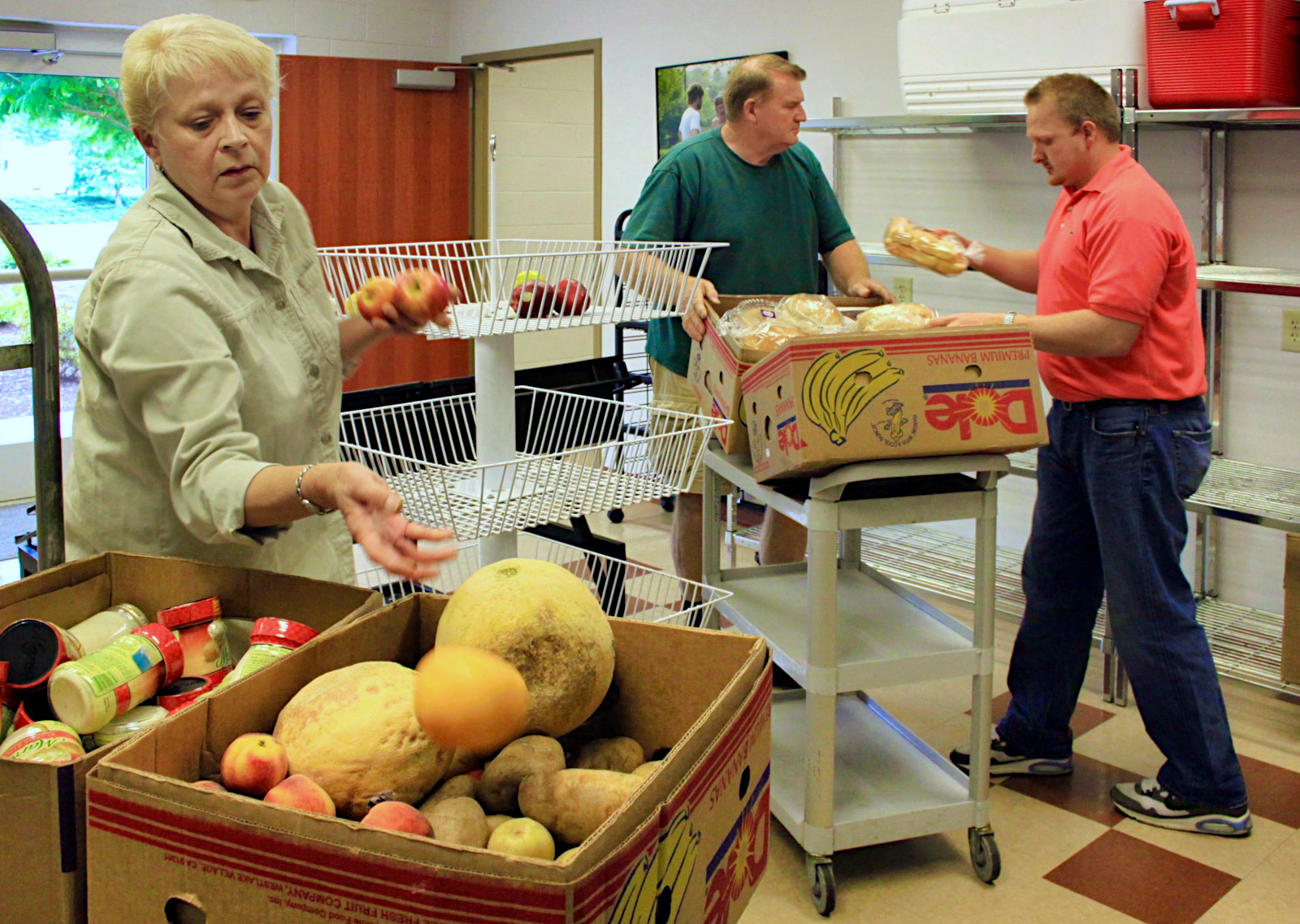
It’s not so much about what I say, it’s about what I do. Helping in a food-bank, for example, picking up litter, planting snowdrops on grass verges, listening, learning to be more like Jesus.
Talking about Jesus
If I walk up to a stranger in the street and start telling them about Jesus, what will happen? Will they listen? I think we all know the answer!
If people notice how I behave and what I do and are surprised about that in some way, they might sometimes ask me about it. And I’ll explain that it’s simply because I’m trying to become more like Jesus. They might ask about that as well.
If I claim to be following Jesus, people will assume that Jesus is like me. That is a huge responsibility. If I fail in how I live, what I say will not be believed. Answering questions is always better than telling people things they may not be eager to hear. Reaching people is a matter of my behaviour being interesting enough to spark the why question and then providing good answers.
If you enjoyed this or found it useful, please like, comment, and share below. (If you don’t see those links, click the article’s title above the main photo and they will appear.) Send a link to friends who might enjoy the article or benefit from it – Thanks! My material is free to reuse (see conditions), but a coffee is always welcome and encourages me to write more often!
Look at the world around you and you will see pain, loss, discouragement, guilt, and hard struggles for survival. But look at the world from just the right angle and you will see altogether better things.
This photo of the interior of Cirencester Parish Church reminds us of the dedication, hard work, and sheer skill put into building a church nearly 1000 years ago. That should stop us in our tracks and make us think – why go to so much effort?
Click to enlarge
Work on building Cirencester’s Parish Church of John Baptist began in the twelfth century. The chancel (where the altar stands) is the oldest part of the structure and replaced a previous Saxon Church, and perhaps a Roman one beneath that. Additions, alterations, repairs and improvements date to almost every century, the most recent change returning sculptures to two empty niches on the tower in 2019. It’s been a lot of work over a period of a thousand years.
Why? There will, of course, be many reasons. Wealthy townspeople have been willing to spend large sums of money from time to time, and masons, carpenters and other tradespeople will have worked for payment. Some people may have been motivated by their faith, others by a desire to contribute to something beautiful and special, perhaps some to say, ‘Thank you’, for answered prayer. We will never know the full detail, mostly we can only imagine.
But for me, this photo illustrates something quite different. My own understanding of Jesus’ teachings is that we have received a great treasure and should do whatever we can to share it freely with friends, family, neighbours, even enemies, with everyone who will listen. This is an altogether different kind of building work. We are raising a beautiful structure, not of stone and timber, brass and lead, stained glass, silver and bronze. We are building as Jesus builds, a structure of trust, love, grace and peace, of joy, precious thoughts, acts of kindness and caring, a work of self sacrifice, healing, truth, and acceptance. A drawing in as well as a raising up, a work that can always be extended further.
Am I good at it? No, not really. Only Jesus is truly good at this task. He came to reveal his Father, and to pour out his Spirit. And he told us (his followers, his apprentices) to carry on his work.
So, as a very small part of this task, I say to you my readers (if you are still reading at this point) whatever your faith, or religion or view of life, my wish for you, my prayer for you, is that these weeks as 2024 grows old, will be a time of growing peace in your heart. Life isn’t always easy, so my hope is that you will find something to smile about even in difficult times.
Here’s something I wrote last year, I’ll offer it up to you again now. More and more, the UK is a rich mix of people from many cultural backgrounds. That’s why the title is not ‘Christmas Greetings’. Please accept the greetings and replace the word ‘Season’ with whatever you like. If you’re Hindu you could choose Diwali as a reminder of your celebrations in October, or Jewish friends might go with Hannukah in December, if you’re Muslim you might look forward to Lailat al Miraj in February; Buddhists might consider Bodhi Day, and there are more groups of people I haven’t mentioned specifically. But whatever you celebrate, please take my greetings as a blessing for the whole of next year – spring, summer, autumn and winter.
And I apologise to my southern hemisphere friends whose new beginnings may come in June or July!
PS – If you like the photo, click the thumbnail for the full size version. Print it out, put it in a frame and hang it on the wall. Give a copy to friends if you think they’d like it; or send them a link to this message.
There is a synergy, a sparking of abundant life that comes from the interdependence of the parts.
A page from the book
This is a slightly modified copy of an article I wrote in 2014. I’m republishing it because I think it is still useful and deserves another airing. Perhaps it hints at some things we are liable to forget.
The book, Simple Church: Unity Within Diversity, contains twenty-four chapters. Each one discusses a positive aspect of church, something that is an essential part of the whole. Reading from the book I was deeply impacted by Chapter 22 from Kathy Escobar; the chapter is entitled A church that restores dignity where it’s been lost.
She writes:
Jesus calls [Lazarus] out of the tomb, but then he looks to the people around him – his community, friends, and advocates – and says to them ‘unbind him’. Unbind him. Unwrap him. Take off his graveclothes.
I think God calls us to participate in this uncovering-unwrapping-unbinding with each other through healing community.
And it struck me that although church is much more than the sum of its parts, all of the parts need to be actively present. There is a synergy, a sparking of abundant life that comes from the interdependence of the parts. Church is a person, the Bride of Christ.
Like all people, you and I are much more than the sum of hands, ears, spleen, heart, lungs and all the rest. But if any of these were missing we would either die or be unable to fully function. And it’s just the same with the church.
Just consider some of the other chapter themes. The church cherishes Jesus Christ, exhibits personal holiness, counts every member as key, assembles for mutual edification, and knows eternal life is free. Imagine all of those being true in a church that fails to restore dignity where it’s been lost. It would be a church without the active compassion necessary to unbind those who so desperately need it.
Or consider a church that clings to scriptural truth, is most notable for its love and is united in Christ but doesn’t follow the lead of the Holy Spirit. This would be a church that failed to hear where to go and what to do and did everything in its own strength.
Or what about a church that was composed of peacemakers, viewed itself as a people, restored dignity but failed to proclaim the gospel clearly?
The chapters of this book all stand alone and can be read alone. But they often overlap so that there are echoes and glimpses of them in one another. Yet taken together, with no part missing or inactive, they describe a holistic church, a wholesome church and a church that is alive and active and effective in the world. There are other aspects that are not explicitly covered in the book, prayer for example. But these are implied throughout in a variety of ways.
Church is as complex as any living organism, and just like a living organism it is not only complex but also multi-faceted, and astonishingly well constructed. The church is also alive with the life of Christ. And every part contributes!
If you enjoyed this or found it useful, please like, comment, and share below. (If you don’t see those links, click the article’s title above the main photo and they will appear.) Send a link to friends who might enjoy the article or benefit from it – Thanks! My material is free to reuse (see conditions), but a coffee is always welcome and encourages me to write more often!
The videos are by turn funny, gripping, informative, and very, very useful.
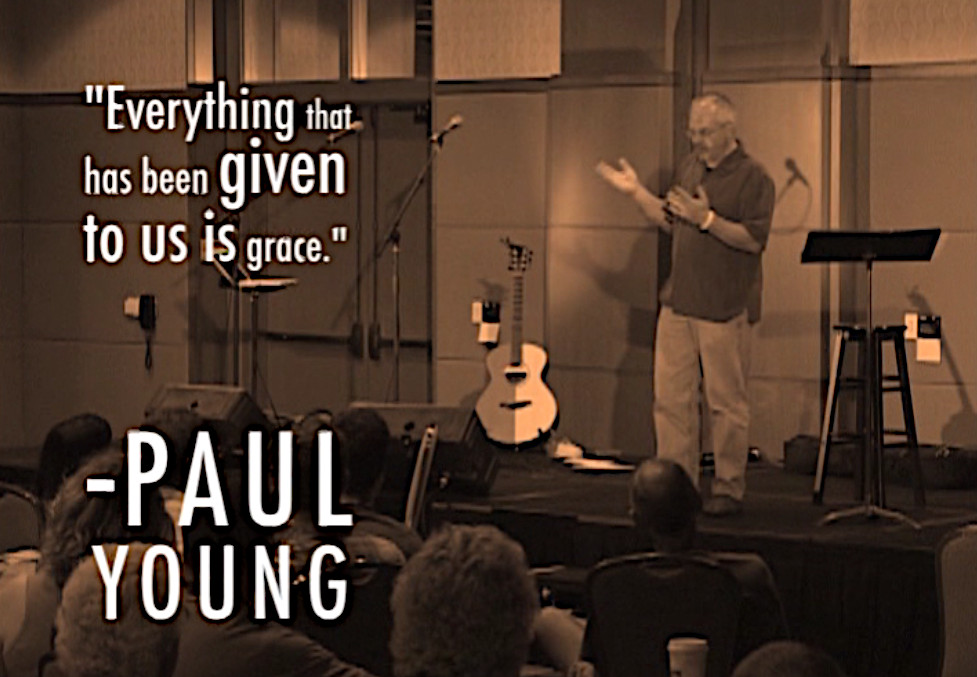
Paul Young (sometimes William P Young) wrote The Shack for his children and it unexpectedly became a very famous best-seller and much later a movie.
Here he speaks to a House2House (H2H) conference in 2008, explaining how our traditions can trip us up and mislead us, how he came to write the book, and how Father’s grace can take any one of us and make the impossible possible.
Paul Young, speaking on the topic ‘Grace’
I’ve put the three YouTube videos into a playlist. The video is low quality as it was recorded in 2008 using the standards available at the time, but the sound is clear enough. Copyright for all three videos is with House2House and I have their permission to share the videos here.
Click the playlist link and watch away. These videos have, I suspect, changed many people’s lives – in a good way. They open up truths that have been hidden for some, for others they will confirm what they already thought. The videos are by turn funny, gripping, informative, and very, very useful today just as much as in 2008. Truth doesn’t change.
So for you, and your friends, it may be transformational or it may be confirming. Either way, my prayer for you is that you will be blessed and encouraged by listening.
Some background
The conference was over three days, the first day was for leaders; Paul spoke on Grace and covers how and why The Shack came to be written. In his opening remarks he notes that he’s in an environment that he’s not familiar with. However, he was very well received.
The second topic, Tradition, was presented to the full conference. In it, Paul discusses the fall and the interactions between Yawheh, Ish, Isha, and Lucifer. (We often think of Ish as ‘Adam’ and Ishah as ‘Eve’, Paul explains the distinction.)
The third topic, Soul, was again to the full conference. This time Paul explains his background and life story very frankly.
Useful? Interesting?
If you enjoyed this or found it useful, please like, comment, and share below. (If you don’t see those links, click the article’s title above the main photo and they will appear.) Send a link to friends who might enjoy the article or benefit from it – Thanks! My material is free to reuse (see conditions), but a coffee is always welcome and encourages me to write more often!
What’s in an image? Sometimes quite a lot, more than meets the eye.
I’m posting an image every day (or as often as I can). A photo, an image from the internet, a diagram or a map. Whatever takes my fancy.
This is an image of an image of a story. It’s my photo of a stained glass window in a little church in the village of Upper Framilode near the River Severn in Gloucestershire.
The words at the bottom of the window read ‘Go and do thou likewise’ which we might rephrase in today’s English, ‘Now you go and do the same’.
It’s the punchline from a story Jesus told to show that love is an active thing, and if we don’t love the needy people around us in practical ways, how can we claim to be pure, or spiritual, or selfless?
Knowing what is the right thing to do is not the same as doing the right thing. It’s quite easy to mix those two ideas up in our minds, but it’s oh-so-important to have clarity about it.
You can read the story in modern English on the internet.
Themed image collections
The links below will take you to the first post in each collection
If you enjoyed this or found it useful, please like, comment, and share below. (If you don’t see those links, click the article’s title above the main photo and they will appear.) Send a link to friends who might enjoy the article or benefit from it – Thanks! My material is free to reuse (see conditions), but a coffee is always welcome and encourages me to write more often!
There was a young man holding a baby just a few weeks old, and right opposite him a young woman, clearly the mother. The three of them were interacting so beautifully
Here’s a short story from a morning recently, here in Cirencester where I live. It involves the very briefest of interactions between me, a young man, a young woman, and their baby. Maybe we can learn several things from what happened, useful lessons about life, about ourselves, about politics, and about the nature of Love itself.
I sat in Coffee#1 in Cirencester enjoying a white Americano, I’d walked into town and had a heavy load of shopping in my rucksack to take back home, a range of fruit from the market stall in the beautiful old Market Place, and a loaf of fresh bread from a traditional bakery. I fancied a break before setting off for home.
I put down the weighty rucksack and my hat on a chair at a vacant table, ordered the coffee and waited while it was prepared, then returned to the table, put in my earbuds, and caught up with some of the news following the previous night’s exciting General Election. While I was watching and listening, I couldn’t help noticing the people at the next table. There was a young man holding a baby just a few weeks old, and right opposite him a young woman, clearly the mother. The three of them were interacting so beautifully, the parents obviously very fond of one another and completely relaxed, the baby equally happy to be held by either of them, and both the adults alert to the needs of the little one. It was a triangle of love and of trust, a happy and peaceful grouping.
They were still there when I got up to leave and I had to pass their table to reach the door. I put on my rucksack and hat, stopped briefly at their table and said, ‘I just have to say that you three are such a lovely little family, and I want to wish you the very best going forward’. I received two huge smiles and headed out through the door to the street. As I passed the shop window, they were still beaming and the young man and I waved to one another, both smiling.
Why am I sharing this little story? Because it seemed notable to me. How many young families are there with difficulties and troubles? All of them! We all have problems during our lives, the important thing is not whether we have them, but how we will handle them. The threesome at Coffee#1 will likely grow to four (maybe more) but it seems to me that they’ll deal with any difficulty wisely and lovingly and will come through any troubles stronger than before. Love is such a powerful thing. There’s a lesson there for everyone.
Go through life pouring out love towards those you meet along the way, and you’ll fare better than if you approach life asking, ‘What can I get out of it? How can I profit? How can I become wealthier or more successful? How can I benefit by ignoring the needs of others?
This is not irrelevant to the politics of our day. For some time there has been a rather nasty drift towards selfish, arrogant, pushy, self-serving, uncaring attitudes from some quarters. It’s not too hard to find examples of this approach in Britain or America with some disturbing and growing trends towards noisy, yet empty politics. The old adage remains true, ‘Empty vessels make the most noise’. In Britain, the Labour victory may work to quell this for the next four or five years, and hopefully the electorate will appreciate the change and clearly understand the dangers, and not support parties or politicians that behave like that.
We now have a chance for more well-considered sanity in our politics, and less mis- and dis-information, or so I fervently hope. We need debate that is less like the destructive accusations and anger inevitable in broken families, and more like the love and gentleness and hope for the future of that young family in Coffee#1.
I like what Paul wrote about love in 1 Corinthians 13, here’s an extract:
Love is patient, love is kind. It does not envy, it does not boast, it is not proud. It does not dishonour others, it is not self-seeking, it is not easily angered, it keeps no record of wrongs. Love does not delight in evil but rejoices with the truth. It always protects, always trusts, always hopes, always perseveres.
Love never fails.
Such love was abundantly present in those parents in Coffee#1. They clearly cared for one another, and they trusted one another completely in caring for the little one. Babies are vulnerable and helpless, it takes parental love to keep them safe and to guide them well as they grow. And the examples provided by two good parents will give a child the best possible chance to develop the same sort of love themselves as they grow and mature.
Paul, as he wrote about love, was thinking of the love of the Creator King acting as Parent, Offspring and life-giving Breath, showing love and care for us all; and the love that we have for one another, for the world, and even for our enemies as we do our best to follow his lead. Paul expresses this clearly, but he was also thinking about the nature and attributes of love itself.
The Victorian teacher and writer, Henry Drummond, had some wonderfiul perspectives on John’s words to the believers in Corinth; he, too, draws out deep truths about love.
If you enjoyed this or found it useful, please like, comment, and share below. (If you don’t see those links, click the article’s title above the main photo and they will appear.) Send a link to friends who might enjoy the article or benefit from it – Thanks! My material is free to reuse (see conditions), but a coffee is always welcome and encourages me to write more often!






 Journeys of Heart and Mind

