Other Church leaders – 2

The priests were members of a single family, descended from Aaron and his sons. The men of this family were responsible for offering sacrifices

< Previous | Index | Next >

This article is an extract from my short book, Jesus, Disciple, Mission, Church (JDMC). The bite-sized piece below is roughly two percent of the book.

Deacons
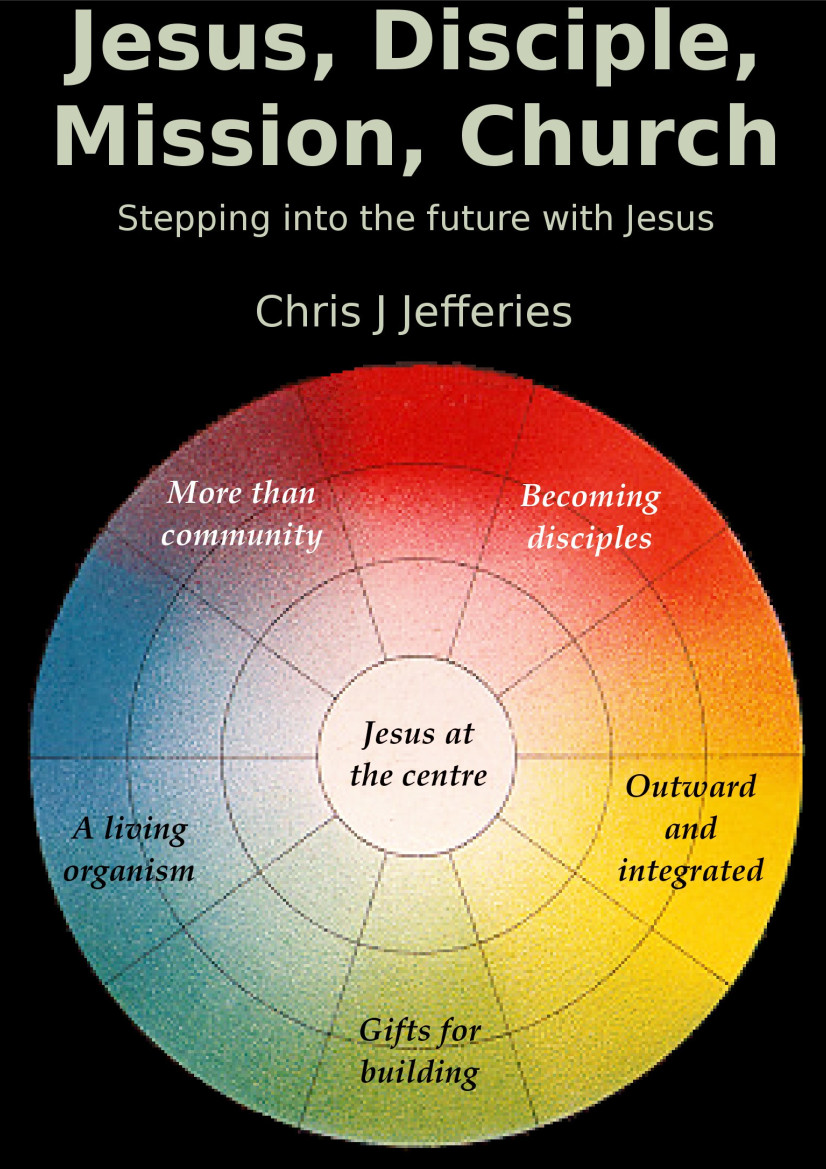
JDMC cover

Sometimes, in the early years as communities of believers formed, individuals or small teams were given particular tasks, often when there was a specific need. The men and women who were given these tasks were called ‘deacons’ (Greek ‘diakonos’). The word at its root means ‘dust kickers’, people who would run errands. Over time it came to have a more general meaning in everyday Greek, servant’, ‘waiter’ or ‘administrator’. Deacons in the early church were about getting things done.

At their first mention (in Acts 6:1-6) they were responsible for giving out aid to Greek widows who had been previously overlooked, but the task could be anything else that needed regular and reliable attention. For more on deacons see 1 Timothy 3:8-13).

Think it through – Read some of the passages about deacons and consider the
people who were chosen to do the work. Can you identify people doing
some of these things in the church today? (They may or may not be called
‘deacons’.) Do deacons have command authority or knowledge and wisdom
authority?

Pastors

Pastor is an old fashioned English word for ‘shepherd’. Read about the The shepherding gift in the section on The APEST gifts, JDMC page 42. Bear in mind that there are many people today called ‘pastor’ who are administrators, teachers and managers. This is not the same thing as the gift of shepherding.

Priests

Where does this title come from and what does it mean? In the Old Testament we read about priests and, in particular the ‘High Priest’ or ‘Chief Priest’ (2 Chronicles 19:11). The priests were members of a single family, descended from Aaron and his sons (Exodus 29:44). The men of this family were responsible for offering sacrifices on the altar, first in the Tabernacle and later in the Temple. An animal would be slaughtered and offered on behalf of the people when they had transgressed the law in some way. A sin offering was required for forgiveness (Leviticus 4:27-31). The priest acted as a go-between, taking the living animal and offering its life (the blood) in place of the sinner’s life, a substitutionary sacrifice.

Priests today are church leaders who offer the bread and wine on our behalf, a role that the New Testament clearly states is not required. All who believe in and follow Jesus are priests! (1 Peter 2:9) We offer Christ’s substitutionary sacrifice to all who will accept him. We are the go-betweens, and need no-one to bring us into the Presence of the Father, something Jesus has already done once and for all (John 14:9).

Consider – Were the priests helpful towards Jesus or a hindrance? (eg
Matthew 16:21) How do you suppose the church made the mistake of
thinking we still need this role today? Think about the role of Jesus as our
Great High Priest and our role as a Royal Priesthood (Hebrews 4:14).

Bishops, elders, deacons, pastors and priests today

(Bishops and elders were considered in the previous post in this series.) Many denominations use these words in a different sense than the early church. Often they are used for organisational roles. But if we see church as a living organism rather than an organisation we will also need to understand these terms in living ways instead.

Consider – Do we need to identify certain people as bishops, elders and
deacons? Paul identified them, think about how he saw them and why he
regarded them as necessary and useful. Did he see them as functions of
control or of service? How do we see them? And is there a role for pastors
and priests?

More sections of JDMC

IntroductionJDMC, what does it contain?Using JDMC – how to approach it

Working together in six waysIntro and Way 1Ways 2, 3 and 4Ways 5 and 6, six ways

Way One, Jesus at the centreJesus at centre 1Jesus at centre 2Jesus at centre 3

Way Two, Becoming disciplesDisciples 1Disciples 2Disciples 3

Way Three, Outward and integratedOutAndInt1, OutAndInt2

Way Four, Gifts for buildingGiftsForBuilding1, GiftsForBuilding2

Way Five, A living organismLivingOrg1, LivingOrg2

More sections will appear here…

The work of the SpiritIntroJesus, disciples, outwardGifts, living, community, help

Other church leadersIntro, bishops, eldersDeacons, pastors, priests

Last wordsThe end can also be the beginning

< Previous | Index | Next >

Read the book

This was extracted from Jesus, Disciple, Mission, Church (JDMC), pages 47 and 48. Download the whole thing or read it online – GetJDMC.scilla.org.uk

Useful? Interesting?

If you enjoyed this or found it useful, please like, comment, and share below. My material is free to reuse (see conditions), but a coffee is always welcome!

Other Church leaders – 1

Elders … are people we would naturally turn to when we are confused or anxious or when conflict arises.

< Previous | Index | Next >

This article is an extract from my short book, Jesus, Disciple, Mission, Church (JDMC). The bite-sized piece below is roughly three percent of the book.

Why do we need to consider other leaders?
JDMC cover

We have already seen in part Four – Gifts for building, that the original pattern of church leadership springs from the apostolic gift (JDMC, page 41). We also saw that four further gifts are released to operate where there is an apostolic foundation, and we looked at these in more detail in the previous part, The APEST gifts (page 41-44). But the New Testament also mentions bishops (or overseers), elders and deacons, and today we use the terms pastor and priest quite widely. We need to briefly examine these too and understand how they fit into the overall picture. Before we do this, let’s consider the New Testament principles around authority – particularly what Jesus himself said and modelled.

It’s easy to think of the Greek words and their English translations as positions in a hierarchical authority structure, each with defined powers and roles. But as we have seen in Five – A living organism, church is much more a life form than an organisation. The six forgotten ways are not the only things that have been mislaid during the two millennia since Jesus’ time. Our understanding of the functions of bishops, elders and deacons has changed, and very dramatically so. We need to understand them again as they were understood by those early believers, just as recorded in the New Testament.

Perhaps the first thing to say is that as with the APEST gifts, bishops, elders and deacons are not positions of authority in the sense of ruling over other believers. Jesus explicitly told his disciples that they were to love one another as he had loved them (John 13:34-35). If he came to serve, so also should we. And he also told them that they were not to rule over one another as the gentiles do (Matthew 20:25-28). Paul writes that we should submit to one another (Ephesians 5:21). This much is very clear. So whatever else we may say about bishops, elders and deacons, we can be quite certain at the outset that they are not about enforcing rules, governing people’s behaviour or managing an organisation.

Bishops, elders and deacons don’t seem to chime with the idea of
the APEST gifts of service or with church as a living organism. Is this a
problem? If so, how can we resolve it? Consider this carefully before
moving on.

Bishops

The Greek word here is ‘episkopos’ and it means, literally, ‘overseer’, someone who keeps watch, someone who keeps an eye on things. Another word we could use is ‘lookout’. It need not be understood to mean an official who makes sure everyone follows orders, although it might seem to imply control because that is the sense of the English word ‘overseer’ in everyday usage.

We need to check the New Testament to understand how the word is used there. Here are some wise words from JP Louw and EA Nida writing in Greek English Lexicon of the New Testament, ‘Though in some contexts [episkopos] has been regarded traditionally as a position of authority, in reality the focus is upon the responsibility for caring for others’. This is a responsibility we all share, we must all look out for one another.

‘Episkopos’ is not always used in a positive way; just take a look at 1 Peter 4:15. Which word in this verse contains the Greek ‘episkopos’ do you think? There’s another Greek word ‘allotri’ which means ‘other people’s business’ and ‘meddler’ (NIV) is ‘allotriepiskopos’, an ‘episkopos’ who meddles in other people’s business.

When Paul writes ‘episkopos’ it’s clear he is referring to particular people he regards as effective at keeping watch to detect – and respond to – error. But this doesn’t mean that the other believers were free to relax. If any of us sees error, or somebody promoting it, we must question it and, if necessary, alert others. Might it be that Paul is simply saying that we need people among us who will be alert and willing to respond? Perhaps he is just saying that some are better at this than others and it’s useful to identify them, recognise them, and pay attention to what they say. Indeed, the work of keeping watch is one of the things shepherds need to do , something they are gifted at. (See The shepherding gift, JDMC page 42)

Jesus himself can be regarded as an ‘episkopos’. In 1 Peter 2:25 we read that Jesus is ‘the shepherd and guardian of your souls’. Some versions translate this as guardian (NASB, TLB), some as overseer (ESV, NIV), and some as bishop (ASV, KJV). Once again, the sense is not of ruling but of taking care, keeping watch (part of what a shepherd does as noted above).

Look up ‘overseer’ in a concordance or search function and draw
your own conclusions about the work of an overseer or lookout. Try to get
a feeling for what these people were expected to do. Did they have
authority over other believers?

Elders

Paul made a habit of identifying elders in the churches he planted (Acts 14:23, Titus 1:5). It’s worth mentioning that the word translated ‘appointed’ might equally well mean ‘pointed out’ or ‘identified’. But in English, the idea that Paul ‘pointed out’ elders is very different from the idea that he ‘appointed’ them. In everyday life, people who are appointed to a position are given authority to make decisions and to act in a particular role. But let’s remember that the New Testament and the words of Jesus himself suggest love, humility and submitting to one another as the primary focus.

The word ‘elder’ is from the Greek ‘presbuteros’ and it does literally mean an older person. But it is also used to signify someone who is wise, and this is probably the sense in which Paul uses it. Eldership is not a role involving the giving of instructions or the making of decisions on behalf of others. Rather, elders are those people in the church who have more experience and wisdom. They are people we would naturally turn to when we are confused or anxious or when conflict arises. Pointing such people out in new and inexperienced gatherings of believers was a wise precaution taken by Paul and those he coached.

Bear in mind that the word ‘authority’ has two rather different meanings. The police have authority and you do what they tell you or face the consequences; this is command authority. Plumbers have a different kind of authority and you do what they tell you because you have a problem they know how to fix; this is knowledge and wisdom authority. Which kind of authority do you suppose elders should exercise?

Did Jesus exercise command authority or knowledge and wisdom
authority? (Trick question – you should be able to find examples of both.)
What kind of authority does he want us to exercise over demons? What kind
does he want us to exercise with one another?

PS – I liked this post by Christopher Dryden. It’s very much about the subject of elders, but written as a story from his own experience: Fun to read but gentle, kind and definitely not judgemental. He very clearly explains the difference between elders as often found in church life, and elders as Jesus intended them to be. He says what I wanted to say in the section on elders, but he says it more eloquently.

More sections of JDMC

IntroductionJDMC, what does it contain?Using JDMC – how to approach it

Working together in six waysIntro and Way 1Ways 2, 3 and 4Ways 5 and 6, six ways

Way One, Jesus at the centreJesus at centre 1Jesus at centre 2Jesus at centre 3

Way Two, Becoming disciplesDisciples 1Disciples 2Disciples 3

Way Three, Outward and integratedOutAndInt1, OutAndInt2

Way Four, Gifts for buildingGiftsForBuilding1, GiftsForBuilding2

Way Five, A living organismLivingOrg1, LivingOrg2

More sections will appear here…

The work of the SpiritIntroJesus, disciples, outwardGifts, living, community, help

Other church leadersIntro, bishops, eldersDeacons, pastors, priests

Last wordsThe end can also be the beginning

While you’re on his website, have a look around to see what else might grab your attention.

< Previous | Index | Next >

Read the book

This was extracted from Jesus, Disciple, Mission, Church (JDMC), pages 45 to 47. Download the whole thing or read it online – GetJDMC.scilla.org.uk

Useful? Interesting?

If you enjoyed this or found it useful, please like, comment, and share below. My material is free to reuse (see conditions), but a coffee is always welcome!

The work of the Spirit – 3

Now the church is not the same thing as the kingdom, but if church is not part of the kingdom we are in serious trouble!

< Previous | Index | Next >

This article is an extract from my short book, Jesus, Disciple, Mission, Church (JDMC). The bite-sized piece below is roughly two percent of the book.

Gifts for building
JDMC cover

It really should be self-evident that the Holy Spirit is involved in the fivefold gifts of service – apostles, prophets, evangelists, shepherds and teachers (APEST). These are gifts indeed, and Christ himself is the giver (Ephesians 4:11-12). Paul explains that we are most certainly one, but that these gifts of grace are handed out in individual measure to each of us (Ephesians 4:1-7). We are one, we all receive, yet we all receive individually as he chooses (1 Corinthians 12:27-30).

And if there’s any doubt in your mind about the role of the Holy Spirit in all this, read 1 Corinthians 12:1-11. Verse 11 is very clear! ‘All these are the work of one and the same Spirit, and he distributes them to each one, just as he determines.’

Jesus himself chooses how to distribute these gifts of service. What gifts can you identify in one another? Tell one another what you see, this is a good way of encouraging one another.

A living organism

We know that we need to see the church as a living entity and not as an organisation or institution built and managed by human ability. But what part does the Holy Spirit play in this?

I must begin by pointing out that only the Spirit of Christ can reveal this truth to us. Jesus often told parables to illustrate the nature of the kingdom of heaven, and some of them involve living things. The kingdom is like yeast or a mustard seed; it grows and develops and expands as only living things can.

Now the church is not the same thing as the kingdom, but if church is not part of the kingdom we are in serious trouble! The church, too, is described as part of a living thing; church is the body and Jesus is the head. It’s significant that a body only remains alive as long as the head is attached. Cut off an arm or a leg and a body may continue to live, but cut off the head and it dies immediately. And how is the church attached to Christ? It is the Holy Spirit who makes the connection; he is the Spirit of Christ, yet he has been implanted in you and me, the members of the church. And he works in us (Luke 12:12, Acts 1:5-8, Romans 8:26) and amongst us (Acts 9:31, 1 Corinthians 14:12, Ephesians 4:3-4) as we gather together. The Spirit of the Head is present within every individual part of the body.

Considering church as you have experienced it, talk about aspects that are like an organism and aspects that are like an organisation. Are there ways you can help things move more towards the organism end of the spectrum? What part might the Holy Spirit play in this?

More than community

We need to work together in a community where we will be significantly stretched by sharing in making tough decisions, facing difficulties, supporting one another, and pressing forward together. The challenges we face will be diverse, but whatever they are we are surely going to need the encouragement and wisdom and guidance and insight of the Holy Spirit. Romans 7:6, 1 Corinthians 2:15, Acts 12:1-19.

We all share in the presence and work of the Spirit in our lives. How does this feed into community life, and in particular how does the Holy Spirit draw the community into facing challenges and difficulties? Talk about your own experiences and those of other people you know.

Some practical help


Many believers and followers of Jesus are familiar with the activity of the Holy Spirit, individually and in meeting together. Others may have little or no personal experience of him. The key to listening is not hard, it’s basically a matter of paying attention. Our lives are often too busy and too rushed to do this, but there’s a simple exercise called Virkler that can help. If you don’t think you’re hearing the Holy Spirit fluently and frequently, why not try Virkler for yourself?

It’s a curious name – why ‘Virkler’? That’s simple! The person who first suggested this straightforward practice is called Mark Virkler.

There are four steps, sometimes called the four keys.

  1. Clear the clutter of everyday things from your mind.
  2. Imagine being in Jesus presence.
  3. Pay attention to the thoughts that pop into your mind.
  4. Write down what you are shown, as you receive it. Review and process the material afterwards.

There’s no space here to explain Virkler in detail, but in my experience it can be extremely helpful. If I feel there’s a need, I’ll write about it in more detail in another article here on JHM. If I do, I’ll place a link to it here.

See also:
  • Jargon and the Holy Spirit – JHM
More sections of JDMC

IntroductionJDMC, what does it contain?Using JDMC – how to approach it

Working together in six waysIntro and Way 1Ways 2, 3 and 4Ways 5 and 6, six ways

Way One, Jesus at the centreJesus at centre 1Jesus at centre 2Jesus at centre 3

Way Two, Becoming disciplesDisciples 1Disciples 2Disciples 3

Way Three, Outward and integratedOutAndInt1, OutAndInt2

Way Four, Gifts for buildingGiftsForBuilding1, GiftsForBuilding2

Way Five, A living organismLivingOrg1, LivingOrg2

More sections will appear here…

The work of the SpiritIntroJesus, disciples, outwardGifts, living, community, help

Other church leadersIntro, bishops, eldersDeacons, pastors, priests

Last wordsThe end can also be the beginning

< Previous | Index | Next >

Read the book

This was extracted from Jesus, Disciple, Mission, Church (JDMC), pages 39 and 40. Download the whole thing or read it online – GetJDMC.scilla.org.uk

More sections of JDMC

IntroductionJDMC, what does it contain?Using JDMC – how to approach it

Working together in six waysIntro and Way 1Ways 2, 3 and 4Ways 5 and 6, six ways

Way One, Jesus at the centreJesus at centre 1Jesus at centre 2Jesus at centre 3

Way Two, Becoming disciplesDisciples 1Disciples 2Disciples 3

Way Three, Outward and integratedOutAndInt1, OutAndInt2

Way Four, Gifts for buildingGiftsForBuilding1, GiftsForBuilding2

Way Five, A living organismLivingOrg1, LivingOrg2

More sections will appear here…

The work of the SpiritIntroJesus, disciples, outwardGifts, living, community, help

Other church leadersIntro, bishops, eldersDeacons, pastors, priests

Last wordsThe end can also be the beginning

Useful? Interesting?

If you enjoyed this or found it useful, please like, comment, and share below. My material is free to reuse (see conditions), but a coffee is always welcome!

JDMC extracts – INDEX

(See indexes on other topics)

JDMC cover

This index links to serialised extracts from my short book, Jesus, Disciple, Mission, Church (JDMC). If you want to read just one section, or share it with someone else, the articles below may be the most effective way to do it.

You can also read the blurb, download the whole book for free, or read it online – GetJDMC.scilla.org.uk

More sections of JDMC

IntroductionJDMC, what does it contain?Using JDMC – how to approach it

Working together in six waysIntro and Way 1Ways 2, 3 and 4Ways 5 and 6, six ways

Way One, Jesus at the centreJesus at centre 1Jesus at centre 2Jesus at centre 3

Way Two, Becoming disciplesDisciples 1Disciples 2Disciples 3

Way Three, Outward and integratedOutAndInt1, OutAndInt2

Way Four, Gifts for buildingGiftsForBuilding1, GiftsForBuilding2

Way Five, A living organismLivingOrg1, LivingOrg2

More sections will appear here…

The work of the SpiritIntroJesus, disciples, outwardGifts, living, community, help

Other church leadersIntro, bishops, eldersDeacons, pastors, priests

Last wordsThe end can also be the beginning

Useful? Interesting?

If you enjoyed this or found it useful, please like, comment, and share below. My material is free to reuse (see conditions), but a coffee is always welcome!

The work of the Spirit – 2

Not only are we together as a community of his people, we are also together in the community of the Almighty Creator.

< Previous | Index | Next >

This article is an extract from my short book, Jesus, Disciple, Mission, Church (JDMC). The bite-sized piece below is roughly two percent of the book.

Jesus at the centre
JDMC cover

We have seen how important it is to keep Jesus right at the heart of everything we do. We have seen that we must follow Jesus alone and that there can be no room for following anyone or anything else.

Without the Holy Spirit we will find this impossible. We receive the Spirit from Jesus as a baptism (Matthew 3:11). In response to our love and obedience, Jesus sends us his Spirit (John 14:15-17). We are not free to defile our bodies because they are ‘temples of the Holy Spirit’ (1 Corinthians 6:19) – and if this is true of our bodies, isn’t it also true of our hearts and minds? The essence of keeping Jesus at the centre is that we know Jesus is Lord of our lives and our thinking and our emotions, of all that we are and all that we do. Yet we can’t even say the words ‘Jesus is Lord’ except by the Holy Spirit (1 Corinthians 12:3).

How has the Spirit helped keep you focused on Jesus? Try to find specific examples rather than generalisations.

Becoming disciples

This is a matter of following Jesus and becoming conformed to his image. Look at the fruit of the Spirit as set out by Paul in Galatians 5:22-26: love, joy, peace, patience, kindness, goodness, faithfulness, gentleness and self-control. This is how the Holy Spirit moulds us to become more Christlike. This is fruit, it grows in us day by day, year by year. And the degree to which we have become conformed is expressed in all we think and say and do.

Doesn’t this sound familiar? Isn’t this the very process of becoming disciples that we are looking for? If we are filled by the Spirit and respond to him we will bear the fruit of the Spirit in every way. We co-operate with the Holy Spirit when we develop a habit of joy or patience or gentleness. Right behaviour over and over again forms those habits of fruitfulness in us. There are two sides to this. We cannot do it in our own strength so we need and depend on the Spirit. But he will not coerce us, he expects to see our obedient willingness to allow him to change us.

Is there spiritual fruit in your life? How might you explain this to someone
who doesn’t yet know Jesus?

Outward and integrated

We need to reach those around us; Jesus commands it. He said, ‘I’ve been given all authority in heaven and on earth, so as you go, make disciples of all nations … and I’ll be with you.’ (Matthew 28:18-20) But as we go out into the world and seek to embed ourselves deep in the culture (as he did), we do not go alone.

Not only are we together as a community of his people, we are also together in the community of the Almighty Creator. The Son has made the way open and has sent the Spirit to fill us – Father, Son, Spirit, and us! It’s not going to heaven when we die; it’s far better than that. It’s living in their community right here, right now and forever. Jesus says he is with us right to the end (Matthew 28:20) and he says that if we have seen him we have seen the Father (John 14:9).

In our going out and going deep we remain in the Presence, for the Holy Spirit is in us and communicates with us and for us. We couldn’t be effective carriers of good news without him. There are some great examples in the New Testament; read Acts 8:26-39, Acts 10:9-21 and Acts 16:7-10.

As you go out and deep in the culture around you, how will you pay
attention to the presence of the Holy Spirit with you? Consider prayer,
listening, and the truth that the Spirit is alive within you and wanting to
communicate with you.

More sections of JDMC

IntroductionJDMC, what does it contain?Using JDMC – how to approach it

Working together in six waysIntro and Way 1Ways 2, 3 and 4Ways 5 and 6, six ways

Way One, Jesus at the centreJesus at centre 1Jesus at centre 2Jesus at centre 3

Way Two, Becoming disciplesDisciples 1Disciples 2Disciples 3

Way Three, Outward and integratedOutAndInt1, OutAndInt2

Way Four, Gifts for buildingGiftsForBuilding1, GiftsForBuilding2

Way Five, A living organismLivingOrg1, LivingOrg2

More sections will appear here…

The work of the SpiritIntroJesus, disciples, outwardGifts, living, community, help

Other church leadersIntro, bishops, eldersDeacons, pastors, priests

Last wordsThe end can also be the beginning

< Previous | Index | Next >

Read the book

This was extracted from Jesus, Disciple, Mission, Church (JDMC), pages 38 and 39. Download the whole thing or read it online – GetJDMC.scilla.org.uk

Useful? Interesting?

If you enjoyed this or found it useful, please like, comment, and share below. My material is free to reuse (see conditions), but a coffee is always welcome!

The work of the Spirit – 1

This new life we live is not just about what we do, nor is it entirely about receiving from the Spirit. Jesus wants our co-operation.

< Previous | Index | Next >

This article is an extract from my short book, Jesus, Disciple, Mission, Church (JDMC). I also mention The Forgotten Ways, a book by Alan Hirsch. The bite-sized piece below is roughly two percent of the book.

Introduction
JDMC cover

The work of the Holy Spirit is mentioned briefly in the previous part of JDMC, ‘Six – More than community’ (p 33). It is not explicitly presented in The Forgotten Ways, but it is certainly implied on every page. In the first edition of JDMC I closely followed the structure of Alan Hirsch’s work, but in this revision I have decided to add extra sections including this one about the Spirit.

I want to guard against any suggestion that JDMC is merely presenting an organisational mechanism for rapid missional spread. It’s much more than a worldly method or a management technique. Instead it is the pattern set by Christ himself, and therefore the Spirit of Christ is present throughout and waiting for us to hear his guidance and encouragement as we do the work the Master has entrusted to us. To depend on human technique alone won’t cut the mustard – far from it! One of the forgotten ways is keeping Jesus central, following only him, adding nothing in addition. This utter dependence on Christ surely implies and demands a dependence on his Spirit – how could it possibly be otherwise?

We need to recognise that this new life we live is not just about what we do, nor is it entirely about receiving from the Spirit. Jesus wants our co-operation. If there was no need for the work of the Spirit, why would Paul warn us not to quench him? (1 Thessalonians 5:19) And if there was no need for human effort or will, why would he tell us to strive? (1 Thessalonians 5:15, 1 Timothy 4:10)

So in this additional part of JDMC I want to highlight some of the ways we can recognise and value the Holy Spirit’s activity as we attempt to remember and activate the six forgotten ways. I also offer some advice on spiritual listening at the end.

To be clear, this section should not be seen as an additional ‘forgotten way’. It isn’t that at all. But the work of the Holy Spirit surely runs deep in each of those six forgotten ways. He is, as already mentioned, the Spirit of Christ and he was sent specifically to enable us to continue the work of Jesus. If we are the body and Jesus is our head, then the Spirit is like a nervous system – fundamentally centred in the head but with sensory and motor connections to every part of the body. When we resist him and are disobedient, part of the body is effectively paralysed. And if the body acts without the Holy Spirit it is sleepwalking and
ineffective.

If all of this sounds hard – it is. We have to learn to die so that we can begin to live in Christ. It’s not that we have to work hard to be more like Jesus; rather we have to let go of all our own goals and desires and effort and planning and let Jesus live his life in us. He will tell us and show us what to do, when to do it, and how. The Holy Spirit is no less than the Spirit of Christ, he is our guide and walks with us in every situation. He is the heart and mind of the Messiah expressing himself through his people.

Discuss or consider -Talk together about the ways the Holy Spirit has interacted with you in your lives as you follow Jesus. Are there some encouraging stories you can share?

More sections of JDMC

IntroductionJDMC, what does it contain?Using JDMC – how to approach it

Working together in six waysIntro and Way 1Ways 2, 3 and 4Ways 5 and 6, six ways

Way One, Jesus at the centreJesus at centre 1Jesus at centre 2Jesus at centre 3

Way Two, Becoming disciplesDisciples 1Disciples 2Disciples 3

Way Three, Outward and integratedOutAndInt1, OutAndInt2

Way Four, Gifts for buildingGiftsForBuilding1, GiftsForBuilding2

Way Five, A living organismLivingOrg1, LivingOrg2

More sections will appear here…

The work of the SpiritIntroJesus, disciples, outwardGifts, living, community, help

Other church leadersIntro, bishops, eldersDeacons, pastors, priests

Last wordsThe end can also be the beginning

< Previous | Index | Next >

Read the book

This was extracted from Jesus, Disciple, Mission, Church (JDMC), page 37. Download the whole thing or read it online – GetJDMC.scilla.org.uk

Useful? Interesting?

If you enjoyed this or found it useful, please like, comment, and share below. My material is free to reuse (see conditions), but a coffee is always welcome!

Want to learn to follow Jesus?

The English word ‘disciple’ is rather old-fashioned these days, but it has more or less the same meaning as ‘apprentice’.

If you want to learn, here’s one way get started. Or if you are already a follower, it might be a way to go deeper – or even an aid for helping other people to do the same. Don’t worry, I’m not selling anything, and I’m not trying to get you to do anything Jesus didn’t do or anything he wouldn’t want you to do.

JDMC

I’m going to show you part of a short book I wrote some years ago, with a link to the book itself as a free download. The extract follows below, and the entire thing can be read online, printed out, or downloaded as a PDF.

The extract (from page 17)

Becoming disciples

Becoming disciples is important because it’s the main way believers grow to be more like Jesus. It’s not a process with a beginning and an end; it’s ongoing throughout our lives. And we’re not automatically disciples simply because we have believed. Not all of the crowds who listened to Jesus or were healed by him were disciples. Only those who followed him and were greatly changed could claim to be disciples. (Matthew 4:19, Matthew 10:38)

The English word ‘disciple’ is rather old-fashioned these days, but it has more or less the same meaning as ‘apprentice’. In particular it’s all about learning to do the things that the expert is already doing, and Jesus is the expert here. Apprentices don’t just learn from books; this is a hands-on experience. At first, things will often go wrong, but apprentices get better and better by repeatedly doing something under supervision. Expect that to happen to you as Jesus’ apprentice.

Because this change is hard and takes time, Jesus put most of his effort into three years of living closely with a small band of men and women who were prepared to do much more than simply be amazed. They were utterly transformed in those three years. The fact that Jesus worked this way reveals how important making disciples was and is. He put everything he had into those few, and when he returned to the Father they were the ones he continued to work with to reach the nations and build his church. (John 17:6-23) Jesus needs men and women who will become conformed to his image. They are his disciples.

The challenges for us include rejecting false gods such as consumerism, becoming more and more like Jesus, and understanding that we most effectively change by doing, not merely by thinking. Imagine an apprentice plumber who had studied all the books on plumbing but had never bent a pipe or soldered a joint.

To think about

‘We most effectively change by doing, not merely by thinking.’ Is this true in your experience? List some examples. Think about the skills involved in sport, work, music, art. Are there any areas of life in which regular practice doesn’t help?

Useful? Interesting?

If you enjoyed this or found it useful, please like, comment, and share below. My material is free to reuse (see conditions), but a coffee is always welcome!

Blast from the past… 8

We are often in situations where we’re amongst people we recognise, but know almost nothing about.

< Previous | Index | Next >

Notes from bygone years – Julys duly remembered
Hint: Click on the thumbnails for larger images.

A year ago

On 7th July 2022 I noted that ‘the Conservative party is in a state of confusion right now’. Not a lot has changed in the last twelve months; it seems the Conservative ship is still foundering. I included a picture of a sinking ship in my article, here it is again. I also argued for a general election as soon as possible and we’re still waiting on that one! So the big question now is, ‘Will the Conservatives still be in power in July 2024?’ Hard to say, isn’t it! In my judgement it’s very unlikely, but we’ll have to wait and see. The last possible date for the next general election is 28th February 2025. (See the original post.)

Graphic of a sinking ship

<Jun 2022Aug 2022>

Two years ago
Starship’s first launch, 20th April 2023 – Image from Wikimedia

In July 2021, SpaceX‘s Superheavy Booster 3 was being tested at Boca Chica in Texas. They continue to develop and build boosters (and Starships too) at a prodigious rate, and have already launched the full stack on it’s first test flight. That flight failed to reach orbit, and caused serious damage to the launch mount but, following repairs, they are very nearly ready for a second attempt and have made a lot of changes following lessons learned from flight 1.

<Jun 2021Aug 2021>

Five years ago
The JDMC cover

In July 2018 I shared an extract from my short guide, JDMC. I emphasised the work of the Holy Spirit in church life and looked at ways we can recognise and value his activity.

I didn’t want JDMC to be only about what we do, but more significantly about what Jesus does. (Read the original article)

<Jun 2018 Aug 2018>

Ten years ago
Ambience Cafe, St Neots

Research shows we are often in situations where we’re amongst people we recognise, but know almost nothing about. In July 2013 I was thinking about this and how I might notice and engage with such people. (Read the original article)


<Jun 2013Aug 2013>

Fifteen years ago
Still from a video about the hymn

In July 2008 I wrote about the famous Welsh hymn, ‘Dyma gariad fel y moroedd’ or in English ‘Here is love vast as the ocean’. Read about the hymn’s origins and listen to it in the original article.


<Jun 2008Aug 2008>

Twenty years ago
Crow’s nest on HMS Warrior

July 2003 saw us meeting at home to listen to what the Spirit would say and watch what he would do. And of course, we were not disappointed. Afterwards I posted ‘Fallen and lifted up‘ to capture something of that evening.


<Jun 2003Aug 2003>

Twenty-five years ago
Kimbolton Market Place

In July 1998 we visited Kimbolton, just a short distance from our home in Tilbrook. Although it’s a village, Kimbolton always seemed much more like a small town with a market place and Kimbolton Castle, now a private school.


<Jun 1998Aug 1998>

Thirty years ago
The Sealed Knot

In July 1993 Judy, Debbie and Beth went to see a Sealed-Knot re-enactment of a Civil War battle. I didn’t go to this as I was probably at work at the time.


<Jun 1993Aug 1993>

Thirty-five years ago
Mum and Mickey

In July 1988 My Mum was sixty and we had a party at The Catherine Wheel pub in Bibury. Here she is unwrapping a present – a Mickey Mouse landline telephone. She had always wanted one of these!


<Jun 1988Aug 1988>

Forty years ago
Apple pollen tubes

In July 1983 my mathematician friend, Phil, and I had a scientific paper published. Phil built a mathematical model for the effect of temperature on apple pollen tubes. This was based on experimental measurements I’d made in spring 1982.

<Jun 1983Aug 1983

Forty-five years ago

In July 1978 Beth was just two months old (whoops, I think I just gave her age away). We were living in a terraced house in Yatton and I was working on plum and apple pollination.

<Jun 1978Aug 1978>

Fifty years ago
Belland Drive in Charlton Kings

In July 1973 I inspected the base for a greenhouse with my father-in-law, Ron Hill. Here we are, having a good look. As you can see, Ron’s garden in Charlton Kings was beautifully maintained.


<Jun 1973Aug 1973>

Fifty-five years ago

In July 1968 I celebrated my 20th birthday. I don’t remember the occasion, but it would have involved a bit of a party with my Mum and Dad, my three sisters, Judy, and possibly her parents and brother too. From my current perspective it seems a very long time ago!

<Jun 1968Aug 1968>

Sixty years ago
A beach on the Welsh coast

In July 1963 I was 14 years old and we might have been on holiday, but more likely it would have been August. In any case, here’s my Dad taking a photo of the family on the beach on the coast of Ceredigion, Wales.


<Jun 1963Aug 1963>

Sixty-five years ago

In July 1958 I turned ten-years-old, and I’d finished my fifth year of junior education. It was the summer holiday, hooray!

<Jun 1958Aug 1958>

Seventy years ago

In July 1953 I was four, turning five and hadn’t yet started school. Mum, Dad, my little sister, Cindy, and I lived in Queen Anne’s Road on the Beeches estate in Cirencester.

<Jun 1953Aug 1953>

Seventy-five years ago

July 1948 was the month I was born. I was one of the first two children to be delivered at Cirencester’s new maternity hospital. It’s now the main building of today’s Cirencester Hospital.

<Jun 1948Aug 1948>

Eighty years ago

On 29th July 1943 my Dad cycled home from school at the end of term. It was his last day of full-time education.

<Jun 1943Aug 1943>

< Previous | Index | Next >

More on ground breaking

In the life of the church the central figure is Jesus and the central idea is that he is Lord. The church was founded on this person and this truth nearly 2000 years ago.

Where should we start in church life, where should we start in mission, or in teaching, or in any other aspect of being a believer and follower of Jesus? The answer is simple and rather obvious – we should start with Jesus himself.

Following my post ‘Ground breaking‘ on 26th February, I’d like to examine a particular example. In my study guide, JDMC, I set out to help small groups of individuals live out Jesus’ command to ‘go into all the world and make disciples’. The idea is that making disciples is the first step on the journey to starting a movement that will grow and grow. Alan Hirsch, in setting out this idea in his seminal book ‘The Forgotten Ways’, identified six factors that work together to make a movement buzz and thrive. The first factor is that there needs to be a person and an idea that together can become the focal point for the movement.

More groundbreaking – Image from Wikimedia
A person and an idea

All vigorously growing movements have this centralised focus. For the communist revolution in Russia in the early part of the 20th century the person was Karl Marx and the idea was that wealth should be shared, not held primarily by a ruling class. The means of production should be owned, not by industrialists, but by the workers themselves.

It’s not hard to identify the same structure in all sorts of other historical movements; think of Al Qaeda, the Methodist movement, female suffrage, the rise of the German Nazi party between the first and second world wars, the growth of Amazon as a supply and delivery business. I could go on, there are many examples, and it’s not hard to see a central personality and a central notion or purpose for each.

Jesus is Lord!

In the life of the church the central figure is Jesus and the central idea is that he is Lord. The church was founded on this person and this truth nearly 2000 years ago. He gave us everything we need to become disciples, and he imbued the church with everything it needs to be a thriving, thrusting movement. And although in the first few hundred years, there was explosive growth, a real movement on a major scale, something that swept through the Graeco-Roman world and far beyond – that momentum stalled. Something fundamental, in church today, seems to be missing.

This is the first of six essential ingredients that Alan Hirsch argues that we need to rediscover and reactivate in the church. I think he is right. We need to recover the sense that Jesus is at the heart of church life, and that he is Lord.

It’s fair to argue that this is exactly what Jesus himself meant when he told his disciples to go out into the world and make disciples. But he surrounded that command with some super-important statements. First he said that he has full authority, then he told them to go and make more disciples, he said to teach those new disciples to do all the things he’d taught his initial disciples, and then he finished by telling them that he’d be with them all the way. They did what he’d asked, they made many more disciples who also understood that Jesus is Lord and that they were, in turn, to make more disciples. And they did. And that is a movement! They literally changed their world.

But it’s essential that we do more than just repeat the slogan, ‘Jesus is Lord’. We need to live the slogan out; as disciples of Jesus, we need to do what he did, and to speak into our culture the things he spoke into his culture. He told us to love the people in our lives, he said we should forgive people who are unkind to us. He calls us to imitate his words, but also his thinking and his actions. It’s essential to go as he did, to bless the people around us, to help the helpless, feed the hungry, and meet every need as and when we come across it. Jesus blessed people in many ways, if we are truly his disciples so will we. But as Alan Hirsch points out, there’s more to it than just this one factor. We may be ever so familiar with Jesus, and have a close knowledge of him. We might study him at degree level, publish learned papers about him, write theses about his life and work, and read and write great books about him, and never once see any hint of a rapidly expanding movement.

Knowing Jesus is not, on its own, enough. It is, however an indispensable first step. We do need to know Jesus intimately, to understand who he is, and follow him to the best of our abilities. Yet this alone is insufficient for the rapidly growing movement we would all, surely, like to see! There are five other necessary factors and we will look at another one next time. Alongside the person and the idea there also needs to be a gift. We’ll discuss this in detail in the next part of this short series, but for now it’s enough to know that Jesus is not only the person, and his lordship the idea, but also Jesus himself is the gift. Jesus gave himself for us. This is the supreme gift, but there are others as we shall see.

BUT! In the meantime, get to know Jesus as never before. Spend time discovering him as a person by reading through the gospels of Matthew, Mark, Luke and John. Ask him to reveal himself more fully to you, he is always happy to answer this request, whether you are poor or wealthy, healthy or unwell, highly educated or unable to read. Consider what it means that he is Lord, and consider the cost involved in giving himself and the benefit of that gift to you and to me.

Remember, you need to get to know a person – Jesus: and you need to grapple with an idea – Jesus is Lord: and you need to understand a gift – Jesus’ action in pouring himself out for you, for me, for all of us.

Some resources

Meanwhile, let me leave you with some places to look for more information on this.

  • The best way to get to know Jesus better is to keep reading the Gospels (Matthew, Mark, Luke, John). They are freely available on line in a variety of languages and versions. Bible Gateway is a good source, but there are plenty of others. If you like, take a look at my website, Cruising the Gospel.
  • My guidebook, JDMC, presents Alan Hirsch’s six forgotten ways in a short, introductory, workbook format for individuals, or better, a small group of up to 12 people. Part One – Jesus at the Centre is the relevant section.
  • Alan Hirsch’s widely read book ‘The Forgotten Ways’ is available in print or in ebook form. Buy it from Eden, Google Play Books, Amazon or from your local bookshop.

The work of the Spirit

the Holy Spirit … runs deep in [the] forgotten ways. He is … the Spirit of Christ and he was sent specifically to enable us to continue the work of Jesus.

What follows is an extract from JDMC, the first section on the Holy Spirit (page 37).

Cover-tinyThe work of the Holy Spirit is mentioned briefly in the previous part of JDMC, ‘Six – More than community’ (p 33). It is not explicitly presented in The Forgotten Ways, but it is certainly implied on every page. In the first edition of JDMC I closely followed the structure of Alan Hirsch’s work, but in this revision I have decided to add extra sections including this one about the Spirit.

I want to guard against any suggestion that JDMC is merely presenting an organisational mechanism for rapid missional spread. It’s much more than a worldly method or a management technique. Instead it is the pattern set by Christ himself, and therefore the Spirit of Christ is present throughout and waiting for us to hear his guidance and encouragement as we do the work the Master has entrusted to us. To depend on human technique alone won’t cut the mustard – far from it! One of the forgotten ways is keeping Jesus central, following only him, adding nothing in addition. This utter dependence on Christ surely implies and demands a dependence on his Spirit – how could it possibly be otherwise?

We need to recognise that this new life we live is not just about what we do, nor is it entirely about receiving from the Spirit. Jesus wants our co-operation. If there was no need for the work of the Spirit, why would Paul warn us not to quench him? (1 Thessalonians 5:19) And if there was no need for human effort and will, why would he tell us to strive? (1 Thessalonians 5:15, 1 Timothy 4:10)

So in this additional part of JDMC I want to highlight some of the ways we can recognise and value the Holy Spirit’s activity as we attempt to remember and activate the six forgotten ways. I also offer some advice on spiritual listening at the end.

To be clear, this section should not be seen as an additional ‘forgotten way’. It isn’t that at all. But the work of the Holy Spirit surely runs deep in each of those six forgotten ways. He is, as already mentioned, the Spirit of Christ and he was sent specifically to enable us to continue the work of Jesus. If we are the body and Jesus is our head, then the Spirit is like a nervous system – fundamentally centred in the head but with sensory and motor connections to every part of the body. When we resist him and are disobedient, part of the body is effectively paralysed. And if the body acts without the Holy Spirit it is sleepwalking and ineffective.

If all of this sounds hard – it is. We have to learn to die so that we can begin to live in Christ. It’s not that we have to work hard to be more like Jesus; rather we have to let go of all our own goals and desires and effort and planning and let Jesus live his life in us. He will tell us and show us what to do, when to do it, and how. The Holy Spirit is no less than the Spirit of Christ, he is our guide and walks with us in every situation. He is the heart and mind of the Messiah expressing himself through his people.

Talk together about the ways the Holy Spirit has interacted with you in your lives as you follow Jesus. Are there some encouraging stories you can share?

– o0o –

In 2015 I released the second version of JDMC, a discussion guide for Alan Hirsch’s ‘The Forgotten Ways’ in which he analyses the basis of movements throughout church history and identifies the essential ingredients for such movements to start and to be sustained.

(You can download JDMC in full, there’s no charge.)