< Previous | Index | Next >
Notes from bygone years – December after December, Christmas after Christmas…
Hint: Click on the thumbnails for larger images.
December 2022 (1 year before publishing this article)

In December 2022 I posted my first attempt at ‘Blast from the past’. It was brief, covering just 1, 2, 5, 10 and 20 years; I only mentioned earlier JHM blog posts, nothing about my personal history or memories, and no images. It’s changed beyond recognition in 12 months!
On 17th December we drove up to York to visit my daughters and our grandchildren. On the way, the snowy fields and trees were really lovely to see. On the 18th we walked into the centre of York together and looked around Fairfax House, a fabulous and fascinating place – well worth a visit if you’re in York and haven’t seen it before. On 19th, back at home, I built a stack of cats! These were a present, a game where players take turns to add one cat – until the stack collapses.
Also in December 2022, I published an article about order and disorder, destruction and abundance, restrictions and freedom. I called it My Father is a farmer.
December 2021 (2 years before publishing)
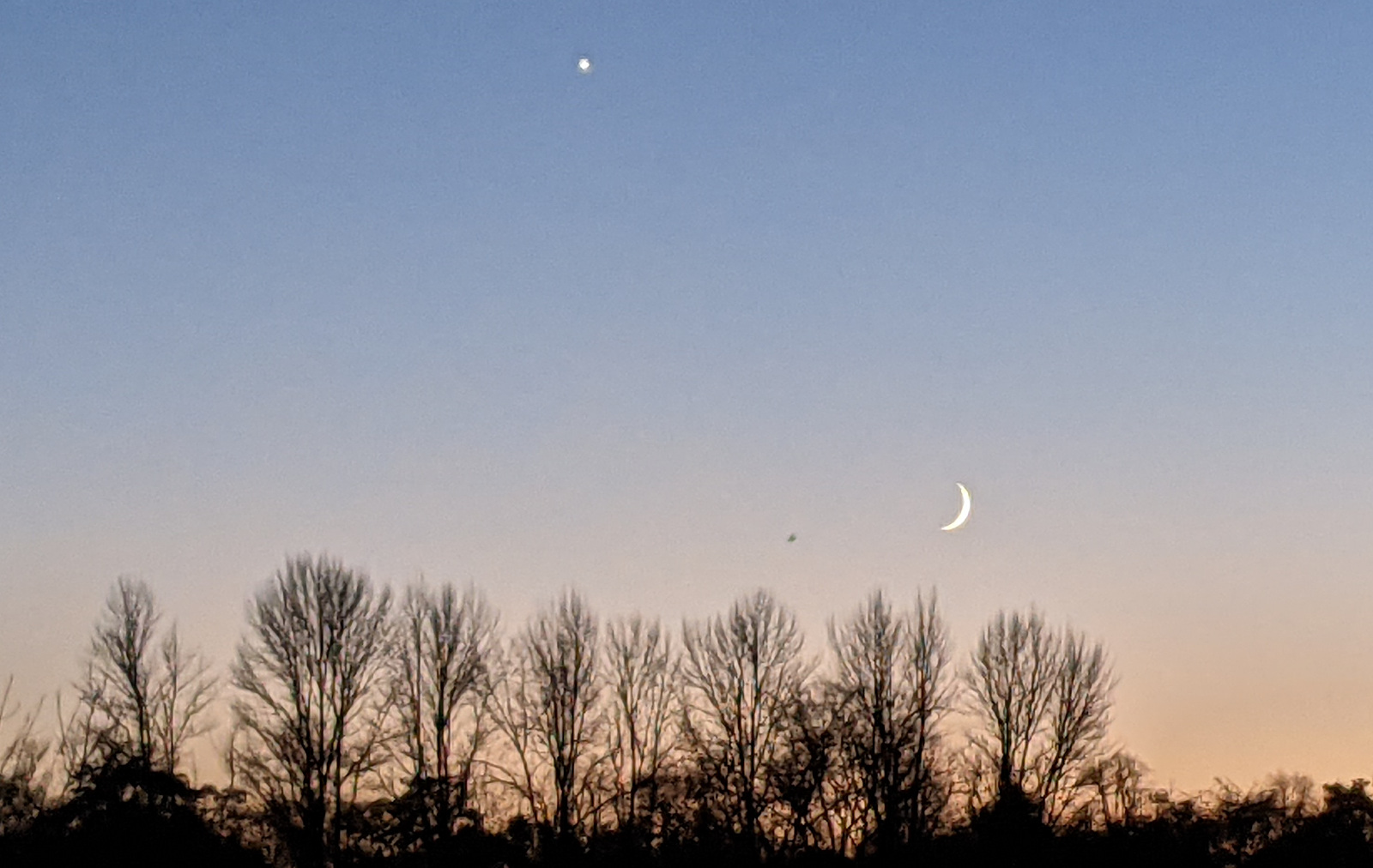
In December 2021 the young Moon and Venus made for a lovely sky in the evening twilight. I took this photo, only noticing later that a passing bird had photobombed the scene!
My friend, Nick Henderson invited me to write an article on why I left the Anglican church. You can read it here on my blog, and and on his website, Anglicanism.org.
December 2018 (5 years before)

In December 2018 I took a photo of the clock on Cirencester’s Parish Church tower. The honey coloured Cotswold limestone of the tower glows gloriously in the orange light of the setting sun. What a combination! Studying the photo later, I realised for the first time that the clock face is painted onto the stone of the tower. I had always imagined it was a large wooden or metal panel.
I posted an online card for Christmas and New Year, hoar frost on red berries.
December 2013 (10 years)
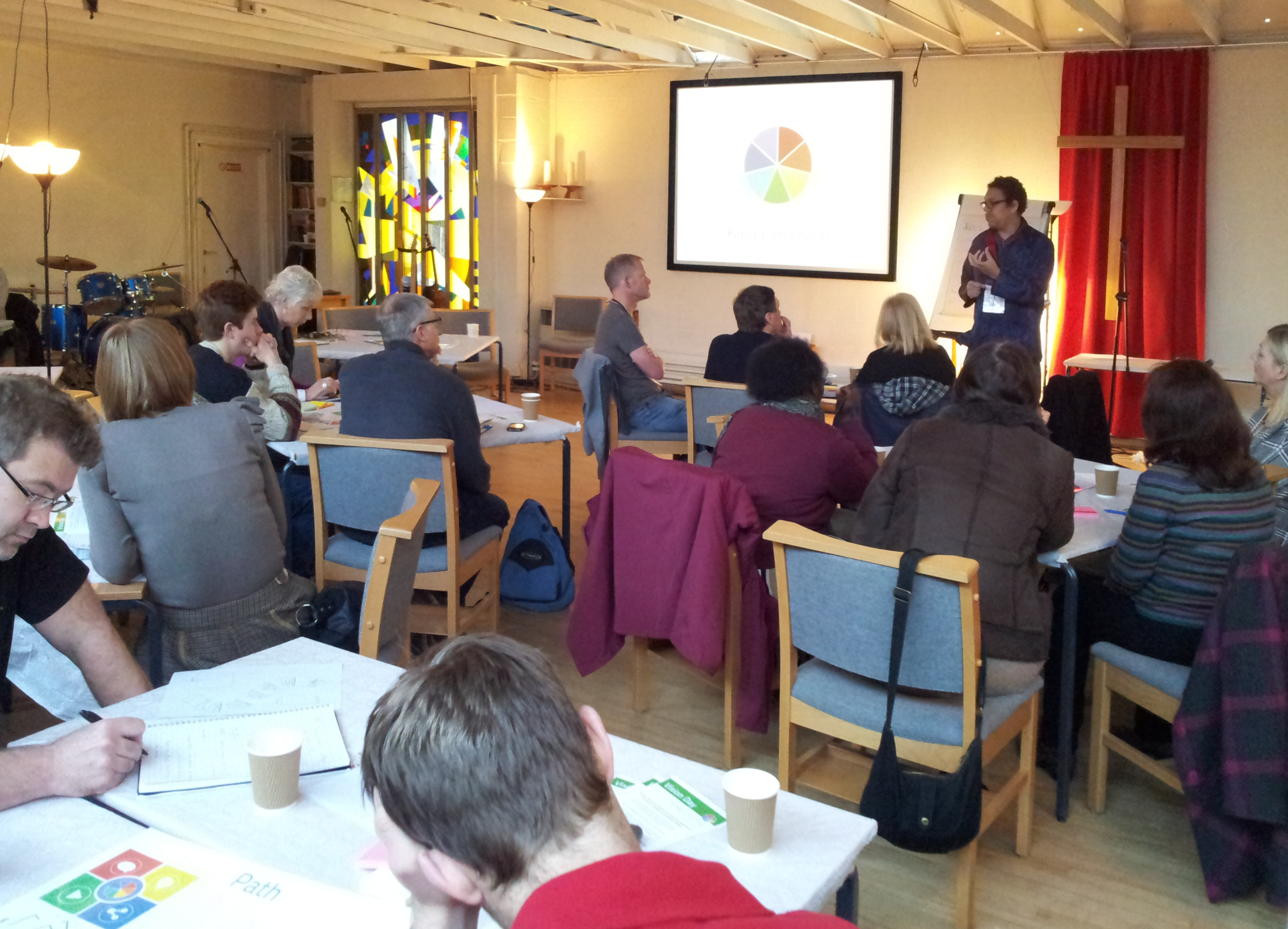
In December 2013 I was at a Newforms Gathering in Nottingham. It was great to be amongst other people doing their best to follow Jesus and represent him in what is often a very broken world.
On JHM I wrote about food banks and why they were needed in Britain. Sadly they are still needed a decade later.
December 2008 (15 years)
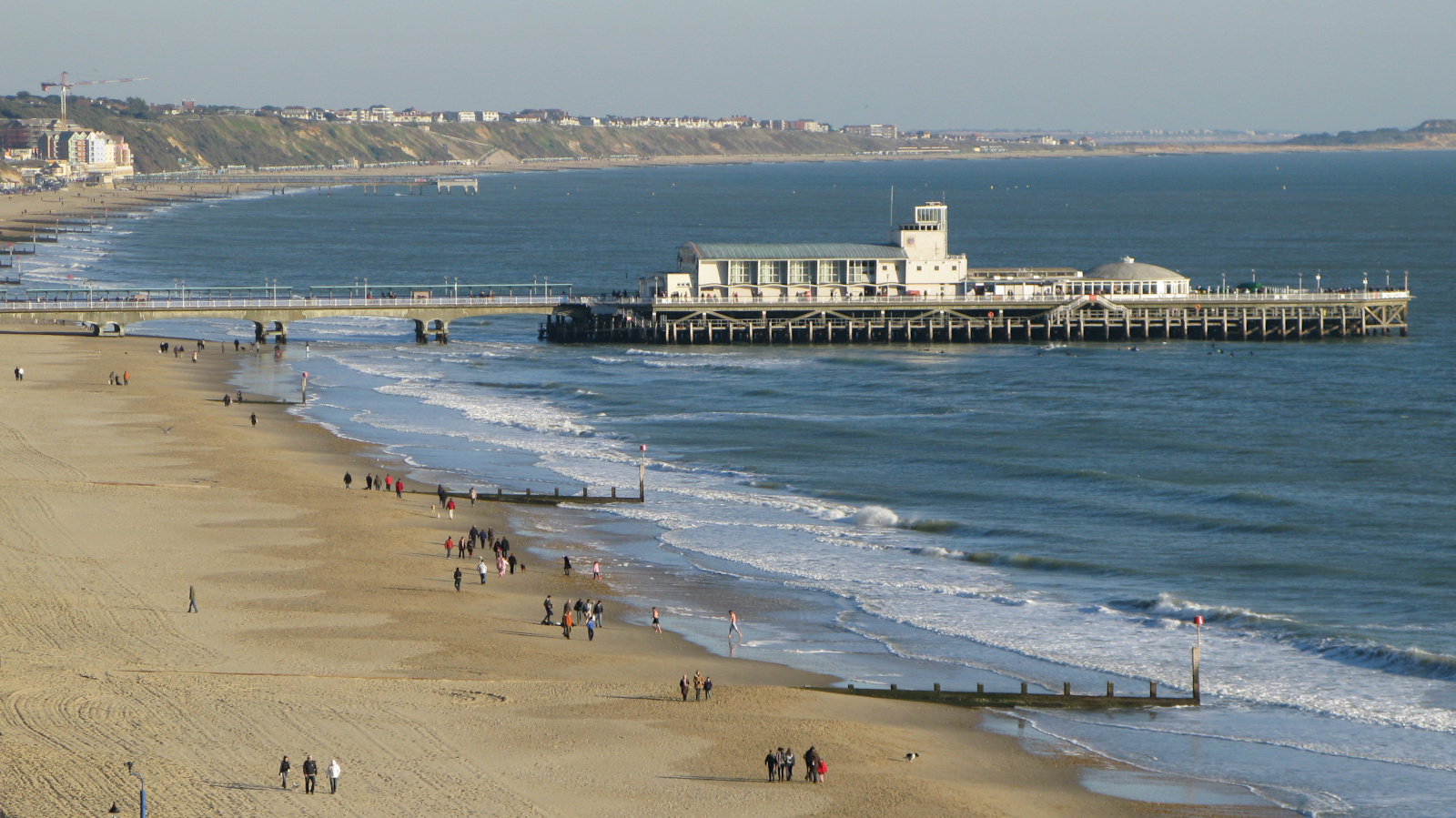
In December 2008 we visited Donna’s parents and walked along the coast near Bournemouth. It looked lovely with some strong sunshine, but my word it was cold!
I wrote an article on JHM the same month on the topics of science and technology.
December 2003 (20 years)

In December 2003 I was working for Unilever Research; and the department had a couple of working away days as a planning and learning exercise. These were always daytime effort and evening fun.
December 1998 (25 years)

In December 1998 we were living in Tilbrook, a tiny village near Kimbolton, Bedfordshire. I received my replacement driving licence for the new address. There was no plastic card, this document folded up and fitted into a flexible plastic sleeve.
December 1993 (30 years)

In December 1993 we were living in Yatton and visited Judy’s parents in Cheltenham for Christmas and my parents in Cirencester for New Year. Here are Cindy, Rachael, Neil and Tom in the dining room at Churnside, playing Buccaneer. It’s a 1938 game of pirates, treasure, shipwreck and rum – great fun.
December 1988 (35 years)

In December 1988 we visited my parents in Cirencester. Dad still had his African land snail in the glass tank and everyone was interested to take a closer look at it. Beth is unfortunately hidden behind Debbie in this shot. The glass tank was originally for a lead-acid radio battery.
December 1983 (40 years)
In December 1983, my department at Long Ashton was beginning the process of working out how proposed budget cuts would effect staff. Some would be redeployed in other research centres. Others would be made redundant.
December 1978 (45 years)
In December 1978 Debbie was three and three quarters and Beth was 7 months old. We’d been in our 1960s mid-terrace house in Yatton for some time but there still seemed to be enough room for us. In Iran, two million people demonstrated in the streets against the Shah.
December 1973 (50 years)
In December 1973, we were trying to save enough money for a deposit on a mortgage. We’d saved quite a lot, but house prices were rising faster than we could manage.

The Pioneer 10 spacecraft was the first probe to fly past Jupiter. The images were fuzzy by modern standards, but far better than any telescope could achieve at the time. I remember sitting in the library at work in my lunch break, reading about it in Science, Nature, and at home in New Scientist.
December 1968 (55 years)
December 1968 was a significant month. As far as I can recall, on 31st December both families were in the same room in Cheltenham when I asked Judy’s Dad if I might marry his daughter. He said, ‘Yes’, right away so all was well. It’s possible this was very early January, but I think it was New Year’s Eve. Of course, Judy and I had decided this well in advance but it was fun to make the move with everyone present!
December 1963 (60 years)
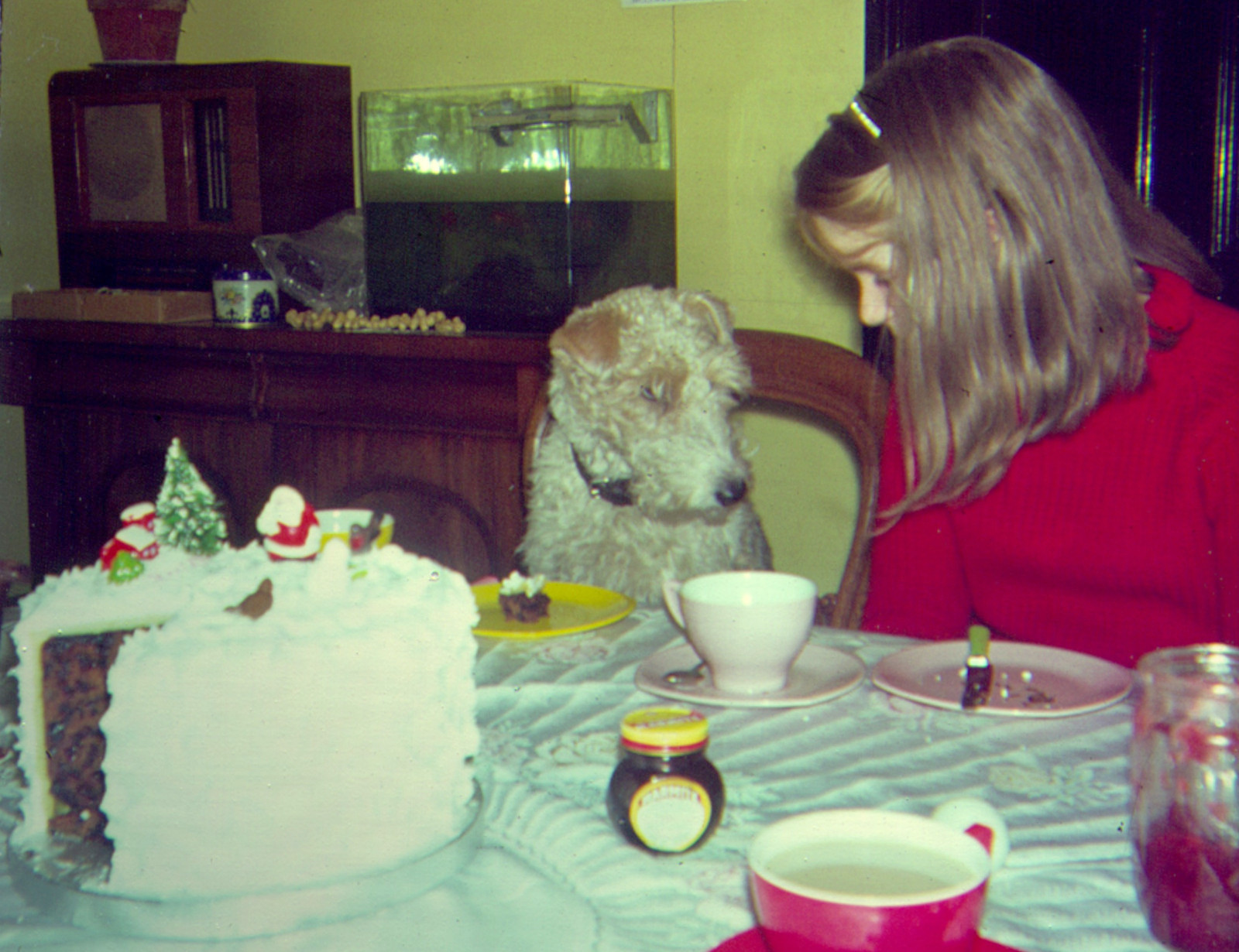
In December 1963 I was in the Fifth Form at Cirencester Grammar School. Mum made the usual stonkingly large Christmas cake (we always managed to eat it all in a week or so). Even Chloe, the dog has a small slice on her own plate in the photo. And, of course, it goes without saying that there’s Marmite on the table.
December 1958 (65 years)

In December 1958 I was in my 6th and final year at Querns School. One of my friends from before we started school, Robert Kneale, wrote a Christmas poem for our teacher, Miss Taylor. We were both ten at the time, I wonder if he had a little help from his Dad, George? It’s a great effort – click on the image to read it.
< Nov 1958 – Jan 1959 >
December 1953 (70 years)
In December 1953 I was five-years-old and finished my first school term.
The world of human paleontology was still reeling following the announcement on 20th November that Piltdown Man had been a hoax.
December 1948 (75 years)
At the end of December 1948 I was five months old and turned over by myself for the first time on 2nd. Dad had a 10/- raise in his wages and was busy lifting Christmas trees for sale.
December 1943 (80 years)
In December 1943 Dad travelled by train to Paddington Station and on to Euston House where he went through a series of subject exams and aptitude tests. He was enlisted as a Radar Operator in the RAF Volunteer Reserve, received 10/6d pay, and was deferred for six months. He was very disappointed to have been turned down as a pilot.
< Previous | Index | Next >


 Along the way we came across a great example of two (or possibly three) trees, cross grafted as saplings. Someone had clearly tied them together tightly, possibly after removing a slice from each and lining up the cambial zones carefully so that they would heal and grow as one. That must have been decades ago and the result today is most striking.
 Journeys of Heart and Mind
