About Patrick

My name is Patricius, I’m a sinner, a simple country person, and the least of all believers; I am looked down upon by many. My father was Calpornius, a deacon.

Patrick, or Saint Patrick as we normally think of him, had an interesting background and history. Of course, we know very little about him, but far more than we know about most other people who lived at that time.

Late Roman Britain
(Wikimedia)

What does the name, Patrick, mean? It comes from the Latin patricius, meaning “nobleman”, “of noble origin” or “patrician”. Patricians were the noble families in ancient Rome, a ruling class, and Patrick can be viewed as a Roman or perhaps a Romanised Briton. By 409 CE when all remaining Roman forces in Britannia were recalled to protect the Western empire against uncontrolled immigration across the Rhine, the distinction between Roman and Romano-Briton had pretty much vanished. Archaeological evidence makes it clear that Roman life continued well after the troops left, particularly in the west of Britain.

Patrick’s life

Patrick’s family lived in Roman style somewhere near the west coast in what is now northern England or southern Scotland (also possibly Wales). They would have been little affected by Angle and Saxon incursions into the far eastern regions of the British Isles, but raids from Ireland and northern Scotland were sometimes a problem. Farming life and indeed villa life and Roman town life would have carried on; no longer governed by the empire, but governed locally like a Roman province. Patrick was born around the time the Roman forces departed.

When he was sixteen he was captured by Irish pirates raiding the area where his parents lived. And he was sold in Ireland as a slave and had a hard life, outside in all weathers, herding sheep or pigs. He had been exposed to Christian ways as a child but had not believed in Jesus or made any attempt to follow him, but during his time in captivity he developed a faith. Spending times of great hardship as a herdsman slave, and living in the open air in all seasons, he must often have been wet and very cold. But spiritually it was a time of great growth and depth for him. He prayed incessantly and felt very close to his heavenly Father.

He made a dash for freedom when the opportunity arose, hearing a voice in his sleep telling him that a ship was waiting to return him home. He was recaptured, but escaped again and made it home successfully.

Later, sensing that his responsibility was to return to Ireland to share his faith with the pagan people there, he travelled back and began to share everything he knew of Jesus. People listened to what he told them and he started many local communities of believers. Later again, Patrick travelled back to northern Britain and spread his teaching about Jesus to the Irish and Welsh speaking Britons and also to the Saxons in the areas he visited. The Celtic church in Ireland and in Great Britain spread far and wide, even back into northern Europe. Celtic Christian monks journeyed singly or in small groups, spreading the good news and founding further communities and groups of believers.

His writings

At some point in his later life, Patrick authored books and letters, two have survived, and one of these is autobiographical in nature, telling the story of who he was and the events of his life. And that book (The Confessio) is why we know as much as we do about Patrick and the world he lived in. Here are his opening words:

My name is Patrick. I am a sinner, a simple country person, and the least of all believers. I am looked down upon by many. My father was Calpornius. He was a deacon; his father was Potitus, a priest, who lived at Bannavem Taburniae. His home was near there, and that is where I was taken prisoner. I was about sixteen at the time. At that time, I did not know the true God. I was taken into captivity in Ireland, along with thousands of others. We deserved this, because we had gone away from God, and did not keep his commandments. We would not listen to our priests, who advised us about how we could be saved. The Lord brought his strong anger upon us, and scattered us among many nations even to the ends of the earth. It was among foreigners that it was seen how little I was.

The Wikipedia article on Patrick provides a lot of good information.

Useful? Interesting?

If you enjoyed this or found it useful, please like, comment, and share below. My material is free to reuse (see conditions), but a coffee is always welcome!

Image of the day – 55

This often came in the form of a silver sixpence, but sometimes as two thrupenny bits.

< Previous | Index | Next >

What’s in an image? Sometimes quite a lot, more than meets the eye.

I’m posting an image every two days (or as often as I can). A photo, an image from the internet, a diagram or a map. Whatever takes my fancy.

Thrift flowering among rocks near the beach

Close to the beach in Newcastle, County Down, this is thrift (Armeria maritima), sometimes known as ‘sea pink’, growing among the rocks well above the high tide mark. These tough and hardy plants are native in the British Isles; they are tolerant of salt in the air and soil, close to places where the waves break on the beach.

Thruppence
(Wikimedia)

A stylised thrift plant was used on the reverse of the old UK 3d coin prior to decimalisation. We called it ‘thruppence’ or a ‘thruppeny bit’. At one time when I was at junior school, my pocket money was 6d a week; this often came in the form of a silver sixpence, but sometimes as two thrupenny bits. Either way I could always find a way of spending some of it and saving some in a tin box as well.


Images from our Irish holiday 2024

For convenience, here’s a list of all the Irish holiday images:

28th Jul – Welsh Botanic Garden, Robin, Fishguard
29th Jul – Wicklow Mts, Glendalough, Powerscourt, Rose, Greystones
30th Jul – Liffey, Temple Bar, St Patrick’s Cathedral
31st Jul – Newgrange, Battle of the Boyne
1st Aug – Monasterboice, Mourne, Thrift, Window
2nd Aug – Spelga Dam, Hydrangea, Pipework, Lough Neagh
3rd Aug – Coagh, Springhill, Portrush
4th Aug – Beach at Portrush
5th Aug – Giant’s Causeway, Carrick-a-Rede, Portrush

Themed image collections

The links below will take you to the first post in each collection

Cirencester, Favourites, Irish holiday 2024, Roman villa

< Previous | Index | Next >

Useful? Interesting?

If you enjoyed this or found it useful, please like, comment, and share below. My material is free to reuse (see conditions), but a coffee is always welcome!

Image of the day – 54

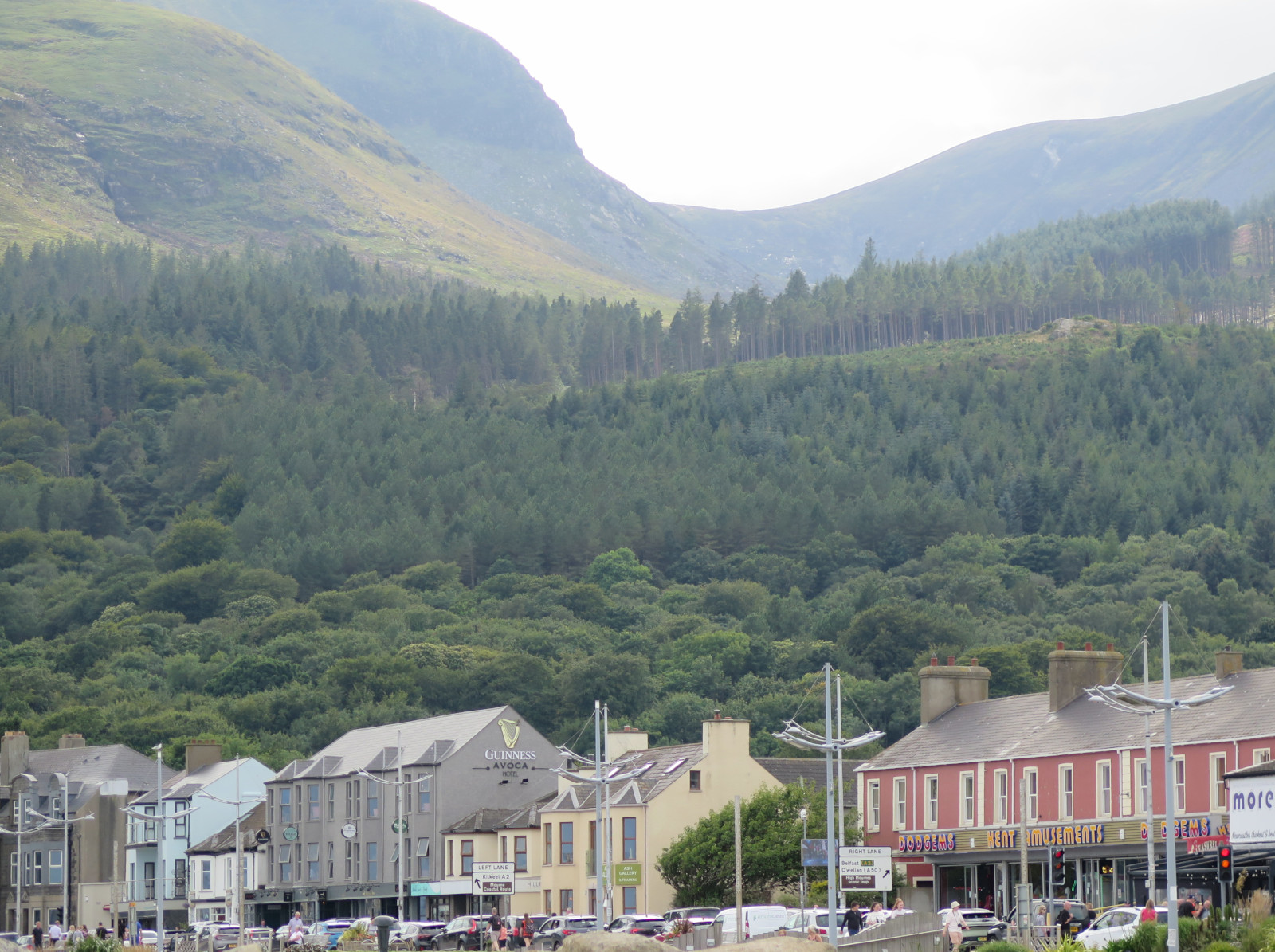
The town nestles beneath these mountains in a way that reminded us of Aviemore in Scotland, but Aviemore has no beach.

< Previous | Index | Next >

What’s in an image? Sometimes quite a lot, more than meets the eye.

I’m posting an image every two days (or as often as I can). A photo, an image from the internet, a diagram or a map. Whatever takes my fancy.

Mountains of Mourne at Newcastle

We visited Newcastle in County Down, this is the town where my parents spent their honeymoon in 1947. It’s the place where ‘the Mountains of Mourne sweep down to the sea’.

The photo shows the properties on Main Street with the fine beach behind me. The town nestles beneath these mountains in a way that reminded us of Aviemore in Scotland, but Aviemore has no beach so Newcastle wins the beauty contest!

The name of these beautiful mountains also reminds me of a song, ‘Mountains o’ Mourne’, so here it is sung by Don McLean.


Images from our Irish holiday 2024

For convenience, here’s a list of all the Irish holiday images:

28th Jul – Welsh Botanic Garden, Robin, Fishguard
29th Jul – Wicklow Mts, Glendalough, Powerscourt, Rose, Greystones
30th Jul – Liffey, Temple Bar, St Patrick’s Cathedral
31st Jul – Newgrange, Battle of the Boyne
1st Aug – Monasterboice, Mourne, Thrift, Window
2nd Aug – Spelga Dam, Hydrangea, Pipework, Lough Neagh
3rd Aug – Coagh, Springhill, Portrush
4th Aug – Beach at Portrush
5th Aug – Giant’s Causeway, Carrick-a-Rede, Portrush

Themed image collections

The links below will take you to the first post in each collection

Cirencester, Favourites, Irish holiday 2024, Roman villa

< Previous | Index | Next >

Useful? Interesting?

If you enjoyed this or found it useful, please like, comment, and share below. My material is free to reuse (see conditions), but a coffee is always welcome!

Image of the day – 53

The crosses are usually carved with traditional Celtic patterns, but often they have panels containing carved pictures that illustrate a story.

< Previous | Index | Next >

What’s in an image? Sometimes quite a lot, more than meets the eye.

I’m posting an image every two days (or as often as I can). A photo, an image from the internet, a diagram or a map. Whatever takes my fancy.

Stone high cross at Monasterboice

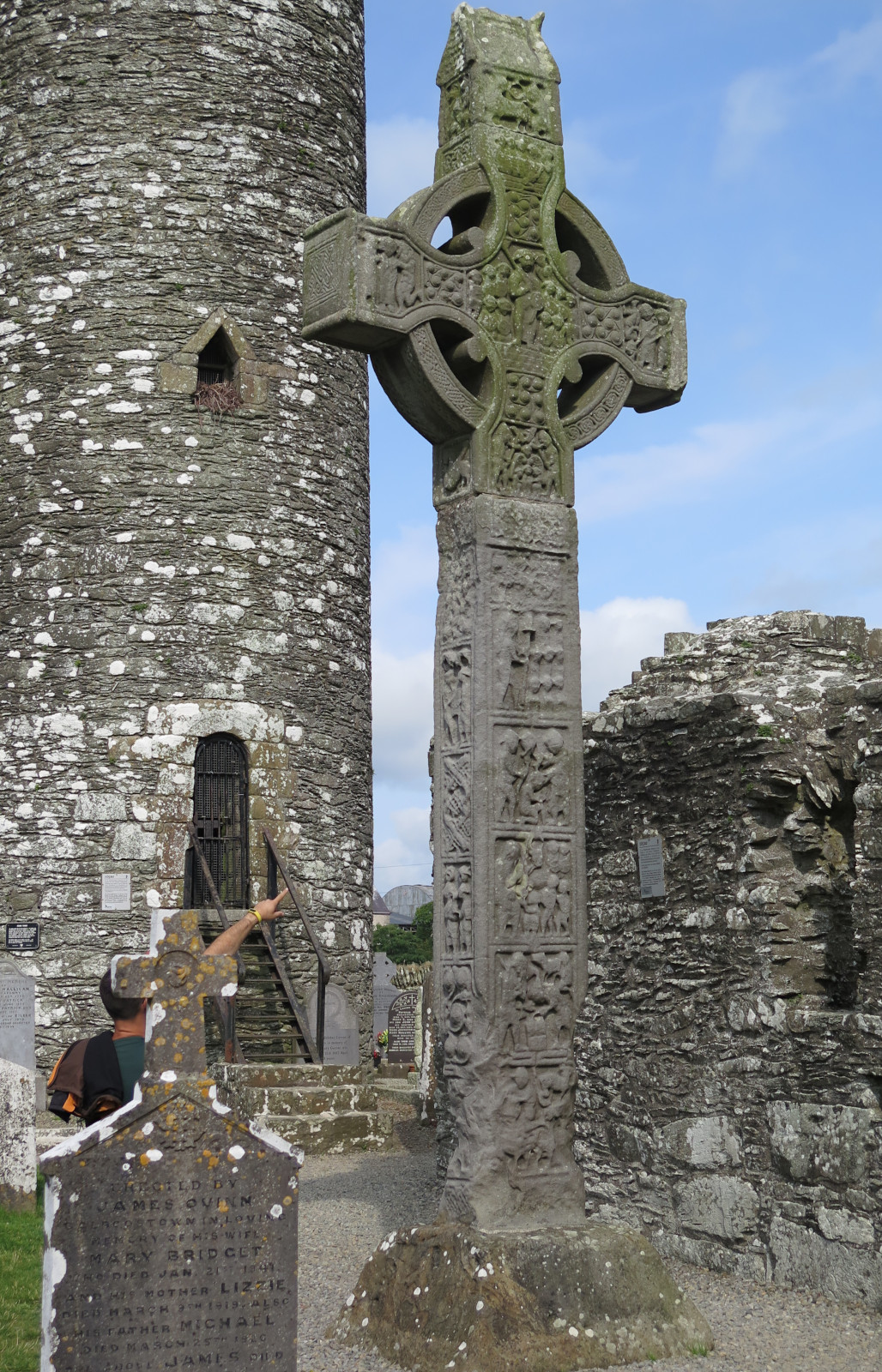
Irish monasteries had a number of features not found (or rarely found) in other parts of the British Isles. The round towers are one example, there are one or two in Scotland and the Isle of Man, but nowhere else outside Ireland. Stone high crosses are another example. These are found throughout the British Isles and parts of France. The ruined monastery of Monasterboice has a round tower similar to the one at Glendalough, but is particularly noted for several outstanding high crosses, one of these features in my photo.

The crosses are usually carved with traditional Celtic patterns, but often they have panels containing carved pictures that illustrate a story, perhaps a Bible story. They were clearly important to the people and communities that took so much care and effort to create them, and they are one of many strong reminders of the Celtic, and particularly the Irish Christian traditions that were significantly different in many ways from the later, Catholic traditions coming into south-eastern England in Saxon times.

The Catholic Church brought initially to Kent from the Continent introduced a hierarchical style, with church officials under the Pope, and fixed orders of service. The Celtic church that had developed from early, pre-Catholic traditions in Roman Britain, was based more on travelling teachers (often missionary monks) who were more flexible in style, without strict rules. They often took little with them but their learning, and depended on the people they taught to support them on their journeys.

Which of these two styles do you think followed the teachings of Jesus most closely?


Images from our Irish holiday 2024

For convenience, here’s a list of all the Irish holiday images:

28th Jul – Welsh Botanic Garden, Robin, Fishguard
29th Jul – Wicklow Mts, Glendalough, Powerscourt, Rose, Greystones
30th Jul – Liffey, Temple Bar, St Patrick’s Cathedral
31st Jul – Newgrange, Battle of the Boyne
1st Aug – Monasterboice, Mourne, Thrift, Window
2nd Aug – Spelga Dam, Hydrangea, Pipework, Lough Neagh
3rd Aug – Coagh, Springhill, Portrush
4th Aug – Beach at Portrush
5th Aug – Giant’s Causeway, Carrick-a-Rede, Portrush

Themed image collections

The links below will take you to the first post in each collection

Cirencester, Favourites, Irish holiday 2024, Roman villa

< Previous | Index | Next >

Useful? Interesting?

If you enjoyed this or found it useful, please like, comment, and share below. My material is free to reuse (see conditions), but a coffee is always welcome!

Image of the day – 52

Unfortunately evil, lies and cruelty are often employed as levers and instruments of war (as in the current Russia/Ukraine conflict).

< Previous | Index | Next >

What’s in an image? Sometimes quite a lot, more than meets the eye.

I’m posting an image every day (or as often as I can). A photo, an image from the internet, a diagram or a map. Whatever takes my fancy.

Battle of the Boyne

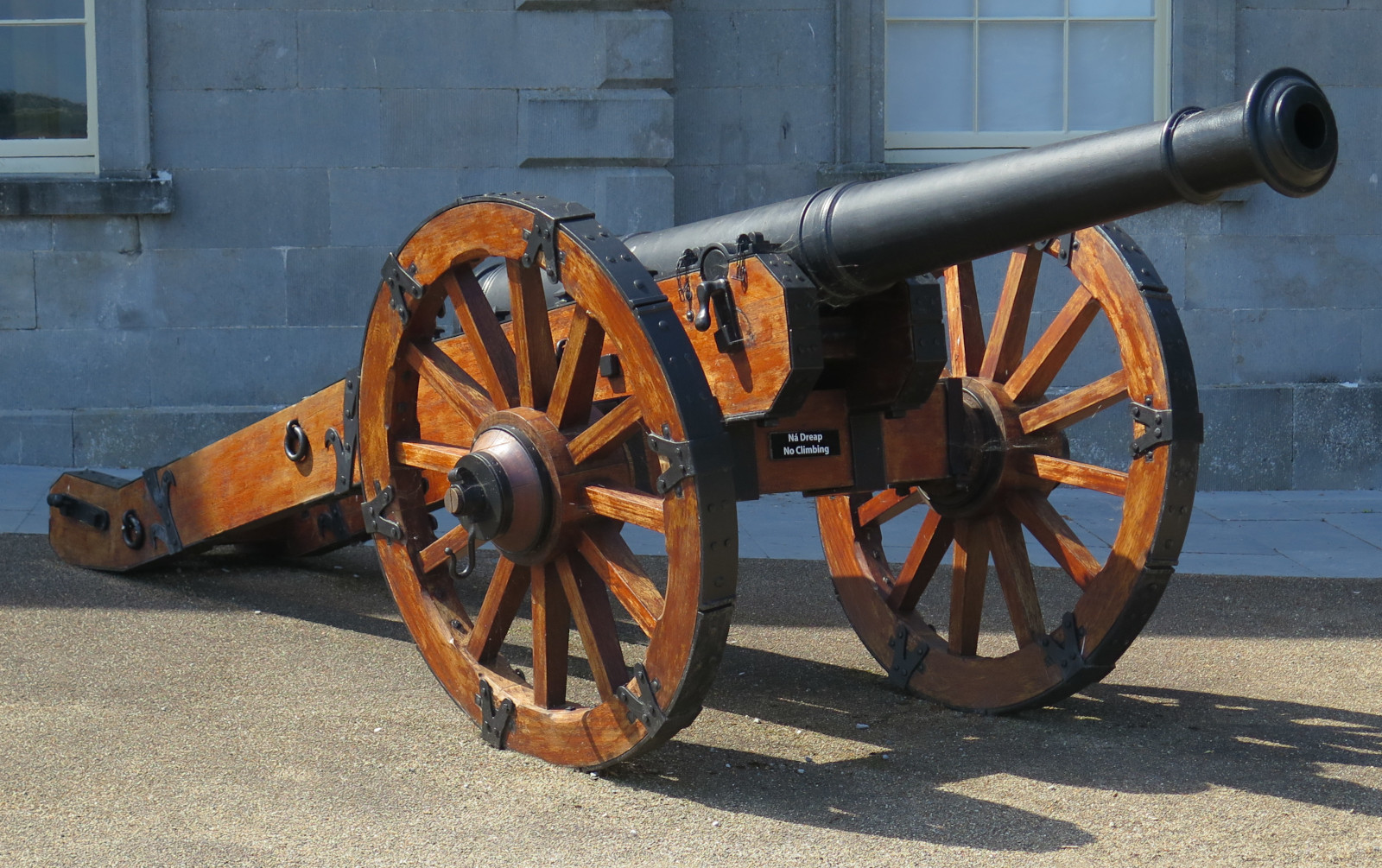
The old cannon in today’s photo dates to the time of the Battle of the Boyne (1690), near the Irish town of Drogheda on the east coast north of Dublin. The battle took place between James II, the final Stuart King of England who was attempting to win back his throne from George III, the first Hanoverian King. But it was a battle of huge significance across the whole of Europe, because both the Catholic Stuarts and the Protestant Hanoverians were backed by various European powers. There were troops from many European states on the battlefield.

George III won the battle and remained the King of England. But the consequences were multinational in nature.

We see the same sorts of thing in the Ukraine/Russia war, it’s not just two national armies pitted against one another. Russia is supported to a greater or lesser degree by China, India, Iran, North Korea, Mongolia, Belarus, and others. Ukraine is supported by most European nations, by the EU, the USA, Canada, Australia, New Zealand, and others. All of these other countries, to a greater or lesser degree, will be affected by the eventual outcome.

Sometimes it seems the world is incapable of living peacefully. The never-ending struggles between good and evil, for example, or truth and lies, or kindness and cruelty, run far deeper than clashes over which king will rule a particular country. Unfortunately evil, lies and cruelty are often employed as levers and instruments of war (as in the current Russia/Ukraine conflict).

I’ll predict one thing, either Russia or Ukraine will lose this war. I fervently hope and pray that the loser will be the nation that has deployed the most evil, lies and cruelty. We can do with less of those things (though realistically they’ll always be present at some level in human societies).


Images from our Irish holiday 2024

For convenience, here’s a list of all the Irish holiday images:

28th Jul – Welsh Botanic Garden, Robin, Fishguard
29th Jul – Wicklow Mts, Glendalough, Powerscourt, Rose, Greystones
30th Jul – Liffey, Temple Bar, St Patrick’s Cathedral
31st Jul – Newgrange, Battle of the Boyne
1st Aug – Monasterboice, Mourne, Thrift, Window
2nd Aug – Spelga Dam, Hydrangea, Pipework, Lough Neagh
3rd Aug – Coagh, Springhill, Portrush
4th Aug – Beach at Portrush
5th Aug – Giant’s Causeway, Carrick-a-Rede, Portrush

Themed image collections

The links below will take you to the first post in each collection

Cirencester, Favourites, Irish holiday 2024, Roman villa

< Previous | Index | Next >

Useful? Interesting?

If you enjoyed this or found it useful, please like, comment, and share below. My material is free to reuse (see conditions), but a coffee is always welcome!

Image of the day – 50

Jonathan Swift…famously wrote, ‘In Ireland we have enough religion to make us hate but not enough to make us love’.

< Previous | Index | Next >

What’s in an image? Sometimes quite a lot, more than meets the eye.

I’m posting an image every day (or as often as I can). A photo, an image from the internet, a diagram or a map. Whatever takes my fancy.

St Patrick’s Cathedral, Dublin

While we were in Dublin we visited St Patrick’s Cathedral. There are two cathedrals in the city, Christ Church and St Patrick’s. St Patrick’s has an association with the famous author, Jonathan Swift who was Dean and Ordinary here. He famously wrote, ‘In Ireland we have enough religion to make us hate but not enough to make us love’.

The cathedral is beautiful, with much interesting stained glass. It has a long and varied history; astonishingly, Oliver Cromwell used the building to stable his horses. The building has had many ups and downs over the centuries, falling into disrepair and being restored.

The phrase ‘chance your arm’ originated here. In 1492, two feuding families had been in battle and the losing side fled to the cathedral for safety. The winners offered a truce but the losers thought it was trap. A hole was cut in the heavy, wooden door to the building and the leader of the winning side put his arm through to shake hands ‘chancing his arm’ in the process. Everything ended well and the truce was accepted.

Sometimes we might need to do this too – chance our arm. We need to take risks in life in the hope of achieving something useful. ‘Nothing ventured, nothing gained’ is another way of making the same point. Risk it for a biscuit!


Images from our Irish holiday 2024

For convenience, here’s a list of all the Irish holiday images:

28th Jul – Welsh Botanic Garden, Robin, Fishguard
29th Jul – Wicklow Mts, Glendalough, Powerscourt, Rose, Greystones
30th Jul – Liffey, Temple Bar, St Patrick’s Cathedral
31st Jul – Newgrange, Battle of the Boyne
1st Aug – Monasterboice, Mourne, Thrift, Window
2nd Aug – Spelga Dam, Hydrangea, Pipework, Lough Neagh
3rd Aug – Coagh, Springhill, Portrush
4th Aug – Beach at Portrush
5th Aug – Giant’s Causeway, Carrick-a-Rede, Portrush

Themed image collections

The links below will take you to the first post in each collection

Cirencester, Favourites, Irish holiday 2024, Roman villa

< Previous | Index | Next >

Useful? Interesting?

If you enjoyed this or found it useful, please like, comment, and share below. My material is free to reuse (see conditions), but a coffee is always welcome!

Image of the day – 42

There were no railways; coastal vessels and canal barges were the main system for transporting heavy goods.

< Previous | Index | Next >

What’s in an image? Sometimes quite a lot, more than meets the eye.

I’m posting an image every day (or as often as I can). A photo, an image from the internet, a diagram or a map. Whatever takes my fancy.

Today’s photo shows the River Liffey in the centre of Dublin. I liked the contrast between the old sailing ship and the modern buildings along the waterfront. There’s a sense of history, of the long passage of time beyond an individual human life.

Two hundred years ago, in 1824, the city was here, the river was here, sailing ships of various sizes would have been jostling together along the quayside, but the buildings have changed dramatically. In 1824 there was no photography, no computing, no motor vehicles, no EU, no electricity supply. There were no railways; coastal vessels and canal barges were the main system for transporting heavy goods, while horse drawn vehicles on generally poor roads were used for passenger travel and light goods.

Over many thousands of years, science and technology working together have taken us from the use of stone, wild plants and animals in the prehistoric past to all the conveniences of modern living. And those changes continue, faster now than ever. Imagining the past is at least possible, imagining the future much less so. There are too many unknowns.


Images from our Irish holiday 2024

For convenience, here’s a list of all the Irish holiday images:

28th Jul – Welsh Botanic Garden, Robin, Fishguard
29th Jul – Wicklow Mts, Glendalough, Powerscourt, Rose, Greystones
30th Jul – Liffey, Temple Bar, St Patrick’s Cathedral
31st Jul – Newgrange, Battle of the Boyne
1st Aug – Monasterboice, Mourne, Thrift, Window
2nd Aug – Spelga Dam, Hydrangea, Pipework, Lough Neagh
3rd Aug – Coagh, Springhill, Portrush
4th Aug – Beach at Portrush
5th Aug – Giant’s Causeway, Carrick-a-Rede, Portrush

Themed image collections

The links below will take you to the first post in each collection

Cirencester, Favourites, Irish holiday 2024, Roman villa

< Previous | Index | Next >

Useful? Interesting?

If you enjoyed this or found it useful, please like, comment, and share below. My material is free to reuse (see conditions), but a coffee is always welcome!

Image of the day – 40

Nobody knows when rose breeding began, it may have been as far back as Greek or Roman times.

< Previous | Index | Next >

What’s in an image? Sometimes quite a lot, more than meets the eye.

I’m posting an image every day (or as often as I can). A photo, an image from the internet, a diagram or a map. Whatever takes my fancy.

A beautiful rose at Powerscourt Gardens

While we were at the Powerscourt Estate, Donna wanted to look at the rose garden; this photo shows a really beautiful example of the flowers on view. Looking at the image now I can almost smell the fragrance in my mind!

Roses like these are not part of the natural world; they’re the work of plant breeders crossing a range of wild species and selecting for characteristics they liked. Nobody knows when rose breeding began, it may have been as far back as Greek or Roman times, but was certainly underway in medieval Europe and perhps in the middle and far east as well.

I wrote an article four years ago that includes photos of a much more natural rose. Comparing the two images emphasises how plant breeding can make huge changes (the breeders might say ‘huge improvements’) to wild forms. The same is true for animal breeding, just compare any modern breed of dog with the wild, wolf ancestor for example!


Images from our Irish holiday 2024

For convenience, here’s a list of all the Irish holiday images:

28th Jul – Welsh Botanic Garden, Robin, Fishguard
29th Jul – Wicklow Mts, Glendalough, Powerscourt, Rose, Greystones
30th Jul – Liffey, Temple Bar, St Patrick’s Cathedral
31st Jul – Newgrange, Battle of the Boyne
1st Aug – Monasterboice, Mourne, Thrift, Window
2nd Aug – Spelga Dam, Hydrangea, Pipework, Lough Neagh
3rd Aug – Coagh, Springhill, Portrush
4th Aug – Beach at Portrush
5th Aug – Giant’s Causeway, Carrick-a-Rede, Portrush

Themed image collections

The links below will take you to the first post in each collection

Cirencester, Favourites, Irish holiday 2024, Roman villa

< Previous | Index | Next >

Useful? Interesting?

If you enjoyed this or found it useful, please like, comment, and share below. My material is free to reuse (see conditions), but a coffee is always welcome!

Image of the day – 38

It’s good to imagine the hustle and bustle of the monks as they tended the farm, milled wheat for flour, [and] baked their bread.

< Previous | Index | Next >

What’s in an image? Sometimes quite a lot, more than meets the eye.

I’m posting an image every day (or as often as I can). A photo, an image from the internet, a diagram or a map. Whatever takes my fancy.

The monastery at Glendalough

This is the ancient monastery of Glendalough. (Glen da lough – da means two, so the ‘Valley of two lakes’.) The aerial shot was taken from a helicopter in the early twelfth century, showing the thriving monastery with many stone structures, and the round tower in the upper-left corner. This is, of course, a modern model of how the settlement may have appeared, but it absolutely looks like the real thing and it’s easy to imagine flying over the scenery.

Very little remains, though the tower is still complete and some of the ruins are quite impressive (especially the cathedral and the gateway). The site is still in use as a graveyard. The museum nearby is informative and beautifully presented, well worth a thorough visit.

I’m always intrigued by the ruins of once-inhabited places. It’s good to imagine the hustle and bustle of the monks as they tended the farm, milled wheat for flour, baked their bread, and carried out all the other tasks – blacksmithing, building, making repairs, fetching water, weaving – everything it took to survive here. And then, the contemplation and prayer, the worship and copying of illuminated manuscripts: nothing would have been done unless other tasks were done first. No writing without preparing vellum, making inks, fashioning pens – you couldn’t just pop down to the shops!

If you ever have a chance to visit Glendalough, don’t hesitate!


Images from our Irish holiday 2024

For convenience, here’s a list of all the Irish holiday images:

28th Jul – Welsh Botanic Garden, Robin, Fishguard
29th Jul – Wicklow Mts, Glendalough, Powerscourt, Rose, Greystones
30th Jul – Liffey, Temple Bar, St Patrick’s Cathedral
31st Jul – Newgrange, Battle of the Boyne
1st Aug – Monasterboice, Mourne, Thrift, Window
2nd Aug – Spelga Dam, Hydrangea, Pipework, Lough Neagh
3rd Aug – Coagh, Springhill, Portrush
4th Aug – Beach at Portrush
5th Aug – Giant’s Causeway, Carrick-a-Rede, Portrush

Themed image collections

The links below will take you to the first post in each collection

Cirencester, Favourites, Irish holiday 2024, Roman villa

< Previous | Index | Next >

Useful? Interesting?

If you enjoyed this or found it useful, please like, comment, and share below. My material is free to reuse (see conditions), but a coffee is always welcome!

Image of the day – 37

It feels especially good to be experiencing the grandeur, the beauty, and the sheer ‘thisness’ of the surroundings.

< Previous | Index | Next >

What’s in an image? Sometimes quite a lot, more than meets the eye.

I’m posting an image every day (or as often as I can). A photo, an image from the internet, a diagram or a map. Whatever takes my fancy.

Arriving in Ireland, one of our first explorations took us into the Wicklow Mountains, driving a loop from Newtownmountkennedy to Glendalough via the old military road through Sally Gap. The scenery was glorious as you can see from the photo. I was reminded of North Wales, the Pennines, the Lake District, and Western Scotland.

It always feels good to be alive, but for me this was one of those special times when it feels especially good to be experiencing the grandeur, the beauty, and the sheer ‘thisness’ of the surroundings.

‘Thisness’ is a term I borrowed from Kim Stanley Robinson‘s Mars trilogy, a word he puts in the mind and mouth of Sax Russell, one of the science team in the story. The books are a good read; begin with ‘Red Mars’, then ‘Green Mars’, and finally ‘Blue Mars’. They are not just good science fiction, they are also a powerful commentary on many political, technological, and societal issues in the real world.


Images from our Irish holiday 2024

For convenience, here’s a list of all the Irish holiday images:

28th Jul – Welsh Botanic Garden, Robin, Fishguard
29th Jul – Wicklow Mts, Glendalough, Powerscourt, Rose, Greystones
30th Jul – Liffey, Temple Bar, St Patrick’s Cathedral
31st Jul – Newgrange, Battle of the Boyne
1st Aug – Monasterboice, Mourne, Thrift, Window
2nd Aug – Spelga Dam, Hydrangea, Pipework, Lough Neagh
3rd Aug – Coagh, Springhill, Portrush
4th Aug – Beach at Portrush
5th Aug – Giant’s Causeway, Carrick-a-Rede, Portrush

Themed image collections

The links below will take you to the first post in each collection

Cirencester, Favourites, Irish holiday 2024, Roman villa

< Previous | Index | Next >

Useful? Interesting?

If you enjoyed this or found it useful, please like, comment, and share below. My material is free to reuse (see conditions), but a coffee is always welcome!