Dinosaurs and the Bible

We are to learn about love, fruitfulness, brokenness, restoration, and our place in this Universe, responsibility, culpability, truth, life and wisdom. We are to understand these things in our own lives, in one another, and also in and through Yahweh.

Dinosaur (Wikimedia)

ad hoc post – 2

< Previous | Index | Next >

Click to enlarge (Wikimedia)

I recently listened to a podcast by Two pastors in a pub (episode 55).  I enjoyed the episode which was about the questions asked and statements sometimes made, to the effect that the presence of dinosaur remains in the fossil record demonstrates the Bible to be incorrect. All sorts of these points are examined and discussed during the podcast. But I think there’s a much more fundamental argument to be made – and it has nothing to do with dinosaurs.

The underlying questions, I believe, are:

  • ‘What is the Bible for?’ That is, ‘What is it’s purpose?’
  • ‘Why was it written?’
  • ‘How was it written?’ and
  • ‘How should I read it?’

What’s in a name?

The background to my answers to those questions is to say that I believe there’s a power of some kind invisible to us, external to the Universe yet responsible for its existence and its nature. We’ll come back to the questions soon, but first let’s go a bit further with the background.

Note first that there is no way I can prove this belief of mine to be true or false. It’s a matter of faith, not of proof and not of evidence. It’s simply something I believe to be true. The set of provable statements is limited to those within and about the Universe; this set does not, cannot, apply to anything exterior to the Universe.

I give this creating and sustaining Authority in which I believe, a name. I like to use the name ‘I am what I am’. It’s the name offered for use by Moses when he asked, ‘Who shall I say has sent me?’ In Hebrew, this enigmatic name is יהוה ie YHWH, the vowels being left out. It’s transliterated into English variously as ‘Yahweh’ or ‘Yahveh’, ‘Yahoveh’ or in the past frequently ‘Jehovah’.

You can read more about Moses and the name in Exodus 3.

Taking the trouble to use something akin to the name given to Moses makes it easier to think this through. A name implies a person; so let’s imagine this creating and sustaining authority as a person called Yahweh.

Back to the questions

What is the Bible for? What is its purpose?

First remember that this person called Yahweh is not here with us inside this Universe we inhabit. Yahweh is outside it, if I make something I cannot also be a part of the thing I made. Suppose I write a story and there are characters in my story, as the author I might want to communicate with the characters. I think that’s the simplest way to answer the question, ‘What’s the Bible for’. I suggest that it’s Yahweh’s way of communicating with us. By influencing people like Moses, but also many others down the long ages of history, Yahweh has encouraged them to write down accounts that explain so many things that we need to know. That is the purpose and function of the Bible. It’s a collection of writings from many times and places written by many different contributors, but all inspired by Yahweh’s character and nature. That inspiring process is so fundamental that we might even regard Yahweh as the author, working behind the scenes.

Why was it written?

If the Bible had not been written, we would know little or nothing about the author. The fact that Yahweh wants you and me and others to know is reason enough. We are to to learn about character, purpose and relationship in particular. We are to learn about love, fruitfulness, brokenness, restoration, and about our place in this Universe, responsibility, culpability, truth, life and wisdom. We are to understand these things in our own lives, in one another, and also in and through Yahweh.

There’s plenty of geography, poetry, history, story, wisdom and more in the Bible, yet it’s not a geography text, or a poetry text , or a history text. Instead, the Bible employs all these forms to put across the core message. When Jesus told the story of the good Samaritan, or the woman who lost a coin, they were not necessarily historical events or real people, the story was to clarify something deeper and far more important than mere, everyday fact. And everything in the Bible, including the Genesis creation account, is there for that kind of purpose. None of the accounts in the Bible is required to be true palaeontologically, that’s not their function. They are there to explain relationship, responsibility and a deeper kind of truth.

How was it written?

Little by little is one answer. The books of the Bible were written at different times, by the efforts of many diverse authors, and based both on the author’s knowledge of the ways and history of the times in which they lived, and on direct inspiration by Yahweh.

How should I read it?

As it was (and is) intended! Don’t go searching for scientific evidence, geographical facts, or historical analysis with supporting documentation. Expect to have flashes of understanding from time to time, particularly about the nature, purposes and character of Yahweh. Most importantly, try to understand Yahweh’s perspective in dealing with characters in stories both imagined and historical. And especially try to grasp and crystallise what you are being shown about yourself, particularly in terms of your relationships and attitudes to others and to Yahweh as well.

Dinosaurs

Given all of that, you should now be in a good place to see that dinosaurs in the fossil record contradict nothing in the Bible. There is good, geological and palaeontological evidence for creatures living on the land and in the oceans of Earth way back in the past. There’s good evidence too to show that they were reptiles and that some of them were very large. There’s further good evidence to reveal that they did not, after all, die out completely. One branch of the dinosaur line survived and gave rise to all the birds that still live in the world today.

But none of this in any way contradicts my personal faith in a power external to the Universe.

And finally

There’s just one more point to make. What I’ve written here is only the merest beginning. You’ll find more right here in Journeys of heart and mind. I suggest using the search box near the top of the right-hand column (you’ll have to scroll up to find it). Try searching for Yahweh or for Jesus. Alternatively begin with this post:

So, is Jesus the same person as Yahweh? I can only give you a weird answer – Yes, he is, and no he’s not! There’s a great deal more to be said about this, and I plan to write more soon. When I do, I’ll leave a link right here.

< Previous | Index | Next >

See also:

Useful? Interesting?

If you enjoyed this or found it useful, please like, comment, and share below. My material is free to reuse (see conditions), but a coffee is always welcome!

You might also like:

Becoming disciples-2

Find out what everyone’s leadership gifts are. We all have them, there are no exceptions. We all have the role and duty and joy of encouraging and equipping others for service.

< Previous | Index | Next >

This article is an extract from my short book, Jesus, Disciple, Mission, Church (JDMC). The bite-sized piece below is roughly two percent of the book. This is the second part of the second forgotten way.

Be committed

It’s useful to agree some standards to help us in our lives together as disciples; this guide doesn’t give you any rules to follow so you will need to work out your own. Every group is different, but getting into some sort of discipleship rhythm is useful. Our aim is already clear (1 Corinthians 10:31-11:1) but the details need working out.

Try hard to discover what really matters most to you. You’ll need to talk about it, and pray together, and you’ll need patience because it may come gradually. You’re looking for the group’s sense of purpose, something that really grips you, a shared passion. Once you understand why your group exists you can begin to work out some of the details together. You’ll be searching for objectives that are both exciting and challenging. As soon as you recognise these group purposes start working towards them.

Choose one or two activities for each of them. Some examples might help. Suppose you really care about the state of your local area, you might organise or join a weekly walk to clear litter or adopt a piece of waste ground and turn it into a beautiful flower bed. Or perhaps you’re passionate about homeless people in your town. If so, find practical ways to regularly bring them food or give them shelter. Maybe the group feels driven to dig deep into the Bible: in that case work through a study course together, find and watch a relevant DVD or online video together each week, or share something significant that you’ve learned or found challenging. One or two could do this every time you meet, different people each time so that everyone is active in sharing.

If enough people in a group are actively growing as disciples it will become the norm. Talk about what you are doing, demonstrate it, give plenty of examples, tell stories of successful outcomes, and encourage others to share too. Try to get more groups of people engaged, tell them about your activities, invite them to come and see for themselves, suggest they try working through this guide with their own group, help them get started.

Discuss or consider – Spend a little time right now talking about the group’s passions and purpose. Consider options for practical ideas like the examples above, and decide how you could work on these together. If it’s difficult to make  progress give yourselves more time and come back to it in a few weeks or months. Oh, and pray about it.

We are all priests

No, I’m not suggesting you all sign up for holy orders – but we are a royal priesthood, a holy nation, a chosen race (1 Peter 2:9). In Israel the royal and priestly functions were separate. But in Christ they are combined, he is King of Kings (Revelation 19:16) and he is also our Great High Priest (Hebrews 4:14). Under him we are government officials and priests. Every single one of us is a servant of Christ and should be fully active – it’s part of being a disciple.

Find out what everyone’s leadership gifts are. We all have them, there are no exceptions. We all have the role and duty and joy of encouraging and equipping others for service. We must build one another up in love. It’s part of discipleship, part of becoming like the Master.

Discuss or consider – I can guarantee that everyone in your group has taken the lead in some way, great or small. Can you identify some of these leading  abilities? It might be initiating something, reminding the group to listen to what the Spirit is saying, spreading a good idea to another group, getting people to care for one another and cooperate or explaining something.

More sections of JDMC

IntroductionJDMC, what does it contain?Using JDMC – how to approach it

Working together in six waysIntro and Way 1Ways 2, 3 and 4Ways 5 and 6, six ways

Way One, Jesus at the centreJesus at centre 1Jesus at centre 2Jesus at centre 3

Way Two, Becoming disciplesDisciples 1Disciples 2Disciples 3

Way Three, Outward and integratedOutAndInt1, OutAndInt2

Way Four, Gifts for buildingGiftsForBuilding1, GiftsForBuilding2

Way Five, A living organismLivingOrg1, LivingOrg2

More sections will appear here…

The work of the SpiritIntroJesus, disciples, outwardGifts, living, community, help

Other church leadersIntro, bishops, eldersDeacons, pastors, priests

Last wordsThe end can also be the beginning

< Previous | Index | Next >

Read the book

This was extracted from Jesus, Disciple, Mission, Church (JDMC), pages 18 and 19. Download the whole thing or read it online – GetJDMC.scilla.org.uk

Useful? Interesting?

If you enjoyed this or found it useful, please like, comment, and share below. My material is free to reuse (see conditions), but a coffee is always welcome!

Becoming disciples-1

It will help us if we talk about these commitments daily, read what the Bible has to say about them, and pray and work together to sharpen our focus.

< Previous | Index | Next >

This article is an extract from my short book, Jesus, Disciple, Mission, Church (JDMC). The bite-sized piece below is roughly two percent of the book. This time we begin on the second forgotten way.

Introduction

Becoming disciples is important because it’s the main way believers grow to be more like Jesus. It’s not a process with a beginning and an end; it’s ongoing throughout our lives. And we’re not automatically disciples simply because we have believed. Not all of the crowds who listened to Jesus or were healed by him were disciples. Only those who followed him and were greatly changed could claim to be disciples (Matthew 4:19, Matthew 10:38).

The English word ‘disciple’ is rather old-fashioned these days, but it has more or less the same meaning as ‘apprentice’. In particular it’s all about learning to do the things that the expert is already doing, and Jesus is the expert here. Apprentices don’t just learn from books; this is a hands-on experience. At first, things will often go wrong, but apprentices get better and better by repeatedly doing something under supervision. Expect that to happen to you as Jesus’ apprentice.

Because this change is hard and takes time, Jesus put most of his effort into three years of living closely with a small band of men and women who were prepared to do much more than simply be amazed. They were utterly transformed in those three years. The fact that Jesus worked this way reveals how important making disciples was and is. He put everything he had into those few, and when he returned to the Father they were the ones he continued to work with to reach the nations and build his church (John 17:6-23).

Jesus needs men and women who will become conformed to his image. They are his disciples.

The challenges for us include rejecting false gods such as consumerism, becoming more and more like Jesus, and understanding that we most effectively change by doing, not merely by thinking. Imagine an apprentice plumber who had studied all the books on plumbing but had never bent a pipe or soldered a joint.

Discuss or consider – ‘We most effectively change by doing, not merely by thinking.’ Is this true in your experience? List some examples. Think about the skills involved in sport, work, music, art. Are there any areas of life in which regular practice doesn’t help?

A more effective way

If we are going to become disciples, who will disciple us? Sometimes it’s been thought that we need to follow others who have set us a good example. But if we follow another person there is always a risk of following some bad habits in amongst the good. This must be so; we know that nobody is perfect.

To do better than this we must follow a leader and guide who is perfect (Matthew 4:18-22, 5:43-48, John 10:30) , and that’s a tall order indeed for any human being – except one.

Discuss or consider – Who could you turn to as the One example to follow? Yes, the answer is obvious, of course. But what does this mean in practice? Talk together about anything you might try to help you become better disciples of Jesus.

Really mean business

We can begin by setting ourselves the highest standard for discipleship – the standard Jesus himself set us. This includes loving the Father with all our heart, mind and strength; denying ourselves; lifting our own heavy cross; and following Jesus and loving those around us in active and meaningful ways (Luke 10:25-28, Matthew 16:24-25, James 2:14-17).

It will help us if we talk about these commitments daily, read what the Bible has to say about them, and pray and work together to sharpen our focus. Read the Bible (2 Timothy 3:16-17), especially the gospels, with a view to what we must do (not just what we must think). Regular patterns of prayer, together and alone, are essential (Philippians 4:6). Don’t forget worship (Hebrews 12:28, Romans 12:1) another key part of becoming a disciple. And worship includes serving one another and the wider community, offering everything back to the Father.

So we need to become kinder, more generous and more patient. We must think about justice, and giving and using our spiritual gifts. And we will need to meet around Jesus and encourage one another. We are responsible for the way we use our time, our skills and our money. These resources are not just for our own pleasure; the way we live speaks volumes about what we value – and the world is watching and listening.

We need to care about our neighbours and about the environment. How can we release more time for friends and family? Are there ways we can represent the Almighty’s deep concern for justice? How can we better care for our surroundings? Try to become an ace recycler, or help keep the locality clean and tidy. Save fuel by turning down the heater or the air conditioner; drive less and walk or cycle short distances instead.

Jesus’ disciples lived and travelled together, ate and talked and listened and learned together. Community is an essential part of being a disciple, for us as for them. He calls us to love one another as he loves us (Ephesians 4:32, Galatians 5:22-23).

Discuss or consider – Pick one or two of the ideas in this section (or ideas of your own) and consider together how you could use them regularly to focus more on living as disciples of Jesus.

More sections of JDMC

IntroductionJDMC, what does it contain?Using JDMC – how to approach it

Working together in six waysIntro and Way 1Ways 2, 3 and 4Ways 5 and 6, six ways

Way One, Jesus at the centreJesus at centre 1Jesus at centre 2Jesus at centre 3

Way Two, Becoming disciplesDisciples 1Disciples 2Disciples 3

Way Three, Outward and integratedOutAndInt1, OutAndInt2

Way Four, Gifts for buildingGiftsForBuilding1, GiftsForBuilding2

Way Five, A living organismLivingOrg1, LivingOrg2

More sections will appear here…

The work of the SpiritIntroJesus, disciples, outwardGifts, living, community, help

Other church leadersIntro, bishops, eldersDeacons, pastors, priests

Last wordsThe end can also be the beginning

< Previous | Index | Next >

Read the book

This was extracted from Jesus, Disciple, Mission, Church (JDMC), pages 17 and 18. Download the whole thing or read it online – GetJDMC.scilla.org.uk

Useful? Interesting?

If you enjoyed this or found it useful, please like, comment, and share below. My material is free to reuse (see conditions), but a coffee is always welcome!

Jesus at the centre-3

Consider the everyday. How do you love the Lord, the creation, and other people (how do you treat them), consider your obedience, are you willing to spend time in Jesus’ company?

< Previous | Index | Next >

This article is an extract from my short book, Jesus, Disciple, Mission, Church (JDMC). The bite-sized piece below is roughly two percent of the book. This article completes our deeper look at the first forgotten way.

Everything is holy!

Make those ‘ordinary’ things holy! Every part of the Tabernacle was holy, not just the impressive parts, but every little thing. (Exodus 40:9) If we are truly a temple built of living stones, we are all marked as holy, set apart for the Almighty’s exclusive use. (Ephesians 1:13) How can you make cleaning, shopping, work and study holy? Sometimes we think of holiness in terms of what we avoid doing. Instead, begin to think more positively in terms of what you do.

Even the things that give us the greatest pleasure can be enjoyed in his presence, with his blessing and in gratitude. Sometimes we regard these things as worldly, and of course they can be if we misuse them. But they can (and should) also be brought into the place of holiness, part of the kingdom. Think of nothing as apart from him.

Worship is much more than singing songs and praising the Lord, it’s also a matter of obedience. Worship is living lives that honour Jesus, it’s gratefully offering our world back to him. As you read the Bible pay attention to what constitutes worship and allow that learning to reshape how you define and practice worship.

In particular consider the everyday. How do you love the Lord, the creation, and other people (how do you treat them), consider your obedience, are you willing to spend time in Jesus’ company?

Not only should Jesus be at the very centre of our lives, he should also not have to share that place with anyone or anything else.

Discuss or consider – Do you reserve certain activities for use only in church? What are they? They might include prayer, worship and communion; is it possible to take these activities out into society? If not, why not? If so, how?

Put the gospels first

Measure everything you do against what Jesus taught. And to get to grips with that teaching, read and think about the parables and topics like prayer, money and the kingdom; go through the Sermon on the Mount thoroughly. (Matthew 5:1-7:29) Do your best to absorb these truths into your daily life and expect to be deeply affected by them. (Check my post from 24th June 2013 for more on this.)

Reading the gospels on a steady cycle is one idea, aim to read a section every day. If possible read the same passages as other people you know so you can talk about what you read and share insights. Get as many people as possible to join in. Study one of the gospels in depth from time to time. Studying a gospel can be done together or it might be made the topic for a teaching series.

When you read other parts of the New Testament, read them with the life, words, actions and nature of Jesus as the framework. Let Jesus be the source of light that makes the entire New Testament clear to you. And when you read the Old Testament books, look for Jesus there as well. Interpret everything with Jesus’ teachings and actions in mind.

Discuss or consider – Talk together about practical ways you might spend more time in the gospels. They focus on Jesus and they’ll help you do the same. What could you do individually? Even better, what could you do together?

Taking it further

Spread the benefits. If you found this session useful, encourage others to try it.

Where will you take this next? Make some notes about things you have decided to do and goals you want to achieve. Make a list of questions you want answered. Check out the extra information below. Come back and revisit this section from time to time.

Discuss – What is the most important thing you have learned during this
part of the guide? Different things may stand out for different people.
Which of the ideas here and those of your own could you begin to put into
practice? (Don’t bite off more than you can chew! But make sure you
actually make a start on something.)

More sections of JDMC

IntroductionJDMC, what does it contain?Using JDMC – how to approach it

Working together in six waysIntro and Way 1Ways 2, 3 and 4Ways 5 and 6, six ways

Way One, Jesus at the centreJesus at centre 1Jesus at centre 2Jesus at centre 3

Way Two, Becoming disciplesDisciples 1Disciples 2Disciples 3

Way Three, Outward and integratedOutAndInt1, OutAndInt2

Way Four, Gifts for buildingGiftsForBuilding1, GiftsForBuilding2

Way Five, A living organismLivingOrg1, LivingOrg2

More sections will appear here…

The work of the SpiritIntroJesus, disciples, outwardGifts, living, community, help

Other church leadersIntro, bishops, eldersDeacons, pastors, priests

Last wordsThe end can also be the beginning

< Previous | Index | Next >

Read the book

This was extracted from Jesus, Disciple, Mission, Church (JDMC), pages 15 and 16. Download the whole thing or read it online – GetJDMC.scilla.org.uk

Useful? Interesting?

If you enjoyed this or found it useful, please like, comment, and share below. My material is free to reuse (see conditions), but a coffee is always welcome!

John 14:8-14 – Making it clear

Nobody has ever made claims like this before! It is either true, or Jesus is utterly deluded, or at worst he’s a complete fraud.

< Previous | Index | Next >

John 14:8-14 – Read it yourself (opens in a new tab)

This must have felt frustrating; Jesus has already explained to them all and then added more to help Thomas. But now Philip doesn’t understand either. But Jesus is able to cope with anything, and in this he leads the way for us; frustration doesn’t lead to impatience. We are called to be patient as he is patient.

Philip asks Jesus to show the Father to the puzzled, anxious disciples, and he adds that doing so will satisfy them. Jesus is surprised. I’ve been with you all this time, Philip: how can you not know me?

Simple truth

And he explains again the simple truth that he and his Father are one, ‘I’m in the Father, and he’s in me’. This simple truth is hard for Philip to grasp because it is so deep, so astonishing, yet so simple. Surely far too simple to be true, and far too shocking as well. Nobody has ever made claims like this before! It is either true, or Jesus is utterly deluded, or at worst he’s a complete fraud. No wonder Philip struggles! Jesus tells him that if he can’t believe what he says, he should certainly believe what he’s been doing – healing the sick, raising the dead, forgiving the guilty. Who else but the Father himself could do this stuff?

The Father’s glory

If you believe in me you’ll do even greater things because, when I’m in the Father’s presence, you’ll be able to ask whatever is needed and I’ll do it for you. Why? Because the Father’s glory (the Presence that has long been in the holiest place in the Temple) will instead be in Jesus and his glory will no longer be contained in the Holy of Holies but will be contained in Jesus instead. And although Jesus doesn’t say so here, the Father’s glory will therefore be in the church because we, the church, are Jesus’ body here in the world. Perhaps this is not fully understood or expressed until the Holy Spirit reveals it to Paul on the Damascus road. Paul knew that the Presence had been in the Holy Place, but that now there was a new Holy Place, the church, inhabited by the Son, and through him, by the Father too since they are one. Although this was plain to Paul even before the Temple’s destruction, it must have been far less clear to the disciples while Jesus was still physically with them.

We carry an inestimable treasure with us wherever we go! And if that doesn’t fill you with hope, joy, and encouragement, I don’t know what will.

< Previous | Index | Next >

Why did I leave the Anglican Church?

The message from the New Testament seemed clear to me, there was supposed to be just one church, not a multiplicity of flavours brought about through a long series of historical disagreements and splits.

Developing faith – 1

< Previous | Index | Next >

I was asked this question some time ago, and at first I felt that it somehow missed the point because I tend to feel that I never was an Anglican. But it’s true that in my mid to late teens I would have called myself Anglican – perhaps.

My parents were Anglicans in the limited sense that they were not Methodists, Baptists, Presbyterians, Salvation Army or anything else. Dad was quite dedicated, jotting brief prayers in his diary and during parts of his life often attending communion at the parish church. I doubt that he made a conscious decision on this, it was just taken for granted, it had been the family tradition as far back as anyone knew. Mum was different, she was used to village life in Northern Ireland and taught Sunday school at the tiny village church, a simple and plain structure. She was uncomfortable with anything remotely high church, but if you’d asked her what she was she might have said Anglican, or Church of Ireland, or just Christian.

I was Christened when I was little and was encouraged to read the Bible as a child, at home, but more so at junior school and later in RE lessons at secondary school. By the age of 13 I was familiar with the outline contents of the Old and New Testaments, and with many of the stories recorded there. In my teens I was expected to attend confirmation classes and went along out of obedience rather than a desire to be there. In due course I was confirmed, though it didn’t mean much to me and life continued as before. I had not yet begun to grapple with what I did and did not believe.

As I went through the processes of sitting my O levels and A levels and applying for a place at university, I began to form my own ideas about faith. For a time I rejected faith of any kind, thinking that science would eventually explain everything. Yet I was intrigued by the Bible and began to take what I read there quite seriously. And I didn’t see much there to support Anglicanism or, indeed, denominations of any kind. The message from the New Testament seemed clear to me, there was supposed to be just one church, not a multiplicity of flavours brought about through a long series of historical disagreements and splits. And what about the many stories of healings, and the parables about how we should live, and the Pauline teachings about gifts of the Spirit, and the letters to churches in the Greek world of the time? I was taking all of this seriously, but saw little evidence that the denominations were doing the same. I explored more widely, visiting the Jehovah’s Witnesses, signing up for a Christadelphian magazine, reading books about the Mormons and Christian Science, but none of these avenues seemed to make much sense to me.

After graduating from university, getting married, and starting full time jobs, Judy and I spent our Sundays in Bristol doing some serious denominational exploration. We went to Sunday services at every church we could find, and never once had a sense of, ‘This is the one!’. We were searching, but not finding.

Zetland Evangelical Church in 2002

In the end, in utter desperation, we tried a weird place just down the road from our flat. In some ways it seemed more odd than any of the other places we’d tried. It had a large sign above the door in blue and gold reading ‘God is Love’, and didn’t look like a church building, more like a large house. This was Zetland Evangelical Church in Bristol, near the railway arches over the Cheltenham Road. We found to our surprise that we were instantly at home! The people there wanted to talk with us, and they shared some of our own thoughts about what we’d been reading in the Bible. We felt welcomed – as if by a large family. We’d found a real community, which is what we’d long hoped for. Not only that, when I went to a mid-week evening meeting I was blown away by teaching about David, perhaps from 2 Samuel, and a section I was familiar with. The fresh insights and explanations were very striking, here were people who knew their topic – and it all made perfect sense.

We still felt there was more, and we were joining one of those denominational ‘splinter groups’ that so perplexed us. But this was by far the best thing yet. At this point in our lives we would not have settled for Anglican or any other church tradition. We were particularly encouraged by the fact that there was no hierarchy at Zetland, there was no single leader, we were all equal, or so it appeared. There was no liturgy, no pastor, and once a month there was a delightful Sunday morning Open Meeting with nobody at the front and where all could contribute a prayer, a hymn, or some teaching. All, that is, except women and children. This was one of several niggling issues that we put to the back of our minds for the time being.

Eventually we discovered much more – but that’s another story.

Explanatory note – Please don’t think that I’m judging or disapproving of denominations and those who are involved with them. In this short article I’m describing how a much younger Chris Jefferies understood things. I have many non-denominational friends, but also friends from New Frontiers, Anglican, and particularly Baptist traditions. Particularly Baptist simply because at the time of writing I take part in a small home group that meets weekly and is part of Cirencester Baptist Church. I’m not a Baptist, I will not (cannot) become a church member. We are all part of one family, the family of those who follow Jesus. We are all brothers and sisters and we have individual perspectives and expressions of what that means. I honour and love each one as part of an undivided whole.

(This article has been cross-posted to Anglicanism.org)

< Previous | Index | Next >

Another great song from Sarah

Sometimes we struggle because we know we’re at a place of final defeat. Yet beyond that defeat, hope can still spring up.

Sarah Reynolds is a talented singer and musician in the Cirencester area and has written, performed, mixed and produced several of her own songs. A little while ago her latest song, Wilderness, was released and I’d like to share it with you. Here’s the version with lyrics.

So – What is special about Wilderness and why do I love the song? For me, Sarah manages to capture both the anxiety and the struggle of seeming failure, but also the hope and expectation of redemption. Sometimes we struggle because we know we’re at a place of final defeat. Yet beyond that defeat, hope can still spring up – sometimes unexpectedly.

This is surely an experience we’ve all had – I’ve been at the end of my tether but finally realised the way forward depends, not on my ability and strength, but on an external source of help. So have you! We’ve all felt this way from time to time.

So this song’s emotional engagement comes from reminding us that there’s defeat within us, yet ‘hope springs eternal’ from elsewhere.

Follow Sarah online:


Reading 5Q

If it’s wide and deep vision that you are looking for … then read this book

FaithOrKnowledge

I don’t often write about books here on JHM. But I just have to tell you about 5Q.

If it’s wide and deep vision that you are looking for, a penetrating gaze into the truth written with passion and humility, then read this book; you will not be disappointed. It’s a book for everyone who is serious in following Jesus. 5Q will challenge you, encourage you, and maybe shock you, but it will also illuminate your thinking and understanding.

5Q is a book by one of my favourite authors, Alan Hirsch. In it, he examines church as commonly understood in the West, and challenges his readers to look at it with fresh and inquisitive eyes. For many years now, Alan has been accumulating knowledge and experience about the way we tend to do church, and sharing his thoughts on what fundamental changes are needed. He has delved deep into both theology and practice, he’s written and taught extensively about the understandings he has developed. And it’s not merely theoretical stuff, much of it is good, practical guidance and advice.

5Q is based on frameworks Alan has described before, namely his ideas around the APEST gifts to the church described by Paul in Ephesians 4. These are the gifts of apostles, prophets, evangelists, shepherds, and teachers. But he has gone much further in the grand synthesis that is 5Q; his excitement and passion shine out on every page.

Don’t miss out, read 5Q for yourself. It’s available both in print and as an e-book.

Paul Young Interviews

Watching ‘The Shack’ was an emotional experience, it had me on the edge of tears a number of times.

FaithOrKnowledge

Paul Young’s extraordinary book, The Shack, came out in 2007. I read it at the time and was so impressed that I shared it widely amongst my friends and family.  A film based on the book was released in March in the USA, but here in the UK we had to wait until June.

Donna and I went to see it in Cheltenham on 10th and thought it  was very true to the book. In some ways it’s better than the book! Watching ‘The Shack’ was an emotional experience, it had me on the edge of tears a number of times, and I mentioned the book and the film on Thursday when I met with some friends from Cirencester Baptist Church. One of the people in that meeting, Miriam, told us about an online video she had seen in which the author is interviewed by Nicky Gumbel. This is just one of many interviews out there, my three particular favourites are below, Paul Young has collected others on his own website, and Google will find more with the author, and with the actors in the film,

https://www.youtube.com/watch?v=S6_A0-kyYXQ

Forgotten ways renewed

Whatever your views on faith, discipleship, mission, community or the nature of church, this book will encourage you to fresh thinking.

JDMC

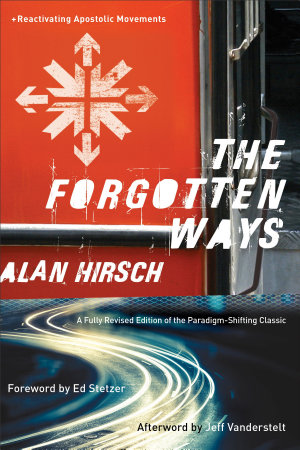
Ten years ago a significant book was written by a guy called Alan Hirsch. He titled it ‘The Forgotten Ways’ and in it he laid out his thinking about a new paradigm to explain the rapid flourishing of movements such as the early church.

forgottenways2

A few days ago a new edition appeared with significant changes following ten further years of thinking about explosive missional movements. Alan has refined the book by adding new examples, making some changes to the terms he uses, and making even more persuasive arguments.

The new version is a great book; read it! Whatever your views on faith, discipleship, mission, community or the nature of church, this book will encourage you to fresh thinking. It will take you down some rarely travelled roads, through unexplored countryside, and it will open new vistas and opportunities.

There are a few links below, you might explore these if you are new to Alan’s thinking. And if you’re familiar with the first edition you’ll certainly want to read the new one.

In the book, Alan writes

The twenty-first century is turning out to be a highly complex phenomenon where terrorism, disruptive technological innovation, environmental crisis, rampant consumerism, discontinuous change, and perilous ideologies confront us at every point. In the face of this upheaval, even the most confident among us would have to admit, in our more honest moments, that the church as we know it faces a very significant adaptive challenge.

He’s absolutely right! But what can we do about it? A very plausible answer will unfold as you read this book.