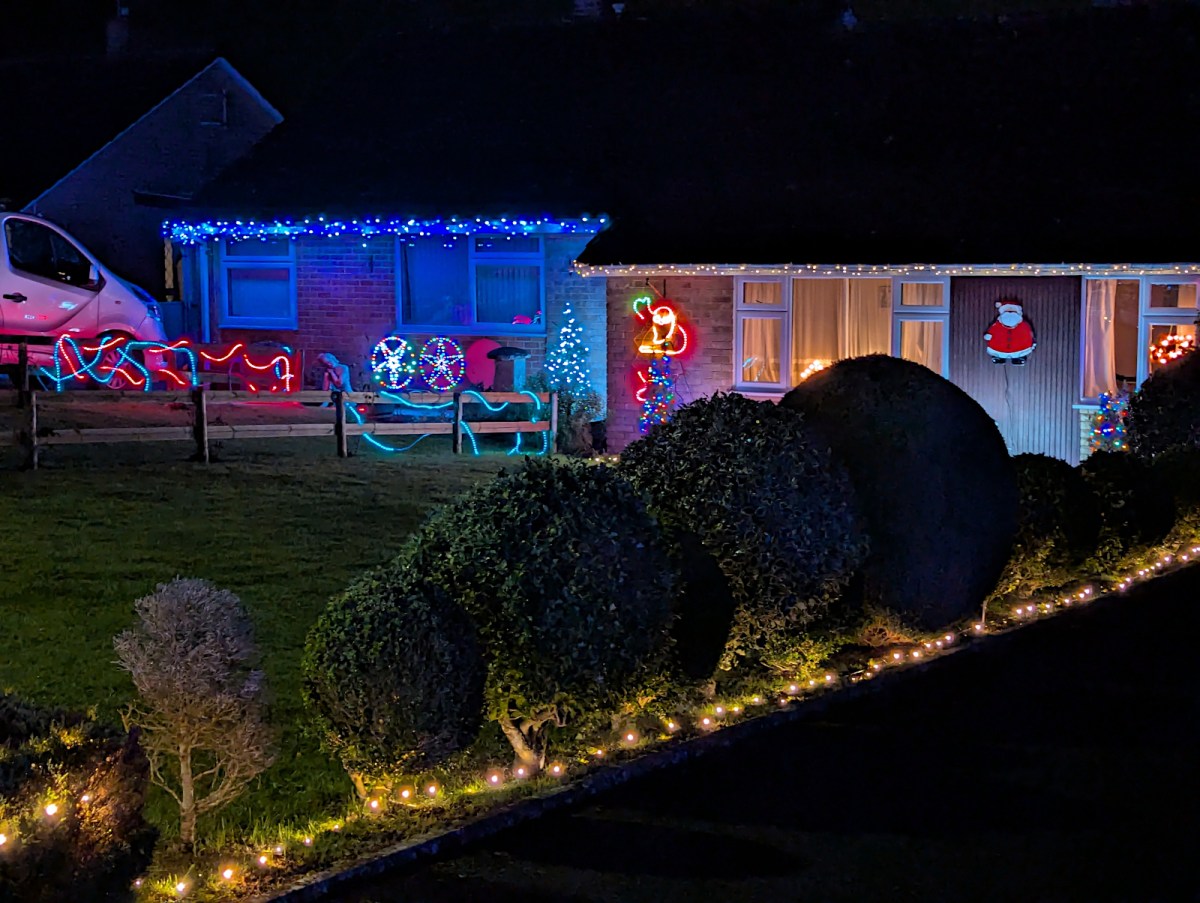
At Vale Road in Stratton on the northern edge of the Cotswold town of Cirencester, residents (and one in particular) put a lot of effort each year into decorating their homes and gardens with all sorts of coloured and illuminated decorations. And they invite the people who come to look to make a contribution to Macmillan Cancer Support.
What’s in an image? Sometimes quite a lot, more than meets the eye. I’m posting an image every few days.
Click images to enlarge
People love Christmas lights and decorations, and people hate illness particularly if there’s no cure. So can Christmas lights help people with incurable illness? Yes they can! But…how?
Well, one way is to use the Christmas decorations to raise money for charity, and that’s what one street in Cirencester has been doing every year for some time now.
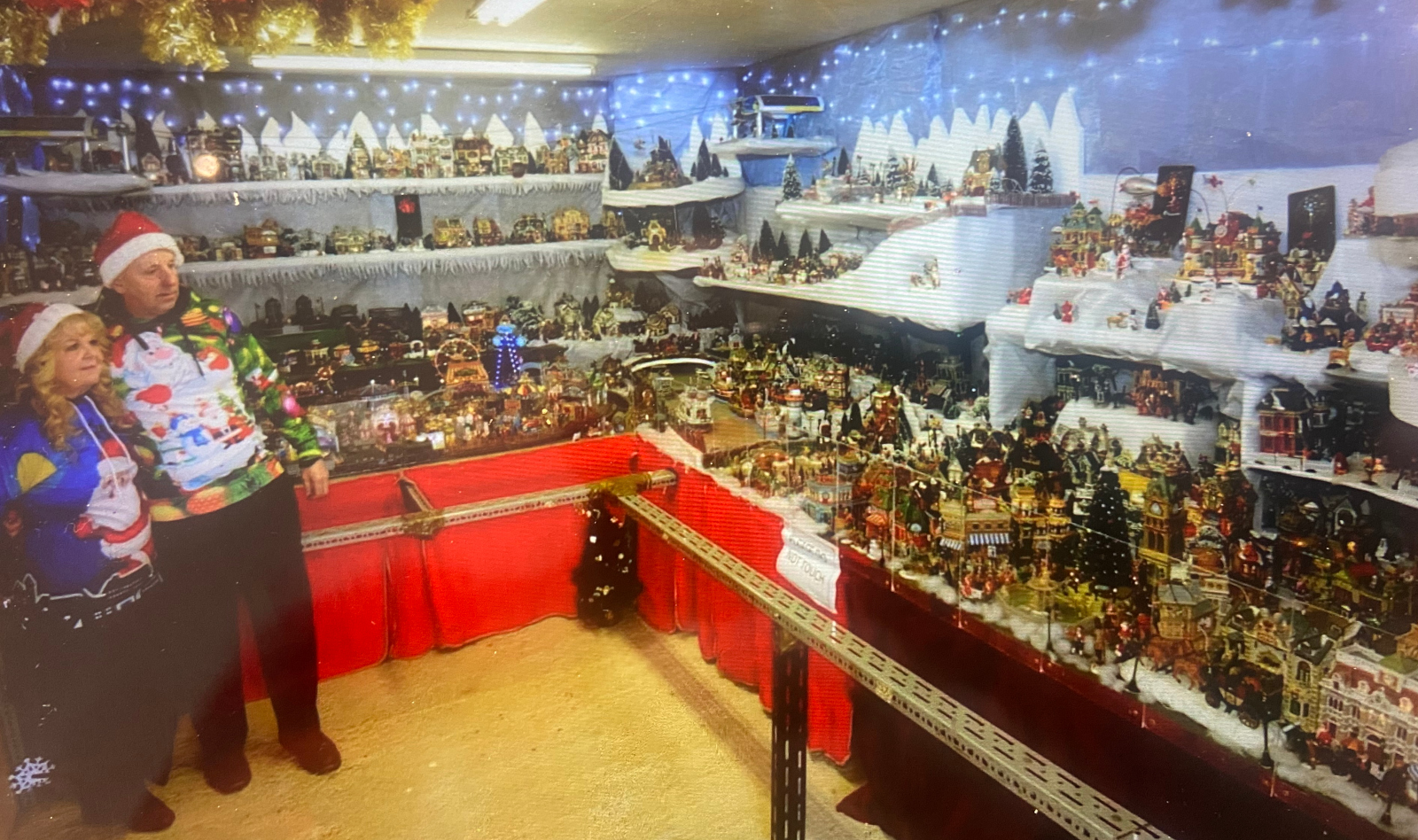
There’s more inside – a model village!
At Vale Road in Stratton on the northern edge of the Cotswold town of Cirencester, residents (and one in particular) put a lot of effort each year into decorating their homes and gardens with all sorts of coloured and illuminated decorations. And they invite the people who come to look to make a contribution to Macmillan Cancer Support. This charity provides care, help, nursing and support for cancer patients and their families right at the time when they need help most. They will help families care for a mum, a dad, or a grandparent at home.
The heart of the action
If you live in Cirencester or the local area, why not drive out to Vale Road and park in a nearby street like Vaisey Road, Tinglesfield or Park View? (But please don’t block any driveways or park near junctions.) Then walk the short distance to Vale Road. You can pay for a tour of the best of the lights, delight your children (or grandchildren), and help support a great cause all at the same time. What could be better than that?
If you enjoyed this or found it useful, please like, comment, and share below. (If you don’t see those links, click the article’s title above the main photo and they will appear.) Send a link to friends who might enjoy the article or benefit from it – Thanks! My material is free to reuse (see conditions), but a coffee is always welcome and encourages me to write more often!
Notes from bygone years – October (Noctober after dark?). Hint: Click on the thumbnails for larger images.
October 2023 (1 year before publishing this article)
Text from a Herculaneum scroll
An exciting scientific paper published in the journal Nature described how X-ray data and clever data manipulation had made it possible to recover small scraps of text from scrolls lost when Vesuvius erupted in October 79 CE. Hope was expressed that it might become possible to recover much larger sections of text, or even whole scrolls.
Our cat, Erin, was not feeling well; due to a tumour she was not eating very well and often threw up afterwards. She was losing weight quickly as a result. The vet suggested a steroid injection to see if it would help her cope better, but it would clearly be only temporary relief. It seemed well worth a try and during the second half of the month she seemed very much her old self again.
We visited Westonbirt Arboretum on 23rd October to enjoy the autumn colours, and Donna’s Uncle Ken died on 26th after a long illness.
I began intermittent fasting, only eating between 11:00 and 21:00, as part of a Zoe trial. I’ve changed the timing slightly, but I’m still following the principle two years later.
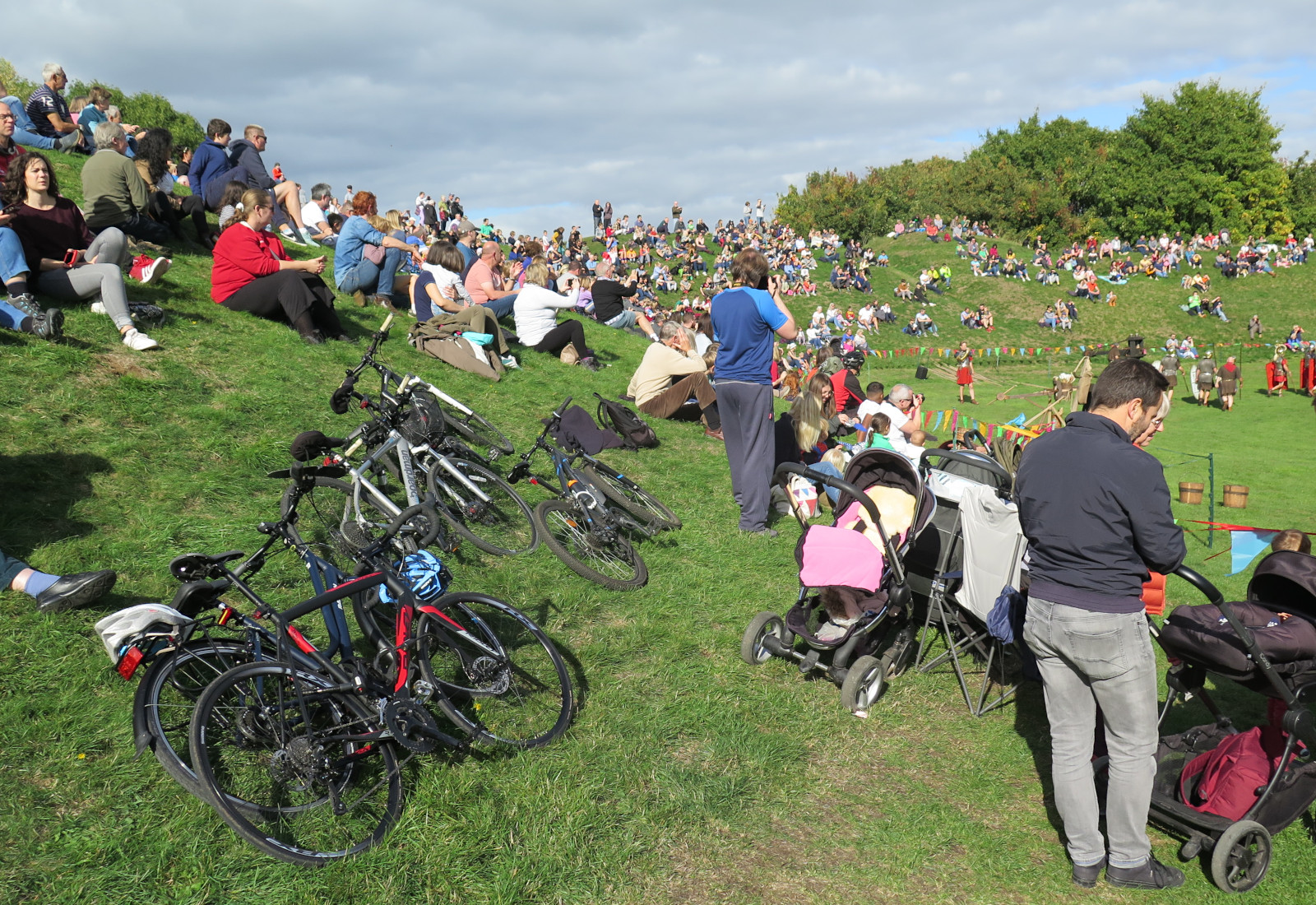
There was a Roman Army historical display in the old amphitheatre on 2nd October, it was great fun to watch the events going on and look at the Roman equipment. They fired a melon from a ballista and it sailed right out of the arena. Seeing a crowd at the amphitheatre gave me a sense of scale and made the place look much larger. The crowd in the photo is using about a third of the seating space.
On Mondays I enjoyed meeting my friend Stephen for a walk, a coffee, and a chat.
I spent some time working out the route of the old canal through the built-up parts of Cirencester, it was an interesting exercise, poring over old maps.
We were also helping Donna’s Mum and Dad quite a lot, I get on well with Tony; we’ve always enjoyed chatting and he seems to trust me. He was mostly wheelchair-bound at this time as his Parkinson’s progressed, but on a good day he could still do quite a lot for himself.
On 19th I joined the People’s Vote march in London, quite an experience!
My friends Jim and Pam ran a church Mums and Tots group (Puddles) in St Neots. Jim ask me to take a set of photos of each mum with their child for official use by the group, here’s a more general shot that I included for them.
I was meeting frequently with different people, there was the Open Door small group once a week, coffee shop meetings with some friends in town, meetings with my friends Jim, Sean and Kevin rotating around our three homes. It was all good and seemed useful, but three such different groups!
Donna’s Mum and Dad came to stay for a weekend in the middle of the month and we drove over to Olney for a walk and then to Stoke Bruerne to look at the canal and the ladder of locks. There were some great autumn colours on the day. The photo shows Isobel, Tony and Donna on a bridge.
At the end of the month we visited Cirencester to visit my Mum and Dad, and while we were there we popped over to Westonbirt Arboretum to look at the autumn colours. There’s always a wonderful display there, and the trees were more or less at their best.
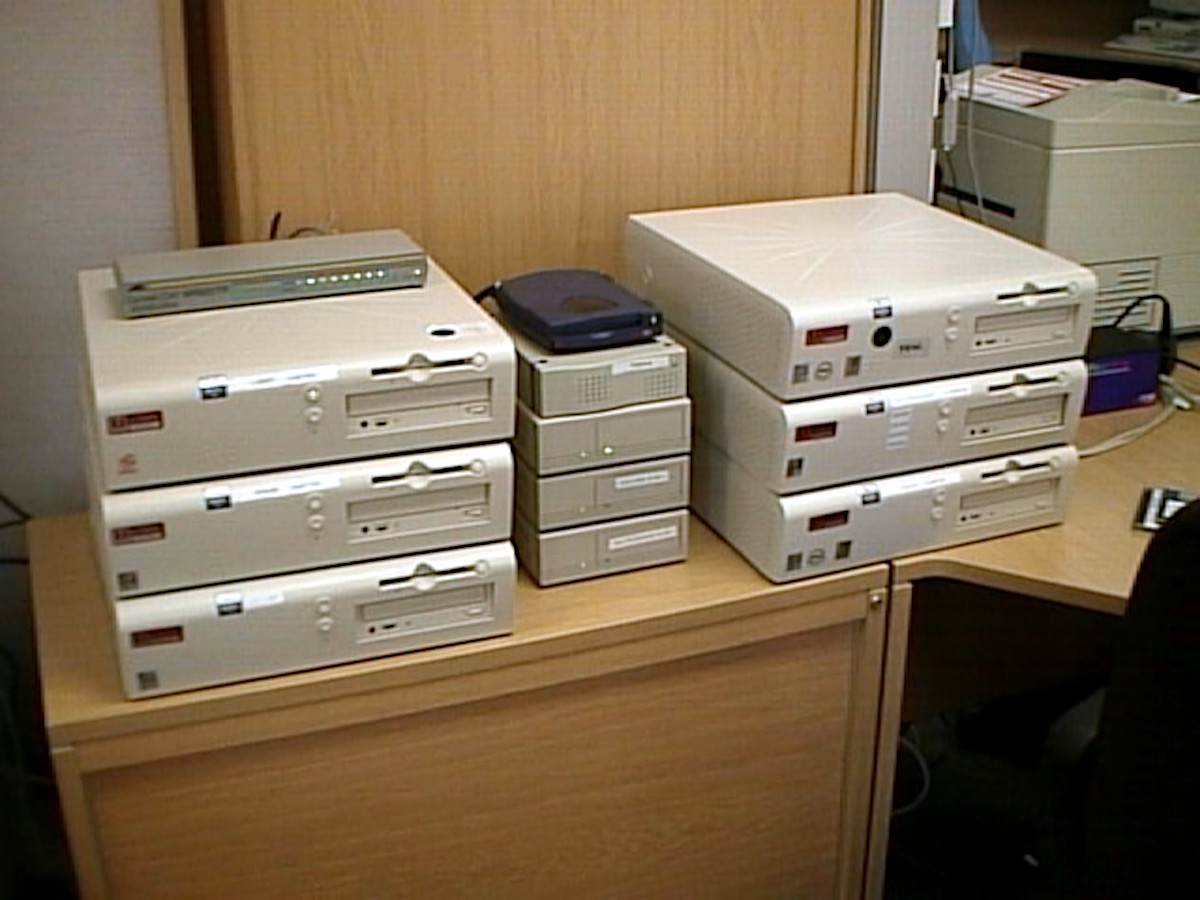
These are the web development servers in the open plan office where I worked as part of the Web Team. Today these would all be virtual servers hosted at a data centre elsewhere in the company. It was very useful to have multiple copies of each website, one for the developers to work on, another for testing purposes, and a third for the live service.
Things seemed to go from bad to worse with Judy’s colon cancer. In October (I think) she began the first of three courses of chemotherapy (5-fluorouracil) to shrink the metastases and slow them down. This was expected to give her at least a couple of extra years of healthy life. But after starting the first course she became quite unwell and the doctors discovered that she lacked an enzyme that normally enables the body to dispose of the drug. She had to spend some weeks in hospital, quite dangerously ill for some of them.
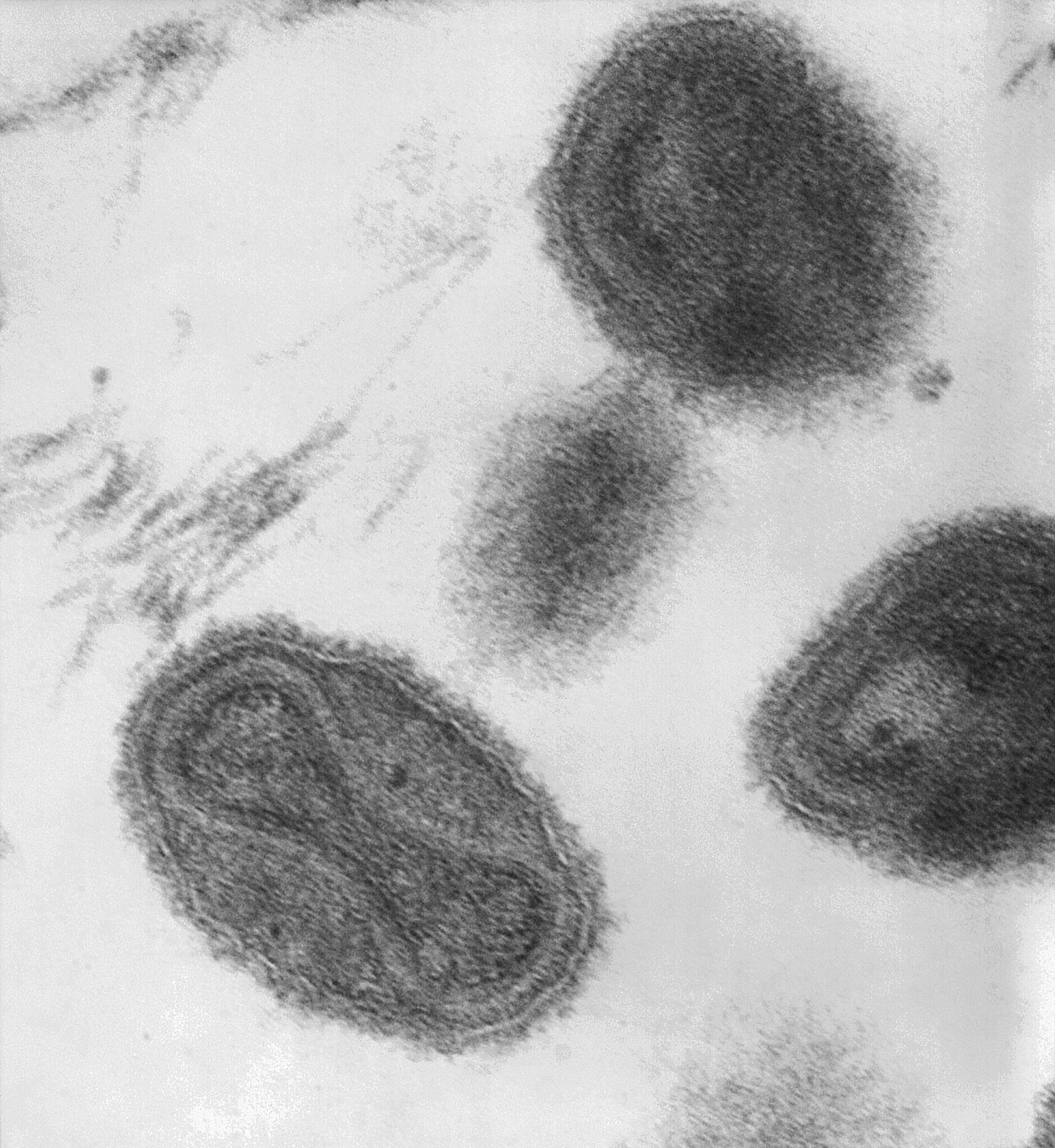
I had been working in Long Ashton’s Electron Microscopy Lab, helping to manage the instruments and operating the Scanning Electron Microscope (SEM) for staff unable to do the work themselves. But with a further reshuffle at work I’d been moved to the Computing Section and was now working on MS-DOS and developing the environment that became the LARS System.
The Good News Crusade came to Portishead and a number of us from Yatton and Claverham were involved. There were several days of the Crusade itself, and then we (and others) arranged some post-Crusade meetings as well.
Mum and Dad had a late touring holiday along the Devon and Cornwall coast. Dad took several 35 mm transparency films of that holiday.
We were living in our flat at 20 Belmont Road, and I already had a Scottish Widows life assurance policy as a first step towards securing a mortgage. We were still not well-placed despite having quite a lot of available reserves in our joint bank savings account.
I was back in Bath University and the fourth year was underway with the final exams looming after Easter. Judy’s position was similar, back at Aber (Aberystwyth) for her third and final year. She took the photo from a ground floor window in Alexandra Hall on the Aber seafront as the sun was setting.
The autumn term meant the start of my time in the Lower Sixth at Cirencester Grammar School. During half-term a friend and I dug a hole in the Lower Garden just east of the footpath behind Churnside (37 Victoria Road). We found some Roman stonework, small pieces of burnt clay, pieces of a broken amphora rim, and a small piece of Samian ware with a failed repair, also a piece of tegula (roof tile). We had no idea this was a bad thing to do!
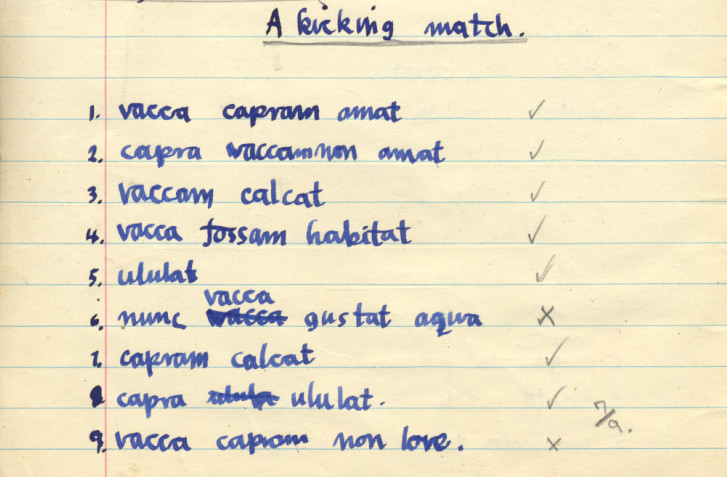
I was in my first term at Cirencester Grammar School. Amongst other subjects I had to learn some Latin, it wasn’t my favourite subject at the time. The image shows a Latin exercise in which I managed to get seven correct answers out of nine. I think my favourite subjects were maths, geography and chemistry.
World events:Luna 3 returned the first images of the far side of the Moon; and Astérix the Gaul first appeared in a French comic.
Cindy turned three and I was in my second year at Querns School; we were living on the Beeches Estate in Cirencester. 17 Queen Anne’s Road was a three-bedroom semi so I had my own room. Mum and Dad’s room had a special feature, a wall-mounted electric fire with two switches. I never saw this heater in use, but there was also a two bar plug-in electric fire that was used downstairs on very cold days in the winter.
I was 1¼-years-old, and life went on well enough as far as I’m aware. We were living in my grandparents house in Victoria Road, Cirencester and Dad was busy working on the nurseries, part of the old family business founded in 1795.
As October passed and Mum and Dad spent more time together, they became what today we would call ‘an item’. His brother Bob, an army officer and 15 years older than Dad, was married to Betty from the town of Dungannon 13 miles south of Coagh. Dad visited them from time to time, but spent much of his off-duty time with Lilias and her family.
World events: The first German Me 262 jet fighter was shot down; and Warsaw was destroyed by the occupying German forces.
If you enjoyed this or found it useful, please like, comment, and share below. (If you don’t see those links, click the article’s title above the main photo and they will appear.) Send a link to friends who might enjoy the article or benefit from it – Thanks! My material is free to reuse (see conditions), but a coffee is always welcome and encourages me to write more often!
What’s in an image? Sometimes quite a lot, more than meets the eye.
I’m posting an image every day (or as often as I can). A photo, an image from the internet, a diagram or a map. Whatever takes my fancy.
The fresh green of spring
There are few things as amazing as life. Perhaps there’s literally nothing as amazing as life in the entire universe! The photo shows the young, expanding leaves of a small-leaved lime tree (Tilia cordata).
Like all deciduous, temperate trees, leaf buds are formed the previous summer and over-winter after the old, mature leaves fall in late autumn. As temperatures increase in springtime, these buds swell and grow and the young leaves appear and expand. At first they’re a beautiful, pale green (lime green) but become a darker and duller shade as the days lengthen and they mature.
These processes all take place naturally in ways that are more complex than most of us might expect. Both plants and animal bodies are composed of countless tiny cells in much the same way that a large building might be made of bricks. Each cell is alive, contains a full copy of the organism’s DNA, and many of them have specialised roles to play. By cooperation and coordination they manage all the behaviours and activities that we see on the larger scale. So in some respects an expanding leaf is a lot like a growing community of people working together as a village or business. Having specialists makes it possible to do so much more, but cooperation becomes essential, not merely optional.
The rioting we’ve seen in some British cities in recent days has been disruptive and damaging to society as a whole. When the cells of an organism behave in uncoordinated and uncontrolled ways we call it a cancer. Rioting is a kind of cancer in a human society. We all know what happens when cancer becomes so widespread that the organism can no longer function. But organisms have ways of dealing with errant cells before they become overwhelming, and so do societies. Both police action and peaceful counter-demonstrations have been effective in controlling the UK riots in recent days.
Themed image collections
The links below will take you to the first post in each collection
If you enjoyed this or found it useful, please like, comment, and share below. (If you don’t see those links, click the article’s title above the main photo and they will appear.) Send a link to friends who might enjoy the article or benefit from it – Thanks! My material is free to reuse (see conditions), but a coffee is always welcome and encourages me to write more often!












 Journeys of Heart and Mind


