Ways two, three and four

Think about seeds, they need to be spread out far and wide but they should also be pressed in and covered over if they are to grow.

< Previous | Index | Next >

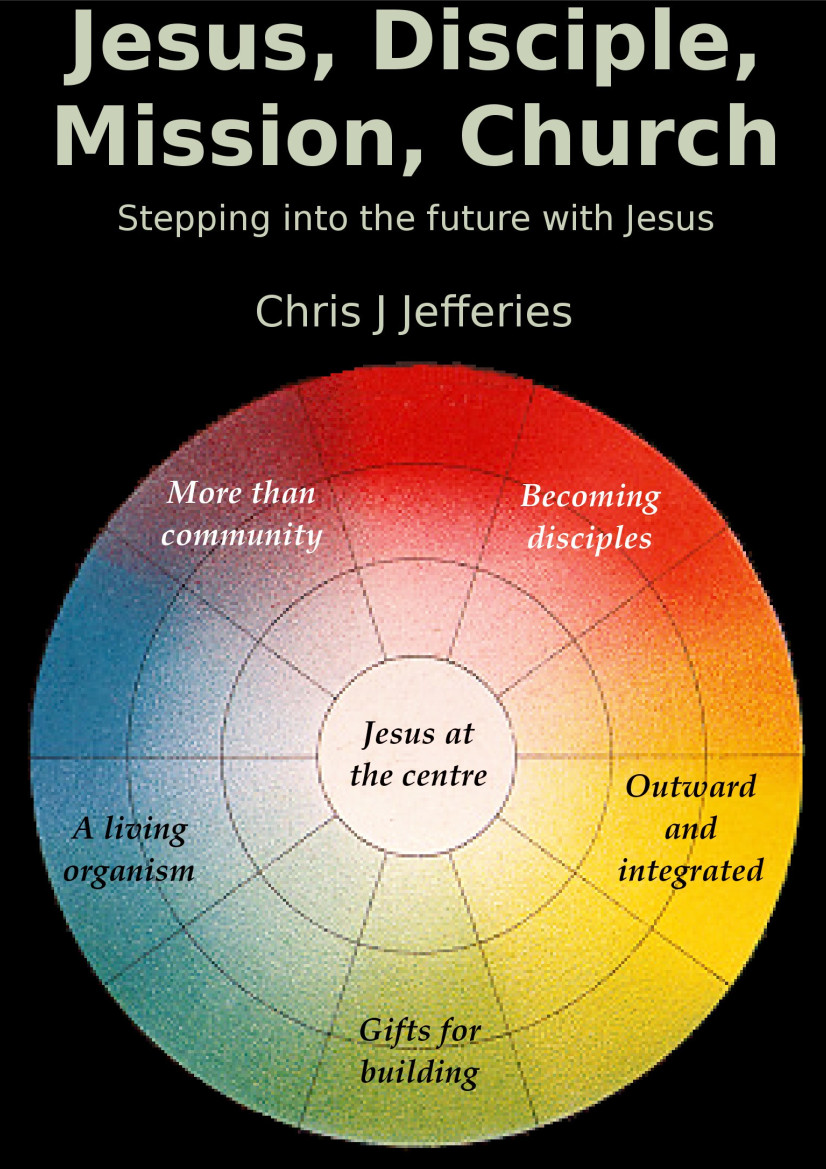
JDMC cover

This article is an extract from my short book, Jesus, Disciple, Mission, Church (JDMC). The bite-sized piece below is roughly two percent of the book. Now we begin the first chapter entitled Working together in six ways.

2 – Becoming disciples

This second forgotten way is about revealing Jesus to the people around us by becoming more and more like him. (John 13:34-35) It demands a lifetime of challenge and we must grapple with it every single day.

Followers of Jesus are always growing in the fruit of the Spirit (Galatians 5:22-23) and encouraging one another. We learn to become more and more like him in what we say and do. The word ‘Christian’ began as a scornful nickname used by the Romans and Greeks and just means ‘Little Christ’. These ‘Christ-ians’ were obviously different from other people in society. (Acts 2:44-47) When Jesus was in a town in Galilee or Judea he was surrounded by stunned and fascinated people watching his every move. Do we have this effect in our society? We need to do more than declare good news, we need to be good news as well, touching people in practical ways.

Discuss – Are you following Jesus’ example? Take a look at Ephesians 5:8-13, or even the entire chapter. What’s the principal here? Does being a disciple mean being perfect or does it mean growing to be more like Jesus?

3 – Outward and integrated

People who follow Jesus will be driven to go out into the world and will also feel the need to be deeply present in the surrounding culture and society.

Think about seeds, they need to be spread out far and wide but they should also be pressed in and covered over if they are to grow. Jesus went wide and deep, setting us an example. He was sent by his Father and lived among us in our world as one of us. He travelled the length and breadth of the land, and even into Greek areas like the Decapolis. And he met people in their particular circumstances, identifying with them to make his words and actions meaningful. For example, see him at work in John 2:1-11, John 4:4-26, and Luke 19:1-10.

Discuss – What did coming into the world involve for Jesus? Where did he come from? What did he leave behind? Think about the ways he embedded himself in our broken world and became like us – list as many as you can.

4 – Gifts for building

The fourth forgotten way involves the gifts of service identified by Paul in Ephesians 4:11-16. The gifts of apostle, prophet, evangelist, shepherd and teacher work together. Do we recognise these gifts in our brothers and sisters? The apostolic gift lays foundations and releases and stirs up the other gifts. All of them are there in every one of us, but we tend to be strongest in one or two.

This form of guiding church life is so completely forgotten that it may seem strange to most of us, yet without it we tend to go in several unhelpful directions. Our spiritual ears and eyes must be wide open even to see this, let alone walk in it.

Discuss – Think about the different ways we run church, can you list some of them? Read Acts 14:14, in what sense were Paul and Barnabas apostles? (Hint: you might need to read a big chunk of Acts to find the answer, and it may remain hidden from you even then.)

More sections of JDMC

IntroductionJDMC, what does it contain?Using JDMC – how to approach it

Working together in six waysIntro and Way 1Ways 2, 3 and 4Ways 5 and 6, six ways

Way One, Jesus at the centreJesus at centre 1Jesus at centre 2Jesus at centre 3

Way Two, Becoming disciplesDisciples 1Disciples 2Disciples 3

Way Three, Outward and integratedOutAndInt1, OutAndInt2

Way Four, Gifts for buildingGiftsForBuilding1, GiftsForBuilding2

Way Five, A living organismLivingOrg1, LivingOrg2

More sections will appear here…

The work of the SpiritIntroJesus, disciples, outwardGifts, living, community, help

Other church leadersIntro, bishops, eldersDeacons, pastors, priests

Last wordsThe end can also be the beginning

< Previous | Index | Next >

Read the book

This was extracted from Jesus, Disciple, Mission, Church (JDMC), pages 10 and 11. Download the whole thing or read it online – GetJDMC.scilla.org.uk

Useful? Interesting?

If you enjoyed this or found it useful, please like, comment, and share below. My material is free to reuse (see conditions), but a coffee is always welcome!

Image of the day – 25

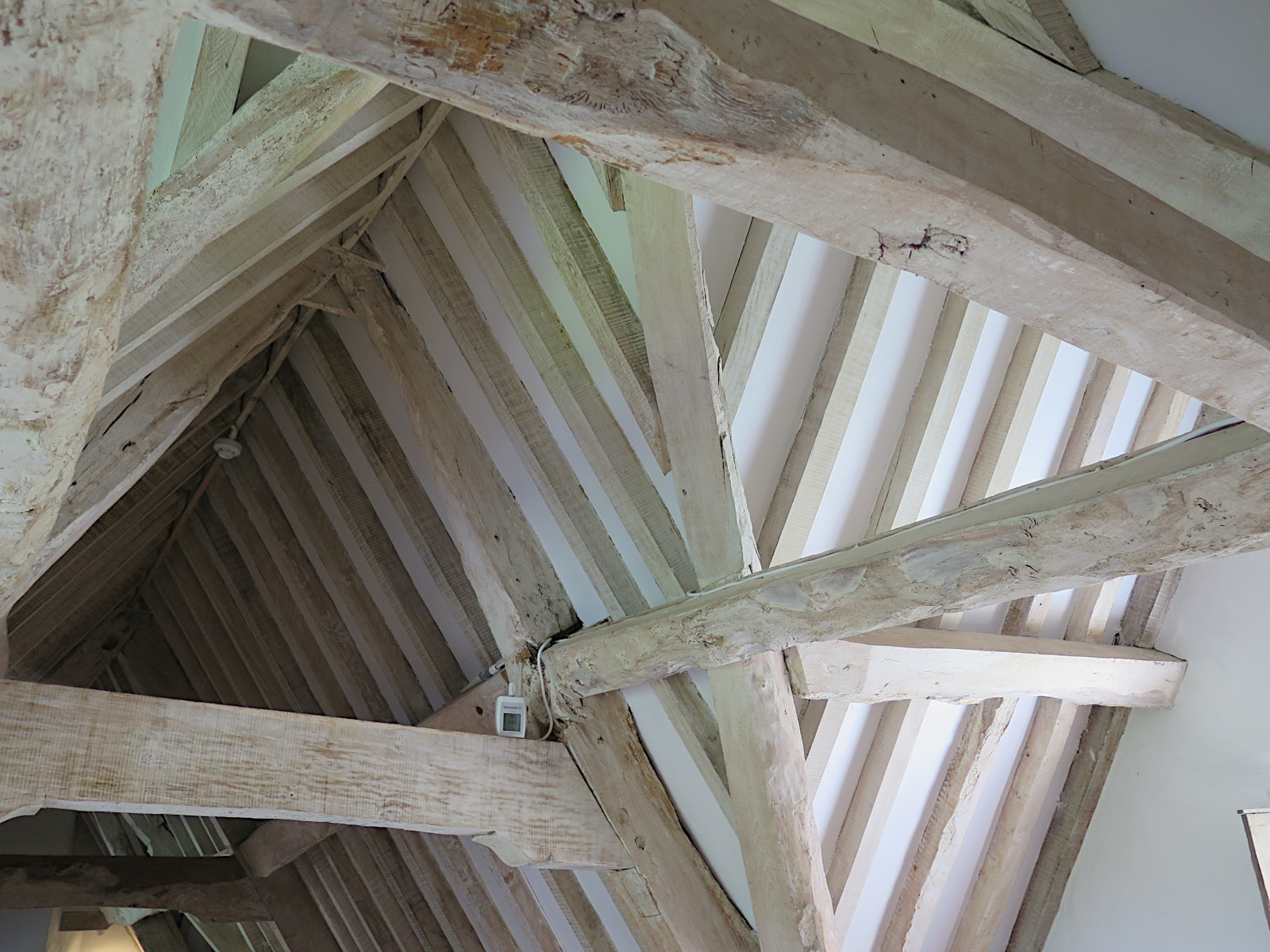
Even today…a wooden roof frame is constructed and then covered to form a roof. Good ideas tend to last a long time!

< Previous | Index | Next >

What’s in an image? Sometimes quite a lot, more than meets the eye.

I’m posting an image every day (or as often as I can). A photo, an image from the internet, a diagram or a map. Whatever takes my fancy.

Roof timbers

How would we manage without roof timbers? They are by far the most common form of support for tiles, slates, thatch, or any other waterproof roof covering. The roof timbers in the photo are a couple of hundred years old, but they’re not significantly different from Medieval or even Roman roof timbers. Even today, although the timbers are much slimmer and are pre-manufactured as truss structures, the principle remains that a wooden roof frame is constructed and then covered to form a roof. Good ideas tend to last a long time!

Is the same true for some of our institutions? From parliaments to town councils, from universities to infant schools, and from multinational corporations to village shops, many of the fundamental patterns are inherited from past generations. If it works well, why change it?

What other examples can you think of? But if you don’t want to ponder that question, just click on the image and enjoy those amazing roof timbers in more detail.

Themed image collections

The links below will take you to the first post in each collection

Cirencester, Favourites, Irish holiday 2024, Roman villa

< Previous | Index | Next >

Useful? Interesting?

If you enjoyed this or found it useful, please like, comment, and share below. My material is free to reuse (see conditions), but a coffee is always welcome!

The old florist’s shop

The shop had a wonderful cellar, always full of mysterious packages of garden chemicals and other shop stock…

Part 1 of a series – John Jefferies & Son

< No earlier posts | Index | No later posts >

The centre of Cirencester has buildings of a variety of ages, from the Roman City Wall (a small part of which is visible in the Abbey Park) to Victorian and more recent constructions. Walking in the town with my camera today, I took some shots of a 19th century development.

CastleStreet01-mod01

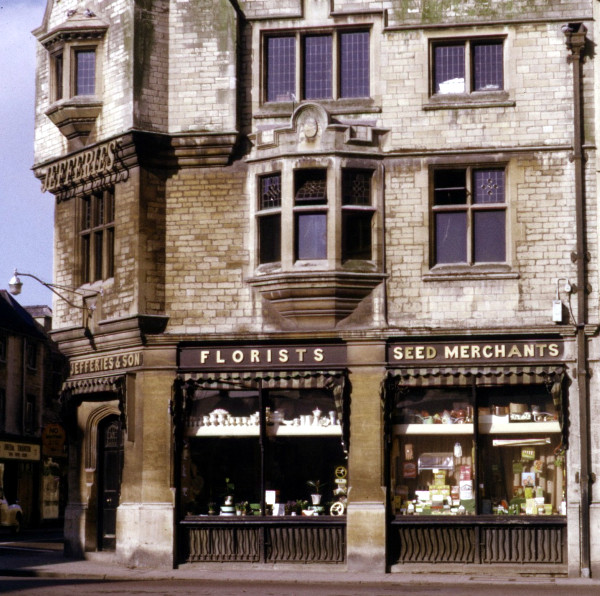
These are the upper floors of a three-storey terrace, a planned development that replaced older properties. The section at the right hand end was used as a florist’s shop for many decades (now Vodafone). I remember it as a child because my father was one of four brothers who owned and ran the shop as part of a larger business with several plant nurseries in the country areas around the town.

The shop had a wonderful cellar, always full of mysterious packages of garden chemicals and other shop stock, and before Christmas there were sometimes hyacinth bulbs being forced for early flowering. There was a marvellous fusty, moist, florist’s aroma in the cellar, but the most exciting thing was the knowledge that the cellar was bigger than the shop floor above. Castle Street was widened when the new development was built, but the cellars of the old buildings were retained. There are stone pillars in the cellar that support the heavy masonry above.

Here’s another view of the same shop from a different angle, the photo was taken by my father in the 1960s. I love the fact that this image includes the shop window displays as these always fascinated me as a young child. I also remember that my grandfather’s office window was above the main door on the corner, and the landscape design office was on the top floor with the small bay window.

JefferiesShop

And finally, for comparison, here’s another view of the same shop today.

VodafoneShop

< No earlier posts | Index | No later posts >

Update on the house

Until those doors are in place neither the kitchen/diner extension nor the bedroom extension can receive their floor screeds…

Our builders have done much of the work that remains, but we’re waiting for our bi-fold and sliding doors to be fitted by the supplier. Until those doors are in place neither the kitchen/diner extension nor the bedroom extension can receive their floor screeds, and those will need a long time to dry out before floor tiles and wood flooring can be laid. For the same reason our new kitchen can’t be fitted – it’s stacked in boxes in the lounge.

We feel badly let down – not by our builder, Jack, and his team – they have done a grand job, but by the door suppliers. Those doors were ordered before Christmas! And the knock-on effects don’t stop there; because the lounge is full of kitchen units, we can’t unload the bulk of our furniture from the steel container parked on our drive. And the boxes containing summer clothes, paperwork, crockery, cutlery etc are blocked in by the furniture we can’t yet unload. Argghhh!

Ah well, it’s summer time. Now, where did I put those summer clothes? Oh… Wait a mo…

Meanwhile, here’s a view of the kitchen/dining extension. You’re looking in through bi-folds that are not yet there, and the opening on the right is also filled with bi-folds that are not yet there. Ho-hum.

BuildingKitchenDiner

Our new home in the Cotswolds

Work is well under way now and we are close to moving back in.

I thought it was time to share something about our house project. In April 2017 we moved from St Neots to Cirencester, selling our 4-bedroom 1950 home where we’d lived since 1998, and buying a little 1960s home as a replacement.

The lounge in chaos
We used to watch TV here!

We already had some ideas about the changes we might make, so soon after moving in we searched for an architect. We found Rural Workshop online and invited Tim Francis to visit us and talk about some possibilities. We were impressed by his ideas, flair for design and clear explanations so we asked him to go ahead and draw up plans for us. Tim made it easy for us by arranging the planning permissions for us; we have ended up with planning consent for an en suite bedroom as a side extension with a sympathetically designed pitched roof, and a flat-roofed rear extension to contain our new kitchen and dining space. Both new rooms will open onto a patio connecting the house with the main part of the back garden.

Plans in hand, we started looking for a builder who would be able to turn the design into a well-finished structure and renovate the old part of the house at the same time. It needs rewiring, replumbing, and generally updating, repairing and refinishing. We found Jack Rzasa in the nearby town of Cheltenham and decided that his team management skills and ‘get it done’ attitude were exactly what we needed. Work is well under way now and we are close to moving back in after four weeks out while the dusty and messy tasks of rewiring, knocking through and plastering are completed. We’re delighted with progress so far.

Note added later

In the end the work ran over time and our builder left the site with some items incomplete. Although we remain delighted with much of the work, it was not a happy completion to a mostly excellent project.