What’s in an image? Sometimes quite a lot, more than meets the eye.
I’m posting an image every day (or as often as I can). A photo, an image from the internet, a diagram or a map. Whatever takes my fancy.
An impressive ceiling
Roman ceilings ranged from plain and simple to very impressive. We’re still in the villa’s office here, a room that was required to impress, so the ceiling is moulded with recessed squares and richly decorated. Anyone visiting the Master in his office would know right away that this was a person of some privilege and power, a person not to be messed with.
Fashions come and fashions go. As in the Victorian era, Roman interior design might seem fussy to 21st century minds. We value simplicity and our ceilings are usually white and without decoration. If you could invite a Roman to visit your home today, they would assume you were either weird, or lacking the money to have your ceiling improved. They would also have found walls in plain colours baffling – again a sign of poverty. They would no doubt have been hugely impressed by your ability to conjure up music or a disembodied voice at will, and your TV would have spooked them. Your decor would have been disappointing in the extreme.
Images of the Roman villa
For convenience, here’s a list of all the Roman villa images:
If you enjoyed this or found it useful, please like, comment, and share below. (If you don’t see those links, click the article’s title above the main photo and they will appear.) Send a link to friends who might enjoy the article or benefit from it – Thanks! My material is free to reuse (see conditions), but a coffee is always welcome and encourages me to write more often!
What’s in an image? Sometimes quite a lot, more than meets the eye.
I’m posting an image every day (or as often as I can). A photo, an image from the internet, a diagram or a map. Whatever takes my fancy.
Roman office desk
After yesterday’s photo of the office, I thought you might like a closer look at the items on the desk. You can see various scrolls as well as a wax tablet in the middle at the front. The tablet would be used for making notes with a pointed stylus and could be erased with the flattened upper end of the same stylus – very convenient. This tablet is hinged so four writing surfaces are available.
The dark rectangle on the sheet of papyrus is a miniature abacus, a sort of pocket calculator! The papyrus itself has a plan of the property on it. Notice also the glass on the left and the glass decanter on the right (glass was fearfully expensive and therefore an extreme luxury item), several pottery vessels (one containing writing styli), two candlesticks for working after dark, and even some snacks. There’s a bowl of walnuts and another one containing ripe cherries.
Paperwork was just as much of a chore no doubt then as now. Despite the fact that paper had not yet been invented!
Images of the Roman villa
For convenience, here’s a list of all the Roman villa images:
If you enjoyed this or found it useful, please like, comment, and share below. (If you don’t see those links, click the article’s title above the main photo and they will appear.) Send a link to friends who might enjoy the article or benefit from it – Thanks! My material is free to reuse (see conditions), but a coffee is always welcome and encourages me to write more often!
What’s in an image? Sometimes quite a lot, more than meets the eye.
I’m posting an image every day (or as often as I can). A photo, an image from the internet, a diagram or a map. Whatever takes my fancy.
The Master’s office
The villa was a place where the master of the house continued his business while away from the cities. He would have had a small office for working on documents and meeting visiting colleagues and officials; he would also use the office when dealing with estate staff concerning the farming work.
Notice the fairly cluttered desk, the comfortable working chair, and two seats across the desk for visitors. There are cupboards for storage, and even a waste bin. We’ll take a closer look at what’s on the desk in the next Image of the day.
In some ways, Roman life would have seemed quite familiar to us, at least the life led by people of reasonable means. In Saxon and medieval times it’s almost as if the calendar has been turned back, not forwards!
Images of the Roman villa
For convenience, here’s a list of all the Roman villa images:
If you enjoyed this or found it useful, please like, comment, and share below. (If you don’t see those links, click the article’s title above the main photo and they will appear.) Send a link to friends who might enjoy the article or benefit from it – Thanks! My material is free to reuse (see conditions), but a coffee is always welcome and encourages me to write more often!
What’s in an image? Sometimes quite a lot, more than meets the eye.
I’m posting an image every day (or as often as I can). A photo, an image from the internet, a diagram or a map. Whatever takes my fancy.
The Roman villa in its surroundings
Here’s another view of the villa, you can see one of the farm outbuildings on the left, and a newly planted vineyard in front of the villa. An access road of pounded stone passes this side of a wooden fence, note the avenue of young trees growing on both sides of this road.
It looks very much the way the original villa would have done in Roman times. Two things really give the game away, though. The young vines have modern protection tubes around them to prevent animal damage (these will be removed onece the vines are three or four years old). And the pattern of modern agriculture in the background is entirely wrong. Roman fields would have been much, much smaller and would not have extended far from the villa. Instead, the more distant parts of this view would have been much more heavily wooded.
Today’s conservationists would love to see parts of our landscape return to the way it was in Roman times. A lot of mature forest was cut down during the days of the British Empire to supply timber for the Royal Navy’s ships, as well as for fuel and the growth of towns and cities. The ancient forests that were lost would have supported populations of wild boar, wolves would have roamed the forests too and would have kept the deer population density lower than it is today. This in turn would have made it more likely that tree and wild flower seeds would have survived and spread more abundantly.
Beavers would have created localised ponds and small lakes that would have naturally regulated water flow, and the natural vegetation would have trapped heavy rainfall and released if gradually, reducing flooding. Almost all the British landscape today is far from it’s natural climax state.
So the view beyond the villa would have been altogether different from the modern landscape in the photo.
Images of the Roman villa
For convenience, here’s a list of all the Roman villa images:
If you enjoyed this or found it useful, please like, comment, and share below. (If you don’t see those links, click the article’s title above the main photo and they will appear.) Send a link to friends who might enjoy the article or benefit from it – Thanks! My material is free to reuse (see conditions), but a coffee is always welcome and encourages me to write more often!
It would have been a delight to walk on a floor of this sort, especially with the underfloor heating that wealthy Romans had in their villas and town houses.
What’s in an image? Sometimes quite a lot, more than meets the eye.
I’m posting an image every day (or as often as I can). A photo, an image from the internet, a diagram or a map. Whatever takes my fancy.
A new mosaic floor
Although most of us will have seen Roman tessellated pavements in museums or at excavation sites, few people will have seen a recently laid floor of this kind. What did a new mosaic floor look like? It looked like this one at The Newt in Somerset!
It would have been a delight to walk on a floor of this sort, especially with the underfloor heating that wealthy Romans had in their villas and town houses. Cool in hot weather, but luxuriously warm in a British winter when the furnace outside had been lit and was being tended by a slave or servant, a warm floor was a wonderful thing indeed.
In the upper left, you will notice some musical instruments placed on stools, when the musicians return in a moment they’ll pick up the instruments, sit on the stools, and begin playing. And then the Master and his dinner guests will arrive to enjoy music until they go through to the triclinium for the meal to be served.
Images of the Roman villa
For convenience, here’s a list of all the Roman villa images:
If you enjoyed this or found it useful, please like, comment, and share below. (If you don’t see those links, click the article’s title above the main photo and they will appear.) Send a link to friends who might enjoy the article or benefit from it – Thanks! My material is free to reuse (see conditions), but a coffee is always welcome and encourages me to write more often!
What’s in an image? Sometimes quite a lot, more than meets the eye.
I’m posting an image every day (or as often as I can). A photo, an image from the internet, a diagram or a map. Whatever takes my fancy.
The monastery at Glendalough
This is the ancient monastery of Glendalough. (Glen da lough – da means two, so the ‘Valley of two lakes’.) The aerial shot was taken from a helicopter in the early twelfth century, showing the thriving monastery with many stone structures, and the round tower in the upper-left corner. This is, of course, a modern model of how the settlement may have appeared, but it absolutely looks like the real thing and it’s easy to imagine flying over the scenery.
Very little remains, though the tower is still complete and some of the ruins are quite impressive (especially the cathedral and the gateway). The site is still in use as a graveyard. The museum nearby is informative and beautifully presented, well worth a thorough visit.
I’m always intrigued by the ruins of once-inhabited places. It’s good to imagine the hustle and bustle of the monks as they tended the farm, milled wheat for flour, baked their bread, and carried out all the other tasks – blacksmithing, building, making repairs, fetching water, weaving – everything it took to survive here. And then, the contemplation and prayer, the worship and copying of illuminated manuscripts: nothing would have been done unless other tasks were done first. No writing without preparing vellum, making inks, fashioning pens – you couldn’t just pop down to the shops!
If you ever have a chance to visit Glendalough, don’t hesitate!
Images from our Irish holiday 2024
For convenience, here’s a list of all the Irish holiday images:
If you enjoyed this or found it useful, please like, comment, and share below. (If you don’t see those links, click the article’s title above the main photo and they will appear.) Send a link to friends who might enjoy the article or benefit from it – Thanks! My material is free to reuse (see conditions), but a coffee is always welcome and encourages me to write more often!
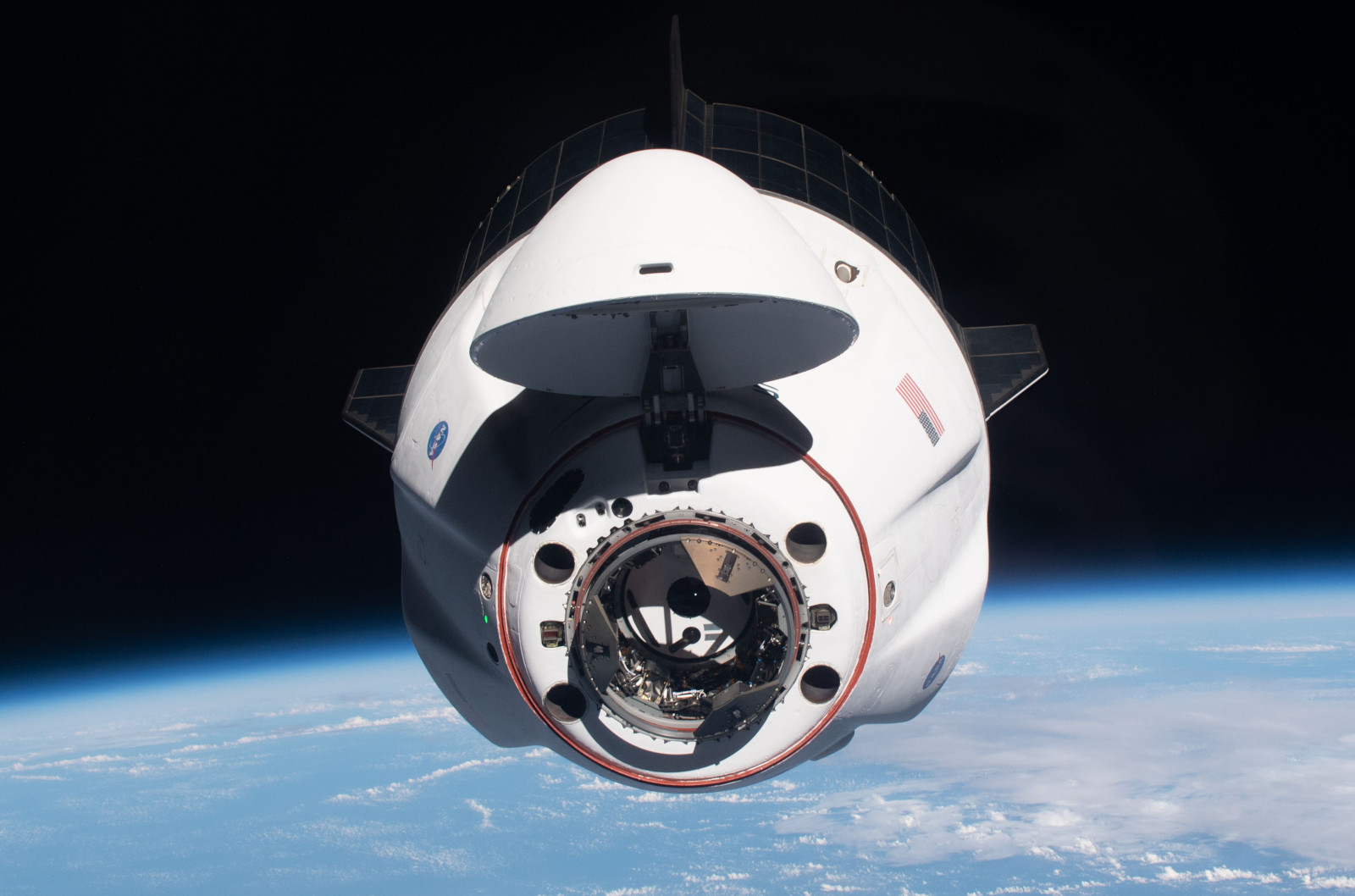
Many satellites are launched every year for profit-making purposes … TV broadcasting, imaging, weather forecasting, and internet provision.
Some time ago I was asked, ‘Why explore space?’
It’s a good question; space exploration is very expensive, surely we could spend the money on better and more important things? Surprisingly, perhaps, spaceflight has become a very profitable industry. Although exploration per se remains almost entirely government funded, exploration in past decades has sparked the profitable space industries that exist today.
Taking the world as a whole, we spend a very large amount of money on space exploration, US$117 billion in 2023. It’s fair to say that the USA almost certainly spends more than any other nation, and China and India both have major space programs, so does Europe (taken as a whole) through the joint ESA programmes (ESA is not part of the EU, however). Russia and Japan are major players too. You can view the figures as a bar chart from Statista.
It’s not quite as simple as it sounds, though. For one thing, material and human resources are much more expensive in some countries than in others, so US$1 billion buys a lot less in the USA or Europe or Australia than it does in China, or India, or Brazil.
Another thing to consider is that space research, spaceflight, and space exploration are not all about spending a lot of money, they are also activities that can generate a great deal of income. Economics is complex and difficult.
I think it may help us if we briefly review the history of space exploration.
The history of spaceflight
We have to go back to ancient and medieval times to find the first hints that people wanted to travel beyond the Earth. Even thousands of years ago, some people thought about leaving Earth behind. The Bible describes Elijah being taken up in a fiery chariot. The Koran describes Mohammed on a winged horse. The Greek, Icarus, wanted to fly high above the Earth. Dante’s ‘Divine Comedy’ in 1320 describes a journey to the heavens. ‘Kepler’s Dream’ in 1608 describes how Earth would look from the Moon. In 1657 Cyrano de Bergerac described a journey from Earth to the Moon.
Of course, much of this was fanciful in various ways, but people were thinking about it. Science fiction became popular in the 19th and, especially, the 20th century and some of the ideas discussed seemed quite plausible. Engineering experiments with solid and liquid fuelled rockets began in the early 20th century, and that’s when some people began risking money (and sometimes their lives) to make progress with early rockets. Costs were involved, but no income was generated.
By 1944 the wartime German government could see the tide had turned against them, with losses on the Russian front and in North Africa. Italy had fallen to the Allies and by the middle of the year southern and northern France had been invaded and German forces were struggling to hold on. Germany had been developing new weapons for some time, and now they began to use them in a final attempt to reverse impending defeat. Jet aircraft, the first cruise missile (the V-1) and the first rocket capable of reaching space (the V-2, the first ballistic missile) all came into play at this late stage of the war. Firing the V-2 vertically in a test, Nazi Germany became the first nation to reach space at 174.6 kilometres (108.5 miles) on 20 June 1944. The rocket entered space vertically and fell straight back as it didn’t have sufficient fuel to attempt the horizontal velocity necessary to go into orbit.
After Germany’s defeat in May 1945 there was a scramble by the USA, the Soviet Union, and to a lesser degree by the UK to capture unflown V-2s, plans and information, construction and test facilities, as well as the engineers and technicians behind the technology.
Rocket technology was developed further, both for use as a weapon and also for scientific research and space exploration. This has led to many nations engaging in spaceflight and space exploration in the late 20th and early 21st centuries.
Recent developments
So now we have set the scene. Space exploration has become technically possible. It remains difficult and expensive, though the development of advanced and miniaturised electronics and computers for control, and improved fuels, materials, and designs have reduced the costs and look set to reduce them even more substantially in future. One major change in the last decade is that we now have the first reusable rocket boosters. SpaceX is already flying some of its Falcon 9 boosters more than twenty times. The costs savings are enormous and other rocket companies are trying to catch up.
Given all of this, why would we want to explore space?
Reasons for exploring space
First, it’s worth mentioning that the reasons for exploring space are the same as those for exploring more generally. People are born explorers: the youngest infant begins exploring the environment as soon as they can crawl. There are only two requirements – an ability to move from one place to another, and a desire to find out what lies further away.
Given the ability we now have to reach ever further into space, we just naturally want to investigate what is there and understand it to the best of our ability. These days, automatic systems can travel to dangerous and hard to reach places and return images and measurements without the presence of human travellers. So we have good images and many kinds of measurement from every large body in the Solar System, and growing numbers of the smaller asteroids and comets. But automated systems have limitations in terms of decision making and judgement, limitations that require the presence of people. These limitations are more severe than first appears given the great distances involved in exploring space. When a rover on the Moon takes an image, we may be able to view it within a few seconds and send instructions on what to do next. On Mars it might take twenty minutes to receive the image and another 20 minutes for the instruction to reach the rover. So a Mars rover needs to navigate and make decisions on avoiding obstacles semi-autonomously.
So far we have travelled only to Earth orbit and to the Moon, but the urge to go further remains. We’re a nosy and inquisitive race; we want to know more, we want to find out, we love to solve mysteries.
The benefits so far
This is unlikely to be an exhaustive list, there are many benefits already and new ones keep moving from theory to practice. I’ll list those I can think of below.
Photographing the Earth’s surface from orbit. This benefits mapping, weather forecasting, resource discovery, agriculture, military intelligence and much, much more.
Understanding geology by comparing Earth rocks and minerals with those on the Moon, other planets, rocky moons, and so on. We are learning how Earth and the other planets formed, and how long ago.
Astronomy has advanced as telescopes are operated from space. Earth’s atmosphere causes reduced image clarity and blocks many wavelengths of light, X-rays, and other forms of radiant energy. Light pollution from cities is also avoided by putting a telescope into orbit. It also becomes far easier to identify smaller objects that might collide with Earth and potentially cause serious damage and loss of life.
Probes have travelled to distant solar system objects to return images and sometimes samples of surface material.
Manufacturing in micro-gravity can produce medical, engineering and scientific materials that simply cannot be made on Earth. Ultra pure proteins have aided medical science enormously in some areas, helping scientists understand protein structures for example, or manufacturing life-saving antibodies and drugs.
Understanding the inhospitable conditions of space itself and the other planets in our solar system provides a perspective that helps us value what we have here on Earth.
Communications systems have benefitted enormously from spaceflight. From TV satellites providing hundreds of high-resolution channels, to satellite internet availability for ships, aircraft and remote regions, the exploration of space has provided the technology behind these improvements. Good internet access for remote areas improves disaster rescue, allowing much quicker responses.
Satellite navigation has transformed many aspects of land, air and sea travel. Who wants to manage without their satnav while driving?
Spin-off technologies like solar panels, stronger materials such as carbon fibre, recycling and purification of air and water were all developed first because of space exploration and are now proving invaluable here on the ground as well.
New resources are becoming available as a result of space exploration. Rare and expensive metals from asteroids, ices from comets and the moons of planets in the outer Solar System are likely to become useful in the near- to mid-term future. This is not yet commercially viable, but will become so as space transport systems develop further.
I hope that brief round up will help my readers understand some of the why-questions around space exploration. In the early days it was an expensive operation, funded by governments, and often justified by military considerations. Today, much space activity is done by companies with a profit motive. Launch services are now largely commercial in nature, so too is the transport of people and materials to and from Earth orbit and even now to and from the Moon. And finally, many satellites are launched every year for profit-making purposes as well – TV broadcasting, imaging, weather forecasting, and internet provision to name just a few.
What’s in an image? Sometimes quite a lot, more than meets the eye.
I’m posting an image every day (or as often as I can). A photo, an image from the internet, a diagram or a map. Whatever takes my fancy.
A juvenile robin
This young robin perched on the back of a chair at our table in the cafe of the Great Glasshouse. Clearly hoping for some dropped particles of food, but disappointed as we only had coffees at the time.
Is it good to feed wild birds? Sometimes this is a no-brainer. In the short, cold days of winter when food may be hard to come by, a bowl of tepid water and some fruit, seeds, fat balls or dried insect larvae may be just the thing they need to avoid dehydration, starvation or hypothermia. But when natural food supplies are plentiful, it may be better to let them find their own. Here’s some good advice from the RSPB.
If you enjoyed this or found it useful, please like, comment, and share below. (If you don’t see those links, click the article’s title above the main photo and they will appear.) Send a link to friends who might enjoy the article or benefit from it – Thanks! My material is free to reuse (see conditions), but a coffee is always welcome and encourages me to write more often!
What’s in an image? Sometimes quite a lot, more than meets the eye.
I’m posting an image every day (or as often as I can). A photo, an image from the internet, a diagram or a map. Whatever takes my fancy.
At the back of the villa was a garden area. In the reconstruction it’s been planted with both decorative plants as well as dual purpose plants like rosemary with value in the kitchen as well as looking and smelling good in the garden.
The villa was built in a position where it is surrounded by hilly ground with a longer view in one direction. A great choice then as now. And on a clear night, with none of the light pollution we’re used to these days, the sky would have been a glorious sight, sprinkled liberally with stars and a stunning vista of the Milky Way spread out across it.
Imagine, if you will, a sunny day with the slaves tending the garden and the cook hunting for the right combination of herbs for the evening dining in the villa. There would have been the sounds of birds and fragrance from the garden, but no distant traffic sounds or planes passing overhead. This would have been a beautiful and peaceful place for the wealthy, but a place of daily duties and hard work for the ever-present slaves who kept the place clean, tidy, and working well.
Images of the Roman villa
For convenience, here’s a list of all the Roman villa images:
If you enjoyed this or found it useful, please like, comment, and share below. (If you don’t see those links, click the article’s title above the main photo and they will appear.) Send a link to friends who might enjoy the article or benefit from it – Thanks! My material is free to reuse (see conditions), but a coffee is always welcome and encourages me to write more often!
What’s in an image? Sometimes quite a lot, more than meets the eye.
I’m posting an image every day (or as often as I can). A photo, an image from the internet, a diagram or a map. Whatever takes my fancy.
A room for relaxed conversation
We’re back inside the villa now. A comfortable space, a nice place to sit, a small table to put down a cup. Notice how Roman walls were painted to simulate architectural features; there’s less structure here than at first appears, plain flat walls are made to look like carved pillars, a border at the top and elaborate skirting boards. Instead of hanging pictures, these were usually painted directly onto the wall plaster as well.
After nightfall, the only light available would have been small lamps burning oil, normally olive oil. A stand for two pendant lamps stands conveniently between the ‘sofa’ and the little table. There are two more lampstands in the dining room.
There was no TV to watch, but conversations would have covered all sorts of topics, no doubt – from household issues, to travel plans, how best to manage a difficult child, the weather, the state of farm crops, planning for an expected guest’s arrival, or the coming journey back to Corinium or Londinium.
Images of the Roman villa
For convenience, here’s a list of all the Roman villa images:
If you enjoyed this or found it useful, please like, comment, and share below. (If you don’t see those links, click the article’s title above the main photo and they will appear.) Send a link to friends who might enjoy the article or benefit from it – Thanks! My material is free to reuse (see conditions), but a coffee is always welcome and encourages me to write more often!




 Journeys of Heart and Mind
.jpg)