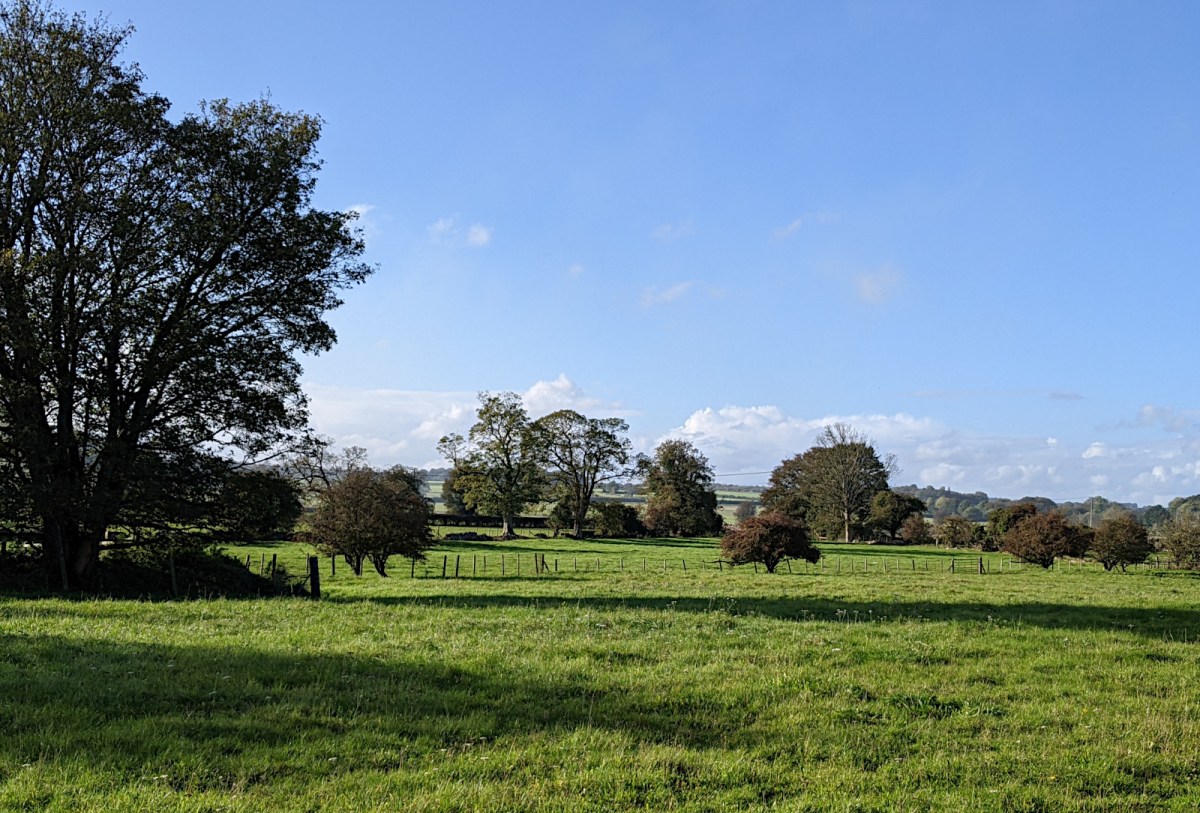
Travelling north and west from Cirencester takes you through steadily rising hills peaking at 330 metres or so, and dissected by water-cut valleys until you reach the Cotswold scarp.
Image 116 – What’s in an image? Sometimes quite a lot, more than meets the eye. I’m posting an image every day or so.
Enlarge
This farmland just on the edge of Cirencester is a classic Cotswold scene. There is higher land in the background with scattered trees, and in the foreground you can see rich pasture good for cattle or horses.
The flat, pasture land is part of the River Churn flood plain, while the low hills beyond are outcrops of oolitic limestone, the rock that forms the backbone of the Cotswold hills. Travelling north and west from Cirencester takes you through steadily rising hills peaking at 330 metres or so, and dissected by water-cut valleys until you reach the Cotswold scarp that drops back almost to sea-level within a short distance. Beyond that is the wide, flat vale of the River Severn, and beyond that again, Wales with its hills and mountains. In medieval times Cirencester was known in Welsh as Caer Ceri. If the Saxons had not settled quite so far west, Cirencester might have signs saying ‘Croeso y Gaerceri’, and the Severn would have been Hafren.
When: 26th October 2023 Where: Gloucester Road, leaving Cirencester
If you enjoyed this or found it useful, please like, comment, and share below. (If you don’t see those links, click the article’s title above the main photo and they will appear.) Send a link to friends who might enjoy the article or benefit from it – Thanks! My material is free to reuse (see conditions), but a coffee is always welcome and encourages me to write more often!
Image 112 – What’s in an image? Sometimes quite a lot, more than meets the eye. I’m posting an image every day or so.
Enlarge
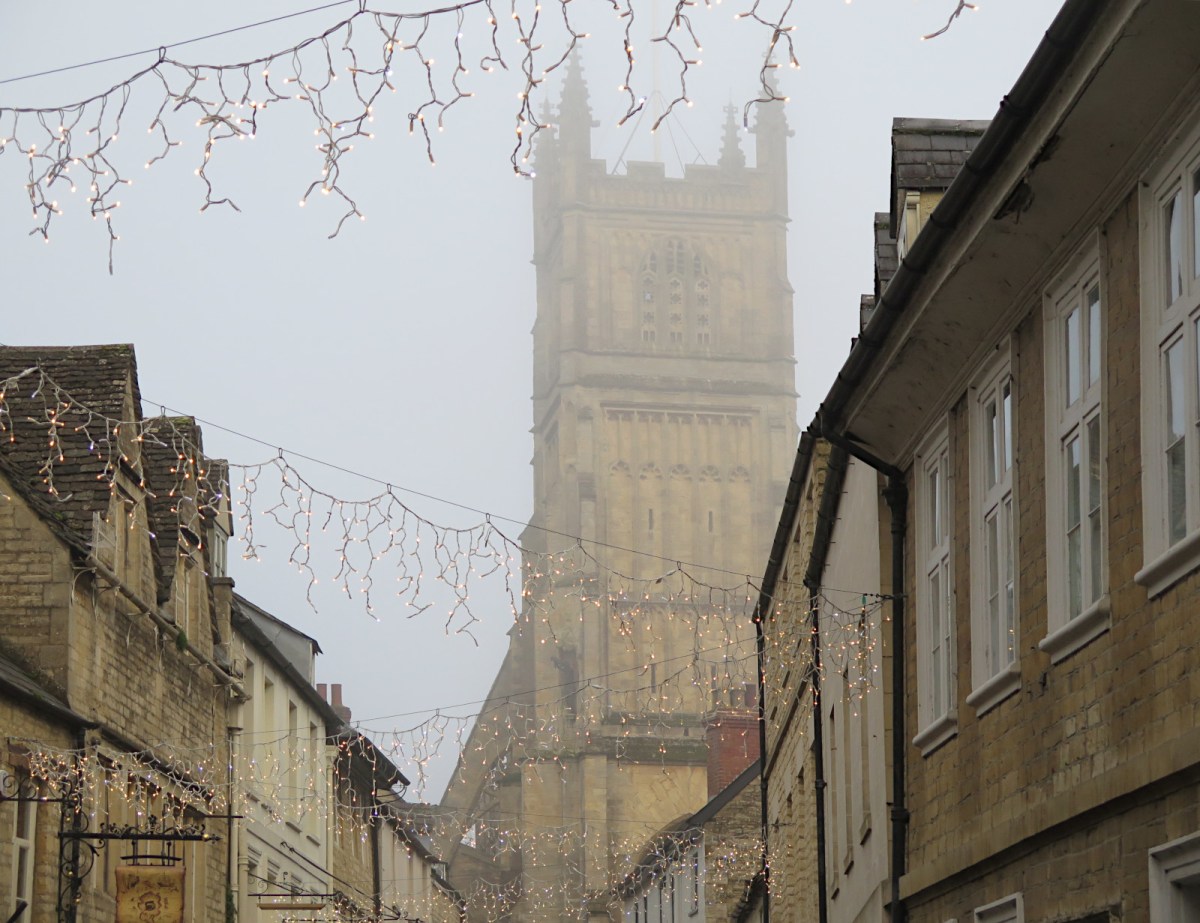
This was a magical moment that just asked to be captured. The Christmas lights had been switched on at the beginning of December and then we had low cloud. The top of the church tower was partly obscured, but other buildings in the town were not tall enough to be affected.
I took several shots, and this one seemed the best of them. So here it is for all to see. Happy Christmas and a wonderful New Year of grace and peace as we head into 2025.
If you enjoyed this or found it useful, please like, comment, and share below. (If you don’t see those links, click the article’s title above the main photo and they will appear.) Send a link to friends who might enjoy the article or benefit from it – Thanks! My material is free to reuse (see conditions), but a coffee is always welcome and encourages me to write more often!
Image 107 – What’s in an image? Sometimes quite a lot, more than meets the eye. I’m posting an image every day or so.
Larger view
Winter storms occasionally bring down mature trees, even if they are healthy. That happened on the road between Stratton and Cirencester on 21st December 2023. The picture shows the clearing up afterwards. The car driver had a very frightening experience and a lucky escape; the tree trunk crushed the right hand side of the bonnet and I imagine the car was a write-off. Amazingly the windscreen was undamaged and the driver presumably shaken but unhurt.
The road was completely blocked by the trunk and branches of this large, mature lime tree, but the team worked quickly and it was clear again later the same day.
Life is full of unexpected events, most of them entirely harmless, some of them inconvenient, and occasionally something that shakes us up and makes us think about life in a different way, at least for a time. It’s probably good for us to face these think-about-life-differently events once in a while. It helps us to realise that some things are important, that we should do the things that matter most right away, that we should not fritter away our time, that life really is precious, and that we should be sympathetic to those who have suffered unexpectedly in life.
I suppose in the end the important thing is to love others regardless of whether they are close family, complete strangers, or somewhere in between. Everybody matters!
When: 21st December 2023 Where: Cirencester, Gloucestershire
Cirencester
For convenience, here’s a list of all the Cirencester area images:
If you enjoyed this or found it useful, please like, comment, and share below. (If you don’t see those links, click the article’s title above the main photo and they will appear.) Send a link to friends who might enjoy the article or benefit from it – Thanks! My material is free to reuse (see conditions), but a coffee is always welcome and encourages me to write more often!
Look at the world around you and you will see pain, loss, discouragement, guilt, and hard struggles for survival. But look at the world from just the right angle and you will see altogether better things.
This photo of the interior of Cirencester Parish Church reminds us of the dedication, hard work, and sheer skill put into building a church nearly 1000 years ago. That should stop us in our tracks and make us think – why go to so much effort?
Click to enlarge
Work on building Cirencester’s Parish Church of John Baptist began in the twelfth century. The chancel (where the altar stands) is the oldest part of the structure and replaced a previous Saxon Church, and perhaps a Roman one beneath that. Additions, alterations, repairs and improvements date to almost every century, the most recent change returning sculptures to two empty niches on the tower in 2019. It’s been a lot of work over a period of a thousand years.
Why? There will, of course, be many reasons. Wealthy townspeople have been willing to spend large sums of money from time to time, and masons, carpenters and other tradespeople will have worked for payment. Some people may have been motivated by their faith, others by a desire to contribute to something beautiful and special, perhaps some to say, ‘Thank you’, for answered prayer. We will never know the full detail, mostly we can only imagine.
But for me, this photo illustrates something quite different. My own understanding of Jesus’ teachings is that we have received a great treasure and should do whatever we can to share it freely with friends, family, neighbours, even enemies, with everyone who will listen. This is an altogether different kind of building work. We are raising a beautiful structure, not of stone and timber, brass and lead, stained glass, silver and bronze. We are building as Jesus builds, a structure of trust, love, grace and peace, of joy, precious thoughts, acts of kindness and caring, a work of self sacrifice, healing, truth, and acceptance. A drawing in as well as a raising up, a work that can always be extended further.
Am I good at it? No, not really. Only Jesus is truly good at this task. He came to reveal his Father, and to pour out his Spirit. And he told us (his followers, his apprentices) to carry on his work.
So, as a very small part of this task, I say to you my readers (if you are still reading at this point) whatever your faith, or religion or view of life, my wish for you, my prayer for you, is that these weeks as 2024 grows old, will be a time of growing peace in your heart. Life isn’t always easy, so my hope is that you will find something to smile about even in difficult times.
Here’s something I wrote last year, I’ll offer it up to you again now. More and more, the UK is a rich mix of people from many cultural backgrounds. That’s why the title is not ‘Christmas Greetings’. Please accept the greetings and replace the word ‘Season’ with whatever you like. If you’re Hindu you could choose Diwali as a reminder of your celebrations in October, or Jewish friends might go with Hannukah in December, if you’re Muslim you might look forward to Lailat al Miraj in February; Buddhists might consider Bodhi Day, and there are more groups of people I haven’t mentioned specifically. But whatever you celebrate, please take my greetings as a blessing for the whole of next year – spring, summer, autumn and winter.
And I apologise to my southern hemisphere friends whose new beginnings may come in June or July!
PS – If you like the photo, click the thumbnail for the full size version. Print it out, put it in a frame and hang it on the wall. Give a copy to friends if you think they’d like it; or send them a link to this message.
Judy’s Dad turned 70-years-old on the tenth and she made him a cake decorated with emblems representing his life so far. We met at their house in Charlton Kings, Cheltenham, with her brother Frank and his family. (1994)
Notes from bygone years – November (Remember, remember). Hint: Click images to enlarge them.
November 2023 (1 year before publishing this article)
Bristol Boxkite at Bristol Museum
We drove to Bristol to take Donna’s saxophone in for a service at Headwind and then spent the rest of the day in the city. We visited the museum and spent some time in the art gallery there. The main lobby still has the Bristol Boxkite hanging from the ceiling, reminding visitors of Bristol’s long and continuing contribution to the aerospace industry. We also walked down Park Street in the rain, investigated Bristol Guild, ate at a student cafe, and looked around the cathedral briefly. A good day out!
Erin (our cat) responded very well to steroid treatment and was fit and happy for the first half of the month, but towards the end of November she was becoming very unwell again and there was nothing more that the vet could do to help her.
JHM: I posted an article about Chuck Pfarrer and his maps of the Ukraine war; and another about Yara who lives in Kyiv. World events: An AI safety summit was held in the UK; and global average temperatures exceeded 2° C above pre-industrial times.
The Christmas cactus was in great form in November, and a couple of Streptocarpus as well.
We had a visit from two friends from the St Neots area, Jim and Kevin. Jim’s wife, Pam, couldn’t make it this time, and Kevin is living on his own. I took them down to Cirencester and we visited the Corinium Museum. Jim was suitably impressed by the tesselated pavements, and Kevin (a fitter by trade) was intrigued by Roman lock mechanisms and the workmanship of these items.
We were meeting at the Baptist Church in Bibury for a while to help encourage them with some changes and fresh ideas. I was involved in other meetings as well, and we were helping Donna’s Mum and Dad with decorating and getting about (though that was becoming harder).
I went to the election hustings where our local MP, Sir Geoffrey Clifton-Brown was booed and heckled a lot. I certainly wasn’t inclined to support him.
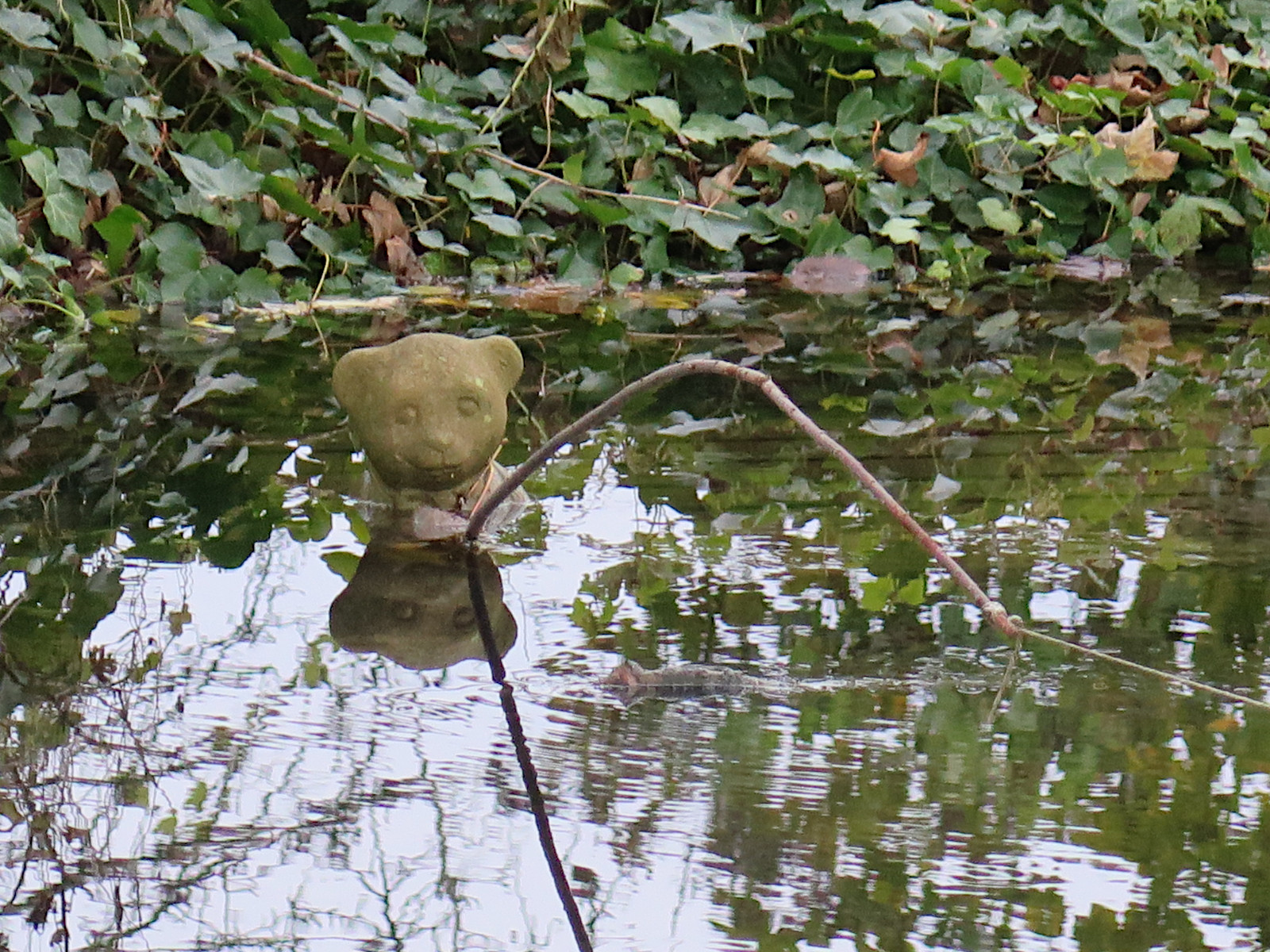
There was quite a lot of rain this month, and a dusting of snow as well. As a result there was some flooding. There’s a concrete bear (a garden ornament) on a wooden platform on the edge of Riverside Walk in Cirencester, and the bear is our water level gauge. As we walk past we see him sitting with his fishing rod on a dry platform (usually). But the photo shows him during the flooding, still clutching his rod and line.
Donna was training as a teacher but was having some second thoughts because of unruly and difficult kids, she also wanted to spend less time running the Open Door Small Group since the teaching work gave her much less available time. Meanwhile I put in a claim for my state pension and we helped some friends move house.
John, one of the guys I’d met at Caffe Nero, was grasping spiritual truths really quickly. He was asking a lot of questions and understanding everything quite deeply. I found this very exciting and immensely encouraging.
I was meeting frequently with different people, there was the Open Door small group once a week, coffee shop meetings with some friends in town, and meetings with my friends Jim, Sean and Kevin rotating around our three homes. It was all good and seemed useful, but three such different groups! Another friend, Chris, was working through Revelation and we met for coffee to discuss this too.
I took my coffee shop friends Matt and Kev to the Newforms Gathering at Kidderminster at the end of the month (photo).
I wrote a short note on the old family dining table we’d been using. It came originally from one of my Dad’s relatives and we’d used it when Judy and I lived in Yatton in the 1980s and 90s. Now we no longer needed it as we required something a good deal larger; we decided it should go to one of my daughters (assuming one of them wanted it).
We had new next door neighbours, Annette and Jerry moved into number 126. And there were major changes taking place in Unilever’s IT organisation that would affect us at Colworth where I was working.
Mum and Dad booked two adjacent holiday villas at Ross-on-Wye and the whole family spent the weekend together. It was a lovely time, a great way to keep in touch, typical of Mum and Dad to organise something like this. They were both closer to the end of their lives than any of us could have imagined, so it’s a special memory for all of us.
Mum had no idea there was an alien spacecraft hovering above her head! Click the photo for a better view.
We had a new gas heating system installed in our home – boiler, radiators, hot tank – everything. The preexisting system was old, decrepit and very inefficient, so high time to replace it.
On 4th November I flew to Schipol for Unilever business at Rotterdam.
And we had a new permanent house guest, Truffles the cat. She was a gift from friends who had more than enough cats, and Truffles preferred being a bit of a loner (though very affectionate with humans).
JHM: View the predecessor website at this time. World events: Australia decided to keep the Queen as head of state; and Kuwait revoked a 1985 law that granted women’s suffrage.
Judy was getting stronger after the problems with the attempted chemotherapy. She was out of danger and out of hospital too during November. She had lost her hair and was wearing a hospital wig, but new hair was already starting to grow and the wig would be only a temporary measure.
Judy’s Dad turned 70-years-old on the tenth and she made him a cake decorated with emblems representing his life so far. We met at their house in Charlton Kings, Cheltenham, with her brother Frank and his family.
In November I bought a new video camera to replace the one stolen in August while were on holiday. This time I bought one of the new, higher resolution Hi-8 cameras. The photo of Beth was made from a VHS copy of a Hi-8 original.
Debbie was probably playing clarinet around this time, but I don’t recall if they ever attempted a piano/clarinet duet!
World events: Dial-up internet was introduced in the USA; while the East German communist government resigned and the Berlin Wall came down.
I developed a DECO database for the Plant Science Division at Long Ashton Research Station to improve the processing and storage of bibliographic information.
This month we had a bit of a breakthrough. My boss at Long Ashton, Ken Stott, put us in touch with a friend of his who was a bank manager; we were then offered good terms on a mortgage.
During the interview we had to hide the fact that Judy was pregnant, as her income had been taken into account.
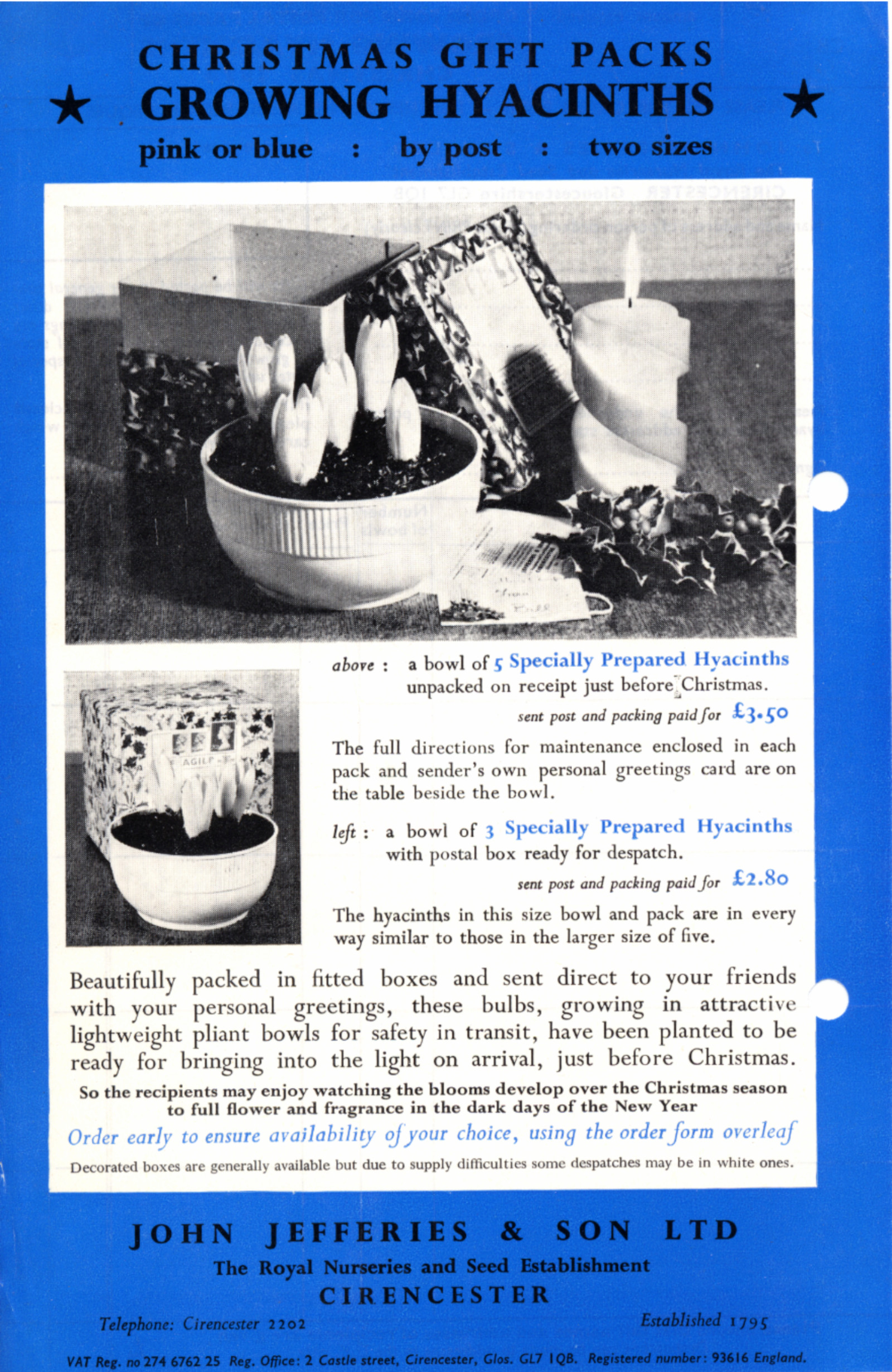
John Jefferies and Son Ltd published their Christmas bulb offer (see the full details, but don’t place an order – they’ve sold out!)
My Granny (Nor) celebrated her 80th birthday and the family gathered for photos and a short celebration at Uncle John’s house, 4 Tower Street, Cirencester.
In the photo – Back row: Cousin Tim, me, Uncles Bob, John and Dick, cousin Jeremy, and my Dad. Middle row: Judy, Aunty Betty (Bob’s wife), Pippa (Jeremy’s wife), My Mum, and Deirdre (Tim’s wife). Front row Aunty Jo (John’s wife), Nor, and Aunt Millicent (Dick’s wife).
Bonfire Night on 5th November was always an important calendar date when I was a child, and indeed right up until recently. It’s gradually been replaced by Halloween over the last ten or twenty years.
This triple Roman candle was the prize firework item in my parent’s back garden in 1964. I took a time exposure on a tripod while this one ran its course, and the photo came out remarkably well. I was 16-years-old and in the Lower Sixth at Cirencester Grammar School.
World events: NASA launched Mariner 4 to Mars; and France tested an atomic bomb underground in Algeria.
I was still in my first term at Cirencester Grammar School. My classroom was in the southernmost of the three Prefab Classrooms; the first year forms 1A, 1B and 1X had these three rooms, perhaps because they were a little way away from the classrooms for the older pupils.
It was an easy walk to the playground where the tuckshop was (it’s important to get important details sorted out as early as possible).
World events: The first section of the M1 Motorway opened; and the MOSFET transistor was invented in the USA.
I was in my second year at Querns School, and half way through the first term. I think that we had Miss Hourihane as our teacher for this second year as well as my first year, although I can’t be sure about that.
I joined the Trex Club, Mummy helped and I remember being a bit puzzled by the whole process, frankly! If you’d like to join, here are the full details.
World events: The first Godzilla film premiered in Tokyo; and a four-kilogram piece of the Hodges Meteorite crashed through a roof injuring a woman.
There’s little to say about this month, as in October I was 1¼-years-old, life went on, and we were still living in my grandparents house in Victoria Road, Cirencester. Dad continued working on the nurseries, part of the old family business.
World events: Oil was discovered beneath the Caspian Sea; and Winston Churchill supported the idea of a European Union.
Mum and Dad briefly talked about the idea of one day being married, and Dad bought a postcard of Cirencester Parish Church in the village shop in Coagh! They visited Uncle Samuel and Aunt Annie in Belfast on 23rd. On the 29th, Dad heard he was soon to be posted away from Northern Ireland, they were both very sad at this unwelcome news.
If you enjoyed this or found it useful, please like, comment, and share below. (If you don’t see those links, click the article’s title above the main photo and they will appear.) Send a link to friends who might enjoy the article or benefit from it – Thanks! My material is free to reuse (see conditions), but a coffee is always welcome and encourages me to write more often!
Chesterton, Stratton and the Beeches areas stand on slightly higher ground. For this reason, the church tower is visible from the distance wherever the view is not blocked by woodland or buildings.
What’s in an image? Sometimes quite a lot, more than meets the eye.
I’m posting an image every two days (or as often as I can). A photo, an image from the internet, a diagram or a map. Whatever takes my fancy.
(I’ve posted 22 photos of Cirencester recently; I’m going to choose some other topics for a while and will return to images of the town later.)
Click to enlarge
The Parish Church of John Baptist towers (no pun intended) over the rooftops of other buildings in Cirencester in this image. The photo was taken looking east from the top of one of the grassy banks covering the Roman Amphitheatre. The honey-coloured Cotswold stone glows in low, January sunlight from the south.
In the background you can see the low hills that surround the town in most directions; the town itself lies on the lower area where the Churn approaches the Thames, but this lower area is small. The Roman town of Corinium was entirely on flatter land (apart from the amphitheatre); but the modern town has spread further, so Chesterton, Stratton and the Beeches areas stand on slightly higher ground. For this reason, the church tower is visible from the distance wherever the view is not blocked by woodland or buildings.
Cirencester
For convenience, here’s a list of all the Cirencester area images:
If you enjoyed this or found it useful, please like, comment, and share below. (If you don’t see those links, click the article’s title above the main photo and they will appear.) Send a link to friends who might enjoy the article or benefit from it – Thanks! My material is free to reuse (see conditions), but a coffee is always welcome and encourages me to write more often!
What’s in an image? Sometimes quite a lot, more than meets the eye.
I’m posting an image every two days (or as often as I can). A photo, an image from the internet, a diagram or a map. Whatever takes my fancy.
Click to enlarge
Yes – This, too, is Cirencester! this is the annual Phoenix Festival, held in the Abbey Grounds right next to the Parish Church. The Phoenix is an old Cirencester emblem, and the name seemed a natural one.
Saxon forces defeated Romano-Britons in the year 577 CE and the old Roman town of Corinium was sacked and destroyed. Cirencester rose from the ashes like the Phoenix and this might be the reason for the association; but there are other plausible explanations.
However that might be, the Phoenix Festival is popular locally and is free of charge. As you might expect, in addition to the music there’s a selection of vans serving food and drink, and the event has a relaxed, family atmosphere. It’s held on two consecutive days in late August. See you there next year?
Oh, by the way, Cirencester’s Phoenix Festival is not to be confused with the Phoenix Festival once held annually near Stratford-on-Avon. That festival was a rival to Glastonbury, very big with world-class bands and notorious for crowd troubles and bad behaviour.
Cirencester
For convenience, here’s a list of all the Cirencester area images:
If you enjoyed this or found it useful, please like, comment, and share below. (If you don’t see those links, click the article’s title above the main photo and they will appear.) Send a link to friends who might enjoy the article or benefit from it – Thanks! My material is free to reuse (see conditions), but a coffee is always welcome and encourages me to write more often!
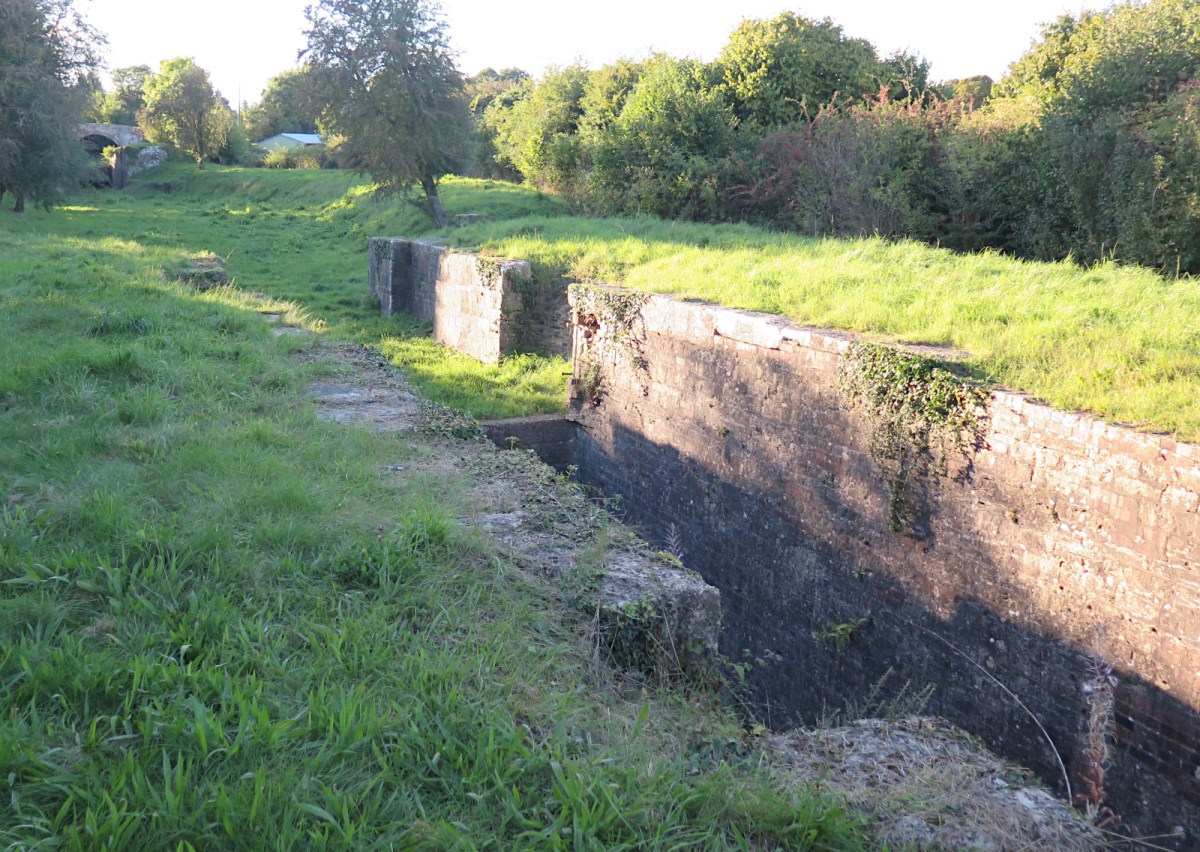
Beyond the lock is a canal basin, currently just an area of grass at a lower level than its surroundings. And beyond the basin is the bridge that featured in an earlier image.
What’s in an image? Sometimes quite a lot, more than meets the eye.
I’m posting an image every two days (or as often as I can). A photo, an image from the internet, a diagram or a map. Whatever takes my fancy.
Click to enlarge
We return to the village of Siddington for today’s image, just a couple of miles south of Cirencester. You can see the brick-built remains of a canal lock, part of a ladder of four locks at this point. Beyond the lock is a canal basin, currently just an area of grass at a lower level than its surroundings. And beyond the basin is the bridge that featured in Image of the day 61.
Although derelict right now, work to improve things has already begun here. Trees growing in the canal bed are being cut down, the towpath is getting some basic care such as filling holes and repairing serious erosion. Down in the western part of the canal in Stroud the section connecting to the Stroudwater Canal is in water and navigable; and within the next two or three years the Stroudwater itself will be connected to the rest of Britain’s canal network at Saul Junction near the River Severn. Focus is moving now to Lechlade in the east where the canal joins the River Thames, and also to the area in the Cotswold Water Park, near South Cerney and Latton. As the Lechlade section develops further, boats will be able to access the canal from both ends, but it will be decades before it becomes possible to travel the entire length by boat.
If you enjoyed this or found it useful, please like, comment, and share below. (If you don’t see those links, click the article’s title above the main photo and they will appear.) Send a link to friends who might enjoy the article or benefit from it – Thanks! My material is free to reuse (see conditions), but a coffee is always welcome and encourages me to write more often!
Of course, non-local companies are far, far better than empty shops. Cirencester has fewer empty shops than most towns; and we do have a good proportion of small, local businesses springing up all the time.
What’s in an image? Sometimes quite a lot, more than meets the eye.
I’m posting an image every two days (or as often as I can). A photo, an image from the internet, a diagram or a map. Whatever takes my fancy.
Click to enlarge
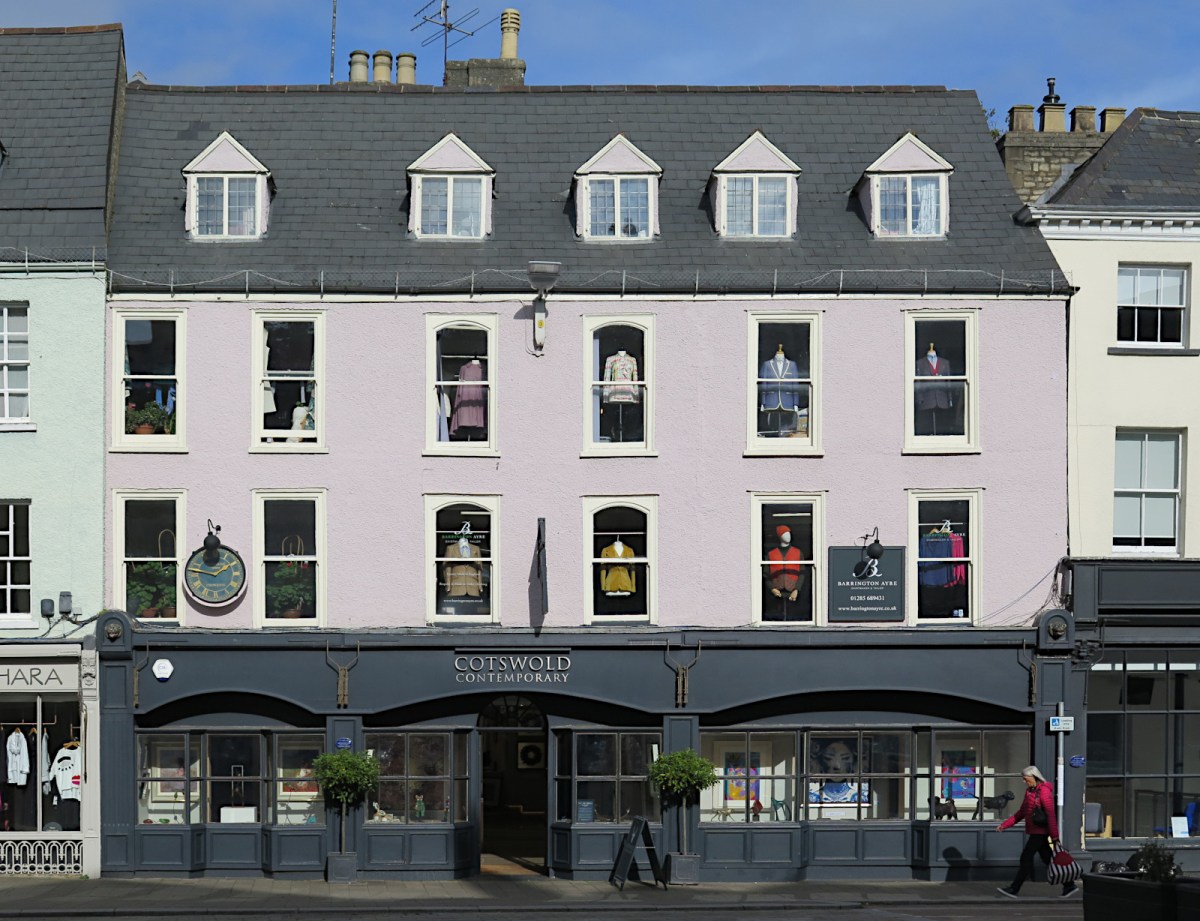
This shop was Stradlings when I was a child. It was a watch, clock and jewellery business and had been a clock maker at one time. If you enlarge the image you will see a clock between two first floor windows on the left. That clock is marked ‘Stradling maker Cirencester’, a relic and reminder of times past.
Businesses come and businesses go, that is normal, it has always happened. But something has changed dramatically in Cirencester as in towns across the county (and indeed much of the world). And it’s this – many of the incoming businesses are branches of large companies, often with little local knowledge or experience.
Of course, non-local companies are far, far better than empty shops. Cirencester has fewer empty shops than most towns; and we do have a good proportion of small, local businesses springing up all the time, especially restaurants, coffee shops and so forth. But the trend is clear, especially when you take the long view. I’m 76-years-old, but as a child almost every business seemed to be local. Perhaps the biggest exceptions were banks and building societies. Sometimes, it’s even in the names, ‘Nationwide’ is indeed a nation-wide building society!
But despite all this, many of the old names, like Stradlings, have left visible mark that can still be seen if you look closely enough. The old clock is still on the wall – a clock made in Cirencester! Not far from Cotswold Contemporary, the current owners of the clock, you’ll find an old sign above a shop front on the same side of the street. There are no words, just a black teapot and a cup and saucer. If you are ever in Cirencester Market Place, see if you can spot it, another emblem of the past. I won’t mention the current name of the shop, that would make it far too easy; but I will say that back in the day it was Anne’s Pantry. They sold little cakes, dainties and pastries to take away, or you could take a table inside for a cup of tea.
If you find the teapot or have memories of Cirencester to share, leave a comment.
Cirencester
For convenience, here’s a list of all the Cirencester area images:
If you enjoyed this or found it useful, please like, comment, and share below. (If you don’t see those links, click the article’s title above the main photo and they will appear.) Send a link to friends who might enjoy the article or benefit from it – Thanks! My material is free to reuse (see conditions), but a coffee is always welcome and encourages me to write more often!
If it’s raining you’ll be looking for an umbrella or zipping up your waterproof coat, in the sunshine you’ll be glad of the shade while enjoying the clear sky.
What’s in an image? Sometimes quite a lot, more than meets the eye.
I’m posting an image every two days (or as often as I can). A photo, an image from the internet, a diagram or a map. Whatever takes my fancy.
Click to enlarge
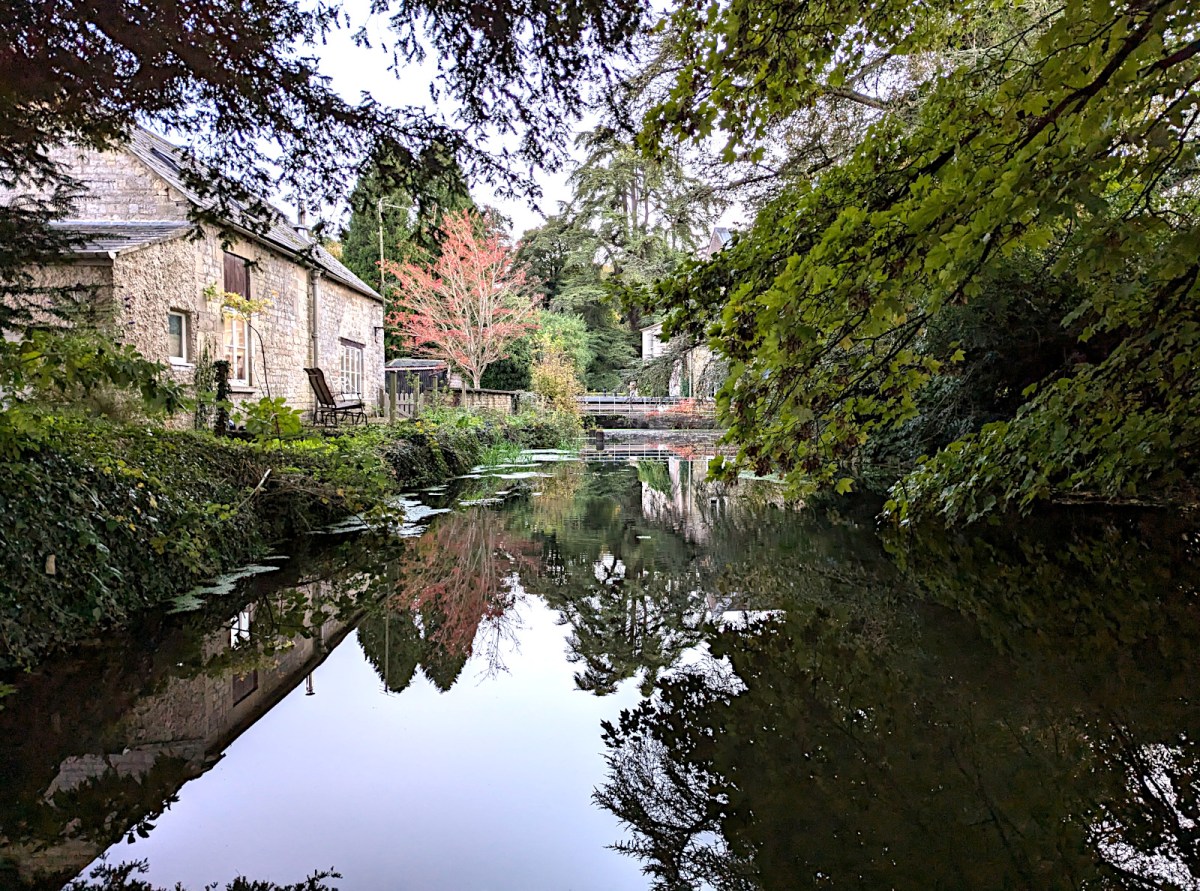
The Riverside Walk runs from Thomas Street (near the junction with Cecily Hill) to the north-western end of Gloucester Street in Cirencester. It crosses the Barton Mill pound, although the mill itself was destroyed in a fire in the 1920s.
This view is from the bridge across the mill pound looking towards the site of the old mill. Riverside Walk is a favourite for Cirencester people walking or cycling from the town centre towards Stratton. It’s a peaceful place to stroll, one end surrounded by fine, old Cotswold stone houses, and the other with a view over flood meadow, and the path is accompanied by water for the entire length.
At the halfway point this footpath crosses Barton Lane, with access to Cirencester Park to the west and Gloucester Street to the right. A lovely part of the town.
What will you think about as you walk this lovely footpath? If it’s raining you’ll be looking for an umbrella or zipping up your waterproof coat, in the sunshine you’ll be glad of the shade while enjoying the clear sky. If you are lucky you might see the kingfisher, the heron, the little egret, or a red kite passing overhead. All are regulars here, though you’ll have to keep your eyes peeled.
Cirencester
For convenience, here’s a list of all the Cirencester area images:
If you enjoyed this or found it useful, please like, comment, and share below. (If you don’t see those links, click the article’s title above the main photo and they will appear.) Send a link to friends who might enjoy the article or benefit from it – Thanks! My material is free to reuse (see conditions), but a coffee is always welcome and encourages me to write more often!











 Journeys of Heart and Mind


