If it’s raining you’ll be looking for an umbrella or zipping up your waterproof coat, in the sunshine you’ll be glad of the shade while enjoying the clear sky.
What’s in an image? Sometimes quite a lot, more than meets the eye.
I’m posting an image every two days (or as often as I can). A photo, an image from the internet, a diagram or a map. Whatever takes my fancy.
Click to enlarge
The Riverside Walk runs from Thomas Street (near the junction with Cecily Hill) to the north-western end of Gloucester Street in Cirencester. It crosses the Barton Mill pound, although the mill itself was destroyed in a fire in the 1920s.
This view is from the bridge across the mill pound looking towards the site of the old mill. Riverside Walk is a favourite for Cirencester people walking or cycling from the town centre towards Stratton. It’s a peaceful place to stroll, one end surrounded by fine, old Cotswold stone houses, and the other with a view over flood meadow, and the path is accompanied by water for the entire length.
At the halfway point this footpath crosses Barton Lane, with access to Cirencester Park to the west and Gloucester Street to the right. A lovely part of the town.
What will you think about as you walk this lovely footpath? If it’s raining you’ll be looking for an umbrella or zipping up your waterproof coat, in the sunshine you’ll be glad of the shade while enjoying the clear sky. If you are lucky you might see the kingfisher, the heron, the little egret, or a red kite passing overhead. All are regulars here, though you’ll have to keep your eyes peeled.
Cirencester
For convenience, here’s a list of all the Cirencester area images:
If you enjoyed this or found it useful, please like, comment, and share below. Send a link to friends who might enjoy the article or benefit from it – Thanks! My material is free to reuse (see conditions), but a coffee is always welcome and encourages me to write more often!
Find out what everyone’s leadership gifts are. We all have them, there are no exceptions. We all have the role and duty and joy of encouraging and equipping others for service.
This article is an extract from my short book, Jesus, Disciple, Mission, Church (JDMC). The bite-sized piece below is roughly two percent of the book. This is the second part of the second forgotten way.
Be committed
It’s useful to agree some standards to help us in our lives together as disciples; this guide doesn’t give you any rules to follow so you will need to work out your own. Every group is different, but getting into some sort of discipleship rhythm is useful. Our aim is already clear (1Corinthians 10:31-11:1) but the details need working out.
Try hard to discover what really matters most to you. You’ll need to talk about it, and pray together, and you’ll need patience because it may come gradually. You’re looking for the group’s sense of purpose, something that really grips you, a shared passion. Once you understand why your group exists you can begin to work out some of the details together. You’ll be searching for objectives that are both exciting and challenging. As soon as you recognise these group purposes start working towards them.
Choose one or two activities for each of them. Some examples might help. Suppose you really care about the state of your local area, you might organise or join a weekly walk to clear litter or adopt a piece of waste ground and turn it into a beautiful flower bed. Or perhaps you’re passionate about homeless people in your town. If so, find practical ways to regularly bring them food or give them shelter. Maybe the group feels driven to dig deep into the Bible: in that case work through a study course together, find and watch a relevant DVD or online video together each week, or share something significant that you’ve learned or found challenging. One or two could do this every time you meet, different people each time so that everyone is active in sharing.
If enough people in a group are actively growing as disciples it will become the norm. Talk about what you are doing, demonstrate it, give plenty of examples, tell stories of successful outcomes, and encourage others to share too. Try to get more groups of people engaged, tell them about your activities, invite them to come and see for themselves, suggest they try working through this guide with their own group, help them get started.
Discuss or consider – Spend a little time right now talking about the group’s passions and purpose. Consider options for practical ideas like the examples above, and decide how you could work on these together. If it’s difficult to make progress give yourselves more time and come back to it in a few weeks or months. Oh, and pray about it.
We are all priests
No, I’m not suggesting you all sign up for holy orders – but we are a royal priesthood, a holy nation, a chosen race (1 Peter 2:9). In Israel the royal and priestly functions were separate. But in Christ they are combined, he is King of Kings (Revelation 19:16) and he is also our Great High Priest (Hebrews 4:14). Under him we are government officials and priests. Every single one of us is a servant of Christ and should be fully active – it’s part of being a disciple.
Find out what everyone’s leadership gifts are. We all have them, there are no exceptions. We all have the role and duty and joy of encouraging and equipping others for service. We must build one another up in love. It’s part of discipleship, part of becoming like the Master.
Discuss or consider – I can guarantee that everyone in your group has taken the lead in some way, great or small. Can you identify some of these leading abilities? It might be initiating something, reminding the group to listen to what the Spirit is saying, spreading a good idea to another group, getting people to care for one another and cooperate or explaining something.
This was extracted from Jesus, Disciple, Mission, Church (JDMC), pages 18 and 19. Download the whole thing or read it online – GetJDMC.scilla.org.uk
Useful? Interesting?
If you enjoyed this or found it useful, please like, comment, and share below. Send a link to friends who might enjoy the article or benefit from it – Thanks! My material is free to reuse (see conditions), but a coffee is always welcome and encourages me to write more often!

What’s in an image? Sometimes quite a lot, more than meets the eye.
I’m posting an image every two days (or as often as I can). A photo, an image from the internet, a diagram or a map. Whatever takes my fancy.
Click to enlarge
This is one of Cirencester’s wonderful old hotels, ‘The Fleece’. It has a long history in the town, and its appearance is especially interesting. It looks like a timber-framed building at first glance, and at least one upper level has a visible overhang, a typical feature of multi-storey timber frame construction. But a closer look shows that the building has a render finish, and the ‘timbers’ are created with black paint on the render. Nonetheless, I can’t help wondering if there are real timbers underneath the render, it actually seems quite likely! If so, the render and the painted ‘timbers’ would be a sort of double-bluff. How intriguing.
Whatever the truth about the timber framing (or not), this old inn would have been part of the coaching network before the coming of the canals and railways. Passengers and their luggage would have been carried from here to Burford, Oxford, London and other destinations. The Fleece is 300-years-old and Grade II listed.
Today, the business has expanded into the properties either side, but to my knowledge the central part still looks exactly as it did 70 years ago.
Cirencester
For convenience, here’s a list of all the Cirencester area images:
If you enjoyed this or found it useful, please like, comment, and share below. Send a link to friends who might enjoy the article or benefit from it – Thanks! My material is free to reuse (see conditions), but a coffee is always welcome and encourages me to write more often!
SpaceX will want to repeat the launch and landing of a booster at least monthly and then weekly going forward.
SpaceX has just made history by catching a returning Superheavy booster in mid air. Not only is this a milestone for SpaceX and a milestone for spaceflight in general, it was achieved on the first attempt.
The now well-known US space company, SpaceX, has made history multiple times, and now they’ve done it again. On 13th October 2024 they launched their Super Heavy booster carrying a Starship on top, this from their private factory/launch site complex at Boca Chica on the coast of Texas right next to the US border with Mexico.
What was new for this 5th test flight, and quite astonishing, was the fact that the booster rocket returned from the edge of space to Boca Chica, and was caught by the launch tower that it had left less than nine minutes earlier. That was time enough to deliver Starship to space, and return. Nobody has ever caught a returning rocket stage before – it’s a world first. And the Super Heavy booster is no lightweight, even empty of fuel it weighs 500 tonnes and it’s the world’s largest launch vehicle. Not only that, once in space Starship accelerated to orbital velocity, flew right across the Caribbean and the Atlantic, across Africa and much of the Pacific, and made a landing with pin-point accuracy in the Indian Ocean.
Why is this useful?
Quite simply, the long term goal is to launch, refuel, and launch again – several times a day. So one reusable booster and an adequate fuel supply could put several Starships into Earth orbit in a single day. Starships are intended to be developed for several different purposes, one of these will be a tanker that can refuel another Starship in orbit and return to Earth empty for another load. Several refuelling trips (at least eight) would result in a fully fuelled Starship in orbit, sufficient to deliver 100 tonnes of cargo or perhaps 50 crew members almost anywhere in the Solar System. (SpaceX claims 150 tons or 100 crew, but we’ll see. I remain conservative in my expectations.)
NASA has already chosen Starship as its human landing system for the return to the Moon. A fully fueled Starship-based Moon lander could collect several astronauts from NASA’s projected lunar space station, carry them and a lot of supplies to a Moon landing, and still have sufficient fuel for the return trip to the NASA Station and on to Earth for recovery and reflight. Today’s booster return was a necessary requirement for this plan to proceed.
What’s next?
Big improvements and lots of practice, that’s what comes next. SpaceX will want to repeat the launch and landing of a Super Heavy at least monthly and then weekly going forward. They will need to make improvements to the boosters until they can be safely and frequently re-used. They will also want to fly Starship into full orbits of Earth and practice re-entry and catching for those too. The heat shield for Starship needs improvement but the next version is already in production and incorporates some of the required changes. Then they will need to fly Starship with cargo (almost certainly the new, larger version of the Starlink satellites) until its safety record is good and it has proven reusability.
After that, they need to design, build and test the tanker and the lunar landing versions of Starship. Next comes flying astronauts to the Moon, and probably in parallel with that, landing cargo on Mars in preparation for sending crew there. This is all a huge ask, but SpaceX keeps surprising us. Can they do it? I don’t know, but if anyone can, SpaceX can.
If you enjoyed this or found it useful, please like, comment, and share below. Send a link to friends who might enjoy the article or benefit from it – Thanks! My material is free to reuse (see conditions), but a coffee is always welcome and encourages me to write more often!
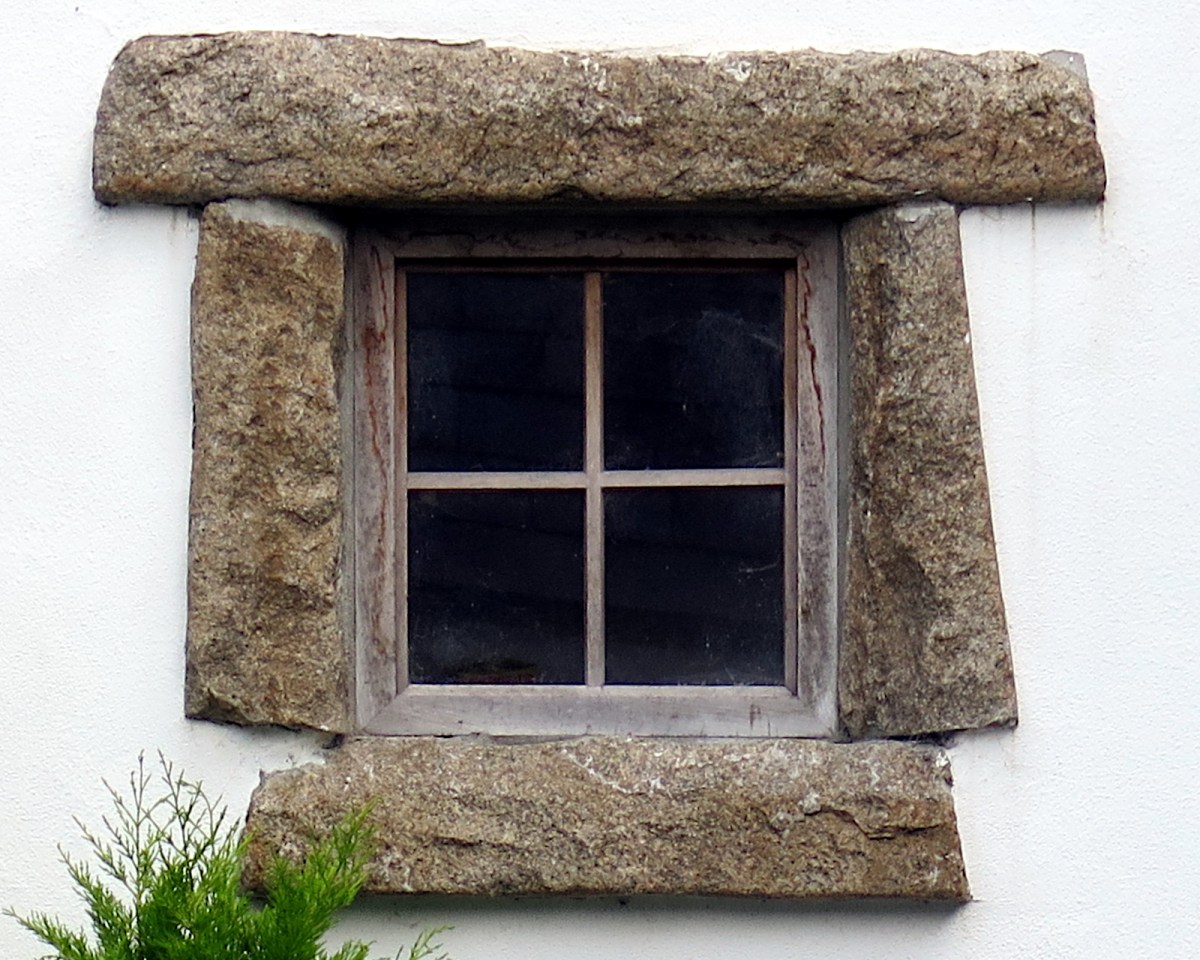
In this image you can see bending in several directions over just a few hundred years – 300 or 400 hundred at most. Look out for similar effects in old town and city streets, castles, churches and cathedrals.
What’s in an image? Sometimes quite a lot, more than meets the eye.
I’m posting an image every two days (or as often as I can). A photo, an image from the internet, a diagram or a map. Whatever takes my fancy.
Click to enlarge
How about another wonky house? This picture shows a stone-built structure here in Cirencester’s Coxwell Street. Unlike timber, stone doesn’t warp or bend in changing climatic conditions; however it does respond to persistent pressure over long periods of time by gradually distorting.
This is often seen in geological formations where sedimentary rock layers may be curved in large, wavy patterns even though they were completely horizontal when deposited millions of years ago. The same can happen in masonry, but foundations (if any) and the mortar between stones may also deform and contribute to the effect.
In this image you can see bending in several directions over just a few hundred years – 300 or 400 hundred at most. Look out for similar effects in old town and city streets, castles, churches and cathedrals.
Look out for bent stone on a much larger scale in cliffs and quarries.
Cirencester
For convenience, here’s a list of all the Cirencester area images:
If you enjoyed this or found it useful, please like, comment, and share below. Send a link to friends who might enjoy the article or benefit from it – Thanks! My material is free to reuse (see conditions), but a coffee is always welcome and encourages me to write more often!
Notes from bygone years – October (Noctober after dark?). Hint: Click on the thumbnails for larger images.
October 2023 (1 year before publishing this article)
Text from a Herculaneum scroll
An exciting scientific paper published in the journal Nature described how X-ray data and clever data manipulation had made it possible to recover small scraps of text from scrolls lost when Vesuvius erupted in October 79 CE. Hope was expressed that it might become possible to recover much larger sections of text, or even whole scrolls.
Our cat, Erin, was not feeling well; due to a tumour she was not eating very well and often threw up afterwards. She was losing weight quickly as a result. The vet suggested a steroid injection to see if it would help her cope better, but it would clearly be only temporary relief. It seemed well worth a try and during the second half of the month she seemed very much her old self again.
We visited Westonbirt Arboretum on 23rd October to enjoy the autumn colours, and Donna’s Uncle Ken died on 26th after a long illness.
I began intermittent fasting, only eating between 11:00 and 21:00, as part of a Zoe trial. I’ve changed the timing slightly, but I’m still following the principle two years later.
There was a Roman Army historical display in the old amphitheatre on 2nd October, it was great fun to watch the events going on and look at the Roman equipment. They fired a melon from a ballista and it sailed right out of the arena. Seeing a crowd at the amphitheatre gave me a sense of scale and made the place look much larger. The crowd in the photo is using about a third of the seating space.
On Mondays I enjoyed meeting my friend Stephen for a walk, a coffee, and a chat.
I spent some time working out the route of the old canal through the built-up parts of Cirencester, it was an interesting exercise, poring over old maps.
We were also helping Donna’s Mum and Dad quite a lot, I get on well with Tony; we’ve always enjoyed chatting and he seems to trust me. He was mostly wheelchair-bound at this time as his Parkinson’s progressed, but on a good day he could still do quite a lot for himself.
On 19th I joined the People’s Vote march in London, quite an experience!
My friends Jim and Pam ran a church Mums and Tots group (Puddles) in St Neots. Jim ask me to take a set of photos of each mum with their child for official use by the group, here’s a more general shot that I included for them.
I was meeting frequently with different people, there was the Open Door small group once a week, coffee shop meetings with some friends in town, meetings with my friends Jim, Sean and Kevin rotating around our three homes. It was all good and seemed useful, but three such different groups!
Donna’s Mum and Dad came to stay for a weekend in the middle of the month and we drove over to Olney for a walk and then to Stoke Bruerne to look at the canal and the ladder of locks. There were some great autumn colours on the day. The photo shows Isobel, Tony and Donna on a bridge.
At the end of the month we visited Cirencester to visit my Mum and Dad, and while we were there we popped over to Westonbirt Arboretum to look at the autumn colours. There’s always a wonderful display there, and the trees were more or less at their best.
These are the web development servers in the open plan office where I worked as part of the Web Team. Today these would all be virtual servers hosted at a data centre elsewhere in the company. It was very useful to have multiple copies of each website, one for the developers to work on, another for testing purposes, and a third for the live service.
Things seemed to go from bad to worse with Judy’s colon cancer. In October (I think) she began the first of three courses of chemotherapy (5-fluorouracil) to shrink the metastases and slow them down. This was expected to give her at least a couple of extra years of healthy life. But after starting the first course she became quite unwell and the doctors discovered that she lacked an enzyme that normally enables the body to dispose of the drug. She had to spend some weeks in hospital, quite dangerously ill for some of them.
I had been working in Long Ashton’s Electron Microscopy Lab, helping to manage the instruments and operating the Scanning Electron Microscope (SEM) for staff unable to do the work themselves. But with a further reshuffle at work I’d been moved to the Computing Section and was now working on MS-DOS and developing the environment that became the LARS System.
The Good News Crusade came to Portishead and a number of us from Yatton and Claverham were involved. There were several days of the Crusade itself, and then we (and others) arranged some post-Crusade meetings as well.
Mum and Dad had a late touring holiday along the Devon and Cornwall coast. Dad took several 35 mm transparency films of that holiday.
We were living in our flat at 20 Belmont Road, and I already had a Scottish Widows life assurance policy as a first step towards securing a mortgage. We were still not well-placed despite having quite a lot of available reserves in our joint bank savings account.
I was back in Bath University and the fourth year was underway with the final exams looming after Easter. Judy’s position was similar, back at Aber (Aberystwyth) for her third and final year. She took the photo from a ground floor window in Alexandra Hall on the Aber seafront as the sun was setting.
The autumn term meant the start of my time in the Lower Sixth at Cirencester Grammar School. During half-term a friend and I dug a hole in the Lower Garden just east of the footpath behind Churnside (37 Victoria Road). We found some Roman stonework, small pieces of burnt clay, pieces of a broken amphora rim, and a small piece of Samian ware with a failed repair, also a piece of tegula (roof tile). We had no idea this was a bad thing to do!
I was in my first term at Cirencester Grammar School. Amongst other subjects I had to learn some Latin, it wasn’t my favourite subject at the time. The image shows a Latin exercise in which I managed to get seven correct answers out of nine. I think my favourite subjects were maths, geography and chemistry.
World events:Luna 3 returned the first images of the far side of the Moon; and Astérix the Gaul first appeared in a French comic.
Cindy turned three and I was in my second year at Querns School; we were living on the Beeches Estate in Cirencester. 17 Queen Anne’s Road was a three-bedroom semi so I had my own room. Mum and Dad’s room had a special feature, a wall-mounted electric fire with two switches. I never saw this heater in use, but there was also a two bar plug-in electric fire that was used downstairs on very cold days in the winter.
I was 1¼-years-old, and life went on well enough as far as I’m aware. We were living in my grandparents house in Victoria Road, Cirencester and Dad was busy working on the nurseries, part of the old family business founded in 1795.
As October passed and Mum and Dad spent more time together, they became what today we would call ‘an item’. His brother Bob, an army officer and 15 years older than Dad, was married to Betty from the town of Dungannon 13 miles south of Coagh. Dad visited them from time to time, but spent much of his off-duty time with Lilias and her family.
World events: The first German Me 262 jet fighter was shot down; and Warsaw was destroyed by the occupying German forces.
If you enjoyed this or found it useful, please like, comment, and share below. Send a link to friends who might enjoy the article or benefit from it – Thanks! My material is free to reuse (see conditions), but a coffee is always welcome and encourages me to write more often!
I don’t know the age of this house, but it is clearly a timber-framed structure and some of those main timbers have adjusted comprehensively to the action of gravity over several centuries.
What’s in an image? Sometimes quite a lot, more than meets the eye.
I’m posting an image every two days (or as often as I can). A photo, an image from the internet, a diagram or a map. Whatever takes my fancy.
Click to enlarge
Here’s Cirencester’s wonkiest house – well, one of them. Until the 18th century, many buildings would have been constructed of timber, and we all know that timber is prone to warp even after seasoning, and it also responds to pressure and stress by slowly changing its shape.
Modern engineered wooden products generally avoid these issues. For example, plywood is in layers with the grain running in different directions from layer to layer. A thin sheet of wood is weak along the line of the grain, in that direction it will split easily when bent. But it will resist bending and splitting if rotated 90°. So multiple sheets glued together can be strong in all directions.
A timber-framed house
I don’t know the age of this house in Dollar Street, but it is clearly a timber-framed structure and some of those main timbers have adjusted comprehensively to the action of gravity over several centuries. Look at the glazing in the windows, for example, compare the windows with their fellows, side-by-side and up and down. See what I mean? At some point a layer of render was added to hide and protect the timbers so these are no longer visible.
The building is unoccupied at present, but I imagine it’s safe enough. Imagine how the new owners in due course will struggle to make right-angled furniture fit into walls and floors at odd angles
What about us?
Are we sometimes a little bit like this house? Do the pressures of life, sustained over years, even decades, cause us to be a little distorted? Is it difficult for other people with their right-angled opinions and requirements to fit into our expectations given our out-of-true alignments? Is the truth about us sometimes plastered over and hidden from view?
Or might it be the other way around? Am I, are you, straight and true and the fault lies with everyone else?
Cirencester
For convenience, here’s a list of all the Cirencester area images:
If you enjoyed this or found it useful, please like, comment, and share below. Send a link to friends who might enjoy the article or benefit from it – Thanks! My material is free to reuse (see conditions), but a coffee is always welcome and encourages me to write more often!
If you’re interested in the future of society and human culture (and who is not?) then you’ll be fascinated to hear what Sean has to say in this podcast episode.
A recent Sean Carroll podcast considers the future, and in particular how humanity lives and how this may change. He discusses the nature of predictability, and its limits. Fascinating stuff!
Sean Carroll is an American theoretical physicist and philosopher specialising in quantum mechanics, cosmology, and the philosophy of science. He’s the Homewood Professor of Natural Philosophy at Johns Hopkins University.
He’s also active on the internet with his website, Preposterous Universe and interviews experts on a host of topics on his podcast Mindscape. For fuller details about Sean and his work, it’s worth reading the Wikipedia article about him and/or visiting his website (both linked below).
Episode 270
Most episodes of the podcast are interviews with scientists, philosophers and others. But Episode 270 is a solo appearance in which Sean thinks aloud on a topic by himself, and that’s not to say he ignores the ideas and work of others – far from it. He discusses his own ideas and those of others, explaining why the early stages of exponential growth may not be easily distinguishable from other kinds of curve such as asymptotic (where growth eventually slow and creeps ever closer to a maximum) or even a singularity or a phase transition (where growth may suddenly settle into a new and altogether different pattern).
Sean unpacks a lot of ideas here, and he’s careful to express his thoughts in ways that most people will be able to understand and digest. Sean is a mathematician (a necessary skill for any physicist) but even non-mathematicians will be able to follow his arguments here.
If you’re interested in the future of society and human culture (and who is not?) then you’ll be fascinated to hear what Sean has to say in this podcast episode. He will certainly cut the ground out from under your feet if you hold the opinion that we will go on expanding and thriving indefinitely.
If you enjoyed this or found it useful, please like, comment, and share below. Send a link to friends who might enjoy the article or benefit from it – Thanks! My material is free to reuse (see conditions), but a coffee is always welcome and encourages me to write more often!
What’s in an image? Sometimes quite a lot, more than meets the eye.
I’m posting an image every two days (or as often as I can). A photo, an image from the internet, a diagram or a map. Whatever takes my fancy.
Click to enlarge
Here’s a second photo from inside Cirencester’s Parish Church. This time we’re looking up for a view of the nave’s wooden ceiling with it’s interesting construction and wooden boarding that supports the external lead sheets to provide the necessary weather-proofing. The structure is certainly a cut above the average house roof!
If you look to the left of the top of the leftmost stone pillar, you will notice a grotesque figure. An imaginary, stone creature with wings stares down at you as it helps to support the stone ceiling below the tower, this space under the tower forms the West Porch of the building.
You can also see some of the north-facing nave windows just below the wooden ceiling, and sunlit stonework from beams shining through the south-facing nave windows (out of sight in this view).
Cirencester
For convenience, here’s a list of all the Cirencester area images:
If you enjoyed this or found it useful, please like, comment, and share below. Send a link to friends who might enjoy the article or benefit from it – Thanks! My material is free to reuse (see conditions), but a coffee is always welcome and encourages me to write more often!
So let’s look at some examples… But do bear in mind that the retrieval process may be quite slow. Time travel takes time.
Time travel would be interesting, but we can be pretty sure it can’t be done. However, history lets us visit the past in a sense. And when it comes to the web, there’s always the amazing Wayback Machine.
The Wayback Machine archives websites and stores them for future use, and anyone can use it to see past versions of sites, or visit sites that are no longer available. Also, anyone can enter a web address and ask for it to be archived.
The Wayback Machine has had a torrid time with DDoS attacks and data theft over the last few weeks, but it’s all fixed and working again as of 14th October (though in read-only mode for the time being).
So let’s look at some examples. Click the links below to check them out, but do bear in mind that the retrieval process may be quite slow. Time travel takes time:
Why not explore some old websites for yourself? Just visit web.archive.org and search for a website you like or one that no longer exists.
What serious uses does it have?
The Wayback Machine (or Web Archive) serves a number of useful purposes beyond viewing old versions of websites for fun.
Historical research
For checking accountability
Verification
As legal evidence
Viewing websites that no longer exist
For further details, read the Wikipedia article on the Wayback Machine.
Useful? Interesting?
If you enjoyed this or found it useful, please like, comment, and share below. Send a link to friends who might enjoy the article or benefit from it – Thanks! My material is free to reuse (see conditions), but a coffee is always welcome and encourages me to write more often!